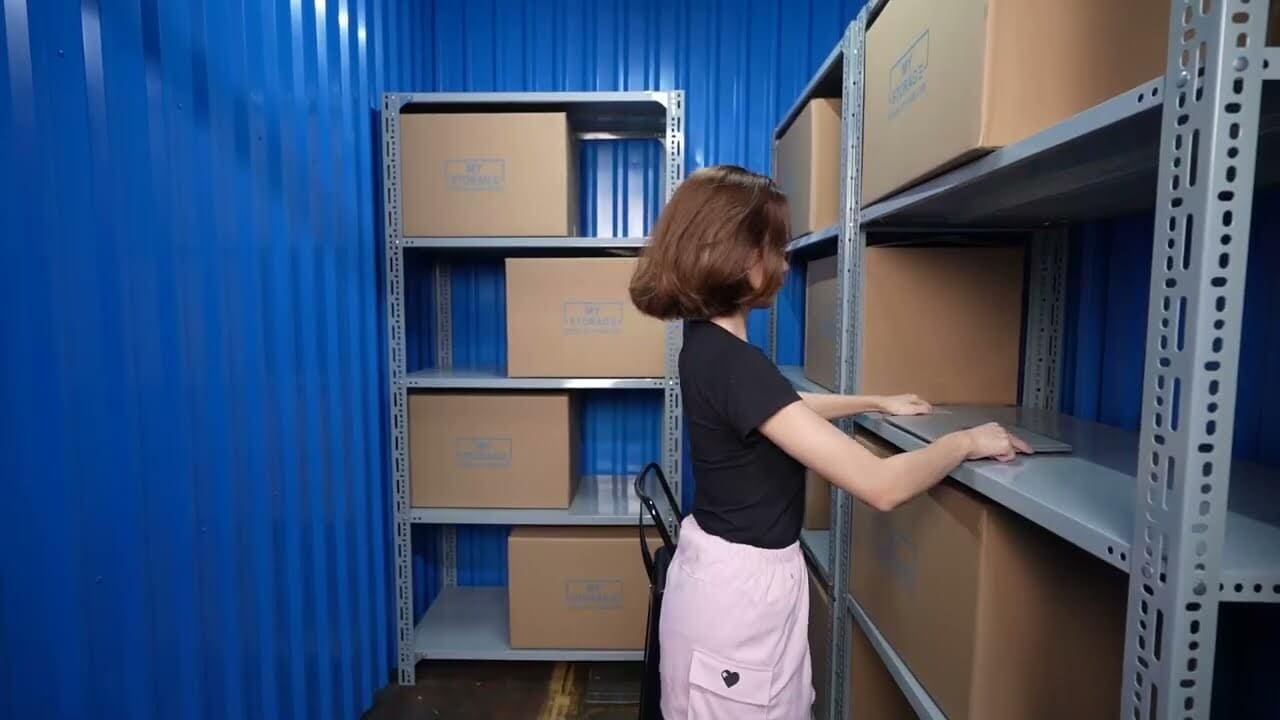
The Vietnamese storage market has evolved rapidly in recent years, making it tough to find the right mini storage price. Mini storage services have grown 4.1% each year since 2021. This growth comes from e-commerce revenue that jumped 54% compared to last year, hitting 63,000 billion VND in Q3.
Prices change significantly when you look for small storage rental in HCMC or small warehouses in other areas. Mini cold storage rental costs range from 51,200,000 VND to 270,700,000 VND. Standard HCMC mini storage rental spaces cost about 5 million VND for 12m³. The urban population now makes up nearly 37% of the country, and living spaces keep shrinking.
People simply need more flexible storage options these days. This piece about mini storage rental prices for 2025 will help you understand all costs, pricing factors, and ways to pick the best storage solution that fits your needs.
Mystorage opens new facility at An Phu Sports Park, District 2, HCMC. Register now to enjoy discount 50% for first storage month.
Get In Touch
Limited spots available for the grand opening.
Who should consider renting mini storage?
Mini storage solutions are becoming popular among different groups of people who want extra space. You can determine if this investment makes sense by looking at who benefits most from mini storage price services. The biggest groups of mini storage users have specific reasons these services are valuable to them.
Small business owners and online sellers
E-commerce entrepreneurs and small retailers make up much of small warehouse users. Online sellers quickly run out of space as their products take over their homes. Many e-commerce businesses that sell on Etsy or Amazon – from clothing and toys to books and personalized gifts – find mini storage to be a practical solution.
Online shops deal with seasonal ups and downs that make HCMC mini storage rental really useful. They just need extra space during peak times like holidays or special sales to maximize their potential. Mini storage gives them an economical option instead of expensive commercial leases, and they only pay for the space they use.

Individuals with limited home space
People in small urban apartments often struggle to find enough storage room. Extra storage space could help when personal items start taking over living areas and getting in the way of daily life. Mini storage becomes a lifesaver, especially if you want to declutter but keep your cherished possessions.
Renting small storage rental in HCMC gives you space to store items like:
- Seasonal clothing and holiday decorations
- Sports equipment and bicycles
- Furniture storage you want to keep
- Personal collections and important documents
Moving these rarely-used items creates a neater, more comfortable living space. One client told us her daily life improved noticeably after she decluttered her apartment using mini storage.
Short-term movers or travelers
Life’s temporary changes create storage challenges. People who move between homes, renovate their space, or start a long trip need safe places for their belongings during these times.
Moving is a common example – mini storage rental prices work perfectly when your move-out and move-in dates don’t match up. Short-term storage lets you avoid rushing or asking friends to store your stuff, and you know your belongings are safe during the move.
Students find mini storage especially helpful. They can store their things during summer breaks or while studying abroad instead of taking everything home. This setup saves them from multiple moves and keeps their belongings secure until they return.

Startups needing flexible inventory space
New businesses often can’t predict their growth, which makes long-term warehouse leases impractical. Mini storage gives startups the ability to adjust their storage space as they grow.
A tech startup that suddenly sees huge demand for its new product can quickly get more storage units without delays. This flexibility is a great way to get through rapid growth phases when money needs to go toward core business operations instead of storage infrastructure.
Many startups utilize mini storage to keep their operational costs low. They save money by paying only for the space they need with small deposits instead of building and maintaining private warehouses. This approach helps new businesses manage their money better while staying flexible in competitive markets.
How much does mini storage cost in 2025?
Understanding mini storage prices in Vietnam will help you plan your storage needs better in 2025. Let’s look at what you might pay in Vietnam’s growing storage market.
Price ranges by size (m² and m³)
The size of your storage unit plays the biggest role in determining costs in Vietnam. Monthly rates can range from a few hundred thousand to several million VND. Here’s a breakdown of typical prices:
| Size (Approx.) | Monthly Price Range (VND) | Typical Usage |
| 3-5 m² | 400,000 – 1,000,000 | Few boxes, suitcases |
| 7 m² | 600,000 – 1,750,000 | Contents of a small room |
| 10 m² | 780,000 – 2,500,000 | Contents of a 1-bedroom apartment |
| 16 m² | 1,250,000 – 3,840,000 | Contents of a 2-BR apt / Small stock |
| 24 m² | 1,870,000 – 5,640,000 | Medium online shop inventory |
| 32 m² | 2,450,000 – 6,080,000 | Small business inventory |
| > 50 m² | 70,000 – 190,000 / m² | Larger spaces, priced per m² |
Some storage facilities base their prices on volume instead of floor area. You’ll pay around 350,000 VND per cubic meter (CBM) for 2+ CBM. Larger volumes get better rates – about 245,000 VND per CBM for 10+ cubic meters.
Cost comparison: self-managed storage vs. shared warehouse
Your choice between self-managed storage and shared warehouse will affect your costs substantially.
Self-managed storage gives you a private, dedicated space. Monthly rates start from a few hundred thousand and can go up to several million VND. Your location, air conditioning needs, and rental duration will determine the final price. The space is yours alone – that’s the main advantage.
Shared warehouse might seem cheaper at first since you pay by cubic meter or pallet. However, the total costs and effort usually end up higher than self-managed storage’s all-inclusive price.

Temperature control and its effect on pricing
Temperature-controlled storage costs more than basic units. You’ll pay about VND 254,148 extra monthly in 2025 for climate control.
This extra cost buys better protection for your items. Climate-controlled units keep your photos, CDs, DVDs, computer equipment, electronics, books, papers, and leather furniture safe from temperature changes, humidity, and moisture.
Here’s how prices differ by unit size:
- 5×10 units: VND 4,447,595 (climate-controlled) vs VND 3,176,854 (standard) monthly
- 10×10 units: VND 5,718,337 (climate-controlled) vs VND 4,193,447 (standard) monthly
- 10×15 units: VND 7,497,375 (climate-controlled) vs VND 5,464,189 (standard) monthly
Typical monthly rates in HCMC and Hanoi
Your location in Vietnam plays a big role in determining mini storage rental prices. Ho Chi Minh City’s prices vary by district:
- Central & Near-Central Districts (D1, 3, 4, 7, Binh Thanh, Phu Nhuan, Thu Duc City (former D2), Tan Binh): 150,000 – 300,000+ VND/m²/month, with better locations costing more
- Suburban & Outskirts (Binh Tan, Binh Chanh, Hoc Mon, Cu Chi, D12, Thu Duc City (former D9/Thu Duc)): 70,000 – 180,000 VND/m²/month
Hanoi follows similar pricing patterns to HCMC. Central districts cost more than suburban areas. Location quality, infrastructure, and amenities shape the final price.
Small storage rental in HCMC services offer different pricing options. You can rent by piece (450,000 VND monthly, 20% off for two-month advance payment) or get a full shelf (1,000,000 VND monthly for 3 CBM). HCMC mini storage rental services often give discounts for longer commitments – usually 30% off for three months paid upfront.
What affects the price of mini storage?
Mini storage prices depend on many factors. You need to understand what affects the costs before signing a rental agreement. Prices can vary a lot based on features and terms.
Storage type and insulation material
Storage unit types play a big role in pricing. Indoor units sit inside larger buildings and protect better from weather, but their pricing works differently than outdoor units. Outdoor units let you drive right up to them. This makes moving heavy items easier but often costs more.
Good insulation affects prices too. Better-insulated facilities use less energy to keep steady conditions. Most professional facilities use at least 6 inches of fiberglass (R19) in their roofs and walls. Higher R-value insulation costs more upfront but saves money on operations over time. These savings often show up in customer rental rates.

Location and accessibility
Location drives small warehouse pricing more than anything else. Just like regular real estate, urban storage facilities cost more than rural ones. Units in city centers often cost 30-50% more than similar units in the suburbs.
Access features change HCMC mini storage rental costs too. Units you can use 24/7 usually cost more than those with set hours. Ground-floor units tend to cost more than upper floors because they’re easier to reach.
Security and climate control features
Security features make a big difference in mini storage rental prices. Facilities with better security charge more. They might have cameras, gates, unit alarms, and staff on site. These features cost extra but help protect valuable items.
Climate control is another key factor in pricing. These units usually cost 20-50% more than basic ones. The extra cost makes sense because they keep temperatures between 55°F and 85°F (around 13°C to 29°C) year-round. They also keep humidity under 65% to stop mold growth.
Rental duration and payment terms
Your rental length changes small storage rental in HCMC pricing. Month-to-month rentals cost more than longer agreements. Many places offer better deals if you sign a longer contract or pay several months ahead.
Payment options vary too. You might pay monthly, quarterly with a discount, or yearly for bigger savings. Some places need security deposits or charge fees to process contracts.

How to choose the right mini storage for your needs
Choosing the perfect mini storage solution needs you to think about several important factors. Many customers rush their decisions based only on mini storage price and that can get pricey. Here’s how you can make a better choice.
Estimate your storage volume
Start by creating a detailed inventory of everything you plan to store. You should group items by size and stackability. Furniture needs more space and won’t stack, while boxes can be organized in tiers. Most storage facilities have online calculators that help you input your belongings’ dimensions to estimate total cubic feet needed. It’s worth mentioning that most storage units have eight-foot (around 2.4m) ceilings that let you maximize space by stacking vertically. Sometimes picking a slightly larger unit than estimated helps ensure easy access and room for more items.
Check for 24/7 access and security
The next step is to review access options. Facilities with 24/7 availability might be worth the extra cost if you need frequent or odd-hours access to your belongings. Security features play a crucial role too. Look for:
- Surveillance cameras throughout the facility
- Secure access codes or key card entry systems
- Well-lit premises (both inside and outside)
- On-site staff or management
Advanced security features like individual unit alarms and continuous CCTV monitoring give superior protection to valuable items.

Review cleanliness and maintenance
After shortlisting options, inspect each facility’s overall cleanliness. A clean storage facility shows management’s steadfast dedication to quality service. Look for clean corridors, working lights, and pest control measures. Dirty, grimy unit doors signal possible neglect of other important maintenance issues. About 20% of customers pick storage facilities based on cleanliness standards.
Ask about insurance and liability
Security measures are great, but insurance coverage for stored items remains crucial. Some facilities offer insurance options, while others need you to bring your own. Ask right away about paperwork requirements for high-value items and understand what events (theft, fire, natural disasters) your policy covers. Whatever the facility’s quality, proper coverage protects you from unexpected problems.
Visit the facility before signing
The final step is to visit potential storage facilities in person before committing. Schedule tours during business hours to see staff interactions and facility operations. Try out locks, doors, and any equipment you’ll use. Take time to check loading areas and mobile phone reception inside the facility—especially near your potential unit. Check if parking is available and the facility has easy access from major roads.
Legal and contract tips when renting mini storage
A quick review of your mini storage contract can save you from unexpected costs and frustrations down the road. You should take time to check the paperwork to protect your belongings and finances.
Always request a written quote
The foundation of any HCMC mini storage rental agreement starts with getting a detailed written quote. Your document should list the exact monthly rent, required security deposits, and administration fees. Make sure all verbal promises appear in writing—storage facilities often charge an upfront administration fee between VND 762,445 and VND 1,016,593. Your original paperwork becomes your reference point for future discussions.
Understand all potential extra fees
Storage facilities add various charges on top of the rental price. You should know these common fees before signing:
- Late fees (about 20% of monthly rent)
- Non-sufficient funds fees for bounced checks
- Cleaning fees (around VND 5,082,966)
- Lock-cutting fees if you lose your key
- Extended access or emergency access fees
Your contract should clearly show these fees to avoid any surprises later.

Review cancelation and extension policies
Cancelation terms change substantially between providers. Storage facilities need 7-14 days written notice before you move out. Some companies set minimum rental periods—usually one month—even when you need less time. Ask how they handle unused rental payments. Good facilities give refunds for unused days after proper notice.
Ensure fire safety and compliance
Fire safety needs special attention since 855 of 994 inspected mini-storage facilities in one country showed fire safety problems. The facility must follow regulations for:
- Fire extinguishers and smoke detectors
- Adequate exit routes and signage
- Proper ventilation systems
- Nonflammable building materials
Your belongings might need sudden relocation if non-compliant facilities face closure or legal action.
Clarify responsibilities in the contract
You should know who handles different situations. Most mini storage price contracts require tenants to insure their belongings. Check the facility’s liability limits for damage, theft, or loss. Ask about access hours, maintenance duties, and banned items to understand your contract responsibilities fully.
How to Cut Self Storage Costs by 50%: Expert Money-Saving Secrets Revealed
Most people overlook simple strategies that could slash these costs significantly. From decluttering before you rent to negotiating better rates, the right approach can save you hundreds of dollars each year.
Whether you’re storing household items during a move or keeping seasonal belongings safe, these money-saving secrets will help you get more value from every dollar spent on self storage.
Declutter Before You Store
The first step to cutting your self storage costs happens before you even rent a unit. Proper decluttering can shrink your storage needs and directly lower your monthly costs.
Decluttering is easier with the three-pile method:
- Keep: Items you use often, hold real sentimental value, or are costly to replace.
- Donate: Good-condition items you no longer need (unused clothes, kitchen gadgets, books).
- Discard: Broken, expired, or irreparable things.
Ask yourself: Have I used it in the past year? Is it worth storing? Could someone else use it more?
Tackle decluttering step by step—one room or drawer at a time, in short sessions.
Sell or Give Away Unused Belongings
- Sell: Use marketplaces like Facebook Marketplace, Chợ Tốt, or Nhattao. Check prices online for fairness.
- Donate: Give to charities, shelters, schools, churches, or Habitat for Humanity ReStores.
Currently, Mystorage has a donation box, accepting donations of clothes, shoes and many other old items such as furniture. Then these charity items will be brought to the temple for charity.
Pick the Right Storage Unit Size
Choosing the right-sized storage unit after decluttering helps cut storage costs.
Use online calculators
Input your items into online tools for accurate size estimates.
Avoid overpaying
-
Too large = wasted money.
-
Short-term storage → smaller unit works.
-
Frequent access → slightly larger unit for easier organization.
Maximize vertical space
-
Stack storage boxes (heavy to light).
-
Use shelves for organization.
-
Disassemble furniture to save room.
-
Store items inside drawers/wardrobes.
-
Use same-size boxes for stable stacking.
Maximize Space with Smart Packing
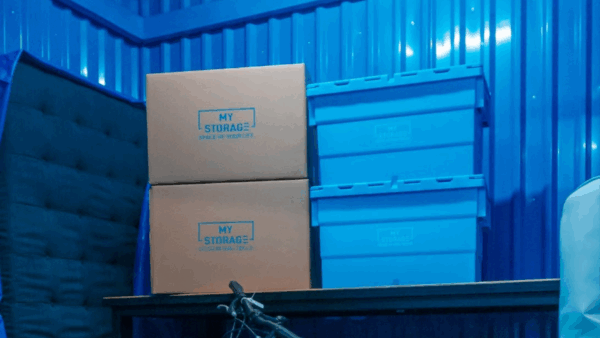
After selecting the right storage unit size, proper packing becomes your next cost-saving strategy. Smart packing techniques can reduce the space needed by up to 30%, potentially allowing you to rent a smaller, less expensive unit.
Use uniform boxes for easy stacking
Investing in storage containers of consistent sizes creates stable, efficient stacks that maximize your unit’s vertical space.
Plastic bins with lids offer superior protection compared to cardboard boxes, particularly in non-climate-controlled environments. Although slightly more expensive upfront, clear plastic containers allow you to see contents without opening boxes, saving time when retrieving items .
For heavy items like books or files, choose smaller containers to prevent excessive weight. This consideration not only protects your back when lifting but also prevents box collapse in stacked arrangements.
Label everything clearly
Proper labeling transforms a chaotic storage unit into an organized system. Label each box with both its contents and which room it belongs to (e.g., “Kitchen – Seasonal Items” or “Living Room – Decorative Pillows”).
Notably, maintaining a digital inventory on your phone provides instant access to your storage contents without visiting the unit, primarily useful for long-term storage.
Disassemble furniture to save space
Taking furniture apart before storage drastically reduces its footprint. Tables without legs, beds without frames, and shelving units in pieces occupy substantially less space.
Essential steps for furniture disassembly include:
- Empty all drawers and remove detachable components first
- Take photos before disassembly as visual references for later reassembly
- Place screws, bolts and hardware in labeled ziplock bags
- Tape hardware bags to corresponding furniture pieces
Large furniture pieces stored intact can waste valuable space, as these items typically contain significant “dead air” that could be filled with boxes. Essentially, disassembled furniture not only takes up less space but also allows for more efficient stacking in your storage unit.
By implementing these packing techniques collectively, you can maximize every cubic foot of your storage unit, potentially downsizing to a smaller unit and reducing your monthly costs.
Cut Costs with Smarter Choices
Saving on storage is all about smart decisions. – Compare prices and ask for deals: Always research multiple warehouse facilities, request quotes, and use them as leverage to negotiate—many providers offer hidden promotions, online discounts, or are willing to match competitors.
- Use standard units for non-sensitive items: Climate-controlled units cost 25–40% more, so reserve them only for items like electronics, photos, or wooden furniture; less delicate belongings such as tools or decorations can safely go into standard units.
- Share a unit with a friend or family member: Splitting a larger unit reduces individual costs, provides moving-day support, and may even unlock group discounts.
- Look for off-peak discounts: Rates often drop between September and March, with added promotions like a free first month or lower long-term rates, especially if you check for online codes.
Protect Your Belongings Without Overpaying
Many renters and homeowners are unaware that their existing insurance policies typically extend to items kept in self storage facilities. Most homeowners insurance policies include “off-premises” coverage that protects your belongings even when they’re not in your home. This coverage typically extends to items in storage units, albeit with certain limitations.
The protection is typically capped at approximately 10% of your policy’s personal property coverage limit. For instance, if your policy includes $25,000 in personal property coverage, you might have up to $2,500 of coverage for belongings in storage.
Prior to purchasing additional storage insurance, request a copy of your insurance declarations page and thoroughly review what’s covered. Some policies protect against specific perils including:
- Fire and lightning damage
- Theft (with evidence of forced entry)
- Vandalism
Nonetheless, be aware that certain valuables may have limited coverage under standard policies. Items such as jewelry, collectibles, and expensive electronics often require additional protection.
Choosing the right mini storage means weighing price against your real needs. Costs vary by size, location, features, and contract terms—units in central districts or with extras like climate control naturally cost more.
Focus on what matters most: business owners gain flexibility for inventory, city residents free up living space, and travelers keep belongings secure. Always visit facilities to check security, cleanliness, and accessibility, and review contracts carefully for hidden fees or limits.
With Vietnam’s growing cities and e-commerce boom, smart storage choices give you more than space—they give you peace of mind and real value.