Author: Danh Phan

  • Safe Luggage & Suitcase Storage in HCMC: Flexible Storage Solutions for Travelers

    Safe Luggage & Suitcase Storage in HCMC: Flexible Storage Solutions for Travelers

    If you need to store your suitcases for a few hours, a few days, or long-term in Ho Chi Minh City, solutions such as smart lockers, self-storage units, or professional luggage storage services will help you move around more conveniently without carrying bulky bags. This is an ideal choice for tourists, business travelers, international students, or those waiting for hotel check-ins.

    When Do You Need to Store Your Suitcases or Luggage?

    The need for luggage storage arises in various situations, ranging from a few hours between flights to several months during study abroad or long-term business trips. Anticipating these scenarios helps travelers prepare the right storage solutions instead of rushing to find one on the spot.

    Early Check-out and Late Check-in

    Most hotels and serviced apartments require check-out before 12 PM and check-in after 2–3 PM. The 2–6 hour gap between these times is the most common situation where travelers need to store their luggage. Dragging suitcases around for sightseeing or dining is not a comfortable option, especially with bulky bags or in hot weather.

    Some hotels offer free luggage storage, but they don’t always have space or guarantee security. Hourly luggage storage services at central locations provide a more proactive solution that doesn’t depend on the specific policies of each accommodation.

    Waiting for Flights, Trains, or Buses

    A flight departing in the evening or at midnight while having to check out in the morning creates an 8–12 hour free window that travelers don’t want to spend sitting at the airport with all their luggage. The same applies to those traveling by train or bus with inconvenient departure times. Storing luggage at a central city location allows you to make the most of your remaining time to explore, shop, or meet up without being hindered by heavy suitcases.

    Transiting in Ho Chi Minh City

    Travelers on layovers or stopping in Ho Chi Minh City during long journeys often have 6–24 hours in the city before their next trip. Instead of staying at the airport or booking a hotel room just to have a place for suitcases, storing luggage at the airport or using hourly storage services makes exploring the city during transit much easier. This is a common situation for travelers from other provinces coming to HCMC before heading to the airport or international passengers with long connecting flights.

    tủ locker chứa đồ, vali, hành lý du lịch ở khách sạn

    Short-Term Business Trips

    People on 1–3 day business trips usually carry just enough luggage but still need a place to store it during meetings, factory tours, or partner visits. Bringing a suitcase into a meeting room or leaving it in a taxi all day is not a professional choice. Storing luggage at a storage point near the work area allows for smoother movement and creates a more professional impression during business meetings.

    Studying Abroad or Long-Term Assignments

    International students returning home for summer break or individuals finishing long-term work contracts often have a large amount of luggage that they don’t want to transport entirely back home or don’t yet have fixed accommodation for at their next destination. Paying for 5–10 kg of excess baggage on a flight is often much more expensive than storing it in a warehouse for 1–2 months. Self-storage with flexible monthly contracts is a more economical solution for this group, especially for those whose travel schedules are not yet fixed during their initial return.

    Situation Storage duration Suitable solution
    Early check-out, late check-in 2–8 hours Hourly lockers or daily luggage storage services
    Waiting for evening flight 4–12 hours Hourly lockers in the city center
    Transit in HCMC 6–24 hours Daily luggage storage services near the center
    Short-term business trip A few hours during work Hourly lockers near office areas
    Studying abroad/summer break 1–3 months Self-storage with flexible monthly terms
    Long-term assignment ends 1–6 months Self-storage with flexible contracts

    Where to Store Suitcases in Ho Chi Minh City?

    Ho Chi Minh City currently offers three main luggage storage options depending on time and needs: hourly lockers for short-term daily needs, self-storage for multiple suitcases requiring flexible access, and long-term storage for international students and business travelers working far from home.

    Hourly Lockers

    Hourly lockers are the fastest and most convenient solution for travelers needing to store luggage for a few hours between two daily activities, requiring no prior booking and paying based on actual usage time.

    Time package Suitable for Reference cost
    1 hour Quick errands, lunch, short meetings Lowest among packages
    2 hours Visiting one site, short work session at a cafe More economical than twice the 1-hour package
    4 hours Half-day city exploration, morning or afternoon Suitable for short transits
    Full day Waiting for evening flight, making the most of the last day in the city Most optimal for long days

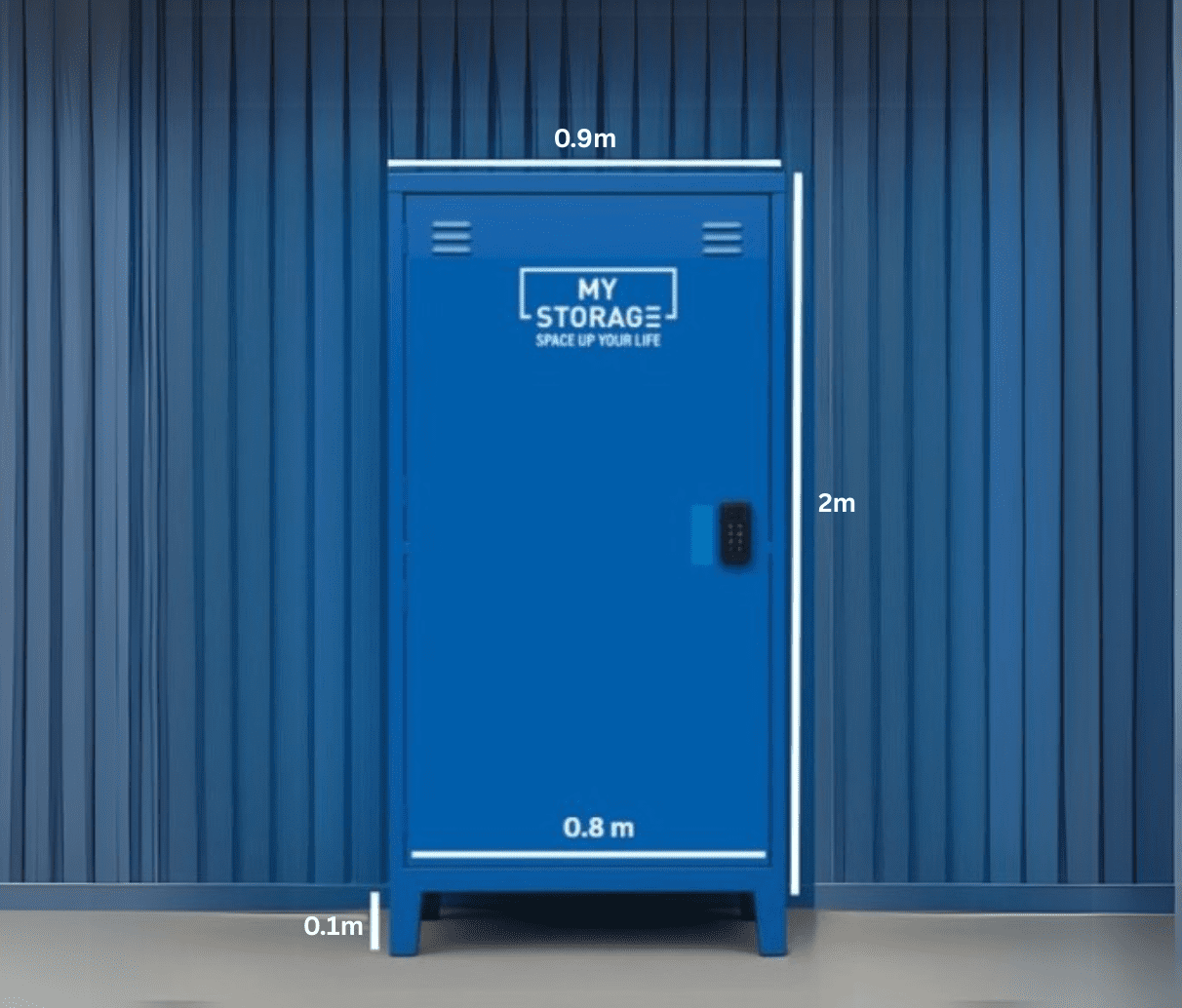
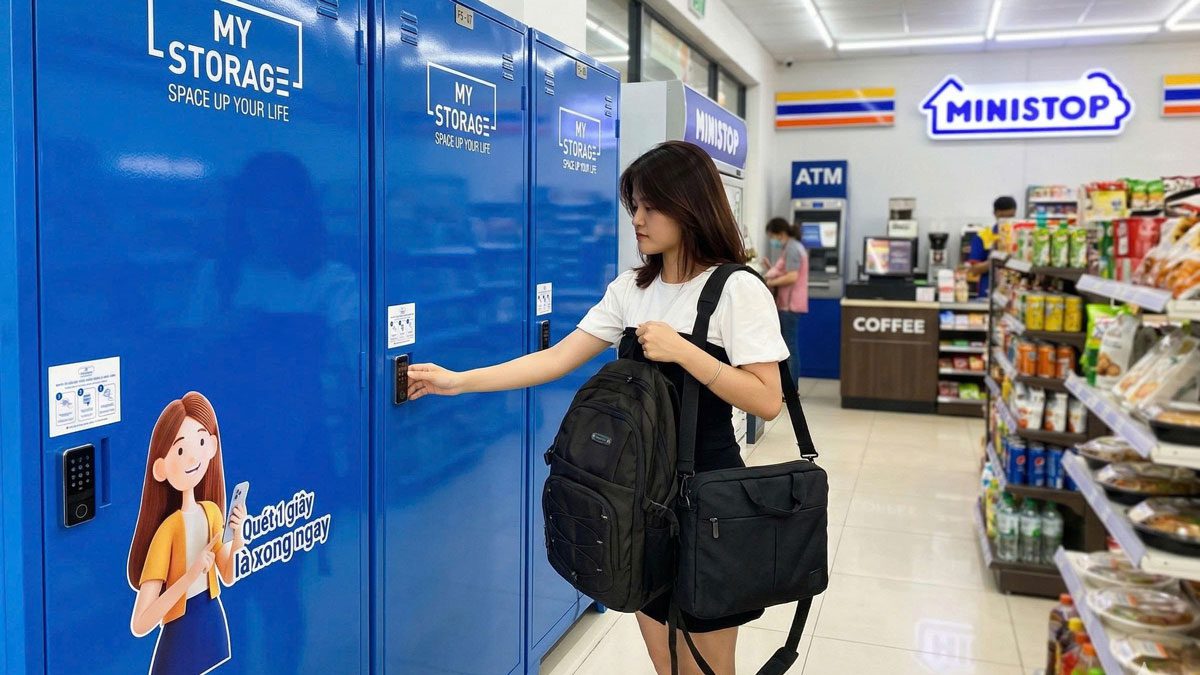
    MyStorage lockers are currently located at Ministop Tran Trong Cung, District 7, open from early morning until late at night following convenience store hours. Users select the appropriate locker size, pay via the touch screen, and receive an unlock code immediately without needing to contact staff.

    Storage locker at ministop 6

    Self-Storage

    Self-storage is ideal when you need to store multiple suitcases at once or store items for several days to months with flexible 24/7 access.

    Standard lockers usually only fit one small suitcase or a backpack. When your luggage includes 3–5 suitcases plus cardboard boxes and personal items—common for international students returning home or professionals finishing a work contract—a 2–5 m² self-storage unit is a more practical solution. 24/7 access via a personal PIN allows you to retrieve or add items at any time without depending on staff working hours.

    Advantages Details
    Large capacity 2–5 m² units hold 3–8 suitcases plus cardboard boxes
    Flexible access 24/7 via PIN code, no prior booking required
    Monthly rental Start and end anytime, no long-term commitment
    Enhanced security 24/7 cameras, individual unit locks, only the owner has access

    Long-Term Storage

    International students, expats, and people moving house need long-term luggage and belongings storage solutions with monthly costs significantly lower than paying excess baggage fees or renting an extra room just for storage.

    Target Audience Storage Duration Common Items Benefits vs. Alternatives
    Students returning home for summer 2–4 months 3–5 suitcases, book boxes, personal items 60–80% cheaper than paying round-trip excess baggage fees
    Professionals finishing overseas contracts 1–6 months Large suitcases, boxes accumulated during the assignment No need to ship everything home without a permanent residence
    People moving house 1–3 months All or part of belongings during the transition No need to rush selling or discarding items; move step-by-step
    People waiting for a new home 2–6 months Furniture, appliances, suitcases, and personal boxes Avoid staying in hotels with all your luggage during the wait

    No single solution fits every situation. If you need storage for a few hours, use a locker; if you have multiple suitcases, use self-storage; and if you need to store items for a month or more, long-term storage is more cost-effective. MyStorage offers all three solutions in HCMC.

    How Much Does Luggage Storage Cost?

    Luggage storage costs in HCMC depend on three factors: storage duration, luggage size, and service type. Hourly storage is suitable for daily needs, while monthly storage is more economical for long-term requirements.

    Hourly Lockers — Reference Price List

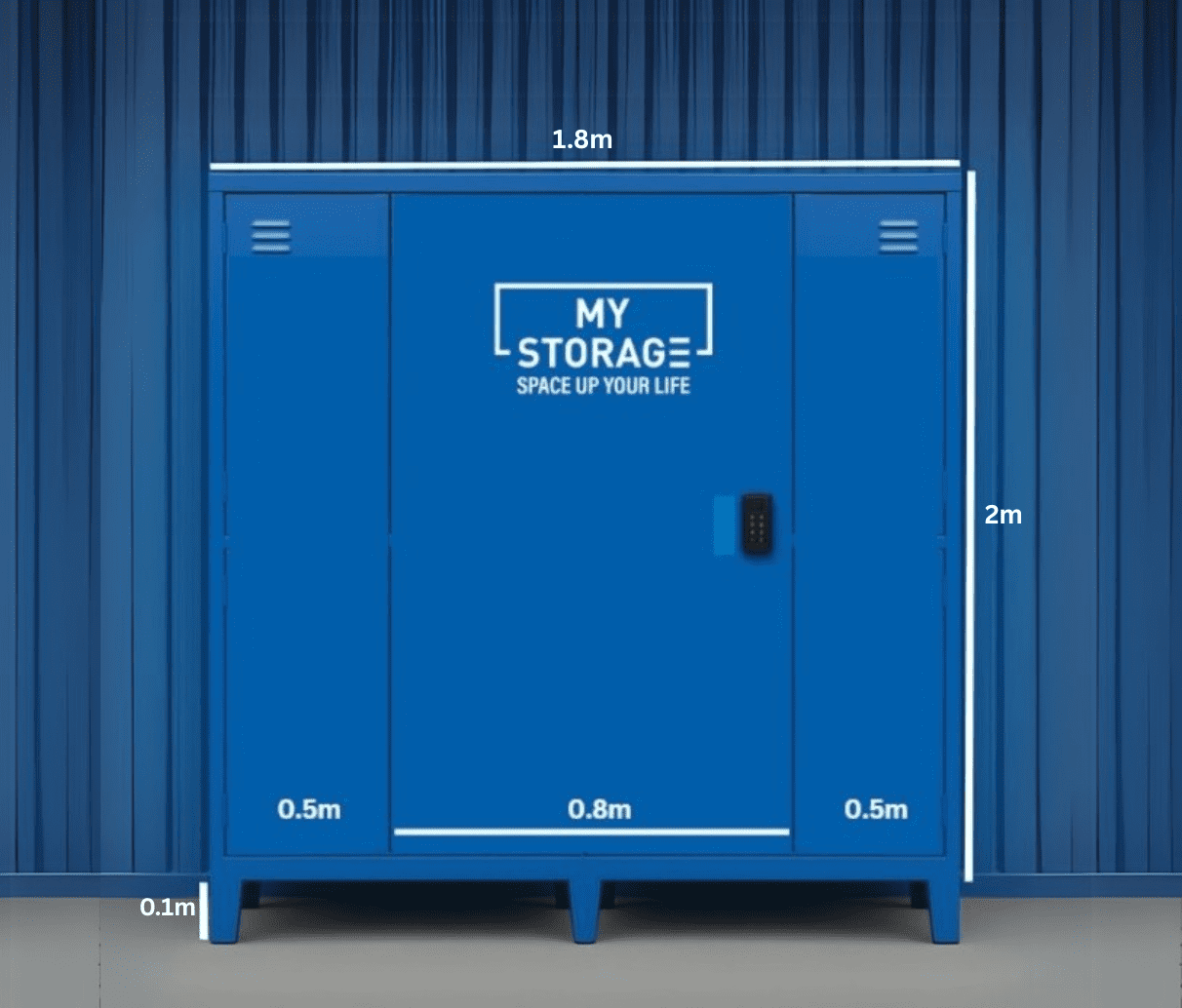
    Time Package Small Size (1 CBM) Large Size (2 CBM)
    1 hour 50,000 VND 70,000 VND
    2 hours 70,000 VND 90,000 VND
    4 hours 100,000 VND 130,000 VND
    Full day (8–12 hours) 150,000 VND 200,000 VND

    MyStorage lockers are currently located at Ministop Tran Trong Tung, District 7, with prices starting from only 54,000 VND/hour. Pay directly and receive your unlock code instantly.

    Self-Storage — For Multiple Suitcases or Longer Storage

    Duration Suitable Area Reference Cost Capacity
    Weekly 1–2 m² Contact MyStorage 2–3 suitcases plus backpacks
    Monthly 1–2 m² From 300,000–600,000 VND 3–5 suitcases and small boxes
    Monthly 3–5 m² From 700,000–1,400,000 VND 5–10 suitcases plus cardboard boxes
    Long-term 3–6 months 2–5 m² Contact for promotional rates

    Entire student or business luggage

    self storage for luggage storage by hour and day

    Cost Comparison Based on Actual Needs

    Scenario Solution Estimated Cost
    Waiting 4 hours between check-out and check-in 4-hour locker Lowest
    Making the most of the day before an evening flight Full-day locker Average
    International student storing 4 suitcases for 3 summer months 2 m² storage for 3 months 900,000–1,800,000 VND in total
    Home mover storing items for 2 months 5 m² storage for 2 months 1,400,000–2,800,000 VND in total
    Paying for 10 kg excess baggage round-trip Airline rates 1,000,000–3,000,000 VND per trip

    For a detailed price list based on size and storage duration, please contact us directly for a consultation on the package that best fits your specific needs.

    Items You Can Store Along With Your Suitcases

    Luggage storage services are not limited to just suitcases. Many customers take advantage of the same storage unit or locker to store additional personal items, making travel lighter and saving costs compared to renting separate spaces for each item type.

    # Specific Examples Storage Notes Suitable for Locker or Storage Unit
    Clothing Storage Garment bags, jackets, office wear for evening events Pack in sealed bags to avoid dust; items that need to stay flat should be hung or folded carefully Locker for a few outfits, storage unit for multiple bags
    Footwear Sneakers, dress shoes, sandals, boots Place in separate cloth or plastic bags to prevent dirt transfer; wet shoes must be dried before storage Locker for 1–2 pairs, storage unit for more
    Sports Equipment Storage Gym bags, rolled yoga mats, small workout gear, helmets Used workout gear must be dry before storage; helmets should be placed correctly to avoid deformation 2 CBM locker or mini storage unit
    Document & File Storage Contracts, business documents, legal files, catalogs Store in waterproof bags or hard boxes to prevent wrinkling and moisture; avoid direct contact with the floor Mini storage unit with humidity control
    Electronics Storage Laptops, tablets, cameras, headphones, chargers, and cables Store in shockproof bags, avoid stacking heavy objects on top; storage units should maintain humidity below 65% RH Mini storage unit with security cameras
    Travel Gear Neck pillows, airplane blankets, swimwear, beach gear, photography accessories Swimwear and blankets must be completely dry to avoid mold; small items should be kept together in a labeled bag Full-day locker or short-term storage unit

    A simple rule for storing items with your suitcases: daily essentials go in hourly lockers, while items needing overnight or multi-day storage should be moved to self-storage units for better space and preservation conditions.

    FAQ

    Where is the most convenient place to store luggage by the hour in Ho Chi Minh City?

    MyStorage has hourly lockers at Ministop Tran Trong Cung, District 7, open from early morning to late evening. Payment is made directly on the touchscreen and an access code is received instantly, with no advance booking or staff contact required.

    What should I do if the hotel does not offer luggage storage?

    Use an hourly locker or self-storage facility near the accommodation. MyStorage lockers in District 7 are a suitable option for travellers needing 2–8 hours of storage without depending on individual hotel policies.

    Can luggage be stored overnight in a locker?

    Hourly lockers typically offer a full-day package of up to 8–12 hours. For overnight or multi-day storage, monthly self-storage is a more suitable option with lower cost per day and more space for multiple pieces of luggage simultaneously.

    Where should international students store their luggage when returning home for summer?

    Monthly self-storage is the most cost-effective option. A 2–3 m² unit holds 4–6 suitcases and personal boxes at 300,000–700,000 VND per month, significantly cheaper than paying two-way excess baggage fees when flying home and back.

    Is it safe to store laptops and electronics alongside luggage?

    Safe if the facility has 24/7 cameras, individual PIN locks, and humidity control below 65% RH. Electronics should be stored in padded bags with nothing heavy placed on top. Avoid storing electronic devices in outdoor lockers without temperature control.

    How much does monthly luggage storage cost at MyStorage?

    A 1–2 m² unit suitable for 3–5 suitcases ranges from 300,000–600,000 VND per month. A 3–5 m² unit holding 5–10 suitcases plus cartons runs 700,000–1,400,000 VND monthly. Month-to-month rental with no long-term commitment and flexible cancellation at any time.

    Can people in the process of moving home store suitcases and belongings in storage?

    Yes. Self-storage is a common solution during home moves when the old apartment has been vacated but the new one is not yet available. Renting a unit for 1–3 months allows a phased move without rushing to sell or discard valuable items.

    What size suitcases fit in 1 CBM and 2 CBM lockers?

    A 1 CBM locker suits a 20-inch cabin bag, large backpack, or oversized tote. A 2 CBM locker fits a 24–28 inch check-in suitcase or a cabin bag combined with a gym bag and backpack. Measure luggage dimensions before selecting a package to avoid sizing issues.

    Can luggage be stored together with sports equipment in a locker?

    Yes, if the total volume fits the selected locker size. Sports items like helmets, gym bags, and shoes should be packed compactly before placing in the locker alongside luggage. Choose a 2 CBM locker when storing both a suitcase and a full gym bag together.

    Should short-term business travellers rent a mini storage unit?

    Yes if the business trip lasts 3–7 days and dragging luggage to every meeting or client visit is impractical. A small 1–2 m² self-storage unit with 24/7 access allows retrieval early in the morning before meetings and return late at night after work without being limited by business hours.

  • The Ultimate Secure Warehouse Storage for Rent in HCMC (Saigon)

    The Ultimate Secure Warehouse Storage for Rent in HCMC (Saigon)

    As urban living spaces in Saigon become increasingly limited, more people are turning to secure and convenient storage solutions. MyStorage is emerging as a top choice, offering over 266 storage units in a prime location near Rach Chiec Station—ideal for residents seeking extra secure warehouse storage space.

    When considering a storage rental service, key factors like location, security, and pricing play a major role. Additionally, understanding the difference between self-storage and shared storage will help you make the right choice. This blog post will explore both options offered by MyStorage, helping you determine which best suits your needs when choosing warehouse for rent in Ho Chi Minh City.

    Mystorage opens new facility at An Phu Sports Park, District 2, HCMC. Register now to enjoy discount 50% for first storage month.

    Get In Touch

    Limited spots available for the grand opening.


    DD slash MM slash YYYY


    Understanding Self-Storage and Its Advantages

    Understanding Self-Storage and Its Advantages

    Self-storage at MyStorage provides individuals and businesses with private, secure storage spaces they can manage independently—perfect for those who need flexible, on-demand access to their belongings.

    Key Features of MyStorage Self-Storage Units:

    • Full control: Manage and organize your items as you wish.

    • Flexible sizes: Choose from 2 to 16 cubic meters.

    • Top-notch security: 24/7 surveillance, dedicated security, and smart locking systems.

    • Optimal conditions: Clean, ventilated environments with temperature control.

    Self-storage gives you round-the-clock access—ideal for frequent retrieval or storing valuable personal items.

    Benefits of Self-Storage:

    • Cost-effective: Much cheaper than renting larger homes or office spaces.

    • Flexible rental periods: Daily, monthly, or yearly plans available.

    • Private access: Only you have the key.

    • Support services: Packing and moving assistance if needed.

    Shared Storage Solutions for Businesses

    Shared Storage Solutions for Businesses

    Shared storage, a key option for warehouse for rent in Ho Chi Minh City, is designed for businesses that prefer not to invest in private warehouse infrastructure.

    Advantages of Shared Storage at MyStorage

    • Modern infrastructure: Built to handle various storage needs.

    • Efficient inventory tracking: Barcode-based management system.

    • Strict safety standards: Fire safety and security compliance.

    • Transport equipment: Modern carts and forklifts available.

    • Pay only for the space you use—perfect for growing companies without worrying about maintenance or facility management.

    • No upfront investment: Avoid capital expenditure on warehouse construction or leasing.

    • Simplified processes: Quick, hassle-free admin procedures.

    • Scalable: Adjust space based on your actual business needs.

    • Professional management: Experienced team ensures safety and efficiency.

    With a 93% occupancy rate, demand for warehouse for rent in Ho Chi Minh City —especially shared options—is booming.

    Comparing Self-Storage vs. Shared Storage

    Criteria Self-Storage Shared Storage
    Control Full autonomy Limited, per shared rules
    Investment Cost Low—rental only No capital investment required
    Usage Flexibility Daily/monthly/yearly Per rental agreement
    Security Private locks, 24/7 CCTV Centralized security systems
    Storage Conditions Customizable Standardized
    Expandability Limited Easily scalable
    Access 24/7 access Business hours or agreed schedule
    Best For Individuals, households, small businesses Medium to large businesses

    Choosing the Right Storage Type

    Choosing the Right Storage Type

    For Individuals and Families:

    Self-storage is best if you need private access, wish to organize things your way, or are storing high-value personal items. MyStorage offers units from 2 to 16 cubic meters to fit all personal storage needs.

    For Businesses:

    • SMEs: Shared storage helps reduce costs and simplifies expansion.

    • Large Enterprises: Opt for self-storage for full control, high security, and managing proprietary inventory.

    Why MyStorage Stands Out for Warehouse for rent in Ho Chi Minh City (Saigon Storage)

    cho thuê kho để đồ tp hcm

    MyStorage is a pioneer in modern storage rental, leading the market in warehouse for rent in Ho Chi Minh City (Saigon) with premium facilities, robust security, and professional customer service. Whether you’re an individual looking to declutter or a business managing inventory, MyStorage offers flexible, reliable, and cost-effective storage solutions tailored to your needs.

    For Individuals Storage

    • Free up living space by storing infrequently used items

    • Safeguard valuables in secure, climate-controlled units

    • Temporary storage while moving to simplify relocations

    • Store seasonal items like decorations, sports gear, or luggage

    For Businesses Storage

    • Maximize office space and improve workplace efficiency

    • Efficient inventory control with tracking and reporting options

    • Scalable storage solutions that grow with your business

    • Lower operational costs compared to traditional warehousing

    Premium Facilities & Security

    • A/C storage system maintaining stable temperatures (20–25°C) and humidity (45–50%) for optimal product preservation

    • Three-layer security system including:

      • 24/7 guarded facilities

      • Fingerprint access

      • Individual keys for self-storage customers

    • Shared shelf management: MyStorage staff oversee inventory for shared-space customers

    • Clean, dust-free infrastructure with:

      • Daily cleaning

      • Fire prevention systems (gas spray, water pipes, centralized alarms)

      • Monthly pest control

    • Heavy-duty floors with excellent load-bearing and anti-sinking design

    • Durable container warehouses built from rust-resistant materials, equipped with ventilation and natural lighting

    cho thuê kho để đồ tp hcm

    Convenient Locations

    Strategically located in District 2, Thu Duc, and Dong Nai, MyStorage facilities provide easy access for both individuals and business customers across Ho Chi Minh City (Saigon).

    Flexible Storage Sizes & Terms

    • Four facilities with a total area of up to 1,500m²

    • Options from 1m³ mini storage (fits 6–8 storage boxes) to hundreds of cubic meters for bulk goods like high-end furniture

    • Flexible rental periods — from short-term storage to long-term business contracts

    Additional Services

    • Climate control for sensitive goods like electronics, documents & file folder storage or artwork

    • Transport support with carts, trolleys, clean trucks, and vans

    • Packing stations equipped for safe handling and packaging

    • Free Wi-Fi & workspace for on-site inventory management

    • B2B fulfillment & logistics services, including:

      • Forklifts and loading support

      • Barcode-based document management systems

      • Inventory tracking and reporting

    Quick & Simple Rental Process

    1. Needs Assessment: Personalized consultation based on your storage goals

    2. Select Unit Size: Choose the ideal size to match your items and budget

    3. Contract & Payment: Simple, transparent agreements with flexible payment options

    4. Access & Use: Immediate entry with your personal security credentials

    Professional Management Team

    MyStorage’s experienced staff specialize in organization, logistics, and warehouse operations, ensuring your goods storage are handled safely, efficiently, and professionally.

    FAQs

    1. What can I store? Most personal and business items except flammables, perishables, and illegal goods.

    2. How to choose the right unit size? Use MyStorage’s online estimator or ask a consultant.

    3. When can I access my storage? Self-storage is 24/7. Shared storage depends on business hours.

    4. Is insurance included? Optional plans available; you may use your own insurance too.

    5. Minimum rental period? Usually one month, with weekly options available in special cases.

    MyStorage is committed to helping you optimize your space and safeguard your possessions for Warehouse for Rent in Ho Chi Minh City (Saigon). Whether you’re an individual or a business, our flexible storage solutions cater to your unique needs—combining affordability, security, and convenience in one place.

    Contact MyStorage today for a free consultation and exclusive offers for new customers!

  • Full-Service Moving Tips – Compare With DIY Moving

    Full-Service Moving Tips – Compare With DIY Moving

    A new home should be a source of excitement, not stress. Professional full-service moving make this challenging transition smooth and manageable. A full-service moving package offers comprehensive solutions, including expert planning, packing, and safe transport. These full-service moving services help you save precious time. They also minimize the risk of injuries and property damage that frequently occur during self-moves.

    This article will guide you through the essentials of a stress-free move. You’ll learn about the benefits of professional moving services and get preparation tips to keep your relocation on track.

    Why Moving Can Be Overwhelming Without Help

    Moving house is ranked among life’s most stressful events, and for good reason. The complex process of moving requires meticulous planning and flawless execution to ensure a smooth transition.

    • Time-Consuming Planning and Packing: DIY moves quickly become overwhelming. Packing alone can take several days to a week, while professionals finish in hours. Planning adds more stress—checklists, address changes, utility transfers, and paperwork can take weeks. Rushed timelines often lead to poor decisions and extra stress. Sorting belongings early helps ease the process.
    • Physical Strain and Risk of Damage: Without professionals, moving becomes physically exhausting and risky. Common DIY injuries include back strains, sprains, and shoulder issues that can mean missed workdays. Belongings also face higher risks of damage—scratched floors, broken furniture, or wall dents—all adding repair costs.

    5 cách tốt nhất để giảm căng thẳng khi chuyển nhà

    • Unexpected Costs and Delays: Many assume DIY saves money, but hidden costs pile up. Truck rentals, fuel, tolls, equipment, and packing supplies quickly exceed expectations. Local moves average 43M VND, long-distance up to 122M VND. Add storage fees and delays from paperwork or property chains, and DIY often ends up pricier. Professional movers offer predictable pricing and smoother timelines.

    The benefits of hiring a moving service vs. DIY house moving

    When it’s time to move, one of the biggest decisions you’ll face is whether to hire professional movers or handle the process yourself. While DIY house moving might seem like a cost-effective option, there are several factors to consider before making your decision. Let’s compare the benefits of hiring a moving service versus going the DIY route to help you decide what’s best for your situation.

    Hiring a Moving Service vs. DIY House Moving

    Factor Hiring a Moving Service DIY House Moving
    Convenience & Efficiency Movers handle packing, disassembly, loading, and unloading with expertise. Saves time and effort so you can focus on other tasks. You manage everything—from renting trucks to packing and lifting. Relies on friends/family, which may be unreliable.
    Cost Considerations Higher upfront cost but includes packing supplies, skilled labor, insurance, and fixed timelines. Can save money by avoiding damage and delays. Seems cheaper at first but hidden costs (truck, fuel, packing materials, damages, lost workdays) often add up.
    Safety & Risk Management Movers use proper tools and techniques to safely handle heavy/fragile items. Insurance coverage protects your belongings. Higher risk of injuries and damages without training/equipment. No insurance—any damage is your responsibility.
    Stress Reduction Reduces stress by managing logistics, heavy lifting, and transport. Provides peace of mind. Overwhelming and exhausting, especially under time pressure or unexpected problems.
    Customization & Flexibility Flexible packages: full-service (packing/unpacking) or partial services (transport only). Tailored to budget and needs. Full control but full responsibility for every detail, which can be daunting alongside work or family duties.
    Overall Best for convenience, safety, and peace of mind. Best if your main priority is minimizing upfront costs and you’re prepared for extra effort.

    Top Benefits of Using a Full-Service Moving Company

    Professional moving services have become the preferred choice for those wanting a seamless relocation experience. A comprehensive full-service moving package offers numerous advantages that solve common moving challenges. Here are the key benefits these services provide.

    Long-term storage solution for furniture and equipment

    Save Time and Energy

    Moving takes up a significant amount of time if you do it yourself. Professional movers make the process much faster. Their experts can complete packing tasks in hours that would take a homeowner days or weeks. They achieve this speed through time-tested systems that coordinate transportation, plan packing sequences, and prepare for potential obstacles.

    Full-service movers handle all the complex logistics of the move. This allows you to focus on other crucial moving tasks, such as:

    • Setting up utilities at your new home
    • Notifying important contacts of your address change
    • Acclimating to your new surroundings
    • Maintaining your work schedule

    Studies show that 30% of homeowners worry about the safety of their belongings during a move. The time savings extend beyond the physical move—you won’t spend hours researching packing methods or searching for the right materials.

    Protect Your Belongings with Expert Packing

    Professional movers use proven packing techniques that significantly reduce the risk of damage during transit. They select the best packing materials for each item, from delicate artwork to heavy furniture, ensuring everything travels safely.

    Full-service moving companies have specialized methods for different items:

    • Custom crating for antiques, artwork, and irregularly shaped items
    • Special padding for fragile items
    • Proper techniques for electronics and appliances
    • Smart loading arrangements in the truck to prevent shifting

    These companies also provide extra security through insurance options. Most reputable companies offer detailed transit coverage against loss or damage. This helps you relax, especially when moving valuable items or relocating over a long distance.

    About 60% of local movers operate within county lines. This gives them excellent knowledge of local routes and area-specific challenges. Their local expertise helps prevent transportation issues.

    Seasonal items stored in a clean, secure self-storage unit

    Avoid Hidden Costs with Clear Pricing

    Reliable moving services are distinguished by their transparent pricing. DIY moves often end up costing more than expected, but professional movers provide detailed quotes upfront.

    The best companies offer written binding or not-to-exceed estimates. This guarantees that your final cost will not go over the original quote. You won’t face the surprise fees that often appear in self-managed moves.

    Full-service movers include many items in their pricing that become extra costs in a DIY move:

    • High-quality packing materials
    • Specialized equipment for moving heavy items
    • Appropriate insurance coverage
    • Professional labor
    • Fuel and transportation expenses

    At first glance, professional movers may seem more expensive than DIY options. However, full-service moving often saves money in the long run. You avoid common unexpected costs like replacing damaged items, paying medical bills from moving injuries, or emergency storage fees.

    Many companies also offer all-in-one packages that cover every aspect of your move for a single price. This makes it easier to budget and plan your relocation finances accurately.

    Step-by-Step Breakdown of a Stress-Free Move

    A clear understanding of the stages of a professional moving service helps you set realistic expectations and prepare for a smooth relocation. Let’s dive into the step-by-step process of working with a full-service moving company.

    1. Initial Consultation and Survey

    The foundation of a successful move begins with a comprehensive initial consultation. A Customer Success Manager will contact you personally after you reach out to a moving company to discuss your relocation needs. This consultation is not just a formality—it’s an opportunity for the company to understand your unique requirements and priorities.

    Reputable movers offer options for both in-person and virtual surveys. The surveyor will:

    • Document file storage items for shipment during a room-by-room walkthrough
    • Identify potential access issues or items requiring special handling
    • Advise you on prohibited items that cannot be shipped due to customs regulations
    • Discuss timeline options for your move

    The survey typically takes 30 to 60 minutes, depending on the size of your home and your belongings.

    Self-storage facility with easy truck loading access

    2. Transparent Quotation and Planning

    You will receive a detailed written quote within 48 hours of the survey. Quality moving companies provide clear quotations that break down all costs, including:

    • Basic moving services
    • Packing materials and labor
    • Special handling for fragile items
    • Insurance options
    • Any additional services you request

    Modern companies now offer tools that allow you to compare different moving quotes side-by-side, showing what each quote includes or excludes. This clarity helps you avoid the hidden fees often associated with DIY moves.

    3. Packing and Loading by Professionals

    Professional packers use specialized techniques and high-quality packaging materials to keep your belongings safe. They work quickly, completing in hours what would take homeowners days.

    Your fragile or valuable items receive extra protection:

    • Corrugated cardboard corners protect furniture
    • Bubble wrap and specialty boxes safeguard delicate items
    • Custom crating shields artwork or antiques

    The loading process follows strategic principles. Professionals place heavy items at the bottom of the truck and use straps to prevent shifting during transit. This careful approach significantly reduces the risk of damage.

    Secure fencing and gated entrance at storage warehouse

    4. Safe Transportation to Your New Home

    The moving team secures everything properly before transport. Professional drivers know how to handle moving trucks safely and understand their unique driving requirements.

    You can track your shipment’s progress through services that many companies now offer. This visibility provides peace of mind during transportation.

    5. Unpacking and Setup (Optional)

    Upon arrival at your new home, the moving team will place your belongings in the correct rooms according to your instructions. With unpacking services, they will:

    • Position and unwrap furniture storage
    • Unpack boxes methodically
    • Set up key areas first (bedrooms, bathrooms, kitchen)
    • Remove all packing materials

    Some companies offer “first night” services. They make beds, set up coffee makers, and arrange essentials so you can enjoy your first night comfortably in your new home.

    This comprehensive full-service moving approach turns a weeks-long task into an efficient, professionally managed process.

    What to Look for in a Reliable Moving Service

    Choosing the right moving service requires you to consider several important factors. These critical elements will help you distinguish truly reliable professionals from those who merely claim to be.

    Experience and Customer Reviews

    A moving company’s time in business says a lot about its reliability. Companies that have been operating for more than 5 years have typically refined their processes through countless relocations. Their experience gives them the skills to handle unexpected challenges like delays, difficult access points, or last-minute changes.

    Customer reviews tell the real story of a company’s performance. You should look beyond website testimonials, as companies may cherry-pick them. Independent review platforms offer unfiltered feedback on customer service, punctuality, packing quality, and damage prevention. The overall ratio of good to bad reviews is more important than a few negative comments.

    Modern self-storage with fire safety equipment installed

    Quality of Packing Materials

    Professional full-service moving services use specialized packing materials that offer maximum protection. Quality movers use sturdy boxes, bubble wrap, and professional-grade packing paper instead of newspaper or used boxes. These materials significantly reduce the risk of breakage during transit.

    Reliable companies bring all their own equipment without borrowing anything or leaving a mess behind. You should ask about their specialty materials for fragile items before hiring them.

    Availability of Insurance and Guarantees

    Trustworthy movers offer detailed written guarantees to protect your belongings. They clearly explain insurance coverage and provide different valuation options to suit your needs. This protection offers financial security if something goes wrong during the move.

    The contract should include all details about fees and coverage limits in writing. Quality movers pride themselves on being transparent about how they resolve disputes.

    Multilingual Support and Communication

    International relocations require multilingual support. Professional moving services with multilingual staff can assist with customs documentation and maintain communication throughout the process. Their support prevents misunderstandings and ensures they clearly understand your requirements.

    Good communication demonstrates a company’s commitment to customer service. Reliable movers maintain regular contact from your first meeting through delivery and keep you updated on your shipment’s status.

    Tips to Prepare for a Smooth Moving Day

    Your personal preparation will contribute to a smooth relocation, regardless of which professional moving service you choose. These proactive steps, combined with professional help, will make your moving day far less stressful.

    Declutter Before the Move

    A smart move starts with decluttering before you pack. Moving companies often calculate their prices based on volume. You’ll save money by getting rid of items you don’t need. Start decluttering at least eight weeks before your move date. Focus on one to two rooms each weekend.

    Sort everything into three piles: keep, donate, and recycle/trash. Pack donation bags with items that are still in good condition but you no longer use. This step is especially vital if you are staging a home for sale. A clean, simple space helps buyers imagine themselves living there.

    Label Boxes Clearly

    Good labeling will transform your unpacking from chaos to order. Mark both the top AND sides of each box with the room name and a summary of its contents. This way, you can see the labels no matter how the boxes are stacked.

    A color-coded system optimizes the process—use a different color for each room (e.g., red for the bedroom, blue for the bathroom). Many professional organizers also suggest creating a master list. Number your boxes and list their contents, which helps in tracking valuable items.

    Keep Essentials in a Separate Bag

    Pack a “moving day survival kit” with everything you’ll need right away:

    • Toiletries, medications, and first-aid supplies
    • A change of clothes and pajamas
    • Important documents and valuables
    • Simple kitchen essentials (kettle, mugs, utensils)
    • Phone chargers and essential electronics

    Take this kit with you instead of putting it on the moving truck. Families with young children should pack comfort items like favorite toys and books to help with the transition.

    Notify Utilities and Update Your Address

    Call utility providers at least 48 hours before you move out to arrange service transfers. Record meter readings when you leave and when you arrive to avoid paying for someone else’s usage. You should also inform these organizations of your new address:

    • Government services (electoral register, DMV, tax authorities)
    • Financial institutions (banks, credit cards, insurance)
    • Healthcare providers
    • Subscription services

    Note that postal services typically offer mail forwarding for up to one year after you move.

    Final Thoughts on Making Your Move Stress-Free

    Moving is one of life’s toughest transitions, but a professional full-service moving package can make it far easier. While DIY moves may seem cheaper, hidden costs, time lost, and risks often outweigh the savings. Professional movers bring expertise in packing, transparent pricing, and protection for your valuables—delivering real value and peace of mind.

    No matter your choice, preparation is key: start decluttering, label boxes, and keep essentials handy. When selecting a moving company, focus on proven experience, customer feedback, quality materials, and strong insurance options—not just flashy ads.

    Moving should feel like a new beginning, not a burden. By choosing professionals, you gain convenience, safety, and confidence. Ultimately, investing in a reliable moving service ensures a smoother, less stressful transition—something your future self will thank you for.

  • How to Save Money with Self-Managed Air-Conditioned Storage

    How to Save Money with Self-Managed Air-Conditioned Storage

    Understanding the price of air-conditioned storage is a vital part of the solution. As Vietnam’s warehouse rental market grows, businesses are switching to flexible storage solutions that protect their inventory.

    In this piece, you’ll learn to save money while you retain control over your inventory through self-managed air-conditioned storage. These practical tips will help optimize your operations and boost customer satisfaction if you run an e-commerce business or need to store climate-sensitive products like electronics, cosmetics, documents, or fine art.

    Understand What Self-Managed Air-Conditioned Storage Is

    Self‑managed air‑conditioned storage is a modern alternative to traditional warehousing. These compact, modular units provide temperature and humidity control to protect climate‑sensitive goods while allowing users to manage their own storage space.

    How It Differs from Traditional Storage

    • Quick deployment: Pre‑built storage units can be operational within 1–3 days, without complex foundations or lengthy permit processes.
    • Lower investment: Eliminates major construction costs while maintaining high preservation quality.
    • Energy efficiency: Advanced insulation and modern cooling systems use less energy, reducing operating expenses.
    • Mobility: Container or trailer designs can be easily relocated for business expansion or relocation.
    • Simple control: Each unit comes with a private lock and surveillance camera, giving users autonomy with technical support when needed.

    Understand What Self-Managed Air-Conditioned Storage Is

    Who should think about using it

    Self-managed air-conditioned storage solutions work best for several key groups:

    • E-commerce businesses storage: Online retailers selling electronics, cosmetics, or other high-value goods can protect their inventory from heat and humidity damage.
    • Collectors and Hobbyists: These units provide a stable environment for storing wine, art, antiques, and important documents.
    • Businesses with Archives: Companies can preserve critical paper, file, folder documents storage and media from deterioration.
    • Healthcare facilities: Pharmacies and medical offices can store non-refrigerated medications and sensitive equipment storage in a controlled environment.
    • Homeowners: Individuals in humid climates can protect valuable furniture, clothing, and electronics from mold and heat damage.

    The defining feature of self-managed air-conditioned storage lies in its control. Customers often receive “a standard and secure storage unit with a private lock system and an external surveillance camera”. This setup allows self-management and supervision while accessing support services when needed.

    This balanced approach combines independence with support—perfect for operations that need specialized climate control without the resources for a full-scale controlled facility.

    Step-by-Step: How to Save Money with Air-Conditioned Storage

    Running your own air‑conditioned storage can be cost‑efficient if you plan carefully. Here’s how to reduce expenses while protecting your inventory.

    Step 1: Estimate Your Real Storage Needs

    • Measure the total volume of goods that require climate control warehouse.
    • Add about 25% extra space to allow airflow and easy access.
    • Consider seasonal changes and stock fluctuations to avoid overpaying for unused capacity.

    Step 2: Choose the Right Unit Size and Temperature

    • Select a storage unit that fits your needs—smaller for personal or small‑business use, larger for industrial products.
    • Maintain a consistent temperature—typically 15°C to 25°C with controlled humidity.
    • Avoid oversized units that waste money cooling empty space.

    Step-by-Step: How to Save Money with Air-Conditioned Storage

    Step 3: Compare Providers and Pricing

    • Request quotes from multiple suppliers for similar unit types and features.
    • Compare short‑term and long‑term rental options; short leases (1–2 months) are great for seasonal storage.
    • Use quotes to negotiate better prices or service bundles.

    Step 4: Choose Long‑Term Contracts for Better Rates

    • Most providers offer discounts and promotions for longer agreements.
    • Extended contracts simplify budgeting and protect against future price increases.

    Step 5: Save Energy by Using Off‑Peak Hours

    • Electricity costs rise during peak hours.
    • Schedule cooling and maintenance tasks during off‑peak times to lower your energy bill.
    • Keep equipment well‑maintained for maximum efficiency.

    Following these five steps helps you optimize space, minimize energy costs, and maintain product quality—ensuring your air‑conditioned storage works efficiently and profitably.

    Types of Air-Conditioned Storage and Their Use Cases

    Type Description Advantages Limitations Best for
    Shared Climate ‑ Controlled Storage A shared facility where several businesses rent space within one climate‑controlled building. Each tenant gets a designated section. – Lower rental costs

    – Professional climate management

    – Minimal setup required

    – Limited access control

    – Less privacy

    – Possible scheduling conflicts

    Small businesses or startups wanting affordable climate protection
    Private Air ‑ Conditioned Units Individually controlled storage units offering full personal access, private locks, and external surveillance. – Full control over environment

    – Enhanced security and privacy

    – Flexible layout options

    – Higher cost than shared storage

    – User responsible for maintenance and monitoring

    Companies handling sensitive or high‑value goods; collectors and professionals needing independence
    Advanced Climate ‑ Controlled Units High‑precision units with automated temperature, humidity, and dustproof systems, plus remote monitoring. – Extreme stability and consistency

    – Real‑time environmental tracking

    – Ideal for delicate or technical products

    – Higher purchase or rental price

    – May require technical setup

    Laboratories, art galleries, medical and electronic storage
    E‑Commerce  Focused Air ‑ Conditioned Storage Modular, quickly deployable units tailored to online retail operations; adaptable to changing inventory volumes. – Fast installation (1–3 days)

    – Scalable design

    – Adjustable climate settings

    – May have limited total capacity for large operations

    – Needs careful inventory planning

    Online retailers (electronics, cosmetics, pharmaceuticals) needing flexible storage

    Cost Breakdown and Hidden Fees to Watch Out For

    Budget-friendly storage starts with understanding the financial aspects of renting an air-conditioned unit. Let’s get into what you actually pay for.

    Monthly rental vs. pay-per-use

    Pricing follows two main models. Monthly rental storage contracts provide stability and often come with discounts for long-term commitments. Flexible contracts can range from one day to a full year.

    Pay-per-use models base their charges on actual storage time. This works great for businesses that deal with seasonal inventory changes because you can adjust your storage needs without extra costs.

    Electricity and maintenance charges

    Operating costs make up much of your total expenses. Electricity to run the A/C and dehumidifier is the top ongoing expense. You should also budget for yearly maintenance, which typically runs about 2% to 3% of the total equipment cost. This covers regular servicing and repairs.

    Access and security service fees

    Providers include basic security in their standard pricing, but extra services usually cost more. Unit delivery and setup costs will vary based on your location’s accessibility.

    Facilities may offer extra services for additional fees:

    • Forklift and cart rental for moving goods
    • Loading/unloading assistance
    • Inventory management systems

    The transparency of fee structures varies. Your best bet is to choose companies that state “no hidden charges” in their contracts to avoid surprise expenses.

    Cost Breakdown and Hidden Fees to Watch Out For

    Tips to Maximize Efficiency and Reduce Waste

    Your air-conditioned storage needs more than just the right equipment. Smart organization and regular maintenance will streamline operations.

    Organize inventory for faster access

    A good inventory system ensures you can find items quickly and rotate stock if necessary.

    • Label all shelves and boxes clearly.
    • Keep similar items together so you can find them easily.
    • Track your inventory with simple software or apps.
    • Use clear containers to see what’s inside and how much you have left.

    Use stackable containers to save space

    Your unit can hold more without getting bigger if you stack things vertically. Good organization is key. A cluttered space blocks airflow, making the cooling system less effective. Aim to use around 60% to 70% of the total capacity to ensure good circulation. Mobile shelving systems on rails can help eliminate dead space while keeping every item accessible.

    Monitor temperature and humidity regularly

    Changes in climate can damage your products. Your team should check and log the temperature and humidity levels daily. These checks help spot problems before they cause damage. Modern systems that track data continuously are even better and can alert you remotely if conditions go outside your set range. Place sensors throughout the unit to catch any trouble spots.

    Self-managed air-conditioned storage is changing the game for businesses and individuals who need climate control but face space or budget limitations. This piece explored how these flexible storage units bring major benefits compared to traditional storage options. Their modular design, quick setup, and adaptable operations make them a practical choice.

    Think about both today’s requirements and tomorrow’s growth when making your choice. The right air-conditioned storage solution gives you the perfect mix of affordability and space while keeping you in control. Your climate-sensitive products stay protected, and your business stays profitable.

  • What Nobody Tells You About Setting Up a Document Storage System

    What Nobody Tells You About Setting Up a Document Storage System

    What Nobody Tells You About Setting Up a Document Storage System

    Businesses of all sizes need document storage more than ever as paperwork volumes keep growing. Our experience shows how expanding operations make document preservation a significant task that organizations find challenging.

    Document storage services have become popular with businesses because of their many advantages. These systems boost security and organization, and users can quickly find information through keyword searches and well-laid-out directory systems. A properly implemented storage system for archived documents acts as a single source of truth and dramatically improves document management.

    But creating an effective document storage system needs more than just filing papers or saving digital copies. We’ll explore everything in building a document storage system that handles both physical needs—proper temperature, humidity controls, and security measures—and digital requirements to retrieve files quickly, maintain compliance, and prevent unauthorized access.

    Understanding the Core Purpose of Document Storage

    A reliable document management system does more than just store files—it serves several vital purposes for organizations of all sizes. Good document storage creates order from chaos and turns information into a valuable business asset.

    Why businesses need structured storage

    Today’s businesses handle massive amounts of information, making organized document management essential. Companies without proper systems face major operational challenges that hurt their profits.

    Financial protection and compliance are pioneering reasons for document storage needs. Companies must follow both industry-specific and general legal requirements for keeping documents. A detailed document storage plan helps businesses stay compliant with these rules and avoid fines and legal issues. To name just one example, GDPR violations can lead to fines of up to €20 million or 4% of a business’s worldwide annual turnover, whichever is higher.

    Cost reduction makes a compelling case for structured document storage. Poor document handling creates hidden expenses. Staff members spend roughly 18 minutes looking for a single document. One study shows misfiling costs companies around VND 3,049,780 per document. Lost documents can cost up to VND 5,591,263 per sheet to recreate.

    Space optimization matters more as companies expand. Office space comes at a premium for most organizations. Physical documents take up about 15% of total office space. Office space in major American cities costs between VND 584,541 and VND 1,906,112 per square foot monthly. This makes document storage a major expense that proper management can reduce.

    Enhanced security plays a crucial role in today’s threat landscape. Cyberattacks happen every 39 seconds, with financial losses reaching VND 20,026,888,921 per hour. Modern document storage systems use access controls, encryption, and audit trails to protect sensitive information.

    Improved productivity comes naturally with structured storage. Office workers spend up to 4.5 hours weekly searching for documents. On top of that, 47% of digital workers struggle to find needed documents, while 36% miss important information due to data overload. Centralized document organization dramatically cuts this wasted time.

    Lưu trữ hồ sơ tài liệu an toàn - MyStorage

    Archived documents: what needs to be preserved

    Documents need different levels of preservation. Knowing which archived documents to keep and for how long forms the basis of effective document management.

    Business-critical documents that need long-term preservation include:

    • Financial records (minimum 7 years)
    • Tax documents (3-7 years)
    • Entity documents (permanently)
    • Insurance policies (for the duration of coverage)
    • Employment tax records (4 years)
    • Operational records (at least 7 years)

    Sensitive information that needs secure preservation includes customer data, employee records, intellectual property, contracts, and marketing and promotional materials. These categories need more than storage—they require proper classification, access controls, and secure disposal.

    Experts suggest your document retention policy should clearly define what counts as a “business record.” Some U.S. states follow the Uniform Preservation of Private Business Records Act, which recommends keeping records for at least three years when specific retention periods don’t apply.

    Document preservation doesn’t mean keeping everything forever. Good document storage identifies what you can safely destroy when it’s no longer needed. State and federal laws require companies to dispose of personal information once it has served its purpose.

    Vietnamese businesses must consider both physical and digital storage methods for document archive management. This process covers collection, classification, retention period setting, storage, usage tracking, monitoring, and disposing of unnecessary documents.

    A clear understanding of preservation needs and timeframes creates the foundation for effective document storage. Businesses that lack this clarity risk legal problems from keeping too little or face unnecessary costs and security risks from keeping too much.

    Lưu trữ hồ sơ tài liệu an toàn - MyStorage

    Designing a Storage System That Actually Works

    You need careful planning and smart decisions to build a good document storage system. The right setup will save you time and money while keeping your documents safe and easy to find throughout their lifecycle.

    Choosing between on-site and cloud storage

    Your first big choice in document storage is where to keep your archived documents. This choice will affect everything from your costs to how easily you can access your files.

    On-premises storage means keeping documents in your organization’s building or servers. You get full control over your data and security this way. Your team can access files offline without needing internet access. This setup might even lower your internet costs since you won’t need super-fast connections just to reach your files.

    However, on-site systems need a big investment upfront in hardware, software, and infrastructure. As your storage needs grow, you’ll have to add new hardware, increase memory, and boost computing power. This takes money, work, expertise, and time. Your IT team also has to maintain everything, handle updates, and watch over security.

    Lưu trữ hồ sơ tài liệu an toàn - MyStorage

    Cloud-based storage puts your document management on external servers that you access through web browsers. You can set it up quickly without buying lots of equipment. Instead of paying everything upfront, you’ll usually have monthly fees based on how many users you have and how much storage you need.

    Cloud storage really shines when it comes to growing your system—you can adjust your resources with just a few clicks. Cloud services also keep your data backed up in different locations, which gives you better protection if something goes wrong.

    The biggest drawback is that you need internet access—no connection means no documents. There’s another reason some organizations hesitate: they worry about letting others store their data.

    Many businesses get the best results with a hybrid approach. They keep sensitive or frequently used documents on-site while storing archives and shared files in the cloud. This gives them flexibility while they retain control of their important information.

    Lưu trữ đám mây là gì? Những tiện ích mà lưu trữ đám mây mang lại

    Planning for access and retrieval

    The way you organize your storage system determines how quickly people can find and use documents.

    Here’s what to consider when designing your system:

    • Choose between centralized and decentralized storage structures. A central repository makes organization, search, and security simpler but can create bottlenecks. Decentralized systems offer flexibility but make document management more complex.
    • Create logical folder structures and naming conventions that make sense to your organization. This helps people find documents easily as your system grows.

    Good planning prevents workers from wasting the typical 18 minutes looking for a single document. Cloud solutions are great here, especially when you have features like live updates across devices and remote access.

    Environmental controls for physical storage

    Physical archived documents need specific conditions to stay preserved. A well-controlled environment slows down damage that builds up over time.

    Temperature and humidity are crucial. Paper records do best at temperatures between 18-22°C (65-72°F) with relative humidity between 40-55%. Magnetic media needs long-term storage below 18°C and 40% relative humidity, while very long-term storage needs even lower levels.

    Air quality plays a big role in preserving documents. Storage areas must stay clean, dust-free, and have filtered air. Good ventilation stops harmful compounds like nitrogen oxide, ozone, formaldehyde, and sulfur dioxide from building up.

    Light exposure makes media deteriorate faster, mainly because of ultraviolet rays. You should either use lights without UV or filter it out, and keep overall light levels low.

    Organizations track these conditions using various tools, from basic humidity strips and thermometers to advanced data loggers that constantly record environmental measurements.

    A well-planned system that covers these three areas will protect your organization’s important information and keep it accessible when needed.

    Meeting Legal and Compliance Requirements

    Legal compliance serves as the life-blood of any successful document storage system. Your organization could face hefty penalties and legal exposure if regulatory requirements don’t get proper attention, even with sophisticated storage solutions.

    Retention schedules and audit readiness

    A records retention schedule works as the life-blood of a functional document management program. Your organization’s legal and compliance recordkeeping requirements define how long documents need to stay—no more, no less. Companies can boost resource use, manage document growth, and lower litigation risks by implementing a complete retention schedule.

    Setting the right retention periods needs careful analysis of industry-specific regulations. While no single retention rule fits all records, most business documents must follow requirements from several federal agencies. These requirements state:

    • Tax documents (3-7 years)
    • Employment records (typically 4-7 years)
    • Financial statements (minimum 7 years)
    • Entity formation documents (permanently)

    Organizations in eight U.S. states can follow the Uniform Preservation of Private Business Records Act (UPPBRA) for records without specific legislation. UPPBRA suggests keeping records for at least three years.

    Audit readiness goes beyond just storing documents—you need to keep them in a state that shows ongoing compliance. An audit-ready document system has standardized naming rules, detailed access logs, and regular reviews. Version control and permission settings help manage document lifecycles well and alleviate non-compliance risks.

    Data privacy and access logs

    Data privacy rules add another layer of complexity to document storage in today’s regulatory world. We focused mainly on understanding data types, storage locations, and the consequences of mishandling.

    GDPR can hit businesses with fines up to 4% of annual global turnover or €20 million (whichever is higher) for non-compliance. Understanding and using proper privacy controls isn’t just good practice—it helps preserve your finances.

    Access logs are vital in demonstrating compliance with privacy regulations. A good audit trail for document sharing should track:

    • User identity (who accessed the document)
    • Document identification (what was accessed)
    • Precise timestamp (when access occurred)
    • Actions performed (view, download, print)
    • Access status (successful or failed)

    Yes, it is true that GDPR’s Accountability principle demands proof of compliance, not just compliance itself. Regular email or simple cloud storage don’t provide enough logging details. This makes specialized document management systems crucial for organizations that handle sensitive information.

    Kho tự quản, cho thuê kho mini - MyStorage

    Relevant local and international standards

    International standards provide frameworks for compliant document management. For instance, ISO 15489 sets minimum requirements for keeping documents authentic, intact, and readable. ISO/TS 18759:2022 details functional requirements for storage systems that protect electronic information throughout its lifecycle.

    Document management is at the heart of many ISO standards, including ISO 9001 (quality management) and ISO 14001 (environmental management). Furthermore, it focuses on information security management through ISO 27001, ensuring proper protection for confidential records.

    Industry-specific regulations like HIPAA (healthcare), SOX (financial), and GDPR (data protection) impose their own document management rules beyond ISO frameworks. Whatever the industry, these standards champion continuous improvement through regular reviews and updates that align with amendments or organizational changes.

    Organizations using document storage systems must consider both physical and digital compliance. Physical archived documents need secure facilities with limited access, while digital document systems need robust features like automated retention schedules, complete audit trails, and strict access controls.

    Organizations can reshape the scene by tackling these legal and compliance requirements systematically. What looks like red tape can become a strategic advantage that reduces risks and improves operations.

    Essential Equipment and Tools You’ll Need

    You need the right equipment and tools to set up a functional document storage system. The right physical and digital components create the foundation of a lasting document management system.

    Shelving, boxes, and labeling systems

    A resilient physical storage system protects your archived documents from damage while keeping them accessible. Standard open shelving works well for active documents and gives quick access at about $150-$400 per unit. Mobile shelving systems can boost storage capacity by 50% by eliminating fixed aisles, though they cost $1,000-$1,500 per unit.

    Archival-quality storage boxes are great for long-term protection against environmental threats. These acid-free containers stop paper documents from yellowing and breaking down. Prices range from $3-$20 based on size and quality. Metal cabinets provide better protection against fire and water damage but cost more, at $300-$800 per unit.

    A good labeling system helps you find documents quickly. Barcode systems make it easy to identify and track items, with setup costs between $500-$3,000 depending on the scale. Color-coding creates visual cues that cut retrieval time by up to 40%. Clear naming rules help staff find documents even as team members change.

    Space planning matters before you set up physical storage. Office space costs between $15-$50 per square foot annually, which makes economical storage systems a worthwhile investment.

    Document scanners and OCR tools

    You’ll need specialized equipment to turn physical documents into digital files. Simple desktop scanners ($200-$500) handle the basics at 15-30 pages per minute. Departmental scanners ($1,000-$3,000) work faster at 45-60 pages per minute and can hold 50-100 sheets. Production scanners ($5,000-$30,000) process 100+ pages per minute with better paper handling.

    Optical Character Recognition (OCR) turns scanned images into searchable text. Simple OCR software is 85-95% accurate with standard documents. Advanced solutions reach 98%+ accuracy using machine learning that gets better over time. Single OCR licenses cost $100-$500, but most modern document systems include OCR.

    Here are the key scanner features to assess:

    • Duplex scanning (simultaneous two-sided processing)
    • Resolution capabilities (300-600 DPI is sufficient for document storage)
    • Paper handling (very important for different document sizes and conditions)
    • Connectivity options (USB, network, wireless)

    Your scanner choice should align with your document volume and type. Desktop models work well for teams handling under 500 pages weekly. Organizations processing 1,000+ pages daily need production-level equipment.

    Document management software (DMS)

    Modern archived document systems need software that organizes, secures, and shares documents. Cloud DMS solutions cost $15-$50 per user monthly with little upfront cost. On-premises systems require an initial license of $5,000-$25,000 plus annual maintenance at 15-20%.

    A good DMS needs version control to prevent overwrites, access controls to limit document visibility, and audit trails to track usage. The system can also automate workflows and route documents through approvals, which saves 20-30% in processing time.

    The way DMS connects with other systems affects how well it works. Smooth connections to email, CRM, and ERP platforms prevent information silos from forming. Setup and customization usually cost 2-3 times more than the software itself.

    User adoption makes or breaks a DMS. Systems with accessible interfaces see 40-60% higher adoption rates than complex ones. The core team should test potential systems before buying to ensure they fit your needs.

    Your equipment choice should balance current budget limits against future benefits. Quality tools provide returns through better efficiency, fewer errors, and stronger compliance.

    Best Practices for Long-Term Maintenance

    Your document storage system needs proper maintenance just like its initial setup. Your archived documents need constant care to stay preserved and accessible over time.

    Routine inspections and pest control

    Document preservation depends on regular checks of the storage area. Dust creates one of the biggest risks to paper documents. Storage areas contain dust particles that are 80% long fibers from paper, cotton, and wool. These particles harm materials directly and raise moisture levels, which allows microorganisms to grow.

    Your documents and premises need careful inspection twice a year to control pests. Watch for signs like dead insects, larvae skins, cocoons, holes in document bindings, and brown, powder-like residue on shelves. The storage areas should be food-free. Windows need protective nets. Keep flowers out of storage rooms and clean the facility regularly.

    Fire safety and humidity control

    Paper records can catch fire easily, so complete fire protection is a must. Archives face high fire risks because they hold very dry and often irreplaceable materials. The best protection combines active systems that trigger with smoke/fire and passive systems that create physical barriers.

    The right temperature and humidity levels help documents last longer. Paper documents do best at 18-22°C (65-72°F) with 45-60% relative humidity. When these levels change, paper can dry out, curl, grow mold, or lose its color. You should install proper climate control equipment and check conditions regularly with hygrometers and thermometers.

    Regular backups and system updates

    Digital archives need consistent backups to protect against data loss, corruption, and unauthorized access. Start with a well-laid-out backup schedule. Back up critical data daily and use regular incremental backups for better efficiency. Cloud storage helps with access and redundancy since providers keep data in multiple places.

    Keep your backups offsite to protect against fires or floods. You can use cloud services or move backup media to secure locations away from your main site. Software solutions with automated scheduling and live backups reduce human error.

    Test your data recovery processes regularly, especially after system upgrades. This ensures everything works together properly. A complete maintenance plan with all these practices will protect your document storage system for years.

    Training Your Team for Success

    The best document storage system will fail if employees don’t receive proper training. People need constant attention to maintain consistent document handling practices, unlike hardware or software systems.

    Creating SOPs for document handling

    Standard Operating Procedures (SOPs) give clear guidance to manage archived documents throughout their lifecycle. Good SOPs provide step-by-step instructions to create, store, retrieve, and dispose of documents. These procedures help maintain consistency between departments and reduce errors.

    Here’s what you need to develop document management SOPs:

    • Clear document control policies with specific guidelines for creation, storage, and sharing.
    • Detailed procedures to organize, retrieve, and manage documents.
    • Specific roles and responsibilities for each document lifecycle step.
    • Simple language and visual aids that illustrate complex procedures.

    Your SOPs need regular updates to reflect system changes and new regulatory requirements. This helps maintain compliance and makes operations more efficient.

    User roles and permission levels

    The right access controls protect sensitive information while enabling necessary collaboration. Document management systems typically support several permission types:

    • Administrators control the entire system. They manage categories and give permissions to other users.
    • Category managers oversee specific document categories.
    • Viewers can only see documents and complete assigned training in their authorized categories.

    Large organizations benefit from role-based permissions that control who can create, read, edit, or delete specific documents. This approach reduces security risks. Team members get exactly the access they need.

    Ongoing training and support

    The original training starts your document management education strategy. Your team needs continuous learning opportunities through refresher courses, advanced sessions, and updates about new features to use the system well.

    Good training helps teams work better as they learn to use advanced features like metadata tagging and automated workflows. Teams with proper training make fewer mistakes. They don’t misplace documents or overwrite important versions.

    Introducing Professional Document Storage Services at MyStorage

    Are you facing the challenges mentioned in this article – shrinking office space, concerns about document security, and the pressure to comply with storage regulations? MyStorage offers a professional, secure, and flexible document storage solution to help your business completely solve these problems.

    At MyStorage, we understand that your archived documents are more than just paper. They are intellectual property, legal records, and the operational history of your company. That’s why we provide:

    • Maximum Security: Our facilities are equipped with 24/7 surveillance cameras, a personal PIN code access control system, and on-site security staff, ensuring only you can access your documents.
    • Controlled Environment: Our storage units are always clean, dry, and climate-controlled, protecting your important documents from harmful factors like humidity, mold, and pests.
    • Flexibility and Savings: We offer various unit sizes to fit every need, from a few boxes of documents to an entire corporate archive. You only pay for the space you use, optimizing costs compared to expensive office rent.
    • Convenience: Easily access your storage unit whenever you need to. MyStorage helps you free up valuable office space to focus on your core business activities.

    Let MyStorage become your trusted partner in managing your archived documents. Contact us today for a consultation on the best storage solution for your business and to receive a special quote!

    Conclusion

    A successful document storage system needs detailed planning and careful execution. This piece explores how proper document storage does more than just filing papers away. Smart document management works as a strategic business asset that protects organizations from compliance problems and boosts operational efficiency.

    Financial matters play a key role in storage decisions. The right system cuts costs by reducing search time, preventing document loss, and making the best use of office space. On top of that, it helps you choose between on-premises, cloud-based, or hybrid storage options that affect your initial investment and running costs.

    Your physical documents need special care through environmental controls. Temperature, humidity, light exposure, and air quality greatly affect document life. Digital storage needs regular backups, system updates, and resilient security measures to keep your information safe.

    Every serious document management strategy must follow legal rules. Your retention schedules should match relevant regulations. Access controls and detailed audit trails show your dedication to data privacy standards.

    Quality equipment and tools build your system’s foundation. Good shelving, proper storage boxes, reliable scanners, and powerful management software create the framework you need to succeed. All the same, even the best system fails without proper staff oversight.

    Staff training deserves as much focus as technical setup. Clear procedures, defined user roles, and regular education help maintain consistent document handling across your organization.

    Document storage might look daunting at first, but a step-by-step approach makes it simple. Start with your specific needs, create good policies, pick the right tools, and train your team well. Your investment will pay off through better security, compliance, and efficiency over the next several years.