Category: Uncategorized

  • Logistics & Warehousing Associations in Vietnam and Internationally

    Logistics & Warehousing Associations in Vietnam and Internationally

    Logistics and warehousing associations play a crucial role in connecting businesses, standardizing operations, updating policies, and fostering the development of the logistics and warehousing industry in individual countries and regions.

    In Vietnam, associations such as VLA, VCCI, and FIATA Vietnam serve as reputable references for warehousing, transportation, and goods storage businesses. Globally, international logistics associations help businesses access global standards, technological trends, and cross-border partner networks.

    Definition of Logistics and Warehousing Associations

    A logistics and warehousing association is a non-profit professional organization comprising businesses, experts, and organizations operating in the fields of transportation, freight forwarding, warehouse leasing, and supply chain management.

    The core objectives of these associations are to protect the legitimate interests of their members, promote industry development by standardizing practices, and create a networking platform between businesses and the government or international markets.

    Role in the Supply Chain

    Joining a logistics and warehousing association brings direct benefits to businesses, especially in enhancing brand credibility and expanding B2B business opportunities. Businesses gain easier access to major clients, receive early updates on standards for warehouse safety, cargo insurance, and fire prevention and fighting (PCCC), and grasp market trends before they become widespread. These are crucial factors that help warehousing businesses operate sustainably and compete in the long term.

    These associations act as a “link,” connecting disparate components within the supply chain into a unified system:

    1. Representing the Voice of Businesses

    Associations serve as a bridge for policy feedback. When there are changes in tax laws, infrastructure fees, or import/export regulations, the association advocates on behalf of businesses, submitting recommendations to regulatory bodies to ensure a fair business environment and optimize costs.

    Các Loại Hình Thuê Kho Phổ Biến Tại Quận Tân Bình

    2. Standardize Warehouse Operations

    For the logistics industry to achieve high efficiency, synchronization is essential. Associations play a crucial role in establishing or disseminating technical standards such as:

    • Standard Pallet Dimensions.
    • Occupational Safety and Fire Prevention Procedures in Warehouses.
    • Application of Barcode Systems and Warehouse Management Technology (WMS).

    3. Connecting Policy – Legal – Market

    • Policy: Rapidly update businesses on new circulars and decrees.
    • Legal: Provide legal consultation support, resolve international trade disputes (e.g., Incoterms clauses).
    • Market: Organize forums and trade fairs for businesses to find partners and expand their global supply network.

    Distinguishing Types of Associations

    Despite significant overlap, associations are typically categorized based on their specialized scope of operations:

    Criteria Logistics Association Warehousing Association Transport – Integrated Supply Chain Association
    Focus Area Freight forwarding services, customs procedures, cargo coordination. Storage management, handling, distribution at warehouses and logistics centers. Encompasses the entire flow of goods from raw materials to end consumers.
    Key Function Optimizing goods flow. Optimizing space and goods preservation (Storage). Optimizing the entire system and end-to-end risk management.
    Member Profile Forwarding companies, customs agents, multimodal transport providers. Warehouse owners, businesses supplying lifting equipment, shelving. Manufacturing corporations, retailers, 3PL/4PL providers.

    Note: In Vietnam, VLA (Vietnam Logistics Business Association) is the leading organization covering most of the above aspects, while narrower specialized associations often focus on specific modes of transport (waterway, road).

    The Role of Logistics Associations for Warehousing Businesses

    Logistics associations act as both a “navigator” and a “shield,” helping warehousing businesses not only survive but also thrive sustainably in a fiercely competitive environment. Here are the specific benefits an association provides:

    1. Legal Support and Policy Updates

    Regulations concerning logistics and warehousing frequently change to align with international practices. Associations assist businesses by:

    • Rapid Updates: Timely grasp new decrees on land use planning, fire prevention and fighting (PCCC) standards, and customs procedures at bonded warehouses.
    • Protecting Interests: Represent businesses in challenging unreasonable policies, helping reduce administrative barriers and optimize compliance costs.

    2. Training and Professional Certification

    Human resources are a key factor in modern warehouse operations. Associations provide:

    • Standardized Programs: Training courses on Warehouse Management, dangerous goods safety, and specialized equipment operation.
    • Reputable Certifications: Issue internationally recognized professional certifications (such as FIATA, IATA), helping businesses affirm their capabilities and credibility with global clients.

    Thuê nhà kho chứa hàng tại quận bình tân

    3. Partner Connection and Network Expansion (Networking)

    The association fosters a multi-faceted connection ecosystem, helping to optimize warehouse capacity:

    • Warehouse Owners – Logistics Businesses: Collaborating to provide comprehensive (3PL/4PL) services to customers.
    • B2B Connections: Directly linking entities in need of warehouse space (manufacturers, retailers) with suitable warehousing businesses based on location and specific cargo requirements.

    4. Updating Trends and New Technologies

    To avoid falling behind, the association serves as a hub for knowledge transfer on pioneering trends:

    • Smart Warehousing & Automation: Introducing Robotic solutions (AMR/AGV), automated sorting systems, and Warehouse Management Software (WMS) to boost productivity by 200-300%.
    • ESG & Green Logistics: Guiding businesses in transitioning to sustainable warehousing (installing rooftop solar power, using recycled packaging, optimizing vehicle flows to reduce CO2 emissions).
    • Digital Transformation: Supporting the application of AI and Big Data for accurate demand forecasting and inventory management.

    Logistics & Warehousing Associations in Vietnam

    1. Vietnam Logistics Business Association (VLA)

    This is the leading national association, representing over 700 logistics businesses in Vietnam.

    • Scope of Operations: Nationwide, and an official member of international organizations such as FIATA and AFFA.
    • Membership: Includes 3PL, 4PL businesses, customs agents, transportation companies, and especially large-scale warehouse operators.
    • Role for Warehousing Businesses: VLA plays a crucial role in standardizing warehouse documentation and contributing to the development of national-level logistics hub master plans.

    2. Vietnam Chamber of Commerce and Industry (VCCI)

    VCCI is a national organization that gathers and represents the business community and business associations in Vietnam.

    • Policy & Legal Connections: VCCI is the strongest entity in protecting business interests against changes in legislation.
    • Role in Logistics: Supporting warehousing and logistics businesses with Certificate of Origin (C/O) procedures, and providing legal consultation for disputes in warehouse lease agreements and international shipping.

    3. FIATA Vietnam (Chapter/Representative)

    Although FIATA is an international organization, FIATA’s activities in Vietnam (often through VLA) bring tangible value:

    • International Linkages: Helping Vietnamese businesses access a network of agents in over 150 countries.
    • Operational Standards: Implementing specialized training programs like the FIATA Diploma, enabling warehouse personnel to master global standard cargo handling procedures.

    Các Hiệp Hội Logistics & Kho Bãi Tại Việt Nam Và Quốc Tế

    Reputable International Logistics & Warehousing Associations

    If you’re seeking the highest standards in supply chain management, these three organizations are indispensable:

    1. FIATA (International Federation of Freight Forwarders Associations)

    Dubbed the “Architect of Global Transport,” FIATA establishes common rules for the worldwide logistics industry.

    Scale: Represents approximately 40,000 logistics companies in over 150 countries.

    Key Feature: Renowned for its standardized documents, such as the FWR (FIATA Warehouse Receipt) – a warehouse receipt with high international legal validity.

    2. CSCMP (Council of Supply Chain Management Professionals)

    The world’s leading organization for supply chain research and education.

    Strength: Offers prestigious certifications like SCPro™, with a deep focus on strategic thinking in warehouse management and inventory optimization.

    Role: Serves as a hub for the latest reports on the global logistics landscape (Annual State of Logistics Report).

    3. IWLA (International Warehouse Logistics Association)

    This is the most specialized organization dedicated exclusively to the warehousing industry.

    • Specialization: Fully focused on third-party logistics (3PL) providers.
    • Safety & Operational Standards: IWLA establishes standards for food safety in warehouses, hazardous goods storage, and provides model warehouse lease agreements to mitigate risks for warehouse owners.

    Which Association Should Warehousing Businesses Join?

    Warehousing businesses should select an association based on their business model and operational scope. If operating primarily domestically, Vietnamese logistics and trade associations can help businesses stay updated on legal regulations, connect with B2B clients, and standardize operations. Conversely, businesses aiming for international expansion or working with FDI clients should consider joining global logistics associations to access international standards and cross-border partner networks.

    Type of Warehousing Business Actual Needs Recommended Association Priority Scope Key Benefits of Participation
    Self-operated warehouse business Stable operations, legal compliance, warehouse safety standards VLA, VCCI Domestic
    Storage warehouse rental unit Increase reputation, access corporate tenants VLA, VCCI, relevant industry associations Domestic
    • Access reputable B2B clients
    • Transparent warehouse standards & rental prices
    • Easily chosen by major partners
    Integrated logistics business Supply chain connectivity, network expansion VLA, FIATA Vietnam, FIATA Domestic + International
    • Connect with multinational logistics partners
    • Access international operational standards
    • Enhance competitive capability
    Mini warehouse – self-storage startup Build market trust, learn standard models VLA, logistics & warehousing community Domestic
    • Quickly learn warehouse industry best practices
    • Increase credibility with individual & SME customers
    • Reduce legal risks during expansion
    Warehouse business with international expansion plans Standardize according to global standards FIATA, IWLA, CSCMP International
    • Apply international warehouse standards
    • Attract FDI clients
    • Facilitate cross-border cooperation
    Warehouse business serving high-value goods Safety, insurance, strict standards Specialized logistics associations Domestic + International
    • Easily meet cargo insurance standards
    • Enhance warehouse safety levels
    • Increase trust among high-value customers

    Future Development Trends for Logistics & Warehousing Associations

    The 2026–2030 period marks a significant turning point as the logistics industry shifts strongly from relying solely on physical infrastructure scale to embracing knowledge and technology. According to Vietnam’s recently approved Logistics Services Development Strategy for 2025–2035, associations are guiding businesses along four main trends:

    1. Popularizing “Smart Warehouses”

    By 2026, warehouses will no longer be passive storage facilities but rather “smart coordination centers.”

    AS/RS Systems and Robots: Associations (such as VLA) are promoting the application of Automated Storage and Retrieval Systems (AS/RS) and Autonomous Mobile Robots (AMR/AGV). These systems help boost operational productivity by 200–300%.

    Dark Warehouses: The trend of fully automated 24/7 operations, requiring no light or direct human intervention, is being piloted by “major players” within the associations at national-level logistics centers.

    2. AI and Data in Goods Flow Management

    Artificial Intelligence (AI) has transitioned from experimental technology to a mandatory standard in Warehouse Management Systems (WMS).

    Predictive Analytics: AI enables businesses to shift from a “reactive” to a “proactive” stance by analyzing market data, weather, and consumer trends to accurately forecast storage demand, thereby reducing excess inventory by 20–30%.

    Super Employees: AI technology, combined with Augmented Reality (AR) glasses and smart wearables, empowers warehouse staff to make precise decisions on-site, optimizing picking routes within the warehouse.

    3. Green Logistics and ESG Implementation

    This is a “make-or-break” condition for Vietnamese warehousing businesses to participate in global supply chains.

    Net-Zero Goal: The national strategy aims for the logistics sector to significantly reduce emissions by 2030.

    Specific Actions:

    • Install rooftop solar panels for energy self-sufficiency.
    • Utilize electric forklifts and low-emission transport equipment.
    • Implement transparent ESG (Environmental – Social – Governance) reporting to attract contracts from demanding markets like Europe and the US.

    4. ASEAN Regional Association Linkages (AFFA & AFFA 2026)

    The connectivity among associations is no longer confined to national borders but extends across the entire region.

    AFFA Network: The ASEAN Federation of Forwarders Associations (AFFA) is actively promoting synchronized digital transformation among member states. This facilitates seamless cross-border goods data flow, reducing waiting times at customs checkpoints.

    Standardization of Digital Documents: Moving towards common platforms for electronic documents (e-AWB, e-BL) across the entire ASEAN bloc, which helps save administrative costs and enhance transparency.

    Indicator 2030 Target
    Contribution to GDP 6% – 8%
    Growth Rate 12% – 15%/year
    Percentage of Businesses Undergoing Digital Transformation 80%
    Logistics Costs/GDP Reduced to 12% – 15%
    Global LPI Ranking Among the top 40 leading countries

    FAQ

    Why should businesses join a logistics association?

    Joining an association helps businesses protect their legal rights, stay updated on the latest policies, participate in specialized training, and expand their global partner network

    Which is the largest logistics association in Vietnam currently?

    The Vietnam Logistics Business Association (VLA) is the leading organization representing the voice of Vietnam’s logistics industry internationally.

    Do associations provide training for warehouse personnel?

    Yes. Associations like VLA or FIATA regularly organize training courses for international certifications in warehouse management, operational safety, and digital transformation.

    What is a FIATA certification and why is it important?

    This is a globally recognized logistics professional certification. It proves that personnel and businesses meet international standards for operational processes and documentation.

    Can Small and Medium Enterprises (SMEs) join these associations?

    Absolutely. Associations often offer flexible membership tiers and special support programs to help SMEs access technology and larger markets

    How do logistics associations help in implementing ESG?

    Associations provide “Green Logistics” standards, guiding businesses in solar power installation, route optimization to reduce emissions, and sustainability reporting

    How can I check if a company is a member of an association?

    You can search directly in the Member Directory on the official websites of associations such as VLA, FIATA, or VCCI

    How does the IWLA differ from general logistics associations?

    IWLA focuses specifically on third-party warehousing (3PL), storage safety standards, and handling techniques, rather than general transportation

    Does the association resolve disputes between warehouse owners and tenants?

    The association acts as a mediator and provides legal advice based on industry codes of conduct and standard contract templates.

    What are the digital transformation trends for associations in 2026?

    Focusing on implementing electronic documents (e-Docs), cloud data connectivity among members, and applying AI in regional supply chain forecasting.
  • How to Calculate Warehouse Size Using AI – Choose the Right Storage Space

    How to Calculate Warehouse Size Using AI – Choose the Right Storage Space

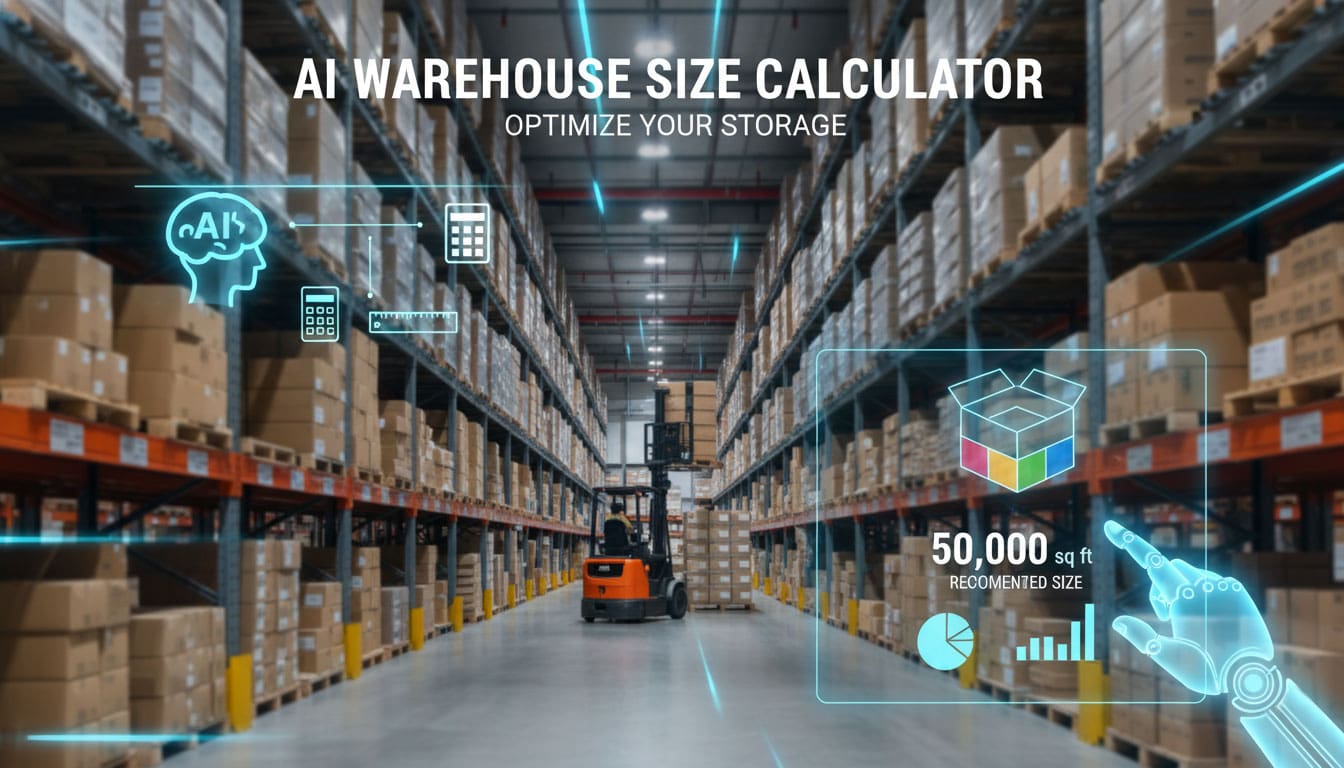
    MyStorage’s AI Size Estimator is an AI-powered storage size calculator that helps renters accurately estimate storage volume (m³) in just 1 minute, completely free of charge.

    This tool analyzes the type of items, quantity, and actual stacking capability to suggest the correct storage area needed, helping users avoid wasted costs and choose the right storage unit from the start. With an accuracy of up to 95%, the AI Size Estimator is becoming the standard solution for individuals and businesses renting self-storage in Vietnam.

    Why do renters often choose the wrong size?

    When needing to rent storage, most customers face a common problem: not knowing exactly how many cubic meters (m³) their belongings will occupy. The lack of an intuitive measurement tool leads many to rent storage based on guesswork.

    In reality, estimating space by eye or “guessing” based on intuition often leads to two awkward scenarios that any renter would want to avoid:

    • Scenario 1 – Over-renting (Wasting money): Driven by the “better safe than sorry” mindset, you decide to rent a large storage unit. The result is that you have to pay millions of VND extra each month for empty cubic meters you never use.
    • Scenario 2 – Under-renting (Causing hassle): You try to save money and choose a small unit. When the moving truck arrives with your belongings, you realize with a shock that you can’t fit everything in. Changing units at that moment not only causes extreme stress but also incurs additional labor costs for loading/unloading and truck waiting fees.

    This problem is particularly frustrating for the following customer groups:

    • Families renovating/moving homes: They have too many items, from beds, wardrobes, and sofas to dozens of boxes of miscellaneous items.
    • Businesses relocating offices: They need to store documents and office furniture but don’t know how to accurately convert them into volume.
    • Online shop owners: They need temporary storage but are unsure of the actual cubic meter volume of their packages.

    Understanding these “pain points,” MyStorage has pioneered the application of modern technology to provide a solution: AI Size Estimator – the first artificial intelligence-powered storage volume calculator in Vietnam.


    AI size estimator for warehouse storage

    Instead of having to measure every chair leg or struggle with dry volume calculation formulas, you now have a smart “virtual assistant” that helps you:

    • Accurate Quantification: Calculates the total cubic meters (m³) based on your actual inventory list.
    • Cost Optimization: Helps you choose the right storage type (Standard or Air-conditioned Storage) and the most suitable space from the outset, completely eliminating wasted space.

    With an operation time of just 1 minute, up to 95% accuracy, and completely free of charge, the AI Size Estimator empowers renters to make data-driven decisions, reducing the risk of errors and optimizing storage costs right from their very first rental.

    Why is the AI Size Estimator a Game-Changer in the Storage Industry?

    AI-powered storage volume calculation is more accurate because AI relies on real operational data rather than theoretical assumptions. This tool considers factors like stacking, furniture disassembly, and storage density within the warehouse, whereas manual calculations often only account for the dimensions of individual items, which can easily lead to discrepancies in rented space.

    What is the AI Size Estimator?

    The AI Size Estimator is a storage volume (m³) estimation tool developed by MyStorage, powered by artificial intelligence and real operational data.

    Instead of requiring users to manually measure or understand technical concepts like CBM, this tool allows for quick selection from common item categories such as household goods, office furniture, or individual luggage, then automatically converts them into the appropriate storage volume.

    The key differentiator lies in its data foundation: the AI Size Estimator has been trained on thousands of real storage cases from MyStorage customers, accurately reflecting actual storage usage behavior in Vietnam rather than relying solely on theoretical specifications.

    Quy trình vận hành nhà kho cho doanh nghiệp

    How does the AI Size Estimator work?

    Unlike traditional calculation methods that simply add up the size of each item, the AI Size Estimator analyzes the entire real-world storage picture. MyStorage’s algorithm takes into account:

    • The stacking capability between items
    • The ability to disassemble furniture such as beds, wardrobes, and shelves
    • Optimal storage density in the warehouse based on the actual arrangement by the operations team

    Thanks to this, the AI-generated result is the actual usable volume – closely matching the space customers truly need to rent, rather than a theoretical figure that can easily lead to inaccuracies.

    This is precisely why the AI Size Estimator can achieve up to 95% accuracy in real-world operations.

    MyStorage’s Expertise and Pioneering Role

    MyStorage is one of the few companies in Vietnam to standardize storage services by cubic meter (m³) and integrate data-driven thinking into the self-storage industry. Applying AI to the space consultation process not only helps customers make decisions more easily but also reflects the service provider’s professional competence and practical operational experience.

    In a market where storage pricing often relies on subjective estimates, the AI Size Estimator helps MyStorage create a new standard of transparency, while affirming its pioneering role in applying technology to the self-storage industry in Vietnam.

    Practical Benefits of Using MyStorage’s AI Size Estimator

    The AI Size Estimator helps renters save costs, requires no technical knowledge, and is easy to use on any device. In addition to selecting the correct storage size, the tool also suggests smart arrangement methods, supports choosing between regular or air-conditioned units, and helps users receive direct offers when submitting results to the consulting team.

    1. No technical or mathematical knowledge required

    With the AI Size Estimator, renters don’t need to understand complex concepts like CBM or how to calculate cubic meters. The entire process is simplified to the maximum: users simply select the type of items (beds, wardrobes, tables, cardboard boxes, etc.) and enter the corresponding quantity. The rest is automatically handled by AI based on real-world data, allowing anyone to estimate storage space without needing an expert.

    2. Optimize storage rental costs, avoid monthly waste

    One of the clearest benefits of the AI Size Estimator is helping to avoid renting unnecessary excess space. By knowing exactly how many m³ they need, users can choose the right storage size from the start, instead of renting “just in case.”

    This tool is particularly suitable for:

    • Individuals storing only a few items, where rental costs might be as low as 300,000 – 500,000 VND/month.
    • Small apartments or medium-sized offices that need to optimize their budget while ensuring sufficient storage space.

    Tiêu chuẩn PCCC Nhà Kho Mới Nhất: Quy Định, Yêu Cầu

    3. Easy to Use, Anytime, Anywhere

    The AI Size Estimator is designed to work seamlessly on phones, tablets, and laptops, with no additional app installation required. Users can calculate their storage space needs right from home, whether they’re decluttering or planning home renovations, even before contacting our consultation team. This makes discussions with our sales team quicker, more transparent, and perfectly aligned with their specific requirements.

    4. Smart Packing Tips to Reduce Cubic Meters

    Beyond just providing a size estimate, the AI Size Estimator also suggests efficient packing methods to minimize storage volume while ensuring the safety of your belongings. Some popular tips include:

    • Disassembling bed frames, shelves, and tables
    • Stacking wardrobes and sofas vertically to save space
    • Grouping similar items to optimize stacking density

    Thanks to these tips, many customers can significantly reduce the cubic meters they need to rent compared to their initial packing plans.

    Who is the AI Size Estimator for?

    The AI Size Estimator is ideal for individuals renovating or moving homes, businesses relocating offices, and online sellers requiring temporary storage. Crucially, this tool is especially beneficial for those new to storage rental, helping them avoid the risk of selecting the wrong size from their very first service experience.

    The AI Size Estimator is designed for non-storage professionals who need to make accurate decisions from the outset. This tool is particularly suitable for the following customer groups:

    • Individuals renovating or moving homes: needing temporary storage for furniture, electronics, and cartons but unsure of the required cubic meters.
    • Businesses relocating offices: wanting to quickly estimate storage space for desks, documents, and IT equipment without time-consuming manual measurements.
    • Online sellers / small businesses: requiring flexible storage that optimizes costs at every stage.
    • First-time storage renters: lacking experience in choosing storage sizes and wanting to avoid the risk of over-renting or under-renting space.

    With its user-friendly interface and data standardized according to real-world operations, the AI Size Estimator empowers all users to confidently select the correct storage size without relying solely on subjective advice.

    Real Customer Stories

    Many MyStorage customers have significantly reduced their storage rental costs by using the AI Size Estimator before signing a contract. Instead of renting storage based on guesswork, users can adjust their packing methods based on AI suggestions, thereby reducing the rented space and optimizing their monthly budget.

    A prime example is Ms. Lan (Thu Duc City) during her home renovation. Initially, she planned to rent a 10m³ unit to store her bed, wardrobe, sofa, and household items for a few months. However, after using MyStorage’s AI Size Estimator, the results showed she only needed 7m³ if she disassembled some furniture and stacked items correctly.

    Based on the AI’s suggestions, Ms. Lan adjusted her packing before moving items into storage and selected the correct size from the outset. As a result, she saved nearly 1 million VND per month compared to her initial storage rental plan.

    This case demonstrates that the AI Size Estimator is not just a space estimation tool, but a practical solution that helps storage renters optimize space and costs, leveraging MyStorage’s real-world operational data and experience.

    MyStorage is one of the few providers in Vietnam to standardize storage services by cubic meter (m³) and integrate data-driven insights into the self-storage industry. Applying AI to the space consultation process not only empowers customers to make easier decisions but also reflects the service provider’s professional expertise and practical operational experience.

    In a storage market still characterized by many subjective pricing methods, the AI Size Estimator helps MyStorage establish a new standard of transparency, while also affirming its pioneering role in applying technology to the self-storage industry in Vietnam.

    FAQ

    What is MyStorage’s AI Size Estimator?

    AI Size Estimator is an AI-powered tool that accurately estimates the storage volume (m³) you need based on your actual items and quantities.

    Is AI Size Estimator free to use?

    It is 100% free to use with no payment or complicated registration required.

    How accurate is the AI Size Estimator?

    The estimator reaches around 95% accuracy, based on real operational data from thousands of MyStorage customers.

    Can the AI estimate bulky items like beds, wardrobes, or sofas?

    Yes. The AI is trained on common furniture items and accounts for disassembly and stacking options.

    Who should use the AI Size Estimator?

    It is ideal for home renovation, moving, office relocation, online sellers, and first-time storage renters in Ho Chi Minh City.

    Does the AI help reduce storage rental costs?

    Yes. By choosing the right storage size upfront, many users save hundreds of thousands to over one million VND per month.

    Does the AI recommend the right type of storage?

    es. It recommends standard or climate-controlled storage based on item types such as wood, electronics, or documents.

    Can I use the AI Size Estimator on my phone?

    Yes. It works smoothly on phones, tablets, and laptops without installing any app.

    What if I have more items than the AI estimate?

    MyStorage allows flexible storage size adjustments if additional items are added.

    Is the AI Size Estimator applicable for storage rental in Thu Duc?

    Yes. The AI Size Estimator applies to all MyStorage locations in Ho Chi Minh City, including Thu Duc, District 2, and District 7.

  • How to Store Sports Equipment Neatly and Without Taking Up Much Space

    How to Store Sports Equipment Neatly and Without Taking Up Much Space

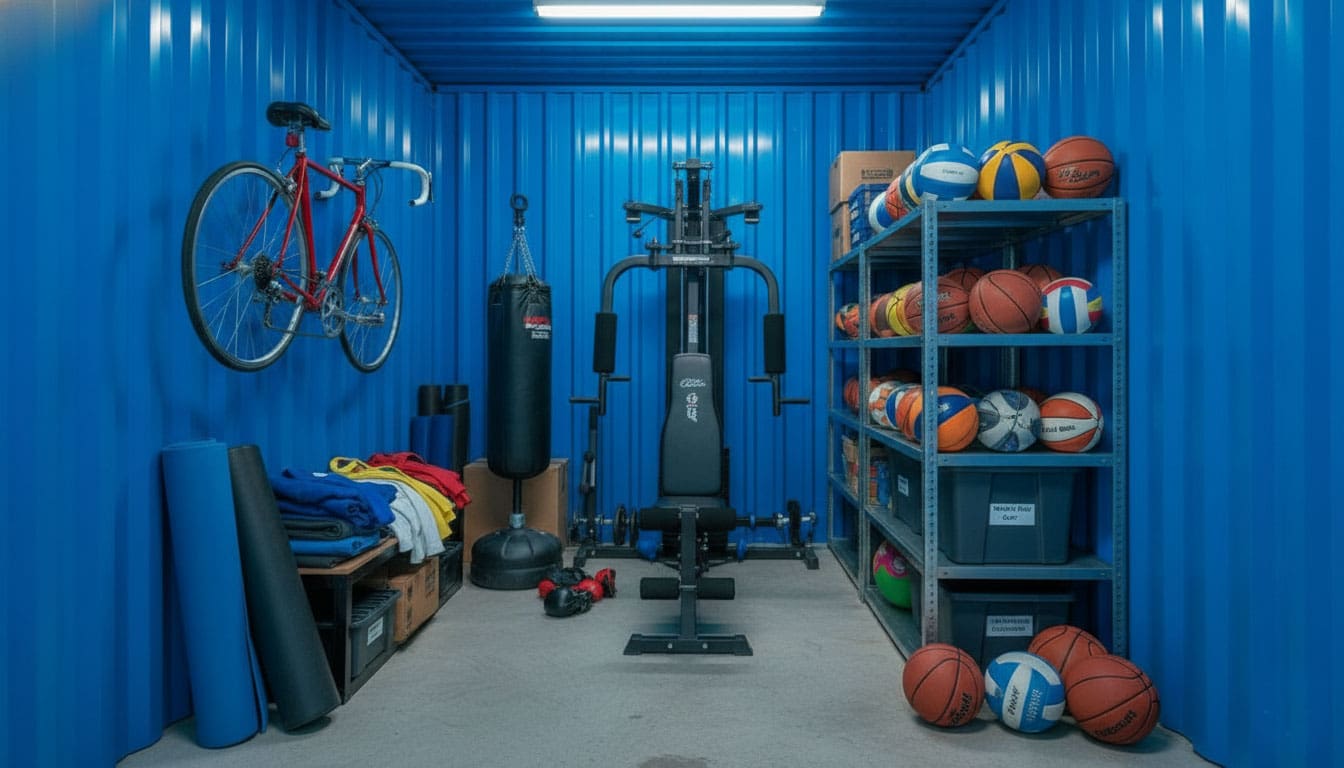
    Proper storage of sports equipment helps save living space, protects gear from mold and damage, and makes it more convenient to use. Depending on whether it’s for personal, family, or business use, you can optimize by smart organization at home or by utilizing a self-storage unit with humidity control and 24/7 security.

    Why Does Sports Equipment Easily Clutter Your Home?

    Sports gear often comes in large sizes, is used seasonally, and is difficult to store compactly, quickly taking up living space if not properly managed.

    Sports equipment is often the main culprit behind a cluttered home, especially during renovation periods when space is limited. The reasons include:

    • Awkward Sizes and Shapes: Unlike clothes or books that can be neatly stacked, items like bicycles, surfboards, golf clubs, or treadmills are bulky and have asymmetrical shapes, making them very difficult to stack or utilize corner spaces efficiently.
    • Seasonal and Specialized Use: Skiing equipment is only used in winter, while diving gear is for summer. These long “dormant” periods mean they occupy valuable storage space without providing regular utility.
    • Strict Environmental Requirements: High-end sports equipment is often made from sensitive materials (carbon, composite, genuine leather). They cannot simply be tossed into a dark storage room but require a dry, airy environment to prevent degradation.
    • “Temporary Storage” Habit: Due to irregular usage, we often have the tendency to leave items on balconies or under staircases for “convenience,” inadvertently turning these areas into makeshift storage spots that detract from aesthetics and obstruct pathways.

    Your home becomes cramped, reducing family living space, creating a suffocating feeling, and posing potential risks of bumps and injuries.

    What Are the Risks of Improper Sports Equipment Storage?

    Incorrectly storing sports equipment can lead to mold, rust, equipment deformation, and potential safety hazards, especially in small living spaces.

    If you treat sports equipment like ordinary household items during a home renovation, you might face unfortunate financial losses:

    • Mold and Rust: High humidity in temporary storage environments or construction dust clinging to metal joints (weights, bicycle chains, treadmill components) leads to oxidation, reducing the equipment’s lifespan and safety.
    • Deformation and Loss of Elasticity: Tennis or badminton rackets, if compressed or left in excessively hot environments, can suffer frame distortion and string loosening. High-end running shoes without proper form holders may experience sole compression and cracking of specialized adhesive layers.
    • Damage to Smart Components: Many modern golf clubs, rackets, and shoes integrate IoT sensors to track performance. Storing them in magnetic or humid environments can damage these sensitive electronic circuits.
    • Safety Hazards: Heavy equipment like dumbbells and exercise machines, if not securely fastened, can easily tip over, posing dangers to children and the elderly moving around storage boxes.
    • Missing Accessories: Sports equipment often comes with numerous small accessories (screws, battery chargers, resistance bands). If packed haphazardly, you’ll waste a lot of time searching or have to purchase new ones when you need to use them again.

    Sports Equipment Storage Solutions

    If you’re currently renovating your home, implement these tips right away:

    • Use Vacuum Storage Bags for Fabric Items: Bulky workout clothes and protective gear should be vacuum-sealed to save 70% of space.
    • Vertical Hanging Systems: Utilize tall wall spaces to hang bicycles, rackets, or skateboards. This keeps items dry and airy while preventing them from being knocked over on the floor.
    • Desiccant Bags and PE Shrink Wrap: Carefully wrap electronic sports equipment and add silica gel desiccant packets inside before boxing them up.
    • Utilize Temperature-Controlled Storage Services: For expensive golf club sets or bicycles, storing them in air-conditioned mini-warehouses is a worthwhile investment to protect your assets.
    • Rent a Storage Unit During Home Renovation: This helps safely preserve not only sports equipment but also many other household items and furniture. It’s especially crucial for storing electronics like TVs, speakers, computers, etc.

    Comprehensive Sports Gear Storage Solutions by Need

    Proper sports equipment storage helps save living space, protect gear, and optimize long-term costs. Depending on the user (individual, family, or business), the quantity of equipment, frequency of use, and asset value, everyone will require a different storage solution.

    The table below summarizes popular sports equipment storage solutions available today, comparing them by space occupied, safety level, and actual reference rental costs. This aims to help readers easily choose the most suitable option without requiring extensive professional experience.

    User/Target Group Common Sports Equipment Types Storage Characteristics Priority Criteria Suitable Solution Space Occupied Safety Level Reference Price (VND/month)*
    Individual Bicycles, sports shoes, dumbbells, yoga mats Small-to-medium quantity, frequent use Easy access, cost-effective Home storage (hanging racks, boxes) High Low-Medium 0
    Individual (Seasonal) Skateboards, climbing gear, SUPs, winter sports equipment Infrequent use, bulky Space-saving, moisture-proof Self-storage, small unit (1–2 m²) Very Low High ~500,000 – 1,200,000
    Family Children’s sports gear, balls, badminton equipment Many types, increasing over time Safe, easy to manage Self-storage, small unit Very Low High ~1,000,000 – 2,500,000
    Family Treadmills, exercise benches, large bicycles Bulky, high value Space, moisture-proof Self-storage, small unit (3–5 m²) Very Low High ~1,800,000 – 3,500,000
    Family Tents, camping stoves, outdoor gear Used per trip/season Dry, clean Self-storage, small unit Very Low High ~1,000,000 – 2,000,000
    Business / Club Training equipment Large quantity, rotational use Management, access control Self-storage / specialized warehouse Very Low High ~3,000,000 – 6,000,000
    Business / Club Competition equipment High value, sensitive Security, moisture-proof Self-storage Very Low High ~2,500,000 – 5,000,000
    Business Inventory, rental items Long-term storage Flexible space Self-storage Very Low High ~3,000,000 – 7,000,000
    Short-term Any sports equipment Temporary storage Cost-saving Store with acquaintances Medium Dependent 0
    Long-term Infrequently used, high-value items Long-term storage, infrequent access Safe, stable Self-storage (e.g., MyStorage) Very Low High Varies by area

    * Reference prices for mini-storage units for sports equipment in Ho Chi Minh City, subject to change based on location, area, and storage conditions.

    There isn’t a single “best for all” sports equipment storage solution, but rather one that best suits specific needs. If you only have a few small items that you use frequently, home storage might be sufficient. Conversely, for bulky equipment, seasonal sports gear, or high-value assets, solutions like renting a storage unit often help save space, ensure security, and provide better control over storage conditions.

    In reality, many urban families and businesses opt for professional storage facilities to balance cost, flexibility, and safety, especially when living or business space is limited.

    Tổng Hợp Giải Pháp Lưu Trữ Đồ Thể Thao Theo Nhu Cầu

    Tips for Long-Term Storage of Sports Equipment

    Storing sports equipment for extended periods isn’t just about “tidying up”; it directly impacts the lifespan, safety, and usability of your gear.

    Proper preparation from the outset helps prevent common risks associated with long-term storage in urban environments, such as mold, material damage, battery degradation, or lost accessories.

    Key Considerations Before Storing Your Gear

    • Thoroughly clean and dry: Remove sweat, mud, and rainwater to prevent mold and odors, especially for shoes, exercise mats, and protective gear.
    • Remove batteries and electronic accessories: This applies to sports watches, meters, and smart fitness devices to prevent battery leakage or circuit damage.
    • Pack by sport: This makes items easier to find and prevents different types of equipment from clashing or getting damaged.
    • Label clearly on the outside: Note the sport, quantity, and condition for easy retrieval and inventory management.
    • Conduct periodic checks: For storage exceeding 3–6 months, it’s advisable to re-inspect for early detection of mold or pests.
    Key Consideration Main Purpose Long-Term Benefit
    Clean & Dry Prevent mold, odors Extend equipment lifespan
    Remove batteries, electronics Avoid battery damage, short circuits Maintain stable equipment operation
    Pack by sport Easy management, retrieval Save time when reusing
    Clear labeling Prevent confusion, loss Scientific management
    Periodic checks Early risk detection Reduce repair costs

    Whether storing at home or in a rented facility, adhering to these principles ensures your sports gear remains ready for use, minimizes wear and tear, and effectively protects your initial investment.

    Smart sports equipment storage not only helps free up living space but also protects your assets and enhances your user experience. Depending on individual, family, or business needs, combining scientific organization with professional storage solutions will offer a sustainable, flexible, and long-term effective approach.

    FAQ

    When should I rent a warehouse to store my sporting goods?

    You should rent a storage unit when sports equipment takes up too much space, is seasonal, or during home renovation or relocation.

    Is it safe to store sporting goods in a self-storage facility?

    Yes. Professional self-storage offers humidity control, 24/7 security, and private units, making it safe for high-value equipment.

    How much warehouse space do I need to rent for my personal sporting goods?

    For individuals, a 1–3 m² storage unit is usually enough for shoes, training gear, mats, or a folding bike.

    The family has a lot of sporting goods, so what kind of storage space should they choose?

    Families should consider 3–5 m² units to store kids’ gear, bikes, camping equipment, and outdoor sports items.

    What do businesses or sports clubs typically rent warehouses for?

    Businesses and sports clubs use storage for training equipment, competition gear, and seasonal rental inventory.

    How much does it cost to rent a sports equipment storage space?

    In Ho Chi Minh City, storage prices typically range from VND 600,000 to 2,500,000 per month, depending on size and features.

    Is it possible to rent warehouse space for a short term of 1-2 months?

    Yes. Many self-storage providers offer monthly rentals, ideal for seasonal or short-term sports storage.

    Do sporting goods need a humidity-controlled storage area?

    Yes, especially for shoes, leather gear, and electronic sports equipment to prevent mold and long-term damage.

    Is storing at home cheaper than renting a warehouse?

    Home storage may be free, but it often takes up living space and carries higher risks of humidity damage.

    What factors should I prioritize when choosing a sporting goods storage facility?

    Prioritize suitable unit size, security, humidity control, and transparent pricing to optimize long-term costs.

  • 10 Easy Ways to Optimize Space For Small Apartment That Anyone Can Do

    10 Easy Ways to Optimize Space For Small Apartment That Anyone Can Do

    Optimize space for small apartment doesn’t require renovations or high costs. By simply changing your furniture layout, storage habits, and decluttering unnecessary items, you can transform your 30–50 m² apartment into a tidy, spacious, and more livable home. Here are 10 simple, practical solutions that many families and small apartment dwellers have successfully adopted.

    Why Do Small Apartments Easily Feel Cramped?

    Living in a central apartment is a dream for many, offering convenience and a prime location. However, after some time, many families find themselves in a situation where “belongings overwhelm people.” Below are the core reasons why your living space might be shrinking:

    Limited Actual Area (30m² – 60m²)

    Most modern apartments in Ho Chi Minh City range from 30m² (Studio) to 60m² (2 bedrooms). This size is sufficient for basic living needs but offers little “breathing room” for accumulating possessions. When space is fixed but usage demands increase, a cramped feeling is inevitable.

    The “Accumulation Trap”

    We often have a habit of keeping items “just in case we need them later”:

    • Electronic device boxes, home appliances.
    • Old clothes, souvenirs from travels.
    • Books, newspapers, and documents accumulated over years of work. The reality is that 80% of these items remain untouched for an entire year, yet they occupy up to 30% of your floor space.

    Furniture Incompatible with the Space

    Many families make the mistake of buying disjointed furniture. An oversized sofa or a traditional bed without integrated drawers creates wasted “dead spaces.” When furniture isn’t custom-fitted or multi-functional, the apartment will appear cluttered, even with regular tidying.

    Lack of Scientific Storage Solutions

    Instead of utilizing vertical space (floor-to-ceiling shelves, wall hooks), many tend to display everything on flat surfaces (tables, low shelves, floors). This not only reduces movement space but also creates visual clutter, making the room appear smaller than it is.

    Ms. Lan (32, a resident of an apartment in District 3) shared: “When we first got married, our 50m² apartment felt very spacious and airy. But since our first child arrived, and then with more work-from-home in 2025, my child’s toys and my husband’s work equipment have taken over the walkways. I realized my biggest mistake was accumulating too many souvenirs and buying overly bulky furniture from the start.”

    This overload not only detracts from aesthetics but also directly impacts mental well-being, causing feelings of stress every time you return home.

    cho thuê kho cá nhân

    Key Principles for Maximizing Small Apartment Spaces

    Transforming a small apartment into a sophisticated and comfortable living space isn’t just about arranging furniture; it’s about “redesigning a lifestyle.” Below is an in-depth analysis of the four golden principles you’ve outlined:

    Prioritize Multi-functionality and Flexibility

    In a confined space, an item that serves only one purpose is a “waste” of valuable area. Think in terms of smart furniture.

    • Sofa bed: Your living room by day becomes a bedroom by night.
    • Extendable/foldable dining table: Can be compact for family meals and expanded when guests arrive.
    • Modular furniture: Shelf units that can be separated or combined depending on your needs at different times.

    Minimize Horizontal Footprint, Maximize Vertical Utilization

    A common mistake is spreading furniture across the floor. When floor space is limited, leverage the “vertical space.”

    • Floor-to-ceiling cabinets: Instead of low cabinets that collect dust on top, opt for tall cabinets that reach the ceiling to store less frequently used items (winter blankets, suitcases).
    • Floating shelves: Help free up floor space, making the floor feel more expansive.
    • Maximize corner spaces: Utilize corner shelves or smart sliding systems for kitchen and wardrobe corners.

    Empty Space = Living Space

    Many people tend to “fill” every empty spot with decorative items. However, in architecture, empty space is precisely where air and light circulate.

    • Visual breathing room: Avoid placing furniture too close together. An empty wall or a furniture-free corner helps the mind relax and reduces feelings of clutter.
    • Opt for elevated furniture: When you can see the floor beneath your furniture, your brain automatically perceives the room as larger than it is.
    • Utilize mirrors and light: Large mirrors create the illusion of doubled space, while natural light blurs the boundaries between indoors and outdoors.

    Every Item Must Serve a Clear Purpose

    Minimalism isn’t about living without; it’s about conscious living.

    • The “One In, One Out” Rule: Before buying a new item, consider getting rid of an old one that no longer serves a useful purpose.
    • Clarity in function: Eliminate items that are “nice to have” but not essential. A chair that doubles as a step stool and has storage underneath is more valuable than three single-purpose items combined.

    To optimize a small space, always ask yourself: “Does this item serve at least two purposes or help free up floor space?”

    Thuê kho lưu trữ đồ đạc gia đình

    10 Effective Ways to Optimize Small Apartment Space

    Based on the core criteria you’ve provided, here’s a detailed and in-depth analysis of 10 space optimization methods, designed to transform your small apartment into a smart and stylish living space.

    No. Method Specific Actions Benefits
    01 Decluttering Categorize items: Keep – Sell/Donate – Discard. Get rid of clothes unworn for 6 months, old papers, empty boxes. Immediately frees up floor space. Reduces psychological stress from clutter.
    02 Multi-functional Furniture Use beds with storage drawers, sofa beds, smart foldable dining tables, desks combined with bookshelves. Reduces the number of items you need to buy. One item serves multiple living needs.
    03 Utilize Vertical Space Design floor-to-ceiling kitchen/wardrobe cabinets. Use wall-mounted shelves instead of freestanding ones. Increases storage capacity by 30-50% without taking up additional floor space.
    04 Zone with Furniture Replace brick walls with open bookshelves, fabric curtains, or area rugs to define functional zones. Helps the apartment feel airy, allowing light and air to flow freely between areas.
    05 Light & Color Paint walls white/cream. Install large mirrors opposite windows. Maximize natural light. Creates a visual illusion, making the room appear twice as large as it is.
    06 Optimize Kitchen & Bathroom Use knife racks, corner pull-out shelves in the kitchen, mirrored cabinets in the bathroom to hide personal items. Transforms the most cluttered areas into tidy and clean spaces, easy to maintain.
    07 Functional Decor Choose 1-2 large, sophisticated decor items instead of many small ones. Prioritize decor with storage capabilities. Avoids a “cluttered” feeling, giving the space elegant focal points and an airy feel.
    08 Organize by Frequency Place daily-use items within reach (middle drawers). Store less-used items high up or low down. Saves time searching and keeps your home consistently tidy.
    09 Off-site Storage Rent a mini storage unit for winter clothes, suitcases, camping gear, or rarely touched collections. Ensures your apartment only contains what’s “truly needed for the present,” optimizing your living experience.
    10 “One In, One Out” Rule Whenever you buy a new item, you must discard or donate a corresponding old item. Maintains balance in the number of belongings, preventing the apartment from becoming “re-cluttered.”

    A Few Small Tips for Effective Implementation:

    • Prioritize furniture with legs: This allows you to see the floor underneath, creating a sense of uninterrupted space.
    • Synchronize colors: Using too many colors in a small space can be visually jarring; opt for a dominant color scheme with 1-2 accent colors.

    When Should You Consider Off-site Storage?

    Small Apartments (< 50m²)

    For studio or one-bedroom apartments, every square meter is incredibly valuable.

    • Problem: When wardrobes and storage shelves occupy more than 20% of the floor area, the apartment can feel suffocating.
    • Solution: Move large, infrequently used items (suitcases, Christmas decorations, guest mattresses) to off-site storage to give your home some “breathing room.”

    Families with Young Children

    Children grow very quickly, and with that comes a changing array of items for each stage: cribs, strollers, high chairs, large toys…

    • Problem: You want to keep items for a second child, but your current home lacks storage space.
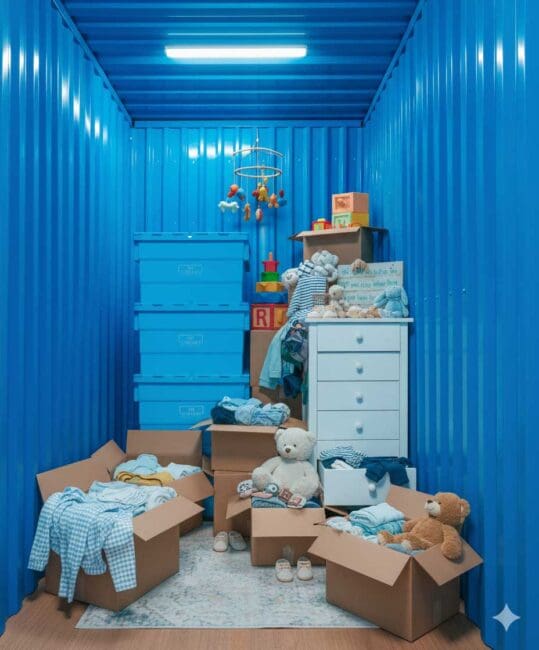
    • Solution: Consolidate baby items by stage into a personal storage unit. This keeps your home safe and spacious for your child to play.

    During Home Renovation or Moving

    This is when belongings are most susceptible to damage, dust, or getting lost.

    • Problem: You need to clear the area for contractors or require temporary storage while awaiting your new home.
    • Solution: Storing items at self-storage facilities with air conditioning and 24/7 security better protects valuables (leather sofas, wooden furniture, electronics) than covering them with tarps on a construction site.

    Owning Valuables or Collections

    Many people enjoy collecting books, vinyl records, designer shoes, or high-end camping equipment.

    • Problem: Humidity and dust at home can damage these precious items.
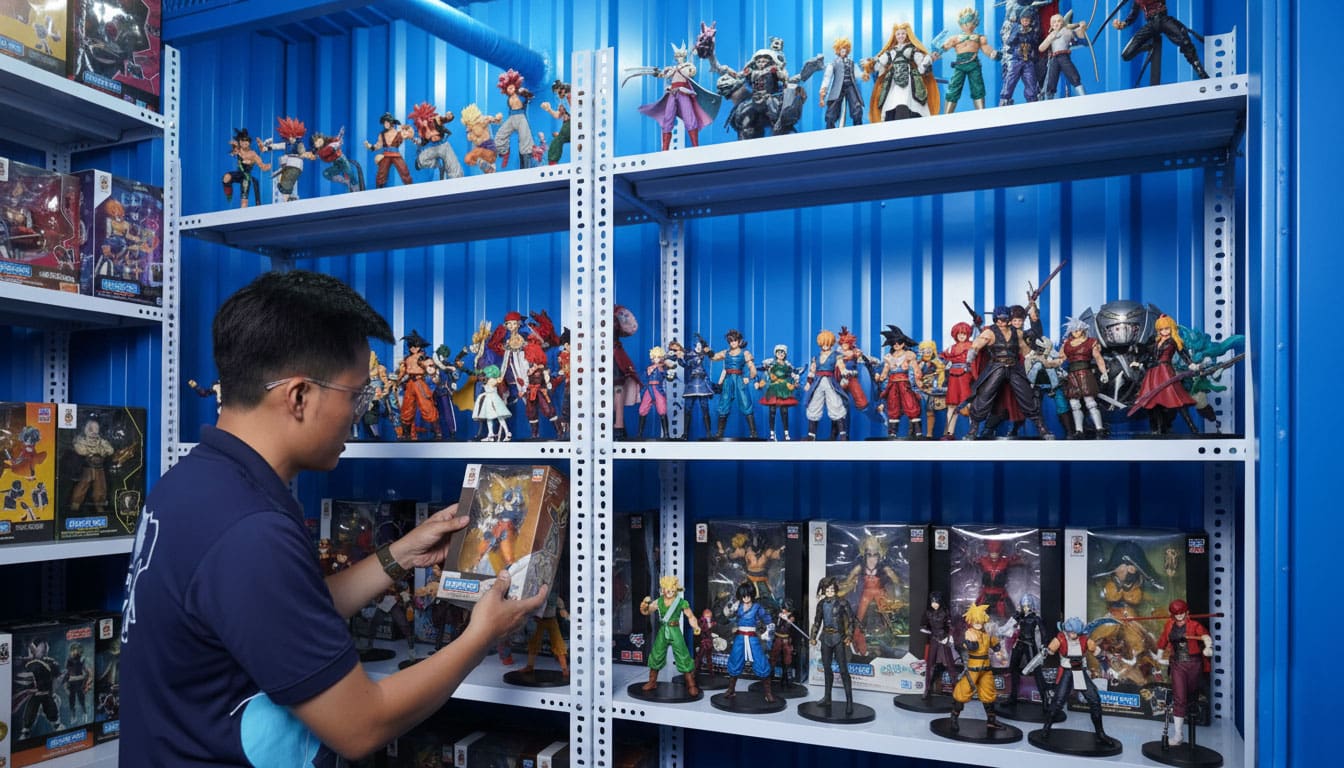
    • Solution: Professional storage facilities often have stable humidity and temperature control systems, helping to preserve assets better than typical home conditions.
    Criteria Home Storage Off-site Storage (Self-storage)
    Cost Free (but costs living space) Paid monthly/by area
    Space Limited, easily cluttered Flexible, expandable as needed
    Preservation Prone to mold, dust Air-conditioned, 24/7 humidity control
    Security Depends on building security CCTV system, private lock, 24/7 security
    Suitable for Everyday items Seasonal items, keepsakes, collections

    Think of off-site storage as a “Cloud Storage” for your physical belongings. Instead of upgrading to a larger apartment (which is very costly), renting a small external storage space is a much more economical solution to maintain a high quality of life in an urban setting. The cost of renting a mini storage unit is relatively affordable for many families.

    Optimizing small apartment space is an ongoing process, starting with letting go – organizing – maintaining. By simply applying each step of the 10 methods above, you can absolutely transform your small apartment into a more comfortable, tidy, and breathable living space every day.

    FAQ

    What is the most effective way to optimize a small apartment space?

    The most effective way is combining decluttering with multi-functional furniture. Additionally, utilizing vertical space instead of horizontal space significantly frees up floor area.

    Which multi-functional furniture is best for apartments under 50sqm?

    Top choices include sofa-beds, storage beds with drawers, wall-mounted folding tables, and floor-to-ceiling cabinetry.

    Why should I use self-storage services?

    This service helps store infrequently used items (seasonal gear, memorabilia, collectibles) safely, making your living space airier without needing to upgrade to a larger apartment.

    How do color and lighting affect the perception of space?

    Light tones (white, cream, light gray) and large mirrors help reflect light, creating an illusion of a larger and deeper space than the actual area.

    How to divide zones in a studio apartment without using walls?

    (You can use “soft dividers” like open bookshelves, curtains, rugs, or varying floor/ceiling heights to define functional zones

    Is storing belongings in external storage safe?

    Reputable self-storage facilities are equipped with 24/7 CCTV, fire protection systems, climate control, and individual private locks for each customer.

    What is the “One-in, One-out” rule?

    This is a minimalism rule: Every time you buy a new item, you must discard or donate an old one to prevent the space from becoming cluttered.

    How should families with small children optimize their space?

    Use blunt-edged furniture, utilize under-bed space for toy storage, and send old baby gear (cribs, strollers) to storage if planning for future children.

    What is utilizing vertical space?

    It involves installing wall-mounted shelves, high hooks, or floor-to-ceiling cabinets for storage instead of placing everything on the floor.

    How does the cost of self-storage compare to buying a larger apartment?

    Renting self-storage is much more economical. The cost is only a fraction of the price difference when buying or renting a larger apartment in urban areas

  • Reliable Warehouse Rental in District 3 | Mini Warehouse in Central HCMC

    Reliable Warehouse Rental in District 3 | Mini Warehouse in Central HCMC

    Renting a warehouse in District 3 is an optimal solution for individuals and businesses needing storage near the center of Ho Chi Minh City, offering convenient access to District 1, District 10, and Phu Nhuan. Popular warehouse types include mini/self-storage, small goods warehouses, and document storage, suitable for short- to medium-term storage with high requirements for security, humidity control, and fire safety compliance.

    Why is the Demand for Warehouse Rental in District 3 So High?

    Dense population and office density

    District 3 has one of the highest population densities in the city, along with the presence of countless offices, retail stores, and small and medium-sized enterprises. This creates significant pressure on storage space.

    Limited residential and business space

    Rental prices in District 3 are among the most expensive in Ho Chi Minh City. Many households and small businesses lack sufficient space to store goods, documents, personal belongings, or inventory. Renting a private warehouse becomes an optimal solution to save costs and maximize usable space.

    Central location, convenient connectivity

    District 3 boasts a prime location, bordering other central districts such as District 1, District 10, Phu Nhuan District, and Binh Thanh District. Convenient transportation ensures quick movement of goods in and out of the warehouse, promptly serving business operations or personal needs.

    Real-World Experience of Urban Users

    Many residents and business owners in District 3 share that they frequently encounter situations such as:

    Renting a warehouse due to lack of storage space at home, especially in small apartments, particularly for families with young children or many personal items. Insufficient storage for inventory for online shops, small stores, or startup businesses. Needing space to store documents for small offices or family businesses.

    Warehouse rental solutions in District 3 meet three crucial factors:

    • Close: Just a few minutes’ commute from home or office.
    • Safe: 24/7 security system, CCTV surveillance, strict access control.
    • Accessible: Flexible access hours, simple procedures, quick support.

    With increasing urbanization trends, warehouse rental is no longer just a need for large enterprises but has become a practical solution for all types of users in the city center.

    Why Should You Rent a Warehouse in District 3?

    When weighing the options between expanding business premises or finding external storage solutions, many individuals and businesses in Ho Chi Minh City have chosen to rent a warehouse in District 3. This is not just a financial decision but also a strategic choice based on real-world experience and long-term benefits.

    Central Location – Quick Connectivity

    Inner-city transport hub: District 3 is strategically located, bordering key districts of Ho Chi Minh City:

    • District 1 (approx. 2-5 km): The city’s largest financial and commercial center.
    • District 10 (approx. 1-3 km): A bustling business area with many wholesale markets.
    • Phu Nhuan District (approx. 1-2 km): High-end residential area and offices.
    • Binh Thanh District (approx. 2-4 km): Gateway connecting to East Saigon.

    According to data from the Ho Chi Minh City Department of Transport, the average distance from District 3 to core districts ranges from only 10-15 minutes of travel during normal hours, significantly saving time and logistics costs.

    Convenient transportation and delivery thanks to a diverse transport network:

    Major roads: Vo Van Tan, Dien Bien Phu, Cach Mang Thang Tam, Ba Thang Hai. Direct connection to main routes to other districts. Easy access to express delivery services (Grab, Ahamove, Lalamove).

    Advantages for business operations: A 2024 study by the Vietnam E-commerce Association (VECOM) shows that online shops with warehouses located in central districts have a 35% higher same-day delivery success rate compared to warehouses located in the suburbs. Average delivery time within the inner city decreased from 2-3 hours to 45-60 minutes.

    Real-world experience: Ms. Minh Anh, owner of an online fashion shop in District 3, shared: “Previously, I stored goods in Binh Chanh, and each time I needed to pick up goods for urgent delivery, it took almost an hour to travel. Now, renting a warehouse in District 3, I can get there in 10 minutes, which is very convenient for processing quick orders.”

    cho thuê kho để đồ tp hcm

    Flexible Storage Solutions

    Solution for Limited Space: According to CBRE Vietnam’s Q4/2024 real estate market report, the average rental price for commercial spaces in District 3 ranges from 45-80 million VND/month for areas of 50-100m². At this price point, many small businesses and households find it challenging to allocate additional funds for storage.

    Typical Cases Requiring Warehouse Rental:

    Households:

    • Average 60-80m² apartments lack space for seasonal items
    • Need to store belongings when on long-term business trips or studying abroad
    • Storing relatives’ or children’s belongings during relocation

    Small Offices:

    • 20-30m² offices lack space for archived documents
    • Requirement to store legal records and accounting documents as per regulations (typically 5-10 years)
    • Backup office equipment, product samples

    Online Shops and Small Businesses:

    • Storing inventory that doesn’t require direct display
    • Product samples, seasonal goods (Tet, Black Friday, 11/11)
    • Raw materials, packaging

    Flexibility According to Actual Needs, such as Seasonal Business Rentals: Data from the Ho Chi Minh City Statistics Office indicates that demand for goods storage surges by 60-80% during peak seasons like Lunar New Year, Black Friday, and back-to-school periods. Current warehouse rental services in District 3 offer:

    • Short-term contracts: 1-3 months, suitable for seasonal needs
    • Adjustable space: Increase/decrease space based on actual requirements
    • No long-term commitments: Easily terminate contracts when no longer needed

    Real-world Case Study: Mr. Tuan, owner of a children’s toy store, shared: “Each year, I only need a large warehouse for 2 months before Tet and during August-September (back-to-school season). For the remaining months, I only rent a small space. This helps me save about 40% of storage costs compared to renting a fixed-size warehouse all year round.”

    Optimize Operating Costs

    Investment Analysis: Own Space vs. Warehouse Rental:

    Category Own Space (50m²) Professional Warehouse Rental
    Initial Cost 40-60 million VND/month 5-12 million VND/month
    Deposit 2-3 months (120-180M VND) 1 month (5-12M VND)
    24/7 Security 8-12 million/month Included
    Cameras, Fire Protection 20-40 million (installation) Included
    Utilities (Electricity, Water) 3-5 million/month Included or preferential rates
    Maintenance, Repairs Self-borne Included

    Renting a warehouse helps save 60-75% of costs compared to renting a dedicated space for storage purposes.

    Avoid Hidden Costs and Risks:

    • Management personnel: Requires at least 1 caretaker (7-10 million VND/month)
    • Asset insurance: 0.5-1% of goods value/year
    • Risks of theft, fire: Fully self-borne if uninsured
    • Equipment depreciation: Shelves, pallets, humidity control devices
    • Opportunity cost: Time and effort spent on management instead of focusing on business

    A 2024 report from the Vietnam Chamber of Commerce and Industry (VCCI) indicates that small and medium-sized enterprises utilizing professional warehousing services achieve a 28% higher revenue growth rate compared to those managing their own warehouses, thanks to time savings and focus on core business activities.

    Long-term Financial Benefits as Your Business Grows, You Can:

    • Rent additional space without significant investment
    • Easily transition to a larger warehouse
    • Downsize when necessary without capital loss

    Instead of investing hundreds of millions in premises and equipment, you only need a fixed monthly cost of 5-15 million VND, ensuring your cash flow is always controlled and stable.

    How Much Does Warehouse Rental in District 3 Cost?

    One of the most frequently asked questions when seeking storage services is: “What is the cost of warehouse rental in District 3?”. To answer accurately, you need to understand the factors influencing the price and the total actual cost involved.

    Thuê kho mini tự quản an toàn, thông minh, 24/7 tại Mystorage

    Factors Affecting Warehouse Rental Prices

    Warehouse Area

    This is the most fundamental factor determining rental prices. However, the rental price per square meter for mini warehouses often decreases as the area increases:

    1-5 m²: 1.5 – 2.5 million VND/m²/month 6-10 m²: 1.2 – 2.0 million VND/m²/month 11-20 m²: 1.0 – 1.8 million VND/m²/month 21-50 m²: 800 thousand – 1.5 million VND/m²/month Above 50 m²: 600 thousand – 1.2 million VND/m²/month

    Practical Note: Many providers calculate prices based on fixed “storage rooms” rather than m², with packages like: Mini (2m²), Small (5m²), Medium (10m²), Large (20m²).

    Location and Truck Accessibility

    Location in District 3:

    Central areas (near Cach Mang Thang 8, Vo Van Tan): Highest prices, +20-30% compared to the average Outlying areas (bordering District 10, Phu Nhuan): More reasonable prices, 10-15% lower

    Truck Accessibility:

    1-2 ton trucks accessible: Standard price Motorbikes/cars only: 10-15% reduction (due to transport limitations) 5-10 ton trucks accessible: 15-25% increase (suitable for logistics)

    According to a 2024 survey by the Vietnam Logistics Association (VLA), 68% of small businesses prioritize warehouses accessible to 1-3 ton trucks, willing to pay an additional 10-15% for this convenience.

    Warehouse Type Common Area Primary Use Suitable For Estimated Rental Price / Month Standard Features & Services
    Mini / Self-storage 1 – 5 m² Personal items, home renovation, small shop inventory Individuals, households, online shops 1,200,000 – 3,500,000 VND 24/7 security, humidity control, private unit
      6 – 10 m² Medium volume e-commerce inventory Small businesses, startups 3,500,000 – 6,000,000 VND Free access, stable environment
    Small warehouse – Transit warehouse 20 – 50 m² Business inventory storage Large online shops, small businesses 5,000,000 – 10,000,000 VND Small truck access, basic security & fire safety
    General storage warehouse 50 – 200+ m² Large volume goods storage Trading companies, inner-city distribution 40,000 – 70,000 VND/m² Concrete floor, high ceiling, full fire safety
    Document storage warehouse 5 – 20 m² Storing important documents, records Businesses, law/accounting firms 2,000,000 – 4,000,000 VND Humidity control, high security, specialized shelving
      20 – 50 m² Long-term storage Medium-sized businesses 4,000,000 – 7,000,000 VND Stable environment, fire safety, monitoring
    Cold storage 10 – 100+ m² Food, pharmaceutical preservation Food businesses, F&B, pharmaceuticals 150,000 – 300,000 VND/m² Temperature – humidity control – 24/7 security
    Cool / Air-conditioned storage 10 – 100+ m² Temperature-sensitive goods (cosmetics, tech) Retail businesses, trading 90,000 – 150,000 VND/m² Stable temperature, high humidity control

    Additional services affecting price:

    Service Price Impact Notes
    Goods loading/unloading +5-10% Or charged separately 50-150k/time
    Inner-city transportation +10-15% Or charged per km (15-30k/km)
    Packaging, sealing +5-8% Suitable for fragile goods
    Periodic inventory check +8-12% Important for online shops
    Goods insurance +2-5% Recommended for high-value goods

    Warehouse Rental Experience in District 3

    District 3 is the “heart” of Ho Chi Minh City, with a high population density and bustling trade. Renting a warehouse here is not just about finding a place to store things, but an optimization challenge concerning location and cost.

    The “Most Advantageous” Customer Groups for Renting a Warehouse in District 3

    If you belong to one of the following groups, having a storage warehouse in District 3 will significantly save time and effort:

    • Individuals renovating or moving house: Need temporary storage space for furniture, electronic appliances for 1-3 months to ensure items are not damaged by dust or impact.
    • Residents of central apartments and townhouses: Families living in high-end apartments or small townhouses often lack space for seasonal items (Tet decorations, bicycles, old documents).
    • Online Shop Owners: District 3 helps you reach customers in District 1, District 10, Phu Nhuan in just 5-10 minutes. This is a “key” to cutting shipping costs and accelerating express delivery.
    • Businesses needing auxiliary storage: Offices in the city center often have very high rental prices. Using an external warehouse in District 3 to store documents, event gifts, or product samples is a smart cost-saving operational solution.

    Checklist of 05 Steps for Safe Warehouse Rental in District 3, Avoiding “Hidden Fees”

    To avoid issues arising after signing the contract, you need to pay special attention to the following criteria:

    Criteria Details to Check
    Location & Traffic Prioritize warehouses near major roads (Cach Mang Thang 8, Vo Van Tan, Nam Ky Khoi Nghia). Ensure roads are not subject to time-based truck bans for easy truck access.
    Actual Area Carefully measure or request a layout consultation. Only rent the exact area needed to avoid budget waste.
    Security & Fire Safety Warehouse fire safety system must meet standards (with approval). The warehouse must have 24/7 cameras and strict access control via magnetic cards or security guards.
    Environmental Conditions Check humidity, lighting, and pest infestation. The warehouse must be dry to prevent damage to papers, fabrics, or electronic devices.
    Cost Transparency Request a detailed price list of all fees: management fees, electricity and water fees, loading/unloading fees, security fees… to avoid “cheap price but high surcharges.”

    If you only need to store small items or personal belongings, prioritize Self-storage models. This model allows you 24/7 access and offers flexible areas from 1m² – 20m², which is very popular in the central District 3 area.

    Where to Find Reputable Warehouse Rentals in District 3?

    In central areas like District 3, choosing a reputable warehouse rental provider that operates professional 5S standard warehouses plays a crucial role in ensuring asset safety and optimizing long-term costs. Instead of just comparing rental prices, tenants should prioritize providers that meet the following criteria well:

    • Experienced in urban warehouse operations: Providers with long-standing operations in inner-city areas often understand the specifics of traffic, population density, fire safety regulations, and how to organize warehouses suitable for the limited space of District 3.
    • Transparent rental prices and contracts: Clear price lists openly detailing all related fees (management fees, electricity and water, accompanying services) help tenants easily estimate the actual total cost, limiting unexpected charges outside the contract.
    • Trusted by many corporate and individual clients: Providers with a diverse client list, especially businesses and offices in central areas, often have more systematic management, security, and customer service processes.

    Signs of an experienced provider:

    • Operating for at least 3-5 years in central areas
    • Having multiple branches or facilities in core districts
    • Professional warehouse management system (WMS – Warehouse Management System)
    • Well-trained staff in logistics and customer service
    • ISO certification or international standards for warehouse management

    Reputable Warehouse Rental Providers in District 3

    Below is a list of 8 reputable warehouse rental providers in District 3 or nearby central areas, catering to diverse needs from individuals to businesses:

    Thuê kho tự quản cho cá nhân và doanh nghiệp tại Mystorage

    1. Nhatviet Logistics: Headquartered on Vo Van Tan Street (District 3), specializing in providing standard-compliant warehousing, 24/7 security, and a professional management system.

    2. Freight Mark Vietnam: With an office on Nguyen Dinh Chieu Street (District 3), its strength lies in comprehensive logistics solutions for large enterprises and supply chains.

    3. SEC Warehouse (Saigon Express): A reputable provider offering a system of shared and self-storage warehouses with flexible areas, and a central location convenient for trade.

    4. BoxLok: Smart storage service with the advantage of pick-up and delivery support to your doorstep, making it extremely convenient for busy individuals in District 3.

    5. Proship: Specializing in large-area warehousing and container transport services, ideal for businesses requiring storage for large-volume goods in transit.

    6. Hung A Logistics: Located near District 3, it provides dry and airy warehouses, strict import/export procedures, and accompanying customs clearance support.

    7. Taxi Tai Saigon: Perfectly combining home relocation services with temporary storage, helping individuals optimize costs when needing home renovations.

    Amidst the growing demand for storage in District 3, modern mini-storage and self-storage models, featuring security control, environmental management, and flexible rental periods, are becoming popular choices. Thoroughly researching information, experiencing the warehouse facilities firsthand, and evaluating feedback from previous customers will help you make an informed decision and feel secure throughout your rental period.

    FAQ

    How much does it cost to rent a warehouse in District 3?

    Warehouse rental prices in District 3 range from 1.2 to 2.5 million VND/m²/month, depending on:

    • Mini warehouses (1-10m²): 1.8 – 2.5 million VND/m²/month
    • Medium warehouses (11-50m²): 1.0 – 1.8 million VND/m²/month
    • Large warehouses (over 50m²): 600,000 – 1.2 million VND/m²/month

    Prices include electricity, water, security, and CCTV surveillance. Long-term rentals (6-12 months) usually receive a 10-15% discount.

    Can I rent a warehouse in District 3 for short-term?

    Yes, most warehouse rental units in District 3 accept short-term contracts:

    • Minimum 1 month for mini/self-storage warehouses
    • Weekly rentals may be available in special circumstances (Tet holiday, peak season)
    • Flexible monthly renewals, no long-term commitment

    Short-term rentals are 10-20% more expensive than long-term rentals but suit seasonal needs.

    Are warehouses in District 3 safe and secure?

    Warehouses in District 3 typically have high security standards due to their central location:

    • 24/7 CCTV surveillance with 30-90 day storage
    • Professional security guards working 24/7
    • Personal electronic locks or fingerprint/card access control
    • Fire protection system meeting Class A standards
    • Cargo insurance (depending on the service package)

    The loss/damage rate at District 3 warehouses is less than 0.1% according to industry statistics.

    What items are prohibited in warehouse storage?

    The following types of goods are NOT permitted to be stored in District 3 warehouses:

    • Flammable and explosive materials (gasoline, gas, fireworks)
    • Weapons and ammunition
    • Drugs and prohibited substances
    • Smuggled goods, goods of unknown origin
    • Perishable food items that are not packaged (regular warehouse)
    • Live animals
    • Hazardous waste and toxic chemicals

    Legal and safe goods are accepted after declaration.

    Can I access the warehouse 24/7?

    Depending on warehouse type and service package:

    Mini-Storage/Self-Storage:

    • 24/7 access with key card/personal PIN
    • Unlimited access
    • Suitable for flexible needs

    Commercial/Logistics Warehouse:

    • Business hours: 8 AM – 5 PM (Monday-Friday)
    • Outside business hours: Requires advance booking, may incur a surcharge of 50-100k VND/visit
    • Weekends: By agreement

    Please confirm the access policy before signing the contract.

    Are loading/unloading and transportation services available?

    Yes, most warehouses in District 3 offer:

    Loading and unloading services:

    • Labor: 50 – 150k VND/person/hour
    • Forklift: 200 – 500k VND/hour
    • Professional packaging: 20 – 100k VND/package

    Transportation services:

    • Small trucks (500kg-1 ton): 200 – 400k VND/trip within the city
    • Large trucks (3-5 tons): 800k – 1.5 million VND/trip
    • Express delivery: 15 – 30k VND/km

    Combo packages of warehouse + transportation are often offered at discounted prices for regular customers.

    What documents are needed to rent a warehouse in District 3?

    Required documents for individuals:

    • ID card/Citizen Identification Card or Passport (photocopy)
    • Warehouse rental contract (provided by the supplier)
    • Deposit: 1 month’s rent
    • Contact information: Phone number, email, address

    For businesses:

    • Business license (notarized copy)
    • Tax identification number
    • ID card of the legal representative
    • Power of attorney (if not signed by the legal representative)

    Simple procedure, completed in 30 minutes – 1 hour.

    Is it more cost-effective to rent mini or large warehouse?

    Depending on your actual needs:

    Renting a mini warehouse (1-10m²) is SUITABLE when:

    • You have few, high-value goods
    • You need frequent access
    • You have short-term, seasonal needs
    • The starting cost is low: 2-6 million VND/month

    Renting a large warehouse (20-50m²) is MORE ECONOMICAL when:

    • You have a lot of inventory and need more space
    • You have a stable, long-term business
    • The price per m² is 30-40% cheaper
    • You get an additional discount when renting for 6-12 months

    Comparison: 5m² × 2 million VND = 10 million VND vs. 20m² × 1.2 million VND = 24 million VND → If you use all the space, a larger warehouse saves 40%/m²

    Is District 3 warehouse suitable for online shops?

    VERY SUITABLE for the following reasons:

    Location advantages:

    • Central Ho Chi Minh City: Inner-city delivery within 2 hours
    • Fast connectivity: Districts 1, 10, Phu Nhuan, and Binh Thanh are only 10-15 minutes away
    • Easy to call a shipper: Grab, Ahamove, and Lalamove arrive within 5-10 minutes

    Services suitable for online shops:

    • Flexible mini warehouse from 2m² (50-200 orders/month)
    • Packaging, weighing, and sealing tables
    • Product photography service
      Integrated order management

    In reality: 65% of online shops in Ho Chi Minh City choose warehouses in Districts 1, 3, and 10 due to twice the delivery speed.

    Can I rent multiple warehouses simultaneously?

    This is likely a common business strategy:

    Multi-warehouse Model:

    🏢 Main Warehouse (District 3):

    Fast-selling goods, needing quick delivery
    Area: 20-50m²
    Frequent access

    🏭 Subsidiary Warehouse (Suburban):

    Inventory, seasonal goods
    Large area, 50-60% cheaper price
    Less frequent access

    Benefits:

    30-40% cost savings
    Optimized transportation: Fast delivery from the central warehouse
    Flexible expansion: Easy adjustment of warehouse size

    Many companies offer incentives for renting multiple locations.

  • Warehouse Rental in Hoc Mon 2026: Latest Price List

    Warehouse Rental in Hoc Mon 2026: Latest Price List

    The demand for warehouse and factory rentals in Hoc Mon is strongly recovering after the pandemic, with an average warehouse occupancy rate of 82-87% in 2024, according to a report by Savills Vietnam. This trend is driven by the growth of e-commerce, logistics, and businesses’ need to optimize their supply chains.

    Hoc Mon boasts a unique strategic location – it’s the Northwest gateway to Ho Chi Minh City, directly connecting to National Highway 22 leading to Tay Ninh and Cambodia, the HCMC – Trung Luong Expressway linking Mekong Delta provinces, and the ongoing Ring Road 3. Its proximity, just 20-25km from the city center and 35km from Cat Lai Port, makes Hoc Mon an ideal destination for distribution, warehousing, and manufacturing activities.

    This article will provide detailed information on warehouse rental prices, locations, legal procedures, and practical experience in selecting and negotiating warehouse lease agreements.

    Overview of Hoc Mon Warehouse Rental Market

    Geographical Location and Logistics Advantages

    Hoc Mon is strategically located in the Northwest of Ho Chi Minh City, bordering District 12 to the East, Cu Chi District to the West and North, and Binh Duong Province to the North. This prime location creates a logistics corridor connecting three important directions in the region.

    Key Transportation System:

    • National Highway 22, running through Hoc Mon, is a vital route connecting HCMC with Tay Ninh and the Cambodian border, especially crucial for import-export and cross-border trade activities.
    • National Highway 1A and Hanoi Highway connect to the Southeastern provinces and major industrial parks. Tran Van Giau and Pham Van Sang roads are two important internal axes, directly connecting to District 12 and the city center.
    • Notably, the accelerating completion of Ring Road 3 will shorten travel time from Hoc Mon to Cat Lai Port to 40-45 minutes, a 30-40% reduction compared to current times.
    • The distance to Tan Son Nhat Airport is only about 18km, convenient for air logistics. From Hoc Mon to Hiep Phuoc Port is 45km, suitable for businesses with container import-export needs.

    Competitive Cost Advantages

    Compared to inner-city districts and Binh Duong industrial parks, the rental price for individual and corporate warehouses in Hoc Mon is 25-35% lower, while still maintaining excellent connectivity to major transportation routes.

    Labor and operating costs are also more competitive, helping businesses optimize overall logistics costs.

    Warehouse Development Trends in Hoc Mon

    Growth of the Logistics Industry

    According to Savills Vietnam’s “Vietnam Industrial & Logistics Property Market Q4 2024” report, HCMC’s industrial real estate market recorded a positive recovery with an average occupancy rate of 85% in Q4/2024. Specifically, the Western and Northwestern areas of the city, including Hoc Mon, had a higher-than-average occupancy rate of 87-89%.

    CBRE Vietnam’s 2024 logistics market report shows that the supply of modern warehouses in HCMC’s suburban areas increased by 18% compared to 2023, with Hoc Mon contributing approximately 12% of the total new supply. Demand for warehouse rentals here primarily comes from e-commerce businesses (35%), third-party logistics – 3PL (28%), FMCG distribution (22%), and light manufacturing (15%).

    According to data from the HCMC Department of Industry and Trade, the total import-export turnover through Western border gates in 2024 increased by 22% compared to the previous year, providing strong momentum for warehousing demand in Hoc Mon – a crucial gateway connecting to border provinces.

    Planning and Infrastructure Development

    According to Decision No. 1659/QD-UBND of the HCMC People’s Committee on adjusting Hoc Mon’s general planning until 2025 and vision to 2035, the district is oriented to develop into a logistics and high-tech industrial center for the city’s Northwest region. The land area designated for warehousing and logistics will be expanded by an additional 180 hectares in the 2024-2028 period.

    The section of Ring Road 3 passing through Hoc Mon is expected to be completed in Q3/2025, shortening connection times to seaports and Eastern industrial parks. The project to expand National Highway 22 to 6 lanes is in the site clearance phase, with construction expected to begin in 2025. The internal road system for industrial parks and logistics clusters is being upgraded with a total capital of over 2,800 billion VND from the state budget and socialized capital.

    Notably, Binh Duong and HCMC are coordinating to plan an inter-regional logistics hub in the border area of Hoc Mon – Bau Bang with a scale of over 500 hectares, expected to attract investment from 2026.

    Thuê Kho Hóc Môn 2026: Bảng Giá Mới Nhất & Top Địa Điểm Uy Tín 1

    Warehouse Rental Demand Forecast 2025-2027

    JLL Vietnam, in its 2025 industrial real estate market outlook report, forecasts that warehouse rental demand in the suburban areas of Ho Chi Minh City will grow by 15-20% annually between 2025 and 2027, bolstered by three key factors:

    1. Firstly, e-commerce continues its explosive growth, with average annual revenue increasing by 25-30%. This alone demands an additional 200,000-250,000 m² of new warehouse space each year in Ho Chi Minh City and its surrounding areas.
    2. Secondly, the “China+1” trend is prompting many multinational corporations to shift their supply chains to Vietnam, generating demand for regional transit and distribution warehouses. Hoc Mon is considered an attractive destination due to its reasonable costs and excellent connectivity.
    3. Thirdly, the RCEP free trade agreement and various bilateral FTAs are boosting import-export activities, particularly cross-border trade with Cambodia – a market experiencing double-digit growth. Hoc Mon directly benefits from this trend.

    This indicates a positive mid-term outlook for the market.

    Comprehensive Price List by Warehouse Type and Area

    Warehouse Type Area Rental Price (VND/m²/month) Key Features Suitable Industries
    STANDARD WAREHOUSE        
    Small warehouse 200-500m² 90,000-120,000 Excl. VAT, with small office Small distribution, medium e-commerce
    Medium warehouse 500-1,000m² 75,000-100,000 Excl. VAT, container access 3PL Logistics, FMCG distribution
    Large warehouse 1,000-5,000m² 60,000-90,000 Negotiable, long-term lease Manufacturing, large-scale logistics, distribution centers
    COLD/CHILLED WAREHOUSE        
    Chilled warehouse (+10°C to +15°C) As per demand 150,000-180,000 Excl. electricity, insulated panels Vegetables, beverages, cosmetics
    Cold warehouse (-5°C to 0°C) As per demand 180,000-220,000 Excl. electricity, with pre-cooling room Fresh meat, fresh seafood
    Freezer warehouse (-18°C to -25°C) As per demand 220,000-250,000 Excl. electricity, fire suppression system Frozen food, pharmaceuticals
    Cold warehouse incl. electricity As per demand 300,000-400,000 Includes operational electricity Businesses needing cost control
    OUTDOOR STORAGE YARD        
    Small yard 200-500m² 35,000-50,000 Dirt or concrete base, fencing Construction materials, containers
    Large yard Over 1,000m² 25,000-40,000 May have partial roofing Scrap, machinery, vehicles
    Covered yard As per demand 50,000-70,000 Simple steel frame corrugated roof Wood, more sensitive materials
    MINI WAREHOUSE        
    Very small warehouse 50-100m² 100,000-150,000 Private lock, 24/7 security Small online shops, e-commerce startups
    Mini warehouse 100-200m² 90,000-130,000 Packing support services Small businesses, omnichannel sales
    Independent small warehouse 200-300m² 80,000-120,000 Accompanying office, separate Startups with 3-7 staff

    Prices above do not include 10% VAT (except for cold warehouses with electricity included). Service fees (electricity, water, security, cleaning): 5,000-15,000 VND/m²/month depending on warehouse type.

    Deposit typically equals 2-3 months’ rent. Minimum contract: 12 months (standard warehouse), 6 months (mini warehouse), 24-36 months (cold warehouse).

    Price Comparison with Neighboring Areas

    To accurately assess Hoc Mon’s price advantage, we surveyed and compared warehouse rental prices in 4 neighboring areas within a 15-25km radius:

    Area Standard Warehouse (VND/m²/month) Advantages Disadvantages Rating
    Hoc Mon 75,000-100,000 Competitive prices, good transport, connects to Mekong Delta Further from port than District 9/Thu Duc ⭐⭐⭐⭐⭐ Best overall
    District 12 90,000-130,000 Close to city center (15km), stable infrastructure High prices, scarce land, narrow roads ⭐⭐⭐⭐ Good if budget allows
    Go Vap 120,000-180,000 Very close to city center (8km), dense population Very high prices, fragmented small warehouses, heavy traffic ⭐⭐⭐ Only suitable for mini warehouses/showrooms
    Former District 9 85,000-120,000 Close to Cat Lai Port (25km), many industrial parks Merged into Thu Duc City, prices increasing ⭐⭐⭐⭐ Good for import/export via port
    Thu Duc City 80,000-140,000 Eastern hub, high-tech zone Significant price variations, peak hour traffic ⭐⭐⭐⭐ Potential but prices rising fast


    Compared to renting a warehouse in District 12:

    Hoc Mon is 15-30% cheaper while only being 5-7km further from the city center (District 12 is ~15km from the center, Hoc Mon is ~20-22km).

    The supply of warehouses is much more abundant: District 12 is saturated in terms of land, and new warehouses are very rare. Hoc Mon still has many newly built and developing warehouses.

    Roads in District 12 are narrow due to dense residential areas, making it difficult for container trucks to move. Hoc Mon has National Highway 22 and wider roads. Labor costs are 10-15% cheaper due to a lower cost of living.

    Hoc Mon is the optimal choice in terms of cost. For a 1,000m² area, businesses can save 15-30 million VND/month (180-360 million VND/year) compared to District 12. District 12 should only be chosen if immediate delivery is needed for areas like Districts 5, 6, 8, 10, 11, or the inner city.

    Compared to renting a warehouse in Go Vap:

    Hoc Mon is 35-55% cheaper, a very significant difference (Go Vap has the highest warehouse rental prices among the 5 comparison areas). Go Vap primarily only has small, fragmented warehouses of 50-300m² due to land scarcity, making it unsuitable for large-scale logistics.

    Traffic in Go Vap is severely congested during peak hours (7-9 AM, 4-7 PM), and trucks are restricted on many routes. High pressure from surrounding residents makes it difficult to operate at night or generate noise.

    Go Vap is NOT suitable for logistics/distribution warehouses. Warehouses in Go Vap should only be rented for showrooms, sample warehouses, or small office-warehouse combinations serving retail customers in the inner city. Hoc Mon completely outperforms in terms of price and logistics convenience.

    Compared to renting a warehouse in District 9 (old, now part of Thu Duc City):

    Prices are comparable, or Hoc Mon is 10-20% cheaper depending on the specific location in District 9. District 9 has a significant advantage in terms of proximity to Cat Lai Port: only 15-20km compared to 35-38km from Hoc Mon.

    This saves 30-45 minutes per container trip. District 9 has many industrial parks such as Long Thanh My IP, Song Than IP, making it convenient for connecting with manufacturing plants. However, District 9 is less connected than Hoc Mon to the Mekong Delta and the northwestern border provinces.

    After merging into Thu Duc City, land prices and warehouse rental prices in District 9 are trending upwards rapidly (8-12%/year), while Hoc Mon is more stable.

    • Choose District 9 if: Frequent import/export through Cat Lai Port, Cai Mep; need to connect with industrial parks in the East; serving the Dong Nai, Binh Duong, Ba Ria-Vung Tau markets.
    • Choose Hoc Mon if: Distributing goods domestically; serving the Mekong Delta market; import/export through border gates; prioritizing long-term cost savings.

    Compared to renting a warehouse in Thu Duc City (entire area):

    Thu Duc City is very large (including former Districts 2, 9, and Thu Duc) so prices vary significantly between areas: from 80,000 VND/m² (remote areas like Phuoc Long B, Truong Thanh) to 140,000 VND/m² (closer to the center like Linh Xuan, Binh Chieu). Hoc Mon is generally 5-40% cheaper than most areas in Thu Duc City.

    Thu Duc City is oriented as a center for innovation and high technology, attracting significant infrastructure investment, but this also drives up land and rental prices rapidly. Traffic in Thu Duc City is developing strongly (Metro Line 1, Ring Road 2, 3) but currently still experiences severe congestion on main routes such as Hanoi Highway, Do Xuan Hop, Vo Nguyen Giap.

    Many areas of Thu Duc City are still undergoing site clearance, and infrastructure is not yet complete.

    • Choose Thu Duc City if: High-tech businesses, need to connect with high-tech parks, new urban areas; frequent import/export through ports; have a high budget and want to invest long-term in an area with potential for price appreciation.
    • Choose Hoc Mon if: Prioritizing immediate cost optimization; need a stable warehouse with predictable prices; serving the Western and Mekong Delta markets; small and medium-sized enterprises needing to balance location and price.

    Thuê Kho Hóc Môn 2026: Bảng Giá Mới Nhất & Top Địa Điểm Uy Tín 2

    Summary of Hóc Môn’s Competitive Advantages

    Through comprehensive analysis across 4 key areas, Hóc Môn stands out as the golden balance point:

    • Most Competitive Rental Prices: 35-55% lower than Gò Vấp, 15-30% lower than District 12, 5-40% lower than Thủ Đức City, and equivalent to or 10-20% cheaper than District 9.
    • Strategic Western Gateway Location: The top choice for logistics serving the Mekong Delta market and facilitating cross-border import/export.
    • Developing Transport Infrastructure: National Highway 22 and Ring Road 3 are nearing completion, offering wide roads suitable for container trucks.
    • Diverse Warehouse Supply: Easy to find warehouses ranging from 100m² to 5,000m² with various price points and quality levels.
    • Low Operating Costs: Labor, utilities, and services are 15-25% cheaper than inner-city districts and Thủ Đức City.
    • Stable, Predictable Prices: Not as volatile as Thủ Đức City, making it suitable for long-term financial planning.

    Key Considerations When Renting a Warehouse

    When renting a warehouse, beyond price and location, tenants should pay special attention to legal aspects to ensure safety, regulatory compliance, and mitigate risks during use.

    1. Essential Documents for Warehouse Rental

    Before signing a contract, it’s crucial to thoroughly check the legal documentation of the warehouse, including:

    • A clear warehouse rental contract specifying area, term, rental price, and responsibilities of both parties.
    • Land use rights certificate or legal warehouse operation rights.
    • Valid invoices and documents for accounting and tax purposes.
    • Warehouse handover minutes and current condition report.

    Checking these documents helps businesses avoid disputes and ensures their rights for long-term use.

    2. Fire Prevention and Fighting Regulations for Warehouses

    Warehouses must strictly adhere to fire prevention and fighting regulations, especially for those storing large quantities of goods. Some basic requirements include:

    • Standard-compliant fire alarm and suppression systems.
    • Clear and unobstructed emergency exits.
    • Fire safety acceptance certificate from competent authorities.
    • Regular inspection and maintenance of fire safety equipment.

    This is a mandatory factor, directly impacting the safety of goods and personnel.

    3. Warehouse Business License

    The warehouse lessor must possess a business license appropriate for the warehousing and goods storage industry.

    • Ensures the warehouse is authorized for its intended purpose.
    • Avoids risks of illegal operation, suspension, or penalties.
    • Provides peace of mind for tenant businesses in their long-term operations.

    For small businesses and startups, this point is often overlooked but is critically important.

    4. Warehouse Operations Management According to 5S Standards

    Professional warehouses often implement the 5S management model (Sort – Set in Order – Shine – Standardize – Sustain) to ensure:

    • Tidy, easy-to-manage, and accessible inventory.
    • Reduces risks of damage and loss.
    • Ensures occupational safety and efficient operations.

    Adhering to 5S also helps businesses easily control inventory and optimize costs.

    5. Regulations on Permitted Goods for Storage

    Not all types of goods are permitted for storage in a warehouse. Tenants should note:

    • Prohibited goods by law (flammable/explosive substances, hazardous chemicals, etc.).
    • Goods requiring special conditions (cold storage, humidity control).
    • Specific regulations of each warehouse regarding the list of goods allowed for storage.

    Honestly declaring the type of goods helps avoid contract violations and potential legal risks.

    6. Transportation Routes

    The location of a warehouse, especially when situated on a major route, directly impacts operating costs, traffic regulations, and goods circulation capabilities.

    Some key points to consider include:

    Time-based Traffic Regulations Many main routes restrict trucks and container vehicles during peak hours. It’s essential to clearly check the permitted entry/exit times to avoid penalties or transportation disruptions.

    Connectivity to Key Areas Prioritize warehouses with convenient access to:

    • City center
    • Industrial parks, export processing zones
    • Expressways, national highways, ring roads
    • Ports, airports (if import/export needs exist)

    This helps save delivery time and optimize logistics costs.

    Road Infrastructure in Front of the Warehouse Ensure wide, flat road surfaces, safe truck parking/stopping areas, and minimize difficult U-turns or peak-hour congestion.

    Legal Regulations Related to Warehouse Location Warehouses located on main routes must meet requirements regarding:

    • Fire prevention and fighting
    • Traffic safety
    • Setbacks, entry/exit points according to local regulations

    Compliance ensures stable warehouse operations and avoids risks of inspection or penalties.

    Suitability for Warehouse Usage Purpose For small businesses, startups, or e-commerce, a warehouse with easy connectivity to multiple areas will support fast delivery, reduce last-mile costs, and enhance customer experience.

    Hóc Môn is an optimal choice for businesses seeking a balance between cost and strategic location. With competitive rental prices of 60,000-120,000 VND/m²/month, developed infrastructure, and convenient connectivity to the Mekong Delta, Hóc Môn is suitable for various models, from e-commerce and logistics to manufacturing.

    FAQ

    How much does it cost to rent a warehouse in Hoc Mon on average?

    Warehouse rental prices in Hoc Mon range from 60,000-120,000 VND/m²/month depending on type and size. Standard warehouses of 500-1,000m² cost 75,000-100,000 VND/m²/month. Cold storage is more expensive (150,000-250,000 VND/m²/month excluding electricity), while outdoor yards are only 25,000-50,000 VND/m²/month. Prices exclude 10% VAT and service fees.

    What advantages does Hoc Mon offer compared to District 12 and Go Vap?

     Hoc Mon is 15-30% cheaper than District 12 and 35-55% cheaper than Go Vap. It has better transportation infrastructure with National Highway 22 and Ring Road 3, wide roads suitable for container trucks. Warehouse supply is more abundant than saturated District 12. The only drawback is being 5-7km farther from the city center than District 12, but still much closer than Cu Chi.

    What is the minimum rental period for warehouses?

    Minimum rental periods vary by warehouse type:

    • Standard warehouses: 12 months (most common)
    • Mini warehouses: 6 months, some landlords accept 3 months
    • Cold storage: 24-36 months due to large infrastructure investment requirements
    • Outdoor yards: 12 months

    Long-term rentals of 2-3 years can negotiate 10-15% discount and fixed rental rates.

    How much money do I need to prepare when renting a warehouse for the first time?

    Initial costs include:

    • Deposit: 2-3 months’ rent (most common)
    • First month’s rent: 1 month
    • Initial service fees: 5-10 million VND (cleaning, warehouse preparation)
    • Total: approximately 3.5-4.5 months’ rent

    Example: 500m² warehouse at 90,000 VND/m²/month = 45 million/month → Need to prepare 158-203 million VND initially. Excluding renovation costs and equipment purchases (shelves, pallets, forklifts) if needed.

    Do cold storage facilities in Hoc Mon meet export food standards?

    Yes, some cold storage facilities in Hoc Mon meet high standards for export food, with certifications including:

    • ISO 22000 (Food Safety Management)
    • HACCP (Hazard Analysis and Critical Control Points)
    • Food Safety Certificate from Department of Health

    However, not all warehouses have these certifications. Recommendation: request copies of certifications from the landlord and directly inspect the cooling system, temperature control, and hygiene before renting.

    Can container trucks access all warehouses in Hoc Mon?

    Not all of them. It depends on location:

    • Warehouses on National Highway 22, Pham Van Sang, Tran Van Giau frontage: 90% accessible by container trucks
    • Warehouses on 6-8m wide internal roads: container trucks can access but require skilled drivers
    • Warehouses in 3-5m alleys: only 5-10 ton trucks, not suitable for containers

    If your business frequently handles containers, you must choose frontage warehouses or roads at least 6m wide. Test with an actual truck before renting.

    What licenses are required when renting a warehouse in Hoc Mon?

    Required licenses depend on your business type:

    Mandatory for all:

    • Business license (with appropriate industry codes: wholesale, logistics, warehousing…)
    • Legal warehouse rental contract

    Industry-specific:

    • Food warehouses: Food safety certificate, food hygiene license
    • Cold storage: Certificate of food business eligibility
    • Chemical warehouses: License for conditional chemical business (if hazardous chemicals)
    • Warehouses >500m²: Fire safety certificate

    Note: To register the warehouse as your business address (if using as headquarters), you need confirmation from the landlord.

    How to check if a warehouse floods during rainy season?

    5 ways to check:

    1. Check warehouse floor level: Floor should be 20-30cm higher than street level. If level or lower → high risk
    2. Ask landlord directly: “Has the warehouse ever flooded? How high was the water?” Request evidence (photos, videos if available)
    3. Ask neighboring tenants: If all nearby units flood → your warehouse will flood too
    4. Observe signs: Water marks on walls, rust at column bases, musty smell → may have flooded before
    5. Check drainage system: Are there drainage channels? Are sewers blocked?

    Best time to check: Visit warehouse right after heavy rain (May-October). If signing contract in dry season, add clause “if warehouse floods >5cm, right to cancel contract and refund deposit”.

    Should I rent a warehouse with existing shelving systems or an empty warehouse?

    Depends on your situation:

    Rent warehouse with shelving when:

    • You’re starting out without capital for equipment (save 50-150 million VND)
    • Existing shelves suit your goods (pallet racks for heavy goods, tier shelves for light goods)
    • Short-term rental 12-24 months, don’t want long-term investment
    • Rent is only 5-10% higher than empty warehouse

    Rent empty warehouse when:

    • Need custom layout design for your operational process
    • Existing shelves don’t fit (too low, too small, poorly arranged)
    • Long-term rental 3-5 years → investing in own shelves is more efficient
    • Warehouse with shelves costs 15-20% more → not worth it

    Note: If renting warehouse with shelves, thoroughly inspect quality: are shelves rusty, warped, missing parts? Request landlord to repair or reduce rent if shelves are deteriorated.

    If business is not good, can I terminate the warehouse lease early?

    Yes, but depends on the contract:

    Common scenarios:

    • Contract with early termination clause: Give 60-90 days notice, may pay penalty of 1-2 months’ rent or forfeit deposit
    • Contract without allowance: Heavy penalty (3-6 months’ rent) or pay remaining contract balance

    Ways to minimize risk:

    1. Negotiate upfront: Add clause “allowed to terminate early with 90 days notice without penalty” (difficult but negotiable with higher deposit)
    2. Find replacement tenant: Many landlords agree if you find replacement, you only lose 0.5-1 month rent as brokerage fee
    3. Rent shorter term: Instead of 36 months, rent 12 months with priority renewal option
    4. Rent mini/shared warehouse: More flexible, can terminate easily after 3-6 months

    Experience: Always negotiate early termination clause BEFORE signing, especially if this is your first business or the market is unstable.

  • Locker storage offer safe, flexible, and cost-effective storage solutions

    Locker storage offer safe, flexible, and cost-effective storage solutions

    Lockers are a compact, flexible, and cost-effective storage solution, suitable for short-term storage of personal belongings or small items. Available in sizes from 0.5–2m³, users can rent them by the hour, day, or month, with easy access and security thanks to individual locks and surveillance cameras. Currently, the hourly locker rental model is booming in Ho Chi Minh City, especially in convenience stores to maximize convenience and accessibility.

    In the context of rapid urbanization, living and working spaces in major cities like Hanoi and Ho Chi Minh City are increasingly shrinking. Managing personal belongings, business documents, or simply finding a temporary storage solution when moving becomes a challenging problem. From this reality, locker storage has evolved beyond schools or gyms, transforming into a smart, flexible, and cost-optimized storage service. This is truly a “lifesaving” solution for anyone seeking a compact storage space that still ensures absolute privacy and security.

    What is Locker Storage?

    Simply put, locker storage is a system of individual compartments located in centralized areas, allowing users to store personal belongings or small goods for a specific period.

    Basic Structure of a Modern Locker System:

    • Individual Compartments: Each customer owns an independent, unshared space, ensuring privacy.
    • Personal Locking System: Depending on the technology level, lockers can use physical keys, combination locks, or, most commonly today, electronic/QR code locks integrated with smartphones.
    • Centralized Storage Area: Typically located in office buildings, apartment complexes, or professional storage centers with 24/7 security and CCTV surveillance.

    Core Differences Between Lockers and Traditional Warehouses

    Many people often confuse renting a warehouse with renting a locker. Below is a comparison table to help you differentiate clearly:

    Criterion Locker Storage Traditional Warehouse Storage
    Size Compact (0.5m³ – 2m³), just enough for suitcases, documents, personal items storage. Large (5m² and up), suitable for furniture, bulk goods.
    Flexibility Rent daily/monthly, extremely quick access. Typically long-term rental, access procedures can be more complex.
    Cost Very low, suitable for personal budgets. Higher due to larger space and operational management fees.
    Location Often in prime locations, near residential areas or workplaces. Usually in suburban areas or industrial zones for larger space.

    If you only need to store a few boxes of documents, a set of golf clubs, or household items to free up space in your apartment, then a locker is a many times more economical choice than renting a large warehouse that you won’t utilize to its full capacity.

    Why is Locker Storage Increasingly Popular?

    The shift from owning space to “Space-as-a-Service” (renting space on demand) is becoming a strong trend. Locker storage is no longer just simple metal cabinets but has become a smart storage solution thanks to these 4 strategic advantages:

    Absolute Privacy and Security

    Unlike counter-based luggage deposit models, locker storage establishes an immutable rule: “One locker – One owner.”

    • Personal Control: Only the renter holds the key or access code. This completely eliminates the risk of others touching or tampering with belongings.
    • Multi-layered Surveillance: Modern locker areas are equipped with 24/7 CCTV systems. According to reports from self-storage operators, the rate of property loss in electronic locker systems is almost zero, much lower than depositing items in public areas without partitions.

    Rent the Exact Capacity You Need – Optimize Your Space

    One of the key reasons lockers are gaining popularity is their ability to offer tailor-made solutions for customer needs.

    • Businesses and individuals no longer have to pay for unused space in a large warehouse.
    • Popular sizes, ranging from Small (S) for documents, Medium (M) for suitcases, to Extra Large (XL) for sports equipment (golf clubs, bicycles), help users fully personalize their storage space.

    Lưu kho đồ dùng gia đình gọn gàng nhanh chóng

    Low Cost – High Economic Efficiency

    This is a key factor driving the growth of this service.

    Budget Savings: The cost of renting a locker typically ranges from 200,000đ – 500,000đ/month, depending on size and location.

    Compared to renting a small room or a warehouse with a minimum area of 5-10m², users can save 60% – 80% on monthly expenses.

    According to an industrial real estate market survey, the demand for micro-storage solutions has grown by 15% annually since 2022, as consumers began tightening their spending and seeking shared space solutions.

    Time Management Savings

    Time is money, and lockers help users minimize cumbersome processes:

    • 24/7 Access: Most self-storage facilities allow customers free entry and exit via mobile apps or PIN codes, eliminating the need to wait for staff to open doors or complete check-in procedures with each use.
    • Strategic Locations: Locker systems are often situated in urban centers, reducing travel time from home or office to the storage facility to under 15 minutes.
    Comparison Metric Traditional Warehouse Rental Locker Rental
    Average Monthly Rent 1,500,000đ – 3,000,000đ 200,000đ – 500,000đ
    Handover Process Complex, requires long-term contracts. Quick, can be registered online.
    Flexibility Difficult to change space. Easy to upgrade or downsize.
    User Satisfaction Level Low (due to wasted space). High (pay for exact needs).

    For small startups storage, using lockers to store accounting records and product samples not only helps keep their offices tidy but also significantly reduces their premises costs, transforming fixed costs into flexible variable costs.

    Detailed Overview of Locker Storage Solutions

    Locker Type Technical Specifications Practical Applications Suitable Users
    Personal Locker Size: S – M (0.5m3 – 1m3). Mechanical or digital lock. Store suitcases, backpacks, small cardboard boxes, seasonal personal items. Students, renters: Need extra space when rooms are too cramped. Home renters: Temporarily store belongings while searching for a new place.
    Business Locker Size: L – XL (2m3 – 4m3). High floor load capacity, easy access for trolleys. Store accounting records, legal documents, promotional materials (POSM), product samples. Startups & Small Businesses: Store mandatory 10-year records without wasting office space. Online Businesses: Keep small quantities of inventory.
    Climate-Controlled Locker Integrated dehumidifier/air conditioner. Maintains humidity < 50%, temperature < 25°C. Preserve leather handbags, high-end cosmetics, electronic devices, pharmaceuticals, artworks. Fashion/tech enthusiasts: Need to protect luxury items from mold. Law/Accounting firms: Store important paper documents to prevent decay.
    Temporary Storage Locker Smart Locker system (opened by QR Code/App). Rented daily or weekly. Store personal items when traveling, waiting for home repairs, or renovating living spaces. Individuals/Households: Need a temporary “home” for belongings for 1-2 weeks during home repairs or short-term moves.

    Choosing a locker type typically depends on three core factors: Duration, Asset Value, and Purpose of Use.

    • Individuals & Households storage: Top priorities are Affordability & Convenience. They often choose personal lockers to free up space in small apartments or student dorms. Statistics show that renting a 1m3 locker helps optimize an additional 15% of usable space at home.
    • Small Businesses & Startups: Top priorities are Professionalism & Security. Instead of renting a larger office just to house filing cabinets (which could increase costs by 3-5 million/month), they opt for business lockers at only 1/10th the cost.
    • Collectors/Specialists: Top priority is the Preservation Environment. This group of customers is willing to pay an additional 20-30% service fee to use climate-controlled lockers to protect high-value assets such as leather goods, cameras, or confidential documents.

    When renting a locker, always request an inventory condition report from the facility owner and check for fire insurance certificates. A reputable provider will always be transparent about the process of protecting your assets from drop-off to pick-up.

    Are Storage Lockers Safe?

    The answer is Extremely safe. Customer peace of mind is protected by the following 4 robust layers of defense:

    Layer 1: Independent Personal Locking System

    Each locker compartment is a separate “fortress.” Depending on the service level, the locking system will include:

    • Traditional Physical Locks: Each customer holds a unique key, with no duplicate keys stored haphazardly at the facility.
    • Electronic/PIN Locks: Eliminates the risk of losing keys. Only the owner with the code can access the interior space.
    • Smart Lockers (High-tech): Opened directly via a mobile application (App), precisely recording the history of every second the locker door is opened.

    Layer 2: 24/7 Camera Surveillance System

    The locker area is always the focal point of the surveillance system. Cameras are installed at strategic angles to:

    • Monitor all entry and exit activities in the storage area.
    • Store image data for 30 – 60 days for retrieval when needed.
    • Deter illegal intrusion attempts from the outset.

    Layer 3: Access Control

    Not everyone can access the locker area. Security systems typically include:

    • Magnetic Doors/QR Codes: Only customers with an active rental contract have the right to open doors to the common area.
    • Security Barriers: Professional storage facilities always have on-site security personnel to verify identities and assist customers.

    Layer 4: Clear Operational Processes & Management

    This is the “soft safety” factor, yet it’s the most crucial for building trust:

    • Legal Contracts: Clearly define the lessor’s responsibilities and the lessee’s insurance benefits.
    • Regular Inspections: Our technical team conducts weekly checks on locks, hinges, and cleans the area to ensure the infrastructure is always in optimal condition.
    • Transparency: All handover and consignment activities are documented with written records or electronic confirmations via email/messages.
    Criteria Physical Safety Operational Safety
    Objective Prevent direct loss or damage. Ensure legal compliance and risk management.
    Components Cameras, locks, perimeter walls, fire safety. Contracts, insurance, access logs.
    Value Provided Protects assets intact. Protects customer rights in case of incidents.

    While physical safety helps you sleep soundly, operational safety is the factor that ensures you receive adequate compensation should natural disasters or unforeseen incidents occur.

    When to Rent a Locker & The Perfect Selection Checklist

    Transitioning from home storage to a locker service isn’t just about finding a place for your belongings; it’s a strategic move to optimize living space and operational costs.

    A. The “Golden” Time for Businesses and Individuals to Rent Lockers

    Instead of trying to cram belongings into every nook and cranny, you should consider using a locker when:

    • You don’t need a large warehouse yet: If your volume of belongings is under 5m3 (approximately 10-15 standard cardboard boxes), renting a large warehouse space would waste at least 50-70% of your budget on unused space.
    • You have short-term or seasonal storage needs: Perhaps you need to store items for a week while renovating your home, or store luggage for a few months while on a business trip. Lockers allow for flexible monthly or even weekly contract agreements.
    • You prioritize optimizing fixed costs: With prices starting from just a few hundred thousand VND, lockers help you free up office/home floor space (which typically has a much higher rental rate per square meter).
    • You need quick access: When you need to retrieve documents or product samples daily, a locker located in the city center or near your office will help you save maximum travel time.

    Dễ dàng truy xuất lấy đồ tại kho tự quản hành lý

    B. “5-Step” Checklist to Choose the Most Suitable Locker

    To avoid renting the wrong size or selecting an unsuitable storage type, please check the following criteria before signing a contract:

    Determine the nature of items stored:

    • Durable items (books, household goods): Choose a standard locker.
    • Sensitive items (leather goods, cosmetics, electronics): Must choose a climate-controlled locker.

    Estimate precise dimensions: Gather your belongings in one corner and measure length x width x height. A medium-sized (M) locker typically holds 2 large suitcases and 3-4 handbags.

    Determine storage duration: If renting long-term (>6 months), inquire about pre-payment discount packages. If renting short-term, check for activation fees or early contract termination fees.

    Verify actual security standards: Don’t just rely on advertisements; directly check if the camera system has blind spots and if the fire alarm system meets the latest fire prevention and fighting regulations.

    Ancillary utility needs: Do you need access to your items after 6 PM? Does the facility provide trolleys to help move items from your vehicle to the locker?

    Criterion Key Consideration Purpose
    Functionality Standard vs. Climate-controlled Protecting asset quality.
    Area S, M, L, XL Avoiding wasted rental space.
    Location Distance < 5km Saving travel costs and time.
    Contract Flexible duration Optimizing cash flow for renters.

    When estimating dimensions, add about 10% extra space. This makes it easier to arrange and retrieve items without having to dismantle the entire “maze” of belongings inside whenever you need to find a small item.

    Factors Determining Locker Rental Prices

    Locker Size (Storage Volume)

    This is the most crucial factor. Operators typically categorize lockers into standard sizes, making it easy for users to choose according to their needs:

    • Small (S): Sufficient for documents, files, or a few backpacks.
    • Medium (M): Suitable for travel suitcases or 4-6 medium-sized cardboard boxes.
    • Large (L/XL): Can accommodate sports equipment, golf clubs, or small inventory.

    The larger the area, the higher the cost, but the unit price per cubic meter (m3) generally tends to decrease.

    Rental Duration (Flexible or Fixed)

    Locker rental contracts are often designed to encourage long-term commitment:

    • Short-term rental (daily/weekly): The daily unit price will be higher, suitable for tourists or those in the process of moving.
    • Long-term rental (6 – 12 months): Storage rental providers often apply discounts of 10% – 25% or offer additional months of use for long-term pre-paid contracts.

    Location of the Storage Facility

    Geographic location determines the rental unit’s premises cost, thereby affecting the final price:

    • Central Business District (CBD): Rental prices in central districts are typically higher due to convenience in travel and access.
    • Suburban areas: If you don’t need frequent access to your items, choosing facilities a bit further from the city center can help save 20-30% on costs.

    Services and Included Amenities

    The higher the level of asset “care,” the corresponding cost will reflect the value provided:

    • Environmental control: Lockers with 24/7 dehumidifiers and air conditioning (Climate Control) are always priced higher than standard lockers due to significant electricity operating costs.
    • Enhanced security: Locker systems integrated with Smart Apps, QR code unlocking, or separate security personnel are typically in the premium segment.
    • Support services: Hand trolleys, lifts, or on-site loading/unloading services are also factors that add to the total bill.

    Estimated Market Price Range (Indicative)

    Below are estimated average prices in major cities for your reference (Actual prices may vary depending on the provider):

    Locker Type Estimated Size Estimated Price Range (VNĐ/month)
    Mini/S Locker < 0.5 m3 150,000 – 300,000
    Medium Locker (M) 1m3 – 1.5m3 400,000 – 700,000
    Large Locker (L) 2m3 – 3m3 800,000 – 1,500,000
    Climate-controlled Locker Varies by size Add 15% – 25% to basic price
    • Pack neatly: Use square cardboard boxes to maximize the height of the locker compartment, helping you rent a smaller locker while still fitting all your items.
    • Take advantage of promotions: Keep an eye out for holidays or new facility openings to get the best “bargain” prices.
    • Share space: If you have few items, you can invite friends or colleagues to share a larger locker to split the cost.

    Hourly Locker Rental Service at Ministop

    MyStorage locker service at Ministop is a short-term storage solution allowing customers to rent by the hour or by the day. Located in Ministop convenience stores in District 7, operating 24/7, this locker system is extremely secure with surveillance cameras and electronic locks, allowing users to quickly and affordably store their luggage and bags right in the city center.

    • Hourly Rental: Unlike traditional monthly rentals, at MiniStop, you can rent a locker to store your luggage, bags, helmets, or shopping items by the hour.
    • Prime Location: The lockers are located right inside MiniStop, making it easy to store your belongings before going to work, going out, or meeting clients without having to carry heavy items.
    • 24/7 Operation: Suitable for busy lifestyles, you can deposit and retrieve items anytime (even at midnight) via QR code or mobile app.
    • Suitable for: Travelers needing to leave their suitcases while waiting to depart for the airport, delivery drivers needing a safe place to pick up and drop off goods, or office workers needing a place to store personal belongings after work before going to the gym/on a date.

    FAQ

    What is the main difference between a storage locker and a traditional warehouse?

    A storage locker is a compact, individual unit (0.5m³ – 2m³) designed for personal items or office documents, whereas a traditional warehouse is much larger and intended for industrial goods or bulk furniture

    How secure are storage lockers for high-value items?

    They are very secure. Professional facilities use a “multi-layer” security approach: individual locks (physical or digital), 24/7 CCTV surveillance, and restricted access control systems.

    Do I need a climate-controlled locker for my leather bags and electronics?

    Yes. Leather and electronics are sensitive to humidity. You should choose a climate-controlled locker that maintains humidity below 50% to prevent mold and oxidation.

    Can I access my locker at any time?

    Most modern self-storage facilities offer 24/7 access, allowing you to pick up or drop off items via a mobile app or PIN code, even outside of business hours.

    Is there a minimum rental period for a storage locker?

    Rental periods are very flexible. Depending on the provider, you can rent a locker for as short as a few days (for travelers) or on a month-to-month basis.

    What items are prohibited from being stored in a locker?

    For safety reasons, you cannot store flammable materials, chemicals, perishables (food), illegal substances, or living organisms.

    How do I estimate which locker size I need?

    Start by measuring your largest items. As a rule of thumb, a Small (S) locker fits a few boxes/backpacks, while a Medium (M) fits 2 large suitcases and several boxes.

    Is my stored property insured?

    Many professional storage providers offer insurance options covering risks like fire or theft. You should always ask for the insurance terms before signing a contract

    Why is the price different between two lockers of the same size?

    Price differences are usually due to the facility’s location (central vs. suburban) or additional features like climate control and high-tech security systems.

    Can I change to a bigger or smaller locker during my contract?

    Yes, most providers allow you to upgrade or downgrade your locker size based on availability to ensure you only pay for the space you need.

    Is the locker rental time flexible? Can I rent by the hour?

    Absolutely! Our locker service is designed for instant storage needs with flexible rental packages: 1 hour, 2 hours, 4 hours, or daily. You can proactively choose the time frame that fits your needs and only pay for the actual time used.

    What sizes are the lockers at MiniStop and how much can they hold?

    To meet all needs from small handbags to bulky luggage, MyStorage offers locker compartments in two standard sizes: 1 CBM (1 cubic meter) and 2 CBM (2 cubic meters). With this capacity, you can safely store everything from a few backpacks and suitcases to golf clubs or small household items.

    Where can I find MyStorage lockers in District 7?

    Currently, MyStorage’s smart locker system is exclusively located at the MiniStop on Tran Trong Cung Street, District 7. This is a strategic location, extremely convenient for residents in the Nam Long area or customers needing temporary storage while running errands or shopping.

  • Warehouse Rental in District 11: Safe, Flexible Area & Rental Period

    Warehouse Rental in District 11: Safe, Flexible Area & Rental Period

    Amidst the booming e-commerce market and the surging demand for express delivery, finding storage space in inner-city districts has become a top priority. Renting a warehouse in District 11 isn’t just about finding a place to store goods; it’s a strategic challenge concerning a business’s costs and time.

    Overview of Warehouse Rental Demand in District 11

    District 11 is characterized by its high population density and long-standing commercial activities (especially among the business community in areas like Thiet Market and Binh Thoi Market). According to recent market reports, the demand for warehouse rentals here has seen a steady growth of approximately 15-20% annually. Customers primarily focus on:

    • Mini/Self-storage warehouses: Serving individuals storing household items or online businesses.
    • Transit warehouses (Hubs): Express delivery companies require collection points for distributing goods into the central districts of District 1, 3, 5.

    The biggest reason District 11 has become a “hot spot” is the balance between cost and location. Compared to renting a warehouse in District 1 or District 5, rental prices in District 11 are still about 25-30% lower, while offering comparable access to central areas. This helps businesses optimize profit margins within their supply chains.

    Why Should You Rent a Warehouse in District 11?

    Central location, quick connection to Districts 5, 6, 10, Tan Binh

    District 11 acts as a strategic “buffer zone.” From the warehouse clusters here, businesses can easily branch out in various directions:

    • South: Adjacent to District 5, District 6 – the city’s largest wholesale and retail hub (Chợ Lớn).
    • East: Connecting to District 10, District 3.
    • North: Bordering Tan Binh, convenient for access to Tan Son Nhat Airport.

    The average travel time to these districts is only 10 – 15 minutes, helping ensure fast delivery commitments (2h – 4h).

    A study on the supply chain of a retail business in HCMC showed that by moving service its storage point from an suburban warehouse (Binh Chanh) to District 11, fuel and vehicle wear-and-tear costs decreased by up to 18%.

    More importantly, the first-time delivery success rate increased from 85% to 94% due to reduced customer waiting times.

    Close to major roads: Lac Long Quan, Au Co, 3 Thang 2

    The transportation infrastructure system is the biggest advantage when renting a warehouse here. Warehouses are often concentrated near key routes:

    • 3 Thang 2 Street: A wide main road, less congested than narrower inner-city routes, allowing easy access for trucks.
    • Lac Long Quan & Au Co: Two arterial roads connecting production areas in Tan Binh and Tan Phu with consumption points in District 11.

    Advantage: Minimizes the risk of delays due to traffic jams, especially during peak delivery hours.

    Suitable for inner-city storage – transit of goods

    District 11 is an ideal location for the “Last-mile Delivery” model. Placing a warehouse here helps businesses:

    • Shorten distances: Goods don’t have to travel from main warehouses in the suburbs (Long An, Binh Duong) into the city for every single order.
    • Flexible motorcycle use: Given HCMC’s characteristic narrow alleys, a District 11 warehouse allows motorcycle shippers to access orders and deliver them immediately.

    Due to District 11’s nature as a long-established residential area, warehouses here often face high fire and explosion risks if not professionally managed.

    When renting a warehouse, customers need to check the fire prevention and fighting approval system. Modern warehouses in District 11 now implement 24/7 AI Camera systems and smoke sensors with integrated phone alerts, helping reduce the risk of goods loss to <0.01%.

    Detailed Overview of Warehouse Rental Factors in District 11

    Warehouse Type Common Area Main Usage Needs Suitable For Estimated Rental Price / Month Location & Logistics Services & Standards
    Mini / Self-storage 1 – 5 m² Personal storage, home renovation, small shop inventory Individuals, families, online shops ~ 1,200,000 – 3,500,000 VND Inner city, near Lac Long Quan, Au Co 24/7 camera, private lock, humidity control, fire prevention
      6 – 10 m² Storing medium-volume e-commerce goods Online shops, small businesses ~ 3,500,000 – 6,000,000 VND Convenient access for motorbikes, vans Humidity control, high security
    General Warehouse / Transit Warehouse 20 – 50 m² Goods storage, inner-city transit Large online shops, small businesses ~ 5,000,000 – 10,000,000 VND Connects to Districts 5, 6, 10 Small trucks, basic fire prevention
      100 – 200+ m² Distribution, large-volume storage Commercial businesses, distributors ~ 40,000 – 70,000 VND/m² Near main traffic arteries Concrete floor, high roof
    Document Storage Warehouse 5 – 20 m² Storing records, documents Businesses, offices, accountants ~ 2,000,000 – 4,000,000 VND Inner city Humidity control, camera, fire prevention
      20 – 50 m² Long-term storage Medium-sized businesses ~ 4,000,000 – 7,000,000 VND Near city center High security, inventory management
    Cool Storage 10 – 100+ m² Preserving food, cosmetics, pharmaceuticals Distribution businesses, retailers ~ 90,000 – 150,000 VND/m² Near city center, limited large vehicle access Temperature 15–25°C, 24/7 monitoring
    Cold Storage 10 – 100+ m² Storing frozen food Food businesses, F&B chains ~ 150,000 – 300,000 VND/m² Often on the outskirts of the inner city Temperature 0 to -18°C, high standards
    Workshop Warehouse 100 – 500+ m² Manufacturing, assembly, machinery storage Manufacturing businesses, processing ~ 35,000 – 60,000 VND/m² Priority for main roads, truck access 3-phase electricity, high roof, fire prevention

    Comparing Warehouse Rentals in District 11 with Neighboring Areas

    Choosing a warehouse location depends not only on the rental price but also on a business’s distribution network. Below is a strategic comparison between District 11 and its two biggest “competitors” in the region:

    Renting a Warehouse in District 10 vs. District 11

    • Rental Price: Warehouse rental costs in District 10 are typically 10-20% higher than in District 11 due to its “central hub” nature. District 11 offers a more cost-effective storage solution while ensuring comparable delivery times.
    • Traffic Density: District 10 has an extremely high density of offices and residents, with roads like CMT8 or Su Van Hanh frequently experiencing congestion. District 11 (especially areas near Dam Sen or main roads like Lac Long Quan) offers more open space for light trucks to maneuver.
    • Area: Warehouses in District 10 are often smaller, converted from townhouses. District 11 still has some clusters of older warehouses or workshops with large areas ranging from 200m² – 500m², suitable for businesses requiring ample space.

    Renting a Warehouse in Tan Binh District vs. District 11

    • Logistics Specialization: Tan Binh is a logistics “hub” due to its proximity to Tan Son Nhat Airport and industrial zones. However, if your goods primarily serve consumers in Districts 5, 6, and the Cho Lon area, District 11 is a more optimal choice in terms of distance.
    • Regional Connectivity: Tan Binh offers good connectivity to the North (Go Vap, Hoc Mon). District 11 provides excellent connectivity to the West and South (District 6, Binh Tan, and the Mekong Delta provinces).
    • Flooding & Traffic Conditions: Some areas in Tan Binh (such as near the airport) frequently experience traffic jams and flooding during heavy rain. District 11 has a more stable geological foundation along main roads like 3 Thang 2 or Le Dai Hanh.
    Criteria Warehouse Rental District 11 Warehouse Rental District 10 Warehouse Rental Tan Binh
    Average Rental Price 160,000 – 220,000 VND/m² 190,000 – 260,000 VND/m² 150,000 – 210,000 VND/m²
    Availability of Large Warehouses Medium Low High
    Inner-city Delivery Speed Very fast (D5, D6, D10) Extremely fast (D1, D3) Fast (Go Vap, D12)
    Truck Access Convenient (main roads) Difficult (many small alleys) Convenient (near industrial zones)
    Best Suited For Wholesale, E-commerce, Consumer Goods Offices, High-end Cosmetics Import/Export Goods, Express Delivery

    When should you choose an inner-city warehouse, and when should you opt for a suburban one?

    The decision on warehouse location depends on your business model and cost strategy.

    You should choose an inner-city warehouse (District 11, District 10, Tan Binh) when:

    • Express delivery model: You commit to delivering goods within 2-4 hours (like ShopeeFood, TikiNOW).
    • High-value, compact goods: Phones, cosmetics, pharmaceuticals, electronic components that require secure storage and close proximity for control.
    • High last-mile transportation costs: If the warehouse rental fee is high but helps you save 30% on motorbike shipper costs, an inner-city warehouse is still the cheaper option.
    • Document storage: Requires convenience for office staff to retrieve documents immediately when needed.

    When should you choose an inner-city warehouse, and when should you opt for a suburban one?

    The decision on warehouse location depends on your business model and cost strategy.

    You should choose an inner-city warehouse (District 11, District 10, Tan Binh) when:

    • Express delivery model: You commit to delivering goods within 2-4 hours (like ShopeeFood, TikiNOW).
    • High-value, compact goods: Phones, cosmetics, pharmaceuticals, electronic components that require secure storage and close proximity for control.
    • High last-mile transportation costs: If the warehouse rental fee is high but helps you save 30% on motorbike shipper costs, an inner-city warehouse is still the cheaper option.
    • Document storage: Requires convenience for office staff to retrieve documents immediately when needed.

    You should choose a suburban warehouse (Binh Chanh, Hoc Mon, Long An) when:

    • Bulky, space-consuming goods: Furniture, construction materials, large industrial machinery.
    • Long-term storage: Goods with slow turnover, not requiring continuous daily inbound/outbound operations.
    • Optimizing rental costs: You prioritize lower prices (from only 60,000 – 90,000 VND/m²) to optimize cash flow.
    • Using container trucks: Suburban warehouses are typically not subject to load restrictions, allowing container trucks to enter and exit 24/7, which is very difficult for District 11 warehouses to accommodate.

    Many large businesses currently adopt a “Hybrid Warehouse” model: utilizing a very large main warehouse in the suburbs for inventory storage and renting a satellite warehouse (Hub) in District 11 for daily goods transshipment. This is the best way to both save costs and ensure fast service for customers in central Ho Chi Minh City.

    • Bulky, space-consuming goods: Furniture, construction materials, large industrial machinery.
    • Long-term storage: Goods with slow turnover, not requiring continuous daily inbound/outbound operations.
    • Optimizing rental costs: You prioritize lower prices (from only 60,000 – 90,000 VND/m²) to optimize cash flow.
    • Using container trucks: Suburban warehouses are typically not subject to load restrictions, allowing container trucks to enter and exit 24/7, which is very difficult for District 11 warehouses to accommodate.

    Many large businesses currently adopt a “Hybrid Warehouse” model: utilizing a very large main warehouse in the suburbs for inventory storage and renting a satellite warehouse (Hub) in District 11 for daily goods transshipment. This is the best way to both save costs and ensure fast service for customers in central Ho Chi Minh City.

    Quy Trình Vận Hành Kho Chuẩn: 7 Bước Quản Lý Kho Hiệu Quả & An Toàn

    Effective Tips for Renting a Warehouse in District 11

    Renting a warehouse in a densely populated and commercially active district like District 11 requires careful consideration. Here are some “hard-earned” tips to help you avoid unnecessary expenses and optimize warehouse operations.

    1. Choose a warehouse based on road axis and travel location

    Not every road in District 11 is convenient for loading and unloading goods.

    • Prioritize major roads: Lac Long Quan, Ly Thuong Kiet, Ba Thang Hai, Le Dai Hanh. These routes allow trucks to circulate more easily and connect directly to neighboring districts.
    • Pay attention to prohibited signs: Carefully check for load restrictions, time-based prohibitions, or one-way streets (like some sections on Lanh Binh Thang or Binh Thoi). A cheap warehouse location situated on a road with rush-hour load restrictions will cripple your supply chain.

    2. Don’t just look at the rental price/m²

    This is the most common mistake for first-time warehouse renters. The rental price of the space is just the “tip of the iceberg.”

    • Total operating costs: Add up rental fees + transportation service fees + personnel costs + inventory risks.
    • Example: A warehouse in a deep alley priced at 120,000 VND/m² might seem cheap, but if you spend an extra 500,000 VND daily to hire a three-wheeled vehicle to transfer goods to a large truck at the alley entrance, your actual cost is much higher than a street-front warehouse priced at 180,000 VND/m².

    3. Choose a warehouse based on actual needs (Avoid wasting space)

    • Short-term/seasonal needs: If you only need to store goods for Tet or Mid-Autumn Festival, choose providers that offer flexible monthly rentals or per-pallet options instead of signing long-term 1-2 year contracts.
    • Utilize vertical space: Floor space in District 11 is very expensive. Prioritize warehouses with high ceilings (4m or more) to install pallet racking systems, effectively doubling or tripling storage capacity within the same floor area.

    4. Clarify electricity, management, and maintenance fees

    To avoid future disputes, the contract needs to clearly state fees beyond the rental price:

    • Electricity price: If you use a cold storage or a warehouse requiring a 24/7 dehumidifier, request the business electricity rate according to state regulations.
    • Management/Security fees: Does the warehouse have 24/7 security, surveillance cameras, and on-site loading/unloading services? Is this fee included in the rental price or separate?
    • Maintenance fees: Who is responsible if the corrugated iron roof leaks or the drainage system gets clogged?

    5. Inspect the warehouse in person before signing the contract

    Never finalize a deal based solely on online images. Visit in person and check three “vital” factors in District 11:

    • Flooding situation: District 11 has some low-lying areas. Observe the base of walls in surrounding houses or ask residents about flooding during heavy rains.
    • Fire protection and fighting (PCCC) system: This is a mandatory regulation. A warehouse without a PCCC certificate can be suspended at any time, causing business disruption.
    • Humidity and ventilation: Check if the warehouse has wall seepage or mold, especially if you store electronics, fabrics, or paper documents.

    In District 11, customers should choose providers offering full-service warehouse solutions. Instead of renting space yourself, hiring security, and purchasing shelves, you can rent from a provider that already has the infrastructure. You only pay for the exact space you use, while issues like PCCC, security, and loading/unloading are handled by the operating unit. This is the most optimal approach for e-commerce shops and small to medium-sized businesses today.

    FAQ

    Why is District 11 an ideal location for an urban distribution hub?

    Thanks to its proximity to Districts 5, 6, 10, and Tan Binh, District 11 shortens delivery distances to the city center. It is a perfect “staging point” for e-commerce businesses providing express delivery services (2h-4h).

    What is the average warehouse rental price in District 11 currently?

    Rental prices range from 150,000 to 250,000 VND/sqm depending on location. Warehouses on major roads (3 Thang 2, Lac Long Quan) are pricier than those in alleys but offer better access for large trucks.

    Can I rent small storage spaces (mini-storage) in District 11?

    Yes. District 11 offers various mini-storage/self-storage services with sizes ranging from 1sqm to 20sqm, ideal for online shops or individuals storing household items during a move.

    Can large trucks access warehouse clusters in District 11?

    Warehouses near major routes like Le Dai Hanh or Ly Thuong Kiet allow access for 2.5 to 5-ton trucks. However, you should check the city’s truck ban hours to schedule your transportation.

    How can I avoid flooding risks when renting a warehouse here?

    You should prioritize warehouses with a foundation at least 50cm higher than the street level and check the drainage system around Hoa Binh Street or low-lying alleys before signing a contract.

    Is warehouse leasing in District 11 safe regarding fire protection?

    Professional warehouse systems must pass fire protection inspections to operate. You should ask the landlord for a fire prevention & fighting certificate to ensure the safety of your goods.

    Besides the rental fee, what other costs do I have to pay?

    Typically, there are additional management fees, electricity costs (if using cold storage/dehumidifiers), security fees, and loading/unloading fees if you use on-site services.

    Should I choose a warehouse in District 11 or a suburban one like Binh Chanh?

    Choose District 11 if you need fast and frequent inner-city deliveries. Choose the suburbs if your goods are bulky, for long-term storage, and you need to optimize for low rental costs.

    How long do warehouse rental contracts usually last?

    Mini-storages often offer flexible monthly leases. For larger warehouses or distribution hubs, contracts are typically signed for 1 to 3 years to ensure operational stability.

    Are there specialized document storage services in District 11?

    Yes, there are providers in District 11 offering document storage with specialized shelving, humidity control, and security coding, which is very suitable for nearby offices and banks.

  • Checklist for House Moving Effective in Time & Cost 2026

    Checklist for House Moving Effective in Time & Cost 2026

    Moving house has long been a daunting task for many, not just because of the sheer volume of work but also due to countless unforeseen expenses. So, why does moving house become so costly? Most financial pressure stems from a lack of planning: you might end up buying overpriced packing supplies at the last minute, hiring an ill-suited moving truck, or even damaging valuable items due to poor packing. These “hidden” costs can often account for up to 30% of your total budget without you even realizing it.

    However, moving house can become much smoother and less stressful if you have a detailed plan. Why can a comprehensive moving checklist help reduce time and costs by 20-40%? Simply because it helps you control every step of the process: from decluttering unnecessary items to reduce shipping fees, to proactively booking services in advance to secure discounts. A well-structured checklist helps you eliminate redundant steps, prevent last-minute oversights, and optimize every hour of work.

    Whether you are:

    • Families: With a large volume of belongings, numerous electronic devices, and bulky furniture.
    • Renters, Students: Seeking a quick, minimalist move, prioritizing affordability, durability, and aesthetics.
    • Small Office Owners: Needing to relocate equipment and documents without disrupting workflow.

    Let’s explore the comprehensive moving checklist below to transform your moving day into an exciting new beginning instead of a nightmare!

    Why Does Moving House Often Take More Time & Money Than Expected?

    Many people approach moving with a “we’ll figure it out as we go” mindset, but reality often delivers a cold splash to their budget and energy. Here are the 4 most common “money pits”:

    • Lack of Early Planning: The “wait until the last minute” approach is the most costly mistake. When you only start packing 1-2 days before the move, you won’t have time to compare prices among moving companies, leading to choosing an overpriced or low-quality service out of desperation. Lack of planning also causes disorganization, redundant tasks, and hours wasted just trying to locate important items.
    • Bringing Too Many Unnecessary Items: Many people have a “hoarding” mentality or think, “I might use this in the new house.” In reality, transportation costs are directly proportional to the volume of your belongings. Moving old, broken, or unusable items not only incurs higher costs for a larger truck but also extra expenses for cardboard boxes, tape, and the effort of packing and lifting.
    • Improper Packing → Damage → Additional Costs: This is the most painful “hidden fee.” Packing fragile items too loosely, stacking a washing machine on a TV, or failing to properly wrap the edges of wooden furniture… all lead to damage during transit. The money you spend on repairing or replacing these items is often many times higher than the cost of hiring professional services or purchasing standard packing materials.
    • Choosing the Wrong Time or Moving Service: Moving during peak hours, holidays, or weekends often results in higher service fees and increased chances of traffic jams, extending the rental time for the vehicle (if charged hourly). Furthermore, opting for cheap, unreliable moving companies without clear contracts often leads to “price gouging” midway through the move or loss of belongings without compensation.

    Don’t let moving become a risky battle. A well-structured moving checklist will be your “powerful assistant” to help you control the entire process, optimize every step, and ensure everything goes smoothly and on schedule with minimal costs.

    Minimalism: Cách sống tối giản cho người bận rộn

    Checklist for Cost-Saving Moving – Before Moving Day

    The more thoroughly you prepare, the lower the risks. This preparation phase determines 70% of the success and cost-saving potential of the entire moving process.

    1. Plan Your Move Early (2–4 weeks in advance)

    Don’t wait until the last week to start scrambling. Early planning gives you control over your time and finances.

    Choose a suitable moving day:

    Avoid weekends and month-ends: This is when demand for moving services skyrockets, and companies often raise prices or are fully booked. Opt for mid-week or mid-month: You’ll find it easier to negotiate better rates and avoid stressful traffic jams.

    Create a timeline for tasks:

    • Week 4: Sort and declutter items, liquidate unnecessary belongings.
    • Week 3: Purchase packing supplies (cardboard boxes, shrink wrap, tape).
    • Week 2: Pack less-used items (decorations, books, off-season clothes).
    • Week 1: Pack essential items and contact moving services. 2. Declutter & Get Rid of Unnecessary Items

    Golden rule: The fewer items you have, the cheaper the shipping cost.

    Sell – Donate – Discard: Apply the “6-month rule”: If you haven’t touched an item in the past 6 months, you don’t need it in your new home.

    • Sell: Post on Facebook Marketplace or local second-hand groups to earn some extra cash to offset moving expenses.
    • Donate: Give to friends or charity organizations. Mystorage currently has donation bins for old clothes in District 2, HCMC. Discard: Items that are broken, worn out, and cannot be reused.
    • Benefits: Reducing the number of items allows you to rent a smaller truck, requires less labor, and maximizes truck space.

    3. Compare DIY Moving vs. Hiring a Service

    Many mistakenly believe that DIY moving is always cheaper, but this isn’t always true.

    When to move yourself:

    You live in a rented room with few belongings (just a few cardboard boxes and a motorbike). Short moving distance. Have supportive friends or family to help.

    When to hire a full-service mover:

    Families with young children, elderly members, or those who are too busy. Many heavy furniture items (beds, wardrobes, air conditioners) require professional disassembly/assembly. Long-distance moves requiring a specialized large truck.

    Beware of “hidden costs” if you move yourself:

    • Vehicle rental cost: If you’re unfamiliar, you might rent a truck that’s too large (wasting money) or too small (requiring multiple trips). Labor costs: Meals and gratuities for friends helping out can sometimes equal the cost of hiring professionals.
    • Risk of damage: If you incorrectly disassemble/assemble an air conditioner or wooden cabinet, subsequent repair costs can be extremely high. Professional services often offer compensation commitments for damages.

    Smart Packing Checklist – Save Time

    Packing isn’t just about putting things in boxes; it’s an art of organization so that when you unpack in your new home, you don’t spend weeks searching for items.

    1. Prepare Appropriate Packing Supplies

    Don’t wait until you’re packing to look for boxes. Prepare thoroughly and choose suitable cardboard boxes to ensure a continuous process:

    Cardboard boxes of various sizes:

    • Small boxes: Use for heavy items like books and documents (to prevent boxes from becoming too heavy, tearing, or being difficult to carry).
    • Large boxes: Use for light but bulky items like blankets, pillows, and clothes. Saving tip: You can ask for or buy used boxes from grocery stores or supermarkets to reduce costs.

    Tape, bubble wrap, vacuum bags:

    • Tape: Choose a wide, strong adhesive type.
    • Bubble wrap: Essential for protecting glass and ceramic items.
    • Vacuum bags: A “savior” for pillows, duvets, and winter clothes, helping to reduce up to 70% of the space occupied in the truck.

    2. Pack by Room & Label Clearly

    The biggest mistake is haphazard packing, mixing living room items with kitchen items. Follow this process:

    • Pack by area: Finish one room completely before moving to the next. This prevents you from feeling overwhelmed by clutter.
    • Write detailed notes on the box exterior: Write the room name (e.g., Kitchen, Bedroom 1). Mark “Fragile” with a red pen or specialized tape for movers to note.

    Small tip: You can list 3-5 main items inside the box so you know exactly which box to open if you need something immediately.

    3. Properly Pack Valuables & Perishable Items

    These items require special care to avoid financial loss:

    Electronics (TVs, computers, speakers): If you still have the original packaging, that’s best. Otherwise, wrap them in at least 2 layers of bubble wrap and secure the corners tightly.

    Note: Take photos of the wiring diagram behind the device before unplugging to make reassembly in your new home easier.

    Important documents: Land titles, contracts, passports, jewelry… should be kept in a separate suitcase or small box and always carried with you, not sent with the moving truck.

    Items prone to mold & sensitive to environment: For valuable books, leather goods, or expensive electronics, add desiccant packets to the box. Suggestion: If your new home isn’t ready or space is limited, consider renting a climate-controlled storage unit short-term to protect these valuable items from humidity or construction dust.

    Thùng carton, thùng nhựa đựng đồ

    Moving Day Checklist – Avoid Unexpected Costs

    After days of preparation, it’s time for the “finish line.” To ensure everything goes smoothly and you don’t face last-minute price hikes, please keep the following in mind:

    1. Be Present Early to Supervise the Moving Process

    Don’t delegate everything to the moving team. Your presence (or that of a trusted family member) is a crucial factor in managing time and work quality.

    • Prevent loss: Be the “commander” coordinating, clearly indicating which boxes need to go first and which fragile items require careful handling. Direct supervision helps staff stay focused, preventing items from being tossed around or left behind in hidden corners of your old home.
    • Handle issues quickly: On moving day, unforeseen incidents can occur, such as the truck not fitting down a narrow alley, a sudden apartment elevator maintenance, or oversized furniture not fitting through doors.

    If you’re present in time, you can immediately propose alternative solutions (like hiring a smaller shuttle vehicle or disassembling furniture), preventing workers from waiting around and incurring additional hourly charges.

    2. Inventory Items Before & After Moving

    Photos and numbers are the strongest legal evidence should any disputes or losses arise.

    Check the number of boxes: Before the truck departs, recount the total number of items (e.g., 20 boxes, 1 refrigerator, 2 washing machines) and ask the driver or team leader to sign off on the delivery slip.

    Photograph valuable items before moving:

    • Take pictures of the current condition of your TV, refrigerator, computer, or expensive wooden furniture.
    • If you discover new scratches or dents upon arrival at your new home, these photos will serve as undeniable evidence to claim compensation from the moving company as per their commitment.

    Perform a final check at the old house: Before leaving, walk through all rooms, under staircases, and on top of cabinets to ensure no items are left behind.

    3. Clear Payment & Service Confirmation

    The final stage often leads to monetary misunderstandings if not clarified from the outset.

    Avoid extra charges outside the contract:

    • Before making payment, cross-reference it with the initial quote. Some less reputable companies might arbitrarily add “tip fees,” “heavy lifting fees,” or “waiting fees” not included in the agreement.
    • You should only pay the agreed-upon amount, unless there were objective changes requested by you during the moving process.

    Review the invoice & acceptance certificate:

    • Only sign the acceptance certificate after a preliminary check of important items at the new house.
    • Keep the invoice or transfer receipt in case you need to file a complaint about damage after unpacking, or simply to track your household budget.

    Post-Moving Checklist – Optimize Space & Costs

    After the moving truck has left, you find yourself in a “maze” of cardboard boxes. Instead of rushing to unpack everything, adopt a scientific organization strategy to save effort and optimize your living space from day one.

    1. Prioritize Item Arrangement

    Don’t try to complete your home in a single day. Breaking down priorities will help you not feel overwhelmed and maintain your energy.

    Items needed immediately (Priority Box #1):

    These are essentials for basic living: toiletries, medicines, a bed sheet set, 1-2 outfits, phone chargers, and basic cooking utensils.

    Tip: Prioritize cleaning and organizing the bedroom and bathroom first. A good night’s sleep on a clean bed after a tiring moving day will help you recover your spirits quickly.

    Later-use items: Books, decorations, photo albums, or off-season clothes can be leisurely organized in the following days. Each day, you only need to tackle 2-3 boxes to ensure everything is placed exactly where you want it.

    2. Consider Storing Less-Used Items

    Not all items from your old home will fit perfectly in your new space. Sometimes, overstuffing can make your new home feel cramped and less elegant.

    • When the new home is smaller: If you’re moving from a townhouse to an apartment or from a large rental room to a smaller one, the reduced space will make some items redundant. Don’t try to keep large cabinets or bulky furniture sets if they narrow your walkways.
    • When you don’t want to buy new furniture yet: Perhaps you’re waiting for a sale to buy a new wardrobe, or your new home needs some renovations before furniture can be placed. During this time, leaving items piled up can cause dust and damage.

    Secure Storage Services – More Cost-Effective Than Renting a Larger Home

    One of the incredibly smart cost-saving tips many modern families are adopting is: Renting a sufficiently sized home + Renting external storage.

    • Cost savings: Instead of paying an extra few million VND each month to rent a larger apartment just to store less-used items (souvenirs, old machinery, documents…), you only need to spend a very small amount to rent professional storage units.
    • Safe & Professional: Current storage facilities all feature 24/7 camera systems, security guards, and especially humidity control. This prevents valuable items like pianos, electronics, rare books, or leather sofas from molding due to weather – something home storage can hardly provide.
    • Flexible: You can rent mini-storage units according to your needed area (starting from 1m2) and for flexible periods, helping your new home stay tidy and airy while still keeping your favorite items.

    Moving is a long journey, but with thorough preparation from planning to settling into your new home, you can fully enjoy the joy of a new beginning. Don’t forget to apply this checklist to save maximum time and costs!

    Contact MyStorage now for advice on the most suitable storage and moving solutions for your needs. We are committed to providing modern, secure storage spaces and dedicated service to help you save maximum costs.

    FAQ

    Khi nào là thời điểm tốt nhất để bắt đầu lên kế hoạch chuyển nhà?

    Bạn nên bắt đầu ít nhất từ 2–4 tuần trước ngày chuyển. Điều này giúp bạn có đủ thời gian để thanh lý đồ cũ, so sánh các đơn vị dịch vụ và đóng gói mà không bị áp lực.

    Làm thế nào để tôi có thể giảm thiểu chi phí chuyển nhà?

    Cách tốt nhất là thanh lý (bán hoặc tặng những món đồ không còn dùng đến). Ngoài ra, hãy cố gắng chuyển nhà vào ngày thường hoặc giữa tháng khi giá dịch vụ thường thấp hơn cuối tuần.

    Tôi nên thuê dịch vụ chuyên nghiệp hay tự chuyển nhà?

    Nếu bạn có ít đồ, bạn có thể tự chuyển để tiết kiệm. Tuy nhiên, với gia đình có nội thất cồng kềnh hoặc đồ điện tử, thuê dịch vụ chuyên nghiệp sẽ an toàn hơn và tránh được các hư hỏng tốn kém.

    Tôi cần chuẩn bị những vật dụng đóng gói thiết yếu nào?

    Bạn sẽ cần thùng carton chắc chắn với nhiều kích cỡ, xốp hơi (bubble wrap) cho đồ dễ vỡ, băng keo và bút lông để dán nhãn.

    Làm sao để tôi bảo vệ đồ điện tử không bị hư hỏng khi vận chuyển?

    Sử dụng thùng nguyên bản nếu có thể. Nếu không, hãy bọc nhiều lớp xốp hơi và đảm bảo chúng được đặt đứng trong xe tải. Đừng quên chụp ảnh sơ đồ dây cắm trước khi tháo rời.

    Tôi nên làm gì nếu nhà mới quá nhỏ, không chứa hết nội thất?

    Bạn có thể cân nhắc thuê kho lưu trữ cá nhân. Đây là giải pháp tiết kiệm để giữ đồ đạc an toàn và được kiểm soát độ ẩm cho đến khi bạn quyết định sẽ làm gì với chúng.

    Những món đồ nào tôi nên tự mang theo thay vì để lên xe tải?

    Giấy tờ quan trọng (hộ chiếu, hợp đồng), trang sức, tiền mặt và các vật dụng cá nhân thiết yếu cho đêm đầu tiên nên luôn được mang theo bên người.

    Làm thế nào để tránh các chi phí phát sinh “ngầm” trong ngày chuyển nhà?

    Luôn yêu cầu báo giá rõ ràng bằng văn bản trước khi chuyển. Hãy trung thực về khối lượng đồ đạc, quãng đường và các khó khăn như hẻm nhỏ hoặc không có thang máy.

    Tại sao việc dán nhãn thùng đồ lại quan trọng đến vậy?

    Dán nhãn giúp bạn và đội vận chuyển biết mỗi thùng thuộc phòng nào và thùng nào chứa đồ dễ vỡ. Nó giúp tiết kiệm hàng giờ tìm kiếm khi bạn đến nhà mới.

    MyStorage có thể giúp gì cho quá trình chuyển nhà của tôi?

    MyStorage cung cấp các giải pháp lưu trữ an toàn, có kiểm soát độ ẩm và dịch vụ vận chuyển chuyên nghiệp. Chúng tôi giúp bạn giải phóng không gian và giữ tài sản an toàn trong suốt quá trình chuyển sang nhà mới.

  • Store your collectibles (LEGO, action figures, camera) safely

    Store your collectibles (LEGO, action figures, camera) safely

    In recent years, owning valuable collections has evolved from a mere hobby into a significant form of investment and a statement of lifestyle. From limited-edition LEGO sets with thousands of intricate pieces and artistic Action Figures (Hot Toys, Bearbrick) to high-end tech gadgets like Leica and Sony cameras or premium lenses – all represent a meticulous investment of both finances and passion. These items not only hold sentimental value but also possess significant appreciation potential over time, transforming a collection into a tangible asset.

    The Silent Enemies of Collectors

    However, maintaining these items in “Like New” or “Fullbox” condition is an ongoing battle. In Vietnam, collectors frequently encounter challenging issues:

    • Humidity and mold: High humidity causes camera lenses to develop spiderweb fungus, Action Figures’ plastic to become sticky, and LEGO cardboard boxes to soften and mold.
    • Lack of space: As collections grow, cramming items into household display cabinets becomes impractical, often leading to bumps and scratches.
    • Light and dust: UV rays fade plastic and decals, while dust accumulating in joints diminishes the model’s sharpness.

    Even a minor oversight in preservation can cause an item to lose 30-50% of its value, or even be completely damaged.

    Why Proper Collection Storage is Essential

    A successful collection (BST) isn’t just measured by the number of items but by their preserved condition. Proper collection storage acts as a “shield,” safeguarding both core values of your prized possessions:

    • Sentimental value: Each item tells a story, holds a memory, or marks a significant acquisition that the collector meticulously sought.
    • Financial value: For rare LEGO sets or vintage cameras, “Brand New In Box” (sealed) or “Mint” condition can boost an item’s value by 200% to 500% within a few years. Conversely, a minor scratch or a bit of mold can instantly slash 40-60% off its market resale value.

    Environmental Foes and Common Risks

    If not stored in a standard-compliant space or facility, your collection will face the following destructive agents:

    High Humidity: The Leading Cause of Damage

    The ideal humidity for preserving most collectibles ranges from 40% to 50%. In tropical environments like Vietnam, humidity frequently exceeds 80%, leading to:

    • For cameras/lenses: Causes “spiderweb fungus” or mold to corrode the lens coating, resulting in blurry images and damage to the mechanical system.
    • For Action Figures/LEGO: High humidity combined with temperature causes plastic degradation (plasticizer migration), leading to sticky surfaces or oxidation of accompanying metal parts.
    • For cardboard boxes: Softens the paper core, causing irreversible yellow stains (foxing) and diminishing the “Fullbox” value.

    Light and Dust: Destroyers of Aesthetic Appeal

    • UV rays: Sunlight or high-power fluorescent lights break down polymer bonds in plastic. As a result, white LEGO bricks will yellow, and Action Figures’ plastic becomes brittle and prone to breakage.
    • Fine dust: Dust accumulated over time in model joints not only detracts from aesthetics but also acts as tiny abrasive particles, scratching surfaces during cleaning.

    Impact and Improper Stacking: Risks from Carelessness

    Many collectors have a habit of stacking LEGO boxes or cameras on top of each other to save space. This leads to:

    • Box warping: Gravitational pressure deforms and dents the boxes at the bottom.
    • Broken details: High-end figures (such as resin plastic) are very fragile; even a minor shock from unscientific stacking can cause delicate details to break.

    Standard Storage Specifications for Various Collectibles

    Item Type Ideal Humidity Optimal Temperature Special Notes
    Cameras & Lenses 40% – 45% 20°C – 25°C Store in a dry cabinet, avoid sudden temperature changes.
    LEGO (Sealed) 45% – 55% 18°C – 22°C Store boxes upright (like books), avoid direct sunlight.
    Action Figures (Plastic) 40% – 50% Below 25°C Require airy space, avoid hot, enclosed environments that can cause plastic to melt.
    Tech Accessories 35% – 45% 20°C – 24°C Remove batteries before long-term storage to prevent acid leakage.

    Investing in a professional storage space (such as a self-storage unit) with controlled temperature and humidity is actually the most affordable “insurance” for your valuable collection, potentially worth hundreds of millions of VND.

    Specific Storage Characteristics for Each Collection Type

    1. Storing LEGO and Plastic Model Kits

    LEGO and plastic model kits (like Gundam) are primarily made from ABS plastic. While this type of plastic is highly durable, they do have certain “Achilles’ heels”:

    • Color Degradation: UV rays are the primary cause of photodegradation. According to experts, just 3–6 months of direct sunlight exposure can cause white or grey bricks to noticeably yellow.
    • Static Dust Accumulation: ABS plastic is highly prone to static electricity and attracts fine dust. Dust clinging to brick crevices over time will absorb moisture, creating conditions for mold to grow directly on the plastic surface.
    • Missing Parts: A large LEGO set can contain over 5,000 pieces. Without storage in sealed containers or a stable environment, small parts (such as character weapons, individual accessories) can easily get lost, reducing the collection’s value by 20-30%.
    • Solution: Use air-tight PP plastic containers or display cases with rubber seals to prevent dust.

    Đặc Thù Lưu Trữ Từng Loại Bộ Sưu Tập

    2. Storing Action Figures and Display Models

    Unlike LEGO, Action Figures are typically made from PVC, Vinyl, or Resin, featuring hand-painted finishes and intricate joints.

    • Temperature Sensitivity: At temperatures above 30°C, PVC plastic begins a process called “plasticizer migration,” creating a sticky film on the surface. If the environment is too hot, plastic joints will soften, causing models to collapse or deform over time.
    • Humidity and Paintwork: High humidity (above 65%) can cause paint layers (especially weathered details) to peel or lead to rust on internal screws within the joints.
    • Mechanical Pressure: Absolutely avoid stacking Figure boxes on top of each other. Prolonged compression can dent the art box – an essential component for “Fullbox” collectors.
    • Key Figures: High-end lines like Hot Toys are recommended to be stored at a stable temperature of 22°C – 25°C to maintain optimal joint elasticity.

    3. Storing Cameras and Tech Equipment

    This is arguably the most “demanding” category of collectibles, combining precision mechanics, glass lenses, and electronic circuits.

    • Humidity – Enemy No. 1: If humidity exceeds 60%, mold spores will proliferate on lens coatings, forming “bamboo roots.” If not addressed promptly, the mold will corrode the coating, rendering the lens completely worthless.
    • Electronic Components: Capacitors and circuit boards in digital cameras or film cameras with light meters are highly susceptible to oxidation in humid environments, leading to circuit failure or inaccurate readings.
    • Environmental Requirements: Always maintain humidity range between 35% – 45%.
    • Control Measures: Utilize a specialized dry cabinet with an electronic hygrometer or a storage facility equipped with a 24/7 humidity control system (dehumidifier).

    Important Note: Remove batteries from devices if not in use for more than 30 days to prevent acid leakage, which can damage the camera body.

    Collection Type Main Material Primary Threat Storage Solution
    LEGO ABS Plastic UV Rays, Dust Sealed Containers, Dark Room/UV-blocking Curtains
    Action Figures PVC, Resin, Fabric High Temperatures, Humidity Air Conditioning/Ventilation, Avoid Stacking
    Cameras Glass, Circuitry Humidity (>60%) Dry Cabinet, Humidity-controlled Storage

    Where to Store Safely? Comparing Storage Options

    Choosing the right storage location determines 90% of your collection’s value preservation. Here’s a comparison table to give you an overview:

    Option Advantages Disadvantages Assessment
    Home storage Convenient, easy access, no rental fees. Prone to mold, cramped, sunlight exposure. Only suitable for small quantities.
    Storing at a friend’s/relative’s house Cost-effective, trustworthy. Lack of environmental control, risk of damage. Not recommended for high-value items.
    Renting self-storage 24/7 security, humidity control, private space. Monthly rental fees apply. Optimal for professional collectors.

    Why is Self-Storage the Ideal Solution for Collectors?

    Self-storage is becoming a global trend because it meets stringent standards that typical home environments cannot provide:

    • Private, clean space: You get your own storage unit, not shared with others’ goods, eliminating the risk of mold contamination or odors.
    • Humidity control system: Modern self-storage facilities maintain ideal humidity levels (40% – 50%), preventing fungus on camera lenses and “plasticizer bleed” on Action Figures.
    • Multi-layered security: 24/7 CCTV surveillance, on-site guards, and individual locks for each unit ensure absolute safety for items worth hundreds of millions of VND.
    • Flexible storage space: You can start with a small locker (1m³) and expand as your collection grows.

    When Should You Rent Storage for Your Collection?

    In a collector’s journey, there are times when keeping items at home is no longer a safe option:

    • Moving house or renovating living space: Home renovations generate a lot of fine dust and sudden humidity changes, which can easily damage tech items.
    • Collection exceeds display space: When LEGOs or models take up too much living space, storing them in a professional facility makes your home feel more spacious.
    • Need long-term preservation: For “investment” collections waiting to appreciate in value, storing them in a stable environment helps maintain the product’s “Mint” condition.
    • Scientific classification: Professional collectors often separate display areas (at home) from storage areas (at a facility) to better manage their asset inventory.

    Tips for Safe & Value-Preserving Collection Storage

    To keep your collection looking brand new, you should apply these “golden” rules:

    • Use sealed PP plastic boxes: Instead of cardboard boxes (which easily absorb moisture and attract termites), use clear plastic containers with rubber seals to observe the contents.
    • Label meticulously: Clearly note the set name, production year, and condition to avoid rummaging through everything when searching.
    • Stacking rules: Place the heaviest boxes at the bottom, but it’s best to use metal shelving to separate layers, preventing pressure on paper box art.
    • Regular checks: Even when stored in a professional facility, take time every 3 months to check battery status (cameras) or joint elasticity (models).

    MyStorage – Safe Self-Storage Solution for Collectors

    To fully protect your collecting achievements, understanding storage techniques and choosing a suitable space is essential. Instead of letting your passion overwhelm your living space or degrade in ordinary storage, modern collectors are turning to more professional solutions.

    MyStorage – Giải Pháp Kho Tự Quản An Toàn Cho Người Sưu Tập

    This could be a dedicated home dehumidifying cabinet system or a mini-storage (self-storage) service with a strictly temperature-controlled environment – where each item is not just stored, but also preserved in value over the years.

    If you’re looking for a “second home” for your passion, MyStorage offers international-standard self-storage services in Vietnam:

    • Ideal Environment: Industrial dehumidifiers and high-capacity air conditioners ensure stable temperature and humidity 24/7.
    • Absolute Security: Personal PIN code access control, CCTV monitoring every corner, and standard-compliant fire prevention and fighting systems.
    • Diverse Storage Options: From small lockers for cameras to large storage rooms for hundreds of sealed LEGO sets.
    • Convenient Warehouse Location: Making it easy for you to visit and retrieve your items anytime.

    Proper storage isn’t just about protecting an item; it’s about safeguarding your investment and your passion. Investing in a professional storage space like self-storage is the smartest investment to ensure your collection always retains its value over time.

    FAQ

    Why is humidity so dangerous for camera lenses?

    High humidity (above 60%) promotes the growth of fungus (glass mold), which eats away at the lens coating, causing permanent blurriness and decreasing the resale value significantly

    Should I keep my LEGO sets in their original boxes?

    es, for collectors, the “Original Box” can account for 20-30% of the set’s value. However, store them vertically like books to prevent the boxes from crushing under their own weight

    Can I use mothballs to protect my figures from insects?

    No. The chemicals in mothballs can react with the plastic (PVC/Vinyl), causing discoloration or a sticky surface. Use airtight plastic bins instead.

    What is the ideal temperature for storing Action Figures?

    The ideal temperature is between 20°C and 25°C. High heat can soften the plastic and cause the “sticky plastic” syndrome due to plasticizer migration

    Does sunlight affect LEGO even if it’s inside the house?

    Yes. UV rays can penetrate windows. Even indirect sunlight will eventually turn white and grey bricks into a yellowish tint over time.

    Is it necessary to remove batteries from electronics before storage?

    Absolutely. Batteries can leak acid over time, which corrodes the internal circuits of cameras and electronic toys, often leading to irreparable damage.

    How often should I check my stored collection?

    You should perform a physical check every 3 to 6 months to ensure there is no mold growth, pest infestation, or environmental changes in your storage unit.

    Why is a self-storage unit better than a home basement?

    Most basements suffer from dampness and poor ventilation. Professional self-storage offers climate control (stable humidity and temperature) and 24/7 security

    Can I use silica gel packets for humidity control?

    Silica gel is good for small, airtight containers but ineffective for large spaces. For a whole room or locker, a dedicated dehumidifier is required.

    Is my collection insured in a self-storage facility?

    Most facilities offer optional insurance plans. It is highly recommended to insure valuable collections against fire, theft, or natural disasters.