bTaskee is the pioneer in home utility application in Vietnam with 17 services: home cleaning, childcare, cooking, upholstery… Currently bTaskee is available in 18 major cities in Vietnam & Thailand.
MyStorage’s Customer Deal
Voucher 50% max 75,000 VND discount applied for all services on bTaskee – Home Utility App
Voucher 30% max 50,000 VND applied for one of bCleaning services: Deep Cleaning, Air Conditioner Cleaning, Upholstery Service, Washing Machine Cleaning on bTaskee – Home Utility App
Terms and Conditions
Voucher 50% max 75,000 VND discount on bTaskee
* Voucher applied for user of MyStorage
* Voucher applied for all services on bTaskee
* Voucher applied for new user on bTaskee
* Each user can only use the offer once
* Voucher no value converted into cash.
* Voucher not applicable concurrently with other promotional programs
Voucher 30% max 50,000 VND discount on bTaskee
* Voucher applied for user of MyStorage
* Voucher applied for one of bCleaning services: Deep Cleaning, Air Conditioner Cleaning, Upholstrey Service, Washing Machine Cleaning on bTaskee
* Voucher applied for all user
* Each user can only use the offer once
* Voucher no value converted into cash.
* Voucher not applicable concurrently with other promotional programs
Enter Email For Special Offer
*Please enter the email used to book with MyStorage
A 7-step home decluttering checklist helps eliminate excess items, optimize storage, and move rarely used belongings out of primary living areas, thereby freeing up an average of 25–35% of living space. This is particularly effective for apartments under 90m² in major urban centers.
Why can proper home decluttering free up to 30% of living space?
Most of the occupied space is taken up by rarely used items, incorrectly stored belongings, and “undecided” items, accounting for 28–40% of space according to urban living behavior studies.
Do you ever feel like your apartment is “shrinking” even though the number of occupants hasn’t changed? In reality, the space isn’t lost; it’s merely being “captured” by items we’ve inadvertently forgotten. According to urban living behavior studies from entities like Savills and CBRE, a significant 28–40% of space in modern apartments is occupied by items that don’t provide daily utility.
“Proper” home decluttering isn’t just about cleaning; it’s a “revolution” in organizational thinking to reclaim that stolen 30% of space.
1. Identify the “Space Thieves” in Your Apartment
In a typical 65–85m² apartment, even if wardrobes seem full, we often only truly use a small fraction of their contents. Wasted space typically falls into 3 main categories:
Item Category
Characteristics
“Static” Space Occupancy Rate
Expired items
Items untouched for > 12 months (old clothes, broken appliances).
15%
Seasonal items
Duvets, heavy winter coats, Tet/Christmas decorations stored incorrectly.
10%
“Decide later” items
Items whose fate (keep or discard) is undecided, often found in plastic bags or hidden corners.
5% – 10%
2. Why Does “Doing It Right” Make a Difference?
Many mistakenly believe decluttering means throwing everything away. In reality, proper decluttering is about optimizing the flow of items.
Transition from horizontal to vertical storage: Instead of stacking (which creates dead space underneath), using tall, ceiling-high shelves or smart storage boxes helps you maximize your home’s vertical space.
The “80/20 Visibility” Principle: 80% of items should be neatly stored in closed cabinets, leaving only 20% of frequently used or aesthetically pleasing items visible. This eliminates “visual clutter,” making the space feel significantly more expansive.
Decisive handling of “Grey Areas”: Areas like under beds or on top of cabinets are often where “undecided” items accumulate. By clearly categorizing them (Keep – Donate – Discard), you’ll be surprised how these square meters can transform into professional storage zones.
Fun Fact: For a young family working in a hybrid model (combining home and office work), freeing up 30% of space isn’t just about having room to breathe; it’s equivalent to “adding” a professional workspace without spending a single penny on rent.
3. Decluttering ≠ Discarding
Don’t worry about becoming an extreme minimalist. Proper decluttering is about cherishing the items you keep even more. When every item has its own “home,” you’ll no longer have to repeatedly buy things you already own but can’t find.
7-Step Comprehensive Home Decluttering Process
Area-based inventory helps accurately identify excess items, prevents impulsive decluttering, and forms the foundation for reducing your living space by at least 10% right from the start.
Step 1: Inventory All Items by Area
Don’t start decluttering immediately! Begin by grabbing a notebook (or your phone) and going through each area. An inventory helps you precisely identify the “culprits” taking up space, potentially reducing your footprint by at least 10% just through awareness.
Decluttering Checklist:
Living Room: Old magazines, unidentified cables, dusty decorative items.
Bedroom: Unworn clothes, excessive spare bed sheets.
Kitchen: Expired spices, plastic containers missing lids, appliances used only once a year.
Shoe Cabinet & Under Bed: Shoes “waiting for repair,” empty cardboard boxes.
Balcony / Small Storage: Broken plant pots, old repair tools.
Step 2: Categorize Items into 4 Quick Decision Groups
To avoid getting bogged down in “reminiscing,” apply the 4-group rule. This method can cut your decluttering time by 40-50%.
Group
Action
Description
Used Frequently
Keep
Everyday items, placed in the most accessible locations.
Seldom Used but Needed
Deep Storage
Sentimental items, important documents, backup supplies.
Sell / Donate
Declutter
Items still in good condition but no longer fit your needs.
Discard
Dispose
Damaged, expired, or no longer usable items.
Step 3: Eliminate Items Not Used in the Last 12 Months
This is a painful but necessary “reality check.” Statistics show that if an item hasn’t been touched in 12 months, the likelihood of needing it in the future is less than 20%.
Priority Targets:
Old Clothes: Outfits “waiting for you to lose weight” or outdated styles.
Outdated Devices: Old phone chargers, broken music players, unused TV cables.
Trendy Decor: Decorative items that were once “hot” but now only collect dust.
Step 4: Manage Seasonal & Bulky Items
This group of items takes up a huge amount of space but is used very infrequently. If you keep them in your main living areas, you’re needlessly cluttering your home.
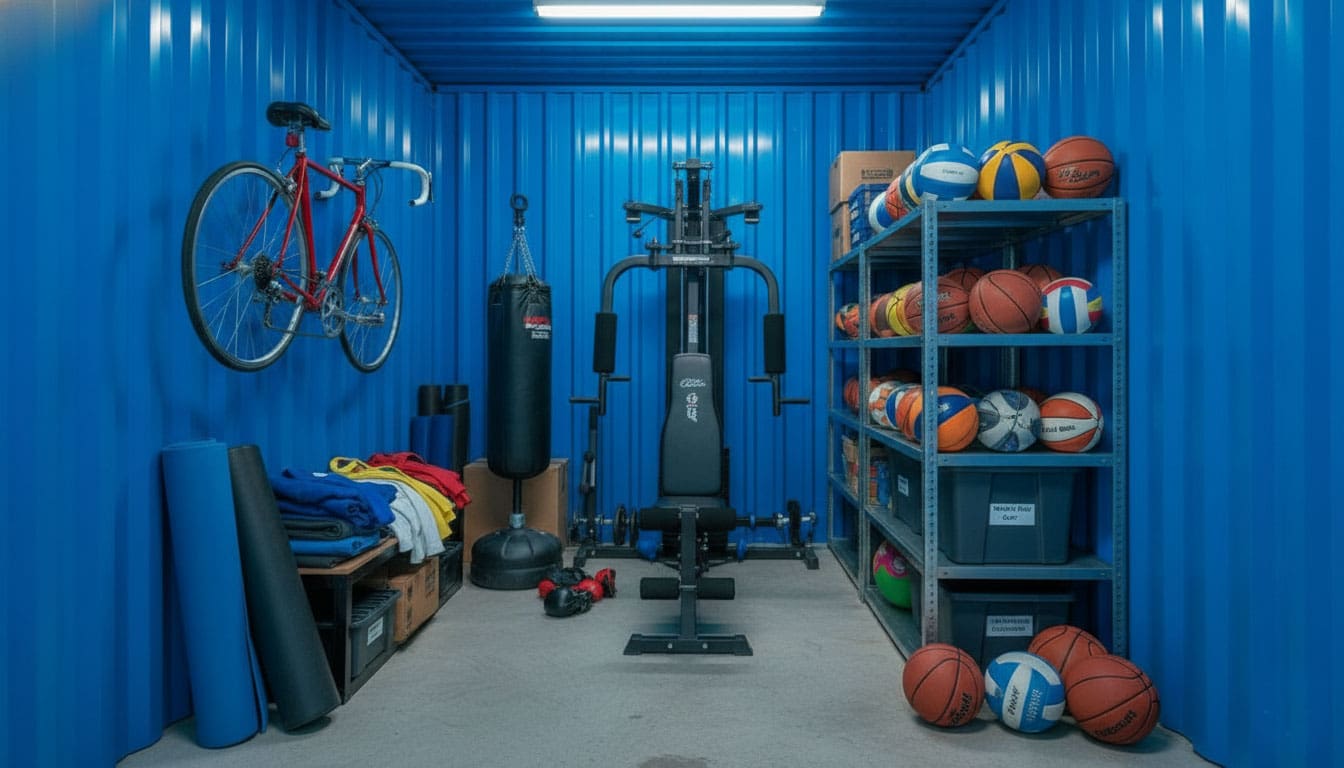
Sports Equipment: Skateboards, old weights, golf club bags.
Travel Gear: Huge suitcases (try nesting smaller suitcases inside larger ones to save space).
Seasonal Appliances: Fans in winter, heaters in summer, Christmas trees.
After filtering out unnecessary items, rearrange what you’ve kept with an “architect’s mindset.”
Utilize Vertical Space: Use tall, ceiling-high shelves and uniform storage boxes.
Labeling: Don’t underestimate the power of labeling; it helps you find items in 5 seconds instead of 5 minutes.
“One In – One Out” Rule: When you buy a new item, be ready to let an old one go.
Step 6: Move Seldom-Used Items Out of Your Living Space
This is a breakthrough step to free up 20-30% of your space without discarding valuable items. In major cities by 2026, the trend of using Self-storage is becoming increasingly popular.
Self-Storage Units: Small, private, locker rooms you can access 24/7.
Ideal Environment:Storage facilities often have humidity control, which helps preserve electronics, books, or leather goods better than your home might.
Mental Freedom: A more spacious home leads to a lighter mind.
Step 7: Maintain a Tidy Space After Decluttering
Decluttering is a journey, not a destination. To prevent things from returning to “square one” after two weeks:
Regular Review: Conduct a “quick inventory” every 3-6 months.
Buffer Zone: Set up a “pending” basket. Newly purchased items or those without an assigned spot will stay here for a maximum of one week before finding their permanent home.
Stop Emotional Hoarding: Before buying an item, ask yourself: “Where will I put this?”
Common Mistakes That Make Home Decluttering Ineffective
Unsuccessful home decluttering often stems from poor categorization, emotional attachment to items, and a lack of external storage solutions.
1. “Out of Sight, Out of Mind” – Shoving Items into Closets
Many people view decluttering as making surfaces (floors, tabletops) completely clear by stuffing everything into closets, under beds, or in hidden corners.
Consequence: You’re not actually freeing up space; you’re merely “relocating” the clutter. Your closet will soon become a “ticking time bomb,” and you’ll spend twice as long trying to find what you need.
Advice: Confront the item. If it doesn’t have a place in plain sight, perhaps it shouldn’t be in your home at all.
2. The Paradox of Boxes: Buying More Without Reducing Clutter
A classic mistake is buying many plastic boxes and beautiful organizers before categorizing your belongings.
Consequence: You’re “organizing” waste. Having more boxes only creates a false sense that your home is tidy, but in reality, your living space is still occupied by the same amount of excess stuff.
Golden Rule: Declutter first, buy boxes later. Only purchase storage solutions when you know exactly how many items you need to store.
3. Keeping Items Due to “Regret” and “What If I Need It Later?”
This is the biggest psychological barrier. We often hold onto items linked to memories or broken appliances with the thought, “one day I’ll fix it.”
The Truth: According to 2026 consumer behavior statistics, 90% of “what if I need it” items will never be touched over the next two years.
Advice: Try the “90/90 rule”: Have you used it in the last 90 days? And do you plan to use it in the next 90 days? If not, be brave and let it go.
Summary Table of Mistakes and Solutions
Mistake
Nature
“Correct” Solution
Shoving items into hidden corners
Avoiding clutter
Categorize and assign a specific place for each item.
Buying storage boxes too early
Storing unnecessary items
Eliminate excess items before considering buying trays/boxes.
Overlooking bulky items
Letting large objects occupy “prime” space
Move seasonal/rarely used items to external storage or the attic.
Decluttering by room
Easily leads to items being moved around
Declutter by category (e.g., clear all books in the entire house at once).
4. Not Dealing with Bulky “Odd Objects”
Empty suitcases, exercise machines used as clothes racks, or electronic equipment cartons… these are the items that take up the most space but are often overlooked because we’ve become too accustomed to their presence.
Small Tip: Try taking a photo of your room. When viewed through a picture, bulky, superfluous items will stand out more clearly than when you look at them directly with your naked eye.
Effective home decluttering isn’t about making your house look like a spotless showroom, but about creating a space where every item serves your current life, not the person you were in the past or a vague future plan.
7-Step Checklist to Declutter and Free Up 30% of Your Space
A concise checklist to help you declutter in just 1–2 days without missing any crucial steps.
Phase 1: Filter & Confront (Day 1)
Goal: Completely eliminate items that don’t add value.
Step 1: Quick Inventory (30-60 minutes)
Go through 5 areas: Living Room, Kitchen, Bedroom, Balcony, Shoe Cabinet.
Identify “hot spots” that are crammed with items.
Step 2: Categorize into 4 Groups (3-Second Rule)
Pick up an item and decide immediately: Use Now – Store – Donate/Sell – Trash.
Step 3: Apply the 12-Month Rule
Ruthlessly eliminate clothes not worn, broken appliances, and old decor that has been “dormant” for the past year.
Phase 2: Optimize & Organize (Day 2)
Objective: Re-establish the flow of items to allow the space to “breathe.”
Step 4: Handle Bulky & Seasonal Items
Nest smaller suitcases inside larger ones.
Vacuum-seal duvets and winter clothes to reduce their volume by 70%.
Step 5: Implement a Smart Storage System
Utilize tall shelves up to the ceiling (maximizing vertical space).
Label every storage box to avoid rummaging when needed.
Step 6: Reclaim “Prime Real Estate”
Move infrequently used items (souvenirs, seasonal equipment) out of main living areas.
Tip: Consider renting a self-storage unit if your home is too cramped.
Phase 3: Sustainable Maintenance (Daily)
Objective: Prevent clutter from returning.
Step 7: Establish New Disciplines
Adopt the “1 in – 1 out” rule (Buy 1 new item, discard 1 old item).
Spend 5 minutes each evening returning items to their designated “home.”
“Don’t declutter with memories; declutter with square footage.” If you feel sentimental, take a photo of the item as a keepsake before letting it go. A picture takes up 0 bytes on your floor but still preserves the memory!
DIY Home Organization vs. Combining with Storage Units: Which Option is Right for You?
DIY organization suits small homes with fewer possessions, while combining with storage units effectively handles infrequently used items, especially for family apartments and those moving homes.
Criteria
DIY Home Organization
Off-site Storage Combination
Cost
Lowest: Only costs for boxes, shelves, and your effort.
Moderate: Additional monthly storage rental fees (starting from a few hundred thousand VND).
Effort
Very High: Must find ways to “cram” or liquidate all excess items to create space.
Lower: Simply pack and move infrequently used items to storage; your home is instantly cleared.
Space Efficiency
Low (5-10%): Merely reorganizing existing items for a tidier look.
High (20-40%): Truly frees up actual space by removing physical objects from the home.
Sustainability
Difficult: Prone to becoming cluttered again if the number of items still exceeds the home’s capacity.
Sustainable: Creates genuine empty space to maintain a tidy lifestyle long-term.
When Should You Choose Which Option?
Choose “DIY Home Organization” when:
You are single or live in a studio apartment with a minimal number of possessions.
You embrace Minimalism and are willing to donate/discard most infrequently used items.
Your budget for decluttering is limited.
Choose “Combining with Storage Units” when:
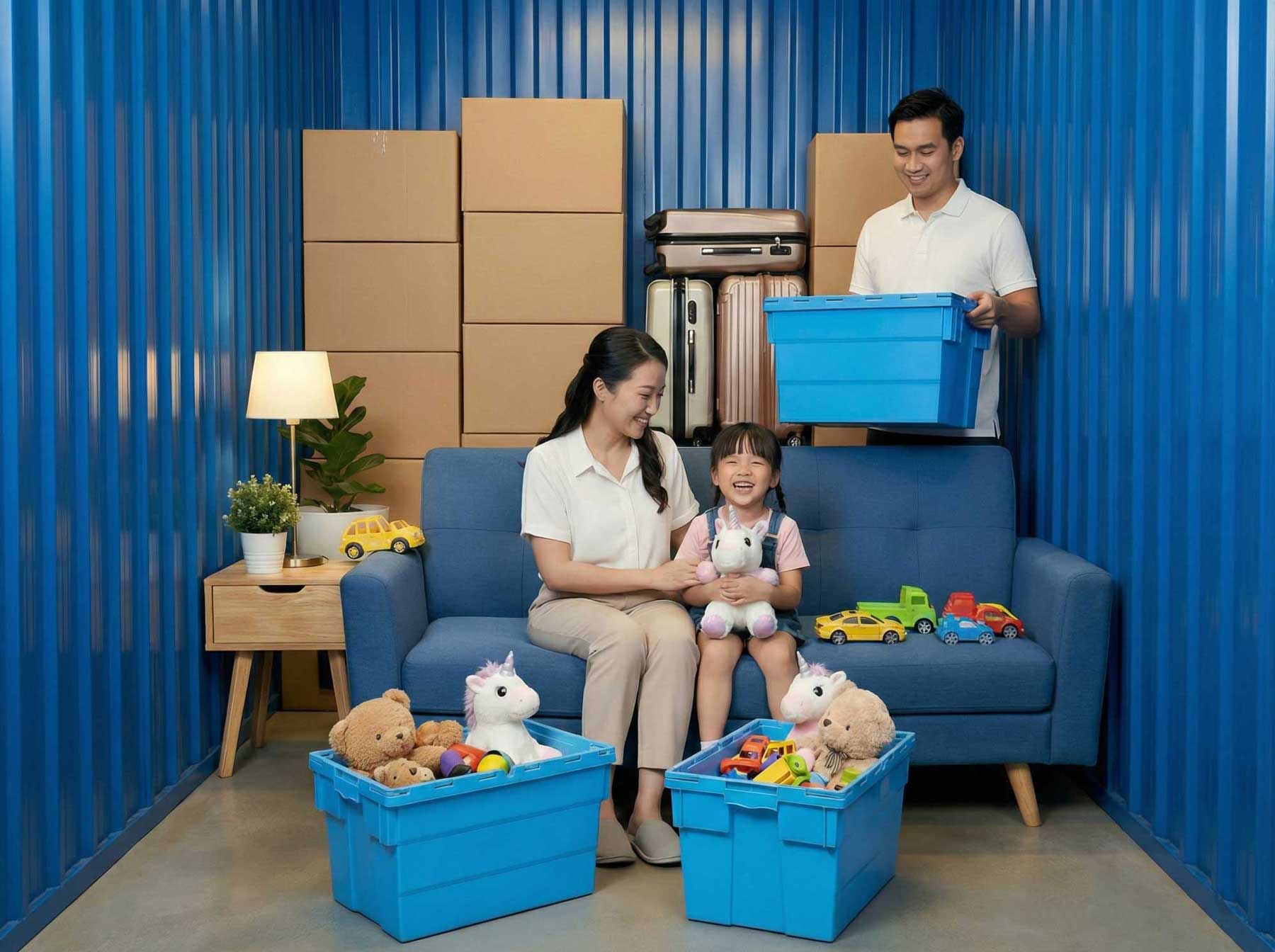
Families with children: Need to keep old baby items for subsequent children (cribs, playpens, strollers…) but lack storage space at home.
Hybrid/Home Office workers: Need to free up 2–3m² for a desk and ergonomic chair without wanting to sell other belongings.
People with special hobbies: Have bulky sports equipment (SUP paddleboards, golf bags, bicycles), collectibles, or a large book library.
Seasonal items: Have too many bed linens, winter clothes, or event decorations that need to be stored in a dry environment (with humidity control).
Don’t view renting a storage unit as “extra expense.” Consider it “buying more living space” at an affordable price. In major cities, the price per square meter of housing is very high. Instead of having to upgrade to a larger apartment (costing billions of VND), renting a 2m² mini-storage unit only costs a few hundred thousand VND/month but offers equivalent efficiency.
FAQ
Why does proper decluttering free up to 30% of living space?
Because most space is occupied by unused items, seasonal goods, and “visual clutter.” By re-categorizing and moving stored items out of active living areas, you reclaim the physical square footage that was previously wasted.
What is the 12-month rule in decluttering?
If you haven’t touched an item in the past 12 months, chances are you’ll never need it again. It’s time to sell, donate, or discard it.
Should I declutter by room or by category?
You should declutter by category (e.g., gathering all clothes at once). This helps you see the total volume of what you own, making keep/toss decisions more accurate.
How does vertical storage benefit small apartments?
Vertical storage utilizes wall space and ceiling height, freeing up floor space – the essential area needed for movement and daily activities.
How do I handle sentimental items?
Take photos to preserve memories digitally and keep only 1-2 most representative pieces. Memories reside in your heart, not in dust-collecting objects.
Is self-storage actually necessary?
Absolutely necessary for urban dwellers with bulky or seasonal items. Renting a mini-storage unit is often much cheaper than upgrading to a larger apartment.
What is the biggest mistake when decluttering?
Buying storage bins before sorting your items. This often leads to “organizing trash” rather than actually eliminating it.
How to maintain a tidy home in the long run?
Apply the “one-in, one-out” rule. Every time you buy something new, discard an equivalent old item to maintain spatial balance.
Does decluttering help reduce stress?
Yes. A space with less “visual clutter” helps the brain relax, increases focus, and improves sleep quality.
Where should I start decluttering to avoid feeling overwhelmed?
Start with the smallest area or the one with the least sentimental value, like a shoe rack or a junk drawer. Small initial wins build momentum for larger areas.
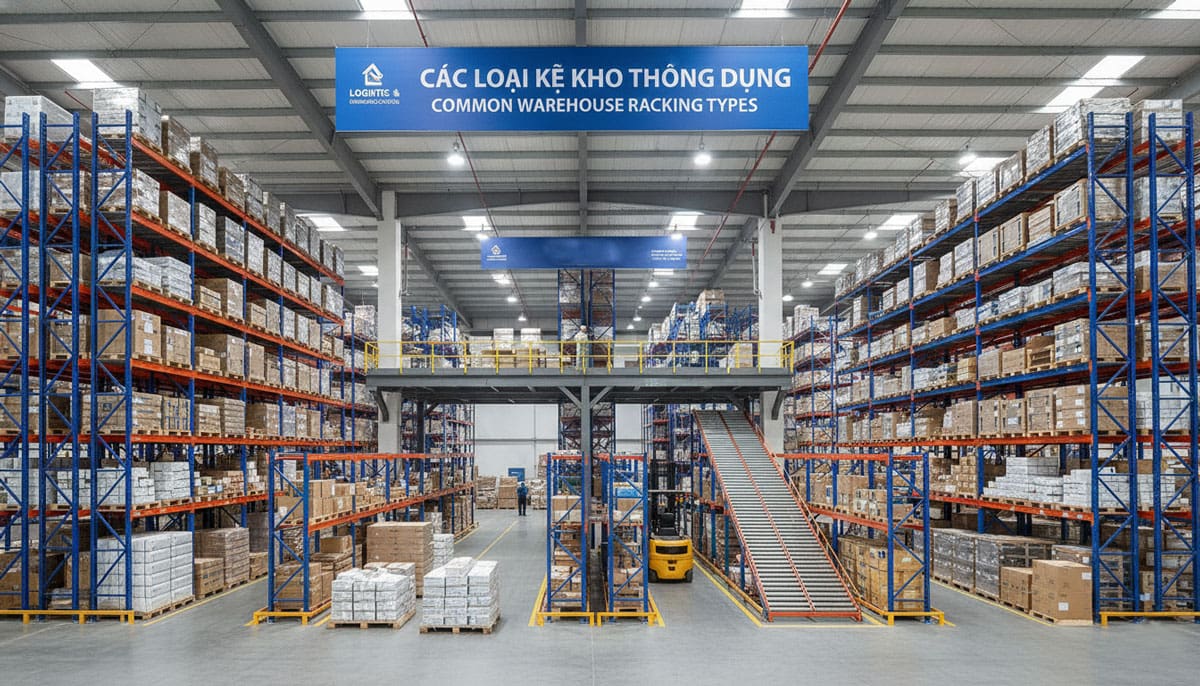
Warehouse racking systems are core solutions that help optimize space, ensure safety, and enhance warehouse operational efficiency. Depending on the type of goods, load capacity, inventory turnover, and warehouse area, logistics and storage businesses will choose different types of racks such as selective racking, drive-in racking, medium-duty racking, or mezzanine flooring. Selecting the right type of racking helps reduce long-term costs, increases scalability, and meets modern operational standards.
What are warehouse racking systems? Why are they crucial in warehouses?
Warehouse racking systems are specialized shelving units (often made of powder-coated steel) used to store goods vertically, helping to optimize space, manage inventory efficiently, and ensure safety in logistics warehouses, production warehouses, and self-managed storage facilities.
Real-world value:
Increase warehouse capacity by 30–60%: Maximize ceiling height utilization instead of just floor space.
Reduce risk of goods damage: Goods are layered, preventing direct stacking and protecting against moisture and mold from the ground.
Standardize fire prevention & occupational safety procedures: Create clear aisles, allowing fire sprinkler systems to reach every corner and minimizing forklift collisions.
Why are warehouse racking systems “vital” for businesses?
If a warehouse is likened to a giant library, then warehouse racks are the shelves that prevent you from having to rummage through the entire building to find an item.
1. Optimize “Every Inch Counts”
Instead of goods occupying the entire floor, racking systems allow you to stack items high (up to 12-15m). This is extremely important for storage or 3PL logistics businesses, where every square meter is measured in dollars.
2. Smart Inventory Management (FIFO/LIFO)
Racking systems help you easily apply modern inventory management principles:
FIFO (First In, First Out): Goods entered first are dispatched first, crucial for food and pharmaceuticals.
LIFO (Last In, First Out): Goods entered last are dispatched first, suitable for construction materials or large quantities of homogeneous goods.
3. Protect Assets and People
Moisture protection: Goods are elevated from the ground, avoiding humidity and rodents.
Occupational safety: Racks are designed for precise load bearing (from a few hundred kg to several tons per level), preventing the risk of goods collapse that could endanger staff.
Classifying Warehouse Racking Systems by Load Capacity
Warehouse racking systems are typically classified based on their load-bearing capacity per shelf level. This classification helps businesses accurately determine the appropriate shelving type for their specific goods, from light document boxes to heavy industrial pallets weighing tons.
Golden Rule: Always choose racking with a design load capacity at least 10-15% higher than the actual goods weight to account for errors and ensure long-term structural durability.
Light-Duty Racking
This is the most common type of racking in daily life and offices.
Load capacity: Typically under 200kg/level.
Characteristics: Simple structure, often versatile slotted angle steel shelving. Quick to install, easy to adjust shelf spacing.
Applications: Storing documents, books, household items, or small retail goods in self-managed warehouses.
Advantages: Lowest cost, absolute flexibility.
Medium-Duty Racking
The “national” racking system for commercial and distribution warehouses.
Load capacity: Ranges from 200kg – 500kg/level.
Characteristics: Uses stronger beams and deck panels (steel sheets or wood). Goods are usually loaded/unloaded manually or with specialized step ladders.
Advantages: Good load-bearing capacity, high durability (often over 10 years), professional aesthetic.
Heavy-Duty Racking
The backbone of modern logistics centers.
Load capacity: From 500kg to several tons/level.
Characteristics: Large upright steel structure, extremely high load-bearing beams. Requires forklifts for loading/unloading goods. Popular types include Selective, Double Deep, Drive-in racking.
Applications: Storing large palletized goods, industrial machinery, raw materials in logistics hubs or factories.
Advantages: Excellent vertical space optimization (up to 12m), durable in harsh operating environments.
Quick Comparison Table of Racking Types by Load Capacity
Criteria
Light-Duty Racking
Medium-Duty Racking
Heavy-Duty Racking
Max Load Capacity
< 200kg/level
200kg – 500kg/level
> 500kg/level (up to 3000kg)
Loading Method
Manual
Manual / Step ladder
Forklift
Main Material
Slotted angle steel, steel shelves
Powder-coated steel
High-strength cold-rolled steel
Common Height
1m – 2.5m
1.5m – 4m
3m – 12m
Note: Never “test” the limits of your racking: A common mistake is concentrating goods in the middle of a shelf level. Always distribute weight evenly across the entire shelf surface to prevent beam deflection or upright deformation.
By 2026, many heavy-duty racking systems have integrated smart load sensors. If you overload, the system will send alerts directly to your phone or warehouse control center to prevent collapse.
Most Common Warehouse Racking Systems Today
Popular warehouse racking types are designed based on inventory retrieval methods (FIFO/LIFO) and storage density, meeting diverse needs from small warehouses to large logistics centers.
Choosing the right warehouse racking system is like solving a spatial puzzle: How can you store the most goods while retrieving them the fastest? Below are the “backbone” racking systems of the logistics industry in 2026.
Selective Pallet Rack
This is the ‘national’ or most common type of racking, found in almost every warehouse in Vietnam.
Features: Each pallet occupies a separate, dedicated position on the rack. Forklifts can directly access any pallet without needing to move others.
Advantages: Offers 100% pallet accessibility and absolute flexibility, ideal for warehouses managing thousands of different SKUs (Stock Keeping Units).
Best suited for: B2C warehouses, e-commerce fulfillment centers, or facilities handling a wide variety of product types.
Drive-In / Drive-Through Racking
The ultimate solution for warehouses aiming to maximize space utilization.
Features: Forklifts drive directly into the racking lanes to store pallets. This system significantly reduces or eliminates most aisles between rows of racks.
Advantages: Achieves extremely high storage density (up to 70-80% of warehouse floor space).
Best suited for: Homogeneous goods (same SKU), and large-batch inbound/outbound operations (e.g., beverage warehouses, packaged food storage).
Double Deep Racking
A clever variation of Selective racking designed to boost storage capacity.
Features: Two rows of Selective racks are placed back-to-back, creating a two-pallet deep storage configuration.
Advantages: Reduces the number of aisles, increasing storage space by approximately 30% compared to standard Selective racking.
Note: Requires a specialized forklift with an extended reach (Deep Reach Forklift) to access pallets stored at the back.
Push Back Racking
Utilizes gravity to operate on a LIFO (Last-In, First-Out) principle.
Features: Pallets are placed on nested carts that slide along slightly inclined rails. When the front pallet is removed, the pallets behind it automatically glide forward to the picking position.
Advantages: Forklifts do not need to drive into the rack structure, unlike Drive-In systems, ensuring greater safety and faster retrieval speeds.
Flow Rack (Pallet Flow Racking – FIFO)
The ‘king’ of warehouses dealing with expiry dates or strict inventory rotation requirements.
Features: Employs a system of rollers and gravity. Goods are loaded from one end and retrieved from the other.
Advantages: Strictly adheres to the FIFO (First-In, First-Out) principle. Achieves extremely fast picking speeds thanks to gravity assistance.
Best suited for: Food warehouses, pharmaceutical storage, and high-standard cold storage facilities.
Rack Type
Accessibility
Storage Density
Picking Principle
Selective
100% (Very High)
Low
Flexible
Double Deep
50% (Medium)
Medium – High
LIFO
Drive-In
Low
Very High
LIFO
Push Back
Medium
High
LIFO
Flow Rack
High
High
FIFO
Trend 2026: Many modern racking systems are now integrating IoT sensors at each pallet position. These sensors report real-time empty/full status directly to the Warehouse Management System (WMS), making inventory location as straightforward as finding a file on your computer.
Which Warehouse Racking System is Right for Your Business Model?
Choosing the right warehouse racking isn’t just about purchasing storage equipment; it’s a strategic challenge to optimize profit per square meter of warehouse space. With land costs at logistics hubs projected to rise significantly by 2026, an incorrect racking choice could slow down your entire operational chain and escalate long-term expenses.
To make the right choice, businesses should consider these four core factors:
Goods type: size, weight capacity, uniformity
Inbound/outbound frequency: fast or slow inventory turnover
Warehouse area: floor space and ceiling height
Investment budget: initial costs and long-term operating expenses
Quick Reference Guide by Common Warehouse Models
Business Model
Suitable Racking Type
Core Advantages
General Logistics (3PL)
Selective, Double Deep
Flexible, 100% SKU accessibility, easily adaptable to contracts
Accelerates picking, supports FIFO, reduces order processing time
Detailed Analysis Based on Actual Needs General Logistics & Distribution Warehouses (3PL)
3PL warehouses are characterized by diverse goods that constantly change according to each client – truly a mix of “everything under the sun.”
Recommended Solutions:
Selective racking is an essential foundation
Combine with Double Deep for long-term storage areas
Why It’s Effective:
Selective allows access to any pallet without moving others
Double Deep increases capacity by ~30% while maintaining operational control → Aligns with 3PL warehouse trends for 2026: flexible yet cost-optimized per m²
Manufacturing & Cold Storage Warehouses
Goods often have high volumes but few SKUs (e.g., beverages, frozen foods, raw materials for production).
Recommended Solutions:
Drive-In / Push Back
For large, highly automated warehouses: Radio Shuttle (robot racking)
Why It’s Effective:
Maximizes aisle space reduction → increases storage density
For cold storage, “compressing” goods reduces the volume requiring refrigeration → Saves significant electricity costs annually, aligning with ESG criteria
The greatest pressure lies in order processing speed (lead time) and picking accuracy.
Recommended Solutions:
Flow Rack (gravity flow racking) for fast-moving items
Selective for slower-moving inventory areas
Why It’s Effective:
Flow Rack operates on a FIFO basis, with goods automatically sliding towards the picker
Reduces warehouse staff travel time by approximately 40% → Increases order processing speed and reduces errors during peak seasons
There’s no single “best” racking type for all warehouses. The most suitable racking system is one that helps you maximize capacity, reduce operating costs, and accelerate goods handling within your specific business model.
Safety & Operational Standards for Warehouse Racking Installation
Warehouse racking must strictly adhere to design load standards, floor anchoring techniques, fire safety distances, and emergency exits to ensure safe operation and meet cargo insurance requirements. Key considerations:
Load Signs: Clearly display the maximum load capacity for each rack level in an easily visible location.
Fire Safety Clearance: Ensure a minimum distance of 50cm from the top of the stored goods to the sprinkler heads.
Regular Inspections: Conduct structural rack inspections every 6-12 months to detect any early signs of deformation or rust.
Detailed Technical Requirements:
Bolting: All heavy-duty rack uprights must be bolted to the concrete floor using expansion anchors to ensure stability and prevent tipping in case of minor impacts or seismic activity.
Floor Flatness: The warehouse floor must meet standard flatness requirements. If the floor is uneven, the racking will twist, reducing its load-bearing capacity by 20-30%.
Post Protectors: Install steel guards at rack corners to protect uprights from direct impact by forklifts – a leading cause of rack collapse.
“Heavy Below – Light Above” Rule: Always prioritize placing the heaviest pallets on the ground floor or the lowest levels to lower the overall system’s center of gravity.
Modern Warehouse Racking Trends in Logistics & Self-Storage
The warehousing industry is rapidly shifting towards flexible, modular racking solutions that are easily reconfigurable and optimized for automation. This move aims to meet ESG trends and significantly reduce long-term operational costs.
Key Trends for 2026:
Reusable Modular Racking: Smart designs allow for quick assembly, disassembly, and relocation without damaging components.
Robot & AGV Optimized Racking: Features integrated rails and sensors for seamless coordination with Automated Guided Vehicles (AGVs).
Urban Warehouse Design (Micro-fulfillment): Maximizes vertical space in the confined areas of major city centers.
In-depth Trend Analysis:
Mezzanine Floor Systems: Instead of costly reinforced concrete construction, modern warehouses are utilizing steel floor racking to double their usable area. This is also a ‘green’ solution, as it’s fully recyclable.
IoT-Integrated Smart Racking: Beams are equipped with vibration and load sensors. If excessive deflection or a strong impact is detected, the system automatically sends alerts to the warehouse manager’s phone.
“Net-Zero” Warehouse Racking: Utilizes steel produced with renewable energy and VOC-free (Volatile Organic Compound) powder coating, helping businesses achieve ESG certification faster.
High-Rise Urban Warehouses: In cities like Ho Chi Minh City and Hanoi, the trend of multi-story warehouses with specialized freight elevator systems is flourishing, employing flexible, medium-duty racking solutions.
If you’re planning to install new warehouse racking, always request as-built drawings and load capacity certification from your contractor. These documents are your ‘safeguard,’ making interactions with insurance providers and fire safety authorities much smoother.
FAQ
What is a warehouse racking system?
A warehouse racking system is a specialized steel framework designed to store goods vertically, optimizing floor space and enabling professional inventory management
How many types of warehouse racks are there based on load capacity?
Warehouse racks are typically divided into three types: Light-duty racks (under 200kg/level), Medium-duty racks (200kg – 500kg/level), and Heavy-duty racks (over 500kg/level).
Why is Selective Racking the most popular?
Selective Racking is popular due to its 100% direct access to every pallet, making it ideal for warehouses with high SKU counts and compatible with all forklift types.
What are FIFO and LIFO principles in warehousing?
FIFO (First-In, First-Out) is ideal for perishable goods. LIFO (Last-In, First-Out) is suitable for high-density storage of homogenous products.
Do warehouse racks need to be bolted to the floor?
Yes. All heavy-duty racking systems must be bolted to the floor using steel anchors to ensure stability and prevent collapse in case of accidental impact.
What is the fire safety distance for warehouse racks?
According to fire safety standards, there must be a minimum clearance of 50cm from the top of the goods to the fire sprinkler heads to ensure effective firefighting.
How to increase warehouse capacity without expanding the floor area?
You should use High-bay heavy-duty racks to utilize vertical space or install a Mezzanine floor to double your usable floor area.
How often should warehouse racks be inspected?
Businesses should perform weekly self-inspections and conduct deep technical audits every 12 months to detect structural deformations or corrosion.
Which business models are medium-duty racks suitable for?
Medium-duty racks are the perfect choice for retail stores, spare parts warehouses, pharmaceuticals, or self-storage service providers.
What are the smart racking trends in 2026?
The current trends are Radio Shuttle systems and IoT-integrated racks that provide real-time pallet location tracking and optimization for Autonomous Guided Vehicles (AGVs).
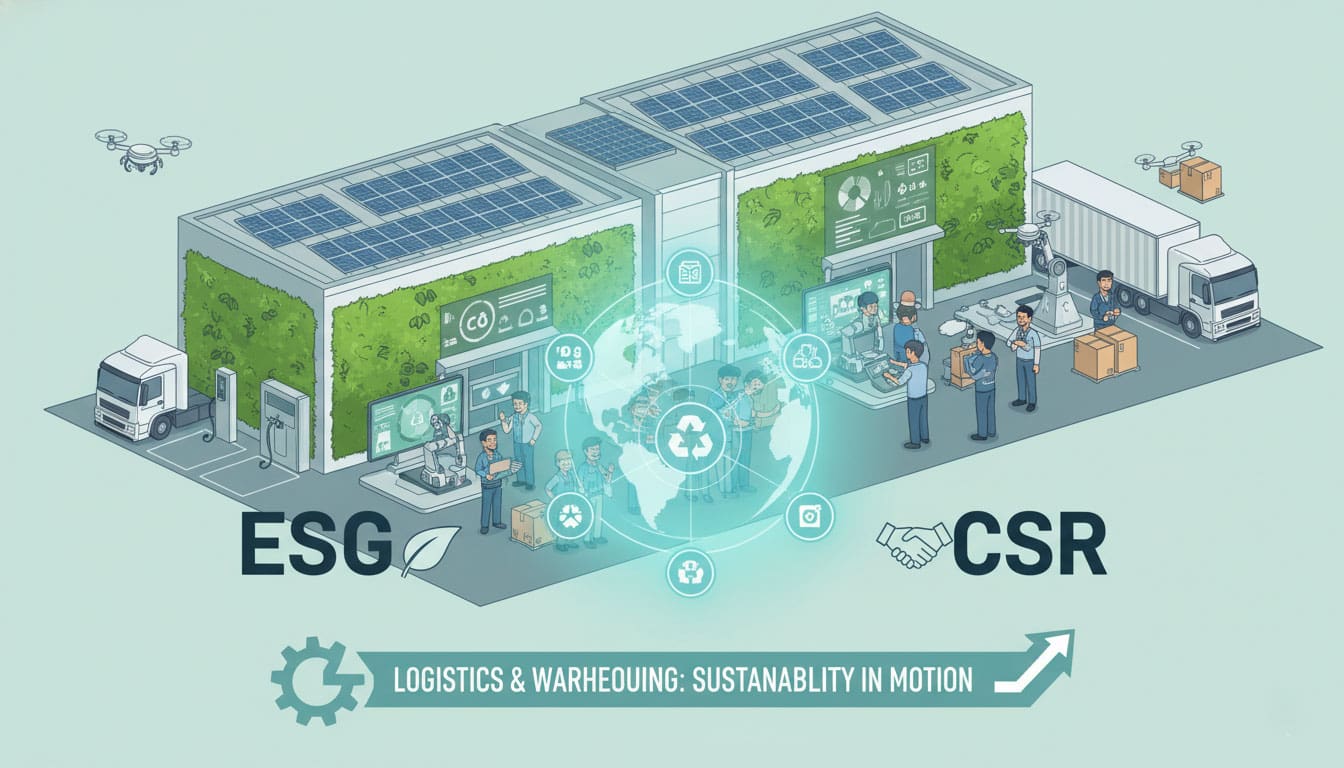
ESG and CSR in the logistics and warehousing industry are no longer merely formal activities but have become mandatory operational standards, especially for businesses serving B2B, FDI clients, and global supply chains. Adopting ESG helps logistics companies reduce energy costs, ensure legal compliance, enhance brand reputation, and increase their ability to secure long-term contracts with domestic and international partners.
How do ESG and CSR differ in the logistics & warehousing industry?
ESG is a set of criteria measuring performance in Environmental, Social, and Governance aspects, acting as a quantitative “metric” that helps investors and partners assess a business’s sustainability. Meanwhile, CSR (Corporate Social Responsibility) leans towards ethical values and voluntary activities aimed at building brand image.
In the logistics and warehousing industry, ESG is mandatory and measurable (e.g., carbon emissions per package), while CSR typically plays a supportive role in building corporate image and culture through community activities.
1. Definition of ESG (Environmental – Social – Governance)
ESG is a governance framework that helps logistics businesses operate sustainably through 3 pillars:
Environmental: Focuses on reducing the carbon footprint. Example: Using electric vehicles (EVs), installing rooftop solar panels on warehouses, optimizing routes to reduce fuel consumption.
Social: Focuses on relationships with people. Example: Ensuring occupational safety for warehouse staff, providing welfare benefits for long-haul drivers, diversifying the workforce.
Governance: Focuses on transparency and business ethics. Example: Publishing regular emissions reports, combating corruption in customs clearance processes, strictly complying with international laws.
2. Definition of CSR
CSR is a business model that helps companies be self-aware of their impact on society. These are “inspiring” activities that build trust.
Example in Logistics: Granting scholarships to drivers’ children, providing free relief goods to disaster-stricken areas, or organizing a “Green Transport” day to raise community awareness.
3. Comparison Table: ESG vs CSR in Warehouse & Logistics Operations
Criteria
CSR (Corporate Social Responsibility)
ESG (Environmental – Social – Governance)
Nature
Voluntary, ethical.
Mandatory (by regulation/partner requirements).
Measurement
Difficult to quantify, often told through stories/images.
Quantified by metrics (KPIs, sensor data, financial reports).
Donating ambulances, planting trees at warehouses.
Transitioning to LEED-certified warehouses, measuring CO2 emissions per km.
Vision
Building brand reputation and trust.
Ensuring competitiveness and survival in the green supply chain.
4. Why is ESG “replacing” traditional CSR?
By 2026, CSR alone will no longer be sufficient to vouch for a reputable logistics company. ESG is becoming a top priority because:
International market requirements: Partners in the EU or US now require transport companies to have ESG certifications to sign long-term contracts.
Financial pressure: Banks prioritize low-interest loans for warehousing businesses with good ESG scores (Green Finance).
Technological support: The explosion of AI and IoT allows for precise measurement of indicators (warehouse temperature, energy consumption), transforming the “vague” commitments of CSR into the “speaking numbers” of ESG.
If CSR is a company’s “promise” for a better world, then ESG is the “proof” that the company is truly acting and operating effectively.
Why Has ESG Become a Mandatory Standard in the Logistics & Warehousing Industry?
The logistics and warehousing sector is currently one of the industries facing the most significant ESG pressure. This is because it acts as a massive energy consumer, generates high CO₂ emissions, and carries numerous potential occupational safety risks.
Today, multinational corporations (MNCs), major investment funds, and FDI clients no longer view ESG as merely a “bonus point.” They consider it a prerequisite: failing to meet ESG standards means being unable to enter their supply chains.
Looking ahead to 2026, if you operate a warehouse without an ESG report, you’re not just being “outdated”; you’re effectively closing the door on participating in the global marketplace.
1. Pressure from FDI Clients & Global Supply Chains
Giants like Apple, Samsung, and Nike have all committed to achieving Net Zero (zero net emissions). However, the majority of their emissions fall under Scope 3 (indirect emissions from their supply chains and transportation).
Chain Reaction: To achieve their green goals, these corporations are compelled to “push” their logistics service providers (3PL/4PL) towards greening their operations.
Green Certifications: If your warehouse doesn’t meet LEED standards or lacks a smart energy management system, you’ll be disqualified from the partner list right from the “get-go.”
2. Stringent Requirements from Banks and Investment Funds
Capital flow into the logistics sector is currently shifting strongly towards Green Credit.
Preferential interest rates: Banks are willing to reduce loan interest rates for projects building smart warehouses and automated warehouses that utilize renewable energy.
Investment barriers: International venture capital funds and pension funds now have strict regulations: They only invest in companies with an ESG score of “Good” or higher to mitigate future legal and reputational risks.
3. Legal Regulations & International Standards
Vietnamese and international governments have shifted from “encouraging” to “mandating”:
Carbon Border Adjustment Mechanism (CBAM): Goods exported to the EU must report emissions during transportation and storage.
Net Zero 2050 Roadmap: In Vietnam, regulations on greenhouse gas inventory are gradually being applied to large logistics enterprises. Compliance is no longer an option, but a legal responsibility.
4. ESG: The “Supplier Shortlist” Condition
In warehouse service bidding sessions for 2026, the scoring criteria have completely changed:
Traditional Criteria
Modern ESG Criteria (Shortlist)
Cheapest rental price
Optimal cost coupled with an emission reduction roadmap
Large warehouse area
Energy efficiency per m²
Convenient location
Integration of EV charging stations & Rooftop solar power
Long-standing experience
Transparent reporting on employee safety and welfare
ESG acts like a “passport.” You might have the most modern warehouse facilities, but if you cannot demonstrate sustainability, you will lose contracts to smaller but “greener” competitors.
ESG in Warehouse Operations: What Should Businesses Do?
ESG in warehousing focuses on three pillars: Minimizing energy consumption (Environmental), enhancing occupational safety (Social), and transparent operational processes (Governance).
To begin, businesses should focus on practical solutions such as: Installing rooftop solar power, using motion-sensor LED lighting, tightening warehouse fire prevention and fighting procedures, and digitizing operational reports to ensure accuracy and transparency.
1. E – Environmental: Greening Warehouse Infrastructure
The Environmental pillar often yields the most direct financial benefits through operational cost savings.
Rooftop Solar Power: Utilize large roof areas to install solar panels. In Vietnam in 2026, this not only helps reduce electricity bills but may also allow for selling surplus electricity (depending on the mechanism) or earning carbon credits.
Energy-saving equipment: Replace 100% of lighting with motion-sensor LED lights (only illuminate when occupied). Use electric forklifts instead of diesel forklifts to reduce noise and emissions in enclosed warehouses.
Packaging Waste Management: Implement a “Circular Logistics” model, encouraging the use of recycled plastic pallets, containers, and bio-based PE shrink wrap.
2. S – Social: Focus on People and Safety
In warehousing, people are the most valuable asset. A positive working environment will reduce staff turnover and errors.
Workplace safety is paramount: Ensure full provision of Personal Protective Equipment (PPE) and conduct regular training sessions on forklift operation and goods arrangement. Install natural ventilation systems or smart cooling solutions to maintain a comfortable temperature for warehouse staff.
Standardized Fire Protection System: Invest in modern automatic fire alarm and suppression systems. This is a “make-or-break” standard for gaining trust from insurance companies and clients storing high-value goods.
Protecting Customer Assets: Utilize 24/7 AI-powered camera surveillance systems and biometric access control to ensure goods are not lost or damaged.
3. G – Governance: Transparent and Standardized Management
Effective governance helps businesses mitigate legal risks and build absolute trust with partners.
Standard Operating Procedures (SOPs): Every operation, from inbound receiving and packaging to outbound shipping, must follow clear procedures and be recorded in the Warehouse Management System (WMS).
Contract & Cost Transparency: Implement Blockchain technology or automated invoicing software so customers can track storage costs in real-time, with no hidden fees.
Internal ESG Audits and Reporting: Establish specific Key Performance Indicators (KPIs) (e.g., electricity consumption per m², number of workplace accidents per year) and publish these reports for stakeholders.
Don’t try to do everything at once. Start by digitizing processes (G) to gather data, then optimize energy (E) to see immediate economic benefits, and finally, perfect the working environment (S).
ESG in Logistics, Transportation, and Supply Chains
In transportation logistics, ESG focuses on optimizing resource efficiency (fuel, time), minimizing carbon footprints, and ensuring humane operations.
Businesses that successfully implement ESG often integrate AI technology to manage fleets, calculate warehouse sizes, monitor real-time emissions, and build a strict safety culture to protect both drivers and goods.
Practical Implementation Content:
Optimizing Transportation & Routes: Utilizing AI algorithms to plan deliveries, reduce deadhead miles, and optimize vehicle load capacity.
Reducing CO₂ Emissions: Gradually transitioning to electric vehicle (EV) fleets or using biofuels. Installing sensor systems to monitor fuel consumption per kilometer.
Traffic Safety & Human Well-being: Implementing journey monitoring systems and collision warning systems (ADAS) to protect drivers. Strictly regulating rest periods to prevent fatigue.
Tracking & Reporting Technology: Using digital platforms to automate the collection of emission data (Scope 1, 2, 3), making ESG reports transparent and ready for international audits.
CSR in the Logistics & Warehousing Industry: What is its role?
CSR still serves as the “soul” of a business, helping to build internal cohesion and trust with local communities.
However, by 2026, CSR will no longer be about isolated charitable activities. It will only be truly effective when it acts as a “satellite” supporting the core ESG system, shifting from “giving what you have” to “being responsible for what you do.”
Practical Implementation Content:
Internal CSR: Beyond just salaries and bonuses, this includes career development paths, digital skills training for warehouse staff so they aren’t replaced by robots. Providing mental health care for long-haul drivers.
Community CSR: Supporting local transportation infrastructure where warehouses are located, providing free transportation services for disaster relief or medical campaigns.
CSR vs ESG – Avoiding “Greenwashing”: Businesses need to avoid using small charitable activities (CSR) to mask environmental issues or poor governance (ESG). A tree-planting campaign becomes meaningless if the vehicle fleet still emits black smoke beyond regulated limits.
Below is a comparison and combination table to give you an overall perspective for applying it to your business:
Pillar
ESG Factors (System & Standards)
CSR Activities (People & Community)
Value Delivered
Environment (E)
Investing in EVs, optimizing routes with AI, installing solar panels on warehouse roofs.
Organizing “Green Transport” day, launching a plastic reduction movement in packaging.
Reduced fuel costs, achieving international green certifications.
Social (S)
ISO-certified occupational safety systems, comprehensive professional insurance.
Supporting education for employees’ children, emergency relief using the company’s transport network.
Increased employee retention, building a reputable brand.
Governance (G)
Transparent supply chains with Blockchain, anti-corruption in customs clearance.
Business ethics training, building a culture of integrity internally.
Reduced legal risks, easier access to preferential loans.
Measurement
By specific data (Liters of fuel/km, tons of CO₂, accident rate).
By employee satisfaction, feedback from the community and society.
Sustainable development and long-term prosperity.
Real Benefits for Logistics & Warehousing Businesses Adopting ESG
Adopting ESG helps logistics businesses not only optimize profits by reducing operational costs but also opens up opportunities to win multi-million dollar contracts from multinational corporations.
In reality, companies that meet ESG standards have a distinct advantage in accessing low-interest loans, securing favorable insurance rates, and becoming the top preferred partners for FDI clients seeking sustainable supply chains.
1. Long-term Cost Savings
ESG encourages businesses to find smarter ways of working, thereby cutting intangible waste:
Energy Optimization: Switching to sensor-controlled LED lighting systems and rooftop solar power can reduce monthly electricity costs by 20-40%.
Reduced Fuel Costs: Using AI to optimize transportation routes not only reduces emissions but also saves significant amounts of fuel and minimizes vehicle wear and tear.
Automation Systems: Reduces human errors, thereby lowering costs associated with handling returns or compensating for damages.
2. Increased Likelihood of Winning B2B Tenders
In 2026 tender processes, major corporations (such as Apple, Samsung, Unilever) often allocate 15-30% of the total score to sustainability criteria.
Making the Shortlist: Without a carbon emission report or a commitment to labor safety, your business might be eliminated immediately during the application stage.
Long-term Contracts: Partners prioritize long-term agreements with logistics service providers that have a clear ESG roadmap to ensure stability for their entire supply chain.
3. Easier International Expansion and Access to Capital
ESG is the common language of the global financial market:
Green Finance: Banks now offer preferential loan packages with interest rates 1-2% lower for businesses with green-certified warehousing/transportation projects.
Overcoming Legal Barriers: Meeting ESG standards helps businesses easily comply with stringent regulations when expanding into EU or US markets (such as the CBAM mechanism – carbon tax).
4. Enhanced Business Value and Brand Reputation
Attracting Talent: Gen Z and Alpha generations prioritize working for companies with social responsibility and a safe, transparent work environment.
Risk Mitigation: A robust governance (G) process helps businesses avoid legal troubles, corruption, and media incidents, thereby maintaining stock value or company valuation.
Many businesses worry about high initial ESG investment costs. However, considering current energy cost charts and stringent demands from FDI clients, not adopting ESG is, in fact, the most expensive “cost” a business will have to bear.
ESG & Green Warehousing: The Future Trend in Vietnam and the Region
Green warehousing and sustainable logistics are now the “dual standards” for Vietnamese businesses to retain foreign capital. Areas such as Ho Chi Minh City, Binh Duong, Long An, Dong Nai, and in the North, Hai Phong, Bac Ninh, are leading this race.
In the near future, ESG will create a significant divide: on one side, leading businesses with smart, energy-efficient warehouse ecosystems; on the other, outdated traditional warehouses gradually being phased out of the global supply chain.
1. “Greening” Warehousing Trends in Vietnam 2026
The market is shifting from “storage warehouses” to “smart logistics centers” with the following characteristics:
Green Certification is Mandatory: Standards like LEED (US) or LOTUS (Vietnam) are becoming primary requirements in long-term warehouse lease contracts.
Rooftop Solar Power: Nearly 100% of new warehouses built from 2024-2025 will integrate solar power systems to self-supply operational energy and reduce Scope 2 emissions.
Digital Twin Technology: Helps simulate warehouse operations to optimize forklift travel distances, thereby reducing electricity consumption and increasing labor safety.
2. Most Rapidly Developing Regions
FDI capital flowing into Vietnam is prioritizing localities with synchronized green logistics infrastructure:
Binh Duong (Bau Bang), Long An (Can Giuoc), Ho Chi Minh City (Cu Chi).
Northern Vietnam
Warehouses serving electronic component and electric vehicle supply chains, with stringent governance (G) requirements.
Hai Phong (Dinh Vu), Bac Ninh (Yen Phong), Quang Ninh.
Central Vietnam
Logistics warehouses serving green seaports and renewable energy.
Da Nang (Lien Chieu), Binh Thuan.
3. Role of Investors and Tenants
This transformation doesn’t stem from mere voluntarism but from “pincer” pressure:
Investors: Investment funds like Warburg Pincus, GLP, or BW Industrial now only inject capital into green-certified projects to meet requirements from international financial institutions.
Tenants: “Giants” like Apple, Lego, or Samsung only lease warehouses from providers capable of reporting monthly emission metrics. If your warehouse isn’t “green,” you simply won’t have clients.
Government: Vietnam’s regulations on greenhouse gas inventory and carbon emission reduction roadmap are creating a legal framework that compels businesses to transform if they want to avoid environmental taxes/fees.
Don’t wait until you’re “forced” to implement ESG. In Vietnam today, investing in green warehouses is like buying a business class ticket for the future: initial costs might be higher, but you’ll be “prioritized” to move faster and further in the global value chain.
FAQ
What is ESG in logistics?
ESG in logistics is a framework used to measure the sustainability and ethical impact of transportation and supply chain companies across three pillars: Environmental, Social, and Governance. It quantifies sustainability performance beyond traditional financial metrics.
How does ESG differ from CSR in the logistics industry?
While CSR in the logistics industry often refers to voluntary philanthropic activities to build brand image, ESG is a mandatory, measurable framework (e.g., CO2 emission metrics) used for reporting to investors and partners.
Why is green warehousing in Vietnam becoming a trend?
Green warehousing in Vietnam is surging due to pressure from FDI corporations and the Government’s Net Zero 2050 commitment. These facilities help reduce energy costs, optimize operations, and serve as a prerequisite for international contracts.
What are the benefits of sustainable logistics for businesses?
Sustainable logistics helps businesses save fuel costs, enhance competitive positioning in B2B bidding, and gain easier access to “green credit” with preferential interest rates.
What does ESG warehousing focus on?
ESG warehousing focuses on installing rooftop solar panels, using energy-efficient automation (E), ensuring occupational safety (S), and transparentizing management data via WMS software (G).
What are common certifications for green warehouses?
In Vietnam, the two most popular certifications for green warehouses are LEED (USA) and LOTUS (Vietnam). These standards strictly evaluate energy, water efficiency, and construction materials.
Can SMEs implement ESG in logistics?
Absolutely. Small businesses can start by optimizing routes to reduce fuel, using recycled packaging, and digitizing documents to reduce paper waste—fundamental yet effective steps of ESG in logistics.
What is Scope 3 in sustainable logistics?
Scope 3 refers to indirect emissions occurring in a company’s value chain, including outsourced transportation. It is the most challenging to control but often represents the largest portion of a sustainable logistics strategy.
How to reduce the carbon footprint in warehousing?
Businesses can upgrade to sensor-based LED lighting, use electric forklifts, and utilize natural ventilation. These are key solutions for realizing the green warehousing Vietnam model.
How does ESG affect fundraising for logistics firms?
Investors now prioritize funding companies with strong ESG warehousing metrics to mitigate risk. A transparent ESG profile helps businesses enhance their valuation and credibility in the financial market.
Logistics and warehousing associations play a crucial role in connecting businesses, standardizing operations, updating policies, and fostering the development of the logistics and warehousing industry in individual countries and regions.
In Vietnam, associations such as VLA, VCCI, and FIATA Vietnam serve as reputable references for warehousing, transportation, and goods storage businesses. Globally, international logistics associations help businesses access global standards, technological trends, and cross-border partner networks.
Definition of Logistics and Warehousing Associations
A logistics and warehousing association is a non-profit professional organization comprising businesses, experts, and organizations operating in the fields of transportation, freight forwarding, warehouse leasing, and supply chain management.
The core objectives of these associations are to protect the legitimate interests of their members, promote industry development by standardizing practices, and create a networking platform between businesses and the government or international markets.
Role in the Supply Chain
Joining a logistics and warehousing association brings direct benefits to businesses, especially in enhancing brand credibility and expanding B2B business opportunities. Businesses gain easier access to major clients, receive early updates on standards for warehouse safety, cargo insurance, and fire prevention and fighting (PCCC), and grasp market trends before they become widespread. These are crucial factors that help warehousing businesses operate sustainably and compete in the long term.
These associations act as a “link,” connecting disparate components within the supply chain into a unified system:
1. Representing the Voice of Businesses
Associations serve as a bridge for policy feedback. When there are changes in tax laws, infrastructure fees, or import/export regulations, the association advocates on behalf of businesses, submitting recommendations to regulatory bodies to ensure a fair business environment and optimize costs.
2. Standardize Warehouse Operations
For the logistics industry to achieve high efficiency, synchronization is essential. Associations play a crucial role in establishing or disseminating technical standards such as:
Standard Pallet Dimensions.
Occupational Safety and Fire Prevention Procedures in Warehouses.
Application of Barcode Systems and Warehouse Management Technology (WMS).
3. Connecting Policy – Legal – Market
Policy: Rapidly update businesses on new circulars and decrees.
Legal: Provide legal consultation support, resolve international trade disputes (e.g., Incoterms clauses).
Market: Organize forums and trade fairs for businesses to find partners and expand their global supply network.
Distinguishing Types of Associations
Despite significant overlap, associations are typically categorized based on their specialized scope of operations:
Note: In Vietnam, VLA (Vietnam Logistics Business Association) is the leading organization covering most of the above aspects, while narrower specialized associations often focus on specific modes of transport (waterway, road).
The Role of Logistics Associations for Warehousing Businesses
Logistics associations act as both a “navigator” and a “shield,” helping warehousing businesses not only survive but also thrive sustainably in a fiercely competitive environment. Here are the specific benefits an association provides:
1. Legal Support and Policy Updates
Regulations concerning logistics and warehousing frequently change to align with international practices. Associations assist businesses by:
Rapid Updates: Timely grasp new decrees on land use planning, fire prevention and fighting (PCCC) standards, and customs procedures at bonded warehouses.
Protecting Interests: Represent businesses in challenging unreasonable policies, helping reduce administrative barriers and optimize compliance costs.
2. Training and Professional Certification
Human resources are a key factor in modern warehouse operations. Associations provide:
Standardized Programs: Training courses on Warehouse Management, dangerous goods safety, and specialized equipment operation.
Reputable Certifications: Issue internationally recognized professional certifications (such as FIATA, IATA), helping businesses affirm their capabilities and credibility with global clients.
3. Partner Connection and Network Expansion (Networking)
The association fosters a multi-faceted connection ecosystem, helping to optimize warehouse capacity:
Warehouse Owners – Logistics Businesses: Collaborating to provide comprehensive (3PL/4PL) services to customers.
B2B Connections: Directly linking entities in need of warehouse space (manufacturers, retailers) with suitable warehousing businesses based on location and specific cargo requirements.
4. Updating Trends and New Technologies
To avoid falling behind, the association serves as a hub for knowledge transfer on pioneering trends:
Smart Warehousing & Automation: Introducing Robotic solutions (AMR/AGV), automated sorting systems, and Warehouse Management Software (WMS) to boost productivity by 200-300%.
ESG & Green Logistics: Guiding businesses in transitioning to sustainable warehousing (installing rooftop solar power, using recycled packaging, optimizing vehicle flows to reduce CO2 emissions).
Digital Transformation: Supporting the application of AI and Big Data for accurate demand forecasting and inventory management.
Logistics & Warehousing Associations in Vietnam
1. Vietnam Logistics Business Association (VLA)
This is the leading national association, representing over 700 logistics businesses in Vietnam.
Scope of Operations: Nationwide, and an official member of international organizations such as FIATA and AFFA.
Membership: Includes 3PL, 4PL businesses, customs agents, transportation companies, and especially large-scale warehouse operators.
Role for Warehousing Businesses: VLA plays a crucial role in standardizing warehouse documentation and contributing to the development of national-level logistics hub master plans.
2. Vietnam Chamber of Commerce and Industry (VCCI)
VCCI is a national organization that gathers and represents the business community and business associations in Vietnam.
Policy & Legal Connections: VCCI is the strongest entity in protecting business interests against changes in legislation.
Role in Logistics: Supporting warehousing and logistics businesses with Certificate of Origin (C/O) procedures, and providing legal consultation for disputes in warehouse lease agreements and international shipping.
3. FIATA Vietnam (Chapter/Representative)
Although FIATA is an international organization, FIATA’s activities in Vietnam (often through VLA) bring tangible value:
International Linkages: Helping Vietnamese businesses access a network of agents in over 150 countries.
Operational Standards: Implementing specialized training programs like the FIATA Diploma, enabling warehouse personnel to master global standard cargo handling procedures.
Reputable International Logistics & Warehousing Associations
If you’re seeking the highest standards in supply chain management, these three organizations are indispensable:
1. FIATA (International Federation of Freight Forwarders Associations)
Dubbed the “Architect of Global Transport,” FIATA establishes common rules for the worldwide logistics industry.
Scale: Represents approximately 40,000 logistics companies in over 150 countries.
Key Feature: Renowned for its standardized documents, such as the FWR (FIATA Warehouse Receipt) – a warehouse receipt with high international legal validity.
2. CSCMP (Council of Supply Chain Management Professionals)
The world’s leading organization for supply chain research and education.
Strength: Offers prestigious certifications like SCPro™, with a deep focus on strategic thinking in warehouse management and inventory optimization.
Role: Serves as a hub for the latest reports on the global logistics landscape (Annual State of Logistics Report).
3. IWLA (International Warehouse Logistics Association)
This is the most specialized organization dedicated exclusively to the warehousing industry.
Specialization: Fully focused on third-party logistics (3PL) providers.
Safety & Operational Standards: IWLA establishes standards for food safety in warehouses, hazardous goods storage, and provides model warehouse lease agreements to mitigate risks for warehouse owners.
Which Association Should Warehousing Businesses Join?
Warehousing businesses should select an association based on their business model and operational scope. If operating primarily domestically, Vietnamese logistics and trade associations can help businesses stay updated on legal regulations, connect with B2B clients, and standardize operations. Conversely, businesses aiming for international expansion or working with FDI clients should consider joining global logistics associations to access international standards and cross-border partner networks.
Increase credibility with individual & SME customers
Reduce legal risks during expansion
Warehouse business with international expansion plans
Standardize according to global standards
FIATA, IWLA, CSCMP
International
Apply international warehouse standards
Attract FDI clients
Facilitate cross-border cooperation
Warehouse business serving high-value goods
Safety, insurance, strict standards
Specialized logistics associations
Domestic + International
Easily meet cargo insurance standards
Enhance warehouse safety levels
Increase trust among high-value customers
Future Development Trends for Logistics & Warehousing Associations
The 2026–2030 period marks a significant turning point as the logistics industry shifts strongly from relying solely on physical infrastructure scale to embracing knowledge and technology. According to Vietnam’s recently approved Logistics Services Development Strategy for 2025–2035, associations are guiding businesses along four main trends:
1. Popularizing “Smart Warehouses”
By 2026, warehouses will no longer be passive storage facilities but rather “smart coordination centers.”
AS/RS Systems and Robots: Associations (such as VLA) are promoting the application of Automated Storage and Retrieval Systems (AS/RS) and Autonomous Mobile Robots (AMR/AGV). These systems help boost operational productivity by 200–300%.
Dark Warehouses: The trend of fully automated 24/7 operations, requiring no light or direct human intervention, is being piloted by “major players” within the associations at national-level logistics centers.
2. AI and Data in Goods Flow Management
Artificial Intelligence (AI) has transitioned from experimental technology to a mandatory standard in Warehouse Management Systems (WMS).
Predictive Analytics: AI enables businesses to shift from a “reactive” to a “proactive” stance by analyzing market data, weather, and consumer trends to accurately forecast storage demand, thereby reducing excess inventory by 20–30%.
Super Employees: AI technology, combined with Augmented Reality (AR) glasses and smart wearables, empowers warehouse staff to make precise decisions on-site, optimizing picking routes within the warehouse.
3. Green Logistics and ESG Implementation
This is a “make-or-break” condition for Vietnamese warehousing businesses to participate in global supply chains.
Net-Zero Goal: The national strategy aims for the logistics sector to significantly reduce emissions by 2030.
Specific Actions:
Install rooftop solar panels for energy self-sufficiency.
Utilize electric forklifts and low-emission transport equipment.
Implement transparent ESG (Environmental – Social – Governance) reporting to attract contracts from demanding markets like Europe and the US.
4. ASEAN Regional Association Linkages (AFFA & AFFA 2026)
The connectivity among associations is no longer confined to national borders but extends across the entire region.
AFFA Network: The ASEAN Federation of Forwarders Associations (AFFA) is actively promoting synchronized digital transformation among member states. This facilitates seamless cross-border goods data flow, reducing waiting times at customs checkpoints.
Standardization of Digital Documents: Moving towards common platforms for electronic documents (e-AWB, e-BL) across the entire ASEAN bloc, which helps save administrative costs and enhance transparency.
Indicator
2030 Target
Contribution to GDP
6% – 8%
Growth Rate
12% – 15%/year
Percentage of Businesses Undergoing Digital Transformation
80%
Logistics Costs/GDP
Reduced to 12% – 15%
Global LPI Ranking
Among the top 40 leading countries
FAQ
Why should businesses join a logistics association?
Joining an association helps businesses protect their legal rights, stay updated on the latest policies, participate in specialized training, and expand their global partner network
Which is the largest logistics association in Vietnam currently?
The Vietnam Logistics Business Association (VLA) is the leading organization representing the voice of Vietnam’s logistics industry internationally.
Do associations provide training for warehouse personnel?
Yes. Associations like VLA or FIATA regularly organize training courses for international certifications in warehouse management, operational safety, and digital transformation.
What is a FIATA certification and why is it important?
This is a globally recognized logistics professional certification. It proves that personnel and businesses meet international standards for operational processes and documentation.
Can Small and Medium Enterprises (SMEs) join these associations?
Absolutely. Associations often offer flexible membership tiers and special support programs to help SMEs access technology and larger markets
How do logistics associations help in implementing ESG?
Associations provide “Green Logistics” standards, guiding businesses in solar power installation, route optimization to reduce emissions, and sustainability reporting
How can I check if a company is a member of an association?
You can search directly in the Member Directory on the official websites of associations such as VLA, FIATA, or VCCI
How does the IWLA differ from general logistics associations?
IWLA focuses specifically on third-party warehousing (3PL), storage safety standards, and handling techniques, rather than general transportation
Does the association resolve disputes between warehouse owners and tenants?
The association acts as a mediator and provides legal advice based on industry codes of conduct and standard contract templates.
What are the digital transformation trends for associations in 2026?
Focusing on implementing electronic documents (e-Docs), cloud data connectivity among members, and applying AI in regional supply chain forecasting.
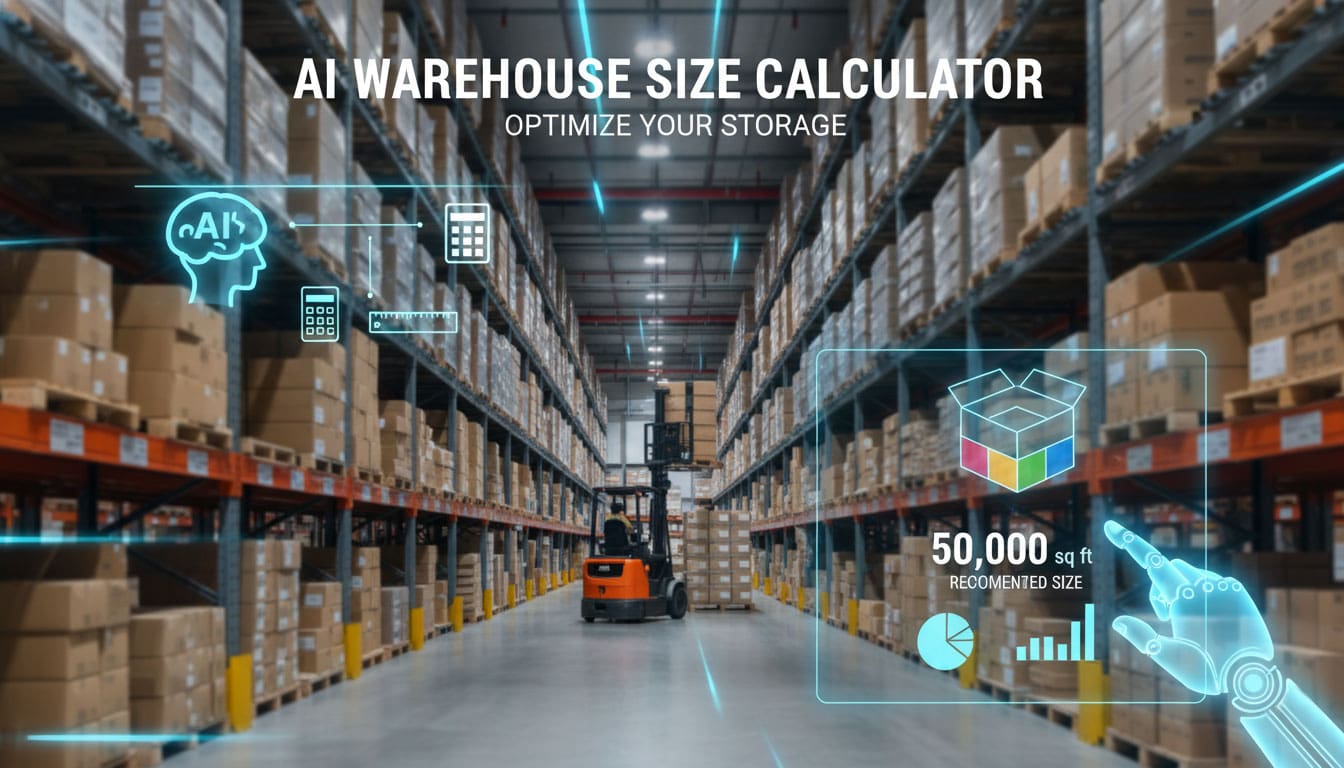
MyStorage’s AI Size Estimator is an AI-powered storage size calculator that helps renters accurately estimate storage volume (m³) in just 1 minute, completely free of charge.
This tool analyzes the type of items, quantity, and actual stacking capability to suggest the correct storage area needed, helping users avoid wasted costs and choose the right storage unit from the start. With an accuracy of up to 95%, the AI Size Estimator is becoming the standard solution for individuals and businesses renting self-storage in Vietnam.
Why do renters often choose the wrong size?
When needing to rent storage, most customers face a common problem: not knowing exactly how many cubic meters (m³) their belongings will occupy. The lack of an intuitive measurement tool leads many to rent storage based on guesswork.
In reality, estimating space by eye or “guessing” based on intuition often leads to two awkward scenarios that any renter would want to avoid:
Scenario 1 – Over-renting (Wasting money): Driven by the “better safe than sorry” mindset, you decide to rent a large storage unit. The result is that you have to pay millions of VND extra each month for empty cubic meters you never use.
Scenario 2 – Under-renting (Causing hassle): You try to save money and choose a small unit. When the moving truck arrives with your belongings, you realize with a shock that you can’t fit everything in. Changing units at that moment not only causes extreme stress but also incurs additional labor costs for loading/unloading and truck waiting fees.
This problem is particularly frustrating for the following customer groups:
Families renovating/moving homes: They have too many items, from beds, wardrobes, and sofas to dozens of boxes of miscellaneous items.
Businesses relocating offices: They need to store documents and office furniture but don’t know how to accurately convert them into volume.
Online shop owners: They need temporary storage but are unsure of the actual cubic meter volume of their packages.
Understanding these “pain points,” MyStorage has pioneered the application of modern technology to provide a solution: AI Size Estimator – the first artificial intelligence-powered storage volume calculator in Vietnam.
Instead of having to measure every chair leg or struggle with dry volume calculation formulas, you now have a smart “virtual assistant” that helps you:
Accurate Quantification: Calculates the total cubic meters (m³) based on your actual inventory list.
Cost Optimization: Helps you choose the right storage type (Standard or Air-conditioned Storage) and the most suitable space from the outset, completely eliminating wasted space.
With an operation time of just 1 minute, up to 95% accuracy, and completely free of charge, the AI Size Estimator empowers renters to make data-driven decisions, reducing the risk of errors and optimizing storage costs right from their very first rental.
Why is the AI Size Estimator a Game-Changer in the Storage Industry?
AI-powered storage volume calculation is more accurate because AI relies on real operational data rather than theoretical assumptions. This tool considers factors like stacking, furniture disassembly, and storage density within the warehouse, whereas manual calculations often only account for the dimensions of individual items, which can easily lead to discrepancies in rented space.
What is the AI Size Estimator?
The AI Size Estimator is a storage volume (m³) estimation tool developed by MyStorage, powered by artificial intelligence and real operational data.
Instead of requiring users to manually measure or understand technical concepts like CBM, this tool allows for quick selection from common item categories such as household goods, office furniture, or individual luggage, then automatically converts them into the appropriate storage volume.
The key differentiator lies in its data foundation: the AI Size Estimator has been trained on thousands of real storage cases from MyStorage customers, accurately reflecting actual storage usage behavior in Vietnam rather than relying solely on theoretical specifications.
How does the AI Size Estimator work?
Unlike traditional calculation methods that simply add up the size of each item, the AI Size Estimator analyzes the entire real-world storage picture. MyStorage’s algorithm takes into account:
The stacking capability between items
The ability to disassemble furniture such as beds, wardrobes, and shelves
Optimal storage density in the warehouse based on the actual arrangement by the operations team
Thanks to this, the AI-generated result is the actual usable volume – closely matching the space customers truly need to rent, rather than a theoretical figure that can easily lead to inaccuracies.
This is precisely why the AI Size Estimator can achieve up to 95% accuracy in real-world operations.
MyStorage’s Expertise and Pioneering Role
MyStorage is one of the few companies in Vietnam to standardize storage services by cubic meter (m³) and integrate data-driven thinking into the self-storage industry. Applying AI to the space consultation process not only helps customers make decisions more easily but also reflects the service provider’s professional competence and practical operational experience.
In a market where storage pricing often relies on subjective estimates, the AI Size Estimator helps MyStorage create a new standard of transparency, while affirming its pioneering role in applying technology to the self-storage industry in Vietnam.
Practical Benefits of Using MyStorage’s AI Size Estimator
The AI Size Estimator helps renters save costs, requires no technical knowledge, and is easy to use on any device. In addition to selecting the correct storage size, the tool also suggests smart arrangement methods, supports choosing between regular or air-conditioned units, and helps users receive direct offers when submitting results to the consulting team.
1. No technical or mathematical knowledge required
With the AI Size Estimator, renters don’t need to understand complex concepts like CBM or how to calculate cubic meters. The entire process is simplified to the maximum: users simply select the type of items (beds, wardrobes, tables, cardboard boxes, etc.) and enter the corresponding quantity. The rest is automatically handled by AI based on real-world data, allowing anyone to estimate storage space without needing an expert.
One of the clearest benefits of the AI Size Estimator is helping to avoid renting unnecessary excess space. By knowing exactly how many m³ they need, users can choose the right storage size from the start, instead of renting “just in case.”
This tool is particularly suitable for:
Individuals storing only a few items, where rental costs might be as low as 300,000 – 500,000 VND/month.
Small apartments or medium-sized offices that need to optimize their budget while ensuring sufficient storage space.
3. Easy to Use, Anytime, Anywhere
The AI Size Estimator is designed to work seamlessly on phones, tablets, and laptops, with no additional app installation required. Users can calculate their storage space needs right from home, whether they’re decluttering or planning home renovations, even before contacting our consultation team. This makes discussions with our sales team quicker, more transparent, and perfectly aligned with their specific requirements.
4. Smart Packing Tips to Reduce Cubic Meters
Beyond just providing a size estimate, the AI Size Estimator also suggests efficient packing methods to minimize storage volume while ensuring the safety of your belongings. Some popular tips include:
Disassembling bed frames, shelves, and tables
Stacking wardrobes and sofas vertically to save space
Grouping similar items to optimize stacking density
Thanks to these tips, many customers can significantly reduce the cubic meters they need to rent compared to their initial packing plans.
Who is the AI Size Estimator for?
The AI Size Estimator is ideal for individuals renovating or moving homes, businesses relocating offices, and online sellers requiring temporary storage. Crucially, this tool is especially beneficial for those new to storage rental, helping them avoid the risk of selecting the wrong size from their very first service experience.
The AI Size Estimator is designed for non-storage professionals who need to make accurate decisions from the outset. This tool is particularly suitable for the following customer groups:
Individuals renovating or moving homes: needing temporary storage for furniture, electronics, and cartons but unsure of the required cubic meters.
Businesses relocating offices: wanting to quickly estimate storage space for desks, documents, and IT equipment without time-consuming manual measurements.
Online sellers / small businesses: requiring flexible storage that optimizes costs at every stage.
First-time storage renters: lacking experience in choosing storage sizes and wanting to avoid the risk of over-renting or under-renting space.
With its user-friendly interface and data standardized according to real-world operations, the AI Size Estimator empowers all users to confidently select the correct storage size without relying solely on subjective advice.
Real Customer Stories
Many MyStorage customers have significantly reduced their storage rental costs by using the AI Size Estimator before signing a contract. Instead of renting storage based on guesswork, users can adjust their packing methods based on AI suggestions, thereby reducing the rented space and optimizing their monthly budget.
A prime example is Ms. Lan (Thu Duc City) during her home renovation. Initially, she planned to rent a 10m³ unit to store her bed, wardrobe, sofa, and household items for a few months. However, after using MyStorage’s AI Size Estimator, the results showed she only needed 7m³ if she disassembled some furniture and stacked items correctly.
Based on the AI’s suggestions, Ms. Lan adjusted her packing before moving items into storage and selected the correct size from the outset. As a result, she saved nearly 1 million VND per month compared to her initial storage rental plan.
This case demonstrates that the AI Size Estimator is not just a space estimation tool, but a practical solution that helps storage renters optimize space and costs, leveraging MyStorage’s real-world operational data and experience.
MyStorage is one of the few providers in Vietnam to standardize storage services by cubic meter (m³) and integrate data-driven insights into the self-storage industry. Applying AI to the space consultation process not only empowers customers to make easier decisions but also reflects the service provider’s professional expertise and practical operational experience.
In a storage market still characterized by many subjective pricing methods, the AI Size Estimator helps MyStorage establish a new standard of transparency, while also affirming its pioneering role in applying technology to the self-storage industry in Vietnam.
FAQ
What is MyStorage’s AI Size Estimator?
AI Size Estimator is an AI-powered tool that accurately estimates the storage volume (m³) you need based on your actual items and quantities.
Is AI Size Estimator free to use?
It is 100% free to use with no payment or complicated registration required.
How accurate is the AI Size Estimator?
The estimator reaches around 95% accuracy, based on real operational data from thousands of MyStorage customers.
Can the AI estimate bulky items like beds, wardrobes, or sofas?
Yes. The AI is trained on common furniture items and accounts for disassembly and stacking options.
Who should use the AI Size Estimator?
It is ideal for home renovation, moving, office relocation, online sellers, and first-time storage renters in Ho Chi Minh City.
Does the AI help reduce storage rental costs?
Yes. By choosing the right storage size upfront, many users save hundreds of thousands to over one million VND per month.
Does the AI recommend the right type of storage?
es. It recommends standard or climate-controlled storage based on item types such as wood, electronics, or documents.
Can I use the AI Size Estimator on my phone?
Yes. It works smoothly on phones, tablets, and laptops without installing any app.
What if I have more items than the AI estimate?
MyStorage allows flexible storage size adjustments if additional items are added.
Is the AI Size Estimator applicable for storage rental in Thu Duc?
Yes. The AI Size Estimator applies to all MyStorage locations in Ho Chi Minh City, including Thu Duc, District 2, and District 7.
Proper storage of sports equipment helps save living space, protects gear from mold and damage, and makes it more convenient to use. Depending on whether it’s for personal, family, or business use, you can optimize by smart organization at home or by utilizing a self-storage unit with humidity control and 24/7 security.
Why Does Sports Equipment Easily Clutter Your Home?
Sports gear often comes in large sizes, is used seasonally, and is difficult to store compactly, quickly taking up living space if not properly managed.
Sports equipment is often the main culprit behind a cluttered home, especially during renovation periods when space is limited. The reasons include:
Awkward Sizes and Shapes: Unlike clothes or books that can be neatly stacked, items like bicycles, surfboards, golf clubs, or treadmills are bulky and have asymmetrical shapes, making them very difficult to stack or utilize corner spaces efficiently.
Seasonal and Specialized Use: Skiing equipment is only used in winter, while diving gear is for summer. These long “dormant” periods mean they occupy valuable storage space without providing regular utility.
Strict Environmental Requirements: High-end sports equipment is often made from sensitive materials (carbon, composite, genuine leather). They cannot simply be tossed into a dark storage room but require a dry, airy environment to prevent degradation.
“Temporary Storage” Habit: Due to irregular usage, we often have the tendency to leave items on balconies or under staircases for “convenience,” inadvertently turning these areas into makeshift storage spots that detract from aesthetics and obstruct pathways.
Your home becomes cramped, reducing family living space, creating a suffocating feeling, and posing potential risks of bumps and injuries.
What Are the Risks of Improper Sports Equipment Storage?
Incorrectly storing sports equipment can lead to mold, rust, equipment deformation, and potential safety hazards, especially in small living spaces.
If you treat sports equipment like ordinary household items during a home renovation, you might face unfortunate financial losses:
Mold and Rust: High humidity in temporary storage environments or construction dust clinging to metal joints (weights, bicycle chains, treadmill components) leads to oxidation, reducing the equipment’s lifespan and safety.
Deformation and Loss of Elasticity: Tennis or badminton rackets, if compressed or left in excessively hot environments, can suffer frame distortion and string loosening. High-end running shoes without proper form holders may experience sole compression and cracking of specialized adhesive layers.
Damage to Smart Components: Many modern golf clubs, rackets, and shoes integrate IoT sensors to track performance. Storing them in magnetic or humid environments can damage these sensitive electronic circuits.
Safety Hazards: Heavy equipment like dumbbells and exercise machines, if not securely fastened, can easily tip over, posing dangers to children and the elderly moving around storage boxes.
Missing Accessories: Sports equipment often comes with numerous small accessories (screws, battery chargers, resistance bands). If packed haphazardly, you’ll waste a lot of time searching or have to purchase new ones when you need to use them again.
Sports Equipment Storage Solutions
If you’re currently renovating your home, implement these tips right away:
Use Vacuum Storage Bags for Fabric Items: Bulky workout clothes and protective gear should be vacuum-sealed to save 70% of space.
Vertical Hanging Systems: Utilize tall wall spaces to hang bicycles, rackets, or skateboards. This keeps items dry and airy while preventing them from being knocked over on the floor.
Desiccant Bags and PE Shrink Wrap: Carefully wrap electronic sports equipment and add silica gel desiccant packets inside before boxing them up.
Utilize Temperature-Controlled Storage Services: For expensive golf club sets or bicycles, storing them in air-conditioned mini-warehouses is a worthwhile investment to protect your assets.
Comprehensive Sports Gear Storage Solutions by Need
Proper sports equipment storage helps save living space, protect gear, and optimize long-term costs. Depending on the user (individual, family, or business), the quantity of equipment, frequency of use, and asset value, everyone will require a different storage solution.
The table below summarizes popular sports equipment storage solutions available today, comparing them by space occupied, safety level, and actual reference rental costs. This aims to help readers easily choose the most suitable option without requiring extensive professional experience.
* Reference prices for mini-storage units for sports equipment in Ho Chi Minh City, subject to change based on location, area, and storage conditions.
There isn’t a single “best for all” sports equipment storage solution, but rather one that best suits specific needs. If you only have a few small items that you use frequently, home storage might be sufficient. Conversely, for bulky equipment, seasonal sports gear, or high-value assets, solutions like renting a storage unit often help save space, ensure security, and provide better control over storage conditions.
In reality, many urban families and businesses opt for professional storage facilities to balance cost, flexibility, and safety, especially when living or business space is limited.
Tips for Long-Term Storage of Sports Equipment
Storing sports equipment for extended periods isn’t just about “tidying up”; it directly impacts the lifespan, safety, and usability of your gear.
Proper preparation from the outset helps prevent common risks associated with long-term storage in urban environments, such as mold, material damage, battery degradation, or lost accessories.
Key Considerations Before Storing Your Gear
Thoroughly clean and dry: Remove sweat, mud, and rainwater to prevent mold and odors, especially for shoes, exercise mats, and protective gear.
Remove batteries and electronic accessories: This applies to sports watches, meters, and smart fitness devices to prevent battery leakage or circuit damage.
Pack by sport: This makes items easier to find and prevents different types of equipment from clashing or getting damaged.
Label clearly on the outside: Note the sport, quantity, and condition for easy retrieval and inventory management.
Conduct periodic checks: For storage exceeding 3–6 months, it’s advisable to re-inspect for early detection of mold or pests.
Key Consideration
Main Purpose
Long-Term Benefit
Clean & Dry
Prevent mold, odors
Extend equipment lifespan
Remove batteries, electronics
Avoid battery damage, short circuits
Maintain stable equipment operation
Pack by sport
Easy management, retrieval
Save time when reusing
Clear labeling
Prevent confusion, loss
Scientific management
Periodic checks
Early risk detection
Reduce repair costs
Whether storing at home or in a rented facility, adhering to these principles ensures your sports gear remains ready for use, minimizes wear and tear, and effectively protects your initial investment.
Smart sports equipment storage not only helps free up living space but also protects your assets and enhances your user experience. Depending on individual, family, or business needs, combining scientific organization with professional storage solutions will offer a sustainable, flexible, and long-term effective approach.
FAQ
When should I rent a warehouse to store my sporting goods?
You should rent a storage unit when sports equipment takes up too much space, is seasonal, or during home renovation or relocation.
Is it safe to store sporting goods in a self-storage facility?
Yes. Professional self-storage offers humidity control, 24/7 security, and private units, making it safe for high-value equipment.
How much warehouse space do I need to rent for my personal sporting goods?
Optimize space for small apartment doesn’t require renovations or high costs. By simply changing your furniture layout, storage habits, and decluttering unnecessary items, you can transform your 30–50 m² apartment into a tidy, spacious, and more livable home. Here are 10 simple, practical solutions that many families and small apartment dwellers have successfully adopted.
Why Do Small Apartments Easily Feel Cramped?
Living in a central apartment is a dream for many, offering convenience and a prime location. However, after some time, many families find themselves in a situation where “belongings overwhelm people.” Below are the core reasons why your living space might be shrinking:
Limited Actual Area (30m² – 60m²)
Most modern apartments in Ho Chi Minh City range from 30m² (Studio) to 60m² (2 bedrooms). This size is sufficient for basic living needs but offers little “breathing room” for accumulating possessions. When space is fixed but usage demands increase, a cramped feeling is inevitable.
The “Accumulation Trap”
We often have a habit of keeping items “just in case we need them later”:
Electronic device boxes, home appliances.
Old clothes, souvenirs from travels.
Books, newspapers, and documents accumulated over years of work. The reality is that 80% of these items remain untouched for an entire year, yet they occupy up to 30% of your floor space.
Furniture Incompatible with the Space
Many families make the mistake of buying disjointed furniture. An oversized sofa or a traditional bed without integrated drawers creates wasted “dead spaces.” When furniture isn’t custom-fitted or multi-functional, the apartment will appear cluttered, even with regular tidying.
Lack of Scientific Storage Solutions
Instead of utilizing vertical space (floor-to-ceiling shelves, wall hooks), many tend to display everything on flat surfaces (tables, low shelves, floors). This not only reduces movement space but also creates visual clutter, making the room appear smaller than it is.
Ms. Lan (32, a resident of an apartment in District 3) shared: “When we first got married, our 50m² apartment felt very spacious and airy. But since our first child arrived, and then with more work-from-home in 2025, my child’s toys and my husband’s work equipment have taken over the walkways. I realized my biggest mistake was accumulating too many souvenirs and buying overly bulky furniture from the start.”
This overload not only detracts from aesthetics but also directly impacts mental well-being, causing feelings of stress every time you return home.
Key Principles for Maximizing Small Apartment Spaces
Transforming a small apartment into a sophisticated and comfortable living space isn’t just about arranging furniture; it’s about “redesigning a lifestyle.” Below is an in-depth analysis of the four golden principles you’ve outlined:
Prioritize Multi-functionality and Flexibility
In a confined space, an item that serves only one purpose is a “waste” of valuable area. Think in terms of smart furniture.
Sofa bed: Your living room by day becomes a bedroom by night.
Extendable/foldable dining table: Can be compact for family meals and expanded when guests arrive.
Modular furniture: Shelf units that can be separated or combined depending on your needs at different times.
A common mistake is spreading furniture across the floor. When floor space is limited, leverage the “vertical space.”
Floor-to-ceiling cabinets: Instead of low cabinets that collect dust on top, opt for tall cabinets that reach the ceiling to store less frequently used items (winter blankets, suitcases).
Floating shelves: Help free up floor space, making the floor feel more expansive.
Maximize corner spaces: Utilize corner shelves or smart sliding systems for kitchen and wardrobe corners.
Empty Space = Living Space
Many people tend to “fill” every empty spot with decorative items. However, in architecture, empty space is precisely where air and light circulate.
Visual breathing room: Avoid placing furniture too close together. An empty wall or a furniture-free corner helps the mind relax and reduces feelings of clutter.
Opt for elevated furniture: When you can see the floor beneath your furniture, your brain automatically perceives the room as larger than it is.
Utilize mirrors and light: Large mirrors create the illusion of doubled space, while natural light blurs the boundaries between indoors and outdoors.
Every Item Must Serve a Clear Purpose
Minimalism isn’t about living without; it’s about conscious living.
The “One In, One Out” Rule: Before buying a new item, consider getting rid of an old one that no longer serves a useful purpose.
Clarity in function: Eliminate items that are “nice to have” but not essential. A chair that doubles as a step stool and has storage underneath is more valuable than three single-purpose items combined.
To optimize a small space, always ask yourself: “Does this item serve at least two purposes or help free up floor space?”
10 Effective Ways to Optimize Small Apartment Space
Based on the core criteria you’ve provided, here’s a detailed and in-depth analysis of 10 space optimization methods, designed to transform your small apartment into a smart and stylish living space.
No.
Method
Specific Actions
Benefits
01
Decluttering
Categorize items: Keep – Sell/Donate – Discard. Get rid of clothes unworn for 6 months, old papers, empty boxes.
Immediately frees up floor space. Reduces psychological stress from clutter.
02
Multi-functional Furniture
Use beds with storage drawers, sofa beds, smart foldable dining tables, desks combined with bookshelves.
Reduces the number of items you need to buy. One item serves multiple living needs.
03
Utilize Vertical Space
Design floor-to-ceiling kitchen/wardrobe cabinets. Use wall-mounted shelves instead of freestanding ones.
Increases storage capacity by 30-50% without taking up additional floor space.
04
Zone with Furniture
Replace brick walls with open bookshelves, fabric curtains, or area rugs to define functional zones.
Helps the apartment feel airy, allowing light and air to flow freely between areas.
Creates a visual illusion, making the room appear twice as large as it is.
06
Optimize Kitchen & Bathroom
Use knife racks, corner pull-out shelves in the kitchen, mirrored cabinets in the bathroom to hide personal items.
Transforms the most cluttered areas into tidy and clean spaces, easy to maintain.
07
Functional Decor
Choose 1-2 large, sophisticated decor items instead of many small ones. Prioritize decor with storage capabilities.
Avoids a “cluttered” feeling, giving the space elegant focal points and an airy feel.
08
Organize by Frequency
Place daily-use items within reach (middle drawers). Store less-used items high up or low down.
Saves time searching and keeps your home consistently tidy.
09
Off-site Storage
Rent a mini storage unit for winter clothes, suitcases, camping gear, or rarely touched collections.
Ensures your apartment only contains what’s “truly needed for the present,” optimizing your living experience.
10
“One In, One Out” Rule
Whenever you buy a new item, you must discard or donate a corresponding old item.
Maintains balance in the number of belongings, preventing the apartment from becoming “re-cluttered.”
A Few Small Tips for Effective Implementation:
Prioritize furniture with legs: This allows you to see the floor underneath, creating a sense of uninterrupted space.
Synchronize colors: Using too many colors in a small space can be visually jarring; opt for a dominant color scheme with 1-2 accent colors.
When Should You Consider Off-site Storage?
Small Apartments (< 50m²)
For studio or one-bedroom apartments, every square meter is incredibly valuable.
Problem: When wardrobes and storage shelves occupy more than 20% of the floor area, the apartment can feel suffocating.
Solution: Move large, infrequently used items (suitcases, Christmas decorations, guest mattresses) to off-site storage to give your home some “breathing room.”
Families with Young Children
Children grow very quickly, and with that comes a changing array of items for each stage: cribs, strollers, high chairs, large toys…
Problem: You want to keep items for a second child, but your current home lacks storage space.
Solution: Consolidate baby items by stage into a personal storage unit. This keeps your home safe and spacious for your child to play.
During Home Renovation or Moving
This is when belongings are most susceptible to damage, dust, or getting lost.
Problem: You need to clear the area for contractors or require temporary storage while awaiting your new home.
Solution: Storing items at self-storage facilities with air conditioning and 24/7 security better protects valuables (leather sofas, wooden furniture, electronics) than covering them with tarps on a construction site.
Owning Valuables or Collections
Many people enjoy collecting books, vinyl records, designer shoes, or high-end camping equipment.
Problem: Humidity and dust at home can damage these precious items.
Solution: Professional storage facilities often have stable humidity and temperature control systems, helping to preserve assets better than typical home conditions.
Criteria
Home Storage
Off-site Storage (Self-storage)
Cost
Free (but costs living space)
Paid monthly/by area
Space
Limited, easily cluttered
Flexible, expandable as needed
Preservation
Prone to mold, dust
Air-conditioned, 24/7 humidity control
Security
Depends on building security
CCTV system, private lock, 24/7 security
Suitable for
Everyday items
Seasonal items, keepsakes, collections
Think of off-site storage as a “Cloud Storage” for your physical belongings. Instead of upgrading to a larger apartment (which is very costly), renting a small external storage space is a much more economical solution to maintain a high quality of life in an urban setting. The cost of renting a mini storage unit is relatively affordable for many families.
Optimizing small apartment space is an ongoing process, starting with letting go – organizing – maintaining. By simply applying each step of the 10 methods above, you can absolutely transform your small apartment into a more comfortable, tidy, and breathable living space every day.
FAQ
What is the most effective way to optimize a small apartment space?
The most effective way is combining decluttering with multi-functional furniture. Additionally, utilizing vertical space instead of horizontal space significantly frees up floor area.
Which multi-functional furniture is best for apartments under 50sqm?
Top choices include sofa-beds, storage beds with drawers, wall-mounted folding tables, and floor-to-ceiling cabinetry.
Why should I use self-storage services?
This service helps store infrequently used items (seasonal gear, memorabilia, collectibles) safely, making your living space airier without needing to upgrade to a larger apartment.
How do color and lighting affect the perception of space?
Light tones (white, cream, light gray) and large mirrors help reflect light, creating an illusion of a larger and deeper space than the actual area.
How to divide zones in a studio apartment without using walls?
(You can use “soft dividers” like open bookshelves, curtains, rugs, or varying floor/ceiling heights to define functional zones
Is storing belongings in external storage safe?
Reputable self-storage facilities are equipped with 24/7 CCTV, fire protection systems, climate control, and individual private locks for each customer.
What is the “One-in, One-out” rule?
This is a minimalism rule: Every time you buy a new item, you must discard or donate an old one to prevent the space from becoming cluttered.
How should families with small children optimize their space?
Use blunt-edged furniture, utilize under-bed space for toy storage, and send old baby gear (cribs, strollers) to storage if planning for future children.
What is utilizing vertical space?
It involves installing wall-mounted shelves, high hooks, or floor-to-ceiling cabinets for storage instead of placing everything on the floor.
How does the cost of self-storage compare to buying a larger apartment?
Renting self-storage is much more economical. The cost is only a fraction of the price difference when buying or renting a larger apartment in urban areas
Renting a warehouse in District 3 is an optimal solution for individuals and businesses needing storage near the center of Ho Chi Minh City, offering convenient access to District 1, District 10, and Phu Nhuan. Popular warehouse types include mini/self-storage, small goods warehouses, and document storage, suitable for short- to medium-term storage with high requirements for security, humidity control, and fire safety compliance.
Why is the Demand for Warehouse Rental in District 3 So High?
Dense population and office density
District 3 has one of the highest population densities in the city, along with the presence of countless offices, retail stores, and small and medium-sized enterprises. This creates significant pressure on storage space.
Limited residential and business space
Rental prices in District 3 are among the most expensive in Ho Chi Minh City. Many households and small businesses lack sufficient space to store goods, documents, personal belongings, or inventory. Renting a private warehouse becomes an optimal solution to save costs and maximize usable space.
Central location, convenient connectivity
District 3 boasts a prime location, bordering other central districts such as District 1, District 10, Phu Nhuan District, and Binh Thanh District. Convenient transportation ensures quick movement of goods in and out of the warehouse, promptly serving business operations or personal needs.
Real-World Experience of Urban Users
Many residents and business owners in District 3 share that they frequently encounter situations such as:
Renting a warehouse due to lack of storage space at home, especially in small apartments, particularly for families with young children or many personal items. Insufficient storage for inventory for online shops, small stores, or startup businesses. Needing space to store documents for small offices or family businesses.
Warehouse rental solutions in District 3 meet three crucial factors:
Close: Just a few minutes’ commute from home or office.
With increasing urbanization trends, warehouse rental is no longer just a need for large enterprises but has become a practical solution for all types of users in the city center.
Why Should You Rent a Warehouse in District 3?
When weighing the options between expanding business premises or finding external storage solutions, many individuals and businesses in Ho Chi Minh City have chosen to rent a warehouse in District 3. This is not just a financial decision but also a strategic choice based on real-world experience and long-term benefits.
Central Location – Quick Connectivity
Inner-city transport hub: District 3 is strategically located, bordering key districts of Ho Chi Minh City:
District 1 (approx. 2-5 km): The city’s largest financial and commercial center.
District 10 (approx. 1-3 km): A bustling business area with many wholesale markets.
Phu Nhuan District (approx. 1-2 km): High-end residential area and offices.
Binh Thanh District (approx. 2-4 km): Gateway connecting to East Saigon.
According to data from the Ho Chi Minh City Department of Transport, the average distance from District 3 to core districts ranges from only 10-15 minutes of travel during normal hours, significantly saving time and logistics costs.
Convenient transportation and delivery thanks to a diverse transport network:
Major roads: Vo Van Tan, Dien Bien Phu, Cach Mang Thang Tam, Ba Thang Hai. Direct connection to main routes to other districts. Easy access to express delivery services (Grab, Ahamove, Lalamove).
Advantages for business operations: A 2024 study by the Vietnam E-commerce Association (VECOM) shows that online shops with warehouses located in central districts have a 35% higher same-day delivery success rate compared to warehouses located in the suburbs. Average delivery time within the inner city decreased from 2-3 hours to 45-60 minutes.
Real-world experience: Ms. Minh Anh, owner of an online fashion shop in District 3, shared: “Previously, I stored goods in Binh Chanh, and each time I needed to pick up goods for urgent delivery, it took almost an hour to travel. Now, renting a warehouse in District 3, I can get there in 10 minutes, which is very convenient for processing quick orders.”
Flexible Storage Solutions
Solution for Limited Space: According to CBRE Vietnam’s Q4/2024 real estate market report, the average rental price for commercial spaces in District 3 ranges from 45-80 million VND/month for areas of 50-100m². At this price point, many small businesses and households find it challenging to allocate additional funds for storage.
Typical Cases Requiring Warehouse Rental:
Households:
Average 60-80m² apartments lack space for seasonal items
Need to store belongings when on long-term business trips or studying abroad
Storing relatives’ or children’s belongings during relocation
Small Offices:
20-30m² offices lack space for archived documents
Requirement to store legal records and accounting documents as per regulations (typically 5-10 years)
Backup office equipment, product samples
Online Shops and Small Businesses:
Storing inventory that doesn’t require direct display
Product samples, seasonal goods (Tet, Black Friday, 11/11)
Raw materials, packaging
Flexibility According to Actual Needs, such as Seasonal Business Rentals: Data from the Ho Chi Minh City Statistics Office indicates that demand for goods storage surges by 60-80% during peak seasons like Lunar New Year, Black Friday, and back-to-school periods. Current warehouse rental services in District 3 offer:
Short-term contracts: 1-3 months, suitable for seasonal needs
Adjustable space: Increase/decrease space based on actual requirements
No long-term commitments: Easily terminate contracts when no longer needed
Real-world Case Study: Mr. Tuan, owner of a children’s toy store, shared: “Each year, I only need a large warehouse for 2 months before Tet and during August-September (back-to-school season). For the remaining months, I only rent a small space. This helps me save about 40% of storage costs compared to renting a fixed-size warehouse all year round.”
Optimize Operating Costs
Investment Analysis: Own Space vs. Warehouse Rental:
Category
Own Space (50m²)
Professional Warehouse Rental
Initial Cost
40-60 million VND/month
5-12 million VND/month
Deposit
2-3 months (120-180M VND)
1 month (5-12M VND)
24/7 Security
8-12 million/month
Included
Cameras, Fire Protection
20-40 million (installation)
Included
Utilities (Electricity, Water)
3-5 million/month
Included or preferential rates
Maintenance, Repairs
Self-borne
Included
Renting a warehouse helps save 60-75% of costs compared to renting a dedicated space for storage purposes.
Avoid Hidden Costs and Risks:
Management personnel: Requires at least 1 caretaker (7-10 million VND/month)
Asset insurance: 0.5-1% of goods value/year
Risks of theft, fire: Fully self-borne if uninsured
Equipment depreciation: Shelves, pallets, humidity control devices
Opportunity cost: Time and effort spent on management instead of focusing on business
A 2024 report from the Vietnam Chamber of Commerce and Industry (VCCI) indicates that small and medium-sized enterprises utilizing professional warehousing services achieve a 28% higher revenue growth rate compared to those managing their own warehouses, thanks to time savings and focus on core business activities.
Long-term Financial Benefits as Your Business Grows, You Can:
Rent additional space without significant investment
Easily transition to a larger warehouse
Downsize when necessary without capital loss
Instead of investing hundreds of millions in premises and equipment, you only need a fixed monthly cost of 5-15 million VND, ensuring your cash flow is always controlled and stable.
How Much Does Warehouse Rental in District 3 Cost?
One of the most frequently asked questions when seeking storage services is: “What is the cost of warehouse rental in District 3?”. To answer accurately, you need to understand the factors influencing the price and the total actual cost involved.
Factors Affecting Warehouse Rental Prices
Warehouse Area
This is the most fundamental factor determining rental prices. However, the rental price per square meter for mini warehouses often decreases as the area increases:
1-5 m²: 1.5 – 2.5 million VND/m²/month 6-10 m²: 1.2 – 2.0 million VND/m²/month 11-20 m²: 1.0 – 1.8 million VND/m²/month 21-50 m²: 800 thousand – 1.5 million VND/m²/month Above 50 m²: 600 thousand – 1.2 million VND/m²/month
Practical Note: Many providers calculate prices based on fixed “storage rooms” rather than m², with packages like: Mini (2m²), Small (5m²), Medium (10m²), Large (20m²).
Location and Truck Accessibility
Location in District 3:
Central areas (near Cach Mang Thang 8, Vo Van Tan): Highest prices, +20-30% compared to the average Outlying areas (bordering District 10, Phu Nhuan): More reasonable prices, 10-15% lower
Truck Accessibility:
1-2 ton trucks accessible: Standard price Motorbikes/cars only: 10-15% reduction (due to transport limitations) 5-10 ton trucks accessible: 15-25% increase (suitable for logistics)
According to a 2024 survey by the Vietnam Logistics Association (VLA), 68% of small businesses prioritize warehouses accessible to 1-3 ton trucks, willing to pay an additional 10-15% for this convenience.
Warehouse Type
Common Area
Primary Use
Suitable For
Estimated Rental Price / Month
Standard Features & Services
Mini / Self-storage
1 – 5 m²
Personal items, home renovation, small shop inventory
Individuals, households, online shops
1,200,000 – 3,500,000 VND
24/7 security, humidity control, private unit
6 – 10 m²
Medium volume e-commerce inventory
Small businesses, startups
3,500,000 – 6,000,000 VND
Free access, stable environment
Small warehouse – Transit warehouse
20 – 50 m²
Business inventory storage
Large online shops, small businesses
5,000,000 – 10,000,000 VND
Small truck access, basic security & fire safety
General storage warehouse
50 – 200+ m²
Large volume goods storage
Trading companies, inner-city distribution
40,000 – 70,000 VND/m²
Concrete floor, high ceiling, full fire safety
Document storage warehouse
5 – 20 m²
Storing important documents, records
Businesses, law/accounting firms
2,000,000 – 4,000,000 VND
Humidity control, high security, specialized shelving
District 3 is the “heart” of Ho Chi Minh City, with a high population density and bustling trade. Renting a warehouse here is not just about finding a place to store things, but an optimization challenge concerning location and cost.
The “Most Advantageous” Customer Groups for Renting a Warehouse in District 3
Individuals renovating or moving house: Need temporary storage space for furniture, electronic appliances for 1-3 months to ensure items are not damaged by dust or impact.
Residents of central apartments and townhouses: Families living in high-end apartments or small townhouses often lack space for seasonal items (Tet decorations, bicycles, old documents).
Online Shop Owners: District 3 helps you reach customers in District 1, District 10, Phu Nhuan in just 5-10 minutes. This is a “key” to cutting shipping costs and accelerating express delivery.
Businesses needing auxiliary storage: Offices in the city center often have very high rental prices. Using an external warehouse in District 3 to store documents, event gifts, or product samples is a smart cost-saving operational solution.
Checklist of 05 Steps for Safe Warehouse Rental in District 3, Avoiding “Hidden Fees”
To avoid issues arising after signing the contract, you need to pay special attention to the following criteria:
Criteria
Details to Check
Location & Traffic
Prioritize warehouses near major roads (Cach Mang Thang 8, Vo Van Tan, Nam Ky Khoi Nghia). Ensure roads are not subject to time-based truck bans for easy truck access.
Actual Area
Carefully measure or request a layout consultation. Only rent the exact area needed to avoid budget waste.
Security & Fire Safety
Warehouse fire safety system must meet standards (with approval). The warehouse must have 24/7 cameras and strict access control via magnetic cards or security guards.
Environmental Conditions
Check humidity, lighting, and pest infestation. The warehouse must be dry to prevent damage to papers, fabrics, or electronic devices.
Cost Transparency
Request a detailed price list of all fees: management fees, electricity and water fees, loading/unloading fees, security fees… to avoid “cheap price but high surcharges.”
If you only need to store small items or personal belongings, prioritize Self-storage models. This model allows you 24/7 access and offers flexible areas from 1m² – 20m², which is very popular in the central District 3 area.
Where to Find Reputable Warehouse Rentals in District 3?
In central areas like District 3, choosing a reputable warehouse rental provider that operates professional 5S standard warehouses plays a crucial role in ensuring asset safety and optimizing long-term costs. Instead of just comparing rental prices, tenants should prioritize providers that meet the following criteria well:
Experienced in urban warehouse operations: Providers with long-standing operations in inner-city areas often understand the specifics of traffic, population density, fire safety regulations, and how to organize warehouses suitable for the limited space of District 3.
Transparent rental prices and contracts: Clear price lists openly detailing all related fees (management fees, electricity and water, accompanying services) help tenants easily estimate the actual total cost, limiting unexpected charges outside the contract.
Trusted by many corporate and individual clients: Providers with a diverse client list, especially businesses and offices in central areas, often have more systematic management, security, and customer service processes.
Signs of an experienced provider:
Operating for at least 3-5 years in central areas
Having multiple branches or facilities in core districts
Professional warehouse management system (WMS – Warehouse Management System)
Well-trained staff in logistics and customer service
ISO certification or international standards for warehouse management
Reputable Warehouse Rental Providers in District 3
Below is a list of 8 reputable warehouse rental providers in District 3 or nearby central areas, catering to diverse needs from individuals to businesses:
Nhatviet Logistics: Headquartered on Vo Van Tan Street (District 3), specializing in providing standard-compliant warehousing, 24/7 security, and a professional management system.
Freight Mark Vietnam: With an office on Nguyen Dinh Chieu Street (District 3), its strength lies in comprehensive logistics solutions for large enterprises and supply chains.
SEC Warehouse (Saigon Express): A reputable provider offering a system of shared and self-storage warehouses with flexible areas, and a central location convenient for trade.
BoxLok: Smart storage service with the advantage of pick-up and delivery support to your doorstep, making it extremely convenient for busy individuals in District 3.
Proship: Specializing in large-area warehousing and container transport services, ideal for businesses requiring storage for large-volume goods in transit.
Hung A Logistics: Located near District 3, it provides dry and airy warehouses, strict import/export procedures, and accompanying customs clearance support.
Taxi Tai Saigon: Perfectly combining home relocation services with temporary storage, helping individuals optimize costs when needing home renovations.
Amidst the growing demand for storage in District 3, modern mini-storage and self-storage models, featuring security control, environmental management, and flexible rental periods, are becoming popular choices. Thoroughly researching information, experiencing the warehouse facilities firsthand, and evaluating feedback from previous customers will help you make an informed decision and feel secure throughout your rental period.
FAQ
How much does it cost to rent a warehouse in District 3?
Warehouse rental prices in District 3 range from 1.2 to 2.5 million VND/m²/month, depending on:
Mini warehouses (1-10m²): 1.8 – 2.5 million VND/m²/month
Medium warehouses (11-50m²): 1.0 – 1.8 million VND/m²/month
Large warehouses (over 50m²): 600,000 – 1.2 million VND/m²/month
Prices include electricity, water, security, and CCTV surveillance. Long-term rentals (6-12 months) usually receive a 10-15% discount.
Can I rent a warehouse in District 3 for short-term?
Yes, most warehouse rental units in District 3 accept short-term contracts:
Minimum 1 month for mini/self-storage warehouses
Weekly rentals may be available in special circumstances (Tet holiday, peak season)
Flexible monthly renewals, no long-term commitment
Short-term rentals are 10-20% more expensive than long-term rentals but suit seasonal needs.
Are warehouses in District 3 safe and secure?
Warehouses in District 3 typically have high security standards due to their central location:
24/7 CCTV surveillance with 30-90 day storage
Professional security guards working 24/7
Personal electronic locks or fingerprint/card access control
Fire protection system meeting Class A standards
Cargo insurance (depending on the service package)
The loss/damage rate at District 3 warehouses is less than 0.1% according to industry statistics.
What items are prohibited in warehouse storage?
The following types of goods are NOT permitted to be stored in District 3 warehouses:
Flammable and explosive materials (gasoline, gas, fireworks)
Weapons and ammunition
Drugs and prohibited substances
Smuggled goods, goods of unknown origin
Perishable food items that are not packaged (regular warehouse)
Live animals
Hazardous waste and toxic chemicals
Legal and safe goods are accepted after declaration.
Can I access the warehouse 24/7?
Depending on warehouse type and service package:
Mini-Storage/Self-Storage:
24/7 access with key card/personal PIN
Unlimited access
Suitable for flexible needs
Commercial/Logistics Warehouse:
Business hours: 8 AM – 5 PM (Monday-Friday)
Outside business hours: Requires advance booking, may incur a surcharge of 50-100k VND/visit
Weekends: By agreement
Please confirm the access policy before signing the contract.
Are loading/unloading and transportation services available?
Yes, most warehouses in District 3 offer:
Loading and unloading services:
Labor: 50 – 150k VND/person/hour
Forklift: 200 – 500k VND/hour
Professional packaging: 20 – 100k VND/package
Transportation services:
Small trucks (500kg-1 ton): 200 – 400k VND/trip within the city
Large trucks (3-5 tons): 800k – 1.5 million VND/trip
Express delivery: 15 – 30k VND/km
Combo packages of warehouse + transportation are often offered at discounted prices for regular customers.
What documents are needed to rent a warehouse in District 3?
Required documents for individuals:
ID card/Citizen Identification Card or Passport (photocopy)
Warehouse rental contract (provided by the supplier)
Deposit: 1 month’s rent
Contact information: Phone number, email, address
For businesses:
Business license (notarized copy)
Tax identification number
ID card of the legal representative
Power of attorney (if not signed by the legal representative)
Simple procedure, completed in 30 minutes – 1 hour.
Is it more cost-effective to rent mini or large warehouse?
Depending on your actual needs:
Renting a mini warehouse (1-10m²) is SUITABLE when:
You have few, high-value goods
You need frequent access
You have short-term, seasonal needs
The starting cost is low: 2-6 million VND/month
Renting a large warehouse (20-50m²) is MORE ECONOMICAL when:
You have a lot of inventory and need more space
You have a stable, long-term business
The price per m² is 30-40% cheaper
You get an additional discount when renting for 6-12 months
Comparison: 5m² × 2 million VND = 10 million VND vs. 20m² × 1.2 million VND = 24 million VND → If you use all the space, a larger warehouse saves 40%/m²
Is District 3 warehouse suitable for online shops?
VERY SUITABLE for the following reasons:
Location advantages:
Central Ho Chi Minh City: Inner-city delivery within 2 hours
Fast connectivity: Districts 1, 10, Phu Nhuan, and Binh Thanh are only 10-15 minutes away
Easy to call a shipper: Grab, Ahamove, and Lalamove arrive within 5-10 minutes
Services suitable for online shops:
Flexible mini warehouse from 2m² (50-200 orders/month)
Packaging, weighing, and sealing tables
Product photography service Integrated order management
In reality: 65% of online shops in Ho Chi Minh City choose warehouses in Districts 1, 3, and 10 due to twice the delivery speed.
The demand for warehouse and factory rentals in Hoc Mon is strongly recovering after the pandemic, with an average warehouse occupancy rate of 82-87% in 2024, according to a report by Savills Vietnam. This trend is driven by the growth of e-commerce, logistics, and businesses’ need to optimize their supply chains.
Hoc Mon boasts a unique strategic location – it’s the Northwest gateway to Ho Chi Minh City, directly connecting to National Highway 22 leading to Tay Ninh and Cambodia, the HCMC – Trung Luong Expressway linking Mekong Delta provinces, and the ongoing Ring Road 3. Its proximity, just 20-25km from the city center and 35km from Cat Lai Port, makes Hoc Mon an ideal destination for distribution, warehousing, and manufacturing activities.
This article will provide detailed information on warehouse rental prices, locations, legal procedures, and practical experience in selecting and negotiating warehouse lease agreements.
Overview of Hoc Mon Warehouse Rental Market
Geographical Location and Logistics Advantages
Hoc Mon is strategically located in the Northwest of Ho Chi Minh City, bordering District 12 to the East, Cu Chi District to the West and North, and Binh Duong Province to the North. This prime location creates a logistics corridor connecting three important directions in the region.
Key Transportation System:
National Highway 22, running through Hoc Mon, is a vital route connecting HCMC with Tay Ninh and the Cambodian border, especially crucial for import-export and cross-border trade activities.
National Highway 1A and Hanoi Highway connect to the Southeastern provinces and major industrial parks. Tran Van Giau and Pham Van Sang roads are two important internal axes, directly connecting to District 12 and the city center.
Notably, the accelerating completion of Ring Road 3 will shorten travel time from Hoc Mon to Cat Lai Port to 40-45 minutes, a 30-40% reduction compared to current times.
The distance to Tan Son Nhat Airport is only about 18km, convenient for air logistics. From Hoc Mon to Hiep Phuoc Port is 45km, suitable for businesses with container import-export needs.
Competitive Cost Advantages
Compared to inner-city districts and Binh Duong industrial parks, the rental price for individual and corporate warehouses in Hoc Mon is 25-35% lower, while still maintaining excellent connectivity to major transportation routes.
Labor and operating costs are also more competitive, helping businesses optimize overall logistics costs.
Warehouse Development Trends in Hoc Mon
Growth of the Logistics Industry
According to Savills Vietnam’s “Vietnam Industrial & Logistics Property Market Q4 2024” report, HCMC’s industrial real estate market recorded a positive recovery with an average occupancy rate of 85% in Q4/2024. Specifically, the Western and Northwestern areas of the city, including Hoc Mon, had a higher-than-average occupancy rate of 87-89%.
CBRE Vietnam’s 2024 logistics market report shows that the supply of modern warehouses in HCMC’s suburban areas increased by 18% compared to 2023, with Hoc Mon contributing approximately 12% of the total new supply. Demand for warehouse rentals here primarily comes from e-commerce businesses (35%), third-party logistics – 3PL (28%), FMCG distribution (22%), and light manufacturing (15%).
According to data from the HCMC Department of Industry and Trade, the total import-export turnover through Western border gates in 2024 increased by 22% compared to the previous year, providing strong momentum for warehousing demand in Hoc Mon – a crucial gateway connecting to border provinces.
Planning and Infrastructure Development
According to Decision No. 1659/QD-UBND of the HCMC People’s Committee on adjusting Hoc Mon’s general planning until 2025 and vision to 2035, the district is oriented to develop into a logistics and high-tech industrial center for the city’s Northwest region. The land area designated for warehousing and logistics will be expanded by an additional 180 hectares in the 2024-2028 period.
The section of Ring Road 3 passing through Hoc Mon is expected to be completed in Q3/2025, shortening connection times to seaports and Eastern industrial parks. The project to expand National Highway 22 to 6 lanes is in the site clearance phase, with construction expected to begin in 2025. The internal road system for industrial parks and logistics clusters is being upgraded with a total capital of over 2,800 billion VND from the state budget and socialized capital.
Notably, Binh Duong and HCMC are coordinating to plan an inter-regional logistics hub in the border area of Hoc Mon – Bau Bang with a scale of over 500 hectares, expected to attract investment from 2026.
Warehouse Rental Demand Forecast 2025-2027
JLL Vietnam, in its 2025 industrial real estate market outlook report, forecasts that warehouse rental demand in the suburban areas of Ho Chi Minh City will grow by 15-20% annually between 2025 and 2027, bolstered by three key factors:
Firstly, e-commerce continues its explosive growth, with average annual revenue increasing by 25-30%. This alone demands an additional 200,000-250,000 m² of new warehouse space each year in Ho Chi Minh City and its surrounding areas.
Secondly, the “China+1” trend is prompting many multinational corporations to shift their supply chains to Vietnam, generating demand for regional transit and distribution warehouses. Hoc Mon is considered an attractive destination due to its reasonable costs and excellent connectivity.
Thirdly, the RCEP free trade agreement and various bilateral FTAs are boosting import-export activities, particularly cross-border trade with Cambodia – a market experiencing double-digit growth. Hoc Mon directly benefits from this trend.
This indicates a positive mid-term outlook for the market.
Comprehensive Price List by Warehouse Type and Area
Prices above do not include 10% VAT (except for cold warehouses with electricity included). Service fees (electricity, water, security, cleaning): 5,000-15,000 VND/m²/month depending on warehouse type.
Hoc Mon is 15-30% cheaper while only being 5-7km further from the city center (District 12 is ~15km from the center, Hoc Mon is ~20-22km).
The supply of warehouses is much more abundant: District 12 is saturated in terms of land, and new warehouses are very rare. Hoc Mon still has many newly built and developing warehouses.
Roads in District 12 are narrow due to dense residential areas, making it difficult for container trucks to move. Hoc Mon has National Highway 22 and wider roads. Labor costs are 10-15% cheaper due to a lower cost of living.
Hoc Mon is the optimal choice in terms of cost. For a 1,000m² area, businesses can save 15-30 million VND/month (180-360 million VND/year) compared to District 12. District 12 should only be chosen if immediate delivery is needed for areas like Districts 5, 6, 8, 10, 11, or the inner city.
Hoc Mon is 35-55% cheaper, a very significant difference (Go Vap has the highest warehouse rental prices among the 5 comparison areas). Go Vap primarily only has small, fragmented warehouses of 50-300m² due to land scarcity, making it unsuitable for large-scale logistics.
Traffic in Go Vap is severely congested during peak hours (7-9 AM, 4-7 PM), and trucks are restricted on many routes. High pressure from surrounding residents makes it difficult to operate at night or generate noise.
Go Vap is NOT suitable for logistics/distribution warehouses. Warehouses in Go Vap should only be rented for showrooms, sample warehouses, or small office-warehouse combinations serving retail customers in the inner city. Hoc Mon completely outperforms in terms of price and logistics convenience.
Prices are comparable, or Hoc Mon is 10-20% cheaper depending on the specific location in District 9. District 9 has a significant advantage in terms of proximity to Cat Lai Port: only 15-20km compared to 35-38km from Hoc Mon.
This saves 30-45 minutes per container trip. District 9 has many industrial parks such as Long Thanh My IP, Song Than IP, making it convenient for connecting with manufacturing plants. However, District 9 is less connected than Hoc Mon to the Mekong Delta and the northwestern border provinces.
After merging into Thu Duc City, land prices and warehouse rental prices in District 9 are trending upwards rapidly (8-12%/year), while Hoc Mon is more stable.
Choose District 9 if: Frequent import/export through Cat Lai Port, Cai Mep; need to connect with industrial parks in the East; serving the Dong Nai, Binh Duong, Ba Ria-Vung Tau markets.
Choose Hoc Mon if: Distributing goods domestically; serving the Mekong Delta market; import/export through border gates; prioritizing long-term cost savings.
Thu Duc City is very large (including former Districts 2, 9, and Thu Duc) so prices vary significantly between areas: from 80,000 VND/m² (remote areas like Phuoc Long B, Truong Thanh) to 140,000 VND/m² (closer to the center like Linh Xuan, Binh Chieu). Hoc Mon is generally 5-40% cheaper than most areas in Thu Duc City.
Thu Duc City is oriented as a center for innovation and high technology, attracting significant infrastructure investment, but this also drives up land and rental prices rapidly. Traffic in Thu Duc City is developing strongly (Metro Line 1, Ring Road 2, 3) but currently still experiences severe congestion on main routes such as Hanoi Highway, Do Xuan Hop, Vo Nguyen Giap.
Many areas of Thu Duc City are still undergoing site clearance, and infrastructure is not yet complete.
Choose Thu Duc City if: High-tech businesses, need to connect with high-tech parks, new urban areas; frequent import/export through ports; have a high budget and want to invest long-term in an area with potential for price appreciation.
Choose Hoc Mon if: Prioritizing immediate cost optimization; need a stable warehouse with predictable prices; serving the Western and Mekong Delta markets; small and medium-sized enterprises needing to balance location and price.
Summary of Hóc Môn’s Competitive Advantages
Through comprehensive analysis across 4 key areas, Hóc Môn stands out as the golden balance point:
Most Competitive Rental Prices: 35-55% lower than Gò Vấp, 15-30% lower than District 12, 5-40% lower than Thủ Đức City, and equivalent to or 10-20% cheaper than District 9.
Strategic Western Gateway Location: The top choice for logistics serving the Mekong Delta market and facilitating cross-border import/export.
Developing Transport Infrastructure: National Highway 22 and Ring Road 3 are nearing completion, offering wide roads suitable for container trucks.
Diverse Warehouse Supply: Easy to find warehouses ranging from 100m² to 5,000m² with various price points and quality levels.
Low Operating Costs: Labor, utilities, and services are 15-25% cheaper than inner-city districts and Thủ Đức City.
Stable, Predictable Prices: Not as volatile as Thủ Đức City, making it suitable for long-term financial planning.
Key Considerations When Renting a Warehouse
When renting a warehouse, beyond price and location, tenants should pay special attention to legal aspects to ensure safety, regulatory compliance, and mitigate risks during use.
1. Essential Documents for Warehouse Rental
Before signing a contract, it’s crucial to thoroughly check the legal documentation of the warehouse, including:
A clear warehouse rental contract specifying area, term, rental price, and responsibilities of both parties.
Land use rights certificate or legal warehouse operation rights.
Valid invoices and documents for accounting and tax purposes.
Warehouse handover minutes and current condition report.
Checking these documents helps businesses avoid disputes and ensures their rights for long-term use.
Warehouses must strictly adhere to fire prevention and fighting regulations, especially for those storing large quantities of goods. Some basic requirements include:
Standard-compliant fire alarm and suppression systems.
Clear and unobstructed emergency exits.
Fire safety acceptance certificate from competent authorities.
Regular inspection and maintenance of fire safety equipment.
This is a mandatory factor, directly impacting the safety of goods and personnel.
3. Warehouse Business License
The warehouse lessor must possess a business license appropriate for the warehousing and goods storage industry.
Ensures the warehouse is authorized for its intended purpose.
Avoids risks of illegal operation, suspension, or penalties.
Provides peace of mind for tenant businesses in their long-term operations.
For small businesses and startups, this point is often overlooked but is critically important.
4. Warehouse Operations Management According to 5S Standards
Professional warehouses often implement the 5S management model (Sort – Set in Order – Shine – Standardize – Sustain) to ensure:
Tidy, easy-to-manage, and accessible inventory.
Reduces risks of damage and loss.
Ensures occupational safety and efficient operations.
Adhering to 5S also helps businesses easily control inventory and optimize costs.
5. Regulations on Permitted Goods for Storage
Not all types of goods are permitted for storage in a warehouse. Tenants should note:
Prohibited goods by law (flammable/explosive substances, hazardous chemicals, etc.).
Goods requiring special conditions (cold storage, humidity control).
Specific regulations of each warehouse regarding the list of goods allowed for storage.
Honestly declaring the type of goods helps avoid contract violations and potential legal risks.
6. Transportation Routes
The location of a warehouse, especially when situated on a major route, directly impacts operating costs, traffic regulations, and goods circulation capabilities.
Some key points to consider include:
Time-based Traffic Regulations Many main routes restrict trucks and container vehicles during peak hours. It’s essential to clearly check the permitted entry/exit times to avoid penalties or transportation disruptions.
Connectivity to Key Areas Prioritize warehouses with convenient access to:
City center
Industrial parks, export processing zones
Expressways, national highways, ring roads
Ports, airports (if import/export needs exist)
This helps save delivery time and optimize logistics costs.
Road Infrastructure in Front of the Warehouse Ensure wide, flat road surfaces, safe truck parking/stopping areas, and minimize difficult U-turns or peak-hour congestion.
Legal Regulations Related to Warehouse Location Warehouses located on main routes must meet requirements regarding:
Fire prevention and fighting
Traffic safety
Setbacks, entry/exit points according to local regulations
Compliance ensures stable warehouse operations and avoids risks of inspection or penalties.
Suitability for Warehouse Usage Purpose For small businesses, startups, or e-commerce, a warehouse with easy connectivity to multiple areas will support fast delivery, reduce last-mile costs, and enhance customer experience.
Hóc Môn is an optimal choice for businesses seeking a balance between cost and strategic location. With competitive rental prices of 60,000-120,000 VND/m²/month, developed infrastructure, and convenient connectivity to the Mekong Delta, Hóc Môn is suitable for various models, from e-commerce and logistics to manufacturing.
FAQ
How much does it cost to rent a warehouse in Hoc Mon on average?
Warehouse rental prices in Hoc Mon range from 60,000-120,000 VND/m²/month depending on type and size. Standard warehouses of 500-1,000m² cost 75,000-100,000 VND/m²/month. Cold storage is more expensive (150,000-250,000 VND/m²/month excluding electricity), while outdoor yards are only 25,000-50,000 VND/m²/month. Prices exclude 10% VAT and service fees.
What advantages does Hoc Mon offer compared to District 12 and Go Vap?
Hoc Mon is 15-30% cheaper than District 12 and 35-55% cheaper than Go Vap. It has better transportation infrastructure with National Highway 22 and Ring Road 3, wide roads suitable for container trucks. Warehouse supply is more abundant than saturated District 12. The only drawback is being 5-7km farther from the city center than District 12, but still much closer than Cu Chi.
What is the minimum rental period for warehouses?
Minimum rental periods vary by warehouse type:
Standard warehouses: 12 months (most common)
Mini warehouses: 6 months, some landlords accept 3 months
Cold storage: 24-36 months due to large infrastructure investment requirements
Outdoor yards: 12 months
Long-term rentals of 2-3 years can negotiate 10-15% discount and fixed rental rates.
How much money do I need to prepare when renting a warehouse for the first time?
Initial costs include:
Deposit: 2-3 months’ rent (most common)
First month’s rent: 1 month
Initial service fees: 5-10 million VND (cleaning, warehouse preparation)
Total: approximately 3.5-4.5 months’ rent
Example: 500m² warehouse at 90,000 VND/m²/month = 45 million/month → Need to prepare 158-203 million VND initially. Excluding renovation costs and equipment purchases (shelves, pallets, forklifts) if needed.
Do cold storage facilities in Hoc Mon meet export food standards?
Yes, some cold storage facilities in Hoc Mon meet high standards for export food, with certifications including:
ISO 22000 (Food Safety Management)
HACCP (Hazard Analysis and Critical Control Points)
Food Safety Certificate from Department of Health
However, not all warehouses have these certifications. Recommendation: request copies of certifications from the landlord and directly inspect the cooling system, temperature control, and hygiene before renting.
Can container trucks access all warehouses in Hoc Mon?
Not all of them. It depends on location:
Warehouses on National Highway 22, Pham Van Sang, Tran Van Giau frontage: 90% accessible by container trucks
Warehouses on 6-8m wide internal roads: container trucks can access but require skilled drivers
Warehouses in 3-5m alleys: only 5-10 ton trucks, not suitable for containers
If your business frequently handles containers, you must choose frontage warehouses or roads at least 6m wide. Test with an actual truck before renting.
What licenses are required when renting a warehouse in Hoc Mon?
Required licenses depend on your business type:
Mandatory for all:
Business license (with appropriate industry codes: wholesale, logistics, warehousing…)
Cold storage: Certificate of food business eligibility
Chemical warehouses: License for conditional chemical business (if hazardous chemicals)
Warehouses >500m²: Fire safety certificate
Note: To register the warehouse as your business address (if using as headquarters), you need confirmation from the landlord.
How to check if a warehouse floods during rainy season?
5 ways to check:
Check warehouse floor level: Floor should be 20-30cm higher than street level. If level or lower → high risk
Ask landlord directly: “Has the warehouse ever flooded? How high was the water?” Request evidence (photos, videos if available)
Ask neighboring tenants: If all nearby units flood → your warehouse will flood too
Observe signs: Water marks on walls, rust at column bases, musty smell → may have flooded before
Check drainage system: Are there drainage channels? Are sewers blocked?
Best time to check: Visit warehouse right after heavy rain (May-October). If signing contract in dry season, add clause “if warehouse floods >5cm, right to cancel contract and refund deposit”.
Should I rent a warehouse with existing shelving systems or an empty warehouse?
Depends on your situation:
Rent warehouse with shelving when:
You’re starting out without capital for equipment (save 50-150 million VND)
Existing shelves suit your goods (pallet racks for heavy goods, tier shelves for light goods)
Need custom layout design for your operational process
Existing shelves don’t fit (too low, too small, poorly arranged)
Long-term rental 3-5 years → investing in own shelves is more efficient
Warehouse with shelves costs 15-20% more → not worth it
Note: If renting warehouse with shelves, thoroughly inspect quality: are shelves rusty, warped, missing parts? Request landlord to repair or reduce rent if shelves are deteriorated.
If business is not good, can I terminate the warehouse lease early?
Yes, but depends on the contract:
Common scenarios:
Contract with early termination clause: Give 60-90 days notice, may pay penalty of 1-2 months’ rent or forfeit deposit
Contract without allowance: Heavy penalty (3-6 months’ rent) or pay remaining contract balance
Ways to minimize risk:
Negotiate upfront: Add clause “allowed to terminate early with 90 days notice without penalty” (difficult but negotiable with higher deposit)
Find replacement tenant: Many landlords agree if you find replacement, you only lose 0.5-1 month rent as brokerage fee
Rent shorter term: Instead of 36 months, rent 12 months with priority renewal option
Rent mini/shared warehouse: More flexible, can terminate easily after 3-6 months
Experience: Always negotiate early termination clause BEFORE signing, especially if this is your first business or the market is unstable.