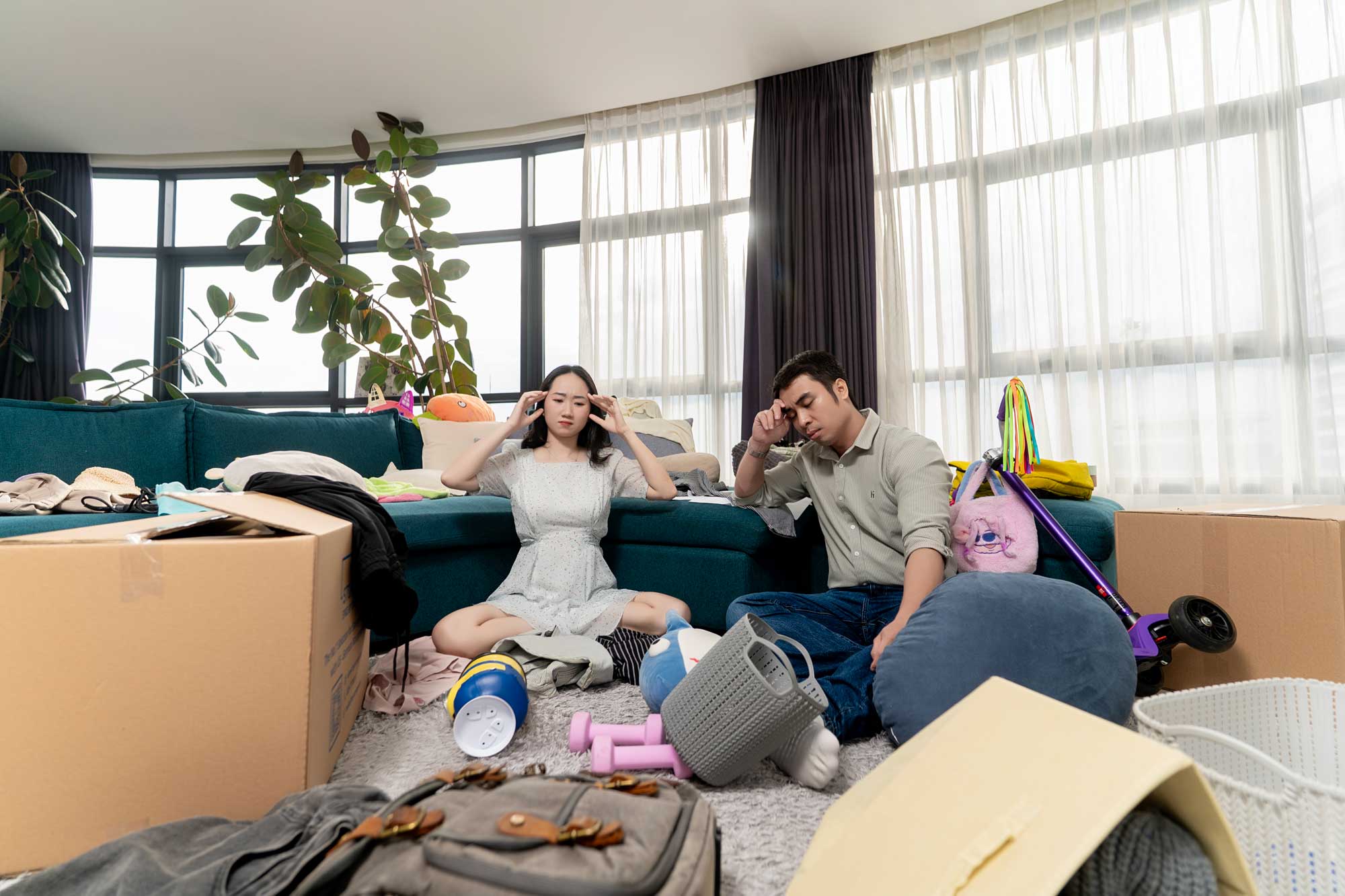
Minimalist living doesn’t mean throwing everything away or living with as few possessions as possible. The essence of a minimalist lifestyle is keeping things that truly bring value and eliminating what is no longer necessary. Instead of owning too many items that waste space, time, and money, minimalism helps you focus on the more important things in life.
What Is Minimalism?
Minimalism is an intentional lifestyle that prioritizes keeping what truly creates value and removing the rest. It is not about having the fewest items possible, but about not letting objects control your living space, time, and attention.
- The Origins of Minimalism: Minimalism emerged from various philosophical and artistic movements. In design, Bauhaus and the Japanese school of wabi-sabi laid the foundation for the “discarding what is unnecessary” mindset. In terms of lifestyle, the modern minimalism movement exploded in the US and Japan in the 2010s, partly as a reaction to excessive consumer culture and the pressure of material accumulation. In Vietnam, minimalism began to attract urban youth around 2015–2017, closely linked to the tidying trend of Marie Kondo’s KonMari method and green living movements.
- The “Less But Better” Philosophy: Dieter Rams, the legendary designer for Braun, summarized the minimalist philosophy in just three words: less but better. Less but better does not mean deprivation; it means that everything you keep serves a clear purpose and is carefully selected. A well-curated wardrobe of 30 items often provides more practical outfit choices than a cluttered closet of 150 items. A living space with fewer items is usually easier to clean, easier to find things in, and creates a significantly more comfortable feeling.
- Minimalism Does Not Mean Poverty: A common misconception is that minimalism requires discarding everything and living in an empty space. In reality, many minimalists still own high-quality material goods—just fewer and more carefully selected ones. Buying one good table instead of three cheap ones, or owning ten favorite outfits instead of a hundred worn once, are all expressions of minimalism. The difference lies in conscious choice, not absolute quantity.
- Minimalism for More Freedom: Psychological research shows that more objects do not automatically bring more happiness but often create an additional psychological burden. Every item you own requires a portion of your attention to manage, maintain, and organize. When reducing the number of items to what is truly necessary, people often feel lighter, more focused, and have more time and energy for the things that truly matter in life.
How Does Minimalism Differ from Frugality?
Many people confuse minimalism with frugality because both involve not buying too much. However, the motivations and outcomes of these two lifestyles differ significantly.
| Criteria | Minimalism | Frugality |
|---|---|---|
| Main motivation | Quality of life and freedom | Financial accumulation |
| View on spending | Willing to pay more for high quality but buy less | Prioritize maximum cost reduction |
| Goal | Reduce quantity of items to increase quality of life | Reduce spending to increase savings |
| Result | Tidier and freer living space | Higher bank account balance |
| Attitude toward old items | Keep if still valuable, discard if not serving life | Keep because it’s still usable even if not needed |
A minimalist might spend more money on a high-quality shirt instead of buying many cheap ones. A frugal person might keep many old items even if they aren’t used because they don’t want to be wasteful. The two lifestyles can be combined, but their essences are different.
Is Minimalism Just a Passing Trend?
This question arises frequently as minimalism booms on social media and then cools down. However, there is an important distinction between minimalism as an Instagram aesthetic and minimalism as a true life philosophy.
Aesthetic minimalism—meaning pure white spaces, dark furniture, and photogenic capsule wardrobes—might be a passing trend. But the core philosophy of minimalism—living intentionally, not letting objects control your life, and prioritizing experiences over material accumulation—has existed for centuries in Buddhist, Stoic, and many other traditions. What makes minimalism sustainable is not its aesthetic, but the practical solution it provides for the problem of over-accumulation that is increasingly common in modern consumer society.
Minimalism Is Not About Getting Rid of Everything
Minimalism doesn’t require you to live in an empty space or give up everything you love. The goal is to eliminate what no longer serves your life, not to eliminate everything. The difference lies in the fact that every item you keep has a clear reason.
Keeping Items with Functional Value
Any item you use regularly that makes life easier deserves a place in your living space, whether it’s a high-quality set of kitchen knives, a work computer, or running shoes used every day. The question is not whether this is a “minimalist” object, but whether it truly serves your life.
A practical principle for evaluating functional value includes three questions: have you used it in the past 30 days, would you have to buy it again if you didn’t have it, and does it help you do an important task better? If at least one of the three answers is yes, the item is worth keeping.
Keeping Items with Sentimental Value
Minimalism doesn’t require you to be emotionless toward objects. Family photos, gifts from loved ones, mementos from important trips, or books that changed how you view life all have real value even if they have no practical daily use.
The boundary to recognize is the difference between objects with true sentimental value and objects you keep only because you feel guilty if you discard them. A gift you don’t like but don’t dare discard for fear of upsetting the giver, an object you keep because it was expensive even though you never use it, or children’s items you keep in their entirety just because you can’t bear to let go, all belong to the second group. True sentimental value is the positive emotion every time you see or touch that item, not the heavy feeling when thinking about getting rid of it.
Keeping Things That Serve Work and Hobbies
Musicians need instruments and accessories, cooks need full kitchen tools, photographers need cameras and lenses, and writers need reference books. Living minimally does not mean giving up what nurtures your passion and creates value in your life.
| Field | Keep | Consider removing |
|---|---|---|
| Work | Equipment and tools used regularly, necessary references | Old equipment no longer used, outdated documents |
| Sports | Equipment for the sport currently practiced | Equipment for sports long abandoned |
| Art and Hobbies | Materials and tools currently in use | Materials accumulated for projects never started |
| Reading | Books currently being read and those truly worth re-reading | Books already finished with no reference value |
Removing Items That Are No Longer Used
This is the true core of minimalism—not removing everything, but removing what no longer serves your current life.
Five clear signs that an item should be removed: you didn’t remember you had it until you happened to see it, you bought a replacement while still keeping the old one, you keep it only because you feel you “should” rather than because you actually need it, it is taking up space that could be better used for something else, and every time you see it, you feel heavier rather than joyful.
Removing doesn’t necessarily mean throwing away. Donating to those in need, reselling to create economic value, long-term lending, or systematically storing items that need to be kept but aren’t used frequently are all more positive ways to handle items than letting them take up space in the house without being used.

Items You Shouldn’t Rush to Throw Away
Effective minimalism isn’t about cleaning up the fastest, but about making the right decision for each item. Just because something isn’t used today doesn’t mean it won’t be needed in the future. Understanding this difference helps avoid regret after discarding things of real value.
Family Photos and Keepsakes
Printed photos, photo albums, and family keepsakes are irreplaceable items if lost. Unlike most other things that can be repurchased, photos capturing a specific moment and keepsakes associated with deceased loved ones or past life stages hold a unique, irrecoverable value.
A practical solution is to digitize photos and documents to save physical space while preserving the content. However, physical originals especially old printed photos, multi-generational family albums, and keepsakes with high sentimental value should be stored properly in a humidity-controlled environment rather than being rushed to the bin just because of a cleaning spree.
Important Documents
Many types of documents have legal value and must be kept according to regulations or may be needed in unpredictable situations.
| Document Storage Type | Retention Period | Reason |
|---|---|---|
| Real estate sales contracts | Permanent | Property disputes can occur at any time |
| Important medical records | Minimum 10 years | Medical history is necessary for future diagnosis |
| Tax and accounting documents | 5–10 years as regulated | Legal requirements for auditing and inspection |
| Degrees and certificates | Permanent | Necessary for work and administrative procedures |
| Old labor contracts | Minimum 5 years | Social insurance and salary/bonus disputes |
| Equipment warranties | During warranty period | Needed when equipment fails within the term |
Seasonal Clothing
Seasonal clothing is a category easily discarded by mistake during decluttering because it goes unused for months. However, thick blankets, winter coats, swimwear, and special occasion outfits all have practical uses, even if only for a certain period each year.
Instead of throwing them away and having to repurchase every season, a better solution is systematic storage. Properly packing them in labeled cardboard boxes and sending them to self-storage completely frees up closet space while keeping what you need. The cost of storage for a few months is often much lower than buying new items for the next season.
Children’s Items You Want to Keep
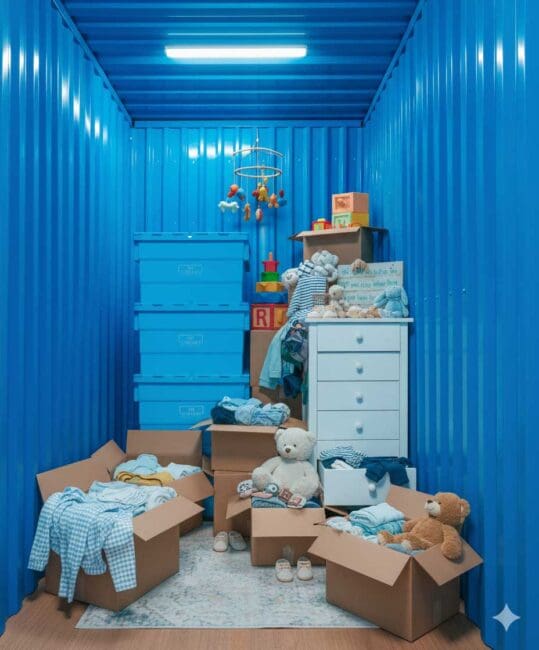
Children’s items accumulate quickly and take up a lot of space, creating pressure for constant decluttering. However, not everything should be discarded immediately.
| Category of children’s items | Keep when | Donate when |
|---|---|---|
| Clothing by size | There is a younger sibling approaching that size | No plans for more children or passing them down |
| Quality educational toys | The child is still interested or there is a younger sibling | The child has outgrown the age and there are no siblings |
| Children’s books | The collection is valuable or for a younger sibling to read later | Single books with little reuse value |
| Childhood keepsakes | They hold emotional value for the family | No one in the family is attached to them |
Personal Collections
Collections, whether books, music records, handicrafts, or cultural items, are often expressions of passion and personality. Minimalism does not require you to give up what defines who you are.
What needs to be considered is not whether the collection should exist, but whether it is being cherished and stored correctly. A collection left in disarray, damaged due to lack of preservation, or taking up space for things you need daily is a sign it needs reorganization, not necessarily disposal. Storing parts of the collection that are not frequently displayed in a mini-storage facility helps with better preservation while freeing up living space.
Spare Furniture
Tables, chairs, shelves, and spare furniture often appear during minimalist-trend decluttering sessions and are discarded hastily. However, some furniture has clear value in being kept.
High-quality furniture purchased at a high price, furniture left by relatives with family value, spare seating for special guest occasions, and furniture waiting for a move or renovation are all cases where storage is better than disposal. The cost of replacing quality furniture is often much higher than the cost of storing it for a few months in a self-storage unit.

Smart Minimalism: Categorizing Items into 3 Groups
The most common mistake in minimalism is only dividing items into two groups: keep or discard. A smarter approach is to divide them into three groups: keep frequently used items at home, systematically store items that are valuable but not used often, and donate or liquidate items that are no longer needed. These three groups allow you to minimize your living space without having to give up what is truly valuable.
| Group | Identification Criteria | Action | Specific Examples |
|---|---|---|---|
| Frequently used | Used at least 1–2 times per week, immediate inconvenience if missing, placed in the most accessible spots | Keep at home, arrange for easy access | Daily clothes, work tools, main kitchenware |
| Infrequent but valuable | Used seasonally or for special occasions, has clear utility or emotional value, will be needed again in the future | Systematic storage in a warehouse or labeled boxes | Seasonal items, wedding dresses, multi-stage baby gear, family heirlooms |
| No longer needed | Not used for over 12 months, no specific reason to keep, others may need it more | Donate, resell, or recycle | Unworn clothes, replaced old devices, items bought but never used |
Group 1 — Frequently Used: Keep at Home
This is the core group of your living space, the things that make up your daily life. The arrangement principle: place the most used items in the easiest-to-reach positions, requiring no searching. When only the things you actually use remain, the space naturally becomes tidier and easier to maintain.
Group 2 — Valuable But Infrequently Used: Storage
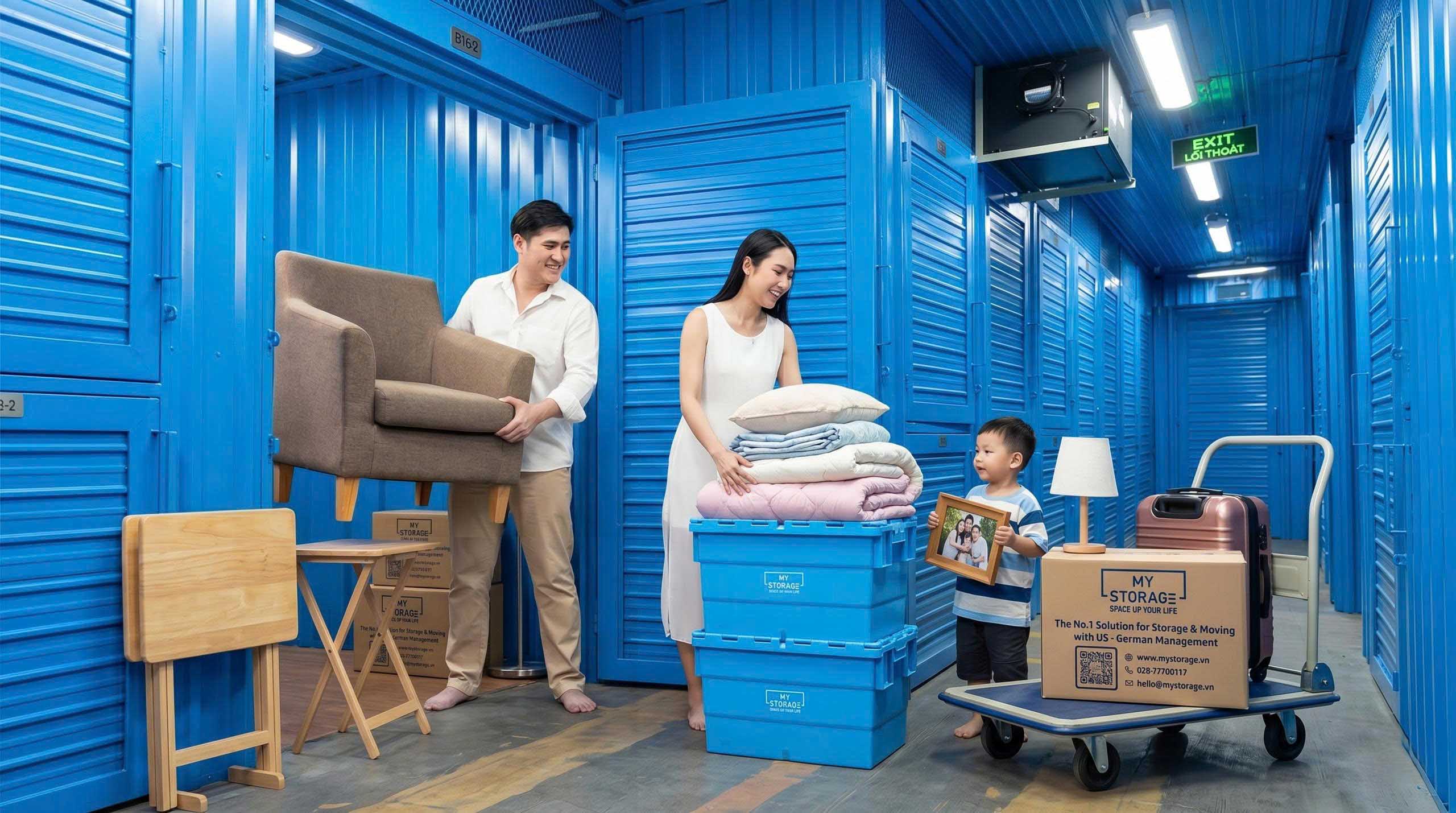
This is the group that many minimalists overlook and later regret. Seasonal items, special outfits, heirlooms, baby gear, and spare furniture all belong here. Systematic storage in a self-storage facility helps these items avoid taking up living space while remaining well-preserved and easy to retrieve when needed.
Group 3 — No Longer Needed: Donate or Liquidate
This group should be handled first because it creates space the fastest. Donate to those in need, resell through e-commerce platforms, or drop them off at the MyStorage charity locker at 375 Vo Nguyen Giap. For broken items that cannot be used, recycle them instead of throwing them into the general trash.
Categorizing into three groups is more effective than two because it solves the biggest psychological bottleneck of minimalism: not everything is ready to be discarded immediately, but that doesn’t mean it must occupy your living space. Smart storage is the bridge that helps minimalism become a sustainable choice rather than the pressure to give everything up.
Donate, Liquidate, or Store – Which is the Right Choice?
There is no one-size-fits-all formula for everyone and every item. The right choice depends on the condition of the item, its potential for future reuse, and how much others might need it. Understanding these three options helps you make decisions faster and with less regret.
When Should You Donate?
Donating is the best option when an item is still in good working condition but you no longer need it, and someone else can benefit directly from it right now.
| Signs you should donate | Specific examples |
|---|---|
| Good condition but unused for over 12 months | Clothes that are still new but unworn, books already read |
| Others clearly need it more than you | School uniforms, coats, baby gear in good condition |
| No specific reason to keep it | Items bought but never used |
| Utility value decreases if kept too long | Food, cosmetics near expiry, outdated technology |
| Want items to reach those in need quickly | Warm clothes before winter, relief goods after natural disasters |
Point of contact for donating good clothes in HCMC: MyStorage charity locker at 375 Vo Nguyen Giap.
When Should You Liquidate?
Liquidating is suitable when an item still has economic value but you no longer have a use for it and want to recover part of the initial cost.
| Signs you should liquidate | Specific examples |
|---|---|
| Clear market value remains | Old electronics in good working order, quality furniture |
| Budget needs to be reinvested | Selling old items to buy more suitable ones |
| Specialized items not suitable for donation | Professional sports equipment, musical instruments, machinery |
| Specific buyer demand exists | Selling in community groups, flea markets, e-commerce platforms |
| Want items to be appreciated by someone who truly needs them | Rare books, collectibles, branded clothing |
Popular liquidation channels in Vietnam: Cho Tot, Facebook Marketplace, second-hand groups on Facebook, Shopee, and specialized groups by product category.
When Should You Store?
Renting a storage unit is the right choice when an item has a clear reason to be kept but does not need frequent access and is occupying precious living space.
| Signs you should store | Specific examples |
|---|---|
| Used seasonally or for special occasions | Winter gear, Tet decorations, summer swimwear |
| Irreplaceable emotional value | Storing family heirlooms, original photo prints, wedding dresses |
| Will be needed again in a specific future | Baby gear for a child approaching that size, furniture while waiting to move house |
| Value is higher than storage costs | High-end suits, backup equipment, valuable collections |
| Not ready to decide immediately | Need more time to think without letting it clutter your living space |
Cost comparison:
| Choice | Cost | Result |
|---|---|---|
| Discard then rebuy | 100% new price | Loss of money and time spent searching |
| Keep at home | Living space cost | Cramped cabinets, occupied space |
| Mini storage | From 300,000 VND per month | Tidy living space, well-preserved items |
The three options are not mutually exclusive. A smart decluttering session usually creates all three groups at once: some items are donated or liquidated immediately, some are systematically stored, and the rest continue to be used daily. The key is that each item is handled intentionally rather than being left to accumulate over time.
Living minimally is not a revolution that happens in a day but a process of building the habit of making intentional decisions for every item. Categorizing correctly into three groups, processing them in the right direction, and maintaining that system over time is all it takes for your living space to always reflect the life you want to have.
What you are not ready to let go of does not necessarily have to take up living space. MyStorage self-storage helps you store what is valuable, while the charity locker at 375 Vo Nguyen Giap accepts what others need more. Smart minimalism is knowing exactly where each item goes, not trying to discard as much as possible in the shortest time.
FAQ
Where should I start living minimally if my home is very cluttered?
Start with one small, visible area — usually a desk surface or wardrobe. Complete one area fully before moving to the next. The sense of finishing each section builds better momentum than attempting to clear the entire home in a single day.
Does minimalism mean never buying anything new?
No. Minimalism does not prohibit shopping but changes how you approach it. Each new purchase comes with consideration of whether it is truly needed and where it will live. The one-in-one-out rule maintains a stable amount of belongings while still allowing updates to things genuinely needed.
How do I avoid regret after getting rid of belongings?
Avoid rushing during the first decluttering session. For uncertain items, place them in a labeled box with a date and store it away for 30–90 days. If you have not retrieved or thought about any item after that period, the decision to let it go becomes much easier with far less regret.
What is the most effective order for processing unwanted belongings?
Sell or donate first, recycle second, and discard last. Selling and donating create immediate positive value while reducing waste. Recycling handles what cannot be used. Discarding is only the last resort when no other option remains.
What items should never be discarded when minimising?
Important legal documents, irreplaceable family photos and keepsakes, tools for active work and hobbies, and items whose value exceeds storage costs. These should be properly stored rather than discarded simply because you are in a decluttering mood.
Is self-storage compatible with a minimalist lifestyle?
Completely compatible because self-storage does not contradict minimalism but complements it. Minimalism aims for intentional and uncluttered living space, and self-storage helps achieve this without surrendering genuinely valuable items. You live minimally at home while things worth keeping are safely preserved elsewhere.
Should items be kept just in case they are needed later?
Just-in-case thinking is common but often leads to unnecessary accumulation. A practical rule: if the cost of replacing an item is lower than storing it for a year, letting it go and repurchasing when genuinely needed is the more rational choice. Conversely, if storage costs less than replacement value, keeping it in storage is the right decision.
How do I maintain a minimalist space after decluttering?
Three simple habits support long-term maintenance: a 5-minute reset each evening to return the space to its baseline state, applying the one-in-one-out rule with every new purchase, and reviewing belongings every 3–6 months to process anything that has stopped serving your life.
Does the MyStorage charity wardrobe regularly accept donations?
The charity wardrobe at the MyStorage office at 375 Vo Nguyen Giap accepts clean and wearable clothing during business hours. No appointment is needed — simply bring washed, fully dried, and neatly packed items to drop off. This is the simplest way to get unused clothing to people who need it without significant time or effort.
Is the cost of storage at MyStorage worth it compared to the benefits?
Worth it when the value of stored items exceeds storage costs and when quality of life improves through a tidier living space. A 1–2 m² unit at 300,000–600,000 VND per month is usually far lower than the cost of repurchasing discarded items or moving to a larger apartment just to have more storage space.