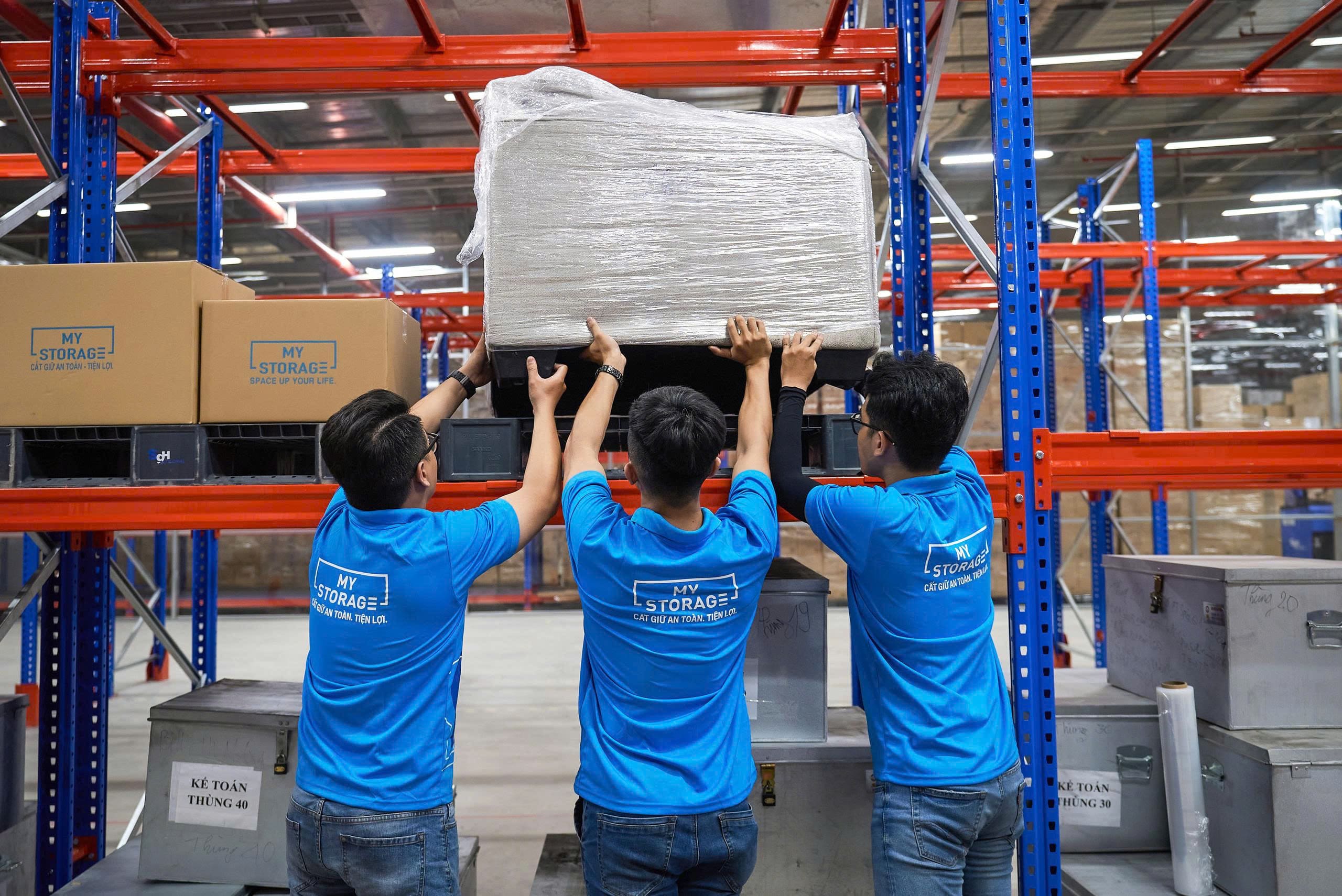
When traveling abroad for 6–24 months, the most optimal solution is to use self-storage combined with a standard moisture-proof packing process. This storage option for studying or working abroad for 6-24 months helps save 70–80% of costs compared to maintaining a rented room/apartment just to store belongings.
Why is it necessary to store belongings when studying or living abroad long-term?
When studying or working abroad for 6–24 months, professional storage of your belongings is not only a way to protect your assets but also a smart financial decision. This solution helps you cut up to 70% of costs compared to maintaining monthly rent, while also protecting your belongings from mold and damage caused by prolonged stagnant air in a closed house. This is the perfect “stepping stone” for you to confidently start your new life without worrying about urgently liquidating assets at a low price or bothering relatives.
The Economic Question: Rent a house for “stuff” or rent a storage unit?
Cost of renting a house: In major cities like Hanoi or Ho Chi Minh City in 2026, the average rent for an apartment/room ranges from 5–15 million VND/month. If you go for 1 year, you’ll lose 60–180 million VND just to hold a spot for your belongings.
Cost of renting a storage unit: A mini self-storage unit only costs 1–2 million VND/month. You save a significant budget to cover the expensive living costs abroad.
Protect belongings from the “silent killer” – Humidity
A house left closed for a long time in Vietnam is an ideal environment for mold, termites, and musty odors to penetrate clothes, books, and leather goods.
Professional storage facilities have humidity control and ventilation systems, ensuring your belongings remain “as good as new” on the day you return.
Flexibility for “Trial” Trips
Families trying out relocation: If life abroad isn’t as expected, you still have a “backup” of all your family’s belongings safely stored, allowing you to restart without the expense of buying new items.
Students/Trainees: Avoid the nightmare of “fire-selling” cherished items at 1/10th of their actual value due to the pressure of an approaching flight date.
Don’t Burden Relationships
Asking relatives or friends to store items for 1–2 weeks is a favor, but storing them for 24 months is a burden. Self-storage helps you maintain relationships and not worry about the safety of your belongings if an unexpected event occurs at a relative’s home.
The 6–24 month period is a psychological “gray area.” You’re not ready to get rid of everything, but you can’t take everything with you either. Smart storage is how you buy “peace of mind” for the journey ahead.
Items to Store When Going Abroad
Ideal items for storage are durable, timeless, or sentimental belongings that you’ll definitely need upon your return. This list often includes: kitchen appliances, disassembled furniture, off-season clothing, important documents, and valuable electronic devices. Keeping these items helps you seamlessly reintegrate into life in Vietnam without spending tens of millions of dong to repurchase everything from scratch.
Priority Items for Storage
| Item Category | Specific Examples | Packing Notes |
|---|---|---|
| Home Appliances & Furniture | Air fryer, coffee maker, disassembled desk, swivel chair. | Clean food crumbs thoroughly, wrap with shrink wrap (PE) to prevent scratches. |
| Clothing & Footwear | Heavy winter coats, office wear, branded shoes, spare luggage. | Vacuum seal to save space and provide absolute moisture protection. |
| Documents & Papers Storage | Degrees, certificates, property contracts, specialized books. | Store in hard, waterproof plastic boxes and add desiccant packets. |
| Electronic Devices Storage | Computer monitor, speaker system, gaming consoles (PS5, Switch). | Absolutely remove batteries, wrap with bubble wrap, and place in a sealed box. |
| Souvenirs & Collectibles Storage | Photo albums, models, personal collections. | These are “priceless” items, so they should be prioritized for the core area of the storage unit. |
Why should you keep these items?
- Small Home Appliances & Furniture: Items like microwaves or blenders often have a lifespan of 5–10 years. Selling them off only recoups 20–30% of their value, but upon returning, you’d have to buy new ones at 100% of the price, which might be higher due to inflation.
- Books and Documents: These are a source of accumulated knowledge over time. Many books may no longer be reprinted, or personal documents could be extremely troublesome if lost during travel.
- Electronics: If you’re only gone for 6–24 months, electronic devices won’t be too outdated. A good graphics monitor will still serve you well upon your return.
Risks of Leaving Items at Home or with Acquaintances
Leaving items in an empty house or with acquaintances for 6–24 months carries risks of damage, mold, loss, and difficulty in control, especially in Vietnam’s hot and humid climate.
1. Risks of Leaving Items in an Empty House
When a house lacks human presence and isn’t regularly cleaned, natural factors will “attack” your belongings very quickly.
- The Silent Killers – Humidity and Mold: With Vietnam’s tropical monsoon climate, humidity often exceeds 80%. In a closed environment with poor air circulation, mold will grow on wood and leather surfaces (sofas, handbags) and damage electronic circuit boards.
- Insect Infestation: Termites, cockroaches, and rats are “uninvited guests.” Rats not only gnaw on clothes but also have a particular fondness for electrical wires, posing a risk of short circuits when you reuse appliances.
- Security and Safety: An empty house left for a long time is an easy target for thieves. Furthermore, incidents like water leaks from an upper floor or electrical shorts won’t be addressed promptly, leading to cascading damage.

2. Risks of Storing Belongings at a Friend’s or Relative’s Home
“Storing items means entrusting them,” but sometimes trust is inversely proportional to convenience and responsibility.
- Inconvenience to their living space: Your belongings (especially bulky items) will occupy someone else’s living area. After 1-2 months, initial enthusiasm can quietly turn into an inconvenience.
- Lack of legal responsibility: As it’s a personal relationship, there’s usually no contract or insurance. If loss, damage, or fire occurs at a friend’s or relative’s home, claiming compensation is extremely difficult and can easily strain the relationship.
- Difficulty accessing your items: You’ll be entirely dependent on their schedule. It can be very awkward if you urgently need an item when they are busy or away.
| Criteria | Leaving at an empty house | Storing with friends/relatives |
|---|---|---|
| Humidity control | None (Prone to mold) | Depends on their home environment |
| Security | Low (Prone to theft) | Medium |
| Cost | 0 VND (but renovation costs) | “Debt” of gratitude |
| Access to items | Free | Dependent on homeowner |
| Risk of damage | Very high (Mice, cockroaches, termites) | High (Accidental bumps, misuse) |
Why is self-storage suitable for students studying abroad for 6–24 months?
1. Cost Optimization Compared to Renting a Room
This is the most obvious economic advantage. Instead of maintaining a rented room for 5–7 million VND/month just to “store items,” you can rent a self-storage unit for only 1/4 or 1/5 of that cost.
- Savings: The money saved in one year could be enough to cover a semester’s tuition or a short trip in your host country.
- No large deposit: Most self-storage facilities do not require a 2-3 month rental deposit like traditional apartment rentals.
2. Flexible Contracts – “Living” by the Semester
Self-storage services typically allow monthly rentals. This is extremely convenient because:
- Easy renewal: If you decide to stay for an extra summer term or pursue further studies, a simple phone call or email is all it takes to extend your contract.
- Quick cancellation: Upon your return, you can terminate the contract immediately without being bound by 1-year terms like a typical rental agreement.
3. Preserving the “Health” of Your Belongings
Student belongings often include books, laptops, cameras, or winter clothes. These items are extremely sensitive to weather conditions.
- Humidity control: Professional storage facilities always maintain ideal temperature and humidity, preventing mold from corroding garments or damaging electronic components.
- 24/7 Security: Surveillance camera systems and individual locks provide significantly more peace of mind compared to leaving items at a friend’s house (where many people come and go).
4. Easy Authorization for Relatives
While you are abroad, if you need to retrieve an important document or an item you’ve stored, you can:
- Authorize access: Grant permission to your parents or close friends to access the storage unit and retrieve items.
- Support services: Some facilities even offer pick-up and delivery services upon request, meaning you might not even need to ask a relative.
Quick Comparison: Renting a Room vs. Self-Storage
| Feature | Renting a room for storage | Self-storage |
|---|---|---|
| Cost | Very high | Low, cost-effective |
| Safety/Security | Medium (prone to fire, theft) | High (with guards, cameras, fire prevention) |
| Preservation | Dusty, moldy, cockroaches/mice | Clean, humidity-controlled |
| Space | Fixed (often excess space) | Flexible (from 1m² to 20m²) |
Before studying abroad, categorize your belongings into 3 groups: Keep (Store), Sell (Resell), and Discard. This helps you reduce the required storage space and save a significant amount of money!

Summary of storage space and costs
The ideal storage space depends on the number of rooms and types of items; on average, a 1-bedroom apartment only requires 2–4 m² of storage for 6–24 months. Storage costs for studying abroad for 6–24 months are often lower than renting an empty apartment, and are flexibly calculated by area, starting from just a few hundred thousand VND per month.
| Target User / Item Volume | Type of Living Space | Suggested Storage Area | Common Stored Items | Estimated Cost / Month | Suitable for 6–24 Months Storage |
|---|---|---|---|---|---|
| Students / Single Room | Rented room, dormitory | 1 – 2 m² | Clothes, luggage, books, personal items | From 300,000 – 600,000 VND | ✔ Highly suitable |
| Study Abroad / 1BR Apartment | 1-bedroom apartment | 2 – 4 m² | Small furniture, electronics, off-season clothes | From 600,000 – 1,200,000 VND | ✔ Most popular |
| Small Family / 2BR Apartment | 2-bedroom apartment | 4 – 6 m² | Small sofa, wardrobe, household appliances, cartons | From 1,200,000 – 2,000,000 VND | ✔ Suitable for long-term |
| Business Trip / Overseas assignment | Short-term rental | 2 – 3 m² | Daily necessities, work equipment | From 600,000 – 900,000 VND | ✔ Flexible |
| Minimalist Storage | Only valuable items | 1 m² | Documents, souvenirs, small devices | From 300,000 VND | ✔ Most economical |
Key Criteria to Check When Choosing a Storage Facility
When selecting a storage facility, prioritize 24/7 security, humidity control, flexible contracts, convenient location, and brand reputation.
1. Security & Safety Systems
Never compromise on the safety of your belongings. A reputable provider must meet the following:
- 24/7 Surveillance: AI Camera systems capable of motion detection and storing data for at least 30 days.
- Access Control: Utilizing fingerprint locks, key cards, or personal PINs. Only you (or an authorized person) can open your storage unit.
- Standard Fire Protection System: Check if the facility has automatic sprinklers, fire extinguishers, and especially a standard smoke alarm system.
2. Environmental Control
This is the distinguishing factor between a “premium storage facility” and an “old warehouse.”
- Humidity Control: Especially crucial if you’re storing wooden items, documents, or electronics. The facility should maintain stable humidity (typically below 60%) to prevent mold.
- Cleanliness & Pest Control: The facility must be clean, free of strange odors, and have a regular schedule for termite, cockroach, and rodent extermination.
3. Contract Flexibility
Studying abroad or business trips often involve unexpected changes. Choose a place with a “flexible” policy:
- Rental Period: Is monthly rental available? Is it easy to extend or terminate the contract early without incurring excessive penalties?
- Space Adjustment: If you sell off some items after 3 months, do they allow you to switch to a smaller unit to save costs?
- Property Insurance: An extremely important criterion. The contract must clearly state the compensation amount in case of fire or loss.
4. Ancillary Services & Location
- Convenient Location: Prioritize facilities near major roads, allowing easy access for trucks or pickup trucks.
- Support Tools: Does the facility provide trolleys, ladders, or cargo lifts? These will save you a lot of effort when moving items.
- 24/7 Access: Check if you can access your items on weekends or at night, or if you’re restricted to business hours.
- An AI-powered storage size calculator helps customers easily determine the optimal storage unit size and cost.

Storing belongings when studying abroad or traveling overseas for 6–24 months is a smart way to protect your possessions, save money, and focus on your new journey with peace of mind.
FAQ
Should I rent a storage unit if I study abroad for 6–24 months?
Yes. Renting a storage unit is often cheaper than keeping an empty apartment and ensures your belongings are stored safely while you are abroad.
How much storage space do I need when studying abroad?
Students usually need 1–2 m², while a one-bedroom apartment typically requires 2–4 m² for 6–12 months of storage.
How much does storage cost for 6–24 months?
Storage costs start from just a few hundred thousand VND per month, based on the space used, with no hidden fees.
Do I need to pay upfront for long-term storage?
No. You can pay monthly or choose long-term plans to receive better discounts.
Will my belongings get moldy if stored for 6–24 months?
No, as long as you choose a clean, dry, or climate-controlled storage unit suitable for long-term storage.
Can I store suitcases, clothes, and books?
Yes. These are among the most common items stored by students and people going abroad long-term.
Can I end my storage rental early if I return sooner?
Yes. You can end the rental early with prior notice, and fees are adjusted based on actual usage.
Is renting a storage unit safer than leaving items with relatives?
Yes. Professional storage facilities offer 24/7 security, private locks, and fire safety systems, reducing risks of loss or damage.
What if I don’t know how much storage space I need?
You can use an AI size estimator by selecting your items—no need to calculate square or cubic meters yourself.
Is self-storage suitable for going abroad for one year?
Absolutely. Self-storage is ideal for medium- to long-term needs, offering flexibility and cost efficiency.