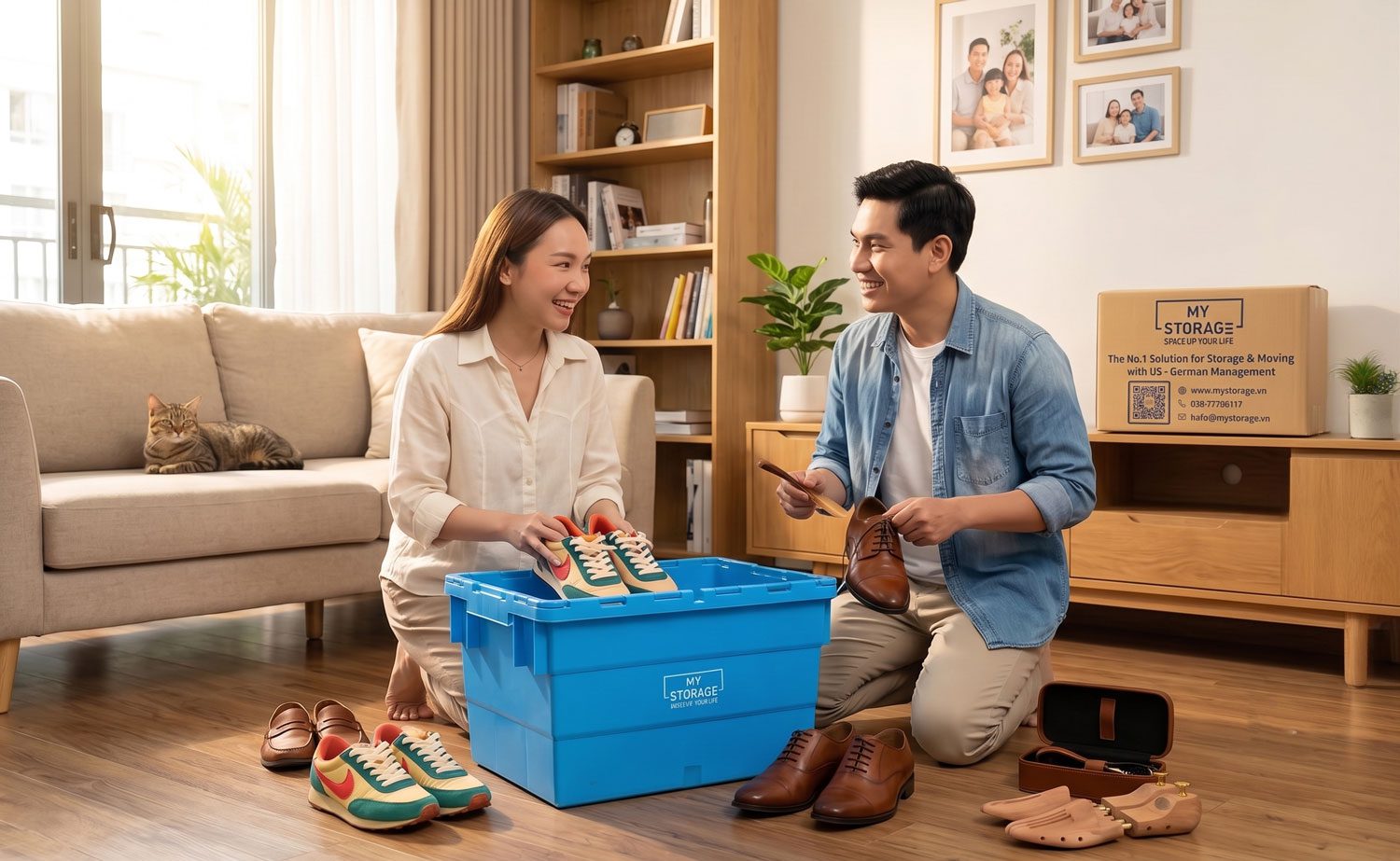
To prevent shoes from getting moldy, losing their shape, or having the glue peel off, you should clean them before storing, let them dry completely, use paper or shoe trees to maintain their form, place them in breathable boxes or cloth bags, and store them in a dry place away from direct sunlight. For shoe collections or rarely used pairs, a stable storage environment will help extend the product’s lifespan. Learn how to store shoes properly to prevent mold, loss of shape, and yellowing.
Why Do Shoes Easily Get Moldy and Degrade?
Shoe damage during storage is often not due to poor quality but rather an unsuitable storage environment. High humidity, accumulated sweat, lack of ventilation, and direct sunlight are the four main factors that destroy shoes even if they haven’t been worn once since being put away.
- Air Humidity: Vietnam has an average humidity of 75–85% during the rainy season, significantly higher than the 65% RH safety threshold for most shoe materials. Natural leather absorbs moisture like a sponge, creating ideal conditions for mold growth. Canvas and mesh fabrics accumulate moisture quickly and are difficult to dry completely in high-humidity conditions. Rubber soles and adhesives undergo chemical decomposition when exposed to prolonged high humidity, which is the primary cause of the common sole-peeling phenomenon for shoes stored for long periods in Vietnam.
- Sweat and Residual Moisture: Storing shoes immediately after wearing them without letting them dry completely is the most common mistake. The average human foot secretes 250ml of sweat daily, most of which is absorbed into the lining and shoe materials. Sweat contains salts and organic acids; when accumulated in enclosed shoes without ventilation, it decomposes the lining, corrodes the leather, and creates an acidic environment that weakens the adhesive structure over time. Both sneakers and leather shoes are equally affected by this, differing only in the speed and manifestation of the damage.
- Lack of Ventilation: Closed shoe cabinets without ventilation holes create a stagnant air environment. Moisture from shoes, nearby clothing, and the floor gradually accumulates with no way to escape.
| Storage Type | Ventilation Level | Mold Risk |
|---|---|---|
| Fully closed cabinet | None | Very high after 2–3 months |
| Cabinet with mesh doors | Good | Low if shoes are dry |
| Open shelves | Very good | Lowest but very dusty |
| Sealed shoe boxes | None | High without silica gel |
| Perforated shoe boxes | Medium | Medium |
- Direct Sunlight: UV rays in sunlight cause fading, make synthetic materials brittle, and decompose adhesives much faster than a cool, dark environment. White sneakers are particularly prone to yellowing when exposed to sunlight, even for just a few weeks. EVA plastic and rubber soles blister and harden after long periods in the sun. This is why shoes left on balconies or near sun-facing windows often degrade much faster than shoes stored in a dark cabinet.
- Storing Shoes Too Long Without Checking: Storing shoes for long periods without periodic inspection allows damage to accumulate to an irreversible level before being discovered. Light mold in the early stages can be wiped clean in minutes. Mold that grows for 3–6 months without inspection penetrates deep into the lining, leather, and adhesive, causing permanent damage. Shoe glue has a certain lifespan and begins to decompose naturally after 5–7 years even if not worn; this process is much faster in an uncontrolled humid environment.
How to Store Each Type of Shoe Properly
Each type of shoe is made from different materials and has its own weaknesses when it comes to long-term storage. Applying the correct storage method for each type helps significantly extend their lifespan and maintain both utility and aesthetic value.
Storing Sneakers
Sneakers are more prone to sole yellowing, glue peeling, and deformation than other types of shoes because they use many synthetic materials sensitive to the environment. Proper storage can keep sneakers looking like new for years.
| Common Issue | Cause | Prevention |
|---|---|---|
| Yellowing of white soles | Oxidation reaction with air and UV light | Wrap soles with anti-yellowing film, store in a dark box, avoid sunlight |
| Sole peeling | High humidity decomposes glue, long storage without use | Store at 50–60% RH, wear or flex the soles periodically |
| Toe box deformation | Not stuffing to maintain shape when storing | Insert shoe trees or enough tissue paper inside |
| Upper fabric yellowing | Sweat and dirt not cleaned before storage | Clean thoroughly and dry completely before boxing |
| Stained shoelaces | Accumulated dust and sweat | Remove laces to wash separately, dry completely before re-storing |
Sneaker storage process before putting away: Clean everything thoroughly with a soft brush and specialized cleaner, air dry naturally and completely for at least 24 hours, stuff with tissue paper or shoe trees to maintain shape, place silica gel packets in the box and seal it, and keep the box in a cool, dark environment away from direct sunlight.
Storing Leather Shoes
Natural leather needs periodic moisturizing and protection from two extremes that both cause damage: excessive humidity leading to mold and excessive dryness leading to surface cracking.
- Periodic conditioning before storage: This is a step many people skip, but it is the most important for leather shoes. Leather conditioner creates a protective layer that prevents moisture from penetrating during storage and prevents the leather from losing its natural moisture when stored for long periods in a dry environment. Apply conditioner evenly over the entire leather surface, let it soak for 15–20 minutes, then gently wipe off the excess before storing.
- Preventing dryness and cracking: Cracked leather usually occurs when stored in an environment that is too dry (below 40% RH) or near a heat source. Cedar wood shoe trees are particularly effective because they both maintain shape and naturally absorb moisture, controlling the microclimate humidity inside the shoe.
- Limiting mold and mildew: Moldy leather shoes usually start at the stitching, joints, and the interface between the leather and the sole. Carefully check these areas when cleaning before storage and place silica gel both inside the shoes and in the storage box.

Preserving Sneakers
Sneakers accumulate the most sweat of all shoe types and are the group at the highest risk of odor and mold if not handled correctly before storage.
- Dry completely after use: Never store damp sneakers in a closet or sealed box. Leave shoes in a well-ventilated area for at least 12–24 hours after each wear before putting them away. Stuffing newspaper into the shoes immediately after taking them off helps absorb moisture faster and maintains their shape while drying.
- Effective deodorizing: Placing baking soda inside the shoes overnight absorbs odors naturally without leaving chemicals behind. Cedar sachets or activated charcoal placed in the shoe box provide long-term odor control. Using a specialized disinfectant spray for sneakers after each wear helps prevent the growth of odor-causing bacteria.
| Step | Time | Tools needed |
|---|---|---|
| Remove shoes, stuff with newspaper | Immediately after wearing | Newspaper |
| Air dry naturally | 12–24 hours | Ventilated rack |
| Deodorize | Overnight | Baking soda or activated charcoal |
| Clean sole and upper | 15–20 minutes | Brush, cleaner |
| Store in box with silica gel | After completely dry | Box, silica gel |
Preserving Boots and High-Top Shoes
Boots and high-top shoes have tall shafts that are prone to folding and deforming if not properly supported during storage. This is also the group of shoes that requires the most storage space.
- Use shoe trees or shaping paper: For leather boots, a foot shoe tree combined with a shaft shaper is the most ideal solution. For fabric or suede boots, tightly stuff newspaper or air bubbles throughout the entire body from the toe up to the collar to keep the boot shaft standing upright without folding.
- Store vertically: Boots should be stored vertically so that the shaft does not fold or lean, which creates permanent creases. Specialized boot racks or DIY PVC pipe stands are both effective solutions. If they must be stored horizontally, place a rigid cardboard roll inside to maintain the shape.
| Boot type | Shaping method | Storage method |
|---|---|---|
| Soft leather boots | Specialized boot shoe trees | Upright on shelf |
| Fabric and suede boots | Stuff tightly with newspaper or air bubbles | Upright, avoid tilting |
| Chelsea boots | Short shoe trees for toe and heel | Upright or lying down with support |
| Knee-high boots | Internal boot shapers or rolled tubes | Always upright, never lying down |
8 Steps for Long-Term Footwear Preservation
The eight steps below apply to most types of footwear, from sneakers to leather shoes and boots. Following the correct sequence before storage helps shoes remain in top condition even if they are not used for months or years.
Step 1 — Cleaning Your Shoes
Cleaning before storage is the most important and most frequently overlooked step. Dirt, sweat, and stains left on shoes for a long time corrode the material and create a nutrient-rich environment for mold to grow.
| Shoe type | Cleaning tools | Notes |
|---|---|---|
| Canvas and mesh sneakers | Soft brush, specialized cleaner or diluted water | Do not soak, only wipe gently |
| Leather shoes | Soft dry cloth for dust, mild leather cleaner | Do not use much water on genuine leather |
| Suede shoes | Dry suede brush, specialized stain eraser | Do not use water, easily leaves marks |
| Rubber soles | Stiffer brush with water and mild soap | Scrub grooves thoroughly to remove dirt |
Step 2 — Drying Completely
This is a step that must not be rushed. Shoes stored in a box while even slightly damp will develop mold within 2–4 weeks under Vietnamese weather conditions.
Air dry shoes in a well-ventilated place, avoiding direct sunlight for at least 12–24 hours after cleaning. Stuffing newspaper or unprinted paper inside immediately after taking them off helps absorb moisture faster and maintains the shape while drying. Change the paper every 4–6 hours if the shoes are very wet. Do not use a hairdryer because high temperatures can warp the soles and shrink the leather.
Step 3 — Remove Insoles If Necessary
Insoles accumulate the most sweat and bacteria in the entire shoe. For sneakers and shoes worn frequently, you should remove the insoles to wash them separately or air them out before storing them with the shoes.
Removed insoles should be aired out separately until completely dry before being placed back into the shoes for storage. Some people choose to store insoles separately next to the shoe box to maximize ventilation inside the shoes during long-term storage.
Step 4 — Stuffing with Paper or Using Shoe Trees
Shoes left empty in a sealed box will flatten and develop creases over time due to a lack of internal support.
| Method | Advantages | Suitable for |
|---|---|---|
| Cedar shoe trees | Best shape retention, natural moisture absorption, odor resistant | High-end leather shoes, boots |
| Plastic shoe trees | More affordable, good shape retention | Sneakers, athletic shoes |
| Tissue paper stuffing | Economical, easy to find | All types of shoes when shoe trees are unavailable |
| Newspaper stuffing | Good moisture absorption, cheap | Sneakers and boots when extra moisture removal is needed |
Stuff just enough so the shoes maintain their natural shape; do not overstuff, as this can strain the stitching and stretch the leather.
Step 5 — Adding Desiccant Packets
Silica gel is an active protective layer against moisture inside the box, which is particularly important during the rainy season in Vietnam when outdoor humidity often exceeds 80%.
Place 1–2 packets of 10–20g silica gel in each shoe box depending on the box size. Use the type of silica gel with a color indicator that changes from blue to pink when saturated, indicating it needs to be replaced or dried and reused. Replace the silica gel every 3–4 months or when you observe a color change. You can supplement this with activated charcoal packets or cedar sachets to control odors alongside moisture control.

Step 6 — Store in Boxes or Fabric Bags
| Storage Option | Pros | Cons | Suitable for |
|---|---|---|---|
| Original shoeboxes | Good protection, maintains shape, easy to identify | No ventilation if completely sealed | High-end sneakers, leather shoes with nice boxes |
| Clear plastic boxes | Visible from the outside, good protection | Requires small ventilation holes | Collections intended for display and preservation |
| Fabric dust bags | Breathable, dust-proof | Less protection than hard boxes | Leather shoes and boots that need to breathe |
| Mesh bags | Best ventilation | No protection from dust | Sports shoes for short-term storage |
Do not use sealed plastic bags as they trap moisture inside, causing mold to grow faster than leaving them exposed to the open air.
Step 7 — Place in a Cool, Dry Area
The storage location accounts for 50% of preservation quality, even if all the above steps are followed correctly.
| Location | Suitability | Reason |
|---|---|---|
| Shelves in air-conditioned rooms | Best for home | Stable temperature and humidity |
| Shoe cabinets with ventilation holes | Good | Dust-free and well-ventilated |
| Under the bed | Average | Poor ventilation, prone to moisture buildup |
| Balcony or near sunny windows | Poor | Fluctuating sunlight and temperature |
| Unventilated warehouses | Very poor | High humidity, very high risk of mold |
| Climate-controlled self-storage | Best | Continuous temperature and humidity control |
Step 8 — Periodic Checks Every 1–2 Months
Regular inspections help detect issues early before damage becomes irreversible.
Each check should involve four tasks: observe the shoe surface for unusual white or green spots signaling early-stage mold, check if silica gel needs replacing, replace stuffing paper if it is damp or flattened, and gently flex sneaker soles a few times to prevent the glue from becoming hard and brittle due to disuse. For leather shoes, apply a thin layer of conditioner every 3–4 months even if not worn to prevent the leather from drying out.
| Shoe Type | Common Risks | Maintenance Method |
|---|---|---|
| Sneakers | Yellowing, sole separation | Clean, keep dry, avoid sunlight |
| Leather shoes | Cracking, mold | Condition leather, maintain stable humidity |
| Canvas shoes | Mold, fading | Wash clean, dry completely |
| Boots | Loss of shape | Use shoe trees, store upright |
| Sports shoes | Odors, deformation | Deodorize, dry after use |

How to Store Shoes for Every Situation
There is no single shoe storage method that fits every situation. The duration of non-use, the number of shoes, and the storage purpose determine the appropriate method and level of investment. Here are 5 common situations to keep in mind for more effective shoe preservation.
When Traveling for Long Periods
Shoes left at home during a 2–4 week trip usually don’t need special preparation if they’ve been cleaned and the house has air conditioning. For trips longer than a month or during the rainy season, place silica gel in the boxes before leaving and ensure shoes are stored in a ventilated room, not in a completely sealed cabinet for long periods without anyone home to check.
Note when bringing shoes for travel: Shoes in luggage should be stuffed with shoe trees or newspaper and placed in cloth bags before being put into the suitcase to maintain their shape and avoid dust from other items in the suitcase.
When Moving House
Moving house creates a period where shoes may be boxed for 2 weeks to 3 months in storage, trucks, or temporary warehouses. This is the riskiest situation for shoes because temperature and humidity in trucks and temporary storage are often uncontrolled.
| Preparation Steps | Details |
|---|---|
| Clean and dry completely | At least 24 hours before boxing |
| Place 2–3 silica gel packets per box | Double the usual amount of silica gel |
| Label boxes clearly | Note shoe type, size, and status for quick searching |
| Stack shoe boxes high | Do not place at the bottom where they are prone to floor moisture |
| Check immediately upon arriving at the new home | Open boxes for ventilation for at least 24 hours before resealing |
For high-value shoe collections, renting a climate-controlled self-storage unit during the move is much safer than leaving them in a truck or temporary warehouse.
When the Seasons Change
Seasonal change is the most logical time of year for shoe rotation. Shoes from the previous season need careful preparation for 3–6 months of storage before being used again.
Seasonal rotation process for shoes: Clean all shoes from the season just ended, treat any mold or minor damage immediately before storing, condition leather shoes, replace with new silica gel in all boxes, and store them on high shelves to give accessible spots to the new season’s shoes.
In Vietnam, there aren’t four distinct seasons, but there is still a shoe rotation cycle based on activities: trekking shoes and boots after the rainy season, outdoor sneakers after the hot summer, and party shoes after the year-end holiday season.
When You Have a Sneaker Collection
Sneaker collectors face the most complex storage challenges due to the large quantity, many high-value pairs, and strict preservation requirements to maintain value.
| Collection Scale | Storage Solution | Estimated Cost |
|---|---|---|
| Under 20 pairs | Glass shelves or transparent boxes at home with a dehumidifier | 500,000–2,000,000 VND for equipment |
| 20–50 pairs | A private room or large cabinet with humidity control | Significant investment in space and equipment |
| Over 50 pairs | Self-storage with a 3–5 m² climate-controlled unit | 700,000–1,200,000 VND per month |
For sneakers valued at 5 million VND or more, adding an anti-yellowing pack to each box helps significantly slow down the yellowing of white soles. Check and rotate sneakers by occasionally taking each pair out to gently flex the soles, preventing the glue from becoming hard and brittle.
When Doing Shoe Business
Online shoe shops and retail stores have storage needs that are completely different from individuals because they involve commercial inventory, many SKUs requiring clear classification, and frequent import/export needs.
| Need | Solution |
|---|---|
| Clear SKU zoning | Tiered shelving by brand, shoe type, size, and color, with full labeling for each position |
| Proper preservation conditions | Humidity-controlled warehouse at 50–65% RH to avoid mold and glue peeling on inventory |
| Bulk stocking before sales | Flexible warehouse space expansion before 11.11, Tet, and summer |
| Order packaging | Storage units large enough to set up a packing area, handling 50–200 orders per peak day |
| Slow-moving inventory management | Separate area for seasonal inventory awaiting clearance sales |
Shoe shops doing business on e-commerce platforms should rent a storage unit of 4–8 m² at a self-storage facility, enough to both store inventory and have a fixed packing area. Warehouse rental costs are usually from 800,000–1,800,000 VND per month, significantly lower than renting a storefront just to store inventory.
FAQ
Why do shoes stored in boxes still develop mould?
Because sealed shoe boxes trap moisture inside with no ventilation, especially if shoes were not fully dry before storage. The solution is placing 1–2 silica gel packets in each box, replacing them every 3–4 months, and ensuring shoes are completely dry for at least 24 hours before boxing.
Will white sneakers yellow when stored long-term?
Yes. White soles yellow due to natural oxidation reacting with air and UV light, occurring even without wear. Storing in dark boxes away from sunlight, using specialist anti-yellowing packets, and wrapping soles in anti-oxidation film significantly slows this process.
Are shoe trees really necessary?
Necessary for premium leather shoes and boots in long-term storage. Cedar wood shoe trees maintain shape while naturally absorbing moisture and repelling odour. For sneakers and athletic shoes, stuffing with adequate tissue paper is a cost-effective alternative that still effectively maintains shape.
Is self-storage suitable for storing a sneaker collection?
Very suitable when a collection exceeds 30–50 pairs or total value surpasses 30–50 million VND. Storage maintaining 50–65% RH and 20–26°C preserves sneakers better than home display cases, especially during rainy season when indoor humidity exceeds 80% and accelerates yellowing and sole separation.
Is sole separation caused by storing shoes without wearing them?
Partly. Shoe adhesive has a finite lifespan and begins degrading after 5–7 years, faster in high humidity. Not wearing shoes long-term causes adhesive to lose elasticity and become brittle. Periodically gently flexing the sole and storing at 50–60% RH significantly slows this process.
How should shoes be stored when moving house?
Clean and dry completely before boxing, place 2–3 silica gel packets per box instead of the usual one, stack shoe boxes elevated to avoid truck floor contact, and open boxes for ventilation immediately upon arrival at the new home. For valuable footwear, renting a self-storage unit during the move is safer than leaving shoes in a moving truck.
How much storage space does an online shoe shop need?
A 4–8 m² unit suits shops processing 20–80 orders daily, providing sufficient space for SKU-zoned inventory by size and colour plus a small packing area. Expanding by 2–4 m² before major sale events is advisable. Costs of 800,000–1,800,000 VND monthly are far lower than retail premises just for inventory storage.
Do leather shoes need conditioning even when not being worn?
Yes, every 3–4 months even without wear. Natural leather loses moisture over time regardless of use. Applying a thin layer of leather conditioner periodically prevents drying and cracking during long-term storage, particularly important for leather shoes kept in dry air-conditioned environments.
Can shoes be stored in plastic bags to keep out dust?
Not recommended. Sealed plastic bags trap moisture inside, creating ideal conditions for mould growth. Use breathable fabric dustbags or shoe boxes with small ventilation holes instead. For dust protection, lightly wrap in tissue paper before placing in a fabric bag.
What preparation is needed before storing shoes at MyStorage?
Clean and dry all shoes thoroughly, prepare boxes or fabric bags for each pair, place silica gel in every box, and label clearly. Contact MyStorage to select the right unit size for the actual number of pairs and storage can begin on the same day the agreement is signed without complicated procedures.