Author: Nhật Hồ

  • Hourly Locker Rental for Office Workers: Convenient Storage for Personal Items & Sports Equipment

    Hourly Locker Rental for Office Workers: Convenient Storage for Personal Items & Sports Equipment

    Hourly locker rental for office workers is a convenient solution that helps professionals store personal belongings, gym bags, helmets, or daily essentials more safely and compactly when commuting. Instead of lugging bulky items into the office, coworking spaces, or cafes, users can utilize lockers for flexible hourly or daily storage in Ho Chi Minh City.

    Real “Pain” of Dynamic Office Workers

    Today’s employees carry more than just laptops and documents. When incorporating gym sessions, yoga, pickleball, or other after-work sports, the volume of items carried daily increases significantly. The lack of suitable storage at the office or coworking space is a challenge that almost every active professional encounters.

    • Bulky gym bags with nowhere to go during work hours: A full gym bag containing a change of clothes, towels, shoes, and a water bottle typically ranges from 20–40 liters, which is larger than many laptop backpacks. Upon arriving at the office, there is no proper place to store it: under the desk is cramped, on the adjacent chair is obstructive, and in common areas, there is a risk of theft. Many choose to leave their gym bags in their car or on their motorbike all day, but temperatures inside vehicles can soar to 50–60°C at noon, damaging sportswear and sensitive items.
    • Expensive helmets with no safe storage: High-quality full-face helmets can cost between 1–5 million VND, or even more for premium brands. Leaving them on a bike in the sun all day causes the lining to deteriorate rapidly and the plastic shell to fade. Leaving them in the building’s communal helmet area risks theft or accidental swaps. Bringing them to the desk is both cumbersome and unprofessional. Despite being a daily necessity, there is almost no suitable storage solution in modern office environments.
    • Carrying both sports shoes and office shoes simultaneously: Those who balance work and exercise often need two pairs of shoes daily: professional shoes for the office and athletic shoes for after-work training. Two pairs of shoes plus a shoe bag take up substantial space in a bag, causing inconvenience throughout the workday. Some attempt to leave their sports shoes at the office, only to be reprimanded after a few days for cluttering common areas.
    • Laptops and personal items are heavy enough; adding sports gear leads to overload: A modern professional’s basic kit usually includes a 1.5–2 kg laptop, power bank, headphones, documents, and snacks, totaling 4–6 kg. When gym or sports gear is added, the total daily weight can easily exceed 8–10 kg. This is the maximum recommended load for the spine when carrying a backpack continuously, yet many endure it because they have no better alternative.
    • Offices and coworking spaces lack personal storage: Modern office design trends favor open layouts, hot-desking, and minimal personal cabinetry. Consequently, employees lack a secure place for personal items during the day. In coworking spaces, personal lockers are often only large enough for a wallet and keys, not a gym bag or a helmet. Users with daily or weekly passes at these locations have no fixed storage solution whatsoever.

    Going to work feeling like you’re going on a trip because of the sheer volume of gear is not just a complaint it is the reality for millions striving to maintain an active lifestyle while staying productive. The issue isn’t having too many belongings; it’s the lack of appropriate storage space at the right place and the right time.

    Kho tự quản cho nhân viên văn phòng chứa đồ

    Why Is the Demand for Hourly Locker Rentals on the Rise?

    The combination of flexible work models, active lifestyles, and motorbike commuting in major cities is driving an increasing demand for short-term personal storage. Today’s professionals need a secure place to store their belongings for a few hours rather than a whole month, yet traditional storage infrastructure has failed to keep pace with this need.

    • Flexible work creates a workday without a fixed anchor: The hybrid work model, which became increasingly popular after 2020, means many individuals no longer have a dedicated desk throughout the week. With two to three days spent working from home and the rest at the office, coworking spaces, or even cafes between meetings, daily routines have become more fragmented. Each stop along these complex journeys often lacks secure storage, making the need for hourly lockers a natural byproduct of this anchorless work schedule.
    • Coworking spaces lack personal storage solutions: While coworking spaces in Ho Chi Minh City have seen rapid growth in recent years, most only offer fixed lockers for monthly subscribers. Daily or weekly pass users who represent a growing demographic are left with nowhere to store their belongings during work hours. Consequently, gym bags, helmets, and personal items end up tucked under desks or beside chairs, causing persistent inconvenience and detracting from the shared professional environment.
    • Post-work exercise has become a common habit: Gym, yoga, pilates, and pickleball are no longer reserved for weekends; they have become daily routines for a large portion of urban office workers. Those heading straight to a workout after work must carry their gear from the morning, store it throughout the day, and then transport it to their session. Hourly lockers located near office hubs or sports centers provide a direct solution, allowing users to maintain their active lifestyles without disrupting their schedules.
    • Motorbike commuting limits carrying capacity: Compared to cars, storage space on a motorbike is extremely restricted. A standard trunk can typically only accommodate a helmet and a few small items, which is insufficient for a gym bag and personal gear needed for a day of work and exercise. Furthermore, leaving belongings on a bike outdoors all day poses risks of theft and heat damage. As a result, motorbike commuters in Ho Chi Minh City and Hanoi have a significantly higher demand for hourly lockers than those using public transport or cars.
    • The desire to avoid carrying items all day: Beyond the practicalities of weight and space, there is a crucial psychological factor: modern professionals do not want to appear as if they are traveling while in a corporate setting. Bringing large backpacks, gym bags, and helmets into meetings or client consultations can feel unprofessional, regardless of how justified the need is. Hourly lockers allow users to store their personal gear and only bring essentials into the workspace, helping them maintain a polished and professional image throughout the day.

    The demand for hourly lockers is not a passing trend but an inevitable consequence of three simultaneous shifts: more flexible work arrangements, more active lifestyles, and urban infrastructure that has yet to catch up. The more dynamic a city becomes, the greater the necessity for flexible, short-term storage solutions.

    Dễ dàng truy xuất lấy đồ tại kho tự quản hành lý

    Items Office Workers Often Need to Store in Lockers

    Hourly lockers are suitable for various personal items that active office workers must carry daily but cannot or do not want to keep with them throughout the workday. The four most common groups of items include gym bags, helmets, sneakers, and personal belongings when moving between multiple locations.

    Gym Bags & Sportswear

    Gym bags with a volume of 20–40 liters are the bulkiest items that office workers must carry when combining work and exercise. Storing gym bags in a locker helps users work comfortably all day and retrieve items exactly when needed without dragging the bag from morning to night.

    A full gym bag usually includes workout clothes, sneakers, towels, water bottles, and post-workout toiletries, with a total weight of 3–5 kg. Keeping the bag under the desk all day is both cramped and creates a sense of clutter in the office space. Leaving it in a car under the sun causes sportswear and elastic materials to degrade significantly faster. Hourly lockers near offices or sports centers are the most direct solution for this group of items.

    High-Value Helmets

    High-quality full-face helmets priced from 1–5 million VND are personal assets that need proper preservation. Leaving them on the bike all day in the sun causes the lining to fade and damage quickly, while bringing them into the office is bulky and lacks a suitable place.

    Beyond financial value, full-face helmets are directly related to travel safety. The EPS foam layer inside the helmet can be compressed and lose its protective capability if frequently placed in the wrong position or subjected to prolonged high temperatures. Lockers have enough height to place the helmet in the correct position, helping to preserve both the shape and protective function of the helmet, extending its lifespan significantly compared to leaving it on a bike or desk.

    Sneakers & Accessories

    People who combine work and exercise often have to carry two pairs of shoes every day. Storing sneakers in a locker significantly reduces the weight carried and maintains hygiene for the workspace.

    Sneakers after a workout have odors and moisture that need ventilation before being stored in a sealed bag. Lockers with ventilation holes allow shoes to dry naturally during storage, much better than stuffing them straight into a gym bag immediately after exercise. Ngoài giày, các phụ kiện thể thao như găng tay tập gym, dây nhảy, thảm yoga cuộn và bình nước loại lớn đều thuộc nhóm đồ hợp lý để gửi locker thay vì mang theo vào không gian làm việc.

    Laptop Bags & Personal Items

    When moving between multiple points during the day such as offices, cafes, and coworking spaces, users often only need to carry a portion of their items at each point. Storing the rest in a locker makes moving lighter and more focused at each stop.

    Item Type Reason for using a locker Typical storage duration
    Laptop backpacks and documents When only a tablet or phone is needed for a short meeting, no need to carry the whole backpack 1–2 hours during meetings or lunch
    Post-work shopping bags Stopping to buy items before entering the office in the afternoon, needing a place to store for a few hours 2–4 hours in the afternoon
    Sensitive personal items Wallets, important documents, electronic devices when entering areas where items are not allowed According to specific situational requirements
    Change of clothes for evening events Clothes and accessories for a party or event after work, not wanting to carry them all day 4–8 hours during the workday

    Who Are Hourly Lockers Suitable For and What Benefits Do They Provide?

    Hourly lockers are suitable for anyone who frequently moves between multiple points during the day, combines work and exercise, or needs to store personal items safely for a few hours without wanting to carry them all day. The core benefit is moving lighter, working more focused, and better preserving valuable items with costs calculated only based on actual usage time.

    Who Is Suitable for Hourly Lockers?

    Target Audience Real-life usage scenarios Key benefits
    Office workers Carrying gym gear from the morning, needing to store it during work hours to exercise immediately after shift without going home to get it Saves travel time back home, exercise on time without interrupting the work schedule
    Freelancers Moving between cafes, coworking spaces, and client meeting points in the same day, having no fixed storage place Carrying only what is needed for each stop, not dragging everything everywhere
    Gym-goers Exercising before or after work, needing to store office clothes while working out or gym gear while working No need to change at the gym with large bags, items for each group are stored separately and neatly
    Pickleball & yoga players Pickleball courts and yoga studios often don’t have private lockers, needing to store personal items while practicing Safe preservation of phones, wallets, and valuables during practice time
    Coworking space users Using daily or weekly packages, having no fixed locker according to monthly membership packages Having a stable place to store personal items despite not being a permanent member
    People who frequently meet clients outside Meeting clients at cafes or partner offices, not wanting to carry large backpacks and gym bags when meeting clients A neater and more professional image during business meetings

    Cách Sắp Xếp Đồ, Quần Áo Thông Minh - Vali Gọn Gàng & Chứa Được Nhiều

    Benefits of Hourly Locker Rentals

    Move more lightly throughout the day: The average weight carried by office workers who also exercise often exceeds 8–10 kg when combining a laptop backpack, gym bag, and personal items. Storing a portion in a locker and only carrying what’s necessary for each activity significantly reduces the physical burden during a long day. The spine experiences less pressure, movement becomes more comfortable, and energy levels are better maintained until the end of the day.

    • Keep the workspace tidy and professional: Gym bags, helmets, and sneakers left exposed at desks or in common areas create an untidy impression in an office environment, especially when clients or partners visit. Lockers help completely separate personal items from the workspace, maintaining a professional image without requiring users to change their daily routines.
    • Enhanced security for valuables: Full-face helmets worth 1–5 million VND, high-end sneakers, and electronic devices left on bikes or in common areas all carry risks of theft and damage. Lockers with private locks and surveillance cameras provide a significantly higher level of security compared to the current alternatives most users are forced to accept.
    • Pay only for actual usage time: Unlike monthly lockers at gyms or offices that require long-term commitments, hourly lockers allow users to pay exactly for the time they need. If you need to store items for 3 hours in the morning, you pay for those 3 hours, not for an entire month just for a few uses. This model fits the non-fixed work schedules and weekly changing workout habits of modern office workers.

    Real-life Experience: Office Workers “Lighten the Load” with Lockers

    Hourly lockers are becoming a practical solution for many workers in HCMC and Hanoi, not just because of theoretical convenience but because they solve very specific daily inconveniences in increasingly flexible work and lifestyle schedules.

    Scenario Before lockers After using lockers
    Going to the gym after work Carrying a gym bag from the morning or going home to get gear before training, losing an extra 30–60 minutes Storing gym gear from the morning, taking it out after work, and heading straight to the gym
    Helmets in the office Left on the bike to gradually deteriorate or brought inside to take up desk space Stored in a locker upon arrival, retrieved when leaving; the helmet is kept in the correct position all day
    External client meetings Carrying everything including the gym bag, creating an untidy image when meeting clients Storing personal items in a locker, carrying only a professional bag when meeting clients
    Working at a coffee shop Backpacks, gym bags, and helmets take up the whole table, making it hard to focus and looking messy Carrying only a laptop and essentials, resulting in a tidy workspace
    Moving between multiple locations Dragging everything to every location even when not always needed Storing unnecessary items, moving lightly between points

    MyStorage – Hourly Locker Solutions for Office Workers in HCMC

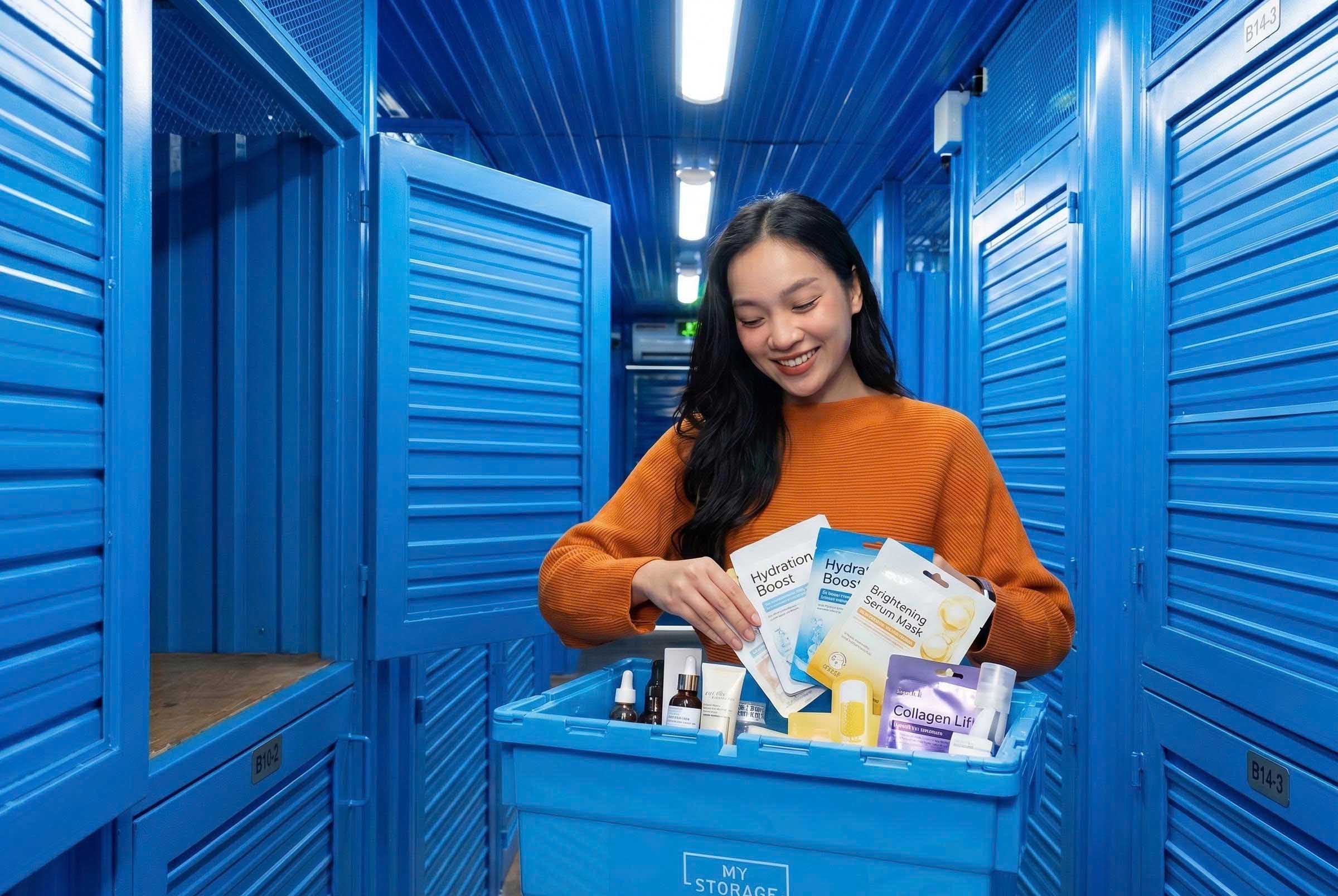
    MyStorage provides self-service hourly locker services in HCMC, allowing office workers, gym-goers, and those moving between multiple locations to store personal items flexibly without long-term commitments. Currently available at Ministop Tran Trong Cung, District 7, with costs starting from only 54,000 VND/hour.

    Rent exactly for the time needed: MyStorage lockers operate on a pay-as-you-go model based on actual usage time, requiring no membership registration or deposits. Users choose a time frame that fits their daily schedule and only pay for that duration.

    Time Package Suitable for
    1 hour Storing items during short meetings, lunch, or quick errands
    2 hours Working sessions at a nearby cafe or a single gym session
    4 hours Half a workday, either morning or afternoon
    Full day Days with multiple locations, avoiding carrying items all day

    Locker storage at Ministop 1

    Multiple sizes to suit every item. MyStorage Lockers offer two main sizes to meet a variety of short-term daily storage needs.

    Size Suitable for
    1 CBM Helmets, small backpacks, handbags, sneakers, lightweight personal items
    2 CBM Full gym bags, large laptop backpacks, or multiple items combined

    Convenient location in District 7. MyStorage Lockers are currently located at Ministop Tran Trong Cung, District 7—a hub for office workers near office buildings, gyms, and co-working spaces. The location inside a 24/7 convenience store provides users with flexible access according to their actual work schedules, without being restricted by office hours.

    Perfect for those days when you want to go to work, hit the gym, or meet clients without carrying too much. Drop off your belongings in the morning, pick them up when needed, and move more easily throughout your long day.

    MyStorage Locker Service for Building Management Partners

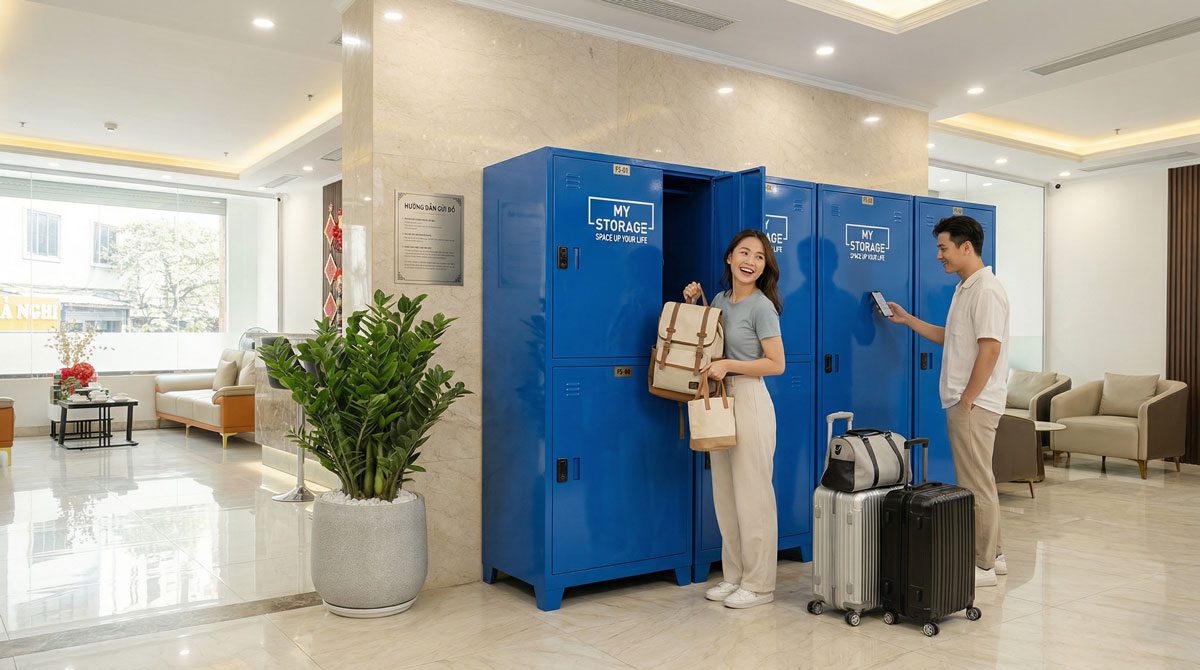
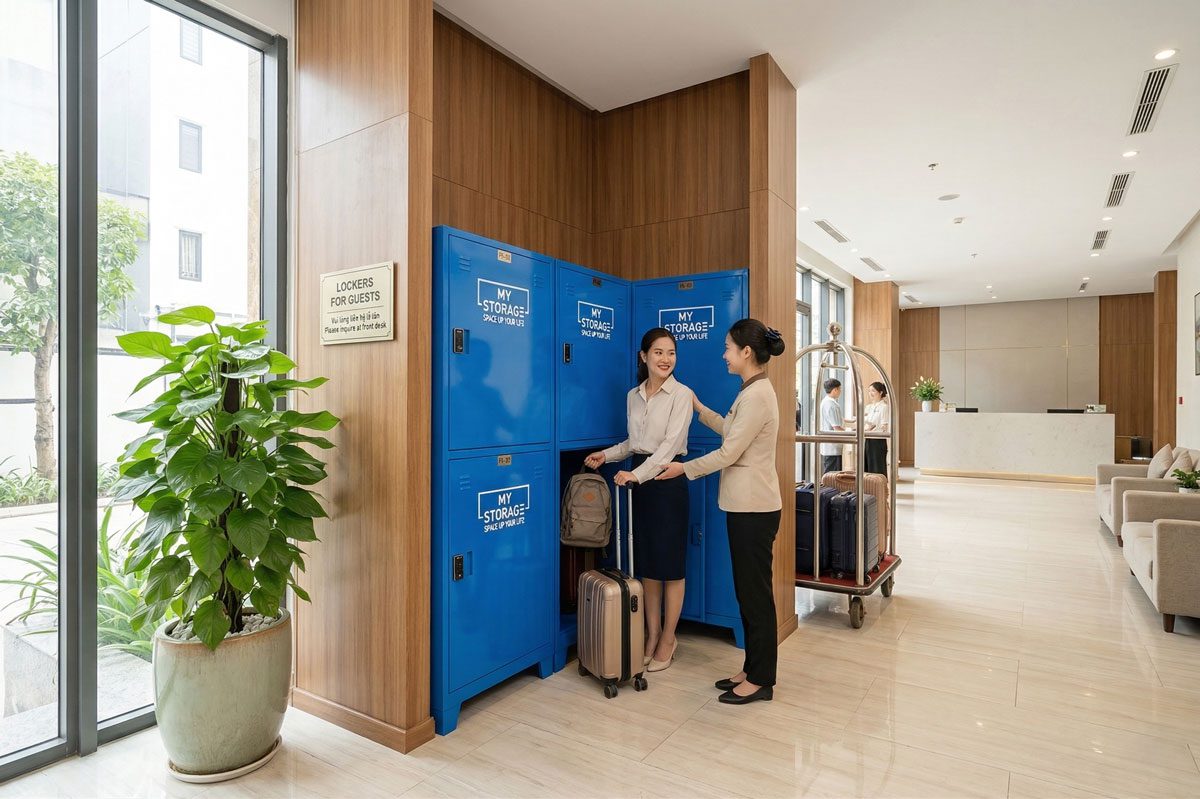
    MyStorage deploys a hyperlocal locker system, installed directly at office buildings, apartments, and co-working spaces. This is an hourly personal storage solution for residents and office workers, operating fully automatically and requiring no management personnel from the partner.

    Collaboration Model

    Category Details
    Format MyStorage installs, operates, and maintains the entire locker system
    Partner Costs No installation or operational costs for the building
    Required Space From 10m² depending on the number of lockers, prioritizing lobby or basement areas
    Revenue Sharing Partners receive a percentage of revenue as per monthly agreement
    Installation Time 3–5 business days after contract signing
    Contract Flexible 6-month or 12-month terms, renewable

    self storage at ministop tran trong cung district 7

    Benefits for Buildings & Management

    • Increasing utility value for residents and tenants Locker systems are a highly valued amenity for office tenants and apartment residents, especially in the context of an active lifestyle where work and exercise are increasingly integrated. A building with self-service lockers creates a clear competitive advantage over those without this facility.
    • No additional costs or personnel required MyStorage covers all costs for equipment, installation, maintenance, and system operation. Building management does not need to allocate extra staff or handle any technical issues. All incidents are handled directly by the MyStorage team according to committed response times.
    • Generating additional revenue from unused space Lobby corners, elevator waiting areas, or basement hallways are often non-profitable areas within a building. Placing a locker system here helps transform these spaces into a monthly passive income source without affecting the building’s core operations.
    • Enhancing building image A locker system with a modern interface, cashless payments, and 24/7 operation creates a positive impression on new tenants and visiting partners. This signals that management prioritizes the user experience within the building.

    Suitable Building Types

    Building Type Reason for Suitability
    Grade B & C Office Buildings Office tenants have a high demand for personal storage, especially those who combine work and exercise.
    High-density Rental Apartments Residents frequently receive packages and need storage when out all day.
    Coworking Spaces Daily and weekly pass members lack fixed lockers, creating a significant demand for short-term storage.
    Shopping Malls & Retail Centers Shoppers need to store items for a few hours, increasing stay time and spending within the building.
    Complexes with Gyms Gym-goers need to store office attire while working out and vice versa.

    Partnership Process

    • Step 1 — Site Survey The MyStorage team visits the building to survey locker locations, assess potential user traffic, and recommend the appropriate number of units. The survey takes 1–2 hours and is free of charge.
    • Step 2 — Proposal and Signing MyStorage sends a detailed proposal regarding locker placement, quantity, dimensions, and revenue-sharing options. Once both parties reach an agreement, the contract is signed and the installation schedule is confirmed.
    • Step 3 — Installation and Trial Operation The MyStorage technical team completes the installation within 3–5 working days. Following installation, there is a 1–2 week trial period to ensure system stability before opening to users.
    • Step 4 — Operation and Periodic Reporting MyStorage manages the entire system and provides monthly revenue reports to the partner. Routine maintenance is scheduled to avoid peak hours in the building.

    To learn more about locker installation options for your building or to schedule a free site survey, building management can contact the MyStorage partnership team directly for a consultation tailored to the specific characteristics of each property.

    FAQ

    Does the building management have to pay for locker installation costs?

    No. MyStorage covers all equipment, installation, and system operation costs. Partners only need to provide space for the lockers and basic power supply; no additional costs are incurred by the building management.

    What is the minimum area required for the locker system?

    A basic locker system requires 5–10 m² for a cluster of 4–6 lockers. Ideal locations include the ground floor lobby, near elevators, or basement corridors with high daily traffic.

    Does the building management need to assign personnel to manage the lockers?

    No. The system operates fully automatically; users book and pay via the app or touchscreen on the locker. Any technical issues are handled directly by the MyStorage team.

    What financial benefits does the building receive from this partnership?

    Partners receive a percentage of monthly revenue from the locker system as agreed in the contract. The specific sharing rate depends on location, user traffic, and the number of lockers installed, and will be transparently agreed upon before signing the contract.

    Does the locker system operate 24/7?

    Yes, if the building allows access outside of business hours. The MyStorage locker system operates continuously; users can access it using their personal code at any time within the building’s permitted hours.

    What is the hourly locker rental cost at MyStorage?

    Fees are calculated based on time packages: 1 hour, 2 hours, 4 hours, or a full day, and you only pay for the actual time used. No membership registration or deposit is required. The minimum price is 54,000 VND/hour.

    Can office buildings or coworking spaces partner to install lockers?

    Yes. MyStorage implements a hyperlocal model, placing lockers directly in the partner building. The building management does not need to pay for installation costs or provide operational staff. The building provides 5–10 m² of space and basic electricity; MyStorage handles all installation and shares monthly revenue.

    What types of items are suitable for hourly locker rentals?

    Gym bags, full-face helmets, athletic shoes, laptop backpacks, handbags, evening event change clothes, and personal accessories. A 1 CBM locker is suitable for lightweight items, while a 2 CBM locker can hold a full gym bag or a large backpack with multiple items.

    Who are hourly locker rentals suitable for?

    Office workers who combine work and exercise, freelancers who travel frequently throughout the day, evening sports enthusiasts, users of shared workspace packages, and those who frequently meet clients outside the office.

    How much does it cost to rent a locker by the hour at MyStorage?

    Fees are calculated based on time packages: 1 hour, 2 hours, 4 hours, or a full day, and you only pay for the actual time used. No membership registration or deposit required. Specific prices are displayed directly on the app or display screen at the time of ordering.
  • Pre-Expansion Market Testing Warehouse: A Flexible Solution for Sellers & Startups

    Pre-Expansion Market Testing Warehouse: A Flexible Solution for Sellers & Startups

    Market testing warehouses help online sellers, startups, and new brands store goods flexibly before scaling their business operations. Instead of importing large quantities and committing to long-term warehouse leases from the outset, businesses can rent small-scale storage spaces to gauge market demand, optimize inventory costs, and operate more efficiently during the product testing phase.

    Why Many Sellers Need to Test the Market Before Expanding Their Product Range

    Importing bulk quantities before knowing if a product is viable is the most common reason for losses during the initial stages. Testing with small volumes helps confirm actual demand, optimize advertising messaging, and evaluate customer feedback before deciding to scale, significantly reducing the risk of being stuck with unsellable inventory.

    • Confirming actual demand before committing to large imports: Actual demand often differs significantly from a seller’s initial projections. A product that appears promising on paper may not generate enough orders to offset the costs of importing, storage, and advertising. The simplest testing method is to import a minimum of 50–100 units, test-sell on a single channel, and measure the actual conversion rate over 2–4 weeks before deciding to restock. Only when the conversion rate hits the target threshold should you begin expanding quantities and distribution channels.
    • Running test ads to measure the actual cost per order: The advertising cost per order is the decisive metric for whether a product is scalable. Many sellers overlook this step and import large quantities based on estimates, only to discover that actual costs are 2–3 times higher, resulting in negative profits from the very first sale. Running a small test budget of 2–5 million VND on advertising platforms to gather real data before committing significant capital to inventory is an essential step for any new product.
    • Testing on social media before bulk importing: Short-form video platforms can generate sudden spikes in orders when content goes viral, yet they can also fail to produce any sales despite heavy investment in content creation. Sellers should test by posting 5–10 organic videos featuring sample products or small quantities first. If one of these reaches hundreds of thousands of views and generates actual orders, it serves as a strong signal to import more. Conversely, avoid bulk importing based solely on the expectation that content will go viral.
    • Evaluating customer feedback before scaling up: Feedback from the first 20–50 orders provides critical insights that no market research can replace. Customer complaints regarding scent, texture, packaging, or usage instructions are signals that the product or supplier needs adjustment before expansion. Scaling a product with unresolved issues only multiplies the number of complaints and negative reviews, which long-term impacts the store’s reputation score on e-commerce platforms.
    • Limiting overstocking without real-world data: The desire to optimize import prices by ordering large quantities is the most common trap for new sellers. The price difference between 100 and 1,000 units is often only 10–20%, but the inventory risk if the product fails to sell is many times higher. The true cost of inventory is not just the purchase price but also includes monthly storage fees, tied-up capital that cannot be reinvested, and the time required for eventual liquidation.

    Many sellers fail not because of poor advertising, but because they import too much before validating the market. A product that sells well at 100 units does not guarantee it will sell out 1,000 units in the same timeframe, especially with fast-changing trends on e-commerce platforms. The simplest principle: validate first, scale later, and always maintain inventory at a level that can be cleared within 30–45 days at the current sales velocity.

    Kho lưu trữ quần áo, vải vóc, đồ thời trang

    Common Issues When Testing Products Without a Dedicated Warehouse

    Most new sellers start by storing inventory at home for convenience and initial cost savings. However, as the number of test products increases across various lines, living spaces are quickly taken over and inventory management becomes chaotic, directly impacting sales efficiency and quality of life.

    • Home turned into a warehouse: The testing phase often involves multiple product lines simultaneously. Sellers might import 3–5 different types of goods in small quantities to test, but in total, they still create dozens of cartons occupying bedrooms, hallways, and living room corners. Unlike importing a single product line, testing multiple products at once creates a unique kind of chaos because items vary in size, packaging, and storage requirements. Living space gradually shrinks, affecting the entire family, not just the seller.
    • Difficulty managing inventory with multiple test lines: Testing many products at once without a clear storage system easily leads to not knowing exactly how much stock is left for each item. Sellers often have to recount from scratch before every order because there is no updated inventory list. Low stock levels go unnoticed, leading to cancellations or late deliveries, which directly affects store ratings during the most critical early stage when accumulating positive feedback is essential.
    • Disorganized stock during live-stream selling: Selling through live broadcasts requires sellers to retrieve items quickly, present them clearly, and process orders continuously for several hours. When goods are scattered around the house without a dedicated display area, the broadcast backdrop becomes messy and unprofessional. Sellers waste time searching for items while live, making it easy to pick the wrong product or misreport stock levels, which creates a negative experience for viewers and significantly reduces conversion rates.
    • Insufficient packing space during order surges: Packing multiple different product lines requires ample space to spread out items, sort them by order, and prepare specific wrapping materials for each type. When everything happens on the dining table or the floor, packing speed slows down significantly and the error rate increases. For sellers testing many new products at once, packing mistakes not only incur return costs but also result in the loss of accurate feedback data for each product—the most important goal of the testing phase.
    • Psychological pressure from holding inventory in living spaces: Seeing unsold stock every day in your living area creates constant psychological pressure that many sellers underestimate. When inventory is in a separate warehouse, sellers can mentally separate work from personal life. When goods are right inside the home, the pressure to sell everything never stops, often leading to hasty discount decisions or giving up on products with potential just to clear out living space. This is a silent reason why many sellers wrongly conclude that a product is unsellable, when the real issue is simply a lack of proper storage space.

    Kho Lưu Trữ Quần Áo, Vải Vóc: Tránh Ẩm Mốc, Côn Trùng & Bạc Màu

    What Standards Are Required for a Product Testing Warehouse?

    Warehouses serving the product testing phase need to meet four core criteria: flexible monthly area, location near main delivery routes, guaranteed security, and support for receiving goods from suppliers. These factors help sellers operate quickly, reduce fixed costs, and easily adjust scale based on actual results.

    Flexible Warehouse Rental Space

    The product testing phase involves significant fluctuations in inventory levels every week. Warehouses that allow increasing or decreasing space on a monthly basis help sellers avoid paying for unused space when a product line fails or inventory drops rapidly after a successful sale.

    Testing phase Space requirement Estimated cost at MyStorage
    Testing 1–2 product lines, under 20 orders per day 1–3 m² 300,000–600,000 VND per month
    Testing 3–5 product lines, 20–50 orders per day 3–6 m² 600,000–1,200,000 VND per month
    Peak restocking before major test sales 6–10 m² 1,200,000–2,000,000 VND per month
    Post-testing, scaling down product lines Reduce to the smallest unit the following month No penalty fees

    Sellers only need to provide 1–2 weeks’ notice when they want to change their storage area. MyStorage supports moving to lockers or suitable units without requiring a new long-term contract.

    Near Residential Areas & Delivery Routes

    Warehouse location directly affects the pickup time of shipping carriers and the delivery speed to customers. A warehouse located within or near densely populated areas helps shorten delivery times, reduce shipping costs, and increase the possibility of same-day delivery for urban orders.

    Location criteria Practical impact on sellers
    Located in residential areas or near main roads Carriers find it easily, pick up on time, and reduce pickup cancellations due to hard-to-reach locations
    Less than 10 km from the city center Same-day or next-morning urban delivery, boosting delivery speed ratings on e-commerce platforms
    Near many post offices and couriers Sellers can drop off goods at post offices for urgent shipments without relying entirely on pickup schedules
    Convenient parking area Easily receive goods from suppliers via motorbikes or small trucks without wasting time finding parking

    Security & 24/7 Cameras

    Testing products are often diverse and difficult to control without a clear security system. Continuous camera surveillance and individual locks for each unit give sellers peace of mind about their assets without needing to be present at the warehouse frequently.

    Security criteria Why it matters for product testing sellers
    Cameras covering all hallways and entrances Detect and track any inventory loss incidents, especially important when storing various high-value product lines simultaneously
    Individual locks for each unit with personal codes Only the owner has access, preventing confusion or accidental pickup between different units
    Footage stored for at least 30–90 days Sufficient time to retrieve data when inventory discrepancies are found or receipt times need verification
    Permanent security or periodic patrols Prevent after-hours intrusion, especially for high-value goods like cosmetics, electronics, and luxury items
    Access via personal PIN code Sellers can enter and exit at any time without contacting warehouse staff, fitting the flexible schedules of online sellers

    Receiving & Shipping Support

    Sellers in the testing phase often receive goods from various suppliers with irregular delivery schedules. The warehouse provides receiving assistance and full loading/unloading facilities, helping sellers save time and eliminating the need to be present for every delivery.

    Support Services Practical Benefits
    Receiving goods on behalf of the seller Goods are delivered directly to the warehouse when the seller is absent, eliminating concerns about lost orders or goods being left outdoors
    On-site trolleys and loading equipment Heavy boxes are easily moved into storage units without the need to hire extra labor
    Truck and motorbike parking directly at the warehouse entrance Receive goods from delivery vehicles quickly without wasting time on long-distance carrying
    Notifications upon arrival of goods Sellers stay informed about arrival times to update inventory promptly, avoiding orders when stock hasn’t arrived
    Support in connecting with shipping carriers New sellers without existing shipping contracts can be assisted in connecting with carriers for on-site pickups

    Kho chứa phụ tùng ô tô và xe máy phù hợp

    Comparison: Flexible Warehouse Rental vs. Fixed Premises Rental

    Fixed premises rental is suitable when products are proven and revenue is stable. During the testing phase with many variables, monthly mini-warehouses help sellers keep fixed costs as low as possible, focusing capital on inventory and advertising instead of premises.

    Criteria Fixed Premises Rental Flexible Mini-Warehouse Rental
    Initial cost 2–3 months’ deposit, usually from 10–30 million VND just to start, excluding interior finishing and setup costs 1 month’s deposit, starting from 300,000–500,000 VND, no setup or finishing costs incurred
    Monthly cost 5–30 million VND depending on location and area, plus electricity, water, building services, and cleaning 300,000–2,000,000 VND depending on area, including electricity, security, and basic utilities
    Contractual commitment Minimum 6–12 months, high penalties for early termination, difficult to exit if product testing is ineffective Monthly, cancel anytime without penalties, suitable for phases with many variables
    Flexibility Fixed area per contract, cannot downsize during slow sales or expand quickly during peak sales Increase or decrease area the following month based on actual stock levels
    Financial pressure High fixed costs create pressure to generate enough revenue to cover rent each month, often leading to rushed decisions Low rental costs allow sellers to patiently test for enough time without being dominated by financial pressure
    Suitability for product testing Not optimal due to long-term commitments while testing results are uncertain, high risk if products don’t sell Highly suitable due to low costs, no strings attached, and easy adjustments based on actual monthly results
    Setup time 2–4 weeks to finish the premises, install shelving, and prepare operations before storage can begin Can start storing goods on the same day the contract is signed, no additional preparation needed
    Brand image Can be decorated and presented according to brand identity, suitable for meeting clients or having staff work on-site Pure storage space, not suitable for meeting clients or working long hours at the warehouse
    Best fit Proven products, stable revenue over 50–100 million VND per month, and long-term development plans Initial 1–6 month testing phase, new sellers, or those testing multiple product lines simultaneously

    When should you switch from a mini-warehouse to fixed premises? When products have sold stably for over 3 consecutive months, revenue is sufficient to cover higher premises costs, and the seller needs workspace for staff or direct client meetings. This is the right time to upgrade to fixed premises without bearing the financial risks of an uncertain phase.

    Common Types of Goods Requiring Market Testing Warehouses

    Product groups best suited for flexible market testing warehouse models typically share common characteristics: fast-changing trends, difficulty in accurately predicting demand before actual sales, and high inventory risks if large quantities are imported from the start.

    Product Category Reasons for Pre-testing Risks of Bulk Importing Storage Characteristics Suitable Area
    Cosmetics & Skincare Storage Skin reactions vary by user; many products seem promising but fail to generate repeat orders after the initial purchase Products have a shelf life of 12–36 months; bulk imports with slow sales can lead to mass disposal and significant losses Requires temperature control (20–26°C) and humidity (50–65% RH), avoiding direct sunlight 2–6 m²
    Phone Accessories Short product lifecycles tied to new device releases; cases and accessories for old models lose value rapidly when new models arrive Inventory for unpopular models is nearly impossible to liquidate, leading to completely trapped capital Compact and lightweight, no special conditions required, easy to categorize by model and color 1–4 m²
    Fashion Warehousing Trends shift seasonally and with social media waves; colors and styles selling well this week may go out of style the next Mismatched sizing for the local market is the most common cause of deadstock; difficult to liquidate if sizes are incorrect Requires proper hanging or folding, moisture prevention to avoid mold and loss of shape, categorized by size and color 3–8 m²
    Small Household Appliances Products appear useful but often lack repeat purchases; demand is difficult to gauge accurately through market research Bulky inventory takes up significant space, is hard to liquidate quickly, and storage costs increase over time Requires sturdy shelving, functional categorization, and protective wrapping for some items to prevent scratches 3–8 m²
    Social Media Trending Goods Very short lifecycles, typically 2–8 weeks from going viral to market saturation; a one-week delay can mean missing the entire opportunity Bulk importing at the peak often means receiving goods just as the trend cools down, making inventory hard to resolve Requires proximity to delivery routes for the fastest possible processing while the trend is still active 2–5 m²
    Seasonal Products Demand is concentrated within 4–8 weeks per year; difficult to predict exact sales volumes despite having previous years’ data Over-importing for one season requires 10–11 months of storage until the next, leading to prolonged storage costs and trapped capital Requires flexible space that can scale up before the season and down immediately after, without long-term commitments 3–10 m² seasonally
    • Cosmetics & Skincare: This group has the highest failure rate in testing because it relies heavily on individual user feedback. Products praised by hundreds on social media may still fail to generate enough repeat orders for sustainable business. Testing with 50–100 units before bulk importing is a minimum rule for this category.
    • Phone Accessories: Low profit margins but fast turnover if the right popular models are chosen. The biggest risk is bulk importing for a specific model only for a new release to cause a sudden drop in demand. Flexible warehousing helps sellers adjust product catalogs quickly with each new device launch.
    • Fashion: The group with the fastest-changing trends, especially in the budget and mid-range segments influenced by social media content. Testing each design in small quantities weekly helps sellers maintain fresh stock without accumulating deadstock from outdated trends.
    • Small Household Appliances: Goods easily swept up in advertising trends but with low repeat purchase rates. Sellers are often lured by high profit margins on certain products without considering return costs and negative reviews when products fail to meet expectations in real-world use.
    • Social Media Trending Goods: The group with the highest profit potential but also the highest risk without a ready warehouse. Successful sellers in this category often maintain small, flexible storage to import and process orders quickly within the trend’s window, usually just 2–4 weeks.
    • Seasonal Products: Swimwear, Lunar New Year items, Christmas decor, and holiday accessories are goods with predictable timing but unpredictable volume. Flexible warehousing that scales seasonally allows sellers to stock enough for peak periods without carrying excess inventory all year.

    Kho Chứa Hàng Test Thị Trường Trước Khi Mở Rộng: Giải Pháp Linh Hoạt Cho Seller & Startup

    Product testing is the most critical stage in an online seller’s journey, and the way inventory is managed during this phase largely determines the potential for long-term survival and growth. Importing the right quantity, storing under the right conditions, and processing orders at the right speed are the three factors that create a real competitive advantage from the very first orders.

    Flexible self-managed storage is not an extra expense but a tool that helps sellers test multiple product lines simultaneously without turning their homes into warehouses, tying up capital in fixed premises, or letting financial pressure dictate business decisions. With costs starting from just a few hundred thousand VND per month, this is the most suitable operational foundation for a stage filled with variables that requires rapid adjustment.

    FAQ

    Do new sellers need to rent storage right away?

    Not if processing fewer than 10 orders daily and stock does not yet affect living space. Consider renting when testing 3 or more product lines simultaneously or when inventory regularly exceeds available home space.

    Is renting a mini storage unit during the testing phase a waste of money?

    Not when calculating actual costs accurately. A 2–3 m² unit at 400,000–700,000 VND per month is far less than losses from damaged stock, cancelled orders due to inventory errors, or the opportunity cost of losing selling focus while managing chaotic home storage.

    Can multiple test product lines be stored in the same unit?

    Yes, if clearly zoned from the start. Label each area by product line, use separate boxes or shelving per category, and maintain an updated inventory list. Clear zoning lets sellers evaluate each product line independently without mixing up data.

    Do mini storage units support on-site livestream selling?

    Some self-storage providers allow tenants to use their unit as a short-term workspace including filming and livestreaming. Confirm with the facility about specific policies as not all locations permit this activity.

    Do sellers of trending social media products need their own storage?

    Very much so, as this category requires extremely fast order processing within the effective trend window, typically just 2–4 weeks. Storage near delivery routes shortens the time from order to delivery, creating a clear competitive advantage over sellers without dedicated storage.

    Will fashion inventory deteriorate in storage over time?

    Not if the unit stays dry and ventilated with humidity below 65% RH. Clothing should be properly folded or hung and not stacked too heavily. Mould and musty odours only develop under prolonged high humidity, common in homes without continuous air conditioning.

    Can storage space be adjusted every month?

    Yes with most month-to-month self-storage providers. Give 1–2 weeks notice when scaling up or down so the facility can arrange a suitable unit. No penalty fees apply for changes, ideal for fluctuating needs across different product testing cycles.

    Do phone accessories require special storage conditions?

    Nothing beyond standard requirements. A dry unit with good ventilation suffices, with clear organization by model and colour being more important. Proper zoning enables fast and accurate picking when orders come in, avoiding wrong model or colour shipments that generate unnecessary returns.

    When should a seller upgrade from mini storage to larger premises?

    When a product line has sold consistently for over 3 months, revenue covers the cost of larger space, and there is a growing need for on-site staff. These three signals indicate the testing phase is over and the product is ready to scale.

    What should a seller prepare before renting a product testing storage unit?

    List all product lines being tested and estimate total stock volume to choose the right unit size. Prepare clearly labeled boxes for each product line and a simple inventory tracking sheet from day one to capture accurate data for evaluating each product after 2–4 weeks of testing.

  • Cosmetic Storage for Online Shops: A Safe Solution for Shopee and TikTok Shop Sellers

    Cosmetic Storage for Online Shops: A Safe Solution for Shopee and TikTok Shop Sellers

    Cosmetic storage helps Shopee, TikTok Shop, and online store sellers store goods safely, cleanly, and more manageably as order volumes increase. Given their sensitivity to temperature and humidity, cosmetics need to be stored in a stable environment to prevent quality degradation. Renting a private warehouse also helps shops optimize living space, manage inventory better, and operate sales more professionally during campaign seasons or livestreams.

    Why Do Shopee and TikTok Shop Sellers Need a Dedicated Cosmetic Warehouse?

    Most online cosmetic sellers start by storing goods at home, but as orders grow through major sale events, living space is quickly occupied and the quality of cosmetic preservation is no longer guaranteed. A private warehouse is an inevitable transition once a shop surpasses the threshold of several dozen orders per day.

    • Goods piling up in bedrooms and living rooms: A few initial boxes are easy to manage, but after each large stock intake before 9.9, 11.11, or Tet sales, inventory levels spike 3–5 times higher than normal. Bedrooms become storage rooms, walkways are blocked by cardboard boxes, and the family’s living space is significantly narrowed. Many sellers report having to sleep next to hundreds of boxes of lipsticks, serums, and creams for several consecutive weeks before and after major sale periods.
    • Difficulty controlling inventory when goods are scattered: When goods are scattered in various places around the house without a clear classification system, sellers easily confuse different batches, forget the expiration dates of each lot, or lose track of exactly how many units remain for each SKU. Inventory errors directly lead to overselling and order cancellations, affecting shop ratings and losing loyal customers.
    • Living space severely affected: The boundary between living and business space blurs as goods spill out of a single room. The scent of certain cosmetics, cardboard packaging accumulating moisture, and blocked walkways create an uncomfortable living environment for the whole family. For sellers with young children, keeping cosmetics and chemical products in living areas also poses safety risks that need to be addressed early.
    • Cosmetics require stricter storage conditions than general goods: Not every item can withstand arbitrary storage conditions. Cosmetics are particularly sensitive to high temperatures, direct sunlight, and fluctuating humidity. Vitamin C serums oxidize and change color when kept in hot places. Sunscreens separate when temperatures consistently exceed 30°C. Lipsticks melt and deform when placed near windows with sunlight. This damage not only causes direct financial loss but also leads to customer complaints and negative reviews that long-term affect the shop’s reputation.

    Initially, a few orders a day are manageable, but after major sales, the house practically turns into a warehouse. This is a sign that the shop has grown enough to need a specialized storage space, completely separate from the living area. Self-managed storage not only solves the space issue but also upgrades the entire operational process from receiving goods and storage to packaging and delivery.

    Common Issues When Storing Cosmetics at Home

    Storing cosmetics at home affects both product quality and operational efficiency. Uncontrolled temperatures damage active ingredients, cramped spaces lead to inventory management errors, and the boundary between personal life and work gradually disappears.

    • Hot and humid temperatures degrade cosmetic quality: Average temperatures in Ho Chi Minh City fluctuate between 28–35°C year-round, combined with 75–85% humidity, creating ideal conditions for cosmetics to degrade quickly. Vitamin C and retinol oxidize and lose effectiveness when exposed to prolonged high temperatures. Sunscreens separate and lose SPF efficacy when stored above 30°C. Lipsticks, balms, and waxes melt or deform when placed near windows with sunlight. Damaged products not only cause direct financial loss but also lead to customer complaints, 1-2 star reviews, and long-term impacts on the shop’s reputation score on e-commerce platforms.
    • Difficulty managing expiration dates without a system: Cosmetics have much shorter shelf lives than general goods, typically 12–36 months from the date of manufacture. When goods are scattered in various places around the house without a first-in, first-out (FIFO) order, sellers easily sell near-expiry batches after newer ones by mistake. The consequence is expired inventory that must be discarded, with losses potentially reaching tens of millions of VND per stocktake if a clear management system isn’t in place from the start.
    • Easy to lose track of inventory amidst living spaces: When goods are in closets, under beds, in kitchen corners, and on balconies all at once, no one can know exactly what the total actual inventory is. Sellers frequently fall into two situations simultaneously: overselling because they think they have stock when they are actually out, or ordering unnecessary extra stock because they can’t find the old batch hidden somewhere in the house. Both cause cash waste and directly affect the shop’s operational cash flow.
    • Insufficient space for professional order packaging: Packaging is the stage that directly affects customer experience and 5-star rating ratios. Without a dedicated packaging area, sellers often have to use dining tables or the floor, lacking organized packaging tools and wasting time searching for wrapping materials, mailers, and labels. During peak sales when processing 50–200 orders per day, the lack of specialized packaging space becomes the biggest bottleneck in the entire operational process.
    • Imbalance between living and work space: When a home serves simultaneously as a warehouse, office, and packaging area, the boundary between personal life and work almost disappears. Stress accumulates when there is no real space to relax, affecting sleep quality and work morale in the long run. For sellers with families, this situation also creates conflict over shared living spaces, especially during peak periods when goods overflow everywhere. This is the clearest sign that a shop has grown large enough to need a complete separation of business space from the residence.

    Kho tự quản có máy lạnh để bảo quản mỹ phẩm

    What Standards Should a Cosmetic Warehouse Meet?

    A cosmetic warehouse doesn’t just need to be spacious; it must meet four core standards: stable temperature and humidity control, a clean environment with minimal dust, 24/7 security, and flexible space for sale seasons. Lacking any of these criteria directly impacts product quality and the shop’s reputation.

    # Description Required Standards How MyStorage Meets Them
    Temperature & Humidity Control A stable environment is the most crucial factor when storing cosmetics, especially for active skincare and perfumes that are easily affected by high temperatures and sudden humidity changes. Temperature 20–26°C, humidity 50–65% RH, with no major fluctuations regardless of the weather Air conditioning and dehumidifying systems operate continuously, maintaining stable conditions year-round regardless of external weather. Suitable for preserving skincare, makeup, and perfumes
    Clean Environment & Dust Limitation Dust on cosmetic packaging not only affects the product’s image upon delivery but also signals an unhygienic warehouse environment, which can easily lead to quality complaints. Clean warehouse floors, shelves with covers or protective wrapping, no insects, and no mold The warehouse is cleaned periodically, featuring dust-proof epoxy floors and easy-to-clean stainless steel or plastic shelves. No windows with direct sunlight exposure, minimizing external dust
    Camera & 24/7 Security Cosmetics are high-value, compact, and portable items, making them common targets for loss if the warehouse security system is not robust enough. Full-coverage HD cameras, individual locks for each unit, clear access logs, and permanent security guards 24/7 cameras with 90-day footage storage; each unit has its own lock with a personal PIN code. Only the owner has access; MyStorage staff do not open customers’ units
    Flexible Space for Sale Seasons Inventory needs for cosmetic sellers fluctuate significantly by campaign: increasing 3–5 times before 9.9, 11.11, and Tet, then decreasing rapidly after sales end. Flexible warehousing helps sellers avoid paying for unnecessary space. Monthly rentals, flexible space expansion or reduction, and no penalties for changes Sellers can expand to adjacent units before sale seasons and downsize afterward. With 1–2 weeks’ notice, MyStorage assists in arranging suitable units in the shortest time possible

    Real-Life Experiences of Online Cosmetic Sellers When Renting a Warehouse

    Many Shopee and TikTok Shop sellers, after moving their goods to mini-warehouses, have solved three problems simultaneously: reclaiming their living space, ensuring cosmetics are stored in proper conditions, and significantly speeding up order processing during sale seasons. This represents a transformation in both quality of life and business efficiency.

    Real-World Experience After Renting a Warehouse

    Issues Before Renting a Warehouse Changes After Having a Private Warehouse
    Goods piled up in bedrooms and living rooms, constant family complaints, especially before major sales when inventory surges 3–5 times higher than usual All stock moved to the warehouse; the home returns to its intended living function. No more waking up at night worrying about falling boxes or house cats climbing on cartons
    Packing on the dining table or floor, lack of space to spread out goods, packing materials scattered everywhere, processing 50–100 orders per day took nearly double the necessary time Dedicated packing area in the warehouse with long tables, material racks, and goods within arm’s reach. Order processing speed increased by 40–60%, especially effective during flash sales when orders flood in continuously
    Not knowing the exact inventory of each SKU, frequent overselling or over-ordering because old stock couldn’t be found, near-expiry items mixed with newly imported goods Goods categorized by product line and batch, clear expiration labels, inventory managed by the First-In-First-Out (FIFO) principle. Almost completely eliminated overselling and expired inventory
    During 11.11 sales and Lunar New Year, large quantities were imported but there was no storage space, having to store items at relatives’ houses or refuse to restock despite knowing they would sell Rented adjacent storage units before the sale season and scaled back after the peak. Proactively increased inventory 3–4 times without affecting living space or turning down good orders
    Serums and active skincare kept in hot rooms discolored, lipsticks melted when placed near windows, customers complained about quality despite products being within their expiry date Warehouse maintains 20–26°C and 50–65% RH humidity year-round. Product quality complaints dropped significantly, and shop ratings improved after the first 1–2 months

    Comparison: Storing Cosmetics at Home vs. Renting a Mini Warehouse

    Criteria Storing at Home Renting a Mini Warehouse
    Living Space Constantly occupied, worst during stock-ups before major sales Home and warehouse are completely separate; living space remains unaffected
    Cosmetic Preservation Temperatures of 28–35°C, uncontrolled humidity, serums easily oxidize, lipsticks easily melt Stable 20–26°C and 50–65% RH humidity, preserving product quality until it reaches the customer
    Inventory Management Goods scattered in multiple places, hard to audit, easy to mix up batches and expiry dates Clear zoning, full labeling, fast auditing, First-In-First-Out (FIFO) easily implemented
    Order Packing Lack of fixed space, extra time spent finding materials, difficult to handle order surges Dedicated packing area, materials within reach, processing speed increases by 40–60%
    Professionalism Shop image affected when goods are damaged due to poor storage, leading to more complaints Shop has clear operational processes, lower complaint rates, and more stable ratings
    Scalability Limited by home area, cannot import large volumes before sales without affecting daily life Increase warehouse space according to sale seasons, scale down after peaks, no long-term commitment required
    Actual Cost No direct warehouse costs but potential losses from damaged goods, overselling, and inefficient processing time From 500,000–1,500,000 VND per month depending on size, much lower than losses from damaged goods and negative reviews
    Best Suited For New shops, under 10 orders per day, low inventory, and no immediate expansion plans Shops with over 20 orders per day, growth plans, and a desire to professionalize operations

    Who Is Suitable for Cosmetic Warehousing Services?

    Cosmetic warehousing services are suitable for any entity whose inventory growth exceeds home storage capacity or those needing a more stable preservation environment: Shopee sellers, TikTok Shop sellers, skincare brands, import resellers, and e-commerce startups in the expansion phase.

    Target Audience Need Triggers Commonly Stored Assets Main Pain Points Suitable Area
    Shopee Sellers Orders exceed 20–30 per day, no more room at home before flash sales and major campaigns Skincare, makeup, beauty tools, packing materials Cramped home, slow packing, difficult to control inventory for many SKUs 2–8 m²
    TikTok Shop Livestreaming creates sudden order surges, needing to process 100–500 orders post-live, home space cannot match required packing speed Flash sale items, promotional combos, free gifts, gift set materials Order surges after lives, unable to pack in time, wrong orders due to disorganized stock 3–10 m²
    Skincare Brands Self-produced or OEM brands needing to store finished products in correct conditions before dispatch, especially temperature-sensitive active ingredients Batch-based finished products, raw packaging materials, samples, certification documents Preserving active ingredients at the right temperature, strict batch and expiry management 5–20 m²
    Imported Cosmetic Resellers Importing large quantities from Korea, Japan, or the US to optimize costs, needing batch and origin-based sorting before distribution Bulk imports, multiple batches, goods awaiting inspection or distribution Managing multiple batches simultaneously, avoiding near-expiry mix-ups, clear inbound/outbound control 8–25 m²
    E-commerce Startups Rapid growth phase, not yet large enough for big warehouses but exceeded home capacity, needing flexible monthly solutions Various product lines, samples, marketing materials, bundle products Flexible warehouse costs, no long-term commitment, easy to expand as revenue grows 3–12 m²

    Kho Chứa Mỹ Phẩm Cho Shop Online: Giải Pháp An Toàn Cho Seller Shopee, TikTok Shop

    • Shopee Sellers: The threshold for renting a warehouse usually occurs when a shop consistently processes over 20 orders per day or prepares for major campaigns like 9.9, 11.11, and Tet. A 2–5 m² locker is sufficient for regular inventory and can be expanded to adjacent units before peak sales without needing to change long-term contracts.
    • TikTok Shop: The unique nature of TikTok is that orders are concentrated within a few short hours after each livestream, creating immense processing pressure in a short time. A private warehouse with a fixed packing area and goods organized by processing order helps sellers shorten the packing time per order and reduce errors when handling hundreds of orders simultaneously.
    • Skincare Brands: These have the strictest storage requirements in this group. Finished products containing vitamin C, retinol, and peptides require temperatures below 25°C and strictly controlled humidity to ensure product efficacy for consumers. Self-managed warehouses with environmental controls meet these standards at a much lower cost than renting specialized cold storage.
    • Imported Cosmetics Resellers: Managing multiple batches from various sources requires a clear zoning system and full labeling. A private warehouse allows resellers to organize goods by country of origin, import date, and expiration date, ensuring the first-in-first-out (FIFO) principle and minimizing losses from expired inventory.
    • E-commerce Startups: The initial phase from 6 months to 2 years often sees highly volatile and unpredictable storage needs. Monthly rental contracts without long-term commitments allow startups to flexibly adjust warehouse space according to actual growth rates without being tied down by excessive fixed costs during periods of uncertainty.

    The transition from storing goods at home to a private warehouse is not just a decision about space but a strategic move for development. Once a shop surpasses the threshold of several dozen orders per day, old operational methods are no longer sufficient to maintain service quality and growth speed simultaneously.

    Self-managed storage helps cosmetic sellers solve three problems at once: preserving goods under the right conditions to maintain product quality, separating living space from business space to maintain quality of life, and building professional operating procedures to prepare for the next growth phase. With storage costs starting from 500,000 VND per month, this is an investment that creates real value from the very first month.

    FAQ

    When should a cosmetics seller start renting storage?

    When the shop consistently processes over 20 orders per day, stock begins taking over living space, or customer complaints about product quality start increasing. These are the three clearest signs that home storage no longer suits the shop’s current scale.

    Is self-storage suitable for storing serums and active skincare products?

    Yes, if the facility maintains 20–26°C and 50–65% RH humidity. These conditions prevent vitamin C discolouration, retinol degradation, and active ingredient breakdown before the expiry date printed on the packaging.

    Will lipstick and makeup products deteriorate in storage?

    Not if the facility maintains temperatures below 28°C and avoids direct light exposure. Lipstick melting and cushion separation occur mainly when temperatures exceed this threshold for extended periods, common in homes without continuous air conditioning.

    Do self-storage facilities support on-site order packing?

    Many self-storage providers allow customers to use their unit as a working area including order packing. Sellers should confirm with the facility about bringing folding tables, packing materials, and label printers into the unit.

    How do I effectively manage cosmetic expiry dates in storage?

    Apply the first-in-first-out principle: older stock placed in front for easy access, newer stock behind. Label every box with the intake date and expiry date, and conduct monthly inventory checks to identify batches approaching expiry before it becomes a problem.

    How much does cosmetics storage cost in Ho Chi Minh City?

    A 2–5 m² unit suitable for mid-sized sellers ranges from 500,000–1,200,000 VND per month at MyStorage. Compared to losses from a single batch of damaged serums or negative reviews from poor-quality products, this cost is typically recovered within the first few weeks.

    Do TikTok Shop sellers have different storage needs compared to Shopee sellers?

    TikTok Shop sellers should prioritize units with ample packing space since orders concentrate after each livestream, potentially reaching 100–500 orders within a few hours. Shopee sellers typically have steadier order flow and prioritize SKU-based inventory zoning over packing speed.

    Do imported cosmetics require special documentation for self-storage?

    Self-storage facilities do not require import documents or product certifications. Sellers only need a rental agreement and personal or business identification. Ensuring the legal compliance of stored goods is the seller’s responsibility, not the storage provider’s.

    Is self-storage suitable for skincare brands with their own production?

    Suitable if finished products do not require cold storage below 15°C. Self-storage maintaining 20–26°C suits most standard skincare products. For products requiring lower temperatures such as probiotic or live-culture skincare, confirm specific storage conditions with the facility before signing.

    What should a cosmetics seller prepare before renting a storage unit?

    List all SKUs and estimate total stock volume to choose the right unit size. Prepare clearly labeled boxes, small shelving for tiered storage if needed, and an initial inventory list. Set up a zoning and labeling system from day one so ongoing inventory management requires minimal additional effort.

  • TuDo

    TuDo

    About TUDO 

    https://www.facebook.com/Tudo.sapxepchuyennghiep/

    TUDO is a pioneering brand in professional organizing and space optimization, providing scientific, structured, and sustainable organizing solutions with a strong commitment to delivering functionality and customer satisfaction. To date, TUDO has organized and optimized over 7,000 professional spaces, serving more than 3,000 loyal premium clients in Hanoi and Ho Chi Minh City.

    TUDO’s organizing specialists are professionally trained, possess refined aesthetic sensibilities, and work with dedication and professionalism. Our services extend beyond residential spaces such as apartments, townhouses, and villas (wardrobes, kitchens, children’s rooms, home storage areas), to specialized environments including warehouses, retail stores, showrooms, corporate offices, and business models that require space optimization. TUDO is dedicated to transforming each space to be not only orderly, but also practical and efficient in every interaction – enabling clients to experience lightness, clarity, and mental freedom in their daily lives.

     MyStorage’s Customer Deal

    1. Enjoy a 200,000 VND discount for bookings of 10 hours or more.
    2. Receive a 200,000 VND discount when referring a friend or sharing your experience via social media or Google Review.
    3. Free post-handover warranty, with direct in-home support within 7 days.
    4. Enjoy 5%–10% savings when purchasing a prepaid package for TUDO’s professional organizing services.

    Enter Email For Special Offer

    *Please enter the email used to book with MyStorage

  • What to Do with Excess Office Furniture? Flexible Storage Solutions

    What to Do with Excess Office Furniture? Flexible Storage Solutions

    Office furniture storage is a solution that helps businesses store desks, chairs, files, equipment, and surplus assets safely, neatly, and flexibly during office moves, renovations, or workspace optimization. Instead of letting items take up space or having to liquidate them early, businesses can rent storage units based on the required area to reduce premises costs and better preserve their assets.

    Why Do Businesses Need Office Furniture Storage?

    Office furniture is a valuable asset but occupies a large area. When businesses expand, downsize, relocate, or renovate, the need for temporary storage arises naturally. Instead of hasty liquidation, self-storage helps preserve assets until they are needed again.

    • Surplus desks, chairs, and filing cabinets after switching to hybrid: The hybrid work model popular after 2020 has caused many businesses to reduce fixed-office staff by 30–50%. The direct consequence is dozens of sets of desks, chairs, filing cabinets, and office equipment becoming redundant yet still holding high utility value. Immediate liquidation usually recovers only 10–20% of the original value, while temporary storage for 3–6 months allows businesses to reuse them when expanding again or sell them at a better price.
    • Downsizing office space to optimize costs: Office rental costs in Ho Chi Minh City and Hanoi range from 300,000–800,000 VND per m² per month. Many businesses proactively reduce their leased area by 20–40% to cut fixed costs, leading to a surplus of furniture that needs to be handled quickly. Self-storage, with costs ranging from 50,000–100,000 VND/m²/month, is a much more economical temporary storage solution than maintaining the original office area just to store items.
    • Relocating workspaces: The office moving process often lasts 1–3 months with many overlapping stages: the old office hasn’t been handed back, the new office isn’t ready, and furniture needs a temporary storage place in between. Without a transit warehouse, businesses are forced to rent temporary storage that doesn’t guarantee preservation conditions or leave items exposed, leading to damage and loss of assets during the transition phase.
    • Office renovation and remodeling: Office renovation projects usually require clearing the entire space or specific areas for 2–8 weeks. Furniture needs to be moved out for construction but cannot be left in hallways or common areas. Monthly self-storage allows businesses to proactively schedule renovations without the pressure of finding temporary storage on short notice.

    Surplus office furniture is not junk but assets not yet needed. A 10-seat meeting table set worth 30–80 million VND, if liquidated hastily, only brings in 5–10 million. Proper storage for 3–6 months preserves the full value of the asset until the business is ready to reuse it or resell it at a more reasonable price.

    Common Types of Office Furniture Requiring Storage

    Office furniture needing storage usually falls into four main groups: surplus desks and chairs after downsizing, filing cabinets and legal documents, IT electronic equipment awaiting reallocation, and backup furniture for the next expansion phase. Each group has different preservation requirements and can all be reused if stored correctly.

    Office Desks and Chairs

    Office desks and chairs are the asset group that occupies the most space and is most prone to hasty liquidation at the lowest prices. Proper storage helps businesses preserve asset value and reuse them when needed without having to buy new ones.

    Desks, swivel chairs, meeting tables, and reception sofas are the items most likely to become redundant when businesses switch to hybrid or reduce headcount. An average quality office furniture set is valued at 5–20 million VND per set; quick liquidation usually only recovers 10–15% of the original value. Furniture storage requirements: dry warehouse, moisture avoidance to prevent peeling of wood surfaces or chair leather, sturdy shelving, or supporting pallets to avoid direct contact with the floor.

    Cách Tính Khối Lượng Hàng Hóa Nặng, Cồng Kềnh Khi Lưu Kho & Vận Chuyển

    Filing Cabinets & Documents

    Business documents have mandatory legal retention requirements of 5–10 years according to the Vietnam Accounting Law. A dry warehouse with humidity control is the minimum standard to preserve paper records from yellowing, mold, or decay over time.

    Metal and wooden filing cabinets often come with a large volume of documents inside, with total weights reaching 50–200 kg per unit. When relocating or renovating an office, businesses often need to move this entire storage system out during construction. In addition to environmental conditions, document storage facilities must have security cameras and strict access control because many records contain sensitive financial, personnel, and legal information.

    Electronic & IT Equipment

    Computers, monitors, printers, and networking equipment are the most environmentally sensitive asset group. High humidity and sudden temperature fluctuations are the two main causes of IT equipment damage during storage.

    Businesses often accumulate surplus IT equipment when upgrading systems, downsizing staff, or migrating to cloud solutions. Desktops, monitors, small servers, and networking devices still hold reuse or resale value but require proper preservation.

    Storage requirements for electronic equipment include humidity below 60% RH, a stable temperature of 18–25°C, packaging in cardboard boxes with shock-absorbing padding, and placement on shelves to avoid floor contact. The total value of IT equipment for an office of 20–50 people can easily exceed 500 million VND, making it worthy of standard preservation rather than haphazard temporary storage.

    kho có máy hút ẩm để lưu trữ đồ điện tử

    Spare Furniture

    Many businesses proactively store spare furniture to be ready for rapid expansion during sudden hiring surges or when setting up new branches without waiting for ordering and delivery times.

    Spare furniture typically includes unassembled desks and chairs, office partitions, desk lamps, secondary monitors, and meeting equipment like webcams and speakers. Fast-growing companies in tech, finance, and e-commerce often maintain a spare furniture inventory equivalent to 20–30% of their current total workstations to onboard new staff within 24–48 hours instead of waiting 2–4 weeks for new orders. The cost of storing spare furniture is usually significantly lower than the cost of delayed onboarding or leaving positions vacant for extended periods.

    Issues Without Storage & Real-world Changes After Renting

    Excess furniture in the office not only causes clutter but also reduces work efficiency and professional image. Many businesses, after moving furniture to self-storage, have seen marked improvements in their work environment, better asset management, and significant savings on premises costs.

    Issues without storage Changes after renting storage
    Cramped office: Excess desks, chairs, cardboard boxes, and old equipment occupy 15–25% of the workspace. Employees lack room to move, and meeting rooms are repurposed as temporary storage, directly impacting productivity and morale. Entire excess furniture moved to storage: The office is rearranged according to its intended design. Actual workspace increases by 15–25% without the need to rent more premises or pay for inefficient square footage.
    Difficult asset management: No clear asset list; IT equipment and furniture are mixed up everywhere. Year-end inventory takes days, and assets are easily lost or damaged without clear records to assign responsibility. Private storage with a categorized zoning system: Helps businesses know exactly where each asset is and its current condition. Periodic inventory is shortened from several days to just a few hours.
    Perishable items: Wood and leather furniture kept in the office without humidity control are prone to peeling and mold during the rainy season. IT equipment left temporarily in hallways or makeshift storage without proper conditions is susceptible to oxidation and component failure. Climate-controlled storage at 50–65% RH: Preserves furniture and equipment according to standards. Assets maintain a significantly higher reuse or resale value compared to being left temporarily in the office.
    Loss of professionalism: Customers and partners visiting the office see piles of chairs, scattered cardboard boxes, and old equipment everywhere. The corporate image is affected even if service quality remains unchanged. Office stays tidy and professional: Unused items have been moved to storage. Guest areas and meeting rooms are maintained to brand image standards.
    Downsizing: A startup cuts 40% of its staff after an unsuccessful funding round, leaving 20 sets of desks and IT equipment occupying half the office. There is no budget for extra space, but they don’t want to liquidate quickly at low prices. Move all excess furniture into a 15 m² storage unit: At a cost of 2–3 million VND per month. The office is neatly rearranged, and assets are preserved until the startup raises capital again and expands its team.
    Company switching to hybrid: A 50-person company moves to a hybrid model (3 days in-office, 2 days remote). Half the desks become redundant, but the lease has 18 months left and cannot be downsized immediately. Store 25 sets of desks and chairs in self-storage: Rearrange the office into a hot-desking model and create more collaboration areas. The workspace becomes more efficient, and employees are more satisfied with the new environment.
    Office renovation or relocation: A 6-week office renovation project requires clearing the entire floor. The business has to overflow furniture into common hallways, causing inconvenience to the building and risking asset loss during construction. Rent a 20–30 m² unit for 2 months: To store all furniture during the renovation. Construction proceeds without interruption, assets are kept safe, and they are handed back intact after the new office is completed.

    Comparison & Target Audience for Office Storage Services

    Renting external storage helps businesses optimize workspace, better preserve assets, and remain flexible through various growth stages. This solution is suitable for most business models, from startups to corporate offices undergoing transformation.

    Comparison: Storing Furniture at the Office vs. Renting External Storage

    Criteria Storing at the office Renting external storage
    Workspace 15–25% of the area is occupied by unused furniture and equipment Completely tidy, area is utilized for its proper function
    Asset management Difficult to inventory, easily lost, no clear tracking system Categorized by zone, with labels and inventory lists, fast retrieval
    Preservation No humidity control; wood and leather peel easily, IT equipment oxidizes 50–65% RH humidity, stable temperature, long-term asset value preservation
    Actual cost Paying rent of 300,000–800,000 VND/m²/month for wasted space Self-storage at 50,000–100,000 VND/m²/month, saving 80–90% on storage costs
    Professionalism Customers and partners see a cluttered office, affecting brand image Office is always neat; guest and meeting spaces meet image standards
    Flexibility Fixed to the office area, cannot expand or shrink quickly Adjust storage size monthly, no long-term commitment required
    Security General building security, no distinction on who accesses which assets 24/7 cameras, private access control, logs for every entry/exit
    Best suited for Newly established offices with few assets and no storage needs yet Businesses changing scale, relocating, or renovating their office

    Who is Suited for Office Storage Services?

    Target audience Scenario Commonly stored assets Suitable area
    Startup Downsizing after staff cuts, switching to remote or hot-desking, office shrinking but assets still have value Excess desks and chairs, IT equipment, monitors, office accessories 5–15 m²
    SME Expanding then shrinking according to business cycles, moving offices, periodic renovation every 3–5 years Spare furniture, filing cabinets, old IT equipment, marketing materials 10–30 m²
    Representative office Operating with few staff, no private warehouse but needs to store legal documents and product samples Contract files, catalogs, product samples, demo equipment 3–8 m²
    Coworking Operator Frequent layout changes based on member needs, accumulating furniture from various setup phases Modular desks and chairs, partitions, AV equipment, seasonal decor 15–40 m²
    Agency Accumulating POSM, campaign materials, and demo items after each project; creative office space needs to stay tidy POSM, standees, banners, samples, small filming/photography gear 5–20 m²

    What Standards Should Office Furniture Storage Meet?

    Office furniture storage must meet four core standards: strict security, a stable preservation environment, flexible space for different stages, and convenient logistics support. MyStorage meets all these criteria with a professional self-storage system in HCMC.

    Security & Access Control

    Corporate office assets, including IT equipment, legal documents, and high-value furniture, need to be protected by multi-layered security systems, rather than relying solely on conventional locks.

    Security Criteria Required Standards How MyStorage Delivers
    Surveillance cameras Full coverage of hallways and every unit entrance 24/7 HD cameras with 90-day footage storage, accessible when needed
    Access control Personalized PIN codes or key cards for each client Each client has a unique access code; no shared locks with other units
    Access logs Records of time and person for every entry Automated logging system; businesses can audit access history
    Physical security Security guards or periodic patrols On-site security personnel controlling entry to the storage area
    Unit locks Individual locks for each unit; no one else can open them, including staff Clients hold the only key or code; MyStorage does not keep copies

    Humidity & Environmental Control

    Vietnam’s hot and humid climate, with an average humidity of 75–85%, is the primary cause of damage to wooden furniture, leather, and electronics when stored under improper conditions. Active environmental control is the minimum standard for businesses storing valuable assets.

    Asset Type Risks in Uncontrolled Environments Storage Standards MyStorage Compliance
    Wood & leather furniture Surface peeling, leather cracking, seasonal mold Humidity below 65% RH, well-ventilated Dehumidification and ventilation systems maintain 50–65% RH
    IT equipment & monitors Circuit oxidation, contact failure, shortened component lifespan Humidity 40–60% RH, stable temperature Temperature maintained at 20–26°C with no sudden fluctuations
    Filing cabinets & paper documents Yellowing, paper decay, surface mold on files Dry conditions, humidity below 60% RH Dry floors, no direct contact, shelving raised off the ground
    Partitions & foam materials Deformation, surface mold, musty odors Well-ventilated, avoid direct sunlight Airy hallways, heat-free LED lighting

    Flexible Space

    Business storage needs change constantly according to cycles of growth, downsizing, or model transitions. Storage that allows for monthly space adjustments helps businesses avoid paying for space they don’t use.

    Business Stage Space Requirements Estimated Cost at MyStorage
    Short-term renovation (1–2 months) 20–40 m² to store all temporary furniture 3–6 million VND per month
    Office relocation (1–3 months) 15–30 m² as a transit warehouse 2–4 million VND per month
    Long-term hybrid downsizing 5–15 m² for permanent surplus furniture 800,000–2 million VND per month
    Expansion backup 3–8 m² for furniture awaiting branch setup 500,000–1.2 million VND per month

    MyStorage allows you to increase or decrease your unit size starting from the very next month without incurring penalty fees. Businesses can start with a small unit and expand as asset volume grows, or downsize after reusing some of the furniture.

    Logistics & Handling Support

    Office furniture is often bulky and heavy; improper transport can easily cause surface damage and consume significant manpower. Storage facilities that offer logistics and handling support help businesses save considerable time and effort.

    Logistics Criteria Why It Matters How MyStorage Supports
    Convenient location Reduces transport time and costs from office to storage Multiple facilities in central HCMC, within 5–15 minutes of major office hubs
    Truck parking Office furniture requires small trucks or vans for transport Truck and van parking directly at the warehouse door; no long-distance carrying
    Moving trolleys Heavy desks and filing cabinets need equipment for internal movement Free trolleys and pallet jacks available on-site for all clients
    Delivery receiving Furniture ordered from suppliers can be delivered directly to storage MyStorage receives goods on your behalf when no staff are present, notifying you immediately
    24/7 access Office moves often happen after hours to avoid disrupting business Access the warehouse anytime using a personal PIN, no appointment needed

    Surplus office furniture is not a burden to be disposed of immediately, but an asset that needs proper management. Whether a business is in a phase of relocation, renovation, downsizing, or transitioning to a hybrid model, self-storage provides a flexible solution to preserve asset value without cluttering the workspace.

    The cost of renting storage is significantly lower than maintaining office floor space just for storage, rushing to liquidate at low prices, or letting assets deteriorate due to improper preservation. With 24/7 security, humidity control, and flexible monthly sizing, MyStorage helps businesses focus on core operations instead of worrying about furniture logistics.

    FAQ

    Should businesses rent storage or find their own space for surplus furniture?

    Renting self-storage is more cost-effective than keeping excess office space and safer than using uncontrolled temporary storage. Costs start from 800,000 VND per month for a small unit, significantly lower than equivalent commercial office space per square metre.

    Can wooden and leather furniture be stored safely?

    Yes, if the facility maintains 50–65% RH with adequate ventilation. These conditions prevent surface peeling on wood and cracking on leather, which commonly occur in uncontrolled environments in Vietnam during the rainy season.

    Can IT equipment like computers and monitors be stored in a unit?

    Yes, provided the facility maintains 20–26°C and humidity below 60% RH. Equipment should be packed in padded cartons and placed on shelving rather than directly on the floor before being moved into storage.

    Can legal and accounting documents be stored in a self-storage unit?

    Yes. Vietnamese Accounting Law requires document retention for 5–10 years. A facility with humidity control and 24/7 security meets this requirement, keeping records free from yellowing, mould, and loss over extended periods.

    What should businesses prepare before moving furniture into storage?

    Create an asset list with photos documenting condition before storage. Disassemble large furniture where possible to save space. Pack electronics properly and clearly label every box and item before moving in.

    What is the minimum contract length for storage during office renovation?

    MyStorage offers month-to-month rentals with no long-term commitment. Businesses can rent for exactly the duration needed for renovation, typically 1–3 months, then vacate immediately after the office is ready without any penalty fees.

    Does the storage facility help with transporting furniture from office to unit?

    MyStorage assists with connecting transport services and provides complimentary trolleys on site. Truck parking directly at the facility entrance allows fast unloading without long carries through the building.

    Do small startups with fewer than 10 people need storage?

    If the total value of surplus furniture and equipment exceeds 50 million VND, renting storage is a sound financial decision. A 2–5 m² unit at 500,000–900,000 VND per month preserves assets far better than storing at home or borrowing space from acquaintances.

    Can businesses quickly scale up storage space when more furniture needs storing?

    Yes. MyStorage allows upgrading to a larger unit or adding an adjacent unit from the following month, subject to availability. Businesses should give 1–2 weeks notice to ensure a suitable unit is ready.

    How is self-storage different from conventional warehouse rental for businesses?

    Self-storage provides individual locked units with personal access, humidity control, 24/7 cameras, and anytime entry. Conventional warehouses typically offer shared open space with no environmental control and business-hours-only access, better suited for bulk goods than valuable office assets.

  • Renting Film Accessory & Equipment Storage for Production Houses

    Renting Film Accessory & Equipment Storage for Production Houses

    Renting film accessory storage helps production houses and creative teams store props, costumes, and filming equipment safely, organized, and more cost-effectively than using studios or offices as warehouses. Modern storage facilities also support humidity control, 24/7 security, and flexible areas, suitable for both short-term projects and long-term operations.

    Why Do Production Houses Need Private Storage?

    Production houses often accumulate large amounts of props, costumes, and filming equipment after each project. Without private storage, studios become cluttered, equipment is hard to inventory, and assets are easily damaged due to improper storage, directly affecting operational efficiency.

    • Props increase with each project: Every film project, TVC, or MV requires specific props ranging from furniture, fake signs, and vehicles to context-specific items. After completion, most props are not liquidated immediately because they can be reused in future projects. A production house operating for 3–5 years can easily accumulate hundreds of props with a total value of up to several hundred million VND. Without private storage, all of these will fill up the studio or must be kept in temporary yards without environmental control, significantly reducing the lifespan of the assets.
    • Studios are occupied: A studio is the direct profit-generating space of a production house; every day it is not used is a real opportunity cost. When props, backdrops, lighting equipment, and costumes overflow into the studio due to a lack of dedicated storage, the filming area shrinks, setups become more complex, and set preparation time increases. Many production houses in HCMC report losing 20–30% of useful studio space just due to a lack of separate storage. Renting an additional 5–10 m² self-storage unit near the studio is often much cheaper than expanding the premises or renting a larger studio.
    • Difficulty in inventory and equipment management: Production house equipment includes many high-value items such as cameras, lenses, gimbals, studio lights, and audio gear, with total values easily exceeding 500 million to several billion VND. When everything is mixed together without a system, inventorying before each project takes hours, and equipment is easily lost or lent out without records. Private storage with a clear shelving system and inventory list helps production houses know exactly where each asset is, its condition, and when maintenance is needed, minimizing the risk of loss and damage before every shoot.

    Types of Film Accessories That Often Need Storage

    Storage for production houses needs to accommodate various asset groups: bulky props, humidity-sensitive costumes, high-value electronics, and large set design materials. Each group has its own preservation requirements, requiring a warehouse with clear zoning instead of mixing everything together.

    Filming Props (Props)

    Props are often large, made of diverse materials, and increase rapidly in number after each project. Organized storage by category helps with quick searching and efficient reuse instead of repurchasing for every new project.

    Props include fake furniture, signs, decorative vehicles, kitchenware, antiques, and specific items for each film setting. An active production house can accumulate 200–500 props after 3–4 years.

    The most effective storage method is zoning by material: separate metal and wood, protect fragile items with padding, and store small items in clearly labeled boxes. Industrial shelving with flexible height adjustment is the most popular solution for this group because it is easy to customize as prop sizes constantly change.

    Bảo quản ảnh, bộ sưu tập & đồ vintage an toàn bằng cách lưu trữ trong kho mini

    Costume & Actor Clothing

    Costumes need a dry, well-ventilated environment away from direct light to maintain color, shape, and material. Humidity above 70% in Vietnam’s climate is the main cause of mold and fabric damage.

    Film costumes often include period clothing, character uniforms, brand outfits, and accompanying accessories like hats, shoes, and jewelry. The value of each professional costume ranges from a few million to tens of millions of VND, especially for historical or fantasy films.

    Preservation requirements include hanging straight on racks to maintain shape, using breathable fabric bags instead of plastic bags, and maintaining warehouse humidity at 50–60% RH. Air-conditioned storage with humidity control for clothing is the most important criterion when a production house chooses a storage provider for this asset group.

    Filming Equipment & Lighting

    Cameras, lenses, gimbals, and studio lights are the highest-value assets in a production house, easily damaged by humidity, dust, and sudden temperature changes. Storage for this group needs to prioritize security and environmental control.

    The total value of filming equipment for a medium-sized production house typically ranges from 500 million to 2–3 billion VND. High-end lenses are particularly sensitive to humidity, prone to optical fungus if stored in environments above 65% RH for long periods. Studio lights and electrical equipment face the risk of circuit oxidation if kept in damp places.

    Electronic equipment storage requirements include specialized dry cabinets for lenses and cameras, sturdy shelves with anti-vibration padding for lights and gimbals, an inventory system based on equipment codes, and a regular maintenance schedule. The warehouse needs security cameras and separate access control locks to restrict entry for those taking equipment without records.

    Backgrounds, Set Materials & POSM

    Backdrops, set design materials, and POSM are often large, difficult to fold, and easily damaged if damp or under heavy weight. This group requires flexible storage with high ceilings and a large area for proper preservation.

    Backgrounds include fabric backdrops, rolled paper backdrops, foam panels, reflectors, and portable LED screens. POSM from brand TVC projects such as standees, banners, and display frames are often kept by production houses for handover or reuse. Set design materials like wooden boards, iron frames, models, and artificial plants occupy the largest area among all production house assets.

    An effective preservation method is to stand backdrops and panels upright instead of laying them flat to avoid warping, roll paper backdrops in protective tubes, and keep them in a dry place. Self-storage units for POSM with ceilings 3–4m high and doors wide enough for trolleys are the most practical criteria when production houses look for storage providers for this asset group.

    Chọn thuê kho chứa POSM phù hợp? Giải pháp lưu trữ cho marketing agency

    Why Production Houses Need Private Storage

    Not having private storage leads to studio overcrowding, lost props, and damaged equipment due to improper storage. Many production houses, after switching to renting their own self-storage units, have seen marked improvements in setup speed, inventory management capabilities, and overall operational efficiency between projects.

    Issues without a warehouse Changes after having a warehouse
    Props: Frequently lost after each project, having to repurchase items already owned but not found. Repurchasing costs for props can reach 10–30 million VND per year just due to poor management. Props are zoned by category, with labels and inventory lists. Find exactly what you need in minutes instead of tearing the studio apart before every shoot.
    Filming equipment: Lenses and cameras mixed with props in an environment without humidity control, prone to optical fungus or circuit oxidation. Repair or replacement costs for damaged equipment range from 20–200 million VND per incident. Equipment is stored in a warehouse with humidity control at 50–65% RH, with a regular maintenance schedule and a code-based inventory system. Significantly reduces the risk of environmental damage.
    Studio: Backdrops, props, and equipment occupy 20–30% of the usable studio area. Setting up each shoot takes an extra 1–2 hours just to clear and move irrelevant items out of the frame. Studio is completely freed up for filming. Setup is faster by an average of 40–60 minutes per session, equivalent to significant savings in personnel costs and hourly venue rental.
    Premises costs: Many crews rent studios larger than actually needed just to have storage space, or rent additional office space that is not optimized, costing 15–40 million VND per month. Renting a 5–10 m² self-storage unit near the studio for 1.5–3 million VND per month, saving 80–90% compared to renting additional commercial space of the same area.
    Inventory management: No clear asset list, the crew spends 30–60 minutes checking inventory before each project. Loaned equipment has no records, leading to loss and internal disputes. Category-based inventory system with the status of each item: in use, in storage, needs maintenance. Check-in/check-out records help the production house know exactly where assets are.
    Crew performance: The crew’s time and energy are drained by finding items, cleaning, and dealing with damaged assets instead of focusing on production. Directly affects output quality and morale. The crew only needs to focus on creative work. The preparation and cleanup process after each project is significantly shortened, creating conditions to take on more projects without increasing staff.

    Comparison: Using a Studio as Storage vs. Renting Professional Warehousing

    Many production houses use their studio as a storage space for immediate convenience, but in the long run, this approach reduces production efficiency and increases operating costs. Renting professional storage helps separate creative space from storage space, ensures better asset preservation, and optimizes overall costs.

    Criteria Studio Storage Professional Warehouse
    Workspace 20–30% of the area is occupied by unused props, backdrops, and equipment Completely separate; the studio is always production-ready
    Equipment Preservation No control over humidity and temperature; lenses and cameras are prone to mold or oxidation Maintains 50–65% RH and stable temperature, reducing the risk of damage to high-value equipment
    Security General building security; no distinction on who can access specific assets 24/7 cameras, individual access control for each unit, clear entry/exit logs
    Long-term Costs Must rent a larger studio than actually needed; costs 15–40 million VND per month for wasted space 5–10 m² units from 1.5–3 million VND per month, saving 80–90% compared to expanding premises
    Setup Time Takes an extra 1–2 hours per shoot to clear and move irrelevant items out of the frame 40–60 minutes faster setup because the studio is always tidy; the crew picks up exactly what they need from storage beforehand
    Inventory Management No system; props and equipment are mixed together, making it hard to inventory and easy to lose items Categorized zones with labels and inventory lists; know exactly where every asset is located
    Scalability The more projects, the more cramped it gets; no quick expansion solution other than renting more floor space Increase or decrease storage area monthly depending on project volume; no long-term commitment required
    Best Fit Newly established production houses with few projects and limited assets Growing production houses with multiple concurrent projects and assets accumulated over time

    What Standards Are Needed for Film Prop Storage?

    Storage for a production house doesn’t just need to be spacious; it must meet four core standards: stable environmental control, strict security, flexible area based on project phases, and convenient logistics support. Lacking any of these criteria directly impacts assets and operational efficiency.

    Humidity & Temperature Control

    The hot and humid climate in Vietnam, with an average humidity of 75–85%, is an ideal environment for mold, oxidation, and material deformation. Storage with active humidity control maintaining 50–65% RH helps protect all production house assets more effectively than any other solution.

    Asset Type Risks without environmental control Preservation standards
    Lenses & cameras Optical mold, contact oxidation Humidity 40–50% RH, temperature 18–22°C
    Costumes & fabrics Mildew, fading, fabric rot during rainy seasons Humidity 50–60% RH, well-ventilated
    Wood & paper props Warping, termites, yellowing Humidity below 60% RH, avoid direct light
    Lights & electrical equipment Circuit oxidation, contact failure Stable temperature, avoid sudden changes
    Backdrops & printed materials Fading, curling, surface sticking Dry, stored upright or rolled in protective tubes

    24/7 Cameras & Security

    The total equipment value of a medium-sized production house can easily exceed 1–2 billion VND. A security system with continuous cameras and individual access control for each storage unit is the minimum standard to protect these high-value assets.

    Security Criteria Basic Level Professional Level
    Surveillance cameras General area cameras Private cameras for each hallway and unit entrance
    Access control Standard key locks PIN codes or personalized RFID cards for each client
    Footage storage None or short-term 30–90 days storage, retrievable when needed
    Physical security None Permanent security guards or periodic patrols
    Access logs No records Recorded time and identity for every access

    Flexible Area Based on Projects

    The volume of production house assets fluctuates significantly by stage: increasing sharply when taking on large projects and decreasing after liquidation or returning props. Storage that allows monthly area adjustments ensures production houses don’t pay for unused space.

    Project Phase Storage Area Needs Flexible Solution
    Pre-production preparation Average 5–10 m² for basic props and costumes Small unit, low cost
    Peak production Increases to 15–30 m² when taking on concurrent projects Expand to adjacent units on a monthly basis
    Post-production Decreases to 3–5 m² after returning props and liquidation Downsize the following month with no penalties
    Off-peak phase Minimum 2–3 m² for core equipment Keep the smallest unit at minimum cost

    Shipping & Receiving Support

    Storage near the city center with truck parking and parcel receiving support helps the crew save significant time and transportation costs between the warehouse, studio, and filming locations.

    Logistics Criteria Why it matters to production houses
    Central location Reduces travel time between storage and locations, especially for urgent shoots or last-minute location changes
    Wide doors and clear paths Bulky props like sofas, large sets, and lighting equipment need trolleys and space to maneuver
    Truck and van parking Crews often transport via small trucks or 7-seater vans; need parking near the door for quick loading/unloading
    Receiving on behalf of crew Props ordered from suppliers or rented from other units can be delivered straight to storage without the crew being present
    24/7 access Shooting schedules often start early or end late; crews need to pick up and return gear outside of office hours

    Who is Suitable for Production House Storage Services?

    Specialized storage services are suitable for any entity owning equipment, props, or production materials accumulated over time: production houses, advertising agencies, creator studios, event teams, and professional freelancers.

    Target Audience Assets to be stored Specific needs Suitable area
    Production House Props, costumes, filming gear, backdrops, studio lights 24/7 access, humidity control for electronics, flexible area by project 10–30 m²
    Advertising Agency POSM, display materials, standees, banners, product samples Parcel receiving from suppliers, short-term storage by campaign, easy loading 5–15 m²
    Creator Studio Ring lights, gimbals, backdrops, filming accessories, photo props Compact storage near studio, low cost, monthly flexibility 2–8 m²
    Event Team LED screens, audio, event furniture, decor materials, lighting gear Wide doors for trucks, parking, access outside office hours 15–50 m²
    Freelancer & Individual Cameras, lenses, lights, tripods, personal accessories Small storage unit at minimum cost, safer equipment preservation than at home 1–3 m²
    • Production House: The entity that needs storage the most in this group. Props and costumes accumulate quickly after each project, and high-value filming equipment requires a humidity-controlled environment. Private storage keeps the studio production-ready instead of doubling as a warehouse.
    • Advertising Agency: Each campaign generates a large volume of POSM and display materials that need temporary storage before deployment or after retrieval. Storage needs fluctuate with campaign schedules, making monthly flexible contracts ideal.
    • Creator Studio: YouTubers, photographers, and professional content creators often have more equipment and props than their home or small studio can accommodate. A 2–5 m² unit is enough to house the entire setup and free up creative workspace.
    • Event Team: This group has the largest area requirements due to bulky event equipment. Priority is given to storage with wide truck access, parking near the entrance, and the ability to access early or late according to event setup schedules.
    • Freelancer: Independent camera operators, photographers, or lighting technicians often lack an office or studio. A small 1–3 m² unit costing 400,000–700,000 VND per month is a safer and more professional equipment preservation solution than keeping it at home.

    Thuê Kho Chứa Phụ Kiện Đóng Phim & Thiết Bị Cho Production House

    Efficient production asset management is the factor that differentiates a professional crew from one that constantly wastes time on logistics. Lost props, damaged equipment, or cramped studios are not unsolvable problems but signs that the storage system hasn’t been properly invested in.

    Specialized self-storage doesn’t require long-term commitments, costs much less than expanding premises, and allows for flexible area adjustments based on project stages. For production houses, agencies, or creator studios in a growth phase, this is an investment that generates real operational efficiency from the very first month.

    FAQ

    Do small production houses need their own storage?

    Yes, even for teams of 3–5 people. Once equipment and props exceed studio or office capacity, a 2–5 m² unit at 400,000–800,000 VND per month effectively separates workspace from storage and offers significantly better asset protection.

    Can lenses and cameras be stored in a self-storage unit?

    Yes, if the facility maintains humidity control at 40–60% RH. Prolonged exposure above this level is the primary cause of fungal growth on lenses and contact oxidation on cameras, especially during Vietnam’s rainy season.

    Can self-storage facilities receive deliveries on behalf of clients?

    Many professional self-storage providers offer parcel and delivery acceptance on behalf of clients. This is especially useful for agencies and production houses that regularly receive props, POSM, or rented equipment from external suppliers.

    How does storage rental cost compare to paying for excess studio space?

    Renting a larger studio than needed just for storage typically costs 15–40 million VND per month. A 5–10 m² self-storage unit runs just 1.5–3 million VND monthly, saving 80–90% compared to equivalent commercial floor space.

    Can event teams rent storage on a per-project basis?

    Yes. Most self-storage facilities offer month-to-month rentals with flexible cancellation. Event teams can scale up to a larger unit during peak event season and downsize or vacate after the project ends without penalty fees.

    Will costumes and fabric deteriorate if stored long-term?

    No, provided the facility maintains 50–60% RH with adequate ventilation. Costumes should hang in breathable fabric bags rather than sealed plastic, which traps moisture inside. These conditions preserve costumes far better than uncontrolled studio environments.

    Should freelancers rent storage or keep equipment at home?

    Renting is recommended when total equipment value exceeds 50 million VND. Self-storage provides better security and preservation conditions than home storage, particularly for lenses, cameras, and professional lighting sensitive to humidity and daily living conditions.

    Do self-storage facilities accommodate trucks and vans?

    Professional self-storage facilities typically provide wide access for small trucks and vans, along with complimentary trolleys on site. This is an important criterion to confirm before signing, especially for event teams and production houses transporting bulky equipment.

    Can I access the storage unit outside business hours?

    Most professional self-storage facilities offer 24/7 access via personal PIN or key card. This matters for production teams with early call times or late wrap schedules who need to retrieve or return equipment outside standard business hours.

    What should a production house prepare before renting a storage unit?

    List all assets to be stored and estimate total volume to choose the right unit size. Once rented, immediately set up a zoning and labeling system for each asset category so future inventory checks and retrieval remain fast and hassle-free.

  • Smart Packing Tips for Clothes – Neat Luggage & Maximum Capacity

    Smart Packing Tips for Clothes – Neat Luggage & Maximum Capacity

    To organize items and clothes in your suitcase neatly, you should categorize your luggage into groups, roll clothes instead of folding them, and utilize compression bags or packing cubes to optimize space. Scientific organization not only helps the suitcase hold more items but also reduces wrinkles, makes things easier to find, and ensures convenience during travel or business trips.

    Why is your suitcase always full and messy?

    A suitcase that fills up quickly and becomes messy is usually due to three main reasons: folding clothes incorrectly which wastes volume, failing to categorize items making them hard to find, and bringing things you don’t actually need. Changing your packing method can save 30–40% of space without needing a larger suitcase.

    • Folding clothes incorrectly – the biggest waste of space: Traditional flat folding creates overlapping layers that take up height but don’t utilize the suitcase’s depth. The rolling technique (roll packing) or the KonMari method helps clothes stand upright, making them easy to see and saving up to 30% more space compared to standard flat folding.
    • Failing to categorize items: When clothes, accessories, toiletries, and electronics are mixed together, you have to rummage through the entire suitcase every time you look for an item. This not only wastes time but also causes clutter and wrinkles. Small sorting bags (packing cubes) are the simplest and most effective solution to this problem.
    • Bringing unnecessary items: Most people carry an average of 30–40% of items in their suitcase that they never use during the trip. This is often due to a “just in case” mentality or failing to make a list before packing. By spending just 10 minutes creating a checklist based on specific days and activities, the amount of gear you bring will decrease significantly.

    Golden rules for organizing your suitcase

    Efficient suitcase organization is based on three principles: only bring what is truly necessary, fully utilize every internal gap, and arrange items in order of use so you don’t have to overturn the suitcase every time you need something.

    • Prioritize essentials — make a list before packing: Create a list of items to bring by day and activity type: casual, evening, and outdoor activities. Every item should answer the question “On which specific day will I use this?” If there isn’t a clear answer, don’t bring it.
    • Utilize the gaps inside the suitcase: Stuff socks and underwear inside shoes to take advantage of the hollow space. Place heavy items like shoes and bottles near the wheels to maintain a stable center of gravity. Rolled clothes fill the gaps between hard items. With a 20-inch suitcase, proper organization can hold as much as a 24-inch one.
    • Arrange by order of use: Place items for the end of the trip or those used least at the bottom. Daily essentials like pajamas, toiletries, and the first day’s outfit should be on top or in the outer lid compartment. Documents, chargers, and items needed quickly at the airport should always be in your carry-on, not in checked luggage.

    thuê kho tự quản lưu trữ hành lý và vali du lịch

    Should you roll or fold your clothes?

    Rolling clothes saves more space than traditional flat folding and reduces wrinkles for soft fabrics like cotton and jersey. However, no single method is perfect; combining both depending on the garment type is the most optimal approach.

    Method Pros Cons Best for
    Rolling Saves 20–30% space, easy to see items Takes more time T-shirts, jeans, sportswear
    Flat folding Fast, maintains shape well Takes up more space, prone to wrinkling Dress shirts, suits, structured dresses
    KonMari Items stand upright, saves space Requires learning the technique Soft clothing, everyday wear

    When should you roll, and when should you fold? Rolling is suitable for soft, elastic fabrics like T-shirts, jeans, and sportswear. Flat folding or using garment bags is better for office shirts, blazers, and structured dresses to avoid unwanted creases. In practice, most travelers should roll about 70% of their items and fold the remaining 30% depending on the fabric.

    How to categorize items before packing your suitcase

    Categorizing items into separate groups before packing helps you find things faster, avoids clutter during the trip, and makes it easier to manage luggage weight. The simplest way is to use packing cubes or color-coded zip bags for each group.

    Clothing

    Group items by day of wear or by type: daytime outfits, evening wear, pajamas, and spares. Roll and stack them vertically in packing cubes to see everything at a glance without rummaging. A simple rule: one outfit per day maximum, plus one spare set for the entire trip.

    Toiletries

    Place everything in a transparent zip-lock bag for quick airport security checks. Liquid containers over 100ml must be checked in, while only those under 100ml are allowed in the cabin. Instead of bringing full-sized bottles, use travel-sized containers to significantly save weight and space.

    Electronic accessories

    Gather charging cables, adapters, headphones, and power banks into a separate zippered pouch. Neatly wrap cables with ties or velcro to prevent tangling. This pouch should be placed in the outer compartment of your suitcase or carry-on backpack for quick access at airport security.

    Footwear

    Put each pair of shoes in a separate fabric or plastic bag to prevent dirt from getting on your clothes. Place shoes near the suitcase wheels to create a stable base. Utilize the empty space inside the shoes to tuck in socks, belts, or small items, saving a significant amount of extra space.

    Tips to Help Your Suitcase Hold More Items

    Increasing suitcase capacity doesn’t require buying a larger one. Simple tips like using compression bags, utilizing space inside shoes, and wearing bulky clothes while traveling can help fit 30–40% more items in the same suitcase.

    Tip Instructions Details
    Use packing cubes Packing cubes help organize luggage scientifically, keeping items from shifting and saving space compared to loose packing. Divide the suitcase into distinct zones: one cube for clothes, one for underwear and socks, and one for accessories. When you need an item, you won’t have to rummage through the entire suitcase. Compression packing cubes also help reduce volume by an additional 15–20% compared to regular cubes.
    Utilize space inside shoes The hollow space inside shoes is the most common wasted space in a suitcase, which can hold socks, accessories, or charging cables. Roll each pair of socks and stuff them into the toes of your shoes. Charging cables, lipsticks, small adapters, or jewelry all fit perfectly inside. Then, wrap each pair of shoes in a separate cloth bag before packing them into the suitcase to avoid getting other items dirty.
    Use vacuum bags Vacuum bags remove excess air, reducing the volume of thick clothing to 50–70% of its original size. Best suited for jackets, thick sweaters, thin blankets, and swimwear. Use a vacuum pump or hand-roll them to expel air. Note that clothes wrinkle easily after compression, so only apply this to items that don’t need to be crisp upon arrival.
    Wear bulky items while traveling Wearing your bulkiest items when boarding the plane helps free up significant space in your suitcase. Jackets, thick sweaters, boots, or large sneakers should be worn directly instead of packed. Combined with stuffing small items into jacket pockets, you can save 3–5 liters of suitcase volume just by changing your travel outfit.

    How to Pack Your Suitcase for Every Type of Trip

    Each type of trip has different luggage needs. Short trips prioritize compactness, business trips require professional attire, while studying abroad or long-term travel demands maximum space optimization and preparation for various social and meeting situations.

      Short Trip Business Trip Study Abroad / Long-term
      A 2–4 day trip only needs a cabin suitcase; prioritize versatile items that can be worn multiple times to avoid overpacking. Business luggage requires neat, professional, and easy-to-coordinate outfits. Prioritize wrinkle-resistant and easy-to-maintain items. Long-term trips require detailed luggage planning, optimizing every cm³, and knowing what items can be purchased at the destination.
    Suitcase type 20-inch cabin, carry-on 24-inch suitcase or hard-shell duffel bag 28–30 inch suitcase combined with a backpack
    Clothing 2–3 versatile sets to mix and match, 1 spare set At least 1 set per business day, plus 1 evening outfit for events Calculated by week: 7 casual sets, 2 formal sets, separate sportswear
    Shoes 1 pair worn, 1 pair packed Dress shoes + 1 pair of comfortable walking shoes 3 pairs maximum: athletic, professional, casual
    Toiletries Mini travel bottles, only bring essentials Basic skincare set, mini perfume Bring a 1–2 week supply, buy refills at the destination
    Electronics Power bank, 1 charging cable, headphones Laptop, charger, universal adapter, mini projector if needed Universal power strip, hard drive, full set of adapters for the country
    Specific tips Wear thick clothes and large shoes when boarding to save space Hang suits on the plane’s coat hooks immediately upon boarding to avoid wrinkles Leave 20–30% of suitcase space for items purchased at the destination
    Items to avoid Thick paper books, bulky jewelry Sportswear if there is no specific workout schedule Disposable items, things that can be bought cheaply at the destination

    What to Do When You Have Too Much Luggage?

    When luggage exceeds limits or is too bulky to move, there are three practical solutions: daily luggage storage at airports or stations, monthly self-managed mini-storage, or hourly luggage lockers at tourist spots. Each solution fits a different situation and budget.

    • Daily luggage storage: Most international airports and major stations in Vietnam offer daily luggage storage services with costs ranging from 50,000–150,000 VND per item depending on size. This is a suitable choice when you have a long layover, need to explore the city for the day before checking into a hotel, or have a late flight but must check out early. Services like Stasher and LuggageHero also allow booking via apps at over 10,000 locations worldwide with prices starting from 1–2 USD per hour.
    • Self-managed mini-storage: Self-storage is the optimal solution for long-term travelers, international students returning home temporarily, or people in a moving phase without a fixed residence. Rental areas are flexible from 1–3 m², paid monthly, with no long-term commitment. The cost of renting a mini-warehouse in Ho Chi Minh City ranges from 400,000–800,000 VND per month for a small unit, including 24/7 security cameras, humidity control, and access at any time. Compared to paying excess baggage fees on a plane (usually 500,000–1,500,000 VND per way), renting a storage unit for a month is often significantly cheaper.
    • Luggage lockers: Hourly luggage lockers are rapidly becoming popular at tourist spots, shopping malls, and station areas in Vietnam. Rental prices range from 20,000–50,000 VND per hour or 100,000–200,000 VND for the whole day. This is suitable when you want to sightsee freely without dragging a suitcase, or need to leave items for a few hours between two travel points. In Hanoi and Ho Chi Minh City, many hotels also allow free luggage storage even if you are not a staying guest if you have booked with them before.

    Storage Solutions for Frequent Travelers

    Frequent travelers don’t need to carry everything on every trip. Combining self-storage for infrequent items, flexible lockers at destinations, and a minimalist luggage strategy makes traveling significantly lighter without missing essentials.

    thuê kho chứa đồ hành lý du lịch 1

    Separate frequent items from long-term storage

    Frequent travelers often make the mistake of bringing everything “just in case.” A practical solution is to divide belongings into two clear groups: the “on-the-go” group (clothes, work equipment, toiletries) and the “storage” group (seasonal items, documents, backup equipment, mementos).

    The second group is sent to self-storage, only retrieved when truly needed. This method keeps your main suitcase at 60–70% capacity, creating space for items purchased during the trip.

    Self-storage as a permanent storage address

    For those without a fixed home or who frequently change locations such as digital nomads, freelancers, or multi-location employees self-storage acts as a stable “belongings address.”

    You can leave at any time without worrying about important items getting lost or having to store them with relatives. Many storage providers like MyStorage in Vietnam offer flexible monthly contracts that can be extended or canceled at any time without incurring penalties.

    Comparing costs of storage solutions

    Solution Cost Duration Best Suited For
    Airport / station lockers 50,000–150,000 VND/day Hourly or daily Layovers, short visits
    Tourist attraction lockers 20,000–50,000 VND/hour Hourly Day-long city exploration
    Hotel luggage storage Usually free A few hours to 1 day Before check-in or after check-out
    Mini self-storage 1–2 m² 400,000–800,000 VND/month Monthly, flexible Long-term travel, studying abroad, moving house
    Excess airline baggage fees 50,000–1,500,000 VND/way One-time Not recommended if alternatives exist

    Minimalist luggage strategy for frequent travelers

    Invest once in a quality 20–22 inch cabin suitcase, which is sufficient for 90% of trips under 2 weeks. Maintain a pre-packed toiletry bag with enough personal items for 2 weeks so you don’t have to start from scratch for every trip. Combined with a self-storage unit for the rest of your belongings, the total monthly cost is usually significantly lower than constantly paying excess baggage fees or shipping items via post.

    FAQ

    What should I do if my luggage is overweight before reaching the airport?

    Move heavy items into your carry-on, wear bulky clothing, or ship items via postal service 1–2 days ahead. Shipping costs are usually lower than excess baggage fees at the check-in counter.

    Where can I store luggage by the day in Vietnam?

    Tan Son Nhat and Noi Bai airports both have luggage storage counters. Many hotels also offer free storage for past guests, even after check-out.

    How is luggage locker different from self-storage?

    Luggage lockers charge by the hour, suitable for a few hours during the day. Self-storage charges monthly, better for long-term storage with more space and higher security.

    How much does a mini storage unit cost in Ho Chi Minh City?

    A 1–2 m² unit ranges from 400,000–800,000 VND per month, including 24/7 cameras and humidity control. Significantly cheaper than paying excess baggage fees on each flight.

    Is self-storage suitable for frequent business travelers?

    Very suitable. Instead of carrying everything on each trip, frequent travelers only bring essentials and store the rest, accessing the unit whenever needed.

    Should international students rent storage when returning home for summer?

    Yes. Renting a 1–2 m² unit for 2–3 summer months is far cheaper than hauling heavy luggage back to Vietnam and paying two-way excess baggage fees.

    Can I use self-storage while moving homes?

    Yes. Self-storage requires no long-term contract, billed monthly with flexible cancellation. It is a common solution during moving or renovation periods.

    Can electronics and clothing be stored safely in a storage unit?

    Yes, if the facility maintains humidity control at 50–65% RH. Electronics avoid oxidation and clothing avoids monsoon-season mould common in Vietnam.

    Should I use an airport locker or self-storage for a long layover?

    For layovers under one day, an airport locker is sufficient. If you plan to explore the city for 2–3 days before the next flight, daily self-storage or LuggageHero is more cost-effective.

    How do I avoid excess luggage every time?

    Keep your suitcase at 70% capacity before each trip, store rarely used items in self-storage, and apply the one-in-one-out rule for anything bought during the trip.

  • T’s Lab – Shoe Spa & More

    T’s Lab – Shoe Spa & More

    About T’s Lab – Shoe Spa & More

    A premium care space dedicated to shoes and luxury goods. We uphold the highest service standards, where every detail is handled with refined craftsmanship and deep material expertise. From cleaning and restoration to protection, each item is treated as a valuable asset—preserving its original beauty and extending its lifespan.

    MyStorage’s Customer Deal

    Special offer for MyStorage customers when using services at T’s Lab:

    • 20% discount on your first invoice
    • Applicable to orders from 500,000 VND or more
    • Maximum discount 150,000 VND
    • Free two way shipping for orders over 500,000 VND

    Enter Email For Special Offer

    *Please enter the email used to book with MyStorage

  • How to Optimize Space in a Small Apartment? Smart Organization & Storage Tips

    How to Optimize Space in a Small Apartment? Smart Organization & Storage Tips

    To optimize small apartment space, it is essential to combine scientific organization, utilize multi-functional furniture, and declutter unnecessary items. Additionally, external storage solutions such as renting family self-storage help free up area, keeping the home tidy while ensuring belongings are safely preserved.

    Why Do Small Apartments Easily Become Cramped?

    Small apartments quickly become cramped not because the area is insufficient, but because belongings accumulated over time exceed the existing storage capacity. A lack of systematic storage solutions causes every empty surface to be filled, shrinking living space and diminishing the quality of life even in apartments with reasonable square footage.

    “It is not that the house is small, but that the storage is improper” is a statement reflecting the reality of most urban apartments in Vietnam. A well-organized 50 m² apartment can be much more comfortable than an 80 m² apartment lacking a proper storage system. The issue lies not in the dimensions of the area but in how that space is utilized.

    Limited Area Is Not the Root Problem

    When people say an apartment is “too small,” what they are actually describing is often the sensation of having no place to store items and no room to move comfortably. These two factors are not necessarily dictated by floor area but by how space is allocated.

    Urban apartments in Ho Chi Minh City and Hanoi are becoming increasingly smaller following market trends, with common areas ranging from 30–65 m² for 1–2 bedroom units. However, the problem is not the absolute figure but the ratio between floor area and storage capacity. An apartment without enough storage space forces every item to be constantly present in the living area, creating a sense of clutter even though the floor area is sufficient for daily activities.

    • A 45 m² apartment designed with built-in wardrobes and under-stair storage can feel more spacious than a 60 m² apartment lacking good storage solutions.
    • Countries with high urban density like Japan and Singapore live comfortably in smaller-than-average spaces thanks to a culture of optimized storage systems, rather than larger square footage.

    Belongings Increase Over Time While Space Remains Constant

    This is the true and systematic cause. The apartment area is fixed from the day of purchase or lease, while belongings continuously accumulate over time through completely natural mechanisms.

    The typical family life cycle: moving into a new apartment with few items, then accumulating through daily shopping, gifts from family and friends, items for each life stage (infants, students, the elderly), and most importantly, no one actively discards old items at a rate equivalent to the arrival of new ones.

    • On average, an urban household in Vietnam accumulates an additional 15–20% of belongings each year, according to estimates from household consumption surveys.
    • Belongings tend to “fill the space” according to an extended Parkinson’s Law: the volume of items expands to occupy all available storage area.
    • Many items are not used frequently but still occupy space permanently because the homeowner has not yet decided how to dispose of them.

    UCLA research on living spaces in the US shows that the average family owns over 300,000 items, most of which are not used frequently. In Vietnam, the figures are lower, but the accumulation trend is similar, especially with the parental generation’s mindset of “keeping it because it might be useful later.”

    self storage for luggage storage by hour and day

    Suboptimal Space Layout for Storage

    Many apartments become cramped not because of a lack of absolute storage space, but because potential storage space remains untapped. The most frequently overlooked spots in small apartments actually hold significant storage potential.

    Overhead space is often the most wasted. The wall area from the top of cabinets to the ceiling, lofts, and the space above doorways are effective storage locations for rarely used items that most families fail to utilize. Similarly, space under beds, under stairs, and dead corners in bathrooms are often left empty or used inefficiently.

    The wall space above kitchen cabinets and wardrobes in a 50 m² apartment can provide an additional 2–4 m² of storage area if extra shelves or cabinets are installed

    Under-bed space can sometimes hold the equivalent of 1–2 small wardrobes if flat storage boxes with wheels are used

    Many families use balconies to store clutter instead of installing organized shelving systems, wasting both storage space and outdoor living space
    When Is Internal Optimization No Longer Enough?

    Optimizing the internal layout of an apartment solves many problems but has its limits. When the volume of belongings exceeds the maximum capacity of the space despite full optimization, the solution is no longer rearranging but expanding storage space outside the apartment.

    Clear signs that this limit has been reached: no empty space left in cabinets despite removing unnecessary items, inability to buy anything new because there is nowhere to put it, or certain rooms starting to function as storage instead of their original living purpose.

    This is the time when external storage, especially flexible monthly self-storage models, becomes the most practical solution to reclaim living space in the apartment without moving or expensive renovations.

    Symptom Meaning Solution
    Full cabinets, items still outside Insufficient storage Optimize shelves, add cabinets
    Items encroaching on living space Capacity exceeded External storage unit
    Cannot find items when needed Lack of organization Categorize and label
    Feeling cramped despite cleaning Too many items Discard or store externally

    Golden Rules for Optimizing Small Apartment Space

    The three core principles for optimizing small apartment space are minimalism, multi-functionality, and utilizing vertical space. Research from the IKEA Global Living Report (2023) shows that 68% of residents in apartments under 50 m² feel more comfortable after applying all three principles simultaneously, compared to only 31% when applying each principle individually.

    These three principles do not work independently; they complement each other. Minimalism creates empty space, multi-functional items fill that space more efficiently, and vertical exploitation doubles storage area without sacrificing living space.

    Minimalism

    Minimalism does not mean living in deprivation but only keeping things that are actually used. According to the Marie Kondo Institute (2022), households applying systematic minimalism reduce their belongings by an average of 40% after the first decluttering, and the sense of spaciousness increases significantly even when the floor area remains unchanged.

    Practical rules:

    • 6-month rule: Items not used in the last 6 months can be discarded, donated, sold, or moved to external storage
    • 1-in-1-out rule: Every time you buy something new, discard or store externally an equivalent item
    • 3-group classification: Frequently used (keep at home), seasonal (external storage), no longer used (discard or donate)

    Seasonal items like winter clothes, holiday decorations, and camping gear are the ideal group to move to external storage, freeing up significant space in the apartment while remaining accessible when needed.

    Lưu kho đồ dùng gia đình 2

    Multi-function

    Every square meter in a small apartment needs to serve more than one purpose. According to a report by Savills Residential Asia Pacific (2023), micro-apartments under 35 m² in major Asian cities command rental prices 15–20% higher than apartments of the same size with single-function layouts, reflecting the practical value of multi-functional design.

    The most effective multi-functional solutions:

    • Beds with drawers or lofts: Convert the area under the bed or above into storage space, equivalent to adding 1–2 m² of storage without taking up additional floor space.
    • Wall-mounted folding tables (murphy desk/bed): Save 2–4 m² of floor space when not in use, particularly effective for studio and 1-bedroom apartments.
    • Flip-top ottomans: Serve as seating, a coffee table, and a storage box in the living room.
    • Staircase-integrated storage: Popular in Japanese and Singaporean apartment designs, turning each step into a storage drawer.

    Vertical Space — Maximizing Height

    This is the most overlooked principle yet has the greatest impact on storage capacity. A typical apartment has a ceiling height of 2.6–3.0 m, but most furniture is stacked below 1.8 m, wasting 30–40% of the room’s vertical volume.

    Specific ways to utilize vertical space:

    • Floor-to-ceiling shelving: Increases effective storage area by 2–3 times compared to standard shelves, especially effective in living rooms and hallways.
    • Full-height built-in wardrobes: According to research by the NHBC Foundation UK (2022), full-height built-in wardrobes optimize storage space by 60% more than freestanding wardrobes with gaps at the top.
    • Wall hooks and rails: Low cost, quick installation, freeing up floor space for medium-sized items like helmets, handbags, and musical instruments.
    • Shelving above doors and windows: Utilizes space that is usually left completely empty, suitable for books, storage boxes, and infrequently used decorations.

    The three principles above address most space issues in small apartments. However, when the volume of belongings exceeds the threshold where interior optimization can no longer solve it, off-site storage is the most logical next step, especially for seasonal items, keepsakes, or equipment not used regularly.

    How to Organize Small Homes Neatly and Efficiently

    Applying multi-functional furniture, utilizing the space under beds, wall shelves, and smart storage boxes can increase the space efficiency of small apartments by 40–60%. According to IKEA Space10 Research (2023), systematically organized apartments under 40 m² are rated as comfortable as unorganized 55–60 m² apartments.

    Effective organization doesn’t require excessive shopping but rather the right mindset regarding every spot in the home. The five solutions below can be applied in order of cost priority from low to high.

    Multi-functional Furniture

    Multi-functional furniture saves an average of 2–4 m² of floor space compared to equivalent single-function furniture, according to a report by Savills Residential Asia Pacific (2023).

    Instead of buying more furniture, choose each piece to have at least two functions. A sofa bed replaces both a seat and an extra bed. A wall-mounted folding table (murphy desk) saves 2–3 m² of floor space when not working. An ottoman with internal storage serves as both a coffee table and a small storage cabinet. Principle: every m² of floor space must serve at least two purposes.

    Utilizing Space Under Beds and Sofas

    A standard double bed frame (160 × 200 cm) can store the equivalent of 1–2 small wardrobes if flat boxes with wheels are used, according to the Home Organization Institute (2022).

    The area under beds and sofas is often left completely empty, despite being the most valuable storage space in a small apartment; a height of 20–30 cm is sufficient for seasonal clothing, blankets, and rarely used items. Prioritize using flat boxes with wheels for easy access when needed, and avoid stacking directly on the floor to prevent mold and mildew.

    moving cardboard box

    Wall-Mounted Shelves

    Ceiling-high wall shelves utilize 30–40% of room volume that is often left empty, potentially increasing effective storage space by 2–3 times compared to standard shelving (NHBC Foundation, 2022).

    Walls are the most wasted real estate in small apartments. Floor-to-ceiling shelving in living rooms or hallways provides significant storage without taking up floor space. Shelves above doors and windows are suitable for books, storage boxes, and infrequently used items. The cost of installing wall shelves is typically 50–70% lower than buying new cabinets with the same storage capacity.

    Sorting and Decluttering Unnecessary Items

    Households applying the KonMari method discard an average of 40% of their belongings after the first decluttering session and maintain a tidier space 80% better after one year compared to those who do not (Marie Kondo Institute, 2022).

    No organization solution is effective when a home has too many items. Apply the 6-month rule: items not used within 6 months fall into one of three categories: discard, donate, or move to storage outside the apartment. Seasonal items like winter clothes, camping gear, and Lunar New Year decorations are ideal candidates for external storage, freeing up significant space without losing possessions.

    Smart Storage Boxes and Bags

    Using a system of labeled storage boxes and bags reduces the average time spent searching for items by 15 minutes per day and increases the long-term tidiness maintenance rate to 65% (The Container Store Consumer Study, 2023).

    Uniformly sized storage boxes utilize cabinet space better than a mix of various sizes. Vacuum bags for clothes and bedding reduce volume by 60–70%, making them ideal for seasonal items stored under the bed or in external storage. Clearly labeling each box is the simplest yet most often overlooked step, largely determining whether the storage system will be maintained.

    Solution Cost Storage Increase Implementation Time
    Sorting and decluttering 0 VND Large (frees up existing space) 1–2 days
    Wall-mounted shelves 500K–3 million VND 2–3 times shelf area A few hours
    Storage boxes and bags 200K–1 million VND Medium 1–2 hours
    Utilizing under-bed space 300K–800K VND 1–2 small wardrobes 1 hour
    Multi-functional furniture 2–15 million VND 2–4 m² of floor space Gradual replacement

    When Should You Look for External Storage Solutions?

    External storage solutions are suitable when infrequently used items, seasonal goods, or memorabilia occupy regular living space while being used less than 2–3 times per year. According to the Self Storage Association Asia (2023), 62% of personal storage users in Southeast Asia primarily store seasonal items and memorabilia, saving an average of 8–12 m² of living space.

    Optimization within the apartment has its limits. When you have applied enough multi-functional furniture, wall shelves, and sorting solutions but the space is still insufficient, it is a clear signal to expand storage outside the apartment.

    Infrequently Used Items

    Infrequently used items are the group that consumes the most space while providing the least utility in daily life. According to research by the National Association of Professional Organizers (NAPO, 2022), 80% of household items are used only 20% of the time, yet they occupy 100% of the space 24/7.

    Typical items that should be moved to external storage:

    • Seasonal sports equipment (bicycles, camping kits, surfboards)
    • Repair and gardening tools used a few times a year
    • Books and archived documents that do not require frequent access
    • Old electronics that are still functional but have been replaced by new devices

    Công ty dịch vụ vận chuyển văn phòng, chuyển nhà tại TP.HCM

    Seasonal Items

    Winter clothes, Tet decorations, summer cooling equipment, and holiday gear are items that occupy significant space during the 9–10 months they are not in use. A full set of winter clothing can take up 0.3–0.5 m³ of closet volume, equivalent to the storage space of dozens of daily outfits.

    Moving seasonal items to external storage and rotating them on a schedule is the most common strategy in Asian urban areas with small apartments. In Tokyo and Singapore, the “seasonal rotation storage” model is adopted by over 35% of households living in apartments under 50 m² (JLL Residential Asia, 2023).

    Keepsakes & Memorabilia

    This is the most difficult group to handle because they cannot be discarded but are not used frequently. Multi-generational family photos, childhood toys, wedding attire, and legal documents requiring long-term storage all belong to this category.

    The characteristic of memorabilia is high emotional value but low access frequency, usually 1–2 times per year or less. This group is best suited for climate-controlled storage for long-term preservation without taking up living space.

    Signs it’s time to find external storage:

    • A room or corner of the house is gradually turning into a storage area instead of serving a living function
    • Unable to find necessary items because they are buried under less-used ones
    • Refusing to buy necessary new items because of “not knowing where to put them”
    • The cost of renting or buying a larger apartment just for more storage space

    Simple calculation: If you transfer 10 m² of area from “storing rarely used items” to “actual living space,” the value of that space in Ho Chi Minh City is equivalent to 3–5 million VND/month based on current apartment rental prices. The cost of renting a small self-storage unit is about 500,000–1,000,000 VND/month—a clear difference in actual value received.

    Renting Family Storage – The Optimal Solution for Apartment Space

    Renting family storage helps free up 8–12 m² of living space by storing rarely used items, seasonal goods, and memorabilia outside the apartment while still ensuring safety and 24/7 access.

    External storage is not a solution only for businesses or people with too many belongings. It is the most practical space optimization tool for families living in urban apartments, especially when the rental cost starts from only 500,000 VND/month while the value of the freed-up space is equivalent to 3–5 million VND/month according to current apartment rental prices.

    Practical Benefits of Renting Family Storage

    • Flexibility based on actual needs: Rent by the month, no long-term commitment. The area can increase when moving house or adding family members, and decrease when items are decluttered. Space ranges from 2 m² for a few boxes to 20 m²+ for entire bedroom furniture sets.
    • Better security and preservation than at home: 24/7 cameras, individual locks for each unit, no pests, and controlled humidity. This is particularly important for high-end clothing, paper documents, and electronics that are easily damaged in unregulated home storage.
    • 24/7 access when needed: Freedom to enter at any time using a personal code, independent of working hours. Suitable for retrieving seasonal items or accessing documents when necessary.

    Comparison: Home Storage vs. Renting a Storage Unit

    Criteria At home Renting storage
    Living space Occupied by rarely used items Freed up by 8–12 m²
    Humidity control Weather-dependent, hard to control Actively maintained at 50–65% RH
    Security General apartment security 24/7 cameras, individual unit locks
    Clothing & document preservation Risk of mold and pests during rainy season Controlled environment, lower risk
    Cost No direct additional cost From 500,000 VND/month
    Flexibility Fixed by apartment area Adjusted according to needs
    Best suited for Daily essentials Rarely used, seasonal, memorabilia

    10 m² of apartment space occupied by rarely used items = 1.5–2.5 million VND/month in wasted rental value (based on average HCMC apartment rates in 2024). The cost of renting a 5 m² storage unit to hold all those items is about 600,000–900,000 VND/month. The difference is a real saving, not an extra cost.

    How to keep your apartment consistently tidy?

    Maintaining a tidy apartment doesn’t require constant cleaning—it just needs three core habits: scheduled periodic cleaning, a minimalist mindset, and strict control over new items brought into the home.

    • Clean periodically, don’t wait until it’s “messy to clean”: Instead of cleaning based on inspiration, set a fixed schedule: 5 minutes every evening to reset tabletops and floors, 15–30 minutes on weekends to handle hidden corners like under the bed, closets, or kitchen shelves. Frequent small cleanups are much easier than a major overhaul once a month.
    • Maintain minimalist habits; every object needs its place: The simplest principle: every item must have a fixed position. After use, return it to its proper place immediately—don’t leave it “temporarily” on a table or chair. For clothing, apply the “one in, one out” rule: every time you buy a new item, liquidate an old one so the total number of items in the house doesn’t increase.
    • Control new items with a filter before bringing them home: Before buying anything, ask yourself: “Where will this go?” If there’s no clear answer, it’s a sign the space isn’t ready for it. For gifts or unused second-hand items, schedule a review every 3 months to decide whether to keep, gift, or liquidate them.

    A tidy apartment is not the result of one big cleaning session; it is the achievement of small habits maintained consistently every day. When you clean periodically, live minimally, and control new items, the living space will naturally become airy without too much effort.

    However, sometimes apartments still accumulate seasonal items, family belongings, or business goods that you aren’t ready to discard. This is when self-storage becomes a smart solution to help you flexibly store what isn’t needed immediately, freeing up living space without having to give up your assets. Living tidily doesn’t mean throwing everything away; it means knowing how to arrange things in the right place.

    FAQ

    How often should I clean my apartment?

    A quick 5–10 minute tidy each evening keeps things under control. Set aside 30–45 minutes on weekends for a full clean, focusing on hidden spots like under the bed, kitchen cabinets, and bookshelves. With consistent habits, you will never need an exhausting all-day deep clean again.


    Where do I start when my apartment is very cluttered?

    Pick one small, visible area — usually a desk or bedside table. Complete it fully before moving on. The sense of finishing one zone creates momentum, rather than feeling overwhelmed by the entire apartment at once.

    How do I prevent clutter from coming back after cleaning?

    The core rule: every item has a fixed home and goes back immediately after use. Never set things down “just for now” — temporary placements almost always become permanent. Label boxes and drawers if needed so everyone in the household follows the same system.


    What rule helps keep the amount of stuff from growing?

    Follow the “one in, one out” rule: every new item means one old item leaves. For clothes, upgrade to “one in, two out” if your wardrobe is already overflowing. Before any purchase, ask yourself: where exactly will this live in my home?


    How should I handle clothes and seasonal items?

    Review your wardrobe every 6 months, timed with seasonal changes. Clothes unworn for over a year should be donated or sold. Seasonal items like heavy blankets, holiday decorations, and travel gear should go into clearly labeled boxes. If your apartment lacks storage space, renting a small self-storage unit of 1–2 m² is far more cost-effective than letting seasonal items take over your bedroom or living room.


    What storage solutions work best for small apartments?

    Maximize vertical space: tall wall shelves, beds with under-bed drawers, over-door organizers, and storage ottomans. For rarely used items like sports equipment, tools, old electronics, or family heirlooms, self-storage is a practical option to fully free up living space without discarding things that still hold value.


    Should I keep or discard sentimental items, documents, and family belongings?

    Keep only what holds real emotional or legal value. Digitize documents and photos to save physical space. Family items like inherited furniture, antiques, or multi-generational keepsakes are hard to let go of but take up significant room. A practical solution is placing them in a family storage unit — keeping them safe and preserved without cluttering your current home.

    Who is self-storage suitable for?

    Self-storage suits a wide range of people: households moving or renovating, online sellers needing inventory space, small apartment renters wanting more living room, or families storing seasonal items and belongings from members who have moved out. Unit sizes range flexibly from 1 m² to 20 m², billed monthly with no long-term commitment required.


    Is the cost of renting a storage unit worth it?

    Renting a 2–3 m² unit in Ho Chi Minh City ranges from 400,000–800,000 VND per month. Compared to the value of living space being taken up by rarely used items, this cost is usually significantly lower. Self-storage also offers better preservation conditions than home storage: humidity control, 24/7 security cameras, and no risk of pests or monsoon-season mould.


    What is the simplest habit to keep a home tidy long-term?

    Do a 5-minute reset before bed: clear all surfaces, return stray items to their places, and set up for tomorrow. Combined with a quarterly or biannual review to decide what to keep, donate, or move into storage, you will maintain a consistently open living space without significant daily effort.


  • Clothing and Fabric Storage: Prevent Mold, Insects & Fading

    Clothing and Fabric Storage: Prevent Mold, Insects & Fading

    Clothing and silk storage facilities must ensure a dry environment, humidity control, and proper ventilation to prevent mold, fading, and pests. Utilizing specialized storage units helps preserve garments for the long term, maintaining their original quality while saving living or business space.

    Why Do You Need Specialized Storage for Clothing and Silk Fabrics?

    Clothing and silk fabrics are easily damaged by humidity, high temperatures, direct light, and insects if not stored correctly. Specialized warehouses maintain a controlled environment, protecting fabric quality and inventory value for fashion businesses, designers, and individuals with high-value clothing collections.

    Fabrics and clothing are among the most sensitive goods to storage conditions, yet they are often stored most haphazardly. While pharmaceutical or electronics warehouses receive thorough environmental control investments, thousands of garments or fabric rolls worth billions of VND are still stacked in unregulated general warehouses. The consequences only surface after a few months: yellowing, mold, fabric moths, and irreversible fading.

    Fabrics Are Prone to Damage in Various Ways

    Not all fabrics deteriorate in the same way. Correctly understanding the damage mechanisms of each material is the first step in choosing appropriate storage conditions.

    Natural fabrics such as cotton, linen, silk, and wool are particularly sensitive to humidity and insects. Natural fibers absorb moisture from the air, creating an ideal environment for mold growth when humidity exceeds 65% RH. Clothing moths (Tineola bisselliella) favor the keratin in wool and silk, and can destroy entire shipments within weeks of storage without a pest control system.

    Synthetic fabrics like polyester and nylon are less sensitive to moisture but are prone to fading and deformation when exposed to continuous high temperatures. Non-air-conditioned warehouses in Ho Chi Minh City can reach 38–42°C during the dry season, enough to shrink synthetic fibers and alter product shapes after several weeks of storage.

    Silk, raw silk, and premium materials are the most sensitive group of all. UV light fades silk faster than any other material. Humidity causes yellowing and loss of surface sheen. Stacking weight permanently creases materials that cannot be ironed back to their original state.

    • Cotton, linen: Prone to mold and moths if humidity and temperature are uncontrolled
    • Wool, silk: Clothing moths attack quickly; damage is difficult to detect early
    • Silk, chiffon: Fading due to UV, yellowing due to moisture, creasing due to pressure
    • Polyester, nylon: Deformation due to high temperatures, difficult to restore shape

    Sensitivity to the Storage Environment

    Clothing and fabrics suffer negative impacts from all environmental factors simultaneously, and these factors amplify each other in a non-linear fashion.

    1. Humidity is the greatest threat in Vietnam. Outdoor humidity during the rainy season in Ho Chi Minh City often reaches 80–90% RH, nearly 30 percentage points higher than the mold activation threshold (65% RH). Unregulated warehouses absorb this moisture into the internal air, creating a perfect environment for mold to grow on natural fibers within 48–72 hours when conditions are poor enough.
    2. High temperatures and thermal fluctuations cause two parallel problems. High temperatures accelerate all chemical reactions that degrade fabric, including dye oxidation and fiber decomposition. Large temperature fluctuations between day and night (which can reach 10–15°C in unregulated warehouses) cause fibers to expand and contract continuously, leading to loss of shape and the appearance of stubborn wrinkles on the fabric surface.
    3. Light, especially UV, attacks fabric dyes through a photo-oxidation mechanism. Uneven color fading is the most common consequence, particularly evident in areas of fabric directly exposed to light sources. Silk and dark-colored fabrics suffer the fastest fading in uncontrolled lighting conditions.

    Storage standards for fabrics and clothing: Temperature 18–22°C, humidity 45–55% RH, no direct light, and no insects. In Vietnam, achieving these conditions requires active air conditioning and dehumidification systems; natural ventilation cannot be relied upon.

    High Value Demands Commensurate Storage Conditions

    Garments and fabrics are more than just ordinary goods for many businesses and individuals. They represent working capital, brand equity, and sometimes irreplaceable personal heritage.

    • For fashion businesses and distributors: Clothing inventory often accounts for 30–50% of total current assets. A 500 m² fabric warehouse containing goods worth billions of VND can have its value completely wiped out just because of a month-long rainy season without a dehumidification system. The loss is not just the value of the goods, but also the time to restock and lost sales opportunities during peak seasons.
    • For designers and fashion brands: Specialty fabric samples, high-end imported fabrics, and prototypes often cannot be reordered if damaged, or reordered at an unacceptable cost and time within a collection’s lifecycle.
    • For individuals with collections of Ao Dai, traditional costumes, and vintage items: Silk Ao Dai, wedding attire, antique costumes, and vintage clothing have emotional and financial value that is irreplaceable if damaged. This is a group of users increasingly seeking specialized storage solutions instead of keeping them in home closets with uncontrolled risks.
    User Group Type of Goods to Preserve Greatest Risk if Stored Incorrectly
    Fashion businesses Inventory, fabric rolls Mold and moths causing total loss of value
    Designers Premium fabrics, prototypes Fading, damage that cannot be reordered
    Apparel distributors Large quantities of imported goods Humidity and mold making them unsellable
    Individuals Ao Dai, traditional costumes, vintage Permanent loss of emotional and financial value

    Vì Sao Cần Kho Chứa Quần Áo, Vải Lụa Riêng Biệt?

    Risks of Improper Clothing Storage

    Improper clothing storage can lead to moldy fabrics, difficult-to-treat odors, insect damage to fibers, faded colors, and permanently distorted product shapes. For fashion items and high-end fabrics, these damages are often irreversible and cause direct financial losses for both businesses and individuals.

    Most clothing damage during storage does not occur suddenly but accumulates silently over weeks and months. By the time the problem becomes obvious, the damage is often at a level that is difficult or impossible to repair. This is why prevention through standard storage conditions is far more important than trying to fix issues after damage has occurred.

    Mold, Mildew, and Odors

    Mold and mildew are the most common risks and have the fastest destruction rate in Vietnam’s climate. When air humidity exceeds 65% RH and temperatures range from 25–30°C, mold spores which are always present in the air begin to activate and grow on fabric surfaces within just 48–72 hours.

    Initial signs are usually a musty odor appearing before mold spots are visible on the fabric. This is the stage where fungi are growing but haven’t left visible marks. If not treated immediately, white or gray mold spots appear and eat into the fibers, leaving stains that cannot be completely removed even after washing.

    • Cotton, linen, and silk fabrics absorb moisture fastest and mold earliest in high humidity conditions
    • Long-term mold secretes organic acids that weaken the fiber structure, making the fabric more prone to tearing even after visible parts are cleaned
    • Odors from mold penetrate deep into the fibers and are extremely difficult to eliminate completely, directly affecting the salability for fashion businesses

    Maintaining warehouse humidity below 55% RH is the standard for clothing and fabric preservation. In Vietnam, achieving this requires dehumidifiers or air conditioning systems operating continuously in enclosed storage spaces.

    Insects: Termites, Moths, and Cockroaches

    Insects are the second danger that many underestimate until they discover a series of small holes in clothing or entire fabric rolls destroyed. Unlike mold, which can be recognized by smell, insects attack from the inside and underneath, often only detected when the damage has spread.

    Clothes moths (Tineola bisselliella) cause the most severe damage to high-end garments. Their larvae feed on keratin in wool, cashmere, silk, and fur. A cashmere sweater or wool blazer can have dozens of small holes drilled into it within a few weeks of uncontrolled storage. This is particularly dangerous because larvae operate in the dark and show no external signs until the stock is opened for inspection.

    • Clothes moths: Focus on protein fibers (wool, silk, cashmere, fur), leaving irreparable holes in thin fabrics
    • Termites: Destroy cellulose fibers in cotton and linen, especially when combined with high humidity, attacking both storage boxes and wooden shelving
    • Cockroaches: Leave stains from excretions on fabric surfaces and gnaw on cardboard and labels, creating conditions for bacteria to grow on surrounding fabrics

    Preventive measures: Periodic pest inspections at least every 30 days, using sealed bags for high-end items, and locating warehouses in buildings with professional pest control systems. Once clothes moths appear in a warehouse, the entire stock must be treated and isolated to prevent spreading.

    Fading and Surface Degradation

    Color is one of the most important values of a garment and also the most easily destroyed by unsuitable storage conditions. Fading occurs gradually and is not immediately noticeable, but it accumulates to an unacceptable level before the product reaches the customer.

    UV light is the strongest fading agent. Fabrics placed near windows, under fluorescent lights, or in warehouses with transparent roofing receiving direct sunlight will fade unevenly, creating a clear color discrepancy between the exposed and covered parts.

    • Silk and dark-colored fabrics (red, dark blue, black) fade fastest when exposed to UV, requiring only a few weeks of direct light exposure to show changes
    • Reactive dyes commonly used in cotton react with both UV and oxidation, causing fading through two simultaneous mechanisms
    • High humidity combined with temperature accelerates the oxidation of dyes, making colors look dull and lose their vibrancy even if the fabric is not moldy

    Besides fading, the fabric surface also degrades through pilling, loss of sheen (for silk and high-end materials), and the formation of white fuzz on dark fabric surfaces due to friction and exposure to dry air.

    Shape Distortion

    Product shape is the hardest loss to notice during storage but causes the greatest commercial damage because products cannot be sold or must be significantly discounted when distorted.

    Distortion occurs through various mechanisms depending on the storage method. Improperly hung clothes suffer from stretched necks and shoulders due to gravity over many days. This is a particularly serious issue for sweaters, heavy coats, and long dresses. Hangers that are not the right size will deform the shoulder line and collar in a way that cannot be ironed flat again.

    • Sweaters and cashmere must be folded flat; never hang them because the fabric’s weight permanently stretches the wool fibers vertically
    • Shirts and silk dresses become permanently wrinkled when stacked in too many layers or pressed by heavy objects, as silk lacks the “memory” to recover like cotton
    • Pleated trousers lose their creases and become wrinkled over time in humid warehouses, and original creases cannot be fully restored when re-ironed
    • Shoes and leather accessories included with outfits warp and crack if they lack shoe trees or shapers under humid conditions and fluctuating temperatures

    High temperatures and large daily thermal fluctuations cause synthetic materials like polyester and spandex to shrink unevenly, changing the fabric proportions and causing the product to no longer fit its original size after leaving the warehouse.

    Risk Primary Cause Most Affected Fabric Types Is it Recoverable?
    Mold & Mildew Humidity above 65% RH Cotton, linen, silk No, if left for long
    Insects No pest control Wool, cashmere, silk No (permanent holes)
    Fading UV light, oxidation Silk, dark-colored fabrics No
    Distortion Improper hanging, heavy pressure, temperature Wool, silk, polyester Partially, depending on severity

    Thuê Kho Cá Nhân

    Silk Fabric Characteristics, High-End Apparel, and Suitable Warehouse Standards

    Silk fabrics and high-end apparel possess delicate fiber structures, sensitive to humidity, temperature, and light, requiring strictly controlled storage environments. Standard warehouses must maintain 50–60% RH humidity, a stable temperature of 18–22°C, adequate ventilation, and pest control systems to comprehensively protect fabric quality throughout the storage period.

    Each sensitive characteristic of premium fabric corresponds to a specific technical requirement of the storage facility. Understanding this connection helps business owners and individuals not only know what kind of warehouse they need but also why each standard is vital for their specific goods.

    Moisture-Sensitive Fabrics → Warehouses Need Active Humidity Control

    Humidity is the greatest threat to natural fabrics. Warehouses maintaining 50–60% RH using dehumidifiers or air conditioning will prevent mold, protecting the quality and scent of the fabric during storage.

    Fabrics of natural origin such as silk, cotton, linen, and wool absorb moisture from the surrounding air through a hygroscopic absorption mechanism. When air humidity rises, fibers absorb water vapor, swell, and create an ideal environment for mold growth. The danger threshold starts at 65% RH, and in Vietnam, unregulated warehouses often exceed this limit during most rainy months.

    The corresponding warehouse solution is not passive ventilation but active control:

    • Industrial dehumidifiers maintain a stable 50–60% RH throughout, unaffected by external weather fluctuations
    • Humidity sensors (hygrometers) installed in the warehouse record and alert when humidity exceeds safe thresholds
    • Air conditioning systems combined with dehumidification are the most comprehensive solution, simultaneously controlling both temperature and humidity in a single system
    • Acid-free sealed packaging for each high-end product creates an additional layer of local protection even if the warehouse environment is not yet perfect

    Easily Wrinkled and Deformed Fabrics → Warehouses Need Standard Hanging and Folding Spaces

    Silk, chiffon, and lightweight materials do not have a “recovery memory” like cotton. A crease created under pressure in a humid warehouse can become a permanent fold that cannot be fully ironed out, diminishing the product’s commercial value. For sweaters and cashmere, improper hanging permanently stretches fibers vertically.

    Warehouses solve this problem with storage infrastructure suited to each material:

    • Hanging systems that are long enough and properly spaced so garments are not squeezed together, preventing friction-induced wrinkling
    • Flat shelves or separate compartments for sweaters, cashmere, and clothing that needs to be folded flat instead of hung
    • Wrapping each product in non-woven fabric bags before stacking to reduce friction between fabric layers
    • Do not stack more than 5–7 layers for thin fabrics to avoid accumulated pressure wrinkling the bottom layer

    Heat-Intolerant Fabrics → Warehouses Need Stable Temperatures Below 25°C

    High temperatures accelerate all chemical reactions that degrade fabric. For synthetic fabrics like polyester and spandex, temperatures above 35°C can cause fiber shrinkage and irreversible changes in product shape. For natural fabrics, high heat combined with humidity speeds up dye oxidation, causing colors to dull and lose their vibrancy.

    Even more dangerous than high heat are large temperature fluctuations throughout the day. Unregulated corrugated iron roof warehouses in Ho Chi Minh City can fluctuate 15–20°C between noon and night, causing fibers to constantly expand and contract, accumulating stress that makes the fabric lose elasticity over time.

    • Target temperature for high-end clothing warehouses: 18–22°C, with a daily fluctuation range of no more than ±3°C
    • Inverter air conditioners consume electricity more efficiently for long-term storage spaces compared to regular units
    • Ceiling and wall insulation helps maintain stable temperatures without consuming excessive electricity for continuous cooling when outdoor temperatures rise

    Fabrics Need Ventilation → Warehouses Need Stagnation-Free Air Circulation

    Stagnant air in closed warehouses accumulates local moisture, fabric odors, and volatile organic compounds from packaging materials. These factors combine to create an ideal environment for bacteria and mold, even if the overall warehouse humidity remains within safe limits.

    Proper ventilation does not mean opening windows for the wind to blow through, but rather controlling the airflow inside the warehouse:

    • Air circulation fans strategically placed to prevent stagnant air pockets from forming around goods stacked against walls
    • Do not stack goods directly against solid walls; maintain a minimum distance of 30cm between goods and walls to allow air to circulate behind
    • Forced ventilation systems (exhaust fans) draw filtered outside air into the warehouse and push stagnant air out periodically

    Fabrics Prone to Insects → Warehouses Need Pest Control Systems

    Clothes moths, termites, and cockroaches do not need special conditions to invade a warehouse. They enter via goods from outside or through small gaps in the warehouse structure. Once present, they reproduce rapidly in warm and humid conditions, destroying entire shipments within weeks without external warning signs.

    • Periodic pest inspections every 30 days with a professional pest control unit
    • Place fabric moth monitoring traps in warehouse corners and under shelves for early detection before spreading
    • Process goods before storage: do not accept items with signs of insects, and isolate newly arrived goods for at least 7 days before moving them to the main storage area
    • Use sealed, fumigated bags for high-end items, especially wool and cashmere

    Summary: Fabric Characteristics and Corresponding Warehouse Solutions

    Fabric Characteristics Risks Without Proper Warehouse Warehouse Standards Solution
    Natural moisture absorption Mold, odors, yellowing Maintain 50–60% RH, 24/7 dehumidifiers
    Easily wrinkled, non-recovery Hard creases, loss of commercial value Properly spaced hanging systems, flat shelves
    Heat intolerance Shrinkage, fading, deformation Temperature 18–22°C, ±3°C fluctuation
    Needs ventilation Bacteria, stagnant odors Circulation fans, 30cm wall clearance
    Prone to insects Permanent holes, total shipment damage Pest inspections every 30 days, sealed bags

    Kho Lưu Trữ Quần Áo, Vải Vóc: Tránh Ẩm Mốc, Côn Trùng & Bạc Màu

    Mini Storage vs. Home Storage? Who Should Use It and Practical Benefits

    Mini storage is a better choice when home space is limited, goods require humidity and temperature control, or the volume of clothing exceeds home storage capacity. It is suitable for online fashion shops, boutiques, designers, and individuals with high-value collections. Key benefits include protecting fabric quality, freeing up living space, and easier inventory management.

    Mini Storage vs. Home Storage

    Home storage is often the first choice because it incurs no additional costs. However, as inventory grows or materials require better preservation conditions, this option quickly shows its limitations.

    Criteria At home Mini storage
    Space Limited, shared with living space Flexible, expands according to needs
    Humidity control Difficult, weather-dependent Actively maintained at 50–60% RH
    Temperature Fluctuates seasonally Stable at 18–22°C
    Security Risks of pests, theft 24/7 cameras, pest control
    Cost No extra cost From 500,000 VND/month
    Suitability Small quantities, infrequent Large quantities, professional preservation needed

    Who Should Use Clothing Storage?

    Not everyone needs a specialized warehouse. However, for the groups below, mini storage is a much more reasonable investment than the risk of damaged goods or occupied home space.

    • Online fashion shops and boutiques needing clean inventory storage that is easy to audit and protects goods before delivery. A single moldy or pest-infested shipment can result in the loss of an entire batch.
    • Designers and fashion brands needing to preserve high-end imported fabrics, prototypes, and seasonal collections. Specialized fabrics cannot be reordered if damaged in substandard storage.
    • Individuals with collections of Ao Dai, wedding attire, or vintage items who want long-term preservation without worrying about mold, pests, or home closets lacking environmental control.
    • People moving house or lacking stable storage space who need a flexible monthly temporary solution without long-term commitments.

    Benefits of Using Professional Storage

    Professional storage offers three specific benefit groups, each solving a problem that home storage cannot:

    • Maintaining fabric and product quality: An environment controlled for humidity, temperature, and light protects colors, shapes, and fiber structures throughout the storage period. Goods leave the warehouse in the same condition as when they entered.
    • Saving living and working space: Freeing up home or shop space from inventory, making room for more effective business and living activities.
    • Easier inventory management: Professional classification, recording, and auditing systems help you know exactly what is in stock without having to rummage through everything every time you need an item.

    When the cost of damaged goods or the cost of occupied home space exceeds the cost of renting a warehouse for 3 months, it is a signal to switch to professional storage.

    Modern Storage Solutions for Clothing and Silk Fabrics

    Modern storage services provide specialized temperature, humidity, and security control for clothing and silk. MyStorage offers two main solutions: climate-controlled storage with air conditioning and dehumidifiers for high-end goods requiring strict conditions, and flexible self-storage suitable for families or online shop owners. Both operate 24/7 self-service with flexible costs based on actual needs.

    Not all types of clothing and fabrics require the same level of preservation. Natural silk and high-end designer items demand much stricter conditions than everyday clothes or retail inventory. MyStorage designs two distinct solutions to fit each need, avoiding paying for higher standards than necessary or, conversely, storing high-end goods in substandard conditions.

    Climate-Controlled Storage with Temperature and Humidity Control

    MyStorage’s climate-controlled storage units are equipped with industrial air conditioners and dehumidifiers, maintaining the most stable environment suitable for silk, high-end clothing, and high-value fashion items.

    Environmental conditions actively maintained in climate-controlled storage:

    • Stable temperature between 20–25°C, unaffected by external weather
    • Humidity controlled at 50–60% RH, preventing mold and protecting natural fibers
    • No direct light, protecting colors and fabric surfaces from UV effects
    • Air filtration system reducing dust and bacteria in the storage environment

    Climate-controlled storage is best suited for silk Ao Dai, designer outfits, high-end imported fabrics, wedding attire, and vintage clothing collections with emotional or financial value that cannot be recovered if damaged.

    Hướng Dẫn Tìm Dịch Vụ Cho Thuê Kho Mini Tự Quản Uy Tín 2025

    Flexible Monthly Self-Storage

    Self-storage is the ideal choice when you need more space than your home for general inventory, seasonal clothing, or personal belongings that do not require strict climate control conditions.

    MyStorage self-storage operates on a fully self-service model:

    • Monthly rentals with no long-term contract commitments 24/7 access via personal code, independent of business hours
    • Individual locks for each unit and site-wide CCTV surveillance
    • Flexible sizes ranging from a few square meters to larger spaces based on actual needs

    Perfect for online fashion shops needing a consolidation point before delivery, families storing seasonal clothes, people moving house, or anyone needing temporary space without wanting to sign a long-term contract.

    FAQ

    How should clothing and silk fabrics be properly stored in a warehouse?

    Proper storage requires ensuring four factors simultaneously:

    • Humidity at 50–60% RH — use a dehumidifier or air-conditioned storage; never exceed 65% RH as mold activates within 48–72 hours
    • Stable temperature of 18–22°C — avoid large daily fluctuations that cause cumulative stress on fabric fibers
    • Correct hanging and folding — knitwear and cashmere must be folded flat, never hung; silk should be wrapped in non-woven fabric bags before stacking
    • Pest control — inspect for clothes moths and cockroaches every 30 days; quarantine new stock for 7 days before placing in the main storage area

    What is the difference between climate-controlled and self-storage for clothing?

    The two solutions serve different needs. Climate-controlled storage maintains temperature at 20–25°C and humidity at 50–60% RH continuously using air conditioning and industrial dehumidifiers, suited for silk, high-end designer pieces, imported fabrics, and wedding garments that cannot be replaced if damaged. Self-storage lacks temperature control but provides 24/7 security, flexible monthly access, and suits standard inventory, seasonal clothing, and online shops needing a staging area for fast-moving stock.


    How much does clothing and fabric storage cost in Vietnam?

    Costs depend on storage type and required space. Self-storage in Ho Chi Minh City and Hanoi ranges from VND 500,000–2,500,000 per unit per month depending on size (2–50 m²). Climate-controlled storage is typically 20–40% higher due to the ongoing cost of running air conditioning and industrial dehumidifiers continuously. For fashion businesses, professional storage costs are usually significantly lower than the losses from a single batch of moldy or pest-damaged inventory.

    When does renting a warehouse actually save money compared to storing clothing at home?

    Professional storage saves money when the true total cost of home storage is properly accounted for. Hidden home storage costs include: continuously running air conditioning and dehumidifiers, the opportunity cost of living space being occupied (equivalent rental value), and losses from goods damaged in uncontrolled conditions. Simple rule: when the cost of damaged goods or occupied home space exceeds three months of warehouse rent, professional storage is the more economical choice.

    How can clothing and silk fabrics be damaged by improper warehouse storage?

    Four most common types of damage and their reversibility:

    • Mold (humidity above 65% RH) — yellowing, musty odor, fiber degradation. Irreversible if left untreated
    • Pests (clothes moths, termites, cockroaches) — permanent holes in wool and silk. Irreversible
    • Color fading (UV light, oxidation) — dull, washed-out appearance. Irreversible
    • Deformation (incorrect hanging, high temperatures) — stubborn creasing, synthetic fiber shrinkage. Partially reversible depending on severity

    What special risks do silk and premium clothing face when stored incorrectly?

    Silk and premium materials are far more sensitive than standard fabrics in three ways: silk fades faster than any other material when exposed to UV, with visible changes after just a few weeks of direct light exposure. Stacking pressure creates permanent creases because silk lacks the self-recovery properties of cotton. Clothes moths target keratin in wool and silk, destroying from the inside with no visible signs until damage has already spread widely. For irreplaceable items, climate-controlled storage is a minimum requirement, not an optional upgrade.

    Where can professional clothing and silk fabric storage be found in Ho Chi Minh City?

    Professional clothing storage services in Ho Chi Minh City are concentrated in high-density residential and commercial areas such as District 7, Binh Thanh, District 1 and newer urban developments like Thu Duc and Phu My Hung. MyStorage provides both climate-controlled storage (temperature and humidity management) and flexible monthly self-storage in Ho Chi Minh City, suitable for individuals, online fashion shops, and boutiques needing storage from small units to larger spaces.

    How does Vietnam’s climate affect the storage of clothing and silk fabrics?

    Vietnam’s tropical humid climate creates some of the harshest storage conditions for clothing and fabrics. Outdoor humidity during the rainy season in Ho Chi Minh City regularly reaches 80–90% RH, nearly 30 percentage points above the mold activation threshold of 65% RH. Daytime temperatures in the dry season can reach 38–42°C in uncontrolled warehouses, enough to shrink synthetic fibers and accelerate color fading. This is why uncontrolled home storage is a high-risk option in Vietnam, particularly for premium fabrics and valuable fashion inventory.

    Should an online fashion shop choose climate-controlled or self-storage for inventory?

    The choice depends on the type of goods being sold:

    • Climate-controlled storage suits shops selling silk, premium fabrics, designer pieces, or imported goods with high value that cannot be replaced if damaged
    • Self-storage suits shops with standard clothing inventory, synthetic materials, or fast-moving stock cycling within 1–3 months
    • Combining both is the optimal approach for shops with mixed catalogs: premium items in climate-controlled storage, standard goods in self-storage

    How will clothing and silk fabric storage services develop through 2030?

    Three trends shaping the market through 2030: (1) Smart warehouses with IoT integration monitoring temperature, humidity, and pest activity in real time, sending automatic alerts to owners’ phones before damage occurs; (2) Strong growth in specialized storage for fashion e-commerce tracking the growth of Vietnam’s online apparel sector, forecast to reach USD 4.5 billion by 2027 (Statista); (3) Storage combined with fulfillment services allowing fashion shops to store, pack, and ship from the same location, reducing logistics costs and order processing time.