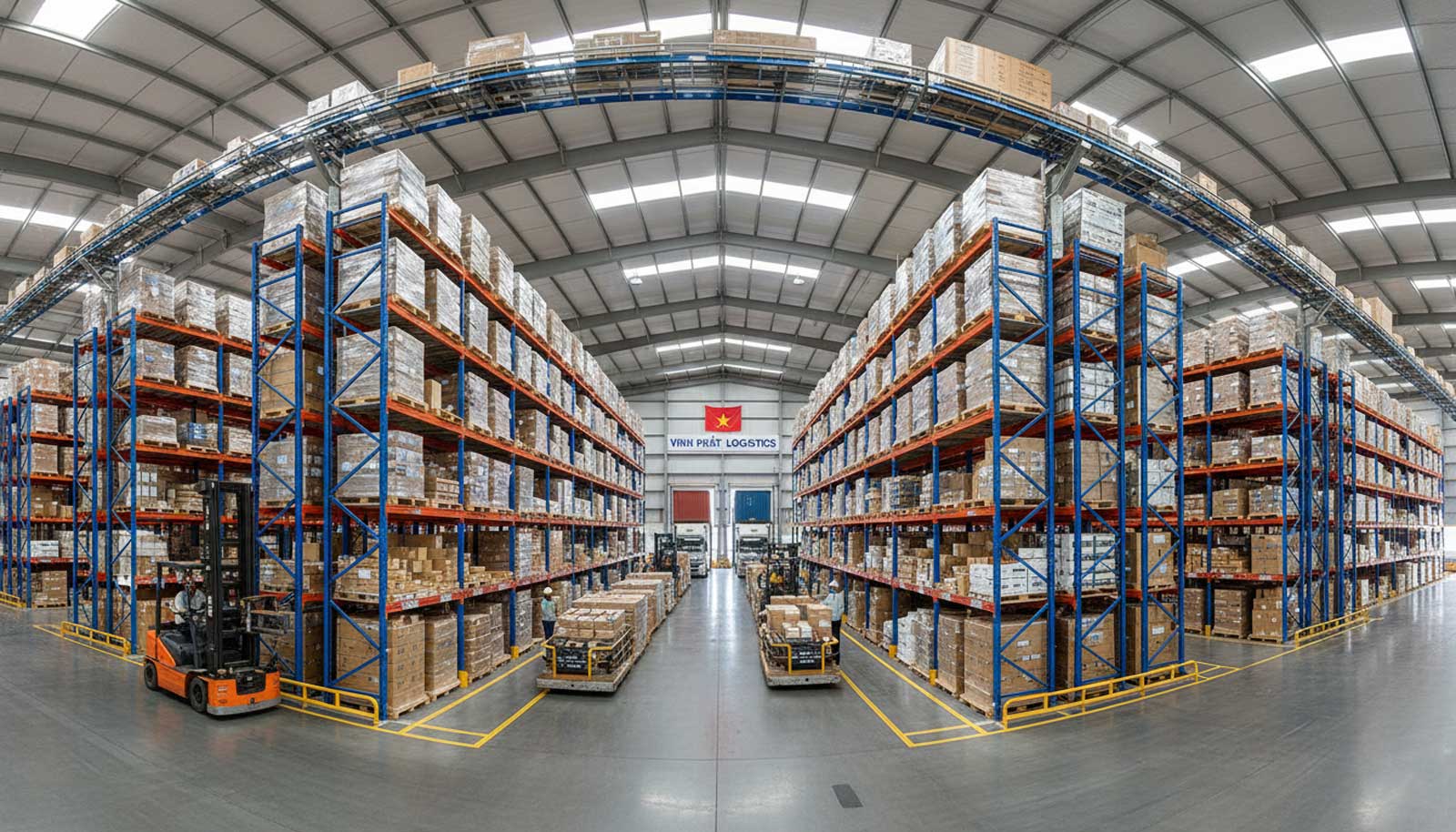
Onshore manufacturing refers to production within a company’s home country, helping to control quality, shorten delivery times, and ensure easier regulatory compliance. Offshore manufacturing involves moving production activities to another country to optimize costs, access labor, and expand the global supply chain. The choice depends on business objectives, costs, markets, and the company’s level of risk tolerance.
What Is Onshore Manufacturing?
Onshore manufacturing is a model of placing factories and production directly within the country where the business operates or its primary market, rather than moving production abroad to save on labor costs. This model helps shorten the supply chain, increase quality control, and reduce the risk of logistics disruptions.
- Definition: Onshore manufacturing, also known as domestic manufacturing, is a domestic production strategy that keeps all or most of the manufacturing process within the country where the business is headquartered or its main consumer market. This model is the opposite of offshore manufacturing (production abroad, usually in countries with lower labor costs) and nearshore manufacturing (production in a neighboring country or the same geographical region).
In Vietnam, onshore manufacturing is gaining increasing attention as many foreign enterprises move their factories to Vietnam and as domestic businesses proactively build local production capacity instead of relying on imports.
- Real-world Example: A Vietnamese fashion brand that previously imported all products from China and switched to setting up a garment factory in Binh Duong is practicing onshore manufacturing. A Korean electronics company building an assembly plant in Bac Ninh instead of assembling in Korea and then exporting to Vietnam is also a typical example of this model from the perspective of the Vietnamese market.
- How it Works: Onshore manufacturing businesses directly control the entire value chain from importing raw materials, production, and assembly, to quality control, storing finished goods, and distributing them to the market. The geographical proximity between the factory, warehousing, and the consumer market creates advantages in response speed and the ability to adjust production volume more flexibly than offshore manufacturing.
| Criteria | Onshore Manufacturing | Offshore Manufacturing |
|---|---|---|
| Production location | Domestic, near the market | Overseas, usually far from the market |
| Labor costs | Higher | Lower |
| Shipping time | Short, 1–5 days | Long, 2–8 weeks |
| Quality control | Direct, easy to monitor | Indirect, difficult to control |
| Disruption risk | Lower | Higher, dependent on international logistics |
| Warehousing needs | Increases due to continuous production | Dispersed, requires larger buffer warehouses |
When Businesses Choose Onshore Manufacturing
Businesses often switch to onshore manufacturing when international logistics costs rise, negating the cost advantages of offshore production; when short delivery time requirements from customers cannot be met by distant production; when product quality needs stricter control; and when they want to reduce dependence on global supply chains that are easily disrupted by geopolitical events or natural disasters.
After the COVID-19 pandemic, the trend of reshoring (bringing production back home) and nearshoring has increased sharply worldwide as many businesses realized the risk level of supply chains being too dependent on a single manufacturing country.

What Is Offshore Manufacturing?
Offshore manufacturing is a strategy of moving all or part of the production process to another country to leverage lower labor costs, tax incentives, and closer raw material sources. Vietnam is currently one of the leading offshore manufacturing destinations in Asia, attracting a large volume of orders from the US, EU, Japan, and South Korea.
- Definition: Offshore manufacturing is a production model where a business sets up a factory or hires a manufacturer in a country different from its main consumer market, typically in countries with lower production costs. This model became popular in the 1970s–1980s when multinational corporations began separating consumption locations from production sites to optimize total chain costs.
Unlike onshore manufacturing, which keeps production domestic, and nearshore manufacturing, which places factories in neighboring countries, offshore manufacturing usually involves greater geographical distances and more significant labor cost disparities between the two nations.
- Real-World Examples From Major Brands: Apple, Nike, and Samsung are three of the most typical examples of global-scale offshore manufacturing, and all three have direct links to Vietnam.
| Brand | Offshore model | Relation to Vietnam |
|---|---|---|
| Apple | Designed in the US, manufactured in China via Foxconn and Pegatron, diversifying to Vietnam and India | AirPods, iPads, and several components have been produced in Vietnam since 2020 |
| Nike | Designed in the US, all sneakers manufactured in Vietnam, Indonesia, and China | Vietnam produces approximately 50% of Nike’s total global footwear output |
| Samsung | Designed in South Korea, phones manufactured in Vietnam and India | Samsung has invested over $20 billion in Vietnam; Bac Ninh and Thai Nguyen are the largest production hubs outside South Korea |
| Adidas | Designed in Germany, manufactured in Vietnam, China, and Indonesia | Vietnam produces about 40% of Adidas’s total footwear output |
| Intel | Designed in the US, chip assembly and testing in HCMC | The Intel Products Vietnam plant in the Saigon Hi-Tech Park is one of the world’s largest chip assembly facilities |
- Outsourcing: Outsourcing is the most common form of offshore manufacturing, where a business hires a foreign factory to produce orders without directly investing in infrastructure. The business provides designs, technical specifications, and quality standards, while the contract factory provides labor, machinery, and production processes.
In Vietnam, export processing is a major contributor to GDP, with key sectors including textiles, footwear, electronics, and furniture. This model creates a high demand for warehousing storage for raw materials and finished goods awaiting export.
OEM and ODM — Two Popular Offshore Manufacturing Models
OEM and ODM are the two most common offshore production partnership models, with important differences in the manufacturer’s level of design involvement.
| Criteria | OEM (Original Equipment Manufacturer) | ODM (Original Design Manufacturer) |
|---|---|---|
| Definition | Production based entirely on designs provided by the customer | Designing and manufacturing products as requested; customers only need to order and apply their brand |
| Manufacturer’s Role | Executes production, no involvement in design | Proposes and executes both design and production |
| Design Ownership | Belongs to the customer | Belongs to the ODM manufacturer |
| Development Costs | Customer bears design and R&D costs | Lower for the customer as the manufacturer already has existing designs |
| Example | Foxconn produces iPhones based on Apple’s designs | A Vietnamese home appliance manufacturer designs and produces rice cookers sold to foreign retail brands under private labels |
| Suitability | Large brands with strong R&D | Small businesses wanting to launch products quickly without investing in design |
Offshore Manufacturing and Warehousing Demand in Vietnam
The boom of offshore manufacturing in Vietnam creates a massive demand for warehousing across various levels. Imported raw material warehouses awaiting production, semi-finished goods storage between stages, finished goods warehouses for inspection and export packaging, and buffer warehouses to handle seasonal order fluctuations are all direct needs arising from this model. Small and medium enterprises participating in the export processing chain often require flexible order-based warehousing solutions instead of investing in high-cost fixed warehouses.
Quick Comparison of Onshore and Offshore Manufacturing
No single model is absolutely better for every business. Onshore is suitable when quality control and market response speed are top priorities. Offshore is suitable when optimizing production costs and accessing global markets are the primary goals. Many large enterprises combine both models within the same supply chain.
| Criteria | Onshore Manufacturing | Offshore Manufacturing |
|---|---|---|
| Production costs | Higher due to expensive labor and operations | 30–70% lower depending on the country and industry |
| Labor costs | High, based on domestic market wages | Significantly lower in developing countries |
| Quality control | Very high, direct on-site supervision | Moderate, depends on the partner manufacturer |
| Lead time | Fast, usually 1–2 weeks from production to delivery | Slower, usually 6–14 weeks including international shipping |
| Logistics costs | Low, simple domestic transport | Higher, including container fees, customs, and cargo insurance |
| Scalability | Moderate, limited by domestic production capacity | Higher, easy to increase capacity by adding partner factories |
| Market access | Primarily domestic and regional | Global, easy to serve multiple markets from one production site |
| Supply chain risk | Low, less dependent on international factors | Higher, easily affected by geopolitics and international logistics |
| Flexibility | High, faster output adjustments | Lower, order changes require longer lead times |
| IP protection | High, follows domestic laws | Riskier in some countries with weak legal systems |
| Warehousing needs | Centralized, warehouses near factories and markets | Dispersed, requires buffer warehouses at multiple points in the chain |
| Environmental impact | Lower due to reduced long-distance transport | Higher due to international logistics generating more carbon |
- When to Choose Onshore: Onshore manufacturing is best suited for products requiring high and uncompromising quality control such as medical and aerospace equipment, products with short lead times based on market demands like fast fashion responding to trends, businesses wanting to build a “Made in Vietnam” or “Made in USA” brand with clear marketing value, and manufacturing sectors with special Government protection or support.
- When to Choose Offshore: Offshore manufacturing is best suited for highly standardized products with few design changes that compete primarily on price, businesses needing large-scale production where domestic costs are uncompetitive, brands wanting to access international markets from a single production base, and rapid growth stages needing flexible capacity expansion without wanting to invest in fixed factories.

Current Trends: Hybrid Manufacturing
Many large enterprises today do not choose a pure model but instead combine both across different stages of the production chain. Keeping research and development onshore to protect intellectual property, moving component manufacturing offshore to optimize costs, and bringing final assembly and quality control back onshore or nearshore to shorten lead times is the most common hybrid structure today.
In Vietnam, this hybrid model is clearly evident when Samsung maintains R&D in South Korea but manufactures the majority of its phones in Vietnam, or when European fashion brands design in Paris but outsource production to garment factories in Ho Chi Minh City and Binh Duong.
Choosing between onshore and offshore is not just a matter of cost but also a calculation of risk, speed, and long-term brand strategy. Businesses that clearly understand the strengths and weaknesses of each model will be able to design a supply chain better suited to their actual growth objectives.
Advantages, Challenges, and Considerations When Choosing a Manufacturing Model
Both onshore and offshore have distinct advantages and challenges that cannot be ignored. The right decision comes from understanding both sides rather than looking solely at cost or quality.
Advantages of Onshore Manufacturing
| Advantage | Practical Details |
|---|---|
| Quality control | Direct supervision at the factory; detecting and handling defects right within the process instead of after the goods have shipped thousands of kilometers |
| Regulatory compliance | Operating within a familiar legal system, making it easier to meet domestic safety, labor, and environmental standards |
| Fast delivery | Lead times shortened from 6–14 weeks to just 1–2 weeks, allowing for rapid response to market demand fluctuations |
| Ease of coordination | Shared time zones, language, and business culture make communication between design, production, and sales departments significantly more efficient |
| Intellectual property protection | Domestic legal systems protect designs, formulas, and manufacturing secrets much better than production in countries with weak IP systems |
Advantages of Offshore Manufacturing
| Advantage | Practical Details |
|---|---|
| Lower costs | Labor costs in developing countries are 50–80% lower than in developed nations, creating a major competitive advantage in pricing |
| Large scale | Easily scale capacity by adding partner factories without investing in new infrastructure, suitable for rapid growth phases |
| Abundant labor | Offshore hubs like Vietnam, Bangladesh, and Indonesia have young, large, and increasingly skilled workforces for complex manufacturing sectors |
| Access to new markets | Locating a factory in a country helps businesses understand that market more deeply and expand distribution within the region more easily |
| Supply chain diversification | Distributing production across multiple countries reduces concentration risk, ensuring operations aren’t severely impacted when one country faces disruptions |
Key Challenges to Consider for Both Models
| Challenge | Onshore | Offshore |
|---|---|---|
| Logistics | Simpler, but domestic transport costs are rising rapidly | Much more complex, depending on seaports, aviation, and shipping intermediaries |
| Taxes and customs | No import duties for the domestic market | Tariffs, customs fees, and clearance procedures create significant costs and delays |
| Political risk | Lower, but still subject to domestic policy changes | Higher, easily affected by trade relations, economic sanctions, and political instability |
| ESG and sustainability | Easier to control and prove to investors and customers | Difficult to monitor; risk of brand damage if partner factories violate labor or environmental standards |
| Exchange rate fluctuations | No impact on domestic transactions | Fluctuating exchange rates change actual production costs in unpredictable ways |
| Cultural differences | None | Communication across different languages, time zones, and work styles creates daily operational friction |
| Remote quality management | Not necessary | Requires inspection systems, periodic audits, and on-site QC personnel or independent inspection units |
| Warehousing needs | Centralized, easy to manage | Dispersed, requiring buffer warehouses at multiple points in the chain from factory to consumer market |
Regardless of the model chosen, the need for flexible storage is always a problem that needs solving. Onshore creates a demand for warehouses near factories and markets. Offshore creates a demand for buffer warehouses at import and distribution points. Both require flexible storage solutions based on volume rather than investing in high-cost fixed warehouses when output is not yet stable.

Why Vietnam is Becoming a Top Offshore Manufacturing Destination?
Vietnam has emerged as one of Asia’s most attractive offshore manufacturing destinations thanks to a combination of several advantages: competitive costs, a rapidly growing young skilled workforce, an extensive network of free trade agreements, and robust industrial park infrastructure. The post-pandemic China+1 trend continues to drive FDI inflows into Vietnam at an unprecedented pace.
China+1 — The Biggest Driver: China+1 is a strategy used by multinational corporations to diversify supply chains by adding at least one manufacturing country outside of China to reduce dependency risks. Vietnam is the leading China+1 destination in Southeast Asia due to its geographical proximity to China, a rapidly developing component supplier ecosystem, and competitive labor costs. Apple, Samsung, Intel, LG, and hundreds of other manufacturers implemented China+1 strategies in Vietnam between 2018–2020 and have continued to expand after 2022.
Extensive FTA Network: Vietnam has signed and implemented over 15 free trade agreements (FTAs) with the world’s largest trading partners, creating significant tariff advantages for goods manufactured in Vietnam and exported globally.
| Agreement | Partners | Key Benefits |
|---|---|---|
| CPTPP | 11 countries including Japan, Canada, Australia | Tariffs reduced to 0% for most goods |
| EVFTA | 27 European Union countries | Access to the EU market of 450 million people |
| UKVFTA | United Kingdom | Preferential tariffs post-Brexit |
| RCEP | 15 Asia-Pacific countries | More favorable regional supply chains |
| VKFTA | South Korea | Incentives for electronics and textiles |
Competitive Costs: Labor costs in Vietnam remain significantly lower than in China and Thailand, while labor productivity increases steadily every year. Regional minimum wages in major industrial parks range from 4.2–4.7 million VND per month, which is 40–60% lower than in China’s main manufacturing provinces. Industrial electricity costs, industrial land rentals, and factory operating costs are also more competitive compared to many countries in the region.
Rapidly Developing Logistics Infrastructure: The Cai Mep deep-water seaport in Ba Ria Vung Tau allows large container ships to dock directly without transshipment through Singapore. The Long Thanh International Airport, currently under construction, will significantly increase air logistics capacity. The highway system connecting major industrial parks from North to South is receiving heavy investment, shortening domestic transport times between factories and ports.
Widespread Industrial Parks: Vietnam has over 400 industrial parks stretching from North to South, many of which are developed by foreign investors with international infrastructure standards.
| Region | Representative Industrial Parks | Key Industries |
|---|---|---|
| Northern Region | Thang Long, VSIP Bac Ninh, Yen Phong | Electronics, semiconductors, high-tech |
| Central Region | Chu Lai, Da Nang IT Park | Automotive, information technology |
| Southern Region | VSIP Binh Duong, Amata Dong Nai, Tan Thuan | Textiles, furniture, consumer goods |
Strong FDI Inflows: FDI into Vietnam has reached record levels consecutively in recent years, with major investors from South Korea, Japan, Singapore, Taiwan, and increasingly from the US and Europe. Samsung, LG, Foxconn, Intel, and Lego have all significantly expanded or are expanding their production capacity in Vietnam, driving the development of the component supplier ecosystem and logistics services.
Industries Suitable for Offshore Manufacturing in Vietnam
Not every industry is suitable for offshore manufacturing in Vietnam to the same extent. The eight industries below have clear competitive advantages when setting up production in Vietnam, and all generate significant demand for domestic warehousing, logistics, and supply chains.
| Industry | Reasons for Suitability in Vietnam | Representative Enterprises | Warehousing Needs |
|---|---|---|---|
| Electronics | Rapidly growing skilled labor, Samsung and Intel have built a domestic component supplier ecosystem | Samsung, LG, Intel, Foxconn | Component warehouses, finished goods export warehouses, order buffer warehouses |
| Semiconductors | Government priority on investment attraction, growing technical workforce, proximity to Taiwan and South Korea supply chains | Samsung SDI, Amkor Technology | High-standard cleanrooms, strict temperature and humidity control |
| Furniture and Wood Products | Abundant wood raw materials, high craftsmanship, top exporter to the US and EU | IKEA, Ashley Furniture (outsourcing) | Large finished goods warehouses, buffer warehouses before peak export seasons |
| Textiles and Footwear | Vietnam’s largest export industry, developed accessory supplier ecosystem | Nike, Adidas, Zara, H&M | Raw material warehouses, seasonal fashion finished goods warehouses |
| Automotive and Components | Chu Lai and Dong Nai industrial parks attract many automakers, CPTPP reduces component tariffs | Toyota, Thaco, TC Motor | Large component warehouses, buffer warehouses for assembly lines |
| Logistics and Distribution | Central Southeast Asian location, deep-water ports, and upgrading infrastructure | DHL, FedEx, Maersk | Regional distribution centers, cross-docking warehouses |
| Consumer Goods | Strong growth in the 100-million domestic market, rapidly expanding middle class | Unilever, P&G, Nestlé | Multi-channel distribution warehouses, seasonal sales campaign warehouses |
| Renewable Energy | Strong policy support, high wind and solar potential, increasing equipment demand | Vestas, GE Renewable, solar panel manufacturers | Large equipment warehouses, project logistics warehouses for each construction site |
Vietnam is not just a low-cost outsourcing destination but is rapidly transforming into a high-tech manufacturing hub within the global supply chain. This shift creates a large and diverse demand for flexible warehousing for both large FDI enterprises and small-to-medium businesses participating in the supply chain.
FAQ
What is the fundamental difference between onshore and offshore manufacturing?
Onshore manufacturing places factories in the country where the business operates or its main market is located, prioritising quality control and delivery speed. Offshore manufacturing moves production to another country to optimise labour costs and scale up capacity. Many large businesses combine both models within the same supply chain.
Why is Vietnam attractive to offshore manufacturing businesses?
Vietnam combines multiple advantages simultaneously: competitive labour costs, more than 15 FTAs with major markets, over 400 industrial zones stretching from north to south, a central Southeast Asian location, and the China+1 trend driving FDI away from China. Few countries in the region can offer all these factors at the same time.
What is the China+1 strategy and how does Vietnam benefit?
China+1 is the strategy of multinational corporations diversifying their supply chains by adding at least one manufacturing country outside China to reduce concentration risk. Vietnam is Southeast Asia’s leading China+1 destination thanks to its proximity to China, competitive costs, and rapidly developing component supplier ecosystem.
Which industries are best suited for offshore manufacturing in Vietnam?
Electronics and semiconductors, textiles and footwear, wood and furniture, and automotive components are the four industries with the clearest competitive advantages. Vietnam is transitioning from low-cost contract manufacturing to high-tech production with the presence of Samsung, Intel, Foxconn, and an increasing number of semiconductor manufacturers from Taiwan and South Korea.
How do FTAs help offshore manufacturing businesses in Vietnam?
Goods manufactured in Vietnam receive preferential or zero tariff rates when exported to markets that have signed FTAs with Vietnam, including the EU, Japan, South Korea, the UK, and 11 CPTPP countries. This tariff advantage creates a significant cost difference compared to manufacturing in countries without FTAs with those markets.
How does offshore manufacturing create warehousing demand?
Offshore manufacturing creates multilayer warehousing needs throughout the chain: raw material warehouses for imported inputs awaiting production, work-in-progress storage between production stages, finished goods warehouses pending inspection and export, and buffer storage to handle seasonal order fluctuations. Small and medium enterprises in the supply chain typically need flexible storage solutions per order rather than high-cost fixed warehouse investment.
Does onshore manufacturing still have advantages in Vietnam?
Yes, particularly for businesses serving the growing domestic market of 100 million consumers. Onshore manufacturing in Vietnam allows rapid market response, avoids import duties, enables direct quality control, and builds the Made in Vietnam brand which carries increasing value with domestic consumers.
Can small and medium enterprises participate in offshore manufacturing chains?
Yes, through roles as component suppliers, subcontract manufacturers, or logistics and warehousing service providers for large FDI corporations. Many Vietnamese SMEs have become tier-2 and tier-3 suppliers in the supply chains of Samsung, Toyota, and other major corporations operating in Vietnam.
What is the biggest risk when choosing offshore manufacturing?
Supply chain disruption from geopolitical events or natural disasters is the greatest risk, clearly demonstrated during the COVID-19 pandemic when many factories had to close suddenly. Difficult-to-control quality risks from a distance, exchange rate volatility, and intellectual property risks in some countries are other persistent risks that require clear management plans.
How does flexible warehousing help businesses participating in offshore manufacturing chains?
Monthly flexible storage allows businesses to increase capacity before peak order periods and downsize after production volumes drop, without being locked into long-term warehouse contracts when orders are not yet stable. In Ho Chi Minh City, MyStorage provides units from 1–23 m² with controlled environment, 24/7 security, and month-to-month rental without long-term commitment, suitable for both manufacturers and distributors in offshore supply chains