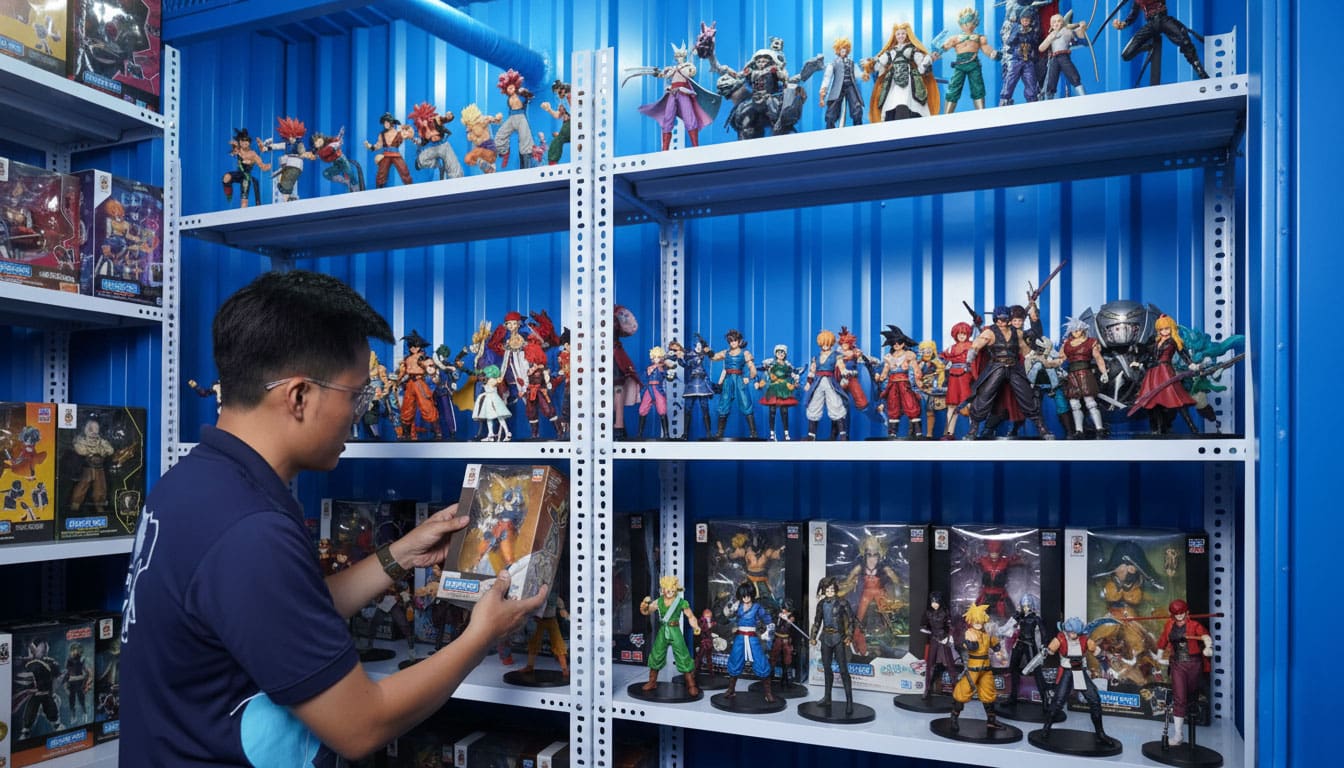
In recent years, owning valuable collections has evolved from a mere hobby into a significant form of investment and a statement of lifestyle. From limited-edition LEGO sets with thousands of intricate pieces and artistic Action Figures (Hot Toys, Bearbrick) to high-end tech gadgets like Leica and Sony cameras or premium lenses – all represent a meticulous investment of both finances and passion. These items not only hold sentimental value but also possess significant appreciation potential over time, transforming a collection into a tangible asset.
The Silent Enemies of Collectors
However, maintaining these items in “Like New” or “Fullbox” condition is an ongoing battle. In Vietnam, collectors frequently encounter challenging issues:
- Humidity and mold: High humidity causes camera lenses to develop spiderweb fungus, Action Figures’ plastic to become sticky, and LEGO cardboard boxes to soften and mold.
- Lack of space: As collections grow, cramming items into household display cabinets becomes impractical, often leading to bumps and scratches.
- Light and dust: UV rays fade plastic and decals, while dust accumulating in joints diminishes the model’s sharpness.
Even a minor oversight in preservation can cause an item to lose 30-50% of its value, or even be completely damaged.
Why Proper Collection Storage is Essential
A successful collection (BST) isn’t just measured by the number of items but by their preserved condition. Proper collection storage acts as a “shield,” safeguarding both core values of your prized possessions:
- Sentimental value: Each item tells a story, holds a memory, or marks a significant acquisition that the collector meticulously sought.
- Financial value: For rare LEGO sets or vintage cameras, “Brand New In Box” (sealed) or “Mint” condition can boost an item’s value by 200% to 500% within a few years. Conversely, a minor scratch or a bit of mold can instantly slash 40-60% off its market resale value.
Environmental Foes and Common Risks
If not stored in a standard-compliant space or facility, your collection will face the following destructive agents:
High Humidity: The Leading Cause of Damage
The ideal humidity for preserving most collectibles ranges from 40% to 50%. In tropical environments like Vietnam, humidity frequently exceeds 80%, leading to:
- For cameras/lenses: Causes “spiderweb fungus” or mold to corrode the lens coating, resulting in blurry images and damage to the mechanical system.
- For Action Figures/LEGO: High humidity combined with temperature causes plastic degradation (plasticizer migration), leading to sticky surfaces or oxidation of accompanying metal parts.
- For cardboard boxes: Softens the paper core, causing irreversible yellow stains (foxing) and diminishing the “Fullbox” value.
Light and Dust: Destroyers of Aesthetic Appeal
- UV rays: Sunlight or high-power fluorescent lights break down polymer bonds in plastic. As a result, white LEGO bricks will yellow, and Action Figures’ plastic becomes brittle and prone to breakage.
- Fine dust: Dust accumulated over time in model joints not only detracts from aesthetics but also acts as tiny abrasive particles, scratching surfaces during cleaning.
Impact and Improper Stacking: Risks from Carelessness
Many collectors have a habit of stacking LEGO boxes or cameras on top of each other to save space. This leads to:
- Box warping: Gravitational pressure deforms and dents the boxes at the bottom.
- Broken details: High-end figures (such as resin plastic) are very fragile; even a minor shock from unscientific stacking can cause delicate details to break.
Standard Storage Specifications for Various Collectibles
| Item Type | Ideal Humidity | Optimal Temperature | Special Notes |
|---|---|---|---|
| Cameras & Lenses | 40% – 45% | 20°C – 25°C | Store in a dry cabinet, avoid sudden temperature changes. |
| LEGO (Sealed) | 45% – 55% | 18°C – 22°C | Store boxes upright (like books), avoid direct sunlight. |
| Action Figures (Plastic) | 40% – 50% | Below 25°C | Require airy space, avoid hot, enclosed environments that can cause plastic to melt. |
| Tech Accessories | 35% – 45% | 20°C – 24°C | Remove batteries before long-term storage to prevent acid leakage. |
Investing in a professional storage space (such as a self-storage unit) with controlled temperature and humidity is actually the most affordable “insurance” for your valuable collection, potentially worth hundreds of millions of VND.
Specific Storage Characteristics for Each Collection Type
1. Storing LEGO and Plastic Model Kits
LEGO and plastic model kits (like Gundam) are primarily made from ABS plastic. While this type of plastic is highly durable, they do have certain “Achilles’ heels”:
- Color Degradation: UV rays are the primary cause of photodegradation. According to experts, just 3–6 months of direct sunlight exposure can cause white or grey bricks to noticeably yellow.
- Static Dust Accumulation: ABS plastic is highly prone to static electricity and attracts fine dust. Dust clinging to brick crevices over time will absorb moisture, creating conditions for mold to grow directly on the plastic surface.
- Missing Parts: A large LEGO set can contain over 5,000 pieces. Without storage in sealed containers or a stable environment, small parts (such as character weapons, individual accessories) can easily get lost, reducing the collection’s value by 20-30%.
- Solution: Use air-tight PP plastic containers or display cases with rubber seals to prevent dust.

2. Storing Action Figures and Display Models
Unlike LEGO, Action Figures are typically made from PVC, Vinyl, or Resin, featuring hand-painted finishes and intricate joints.
- Temperature Sensitivity: At temperatures above 30°C, PVC plastic begins a process called “plasticizer migration,” creating a sticky film on the surface. If the environment is too hot, plastic joints will soften, causing models to collapse or deform over time.
- Humidity and Paintwork: High humidity (above 65%) can cause paint layers (especially weathered details) to peel or lead to rust on internal screws within the joints.
- Mechanical Pressure: Absolutely avoid stacking Figure boxes on top of each other. Prolonged compression can dent the art box – an essential component for “Fullbox” collectors.
- Key Figures: High-end lines like Hot Toys are recommended to be stored at a stable temperature of 22°C – 25°C to maintain optimal joint elasticity.
3. Storing Cameras and Tech Equipment
This is arguably the most “demanding” category of collectibles, combining precision mechanics, glass lenses, and electronic circuits.
- Humidity – Enemy No. 1: If humidity exceeds 60%, mold spores will proliferate on lens coatings, forming “bamboo roots.” If not addressed promptly, the mold will corrode the coating, rendering the lens completely worthless.
- Electronic Components: Capacitors and circuit boards in digital cameras or film cameras with light meters are highly susceptible to oxidation in humid environments, leading to circuit failure or inaccurate readings.
- Environmental Requirements: Always maintain humidity range between 35% – 45%.
- Control Measures: Utilize a specialized dry cabinet with an electronic hygrometer or a storage facility equipped with a 24/7 humidity control system (dehumidifier).
Important Note: Remove batteries from devices if not in use for more than 30 days to prevent acid leakage, which can damage the camera body.
| Collection Type | Main Material | Primary Threat | Storage Solution |
|---|---|---|---|
| LEGO | ABS Plastic | UV Rays, Dust | Sealed Containers, Dark Room/UV-blocking Curtains |
| Action Figures | PVC, Resin, Fabric | High Temperatures, Humidity | Air Conditioning/Ventilation, Avoid Stacking |
| Cameras | Glass, Circuitry | Humidity (>60%) | Dry Cabinet, Humidity-controlled Storage |
Where to Store Safely? Comparing Storage Options
Choosing the right storage location determines 90% of your collection’s value preservation. Here’s a comparison table to give you an overview:
| Option | Advantages | Disadvantages | Assessment |
|---|---|---|---|
| Home storage | Convenient, easy access, no rental fees. | Prone to mold, cramped, sunlight exposure. | Only suitable for small quantities. |
| Storing at a friend’s/relative’s house | Cost-effective, trustworthy. | Lack of environmental control, risk of damage. | Not recommended for high-value items. |
| Renting self-storage | 24/7 security, humidity control, private space. | Monthly rental fees apply. | Optimal for professional collectors. |
Why is Self-Storage the Ideal Solution for Collectors?
Self-storage is becoming a global trend because it meets stringent standards that typical home environments cannot provide:
- Private, clean space: You get your own storage unit, not shared with others’ goods, eliminating the risk of mold contamination or odors.
- Humidity control system: Modern self-storage facilities maintain ideal humidity levels (40% – 50%), preventing fungus on camera lenses and “plasticizer bleed” on Action Figures.
- Multi-layered security: 24/7 CCTV surveillance, on-site guards, and individual locks for each unit ensure absolute safety for items worth hundreds of millions of VND.
- Flexible storage space: You can start with a small locker (1m³) and expand as your collection grows.
When Should You Rent Storage for Your Collection?
In a collector’s journey, there are times when keeping items at home is no longer a safe option:
- Moving house or renovating living space: Home renovations generate a lot of fine dust and sudden humidity changes, which can easily damage tech items.
- Collection exceeds display space: When LEGOs or models take up too much living space, storing them in a professional facility makes your home feel more spacious.
- Need long-term preservation: For “investment” collections waiting to appreciate in value, storing them in a stable environment helps maintain the product’s “Mint” condition.
- Scientific classification: Professional collectors often separate display areas (at home) from storage areas (at a facility) to better manage their asset inventory.
Tips for Safe & Value-Preserving Collection Storage
To keep your collection looking brand new, you should apply these “golden” rules:
- Use sealed PP plastic boxes: Instead of cardboard boxes (which easily absorb moisture and attract termites), use clear plastic containers with rubber seals to observe the contents.
- Label meticulously: Clearly note the set name, production year, and condition to avoid rummaging through everything when searching.
- Stacking rules: Place the heaviest boxes at the bottom, but it’s best to use metal shelving to separate layers, preventing pressure on paper box art.
- Regular checks: Even when stored in a professional facility, take time every 3 months to check battery status (cameras) or joint elasticity (models).
MyStorage – Safe Self-Storage Solution for Collectors
To fully protect your collecting achievements, understanding storage techniques and choosing a suitable space is essential. Instead of letting your passion overwhelm your living space or degrade in ordinary storage, modern collectors are turning to more professional solutions.

This could be a dedicated home dehumidifying cabinet system or a mini-storage (self-storage) service with a strictly temperature-controlled environment – where each item is not just stored, but also preserved in value over the years.
If you’re looking for a “second home” for your passion, MyStorage offers international-standard self-storage services in Vietnam:
- Ideal Environment: Industrial dehumidifiers and high-capacity air conditioners ensure stable temperature and humidity 24/7.
- Absolute Security: Personal PIN code access control, CCTV monitoring every corner, and standard-compliant fire prevention and fighting systems.
- Diverse Storage Options: From small lockers for cameras to large storage rooms for hundreds of sealed LEGO sets.
- Convenient Warehouse Location: Making it easy for you to visit and retrieve your items anytime.
Proper storage isn’t just about protecting an item; it’s about safeguarding your investment and your passion. Investing in a professional storage space like self-storage is the smartest investment to ensure your collection always retains its value over time.
FAQ
Why is humidity so dangerous for camera lenses?
High humidity (above 60%) promotes the growth of fungus (glass mold), which eats away at the lens coating, causing permanent blurriness and decreasing the resale value significantly
Should I keep my LEGO sets in their original boxes?
es, for collectors, the “Original Box” can account for 20-30% of the set’s value. However, store them vertically like books to prevent the boxes from crushing under their own weight
Can I use mothballs to protect my figures from insects?
No. The chemicals in mothballs can react with the plastic (PVC/Vinyl), causing discoloration or a sticky surface. Use airtight plastic bins instead.
What is the ideal temperature for storing Action Figures?
The ideal temperature is between 20°C and 25°C. High heat can soften the plastic and cause the “sticky plastic” syndrome due to plasticizer migration
Does sunlight affect LEGO even if it’s inside the house?
Yes. UV rays can penetrate windows. Even indirect sunlight will eventually turn white and grey bricks into a yellowish tint over time.
Is it necessary to remove batteries from electronics before storage?
Absolutely. Batteries can leak acid over time, which corrodes the internal circuits of cameras and electronic toys, often leading to irreparable damage.
How often should I check my stored collection?
You should perform a physical check every 3 to 6 months to ensure there is no mold growth, pest infestation, or environmental changes in your storage unit.
Why is a self-storage unit better than a home basement?
Most basements suffer from dampness and poor ventilation. Professional self-storage offers climate control (stable humidity and temperature) and 24/7 security
Can I use silica gel packets for humidity control?
Silica gel is good for small, airtight containers but ineffective for large spaces. For a whole room or locker, a dedicated dehumidifier is required.
Is my collection insured in a self-storage facility?
Most facilities offer optional insurance plans. It is highly recommended to insure valuable collections against fire, theft, or natural disasters.