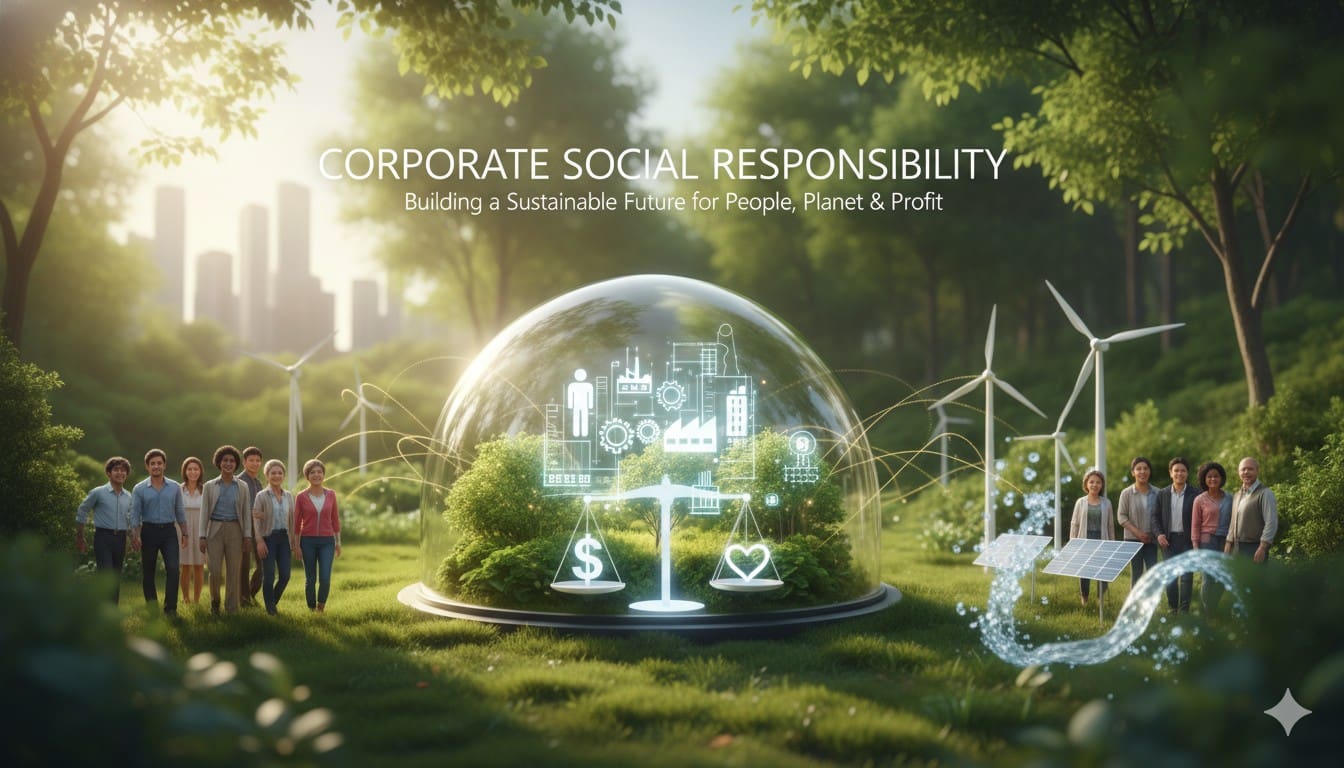
In the context of increasing demands for transparency, sustainable development, and international standards, Corporate Social Responsibility (CSR) has become a crucial factor for companies looking to enhance their reputation and competitiveness. However, effectively implementing CSR goes beyond mere charitable activities; it requires a systematic and measurable approach. The following article guides businesses through the steps to implement CSR in a standardized manner that delivers real value.
What is CSR?
CSR (Corporate Social Responsibility) refers to a company’s commitment to operate in an ethical, transparent manner that is responsible toward the environment, society, and all stakeholders involved.
In other words, CSR is not merely about philanthropic activities; it is a way for companies to create sustainable value for the community and themselves.
History and Development of CSR
- 1950s-1960s: CSR was first introduced in academic discussions, emphasizing business ethics.
- 1970s-1980s: The concept of CSR expanded to encompass responsibilities towards the community, employees, and the environment.
- 1990s: Globalization and environmental issues propelled CSR to become a critical requirement for multinational enterprises.
- 2000 to Present: CSR has evolved into an operational standard closely linked with sustainability reporting, transparent governance, and responsible supply chains.
Differences Between CSR, ESG, and Sustainability
CSR (Corporate Social Responsibility)
- Nature of Activities: Generally voluntary social responsibility efforts.
- Focus: Centered on voluntary social responsibility activities.
- Goals: To reflect ethical standards and contribute to community welfare.
- Examples: Educational sponsorship, community activities, afforestation, improving workplace environments.
ESG (Environmental – Social – Governance)
- Measurement Standard: A set of criteria for measurement and reporting aimed at investors.
- Focus: Criteria for evaluating companies on environmental performance, social impacts, and governance practices.
- Goals: To assess risks, attract investments, and elevate operational standards.
- Examples: Carbon footprint analysis, labor safety, governance transparency, and legal compliance.
Sustainability
- Strategic Focus: Long-term sustainable development strategies.
- Focus: Integrates economic development, environmental protection, and social benefits into long-term plans.
- Goals: To optimize long-term value while minimizing negative impacts on future generations.
- Examples: Energy optimization, implementing circular economy models, and developing green supply chains.
By understanding and implementing CSR effectively, businesses can not only enhance their societal contributions but also promote a sustainable and ethical business environment.

Internationally Recognized CSR Standards and Reporting Frameworks
1. ISO 26000 – Guidance on Social Responsibility
ISO 26000 is an international standard that provides a comprehensive framework for social responsibility for businesses. This standard focuses on seven pillars: governance, human rights, labor practices, the environment, fair operating practices, consumer issues, and community development. Although it is not certification-based, ISO 26000 helps organizations develop structured, transparent CSR strategies in line with international standards.
2. GRI Standards – International Sustainable Reporting Standards
The GRI (Global Reporting Initiative) Standards are the most widely used sustainability reporting standards globally, employed to measure and disclose the economic, environmental, and social impacts of businesses. The GRI Standards help companies:
- Enhance transparency,
- Enable comparison with other organizations,
- Meet market and investor information disclosure requirements.
3. SA8000 – Labor Social Responsibility Standard
SA8000 focuses on labor conditions and encompasses human rights, child labor prohibition, occupational safety, working hours, wages, and freedom of association. Many manufacturing, apparel, and supply chain companies utilize SA8000 to demonstrate compliance with ethical labor practices.
4. UN SDGs – 17 Sustainable Development Goals
The United Nations Sustainable Development Goals (SDGs) serve as a global framework guiding organizations towards achieving objectives by 2030. Businesses use the SDGs to:
- Align CSR with broader social and environmental goals,
- Identify strategic priorities,
- Create sustainability reports using a universally recognized language.
Prominent SDGs often adopted by companies include clean energy, climate action, sustainable consumption, gender equality, and decent work and economic growth.
5. ESG Reporting – Increasing Demand from Investors
In addition to traditional CSR, businesses today are expected to publish ESG reports to meet demands from:
- Investors,
- International partners,
- Credit institutions and funds,
- Market regulatory bodies.
ESG reporting emphasizes quantitative data such as carbon emissions, energy consumption, gender diversity, governance accountability, human resource policies, and operational risks. This framework enables companies to demonstrate transparency and long-term sustainability capability.
Practical Benefits of CSR for Businesses
Implementing CSR is not merely a community responsibility activity but increasingly serves as a vital business strategy that enhances competitive capability in the globalization context. As standards for sustainable development gain greater attention, CSR offers significant benefits in brand reputation, human resources, governance, and supply chains.
1. Enhanced Brand Reputation and Customer Trust
Companies that invest in CSR often receive positive evaluations from consumers, especially in highly competitive sectors. Today’s customers prefer to choose brands that are environmentally and socially responsible.
- Increases brand recognition.
- Improves the company’s image in the community.
- Builds long-term customer loyalty.
2. Attracting Quality Talent and Increasing Internal Cohesion
CSR creates a meaningful work environment, making organizations more appealing to potential employees and helping retain top talent.
- Increases employee satisfaction and engagement.
- Attracts young candidates who value sustainability.
- Improves corporate culture through social responsibility activities.
3. Reduced Operational, Governance, and Legal Risks
By adhering to CSR standards, businesses minimize the risk of penalties, lawsuits, or operational disruptions due to environmental or labor issues.
- Ensures compliance with legal regulations and international requirements.
- Mitigates the risk of disruptions in production and supply.
- Enhances transparency and standards in governance.
4. Increased Competitiveness in Global Supply Chains
For export-oriented companies or those participating in the supply chains of large corporations, CSR has become a mandatory standard. Strong implementation helps businesses better withstand the stringent demands from partners.
- Easily meet assessment criteria from international corporations.
- Increase opportunities for long-term contracts and market expansion.
- Enhance company value in the eyes of investors.
By integrating CSR practices, businesses not only fulfill their societal obligations but also foster a resilient and competitive economic environment.

How Do Businesses Implement CSR?
To ensure that CSR delivers real value to a business—rather than being merely a formal exercise—companies must implement it according to a structured process aligned with strategic objectives and international standards such as GRI or UN SDGs. Below is a comprehensive guide from initiation through measurement, reporting, and communication of CSR activities.
1. Define CSR Objectives Relevant to the Industry
Businesses need to clearly identify the social and environmental issues they are facing to focus their CSR initiatives effectively, such as:
- Manufacturing Companies: Emissions, energy usage, waste management.
- Service Companies: Data security, customer experience.
- Logistics/Warehousing Firms: Carbon emissions, labor safety.
2. Analyze Environmental, Social, and Governance Impacts
This step is crucial for understanding which factors most significantly affect operations and stakeholders.
- Conduct an environmental risk assessment (E).
- Assess risks related to personnel and community (S).
- Review governance processes for transparency (G).
- Consider international customer requirements.
3. Develop a Plan and KPIs for Each CSR Project
An effective CSR plan should include:
- Measurable Objectives: Specific metrics that can be evaluated.
- Clear KPIs: Examples include percentage reduction in emissions, training hours for employees, and the number of community activities.
- Budget Projections, Timelines, and Responsible Personnel.
- Coordination Mechanism: Between Marketing, HR, and Sustainability departments.
4. Implement and Measure CSR Effectiveness
Once the plan is set, businesses proceed with execution and monitoring:
- Collect data through a regular system.
- Compare results against KPIs and industry benchmarks.
- Adjust programs if objectives are not met.
5. Establish a CSR Reporting System According to International Standards (GRI, UN SDGs)
Creating reports helps ensure transparency with customers, partners, and investors.
- Apply GRI Standards (Global Reporting Initiative) to standardize reporting metrics.
- Link CSR objectives with the 17 UN SDGs. Examples include:
- SDG 7: Clean Energy
- SDG 8: Decent Work
- SDG 12: Sustainable Consumption and Production
- Publish annual reports on the website or via a Sustainability Report.
6. Integrate CSR into the Sustainable Development Strategy
CSR should not be a standalone activity but rather part of the overarching strategy:
- Align CSR with ESG and a 3–5 year sustainable development strategy.
- Incorporate CSR into the KPIs for leadership and departments.
- Foster an internal culture aimed at sustainable development.
7. Communicate CSR Effectively
Communication helps CSR generate brand value rather than existing solely internally.
Principles of CSR Communication:
- Transparency and Honesty: Avoid “greenwashing.”
- Specific Metrics: For instance, “a 20% reduction in plastic waste within 12 months.”
- Multi-Channel Approach: Use PR, websites, social media, and video recaps.
Example Case Studies:
- Vinamilk: The “One Million Green Trees” initiative aligned with SDG 13 – Climate Action.
- IKEA: Using 100% renewable energy in operations.
- Unilever: Reducing CO₂ emissions by 52% in its supply chain.
CSR is not just a responsibility; it is also an opportunity for businesses to build sustainable brands, attract talent, and enhance competitive capabilities. With a clear process—from goal definition to impact measurement and international reporting—companies can create long-term value for both their internal stakeholders and the community. Implementing CSR correctly today lays the foundation for sustainable business growth in the future.
Currently, Mystorage is engaged in CSR activities, notably establishing a charity box for clothing and used goods collection at 375 Võ Nguyên Giáp, District 2.