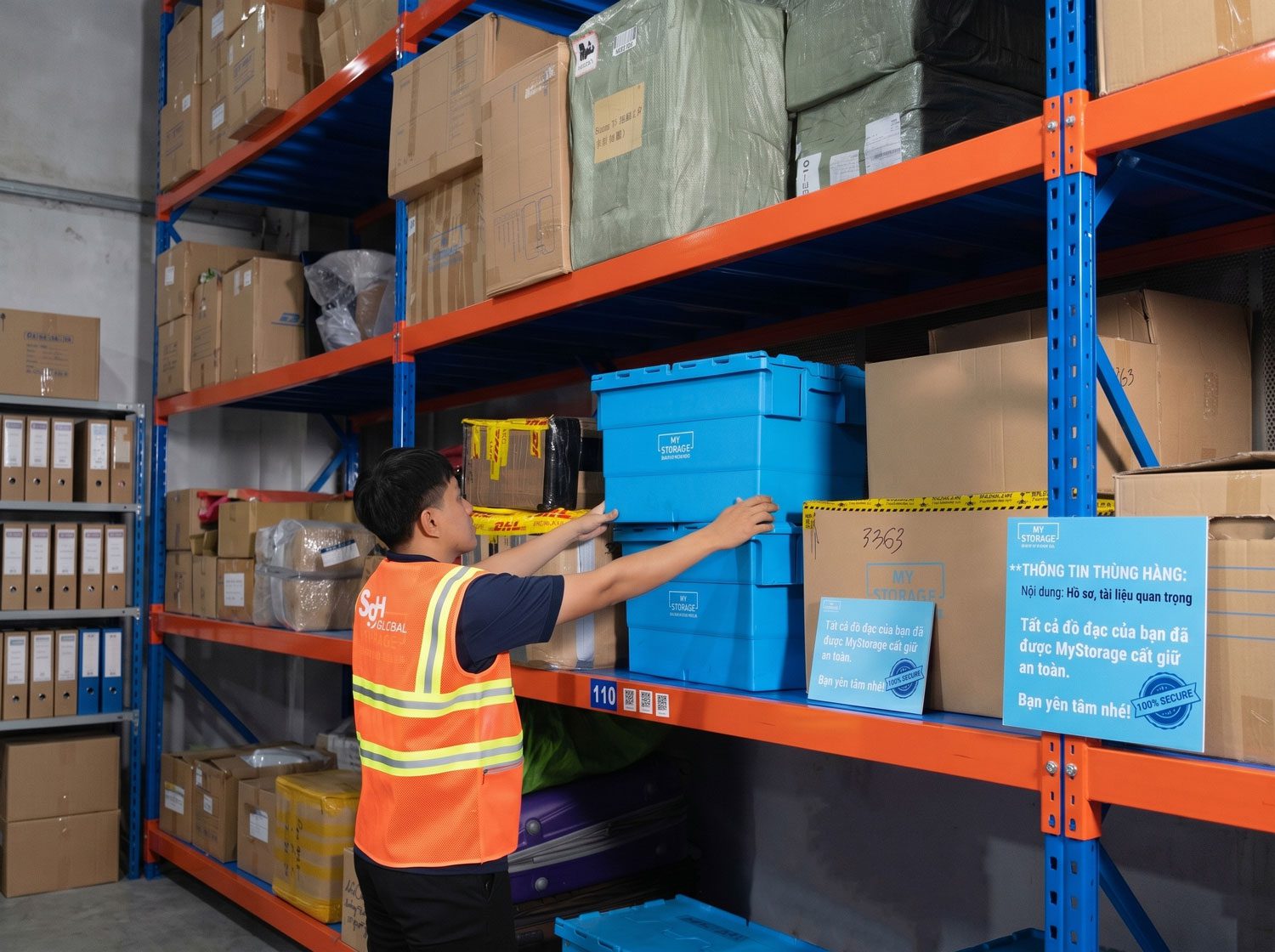
Not every piece of furniture should be liquidated when you need more space. If the furniture still has utility, sentimental value, or will be reused after moving, renovating, or expanding an office, renting storage is often a more economical solution than selling it cheaply only to have to buy new items later. Conversely, items that are damaged, outdated, or no longer needed should be liquidated or recycled to save on storage costs.
When Do You Face the Choice Between Storage or Liquidation?
Choosing between storing and liquidating furniture often arises suddenly during major life events or business changes. Hasty decisions at these moments often lead to regret, whereas understanding each situation helps you make the right choice and save costs in the long run.
Families
- Moving House: Moving is a time when you are forced to re-evaluate all your belongings. A new apartment might be smaller, have a different layout, or come pre-furnished. Furniture that doesn’t fit the new space doesn’t necessarily need to be liquidated if there are plans for future use or if its value remains high. Self-storage creates a transition period to decide rather than acting hastily under the pressure of a move.
- Apartment Renovation: Renovation projects usually require clearing all or part of the space for 2–8 weeks. Furniture needs temporary storage but doesn’t need to be discarded permanently. This is the most typical case for short-term storage needs, not liquidation.
- Business Trips or Settling Abroad: People going abroad for 6 months to several years often face a difficult decision: liquidate belongings and buy them back upon return, or store and keep everything as is. Long-term storage costs are often lower than the cost of buying new items upon return, especially with high-quality furniture.
- Renting Out Your Home: Renting out a furnished or unfurnished home creates two different needs. If renting unfurnished, all furniture needs temporary storage. If renting furnished but wanting to protect specific valuable items, self-storage allows you to select what to keep and what to leave in the rental property.
- Downsizing Living Space: Moving from a large house to a small apartment or from a large apartment to a smaller one often creates a significant amount of surplus furniture. Not everything should be liquidated immediately as it might be needed again when living conditions change.
Businesses
- Office Relocation: The period between two offices often lasts 1–3 months with many overlapping tasks. The new office might not be ready, it’s unclear if old furniture will fit the new space, and there are things that need to be kept but have no place to go yet.
- Closing a Branch: Closing a branch creates a volume of furniture and equipment that needs to be handled quickly. Hasty liquidation at low prices is often not the best choice if the company plans to open a new branch or expand again in the near future.
- Premises Renovation: Similar to home renovation, office renovation needs empty space for construction. Furniture needs to be moved out in the short term but will be brought back after completion.
- Changing Workspace Layout: Switching from a traditional layout to an open space or hot-desking creates surplus furniture. Keeping it as a backup for when staff expands is often wiser than liquidating and then buying back later.
- Storing Backup Furniture: Fast-growing businesses often maintain backup furniture equivalent to 20–30% of total workstations to onboard new staff within 24–48 hours instead of waiting 2–4 weeks for new orders.
| Situation | Storage | Liquidation | Reason for decision |
|---|---|---|---|
| Temporary move under 1 year | ✓ | Storage cost is lower than repurchasing | |
| Renovation for 1–3 months | ✓ | Clear short-term need | |
| Permanent settlement abroad | ✓ | No plans for future use | |
| Closing branch with plans to reopen | ✓ | Saves on new purchase costs | |
| Permanent downsizing | Partial | Partial | Categorize by value and future plans |
| Old furniture with no utility value | ✓ | Storage cost exceeds remaining value |

When Should You Liquidate Furniture?
Liquidation is appropriate when storage costs exceed the item’s remaining value, when there are no plans to reuse it within the next 12–24 months, or when damage has exceeded a reasonable repair threshold. Making a timely decision helps recover part of the value instead of letting the items deteriorate further in storage.
Damaged and Deteriorated Furniture
Furniture damaged to the point of being unusable or requiring high repair costs is the clearest candidate for liquidation. Deeply torn sofas, termite-hollowed wooden tables, water-swollen cabinets, and broken-legged beds that can no longer bear weight all fall into this category.
A sign that you should liquidate rather than repair is when the repair cost exceeds 40–50% of the replacement value for an equivalent new item. A sofa worth 5 million VND with a 3 million VND reupholstering and frame repair cost is usually not worth the investment, especially when a new item of similar quality can be purchased for 6–8 million VND with a much longer lifespan.
Outdated Designs That No Longer Fit
Furniture with an outdated design but a solid structure creates a more difficult decision-making situation. The functional value remains, but the aesthetic value no longer aligns with your current lifestyle or new space.
| Situation | Should Liquidate | Should Store or Donate |
|---|---|---|
| Outdated design but good structure | If no one needs it | Donate or sell at a low price to someone in need |
| Color doesn’t match the new apartment | If it cannot be reasonably repainted | Try painting or reupholstering before deciding |
| Size doesn’t fit the new space | If there is no storage space | Store if there are plans to move again |
| Style is no longer preferred | Always a candidate for liquidation or donation | Should not be kept just out of regret for the money spent |
Excessively High Repair Costs
The threshold for deciding whether to repair or liquidate depends on the remaining value and the actual replacement price in the current market.
| Type of Damage | Typical Repair Cost | Rational Decision |
|---|---|---|
| Reupholstering a sofa | 1.5–4 million VND | Repair if the frame is still good and the item has sentimental value |
| Replacing a glass tabletop | 500,000–1.5 million VND | Usually worth repairing if the table legs are still good |
| Repainting a wooden cabinet | 800,000–2 million VND | Worth repairing for high-quality real wood cabinets |
| Replacing a mattress | 2–5 million VND | Worth repairing if the bed frame is still sturdy |
| Repairing a broken table leg | 200,000–500,000 VND | Always worth repairing unless the wood is rotted |
A simple formula for deciding: if the repair cost exceeds 50% of the price of a comparable new item and the piece has no special emotional value, liquidating and buying new is usually the more economical choice.
No Future Need for Use
This is the most important and often the hardest criterion to evaluate because it requires a realistic forecast of future needs.
Furniture should be liquidated when there is no specific plan to use it within the next 24 months, no relatives or acquaintances need it, and the accumulated storage costs over 12 months exceed 30–40% of its current resale value. Cribs after children have grown, old study desks after kids go to university, and an 8-person dining set after moving to a smaller apartment are typical examples of this group.
Difficult to Transport or Reinstall
Some furniture has functional value but presents logistical challenges when it needs to be moved.
Built-in wardrobes tailored to the dimensions of an old apartment often cannot be disassembled without damage; large glass cabinets and monolithic stone tables require specialized vehicles and at least 4–6 people to carry. Transportation costs and the risk of damage during transit sometimes exceed the item’s remaining value, especially for furniture that has been used for many years.
Before deciding, get an actual shipping quote and compare it with the estimated resale price. If shipping costs account for more than 30% of the resale price, consider donating it on-site or selling it at a very low price so the buyer handles the transport instead of spending money to move it to storage.

When Should You Rent Furniture Storage?
Storing furniture in a warehouse is suitable when items still have high utility value, there is a specific plan for future reuse, or the cost of buying new equivalents far exceeds the storage costs. The six situations below are the most typical cases where storage creates clearer value than liquidation.
Moving House But Haven’t Received the New Home
The time gap between the date of handing over the old house and receiving the new one is usually from 2 weeks to 3 months. During this period, all furniture needs a temporary storage place without being damaged. Storing items in a relative’s warehouse is not always feasible, while keeping items in a rented truck is expensive and risky.
Self-storage with flexible monthly contracts is the most direct solution for this situation. Start renting exactly on the day of handing over the old house and vacate the unit once the furniture has been moved into the new home, without being tied to a term longer than actually needed.
Renovating Apartments or Villas
Renovation projects require empty space for construction, installation, and finishing. Furniture left in the house during renovation faces risks from cement dust, paint splatters, and construction materials damaging the surfaces. Moving furniture out during construction and bringing it back after completion is the best choice for asset protection.
| Renovation Project Type | Storage Duration Needed | Furniture to be Stored |
|---|---|---|
| Full repainting | 1–2 weeks | Furniture near walls, carpets, items prone to paint stains |
| Replacing wooden floors or tiles | 2–4 weeks | All furniture in the room under construction |
| Full apartment renovation | 1–3 months | All furniture and belongings |
| Kitchen or bathroom renovation | 2–4 weeks | Kitchenware, small items easily damaged by dust |
Renting Out a Furnished Apartment
When renting out an apartment, landlords often face two choices: renting it furnished or clearing it out to rent it unfurnished. If renting furnished, particularly high-value or sentimental furniture should be stored in a warehouse instead of letting tenants use it and risking damage.
If renting unfurnished, all furniture needs a place for storage throughout the lease term. The rental income collected is usually enough to cover storage costs and create additional cash flow, while the furniture is safely preserved until the house is reclaimed.
Long-term Business Trips or Studying Abroad
People going abroad for 6 months to several years face an important financial decision: liquidate belongings before leaving and buy them back upon return, or store and keep everything as is.
| Comparison | Liquidate and Repurchase | Store in a Warehouse |
|---|---|---|
| Cost | Lose 50–80% value when selling hastily, buy back at 100% new price | 12-month storage cost is usually 10–20% of furniture value |
| Risk | New item prices may increase upon return | Risk of damage if the warehouse is not up to standard |
| Suitable for | Permanent relocation or old items with no retention value | Fixed-term trips, high-value items |
| Savings | Lose 30–70% of total furniture value | Preserve 80–90% of value |
For furniture worth 50 million VND, the 12-month storage cost is usually from 5–10 million VND, significantly lower than losing 25–35 million VND when liquidating hastily and buying back later.
Businesses Expanding or Downsizing Offices
Changes in office scale create furniture storage needs in two directions: downsizing creates surplus furniture needing temporary storage, while expansion requires backup furniture ready for the next hiring round.
Startups reducing staff after an unsuccessful funding round often need quick storage solutions for 10–30 extra sets of desks and chairs without wanting to liquidate because they expect to re-hire in 6–12 months. Monthly self-storage flexibility fits perfectly with this situation of temporal uncertainty.
Seasonal Furniture Storage or for New Projects
Some businesses and individuals maintain furniture seasonally or for specific projects, not needing frequent access but needing to keep it for a defined purpose.
Event companies keep tables, chairs, backdrops, and decorations between events. Families with summer homes keep city home furniture when not in use. Businesses buy furniture in advance to prepare for new branches that haven’t opened yet. All have clear storage needs with defined terms, best suited for the monthly self-storage model.

Reference Storage Rental Price List
Household Furniture Storage Rental Prices
| Area | Reference furniture capacity | Suitable for | Estimated monthly cost |
|---|---|---|---|
| 1–2 m² | 3–5 small boxes, 1–2 single chairs, decorations | Individuals storing keepsakes, seasonal items, books, and documents | 300,000–600,000 VND |
| 3–5 m² | Small table and chair set, 1 cabinet, 8–12 boxes | Couples moving house, renovating a bedroom or living room | 600,000–1,200,000 VND |
| 6–10 m² | Sofa set, dining table with 4–6 chairs, wardrobe, 15–25 boxes | Families of 3–4 moving house or renovating an entire apartment | 1,200,000–2,500,000 VND |
| 11–15 m² | Entire furniture of a 1-bedroom apartment including bed, cabinets, tables, and chairs | Renting out an apartment, going abroad long-term, waiting for a new home | 2,500,000–3,800,000 VND |
| 16–23 m² | Entire furniture of a 2-bedroom apartment including all belongings | Large families moving house, full home renovation, or relocating abroad | 3,800,000–6,000,000 VND |
Business Furniture Storage Rental Prices
| Area | Reference furniture capacity | Suitable for | Estimated monthly cost |
|---|---|---|---|
| 3–5 m² | 5–8 sets of office desks and chairs, 2–3 filing cabinets | Downsizing startups, storing minimal spare furniture | 600,000–1,200,000 VND |
| 6–10 m² | 10–15 sets of desks and chairs, 4–6 cabinets, office equipment | Offices of 10–15 people relocating or renovating | 1,200,000–2,500,000 VND |
| 11–20 m² | 20–30 sets of desks and chairs, entire furniture of a medium office | Offices of 20–30 people, closing branches with plans to reopen | 2,500,000–5,000,000 VND |
| 21–35 m² | 35–50 sets of desks and chairs, meeting rooms, reception area furniture | Medium enterprises relocating or significantly downsizing | 5,000,000–8,500,000 VND |
| Over 35 m² | Entire furniture of a large office, equipment, and goods | Large enterprises restructuring, retail chains changing models | Contact MyStorage for a quote |
Estimated Costs Based on Storage Duration
| Scenario | Required area | Duration | Total estimated cost |
|---|---|---|---|
| 1-bedroom apartment renovation | 8–10 m² | 1–2 months | 1,200,000–5,000,000 VND |
| 3-person family relocation | 10–15 m² | 1–3 months | 2,500,000–11,400,000 VND |
| Studying abroad for 1 year | 8–12 m² | 12 months | 14,400,000–30,000,000 VND |
| Renting out a 2-bedroom apartment | 16–20 m² | 12–24 months | 45,600,000–144,000,000 VND |
| 15-person office relocation | 8–12 m² | 1–2 months | 1,200,000–5,000,000 VND |
| Startup downsizing from 20 to 10 people | 5–8 m² | 6–12 months | 3,600,000–14,400,000 VND |
The reference prices above are based on common rates in the Ho Chi Minh City self-storage market. Actual costs at MyStorage depend on the facility location, rental timing, and specific area. Contact MyStorage for an accurate quote and advice on the appropriate size for your actual furniture volume.
Comparing Storage Rental vs. Furniture Liquidation
There is no absolute right choice for every situation. The best decision depends on three factors: the actual remaining value of the furniture, the specific probability of future reuse, and a comparison of storage costs versus equivalent replacement costs if liquidated.
| Criteria | Storage Rental | Liquidation |
|---|---|---|
| Asset retention | Yes, preserves full value if stored correctly | No, permanently lost after selling or giving away |
| Reusability | Yes, can be retrieved anytime as needed | No, must buy new if needed again |
| Incurred costs | Monthly storage fee, usually 300,000–2,000,000 VND depending on area | No costs, can recover part of the money from resale |
| Long-term value | Higher if actually reused, lower if stored too long without use | Depends on the selling price and future replacement cost |
| Short-term suitability (under 12 months) | Highly suitable, costs are usually lower than buying new | Not suitable, loses value when sold hastily and then repurchased |
| Suitability when no longer needed | Not suitable, storage fees are wasted | Highly suitable, recovers remaining value |
| Processing speed | Fast, move items into storage within a day | Slower if wanting a good price, fast if giving away or selling low |
| Risks | Damage if the storage doesn’t meet environmental standards | Regret if needed later, difficult to buy equivalent items at a good price |
| Suitability for high-value furniture | Highly suitable, storage cost is small compared to preserved value | Only suitable if certain it won’t be used again |
| Suitability for old, low-value furniture | Inefficient, storage costs exceed remaining value | More suitable, giving away or selling low is better than paying for storage |
Quick Decision Formula
Before choosing, calculate and compare two figures:
Storage cost = Monthly rental fee x Expected number of months in storage
Liquidation and replacement cost = Current furniture value — Resale price + Price of equivalent new items when needed again
If the storage cost is lower than the liquidation and replacement cost, storage is the more economical choice. If it is higher, liquidation is more logical.
Real-Life Calculation Examples
| Scenario | Storage cost | Liquidation and replacement cost | Decision |
|---|---|---|---|
| Dining set worth 8 million VND, needs 6 months storage | 6 x 400,000 = 2.4 million VND | Sold for 3 million, buy back for 8 million, difference of 5 million VND | Storage saves more than 2.6 million VND |
| Old office chair worth 1 million VND, 12 months storage | 12 x 300,000 = 3.6 million VND | Sold for 300,000 VND, buy back for 1.2 million, difference of 900,000 VND | Liquidation saves more than 2.7 million VND |
| Genuine leather sofa worth 25 million VND, 3 months storage for renovation | 3 x 500,000 = 1.5 million VND | Sold for 12 million, buy back for 25 million, difference of 13 million VND | Storage saves more than 11.5 million VND |
The most important formula: don’t decide based on emotion or the time pressure of a move. Spending 30 minutes calculating these two figures usually provides a clearer answer than any estimation-based judgment.
FAQ
Is renting storage for furniture cheaper than buying new?
Usually significantly cheaper for high-value furniture. A genuine leather sofa worth 25 million VND costs about 1.5 million VND to store for 3 months, while selling it only recovers 10–12 million and replacing it costs 25 million. Storage saves 11–12 million VND in this scenario.
How much storage space is needed for a 2-bedroom apartment’s furniture?
Typically 16–23 m² for a fully furnished 2-bedroom apartment including sofa, dining set, wardrobes, bed, and miscellaneous items. If storing only part of the furniture, start with 8–12 m² and adjust once the actual volume is confirmed.
Can wooden and leather furniture be preserved in storage?
Yes, if the facility maintains 50–65% RH and 20–26°C. Natural wood cracks when too dry and moulds when too damp. Natural leather needs protection from high temperatures and sudden humidity changes. MyStorage maintains both conditions continuously for effective preservation of quality furniture.
Should a family going abroad for a year store or sell their furniture?
Store if total furniture value exceeds 30 million VND. Storage costs for a 1-bedroom apartment over 12 months run approximately 14–18 million VND, much lower than losing 40–60% of value through rushed selling then repurchasing everything upon return. Calculate the specific numbers before deciding.
How long should a business rent storage when relocating offices?
Typically 1–3 months depending on the relocation timeline and new office fit-out progress. Renting storage 1–2 weeks before vacating the old office allows gradual moving rather than everything in one day. MyStorage offers monthly rental with early termination at no penalty.
Can household appliances like TVs and washing machines be stored alongside furniture?
Yes, if appliances are cleaned, fully wrapped for protection, and placed on shelving away from direct floor contact. Washing machines must be completely drained before storage. TVs and monitors should retain original packaging or be wrapped in thick foam. Humidity-controlled storage prevents circuit oxidation in electronics during storage.
Should a downsizing startup store or sell office furniture?
Store if there are plans to expand again within 6–12 months. A standard office desk and chair set worth 2–4 million VND typically sells for only 500,000–1 million. Six months of storage costs approximately 1.8–3 million VND. If repurchased later, each set saves 1–2 million VND compared to buying new.
What preparation is needed before moving furniture into storage?
Disassemble large items where possible to save space, clean all surfaces to prevent mould and pests, wrap scratch-prone items in bubble wrap or moving blankets, and label all components for easy reassembly. Create an inventory checklist before moving items in for easy reference later.
Does MyStorage support furniture transportation?
MyStorage assists with connecting transport services and provides complimentary trolleys on site. Truck parking directly at the facility entrance allows fast unloading without long carries. For large furniture volumes, contacting in advance to schedule unloading during off-peak hours avoids waiting.
How should the right storage size for furniture be calculated?
Estimate total volume by multiplying length x width x height for each piece and adding everything together, then add 30–40% for walkways and manoeuvring space. Disassembled furniture typically requires 20–30% less space than assembled. Contact MyStorage for free consultation before committing to a unit size.