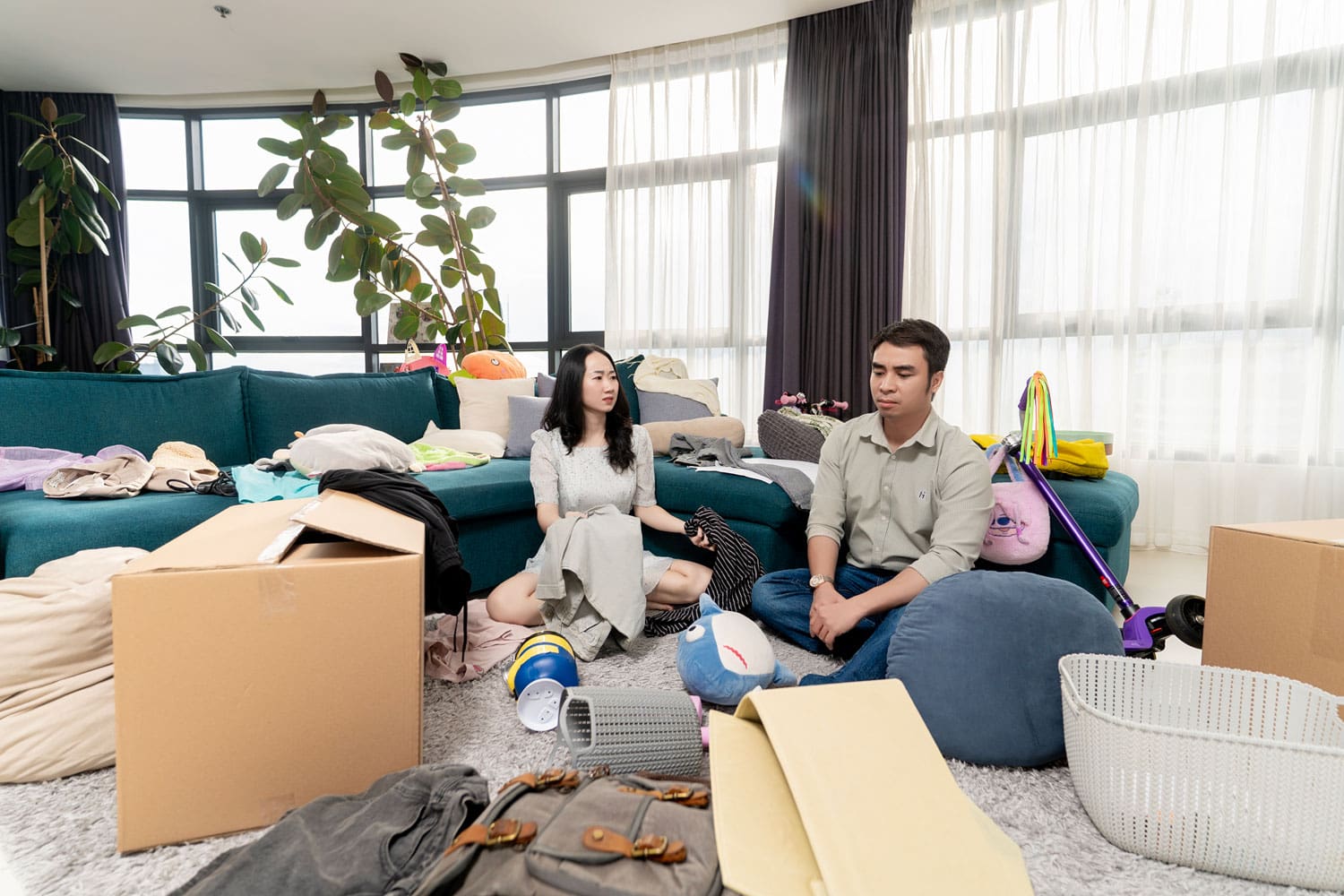
Reusing old clothes is one of the simplest ways to reduce waste, extend product lifecycles, and limit the fashion industry’s impact on the environment. However, not every item should be donated or recycled. Depending on the condition of the clothes, you can choose to continue using them, give them to others, donate to charity, recycle, or store them for future use.
Why Are Old Clothes Becoming an Environmental Issue?
The fashion industry is currently one of the second largest polluting industries in the world, following only the oil industry. Every year, the world produces over 100 billion garments, but 92 million tons of them end up in landfills. The growth of fast fashion, the habit of buying much but wearing little, and the increasingly short lifespan of clothing are the three main causes of the ongoing textile waste crisis.
What Is Fast Fashion?
Fast fashion is a business model that continuously releases new collections at low prices and high speeds, encouraging consumers to buy more and change clothes more frequently. While the fashion industry previously had only two main seasons per year, fast fashion brands now launch 52 collections annually, equivalent to one new collection every week.
The low prices of fast fashion do not reflect the actual costs but are subsidized by poor labor conditions, low-durability materials, and environmental costs that are not included in the selling price.
How Does a T-shirt Impact the Environment?
The lifecycle of a cotton T-shirt leaves a much larger environmental footprint than consumers typically imagine.
| Stage | Specific environmental impact |
|---|---|
| Cotton farming | 1 kg of cotton requires 10,000–20,000 liters of irrigation water, equivalent to the amount of water a person drinks in 10–27 years |
| Dyeing and fabric treatment | The textile dyeing industry is the second largest source of water pollution in the world, using thousands of types of toxic chemicals |
| Transportation | Clothing often passes through 3–5 countries before reaching the buyer, generating significant CO2 emissions |
| Usage | A polyester T-shirt releases 1,900 microplastic fibers per wash, entering the food chain through water sources |
| Disposal | 85% of clothing is discarded in landfills or incinerated, with only 1% being recycled into new clothes |
In total, a typical cotton T-shirt generates about 2.1 kg of CO2 throughout its entire lifecycle, equivalent to driving a car for 8 km. Multiplied by the billions of shirts produced each year, the cumulative impact is enormous.
What Happens to Clothes After They Are Discarded?
The journey of a garment after leaving the wardrobe rarely ends in an environmentally friendly way as many people expect.
- Landfills — the destination for 85% of discarded clothing” Most clothes are thrown into regular trash bins and end up in landfills. Synthetic fabrics like polyester and nylon can take 200–500 years to decompose, while the decomposition process generates methane, a greenhouse gas 80 times more potent than CO2 in the short term.
- Incineration — a quick solution but causes air pollution: Some waste treatment plants and major fashion brands burn unsold inventory to avoid price dumping and protect brand image. Burning synthetic fabrics releases toxic chemicals into the air, including dioxins and furans, harming human health and the environment.
- Exporting to developing countries — shifting the problem elsewhere: Old clothes from developed countries are often collected and exported to Africa and Asia. Ghana receives about 15 million pieces of secondhand clothing every week, of which 40% cannot be reused and go directly into landfills or local coastlines. This model does not solve the problem but merely moves waste from one place to another.
- Recycling — great potential but still limited: Only 1% of clothing is recycled into new fibers due to current technological limitations, especially with blended fabrics. The rest is recycled into lower-grade materials like industrial rags or insulation, a form of downcycling that does not address the root of the problem.

What Are the Benefits of Reusing Old Clothes?
Reusing old clothes is a simple action that creates a real environmental and economic impact. Every garment used for an additional 9 months beyond its average lifespan can reduce carbon, water, and waste footprints associated with new production by 20–30%.
Reducing Waste Discharged into the Environment
Every year, Vietnam generates approximately 200,000 tons of textile waste, most of which ends up in landfills or is incinerated. Reusing clothes directly reduces this waste by extending the lifespan of each product before it becomes trash.
A shirt worn 30 times instead of 10 means replacing three new shirts, equivalent to reducing two-thirds of the potential waste from that product group. When reuse becomes a habit for many, the cumulative impact on urban waste management systems is significant.
Saving Production Resources
Producing new clothing consumes a massive amount of resources at every stage.
| Resource | Consumption for production | Practical equivalent |
|---|---|---|
| Water | 2,700 liters for one cotton T-shirt | A person’s drinking water for 3 years |
| Water | 10,000 liters for a pair of jeans | A person’s drinking water for 10 years |
| Energy | 400 MJ for one T-shirt | Equivalent to riding 100 km on a motorbike |
| Agricultural land | 1 kg of cotton requires 0.3–0.4 ha of land | An area equal to half a tennis court |
Every time a garment is reused instead of buying new, consumers indirectly save all the resources mentioned above without needing to significantly change their lifestyle.
Reducing Carbon Emissions
The fashion industry accounts for 10% of global carbon emissions, more than the aviation and shipping industries combined. Reusing clothes directly impacts this figure in several ways.
Extending a garment’s lifespan by 9 months reduces its carbon footprint by 20–30%. Buying secondhand instead of new reduces carbon emissions by 82% compared to equivalent new production. Repairing instead of replacing saves the entire volume of emissions from manufacturing a replacement product.
In summary, if everyone in developed countries simply increased the average lifespan of their clothes from 2 years to 3 years, the global fashion industry’s carbon emissions could drop by about 10%.
Cost Savings for Individuals and Families
The economic benefits of reusing clothes are often underestimated because they accumulate gradually over time rather than appearing as a single, obvious saving.
| Reuse action | Estimated savings |
|---|---|
| Wearing clothes for 1 more year before replacing | 20–40% of annual clothing costs |
| Buying secondhand instead of new | 50–80% savings for the same quality |
| Repairing instead of discarding | 70–90% savings compared to buying a replacement |
| Swapping clothes with friends | Near-zero cost for a new wardrobe |
| Renting outfits for special occasions | 80–95% savings compared to buying for one-time use |
For families with young children, reusing kids’ clothes has a particularly significant saving impact because children outgrow clothes quickly and rarely have the chance to wear them enough times before they no longer fit.
Contributing to Building a Sustainable Lifestyle
Reusing clothes is not just an isolated action but often a gateway to many more positive lifestyle changes. People who start reusing clothes tend to consider their purchases more carefully, prioritizing quality over quantity and extending their sustainable mindset to other areas of consumption.
At the community level, reusing clothes creates sharing networks, exchanges, and informal circular economies with social value that goes beyond direct environmental impact. As more people practice this, demand for the secondhand market increases, creating economic incentives to develop more professional reuse infrastructure.
Old Clothing Donation – A Humanistic and Practical Solution
Donating usable clothing is a way to transfer value from those who no longer need it to those in need, creating a direct social impact while reducing textile waste. The simplest principle: if you would feel comfortable giving it to a relative, it is suitable for donation.
Types of Clothing Suitable for Donation
| Clothing type | Reason for suitability | Preparation notes |
|---|---|---|
| New or lightly worn clothing | High utility value, recipients can use immediately | Wash and fold neatly before packing |
| School uniforms | High demand in rural areas and disadvantaged families, significantly saving costs for parents | Clearly label the grade level and size on the outside of the bag |
| Jackets and warm clothes | Great demand in the Northern mountainous regions, especially during winter | Check that zippers and buttons are still functioning well |
| Children’s clothing | Children grow quickly so items are often still in good condition, with very high reuse demand | Categorize clearly by age or size |
| Footwear in good condition | Quality shoes are expensive, providing practical support for recipients | Tie pairs together and label the size on the outside |
| Blankets, duvets, towels | High demand in flood-prone and highland areas | Ensure they are clean and free of musty odors |
Types of Clothing That Should Not Be Donated
Donating sub-standard clothing is not only futile but also places an extra burden on receiving organizations that must process unusable items.
| Types not to donate | Reason | Alternative disposal |
|---|---|---|
| Heavily torn or large holes | Unusable, creating extra sorting and processing work for the organization | Cut into rags or recycling materials |
| Moldy or with un-washable odors | Can spread to other items in storage and harm recipients | Dispose of in trash or textile recycling bins |
| Heavily soiled and un-cleanable | Organizations lack the manpower and equipment to re-wash all donated items | Recycle as industrial materials |
| Severe structural damage | Broken zippers, many missing buttons, completely unraveled seams | Liquidate or recycle the fabric |
| Used underwear and swimwear | Most organizations do not accept these for hygiene reasons | Dispose of in regular trash |
How to Prepare Clothing Before Donating
Proper preparation helps receiving organizations save processing time and ensures items reach those in need in the best possible condition.
- Wash and dry completely: This is the most crucial step and cannot be skipped. Even slightly damp clothing will mold during transport and storage, damaging surrounding items. Wash according to label instructions, and air-dry or tumble-dry completely at least 24 hours before packing.
- Sort before packing: Categorizing items helps receiving organizations distribute them faster and more efficiently. The most common sorting methods: by recipient (men, women, children), by garment type (shirts, pants, jackets), and by season (warm vs. thin clothing). Place each group in a separate bag instead of mixing them.
- Pack neatly and securely: Use thick plastic bags or sturdy cardboard boxes to prevent clothing from getting damp or damaged during transport. Do not overstuff, as this causes wrinkles and makes items difficult to remove. Tie bags tightly or tape cardboard boxes shut.
- Label clearly on the outside: Write the contents on the outside of each bag or box, including the type of clothing, sizes if known, and the intended recipient. For example: children’s t-shirts ages 3–5, women’s clothing size S–M, or primary school uniforms. Clear information helps organizations sort and distribute to the right people without wasting time checking each item.
A simple rule for self-checking before donating: if you would feel uncomfortable giving it directly to someone you know, do not donate that item. Quality donations are better than a large quantity of poor-quality items.

What is Clothing Recycling?
Clothing recycling is the process of transforming used fabrics and garments into new materials or products, rather than sending them to landfills or incineration. Unlike direct reuse, recycling alters the form and properties of the original material to create new value.
Textile Fiber Recycling
Textile fiber recycling is the most advanced form of recycling in the garment industry, turning old clothes back into fibers to be woven into new fabric. The process involves sorting fabrics by material, mechanical shredding or chemical dissolution into fibers, and spinning them into yarn for new textile production.
| Material | Recycling Method | Output Product | Current Recycling Rate |
|---|---|---|---|
| Cotton | Mechanical shredding into short fibers, blended with virgin cotton | Medium-quality recycled cotton fabric | Around 1% globally |
| Polyester | Chemical dissolution or melting into plastic pellets | Recycled polyester fiber with quality equivalent to the original | Around 15% globally |
| Nylon | More complex chemical process than polyester | Recycled nylon fiber, popular in swimwear and sportswear | Under 5% globally |
| Blended fabrics | Difficult to separate materials, technology is still developing | Lower quality fibers or cannot be recycled into yarn | Almost no commercial solutions yet |
The biggest challenge in fiber recycling is that most modern clothing is made from blended fabrics, making the separation and recycling into high-quality fibers technically difficult and costly.
Recycling into Industrial Rags
This is currently the most common and practical form of recycling because it does not require complex technology and can handle most blended fabrics that fiber recycling cannot.
Old clothes are cut into standard-sized fabric pieces, packaged by weight, and sold to factories, workshops, and industrial cleaning facilities. Rags made from old cotton are preferred over synthetic ones due to their superior absorbency. One kilogram of old fabric recycled into industrial rags has a much lower value than recycled fiber, but in return, it does not require complex material sorting and can process almost any unwearable clothing.
Recycling into New Materials
Old clothes and fabrics can be transformed into various materials entirely different from their original use in construction, industry, and daily life.
| Output Material | Input Material | Practical Application |
|---|---|---|
| Acoustic and thermal insulation | Shredded cotton and wool, compressed into panels | Wall insulation, studio soundproofing, green building materials |
| Recycled mattresses and padding | Compressed synthetic and cotton fabrics | Budget mattresses, car seat padding, protective padding for shipping goods |
| Geotextiles | Re-woven recycled synthetic fibers | Soil erosion control, road lining, and construction infrastructure |
| Recycled filament for 3D printing | Recycled polyester and nylon extruded into plastic filament | Eco-friendly 3D printing materials |
| Packaging materials | Recycled heavy fabrics | Reusable packaging bags, cushioning materials to replace foam |
Upcycling – Turning Old Items into Higher-Value Products
Upcycling differs from traditional recycling in that the output product has a higher value than the original material, rather than being downgraded. This is the most creative form of recycling and is becoming a major trend in sustainable fashion design.
- Upcycling clothes at home is the simplest approach, including cutting old jeans into shorts, turning old t-shirts into tote bags, or reusing fabric from damaged clothes to patch other garments or sew accessories like small pouches and scarves.
- Commercial upcycling is developing into a distinct segment within the fashion industry. Upcycling brands purchase old clothing, deconstruct them, and recombine them into new products with unique designs. A skirt made from recycled denim or a jacket from old wool fabric can be priced higher than a new product made from raw fabric due to its uniqueness and the story behind the product.
| Comparison | Traditional Recycling | Upcycling |
|---|---|---|
| Output product value | Lower than the original material | Higher than the original material |
| Technical requirements | Industrial technology | Design and sewing skills |
| Scale | Industrial, mass production | Handcrafted to small commercial |
| Uniqueness | Uniform products | Each product is usually unique |
| Best fit for | Damaged fabric, cannot be used directly | Fabric in good condition, can be cut and recreated |
Is Donating or Recycling Better?
There is no absolute answer because the best choice depends on the condition of each item. The general rule: if the clothes are still usable, donate them; if the clothes have degraded, recycle them. Both are better than throwing them into the regular trash.
| Criteria | Donating | Recycling |
|---|---|---|
| Extending product lifecycle | High, maintains the functional value of the clothing | Medium, converts into lower-grade materials |
| Social value | High, directly supports those in need | Lower, indirect through industrial chains |
| Waste reduction | High, prevents clothes from entering landfills | High, processes items that are no longer usable |
| Resource saving | Very high, no need for new production | Medium, requires energy and water for the recycling process |
| Reducing carbon emissions | Very high, avoids all emissions from new production | Medium, the recycling process still consumes energy |
| Suitability for good items | Very suitable | Unnecessary, wastes remaining value |
| Suitability for damaged items | Not suitable, creates a burden for organizations | Very suitable, processes the correct material types |
| Ease of implementation | Easy, just need to find a drop-off point | Medium, need to find a recycling collection unit |
| Cost | Almost none | Some services charge a collection fee |
When to Donate and When to Store?
The decision to donate or store clothes depends on the potential for future reuse and the emotional value of each item. Donate when others need it more than you do, and store when you will need it again or the item has irreplaceable value.
| Type of clothing | Should donate | Should store | Reason |
|---|---|---|---|
| Clothes no longer worn and no plan to wear again | ✓ | Takes up closet space without creating value; others may need them more | |
| Outgrown children’s clothes | ✓ | Optional | Donate if there are no plans for more children; store if intended for a younger sibling |
| School uniforms in good condition | ✓ | Optional | Donate to the school or families in need; store if there is a younger sibling at the same school |
| Coats and warm winter gear | ✓ | Used seasonally; no need to have them in the closet year-round but needed every year | |
| Wedding dresses | Optional | ✓ | High emotional value, high cost; some want to keep them as a memento or alter them for children |
| Suits and high-end evening wear | ✓ | High value, used for special occasions; proper preservation keeps them for many years | |
| Keepsakes and heirlooms | ✓ | Irreplaceable emotional value; requires special preservation to maintain condition | |
| Clothes waiting for weight loss or gain | Optional | Optional | Store if the goal is specific and realistic; donate if kept for many years without change |
| Infrequently worn seasonal items | ✓ | No need to take up closet space year-round; mini storage is the optimal solution | |
| Slightly damaged clothes that can be repaired | ✓ | Store to repair; do not donate damaged items as it burdens receiving organizations |
When to Use Mini Storage Instead of Home Storage
Home storage is suitable for items that need frequent access. Mini storage is more appropriate when items need long-term keeping but take up too much living space.
| Type of item | Store at home | Mini storage |
|---|---|---|
| Weekly wear | ✓ | |
| Seasonal items used 2–3 months per year | ✓ | |
| Wedding dresses and special attire | ✓ | |
| Children’s clothes for various age stages | ✓ | |
| Multiple boxes of family keepsakes | ✓ | |
| Infrequently worn suits and high-end coats | ✓ |
A simple way to decide: if an item has sat in your closet for more than 12 months without being worn and you have no specific reason to keep it, donating is a better choice than storing. If there is a clear reason to keep it but you don’t need frequent access, mini storage helps free up living space without having to give up what is valuable.
MyStorage Supports Clothing Storage & Charity Closets
After sorting your clothes, MyStorage supports both directions of handling: safely storing items you want to keep and accepting donations through the charity closet at the main office. You don’t have to choose one or the other; you can do both in a single visit.
Storing Seasonal Clothing and Personal Items at MyStorage
MyStorage self-storage is suitable for items with functional or emotional value that do not require frequent access, freeing up closet area and living space without giving up what is important.
| Type of item to store | Why it fits MyStorage | Preservation conditions |
|---|---|---|
| Seasonal coats and warm gear | Only used 2–3 months a year, takes up a lot of remaining closet space | 50–65% RH humidity prevents mold and musty odors from accumulating |
| Wedding dresses and evening wear | High value, requires special preservation to avoid moisture and light | Temperature 20–26°C, avoids direct light which yellows fabric |
| Suits and high-end office wear | Used for occasions, not needed in the daily closet | Hung properly in breathable garment bags to avoid wrinkles and deformation |
| Children’s clothes for various stages | Accumulates quickly by month of age, needs flexible storage space | Completely clean and dry before storing, categorized by size |
| Keepsakes and heirlooms | Irreplaceable, needs a stable environment for long-term preservation | Packed in sturdy boxes with padding, using silica gel for moisture control |
MyStorage Charity Closet
If during the sorting process you have clothes in good condition that you want to donate, MyStorage provides a charity closet at the main office to receive them.
| Information | Details |
|---|---|
| Location | 375 Vo Nguyen Giap, Thu Duc City, HCMC |
| Accepted items | Clean and usable clothes, children’s items, coats, uniforms |
| Non-accepted items | Heavily torn items, un-cleanable stains, odors, or mold |
| How to prepare | Wash clean, dry completely, and pack neatly before bringing |
| Visiting time | During MyStorage office working hours |
A complete closet decluttering session can end at MyStorage: bring items you want to keep into storage and leave items you want to give away in the charity closet. Living space is freed up, valuable items are preserved, and good clothes reach those in need.
Every piece of clothing in your closet has a most suitable way to be handled based on its condition and value. Continue wearing it if it’s still usable, donate it if others need it more, store it if there is a clear reason to keep it, and recycle it if there are no other solutions. These four simple steps, when they become a habit, can significantly reduce textile waste without requiring major lifestyle changes.
MyStorage supports both needs in the same location: self-storage helps preserve valuable items you aren’t ready to give up, and the charity closet at 375 Vo Nguyen Giap accepts good clothing to be passed on to those in need. Decluttering your closet is no longer a difficult puzzle when you know exactly where each item is going.
FAQ
How do I know whether to donate or store clothing?
Ask two simple questions: will you wear it again within 12 months, and is there a specific reason to keep it? If neither has a clear answer, donating is the better choice. If there is a specific reason to keep it but no frequent need, mini storage frees up living space without losing value.
Should wedding dresses be stored in a storage unit?
Yes, if the facility maintains humidity and temperature control. Wedding dresses made from silk and lace are particularly sensitive to high humidity and UV light that yellows fabric over time. Hang in breathable fabric bags rather than sealed plastic and store in a facility maintaining 50–65% RH for best preservation.
What items does the MyStorage charity wardrobe accept?
Accepts clean and wearable clothing including adult and children’s garments, jackets, school uniforms, and shoes in good condition. Items must be washed and fully dried before dropping off. Does not accept heavily torn, permanently stained, mouldy, or odorous items.
Should outgrown children’s clothes be donated or stored?
It depends on family plans. If there are plans for another child or younger family members who will use them, storing by size in labeled boxes is the economical choice. If there are no plans to reuse them, donating so the clothes reach families who need them now creates higher social value.
Will wool and cashmere stored in a unit attract moths and pests?
Risk is low if the facility has environmental control and regular cleaning. Wool and cashmere should be washed before storing because sweat and stains attract insects. Adding natural cedar or lavender sachets to storage boxes helps repel moths and cockroaches without the unpleasant chemical smell of mothballs.
Can donations be dropped off at MyStorage without an appointment?
Walk-in donations are welcome at the MyStorage office at 375 Vo Nguyen Giap, Ho Chi Minh City during business hours. No appointment is needed for dropping off donations. Items should be washed, fully dried, and neatly packed before arrival to save time.
How suitable is mini storage for seasonal clothing?
Very suitable since seasonal clothing is only needed 2–3 months per year but occupies wardrobe space 365 days. A 1–2 m² unit holds all heavy blankets, jackets, swimwear, and holiday decorations for an entire family. Retrieve before the season and return after, at a cost of just a few hundred thousand VND per month.
How does fast fashion impact Vietnam’s environment?
Vietnam is one of the world’s largest garment producers, directly experiencing pollution from dyeing and fabric treatment. At the same time, Vietnamese consumers are increasingly adopting global fast fashion consumption patterns, generating rapidly growing textile waste in major cities that existing waste management infrastructure has yet to catch up with.
How much does clothing storage at MyStorage cost?
A 1–2 m² unit suitable for seasonal clothing and personal items ranges from 300,000–600,000 VND per month. Compared to buying additional wardrobes or moving to a larger apartment just for extra storage space, this is a significantly more cost-effective solution in the long term.
How should clothing be prepared before long-term storage?
Wash and dry completely for at least 24 hours before packing. Knitwear and delicate fabrics should be folded flat in rigid boxes rather than hung long-term to prevent distortion. Place 1–2 silica gel packets in each box, label clearly with contents, and avoid fully sealed plastic bags as they trap moisture inside over time.