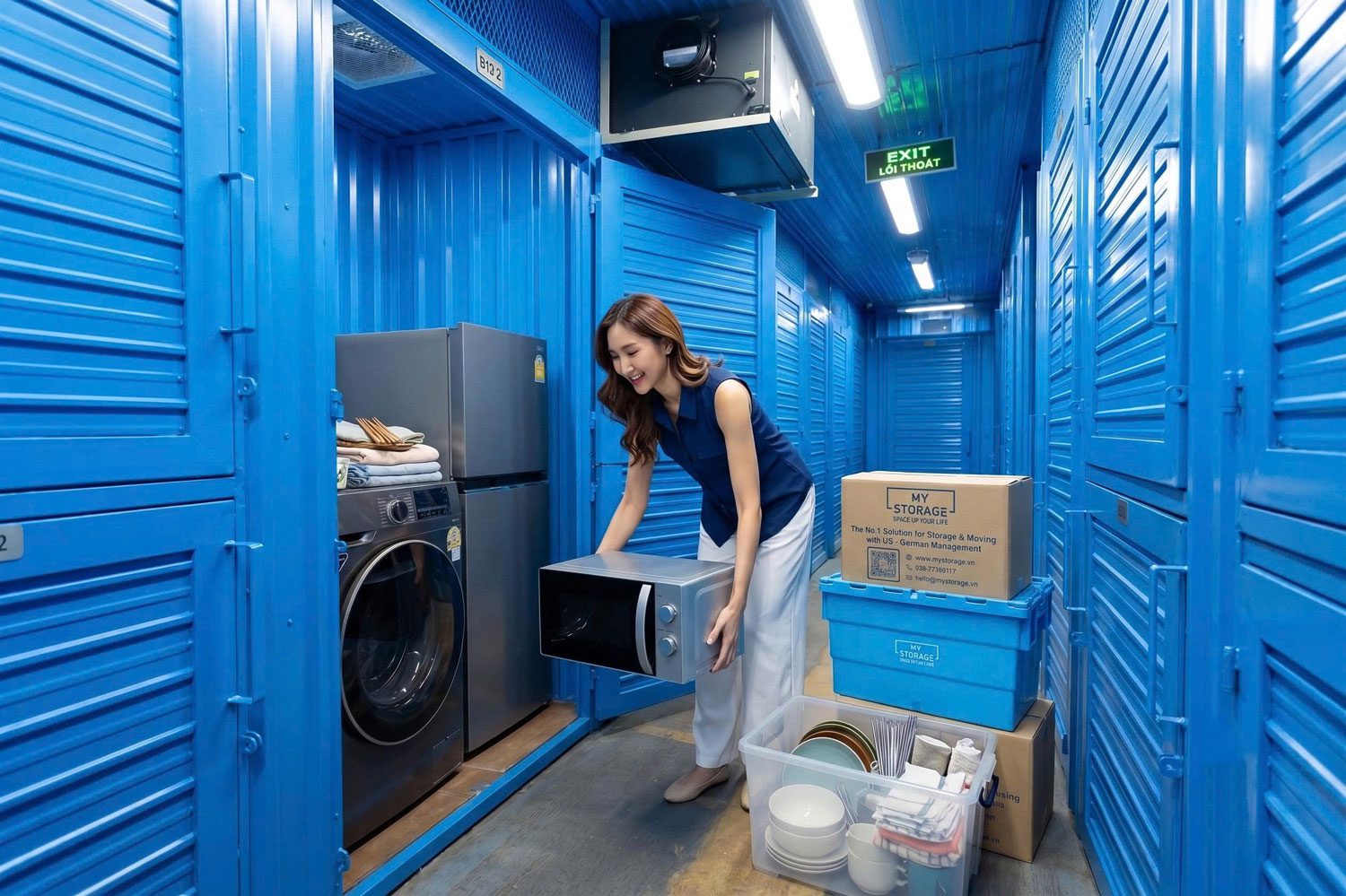
To organize your home storage neatly, categorize items by purpose, discard unnecessary belongings, utilize vertical shelving to optimize height, and label every container. If your home storage is overloaded or filled with rarely used items, consider moving seasonal or bulky belongings to external storage to free up your living space.
Why Is the Family Storage Room Always Cluttered?
A cluttered family storage room isn’t due to a lack of space but a lack of a system. Items accumulated over time without categorization, fixed locations, or clear disposal rules create a mess that becomes increasingly difficult to manage year after year.
- Years of Accumulated Old Items: Family storage often operates on an unwritten rule: if you don’t know where to put it, put it in the warehouse. Over the years, the storage room becomes a collection of unprocessed old electronics, children’s clothes, abandoned sports equipment, and countless miscellaneous items without clear categories. Nothing leaves the warehouse as fast as items enter, creating constant accumulation pressure year by year.
- Lack of Initial Categorization: The most fundamental issue for most family storage rooms is the lack of a classification system from the start. When items are stored without categories or fixed positions, every search requires rummaging through everything. Each search creates more chaos as items are taken out but not returned to their proper places after use.
| Storage Condition | Time to Find an Item | Success Rate |
|---|---|---|
| Systematized with labels | 1–3 minutes | Over 90% |
| Roughly categorized, no labels | 5–15 minutes | 60–70% |
| Uncategorized, messy | 15–30 minutes or not found | Under 40% |
- Lack of Shelving Systems: Storage rooms without shelves force all items to be stacked horizontally on the floor, creating multiple overlapping layers that are hard to access. Items at the bottom often remain untouched for years because they are too difficult to reach without moving everything on top. Vertical shelving helps utilize the warehouse’s height, reduces stacking layers, and ensures every item has a visible position from the outside.
- No Labeling: Unlabeled boxes are the most common reason items in storage become “psychologically invisible.” When people don’t know what’s inside a box, they often don’t open it to check and instead buy new items when needed, leading to multiple copies of the same item scattered across different boxes. Clear labeling is the least effort-intensive step but creates the biggest impact on the actual usability of the storage space.
- Keeping Too Many “Just in Case” Items: The mindset of keeping items just in case they are needed in the future is the deepest reason why family storage is never truly cleared. Everything has a reason to be kept if viewed this way: broken items can be fixed, old items might be needed again, surplus items could be given to someone. As a result, storage space is occupied by items with no practical use, while items that are actually needed become harder to find.
A cluttered warehouse is not a space problem but a decision-making problem. Every item that hasn’t been clearly decided upon—whether to keep or discard—remains in storage and takes up space until someone actively deals with it. Building a habit of making decisions the moment you put items into storage is much more effective than periodic cleaning just for the sake of it.
The Benefits of Scientific Storage Organization
A scientifically organized storage room is not only neater but also saves search time, protects items from damage, and creates a significantly more efficient usable space compared to the same area in a state of clutter.
Easy Retrieval: The most direct and obvious benefit of a well-organized storage room is finding items much faster. When each category has a fixed area and each box has a clear label, the time to find an item drops from 15–30 minutes to just 1–3 minutes. For a family that retrieves items from storage an average of 3–5 times per week, this saving is equivalent to 1–2 hours per week not spent searching and re-cleaning after rummaging.
An efficient retrieval system also means fewer duplicate purchases. Many families buy extra items that they actually already have in storage because they didn’t know or couldn’t find them. A warehouse with labels and a clear system helps avoid this waste.

Maximizing Space Utilization: Cluttered storage often uses less than 40% of its actual space potential because items are stacked inefficiently and many corners remain inaccessible. Vertical shelving systems that utilize height, standardized storage boxes that fit tightly together, and clear zoning help the same storage area hold 2–3 times more than arbitrary stacking.
| Arrangement Method | Space Utilization Efficiency | Accessibility |
|---|---|---|
| Arbitrary floor stacking | 30–40% | Low, requires moving many items |
| Shelving without zoning | 50–60% | Medium |
| Tiered shelves with standard boxes | 70–80% | High |
| Ceiling-high shelves, labeled boxes, and zoning | 85–90% | Very high with a step stool |
Reducing the Risk of Damage: Properly organized items suffer significantly less damage than those in a cluttered pile. Fragile items are placed in cushioned boxes instead of being crushed by heavy objects, leather goods are hung or positioned correctly instead of being folded and flattened, and electronic devices are placed on dry shelves instead of being exposed to damp floors. Damage caused by incorrect storage is often not discovered until needed, at which point it is too late for recovery.
Limiting Mold and Mildew: A well-organized storage room provides ventilation space between items, allowing air to circulate and reducing localized moisture buildup. Items placed directly against floors and walls are particularly susceptible to dampness as moisture seeps in from these surfaces. Shelving that lifts items at least 10–15 cm off the floor and places them 5–10 cm away from walls creates the necessary airflow to significantly reduce mold risks.
Categorizing and placing silica gel in boxes containing sensitive items such as clothing, books, documents, and leather goods is a simple additional step that effectively controls local humidity within each storage box.
Enhancing Safety: Cluttered storage with unstable high stacks creates a risk of collapse and injury, which is especially dangerous for children and the elderly. Walkways blocked by belongings are a real tripping hazard, and in emergency evacuation situations, a messy storage room can pose a serious danger.
An organized storage room with clear walkways at least 60–80 cm wide, heavy items kept low and light items high, and properly secured boxes and shelves creates a significantly safer environment for all family members.
Investing a weekend to properly reorganize your storage room brings cumulative benefits for years: saving time searching, saving money by not rebuying items you already have, and extending the lifespan of correctly preserved belongings. This is one of the highest-return time investments in managing your living space.
10 Tips for Optimizing Home Storage Space
Tip 1: Categorize Items Before Organizing
The first and most important step before buying any shelves or containers is to take everything out of storage and categorize them into three clear groups: keep and use frequently, keep but use rarely (needs storage), and discard or donate. This step typically reduces the total volume of items in storage by 30–40%, creating significant empty space before reorganization begins.
A simple decision rule: if you haven’t used it in the last 12 months and have no specific plan to use it in the next 12 months, it is a candidate for disposal or donation rather than continuing to take up storage space.
Tip 2: Utilize Height with Vertical Shelving
Most home storage wastes the entire space from head height to the ceiling, which is usually 1–1.5m of potential storage height. Adjustable metal shelves 1.8–2m high are the most important investment for optimizing storage space because they increase vertical capacity without expanding the floor footprint.
The principle for shelf stacking: heavy and rarely used items on the lowest level, frequently used items at arm’s reach from 80–160 cm, and the lightest, least-used items on the top level. This arrangement is both safe and time-saving when retrieving items.
Tip 3: Use Standardized Boxes of the Same Size
Storage boxes of varying sizes do not fit tightly together, creating many useless gaps between them. Choosing one or two standard box sizes and using them consistently throughout the storage room helps them fit more snugly, increasing actual capacity and creating a significantly tidier appearance.
Transparent plastic boxes allow you to see the contents from the outside without opening them, saving search time. Fabric boxes with lids are suitable for light items like clothing and blankets. Cheap cardboard boxes are prone to dampness over time and should be avoided for valuable items.
Tip 4: Label All Boxes and Zones
Labeling is the least effort-intensive step but creates the biggest impact on maintaining long-term storage tidiness. Clear labels eliminate the need to open boxes for inspection, helping you find items quickly and, more importantly, helping family members return items to the correct place after use.
The most effective labels include both the category name and a list of 3–5 main items inside. For example, instead of just writing “Electronics,” write “Electronics: old charging cables, adapters, spare headphones.” Laminated labels or clear printed labels are more durable than handwritten ones with ink that easily fades.

Tip 5: Create Dedicated Zones for Each Category
Categorizing your storage into clear zones helps everyone in the family know where to find and return items without having to ask. Repair tools, sports equipment, children’s items, documents, and seasonal items are the five most common zones in a family storage room.
Drawing a simple storage map and sticking it on the door helps all family members understand the system without having to memorize it. This step is particularly useful during the first few months when the new system has not yet become a habit.
Tip 6: Place Frequently Used Items in the Most Accessible Locations
Not all items in storage are used with the same frequency. Repair tools used monthly need to be in a different position than Lunar New Year decorations that are only taken out once a year. Arranging storage locations based on actual usage frequency saves time and effort every time you retrieve an item.
Place weekly items on eye-level shelves near the entrance, monthly items in the middle section of the storage room, and items used less than once a year in the deepest or highest spots. This arrangement naturally creates a logical flow of movement within the storage space.
Tip 7: Utilize Door and Wall Space
The back of the storage door and the walls are often left completely empty, even though they represent significant potential storage space. Over-the-door hooks are suitable for small tools, sports gear, and bags. Floating wall shelves take advantage of the wall area above standing racks. Wall-mounted pegboards are perfect for repair tools, completely freeing up floor and shelf space.
Tip 8: Declutter Periodically Every 6 Months
A well-organized storage room requires periodic maintenance to prevent it from reverting to its original state. Twice a year, before summer and before the Lunar New Year, is the ideal time to review the entire storage area, handle items accumulated over the past 6 months, and update labels if the box contents have changed.
Each review session should answer three questions: are there any new items in storage that haven’t been properly organized, are there any labels that no longer match the current contents, and are there any items eligible to be discarded or donated.
Tip 9: Control Humidity to Protect Belongings
Humidity is the number one enemy of stored items in Vietnam. Placing mini dehumidifiers or large quantities of silica gel desiccant bags in the storage room helps maintain humidity below 65% RH, the safe threshold for most common materials. Replace silica gel every 3–4 months or after the rainy season.
Place all items on shelves or plastic pallets; do not let them come into direct contact with the concrete floor, as concrete absorbs moisture from the ground and transfers it to the items above. Position items at least 5 cm away from the walls to allow air to circulate between the objects and the wall.
Tip 10: Know When You Need External Storage
Sometimes the best solution isn’t reorganizing your existing storage, but recognizing that your home storage isn’t enough for everything you need to keep. Once you have organized your storage properly but still lack space for valuable items that must be kept, renting an external self-storage unit is the logical next step.
| Situation | Solution |
|---|---|
| Storage is cramped but items must be kept | Rent an additional self-storage unit for the least-used items |
| Storage is cramped because of unused items | Declutter and donate before considering renting more space |
| Home renovation requires temporary storage | Rent short-term storage for 1–3 months during construction |
| Valuable items need a better preservation environment | Self-storage with humidity and temperature control |

MyStorage – The Space Expansion Solution for Families
MyStorage offers flexible self-storage units in various sizes from 1–23 m³ for families needing to store furniture, seasonal clothing, suitcases, keepsakes, and rarely used equipment. A clean, climate-controlled environment with 24/7 security ensures your belongings are preserved in optimal conditions while keeping your home clutter-free.
Sizes Tailored to Every Family’s Needs
| Area | Capacity | Suitable for | Reference storage cost |
|---|---|---|---|
| 1–2 m² | Seasonal clothes, suitcases, books, and documents | Individuals or couples needing to free up closet space | 300,000–600,000 VND per month |
| 3–5 m² | Small furniture, multi-stage baby gear, sports equipment | Families of 3–4 people renovating or moving house | 700,000–1,200,000 VND per month |
| 6–10 m² | Sofa sets, dining tables, wardrobes, 15–25 boxes | Families needing to store an entire room’s furniture | 1,300,000–2,500,000 VND per month |
| 11–23 m² | Full furniture for a 2BR apartment, large appliances | Renting out a home, long-term overseas stays, full renovations | 2,500,000–6,000,000 VND per month |
What Families Typically Store at MyStorage
| Item type | Why store them? | Storage conditions at MyStorage |
|---|---|---|
| Seasonal clothing | Only used for 2–3 months but takes up closet space year-round | 50–65% RH humidity prevents mold and musty odors |
| Spare furniture | Extra chairs and folding tables clutter living room corners when not in use | 20–26°C temperature protects wood and leather from warping |
| Outgrown baby gear | Accumulates quickly through stages; needs to be kept for younger siblings | Clean environment with regular pest control |
| Suitcases and travel gear | Bulky with no fixed spot in the house | 24/7 security, accessible before every trip |
| Books and documents | Accumulate silently, taking up wall and cabinet space | Controlled humidity protects paper from yellowing and mold |
| Sports equipment | Bicycles, SUPs, and bulky camping gear are hard to store at home | High ceilings and wide doors for large equipment |
| Keepsakes and heirlooms | Cannot be discarded but don’t need daily display | Stable environment for long-term preservation without damage |
Storage and Security Standards
| Standard | MyStorage’s compliance | Practical benefits |
|---|---|---|
| Humidity control | Continuous 50–65% RH | Prevents mold on fabric, leather, and paper |
| Stable temperature | 20–26°C year-round | Protects wood, leather, and electronics |
| Security cameras | 24/7 HD, 90-day footage storage | Assets are protected even when you aren’t there |
| Personal PIN code | Each unit has a unique code | Only the owner can access the unit |
| Flexible access | 24/7, no appointment needed | Retrieve items whenever convenient |
| Flexible contracts | Monthly, no long-term commitment | Scale space up or down based on actual needs |
Charity Closet — When Items Are No Longer Needed
During the process of decluttering and reorganizing storage, many families discover items they no longer need that are still in good condition. Instead of throwing them away, the MyStorage Charity Closet at 375 Vo Nguyen Giap, HCMC, accepts clean and usable clothes and household items to be passed on to those in need. Items should be washed, completely dry, and neatly packed before being dropped off; no appointment is necessary.
An effective decluttering session often ends at MyStorage in two ways: items you want to keep but don’t use frequently go into storage, while items no longer needed go into the charity closet. The home gains space without sacrificing what the family truly needs to hold onto.
A tidy family storage area doesn’t require more space; it requires a clearer system. Proper categorization, organizing by frequency of use, and maintaining a regular check-up habit are all it takes to keep a storage space functional rather than letting it become a dumping ground no one wants to touch.
When belongings exceed the reasonable capacity of home storage or require a better preservation environment than a home can provide, MyStorage self-storage is the natural next step. Items to keep but rarely use are stored in the unit, while items no longer needed are placed in the charity closet at 375 Vo Nguyen Giap. The home is liberated, and important possessions are properly preserved.
FAQ
How do you start decluttering a storage room that is already very messy?
Start by removing everything from the storage room and sorting into three groups — keep, donate, and discard — before returning anything. This sorting step typically reduces total volume by 30–40%, creating significant space before installing shelving and boxing items. Avoid purchasing shelves or storage boxes before knowing exactly how much remains to be stored.
Are metal or wooden shelves better for a home storage room?
Adjustable metal shelving is better for most home storage rooms as it supports heavier loads, resists humidity better than MDF wood, and allows easy shelf height adjustment to fit different box sizes. Solid wood is sturdy but susceptible to moisture and termites if the storage room lacks good humidity control, particularly in Vietnam during the rainy season.
Should plastic boxes or cardboard boxes be used for home storage?
Clear plastic boxes with locking lids are the best option as they resist moisture, allow contents to be seen from outside, and last decades. Cardboard suits light items and short-term storage but absorbs moisture and softens over time in humid environments. For valuable items needing long-term preservation like documents, special clothing, and keepsakes, investing in quality plastic boxes outweighs the initial cost saving of cardboard.
How often should a home storage room be reviewed and reorganised?
Twice a year is ideal, typically before summer and before Tết. Each review should check whether items have been used in the past 6 months, replace saturated silica gel, update inaccurate box labels, and process newly accumulated unsorted items. Storage rooms reviewed regularly are far easier to maintain than those requiring a major overhaul every few years.
How can humidity be controlled in a storage room without air conditioning?
Combine three measures: place a mini dehumidifier with 500–1000ml daily capacity for rooms under 6m², add large quantities of silica gel packets inside every storage box, and elevate all items off the floor using shelving or plastic pallets. A humidity monitor costing 100,000–200,000 VND in the room helps track and maintain below 65% RH, the safe threshold for most materials.
How much can a 4–6m² home storage room hold when properly organised?
A well-organised 4–6m² storage room with floor-to-ceiling shelving can hold the equivalent of 10–15m² of ordinary floor storage. A family of 4 can typically store all seasonal clothing, family suitcases, children’s items, repair tools, and holiday decorations in this space when using standardised boxes and properly tiered shelving.
When should external storage be rented instead of reorganising the home storage room?
When the home storage room is already properly organised but still lacks space for items with clear reasons to keep, or when items need better preservation conditions than home can provide such as controlled humidity and stable temperature. MyStorage self-storage from 300,000 VND monthly is usually more economical than discarding valuable items only to repurchase them later.
Do old electronics stored in a home storage room need special care?
They need storage below 60% RH to prevent circuit board oxidation, and batteries should be removed before storage to prevent corrosion damaging contacts. Place in sealed boxes with silica gel and keep on shelving away from damp floors. Valuable electronics like cameras, old laptops, and audio equipment benefit from environment-controlled storage better than typical home storage rooms provide.
Can children help organise a home storage room?
Children from age 6 can effectively participate in sorting their own toys and clothing, labelling boxes, and placing light items on lower shelves. Involving children in the organisation process helps them understand the system and they tend to maintain it better because they set it up themselves. Keep children’s items on lower shelves within their reach so they can retrieve and return things independently without adult assistance.
How can MyStorage help families solve their storage space challenges?
MyStorage provides units from 1–23 m² in Ho Chi Minh City with controlled humidity at 50–65% RH, temperature at 20–26°C, 24/7 cameras, and flexible access. Families can store furniture, seasonal clothing, children’s items, and keepsakes in better conditions than home storage allows, renting month-to-month without long-term commitment, and dropping off unneeded items at the charity wardrobe at 375 Vo Nguyen Giap.