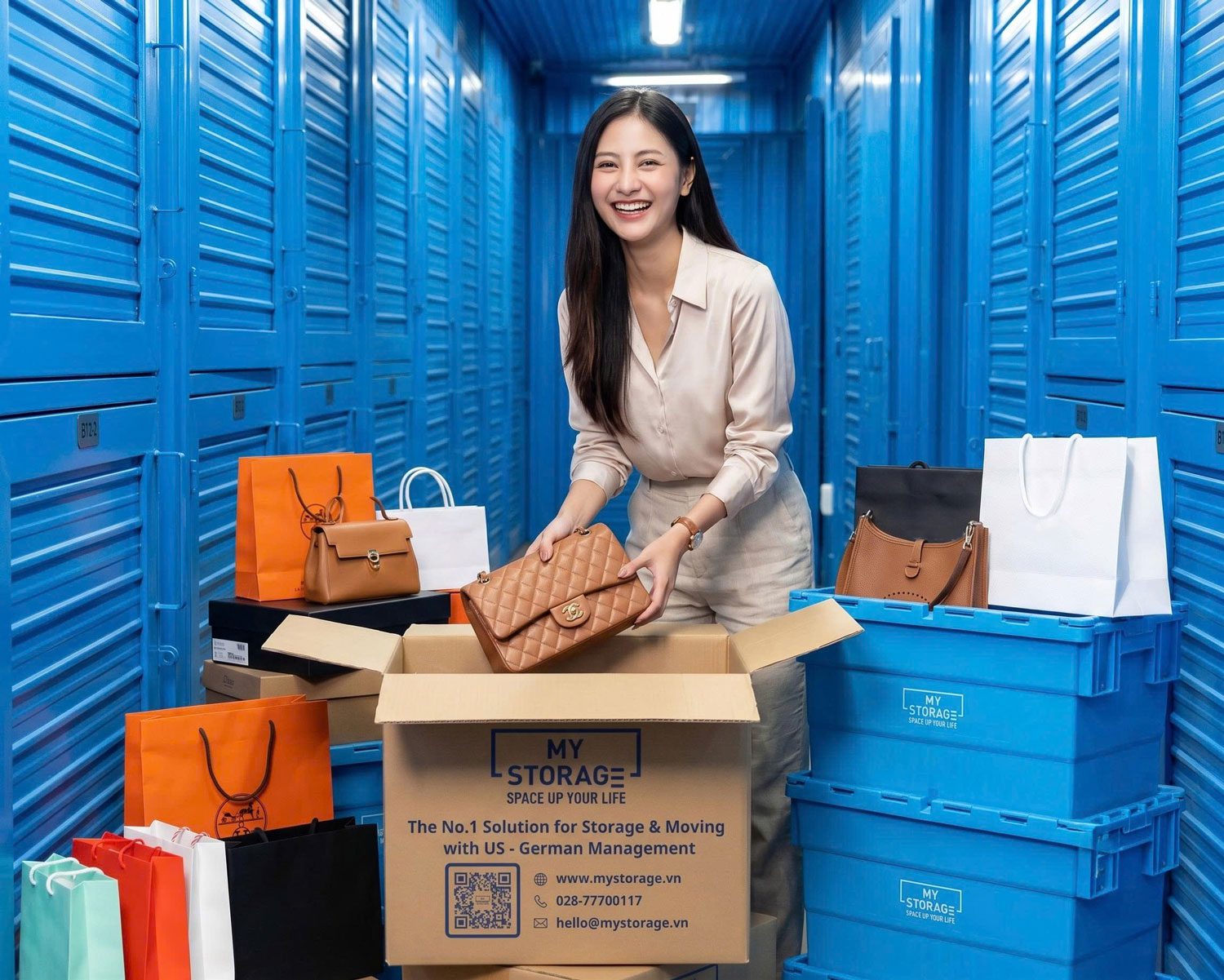
To properly store luxury handbags, you should clean the bag before putting it away, stuff it with paper to maintain its shape, use a dust bag, place it in a dry spot, avoid direct sunlight, and check it periodically. You should not hang the bag by its straps, store it in airtight plastic bags, or leave it in high-humidity environments as this can cause mold, loss of shape, and a decrease in value.
Why Do Luxury Handbags Need Proper Storage?
A luxury handbag is a real financial asset, not just a fashion accessory. Calfskin, lambskin, coated canvas, and gold-plated metal hardware are all sensitive to the storage environment. Proper preservation not only maintains the original beauty but also secures a resale value that can reach 70–95% of the original price for certain high-end lines.
- Leather Materials Are Sensitive To Temperature And Humidity: Hermès calfskin, Chanel lambskin, and caviar leather are all organic materials that react directly to surrounding environmental conditions. Humidity above 70% RH for extended periods creates conditions for mold to grow on the leather surface within 4–8 weeks. Continuous temperatures above 30°C evaporate the natural oils in the leather, leading to dryness, loss of elasticity, and cracking at stress points like corners and flap folds. With soft lambskin used in the Chanel Classic Flap, surface changes due to the wrong environment can occur much faster than with harder leathers like Hermès’ togo or epsom.
- Metal Hardware Is Prone To Oxidation: Metal accessories are a key valuation factor for luxury bags. Chanel’s gold-plated turn-lock, Hermès’ silver cadenas lock, and Dior’s gold-plated chains are all affected by high humidity and exposure to airborne chemicals.
| Metal Type | Signs of Oxidation | Safe Humidity Threshold |
|---|---|---|
| 24k Gold-plated | Tarnishing, dark brown spots appear | Below 60% RH |
| Silver-plated | Quick black tarnishing, difficult to repolish | Below 55% RH |
| Plated copper and alloys | Verdigris (green rust), rusting in small crevices | Below 65% RH |
| Palladium | Gradually dulls, loses metallic luster | Below 60% RH |
- Resale Value Directly Depends On Condition: The secondhand luxury handbag market in Vietnam and globally is growing strongly, with valuations clearly differentiated based on the actual condition of each bag.
| Condition | Value vs. New Price | Real-world Example |
|---|---|---|
| Mint condition, full accessories and receipt | 85–120% of new price | Hermès Birkin, Chanel Classic Flap often exceed original price |
| Excellent, very light signs of use | 65–85% of new price | Still holds good investment value |
| Good, light wear at high-use points | 45–65% of new price | Significant decrease, harder to sell quickly |
| Moldy or metal oxidation | Below 30% of new price | Serious financial loss |
- Reducing Repair And Restoration Costs: The cost of restoring luxury bags at professional facilities is not cheap, and it is not always possible to fully return them to their original condition.
| Restoration Service | Estimated Cost | Result |
|---|---|---|
| Surface mold treatment (light) | 500,000–2,000,000 VND | Good if detected early |
| Metal hardware repolishing | 300,000–1,000,000 VND | Good for light oxidation |
| Cracked or peeling leather restoration | 2,000,000–8,000,000 VND | Cannot be completely like new |
| Color redyeing for fading | 3,000,000–10,000,000 VND | Color is never as even as the original |
| Inner lining replacement | 2,000,000–6,000,000 VND | Affects value if not the original material |
Proper storage is not a luxury but a protection of your investment. A Chanel Classic Flap bought for 120 million VND and well-preserved can be resold for 100–150 million VND after 5 years. The same bag, if moldy or with oxidized hardware, might only be worth 30–40 million VND. The cost of proper storage over 5 years is usually no more than 6–10 million VND.

Factors That Cause Handbags to Deteriorate Quickly
Most damage to designer handbags does not stem from daily use but rather from an unsuitable storage environment during periods of non-use. The five factors below act simultaneously and accumulate over time, causing damage that cannot be fully reversed.
High Humidity Causes Mold and Mildew
High humidity is the number one cause of handbag damage in Vietnam, especially during the rainy season lasting from May to November. When humidity exceeds 65–70% RH for an extended period, mold spores present in the air begin to germinate and grow on the leather surface within 4–8 weeks.
| Mold Stage | Manifestation | Recovery Potential |
|---|---|---|
| Stage 1 — Surface Mold | Faint white spots, can be wiped away | Good recovery if treated immediately |
| Stage 2 — Deep-seated Mold | Gray-green spots, distinct damp smell | Partial recovery, leaves marks |
| Stage 3 — Structural Mold | Mold eats into the inner leather layer, leather becomes mushy | Cannot be fully restored |
Natural leathers such as calfskin, lambskin, and caviar leather have a porous structure that absorbs moisture faster than synthetic leather. The fabric lining inside the bag is also prone to mold and creates an unpleasant odor that spreads throughout the entire bag if not controlled early.
Direct Sunlight Causes Fading
UV rays in sunlight attack the chemical bonds in leather dyes through three simultaneous mechanisms: breaking down the dye molecular structure causing uneven fading, weakening the protective surface coating, and accumulating heat that evaporates natural oils within the leather.
Fading caused by UV is permanent damage and cannot be reversed even with professional leather dye treatments, as re-dyeing never achieves the same uniformity as the original factory finish. Dark colors like black, navy, and bordeaux show less visible fading but still suffer from weakened underlying structures over time due to UV exposure.
High Temperatures Cause Leather to Dry and Crack
Natural leather contains oils and natural moisture that maintain its elasticity. When the ambient temperature continuously exceeds 30°C, evaporation occurs faster than the rate at which the leather can reabsorb moisture from the air, leading to a gradual loss of elasticity and causing the leather to become stiff and brittle.
| Storage Temperature | Impact on Natural Leather | Timeframe for Issues to Arise |
|---|---|---|
| 15–22°C | Ideal, leather retains its properties | No issues |
| 22–28°C | Acceptable, monitor periodically | Several years |
| 28–35°C | Natural oils begin to be lost | 6–18 months |
| Above 35°C | Rapid damage, leather becomes brittle and cracks | 1–6 months |
Cars parked outdoors during the day in Ho Chi Minh City can reach 50–60°C inside; this is the most destructive environment for leather bags that can occur in daily life. Never leave designer leather bags in a car under the sun, even for just a few hours.
Dust Accumulation
Dust accumulating on the surface of a handbag is not only unsightly but also causes long-term damage through two main mechanisms.
Chemical mechanism: Urban dust contains acid particles from exhaust fumes and air pollution. When combined with humidity, these particles form a weak acidic solution on the leather surface, slowly decomposing the protective coating and corroding the leather underneath over time.
Physical mechanism: Dust clings tightly to stitching, joints, and bag corners, forming a hard residue. Cleaning this residue without proper tools can easily scratch the leather surface. With suede and nubuck, dust penetrates deep into the nap structure and is almost impossible to remove completely once it has accumulated for a long time.
Poor Air Circulation
Stagnant air in closed cabinets or sealed boxes creates an unfavorable microclimate for leather bags in two simultaneous ways.
Without air circulation, moisture escaping from the leather has nowhere to go and accumulates inside the box, pushing local humidity much higher than the general room humidity. At the same time, gases evaporated from the natural aging process of leather, such as aldehydes and organic acids, accumulate in the confined space, creating an acidic environment that accelerates decomposition.
| Circulation Solutions | Implementation | Effectiveness |
|---|---|---|
| Fabric dustbags instead of plastic bags | Use breathable cotton or flannel | High, allows for air exchange |
| Boxes with small ventilation holes | Punch 2–4 small holes in the bottom and lid | Medium, significant improvement |
| Storage with ventilation systems | Active air circulation | Highest, ideal for large collections |
| Periodic box opening | 15–30 minutes every 4–6 weeks | Medium, simple and free |

Proper Maintenance Procedures for Designer Handbags
The six steps below apply to most high-end handbags from Hermès and Chanel to Louis Vuitton and Dior. Following the correct sequence and doing so regularly helps the bag maintain its original condition for years, preserving both its utility and commercial value.
Step 1 — Clean the Bag Before Storing
This is the most important and most frequently overlooked step. Dirt, oils from hands, and stains accumulated on the surface during storage can corrode the leather and create an environment for mold to grow.
| Component | Cleaning Method | Suitable Tools |
|---|---|---|
| Natural leather surface | Wipe gently with a dry microfiber cloth, then use a mild leather cleaner if there are stains | Microfiber cloth, specialized leather cleaner |
| Suede and nubuck leather | Only use a dry suede brush; do not use water or wet cleaners | Specialized suede brush |
| Coated canvas (LV or Gucci) | Wipe with a slightly damp cloth, avoiding water seepage into the stitching | Damp cotton cloth, wrung dry |
| Metal hardware | Wipe with a soft, dry flannel cloth, buffing gently in one direction | Flannel cloth, do not use polishing chemicals |
| Interior lining | Gently turn inside out if possible, wipe away dust and debris | Soft cloth, do not use detergents |
Do not use alcohol, regular detergents, or chemical wet wipes on natural leather as they can permanently dry out and discolor the leather.
Step 2 — Stuff with Paper or Pillows to Maintain Shape
Leather has a shape memory and will develop permanent creases if the bag is left empty for a long time. Proper stuffing is a small investment that has a major impact on maintaining the bag’s original form.
Suitable stuffing materials: Acid-free tissue paper is the best choice because it does not cause chemical reactions with the leather. Softly inflated air bubbles are also effective for bags that need to maintain a rigid shape. Do not use newspapers with ink as the ink can transfer to the interior lining; do not overstuff, as this can strain the stitching and stretch the leather at the joints.
For structured bags like the Hermès Kelly or Celine Box, stuff just enough for the bag to hold its natural shape. For soft bags like the Chanel WOC or bucket bags, stuff a bit more fully to prevent the bag from collapsing completely and creating deep creases.
Step 3 — Place the Bag in a Dust Bag
A dust bag is the first layer of protection against dust, light, and scratches, while also allowing the leather to breathe, unlike sealed plastic bags.
Choosing the right dust bag: Original flannel or soft cotton dust bags from the manufacturer are best as they are specifically designed for the bag’s size and material. If the original dust bag is lost, use a white or light yellow cotton bag; avoid dark colors as the dye may bleed onto light-colored bags. Absolutely do not use plastic bags, zip-lock bags, or plastic wrap as they trap moisture completely.
Step 4 — Position the Bag Correctly
The position of the bag during storage directly affects shape retention and prevents unwanted deformation.
| Bag Type | Correct Storage Position | Positions to Avoid |
|---|---|---|
| Structured bags | Place upright on the base, do not tilt | Lay flat or stack on top of each other |
| Soft tote bags | Place upright with internal stuffing for support | Allow to collapse completely or hang by the straps |
| Clutches and handheld wallets | Lay flat in their own boxes | Stack multiple clutches on top of each other |
| Crossbody bags | Place upright, gently coil the strap on top | Hang by the long strap, which stretches the attachment points |
| Chain strap bags | Place the chain on top of the bag; do not let it press against the leather | Let the chain rest on the leather surface, creating indentations |
Step 5 — Store in a Cool, Dry Place
The storage location and environmental conditions determine 50% of the preservation quality, even if all the above steps are followed correctly.
- Ideal environmental standards: A stable temperature of 18–24°C without sudden fluctuations, a continuously maintained humidity of 50–60% RH, no direct sunlight or UV light exposure, and a space with gentle air circulation. MyStorage self-storage meets all these criteria with active air conditioning and dehumidification systems, significantly better than a typical home wardrobe.
- Locations to absolutely avoid: Balconies or places with direct sunlight, areas near bathrooms with high humidity, closets against outer walls susceptible to temperature changes, and under the bed where air circulation is poor and moisture accumulates easily.
Step 6 — Periodic Inspection
Periodic inspections help detect problems early before damage becomes irreversible. Light mold in the early stages can be treated in 30 minutes, whereas mold discovered after 3–6 months may require restoration costs ranging from several million to tens of millions of VND.
Recommended inspection schedule:
| Frequency | Tasks to Perform |
|---|---|
| Every 4–6 weeks | Open the dust bag to observe the surface, smell for unusual odors, and check the metal hardware |
| Every 3 months | Replace with new silica gel, gently wipe the surface with a dry cloth, and check/readjust the internal stuffing |
| Every 6 months | Apply leather conditioner to natural leather, lightly polish metal hardware, and take photos to document the condition |

How to Care for Leather Bags Based on Material
Each handbag material has different physical and chemical properties, leading to distinct weaknesses and specific storage requirements. Applying the correct method for each material type helps avoid the most common damages and significantly extends its lifespan.
Calfskin Bags
- Material characteristics: Calfskin is the most common material in designer bags, used in lines such as Hermès Togo, Hermès Epsom, and many Dior bag collections. Calfskin has higher durability than lambskin, a firmer surface, and is less prone to scratches, yet it still requires proper care to maintain its softness and color over time.
- Common risks: Calfskin is thicker, so it absorbs moisture more slowly, but once mold sets in, it eats deeper and is harder to treat than thinner leathers. Epsom surfaces have embossed grains that easily accumulate dust in the grooves. Togo leather is softer and prone to losing its shape if not properly stuffed for long-term storage.
- Suitable preservation methods: Condition the leather with a silicone-free leather conditioner every 4–6 months. Clean dust in Epsom grooves with a soft brush instead of a flat cloth. Stuff with just enough acid-free tissue paper to maintain the shape, place upright in a fabric dust bag, and store at 50–60% RH.
Lambskin Bags
- Material characteristics: Lambskin is the softest and smoothest of all leathers used for designer bags, most characteristic of the Chanel Classic Flap and Boy Bag lines. The velvet-smooth surface creates a particularly luxurious look, but it is also the material that requires the strictest preservation.
- Common risks: Lambskin is extremely prone to scratches, even from fingernails or contact with hard materials. The smooth surface lacks a thick protective coating, so moisture penetrates faster, posing a higher risk of mold than calfskin under the same conditions. Colors may fade unevenly over time if exposed to light.
- Suitable preservation methods: Do not let any object come into direct contact with the lambskin surface, including other leather bags. Each lambskin bag needs its own dust bag without touching others. Moisturize more frequently than calfskin, every 3–4 months. Storage humidity should be maintained at 50–55% RH, slightly lower than calfskin.
Coated Canvas
Material characteristics: PVC-coated canvas or polymer coating is characteristic of Louis Vuitton Monogram, Gucci GG Supreme, and Goyard. This material is more durable than natural leather against water and normal humidity but has its own weaknesses related to temperature and chemicals.
Common risks
| Risk | Cause | Manifestation |
|---|---|---|
| Coating peeling | Prolonged high temperatures above 35°C | Coating peels in small patches at corners and edges |
| Surface cracking | Repeated bending in cold weather | Cracks along the fold lines |
| Yellowing of fabric | Exposure to chemicals and UV light | Base fabric discolors unevenly |
| Stitching mold | Moisture accumulation at seams | Mold spots along the stitching |
Suitable preservation methods: Absolutely avoid high temperatures and direct sunlight. Wipe the canvas surface with a slightly damp cloth; do not use leather conditioner on the canvas parts. Pay attention to cleaning and conditioning the leather trim, handles, and decorations, as these are the most vulnerable parts of a canvas bag.
Suede Bags
- Material characteristics: Suede is created from the inner side of the leather, featuring a characteristic fine nap surface. It is used in many Prada, YSL, and Gucci bag lines. The unique beauty of suede comes with the most demanding preservation requirements of all materials.
- Common risks: The napped surface of suede attracts dust and dirt extremely quickly and is difficult to clean completely once soiled. Water leaves hard-to-treat stains. Suede colors fade very noticeably and unevenly when exposed to light. The nap can become compressed and flattened under pressure or friction, creating uneven surface areas.
- Suitable preservation methods: Spray a waterproof protector for suede before use and before storage. Store in a dust bag larger than the bag so the nap is not compressed. Do not let any object press against the suede bag. Use a dry suede brush to gently brush in one direction to lift the nap before and after storage.
PU Leather (Synthetic Leather)
Material characteristics: PU synthetic leather is used in many mid-range bags and some lines from sustainable brands. The surface is more uniform and easier to clean than genuine leather, but its lifespan is significantly shorter and it does not appreciate in value over time like natural leather.
Common risks: Peeling of the PU coating is the most characteristic damage and cannot be fully repaired. High temperatures above 30°C are the main cause of accelerated PU layer degradation.
| Condition | Estimated PU leather lifespan |
|---|---|
| Ideal environment 20–26°C, 50–65% RH | 5–8 years |
| Normal temperature 28–32°C, uncontrolled | 2–4 years |
| Frequent high temperatures above 35°C | 1–2 years |
Suitable preservation methods: Temperature control is the number one priority for PU leather. Avoid leaving it in cars, on balconies, or anywhere temperatures may exceed 30°C. Do not use leather conditioner as it cannot penetrate the PU layer. Wipe clean with a slightly damp cloth before storing and place in a breathable dust bag.
How Should Owners of Multiple Handbags Store Them?
When a handbag collection exceeds the capacity of a regular wardrobe or the total value surpasses what a home environment can safely preserve, it is time to move to a more systematic storage solution. Each group of owners has different needs and solutions.
Handbag Collectors
Collectors often have collections ranging from 20–100 items or more, with each item valued from several million to several hundred million VND. The challenge is not just space, but protecting a real investment asset.
| Collection scale | Storage solution | Priority |
|---|---|---|
| 10–20 items | Dedicated glass cabinet at home with a dehumidifier | Humidity control inside the cabinet |
| 20–50 items | Private room or 2–4 m² self-storage unit | Stable environment, tiered shelving |
| Over 50 items | 5–10 m² climate-controlled self-storage | 24/7 security, standard preservation conditions |
Principles for organizing a large collection: categorize by brand, then by product line, and finally by color. Each bag has a fixed position on the shelf, with a label containing basic information and status photos recorded every 6 months.
Fashion Enthusiasts
Fashion lovers often have diverse bags from various brands and segments, changing frequently according to seasons and trends. The main need is easy access and adequate preservation for those not in regular use.
The most effective storage system for this group is dividing bags into two groups: the group currently in use for the season kept in an accessible closet, and the seasonal or rarely used group sent to a 1–2 m² small storage locker. Rotating the two groups seasonally ensures all bags are properly preserved while the home closet remains tidy.
Luxury Resellers
Resellers have the highest preservation requirements because the goods carry direct commercial value. An Hermès Birkin with mold or oxidized hardware can lose 40–70% of its resale value, with losses potentially reaching tens of millions of VND from a single storage incident.
| Criteria | Requirements for resellers |
|---|---|
| Environment | 50–60% RH, 18–24°C continuously stable |
| Security | 24/7 camera, private PIN lock, no shared space |
| Categorization | By brand, product line, item condition |
| Records | Photos and condition notes for each item upon entry and exit |
| Inspection | Every 4 weeks, early detection of any surface changes |
A 3–6 m² climate-controlled self-storage unit at MyStorage, with 24/7 cameras and a private PIN lock, is the most suitable solution for luxury resellers in HCMC.
Fashion Boutiques
Boutiques need to store both seasonal display items and inventory waiting for sale. Store space is often insufficient to both display beautifully and store inventory according to standards.
An effective solution is to completely separate the display space and the storage space. Rent a 5–15 m² self-storage unit near the store as the main warehouse, only bringing items out for display when needed and returning them to storage after each season. Inventory kept under proper conditions helps boutiques maintain product quality and a consistent brand image.
Handbag Shops
Online handbag shops or small-scale physical stores need to balance good preservation with quick access for order processing.
| Need | Self-storage solution |
|---|---|
| Clear SKU categorization | Tiered shelving by brand, material, color |
| Proper preservation conditions | 50–65% RH storage to prevent mold and metal oxidation |
| Order packaging | 5–8 m² storage unit with a dedicated packaging area |
| Large batch imports before sales | Monthly space expansion before 11.11, Lunar New Year |
| High-value security | 24/7 camera, PIN lock, access logs |
Home Storage System for Collections Under 20 Items
For collections still within the capacity of home storage, investing in the right equipment makes a big difference in preservation quality.
| Equipment | Function | Investment cost |
|---|---|---|
| Mini dehumidifier for cabinets | Maintain 50–60% RH in closed cabinets | 500,000–2,000,000 VND |
| Temperature and humidity meter | Monitor environmental conditions | 100,000–300,000 VND |
| Glass-door display shelf | Display and protect from dust | 2,000,000–8,000,000 VND |
| Bulk silica gel | Control moisture in each box | 200,000–500,000 VND every 6 months |
| Heat-free UV lights | Lighting without causing fading | 300,000–1,000,000 VND |
Designer handbags are not just fashion accessories but also assets with real financial value. Proper preservation does not require high costs but primarily requires a correct understanding of each material’s needs and the discipline to perform it regularly.
Whether you are an individual collector, a reseller, or a fashion shop owner, the core principle remains the same: a suitable storage environment preserves value better than any expensive leather care product. When a collection exceeds capacity or value surpasses what a regular wardrobe can safely protect, MyStorage self-storage with climate control, stable temperature, and 24/7 security is the logical next upgrade.
FAQ
What are the ideal conditions for storing luxury handbags?
A stable temperature of 18–24°C and humidity of 50–60% RH are ideal for most luxury bag materials. Completely avoid UV light, stagnant air, and chemical exposure. MyStorage self-storage maintains these conditions continuously throughout the year.
Which is more susceptible to damage from improper storage, lambskin or calfskin?
Lambskin is significantly more vulnerable due to its thinner, smoother surface and thinner protective coating. At the same 75% RH humidity, lambskin can develop mould within 4–6 weeks while the thicker calfskin may withstand 8–12 weeks before visible damage appears.
Do LV or Gucci canvas bags require special storage?
Temperature control matters more than humidity compared to natural leather. Temperatures above 35°C cause polymer coating to peel at canvas corners and edges. The leather trim and handles on canvas bags still need periodic conditioning as these are the most vulnerable components on this bag type.
How is self-storage better than display cabinets at home?
Self-storage actively controls temperature and humidity year-round regardless of outside weather, while home display cases depend on whether room air conditioning runs continuously. During Ho Chi Minh City’s rainy season, humidity in non-air-conditioned rooms easily exceeds 80% RH, far beyond the 65% safety threshold for leather goods.
Can tarnished metal hardware be restored?
Light oxidation can be buffed with soft flannel cloth without chemicals. Heavy oxidation requires professional service at 300,000–1,000,000 VND depending on severity. Re-plating hardware is the last resort when oxidation has eaten through the original plating, carries higher cost, and affects the bag’s original value.
Can dirty suede bags be cleaned at home?
Dry dust and light marks can be gently brushed with a dry suede brush in one direction. Wet stains or oil marks need a specialist suede eraser. Never apply water or wet cleaner to suede as it leaves water marks harder to remove than the original stain. Heavy soiling should go to a professional leather cleaning service.
How often should silica gel packets in handbag boxes be replaced?
Every 3–4 months or when the packet changes from blue to pink for colour-indicating types. During Vietnam’s rainy season, check every 6–8 weeks as silica gel saturates significantly faster. Saturated silica gel can be dried at 120°C for 2 hours for reuse rather than replacement.
Where should luxury bag resellers store their inventory in Ho Chi Minh City?
Controlled-environment self-storage is the best option when total inventory value exceeds 50 million VND. MyStorage in Ho Chi Minh City provides 2–6 m² units with 24/7 cameras, individual PIN locks, and continuous 50–65% RH maintenance, protecting both security and preservation quality better than home storage.
Will PU synthetic leather bags peel when stored long-term?
Yes, if storage temperature regularly exceeds 30°C. PU begins degrading after 5–7 years even in good conditions. High temperatures significantly accelerate this process, potentially shortening lifespan to 2–3 years. Storing at 20–26°C is the single most important measure for extending PU leather longevity.
When should a bag collection be moved from home to self-storage?
When the collection exceeds 20–25 pieces and the wardrobe no longer provides individual space for each bag without stacking, or when total value exceeds 50 million VND and home air conditioning does not run continuously. Storage costs of 300,000–600,000 VND monthly for a 1–2 m² unit are far lower than losses from even a single improper storage incident.