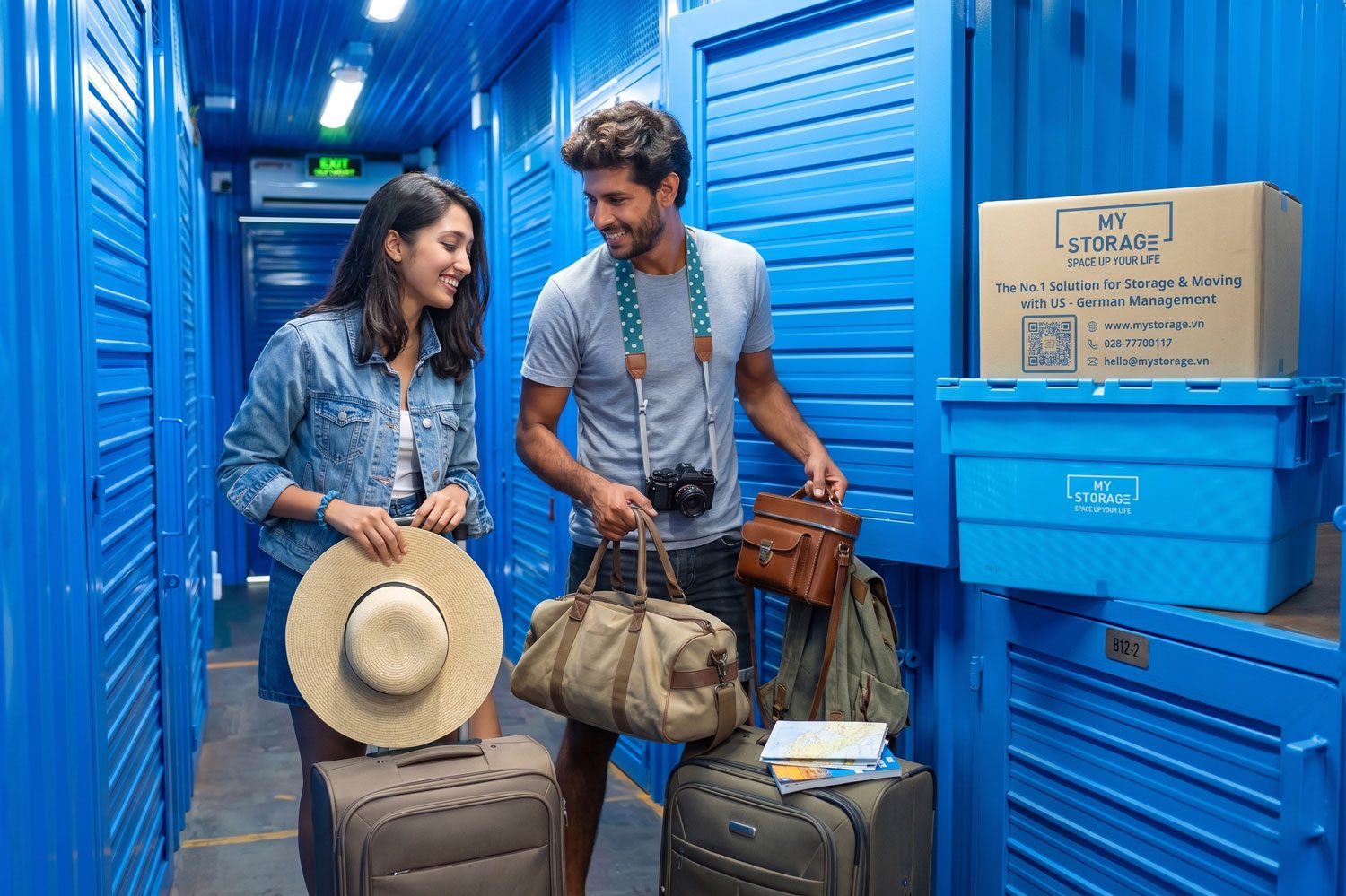
Handbags, leather wallets, and leather products are highly susceptible to mold, peeling, loss of shape, or fading if not stored correctly. For individuals with handbag collections or fashion businesses in need of professional storage solutions, this helps maintain product quality, free up space, and protect valuable assets over the long term.
Why Do Handbags and Leather Goods Need Proper Storage?
Both natural and synthetic leather are organic materials sensitive to their surroundings. High humidity, extreme temperatures, direct light, and physical pressure can all cause irreversible damage to valuable handbags and leather goods, especially in Vietnam’s hot and humid climate.
Humidity Causes Mold and Mildew
Humidity is the most common cause of leather damage in Vietnam, particularly during the rainy season when air humidity frequently exceeds 80–85%. Natural leather has a porous structure that naturally absorbs moisture, creating ideal conditions for mold growth when humidity stays above 65% RH for extended periods.
Mold on leather first appears as small white or grayish-green spots, which then spread and penetrate deep into the leather surface. While it can be wiped clean in the early stages, once mold has deeply embedded into the leather structure, it cannot be fully restored and leaves permanent stains.
High Temperatures Cause Drying and Cracking
Natural leather requires a certain level of moisture to maintain its elasticity and softness. When ambient temperatures exceed 30–35°C for long periods, the natural oils in the leather evaporate quickly, causing the leather to gradually dry out and lose its flexibility.
As a result, the leather surface begins to crack along stress lines, particularly at corners, handles, and bag flaps. For synthetic PU and PVC leather, high temperatures decompose the surface coating much faster than natural leather, manifesting as irreparable peeling in large patches.
Sunlight Causes Fading and Structural Weakening
UV rays in sunlight attack the chemical bonds in leather dyes and surface coatings, causing uneven fading over time. Dark-colored leather bags such as black, brown, and red are particularly prone to visible color changes when exposed to sunlight. In addition to fading, UV rays weaken the leather fiber structure at deeper levels, making the leather brittle and prone to tearing over time even if the outer surface appears fine.
Deformation Due to Stacking and Pressure
Leather has shape memory but is not fully elastic when subjected to prolonged pressure. Handbags that have heavy items stacked on top for long periods will become flattened and lose their original shape. Bags without internal stuffing that are folded or tilted for a long time will warp into that position. Leather straps that are tightly coiled or folded for extended periods gradually lose their softness and become prone to breaking at the fold points.
| Cause | Damage Conditions | Manifestations | Restoration Potential |
|---|---|---|---|
| High humidity | Above 70% RH for long periods | White or green mold spots, musty odor | Early stages can be wiped clean; late stages cannot be fully restored |
| High temperature | Continuous above 30–35°C | Surface cracking, PU leather peeling | Cracking and peeling cannot be fully repaired |
| Direct sunlight | Frequent UV exposure | Uneven fading, brittle leather | Faded color cannot be restored; requires redyeing |
| Pressure and deformation | Long-term stacking or folding | Loss of shape, warping, broken straps | Partial restoration if detected early |

Who Should Rent Storage for Handbags and Leather Goods?
The demand for professional handbag and leather goods storage comes from both individual consumers and fashion businesses. The common factor is that leather items are high-value, environmentally sensitive, and require better preservation conditions than a standard wardrobe can provide.
Storage for Individuals
Owners of numerous high-end handbags or leather items often face the challenge of lacking adequate storage space at home, especially in small urban apartments.
| Target Group | Scenario/Need Arising | Items Typically Stored | Suitable Area |
|---|---|---|---|
| Handbag collectors | Collection exceeds wardrobe capacity; avoiding stacking to prevent losing bag shape | Designer bags (various lines/editions), original boxes, accompanying accessories | 2–5 m² |
| Frequent shoppers | Wardrobe is full but don’t want to discard good old bags; need rotation space | Seasonal bags, special occasion bags, infrequently used leather items | 1–3 m² |
| People moving house | Need temporary storage during transition; preventing damage during the move | Entire collection for 1–3 months during the move | 2–5 m² |
| Long-term business travelers | Reluctant to leave designer bags at an unattended home for long periods | High-value handbags, premium leather goods needing secure storage | 1–2 m² |
Storage for Businesses
Businesses dealing in handbags and leather goods require properly conditioned storage to preserve inventory value, especially for luxury brands and high-unit-value imports.
| Target Group | Scenario/Need Arising | Specific Requirements | Suitable Area |
|---|---|---|---|
| Handbag shops | Seasonal inventory, bulk imports before peak sales | Shelving categorized by product line, humidity-controlled environment | 5–20 m² |
| Luxury resellers | High-value items needing better-than-home care; strict security required | 24/7 CCTV, private locks, moisture-free environment to prevent mold | 3–10 m² |
| Fashion boutiques | Seasonal display rotation; need storage for past collections | Storage near the store, frequent access for restocking | 5–15 m² |
| Accessory stores | Diverse SKUs needing clear zoning; bulk shipments | Shelving categorized by material and product line | 4–12 m² |
| Livestream sellers | Need space for display and order packing; inventory fluctuates by campaign | Sufficient space for livestream setup or on-site packing | 4–10 m² |
Comparison of Individual and Business Needs
| Criteria | Individuals | Businesses |
|---|---|---|
| Primary Goal | Preserving personal assets, freeing up home space | Preserving inventory value, optimizing business operations |
| Access Frequency | When needing to retrieve or store more | Frequently (daily or weekly) |
| Priority Requirements | Good environment, safety, reasonable cost | Standard environment, high security, flexible area for sale seasons |
| Rental Duration | Stable long-term or short-term during moves | Long-term combined with expansion during peak seasons |
| Typical Area | 1–5 m² | 3–20 m² |
Risks of Storing Handbags at Home
Home wardrobes and under-bed spaces create an far-from-ideal environment for leather goods due to lack of ventilation, uncontrolled humidity, and easy access for insects. These risks accumulate silently over months before damage becomes visible on the bag’s surface.
Lack of Ventilation
Fully enclosed wardrobes create a stagnant air environment with no circulation for natural moisture escape. When multiple bags are placed in the same confined space, moisture from the bags themselves and surrounding clothing accumulates over time with no way out.
Wardrobes placed against exterior walls in low-floor apartments also suffer from moisture seeping through the walls, creating an environment significantly more humid than the room air. After a few months, the accumulated humidity inside the wardrobe can be 10–15% higher than outside, enough to trigger mold formation on leather surfaces.
Uncontrolled High Humidity
Vietnam has an average humidity of 75–85% during the rainy season, much higher than the 65% RH threshold recommended for leather preservation. Under these conditions, even ventilated wardrobes struggle to maintain safe humidity levels for leather without specialized dehumidifying equipment.
Leather bags kept in uncontrolled wardrobes during the 6–7 month rainy season in HCMC often show the first signs of mold after 2–3 months, especially genuine leather bags with untreated protective surfaces.
| Humidity Level | Impact on Leather Goods | Timeframe for Issues |
|---|---|---|
| Below 50% RH | Too dry; leather begins to lose elasticity | Several months to years |
| 50–65% RH | Ideal; leather maintains its properties | No issues |
| 65–75% RH | Risk begins; monitoring required | 3–6 months |
| Above 75% RH | High risk; mold grows rapidly | 1–3 months |
Loss of Shape Due to Stacking and Improper Positioning
Handbags without internal stuffing will flatten and lose their shape over time. The leather surface is pressed into the shape of surrounding objects, creating indentations and creases that are difficult to restore. Stacking bags creates uneven pressure on the ones below, which is particularly damaging for structured bags like high-quality cowhide leather that must maintain their form to preserve aesthetic and commercial value.
Dust Accumulation and Surface Alteration
Dust accumulating on leather surfaces is not only unsightly but also combines with moisture to form a stubborn residue that is hard to clean without scratching the surface. For light-colored bags like white, beige, and pale pink, dust buildup causes yellowing and uneven discoloration, especially noticeable at corners and stitching.
Certain types of industrial dust in apartments near main roads or construction sites also contain corrosive particles that damage the leather’s surface coating over time.
Harmful Insects
Cockroaches, woodworms, and other insects can attack leather goods, especially natural leather which contains organic substances that attract them. Cockroaches leave droppings and acid on the leather surface, causing permanent yellow stains. Woodworms bore into the leather layer, creating small holes that permanently damage the structure. Apartments with high humidity or those near kitchens and plumbing have a higher risk of infestation, adding further danger to improperly stored leather items.
Damage to leather goods caused by incorrect storage environments usually doesn’t happen suddenly but accumulates gradually over months. By the time it’s discovered, the damage is often difficult or impossible to fully restore. For handbags valued from several million to tens of millions of VND, investing in a proper storage environment from the start is far more cost-effective than restoration costs or the loss of resale value.

Solutions For Handbag And Leather Goods Shops
Mini storage is a cost-effective solution for growing handbag and leather goods shops. Instead of renting expensive retail space just to have storage room, flexible monthly self-storage helps separate display areas from storage space at significantly lower costs.
Inventory
Handbag and leather inventory is a category that requires the most precise storage conditions due to high value per unit. A humidity-controlled storage unit helps maintain inventory quality while waiting for sale, avoiding damage from leather mold and surface peeling that reduces product value before reaching customers.
| In-store issues | Solutions with mini storage |
|---|---|
| Stacked inventory in glass cabinets loses shape | Tiered shelving in storage; each bag has its own spot without being crushed |
| Display space narrowed by unsold goods | Separate storage from sales space |
| Inventory yellowed or molded due to poor storage | 50–65% RH environment prevents mold and discoloration |
Seasonal Imports
Handbag shops often import large quantities before sale seasons like 11.11, Tet, and Valentine’s to ensure stock availability and better cost prices. Pre-season shipments are usually 3–5 times larger than normal levels and require temporary storage space until sold out.
Flexible monthly storage allows shops to increase area 6–8 weeks before major sales and downsize after inventory returns to normal levels. The cost of additional storage during the 2 peak months is usually much lower than the extra revenue gained from having enough stock during the sale peak.
Livestream Goods
Livestream selling creates a surge of orders in a short time after each broadcast, requiring goods to be organized and ready for fast packing. Mini storage with a fixed packing area helps livestream sellers process orders more efficiently than searching for items in cramped shop cabinets.
| Livestream seller needs | How mini storage meets them |
|---|---|
| Goods organized by product line for easy searching | Clearly zoned shelves, labeled locations |
| Large packing space for surging orders | Folding tables in the unit wide enough to handle multiple orders at once |
| Display items for live sessions | Clean storage units serve as backgrounds or preparation areas |
| Fast order processing speed after live sessions | Goods within reach, find the right SKU in under 1 minute |
New Collections
When importing new collections, shops need space to store old collections while transitioning in-store displays. Instead of rushing clearance sales at low prices or letting old stock crowd new items in limited display space, mini storage creates a buffer zone allowing shops to manage two product lines simultaneously without affecting the in-store shopping experience.
Old collections are stored in the warehouse while the store displays the new ones, then sold gradually through online channels or private sale events. This method helps shops optimize the value of each collection instead of being forced to sell quickly at low prices to make room for new stock.
Packaging And POSM
Paper bags, boxes, tags, ribbons, and high-end packaging materials are often bought in bulk to optimize costs but take up a lot of shop space. POSM storage for brand campaigns like standees, posters, and floor displays needs careful storage for reuse in subsequent rounds.
| Material type | Storage requirements | Risks if not stored correctly |
|---|---|---|
| High-end bag boxes | Dry, not crushed or bent | Dented boxes become unusable, affecting the unboxing experience |
| Paper bags and ribbons | Avoid moisture softening paper, avoid color bleeding | Stained ribbons, soggy paper bags become unusable |
| Tags and labels | Dry and airy, not sticking together | Smudged ink, tags sticking together making them hard to separate |
| POSM and display materials | Stored upright, avoid warping | Warped standees won’t stand straight, wrinkled posters |
Case Study: Online Handbag Shop Optimizes Costs With Mini Storage
Online handbag shops using mini storage to separate storage space from living and working spaces, preserve goods in proper conditions, and flexibly expand before major sales. Storage costs are often much lower than losses from damaged goods or the cost of renting additional premises.
Background
An online handbag shop in HCMC, operating for 2 years on Shopee and TikTok Shop, specializing in mid-range synthetic and genuine leather bags priced at 500,000–3,000,000 VND each. Average 25–35 orders per day in normal months, increasing to 80–120 orders during major sales. Inventory and packaging were taking up the entire second bedroom in a 2-bedroom apartment.
Issues Before Renting Storage
| Issue | Actual loss |
|---|---|
| Bags stacked in closed cabinets | 3–4 genuine leather bags molded every rainy season, loss of 2–5 million VND each time |
| Not enough space to import before 11.11 | Had to import in small batches, losing bulk discounts from suppliers |
| Second bedroom turned into a warehouse | No workspace, processing orders on the dining table took extra cleanup time |
| Packaging boxes yellowed and soggy | Had to reorder packaging earlier than planned, increasing costs by 15–20% |
| Slow packing due to cramped space | Lost an extra 4–6 minutes per order, totaling 2–3 hours daily during peaks |
Solution: Renting a 5m² Storage Unit at MyStorage
Phase 1 — Normal months
Rented a 5m² unit for approximately 950,000 VND per month. All inventory, packaging, and packing materials moved into storage. Arranged zoned shelving by bag line and a folding table as a fixed packing area.
Phase 2 — Before 11.11 sale
Expanded to an adjacent 3m² unit, totaling 8m² for 2 months before and during the sale. Imported a large batch at once, receiving an extra 10% discount from the supplier for ordering sufficient quantity. Scaled back to 5m² after inventory returned to normal levels.
Results After 6 Months of Storage Rental
| Metric | Before renting storage | After renting storage |
|---|---|---|
| Damaged goods due to mold | 3–4 bags per rainy season, loss of 2–5 million VND | Virtually eliminated thanks to 50–65% RH humidity |
| Import cost price | Multiple small batches, no bulk discount | Reduced by 8–10% thanks to one-time bulk imports |
| Packing speed | 8–10 minutes per order | 3–4 minutes per order thanks to fixed packing area |
| Apartment space | Second bedroom unusable | Became a formal workspace |
| 11.11 Sales | Out of stock by day four | Maintained sufficient stock throughout the 7-day sale |
| Storage cost | None, but losses from damaged goods and inefficiency | 950,000 VND per month, lower than losses from damaged goods |
Cost and Benefit Table
| Item | Monthly cost or savings |
|---|---|
| 5m² storage rental cost | 950,000 VND |
| Savings from undamaged goods | 400,000–800,000 VND on average |
| Savings from bulk import cost price | 1,500,000–2,500,000 VND based on sales |
| Packing time savings | 2–3 hours per day, estimated value |
| Value of freed-up bedroom space | 1,500,000–2,500,000 VND based on rental unit price |
After 6 months, the shop owner realized the true cost of not having a warehouse was not zero, but a combination of periodic damaged goods, lost bulk discounts, inefficient working time, and occupied living space. When accounting for all these hidden costs, mini storage is not an extra expense but a profitable investment from the very first month.
FAQ
Can genuine leather bags be stored in a self-storage unit?
Yes, if the facility maintains 50–65% RH humidity and 20–26°C temperature. These are ideal conditions for natural leather, significantly better than home wardrobes which typically fluctuate between 75–85% RH during Vietnam’s rainy season.
How should bags be prepared before going into storage?
Wipe the surface clean with a soft dry cloth, stuff the interior with tissue paper or bubble wrap to maintain shape, place in a breathable dust bag or original box, and add a silica gel packet. Never use sealed plastic bags as they trap moisture inside.
Is mini storage suitable for luxury bag resellers?
Very suitable as designer bags carry high per-unit value and require stricter preservation than regular bags. Storage with 24/7 cameras, individual PIN locks, and humidity control protects both security and quality, maintaining the resale value of each piece.
Do PU synthetic leather bags need the same storage conditions as genuine leather?
Similar humidity and temperature conditions apply, but PU leather is even more sensitive to high heat. Temperatures above 30°C cause PU coating to peel significantly faster than genuine leather. Storage in a cool, dry environment extends PU leather lifespan from 2–3 years to 5 years or more.
What unit size should a bag shop rent?
A 3–5 m² unit suits shops processing 25–50 orders daily, accommodating regular inventory and a small packing area. Before major sales events, expanding by 2–3 m² provides enough space for bulk stock intake and handling surging orders without slowing down packing speed.
Do premium boxes and packaging materials require special storage?
Premium cartons and paper bags are sensitive to humidity causing softening and yellowing. Store boxes upright rather than flat to prevent warping, avoid stacking too many layers, and keep in humidity-controlled storage to maintain packaging quality until use.
Can storage units be used for packing orders and livestreaming?
Yes, if the unit is 4–6 m² or larger to accommodate a work table and basic livestream setup. Many shops adopt this approach as the unit serves as both storage and a small studio, saving the cost of renting separate spaces for each purpose.
Can lightly mouldy bags be saved?
Light surface mould in early stages can be treated by gently wiping with a cloth lightly dampened with diluted white vinegar, air drying naturally, then applying specialist leather conditioner. Mould that has penetrated deep into the leather structure cannot be fully restored. Prevention through proper storage conditions is always more effective than treatment after damage occurs.
Is storage rental cost worth the preservation benefit?
Worth it when total stored value exceeds 20–30 times the monthly storage cost. A 3m² unit at approximately 600,000–900,000 VND per month protects a bag inventory worth 20–50 million VND from mould, peeling, and deformation risks, representing a very high return on the cost invested.
What preparation is needed before storing bags at MyStorage?
Clean and dry all bags thoroughly before bringing them in, prepare individual dust bags or boxes for each piece, and place silica gel in every box. Contact MyStorage to select the right unit size and begin storing on the same day the agreement is signed without complicated procedures.