Blog

  • Seasonal Warehousing: Flexible Storage for Tet, Sales & Festivals

    Seasonal Warehousing: Flexible Storage for Tet, Sales & Festivals

    Many businesses only have storage needs during peak seasons like Tet, Black Friday, 11.11, 12.12, or festivals. Instead of long-term warehouse rental or expanding premises, seasonal warehouse rental solutions help businesses flexibly increase storage space in the short term, optimize costs, and easily scale up or down according to business needs.

    What Is Seasonal Warehousing?

    Seasonal warehousing is a flexible storage solution that allows businesses to increase warehouse space during peak periods and scale back after the season ends, without needing to invest in fixed warehousing. This is the optimal way to manage storage costs based on actual demand instead of paying for unused space year-round.

    Monthly Rental — Flexible According to Business Cycles

    Unlike traditional warehouse leases that require a 1–3 year commitment, seasonal warehousing allows businesses to rent on a month-to-month basis and adjust the area to fit actual production and sales schedules. A fashion shop can rent a larger warehouse 2 months before the autumn-winter season and downsize after the clearance sale ends.

    A beverage distributor can expand their warehouse before summer and reduce it to a minimum during cooler months. This flexibility shifts warehouse costs from fixed to variable based on revenue, which is more suitable for highly seasonal business models.

    Short-Term Rental — Meeting Sudden Peak Demand

    Some businesses need a warehouse for a very short period, from 2–6 weeks, to handle a specific large shipment that their current warehouse cannot accommodate. Importing goods before Tet, preparing stock for 11.11, or receiving a large-scale imported shipment are situations that require short-term warehousing.

    Instead of letting goods overflow into the office or incurring multiple logistics transportation costs, renting an additional storage unit for a short time solves the problem at a low cost without disrupting operations.

    Expanding Or Scaling Down Area Based On Actual Needs

    This is the feature that distinguishes seasonal warehousing from all other forms of traditional warehouse rental. Businesses are not locked into a fixed area but can adjust month by month based on actual inventory data.

    Stage Action Reason
    2–3 months before peak season Increase warehouse area by 50–200% Import large quantities to get good cost prices and be ready to fulfill orders quickly
    During peak season Maintain large area Continuous shipping, need space for operations and packaging
    After peak season Scale down to base level Inventory decreases, no need to pay for empty space
    Off-peak Keep at minimum level Only store essential goods and prepare for the next season

    No Need For Fixed Warehouse Investment

    Building or renting a long-term warehouse to match peak inventory levels requires significant capital investment and creates wasted costs for most of the year when inventory is lower. Seasonal warehousing completely eliminates this problem.

    Category Fixed Warehouse Seasonal Warehouse
    Initial investment capital High, long-term commitment None, storage monthly rental
    Off-peak month costs Same as peak months even if not fully used Only pay for the area actually used
    Risk when business changes High, bound by contract Low, adjust or stop renting at any time
    Sudden expansion capability Limited by the signed area Flexible, increase immediately upon demand depending on supply
    Suitable for Businesses with stable year-round inventory Highly seasonal businesses

    Why Do Businesses Need Seasonal Warehousing?

    Most retail and distribution businesses have inventory that fluctuates cyclically throughout the year. When sudden demand exceeds the capacity of the current warehouse, businesses need flexible supplementary storage solutions instead of investing in fixed space just to serve a few peak months.

    • Year-End Peak: The period from October to February of the following year is the largest retail peak of the year in Vietnam, including sales events like 10.10, 11.11, 12.12, Christmas, and Lunar New Year. Order volume during this period usually increases by 200–500% compared to normal months, requiring inventory several times larger to respond in time. Businesses that do not prepare enough warehouse space often face out-of-stock situations mid-sale, losing revenue to competitors who were better prepared. Seasonal warehousing allows for increased capacity at the right time without long-term commitments.
    • Importing Goods Before Sales Season: Many businesses choose to import large quantities before the sales season to optimize cost prices and ensure a stable supply. Suppliers often give 10–25% better prices when ordering in bulk, but this means storing larger inventory for a longer period before selling. Fashion businesses importing autumn-winter collections from July–August, Tet goods distributors importing from October, and cosmetic shops stocking up before 11.11 all need temporary storage space exceeding their daily warehouse capacity.
    • Running Promotional Programs: Flash sales, promotional combos, and gift-with-purchase programs require preparing large quantities of goods simultaneously in a short time. A 24-hour flash sale can consume an amount of goods equal to an entire normal month, requiring ready inventory to process all orders within a narrow timeframe. Preparing gifts and combo sets also requires separate space for packaging and sorting, often significantly more than standard packaging processes.
    • Stockpiling Imported Goods: Imported goods often arrive in large batches due to container shipping costs, creating a sudden inventory spike immediately after customs clearance. Businesses importing 20–40 foot containers can receive 5,000–20,000 units of goods at once, needing 3–10 times more storage space than normal until the goods are distributed to the market. Seasonal imported shipments like winter warmers, summer swimwear, or year-end electronics all create a clear need for seasonal warehousing that can be planned in advance.
    • Waiting for Distribution: Goods sometimes need to be stored temporarily while waiting for distribution to agents, branches, or retail points. This could be goods that have finished production but have not reached the launch date, goods waiting for customs clearance paperwork, goods needing quality inspection before distribution, or goods concentrated at one point before being divided into multiple channels. This waiting period is usually 2–8 weeks and requires temporary storage space rather than a long-term solution.
    Situation Time supplementary warehouse is needed Typical area increase
    Preparing for 11.11 and 12.12 sales September–December 100–300% increase compared to normal
    Importing Lunar New Year goods October to January 150–400% increase
    Receiving imported containers 4–8 weeks after clearance 200–500% temporary increase
    Running large flash sales 2–4 weeks before and during the event 50–200% increase
    Goods waiting for distribution 2–8 weeks 30–150% increase depending on batch size

    kho chứa quần áo bán hàng sale

    Common Peak Seasons Requiring Warehouse Rentals

    A business’s seasonal warehousing schedule typically aligns with major consumption periods throughout the year. Understanding this cycle in advance helps businesses plan for additional warehouse rentals at the right time, avoiding storage shortages during the most critical weeks.

    Lunar New Year (Tet)

    Tet is the longest peak season with the most diverse range of goods in Vietnam. The demand for stockpiling Tet products usually begins in the 10th lunar month and lasts until the end of the 12th lunar month, creating a need for extra storage for 2–3 months.

    Tet Product Groups Storage Characteristics Storage Duration Needed
    Confectionery and Jams Requires a dry environment to prevent melting and mold November to January (Solar calendar)
    Gift Boxes Bulky, requires shelving for sorting by set and customer December to January
    Tet Decorations Fragile, requires careful packaging and light shelving November to post-Tet
    Alcohol and Beverages Heavy, requires high load-bearing floors and sturdy racks December to January
    Tet Clothing and Fashion Must avoid humidity and direct sunlight November to January

    Black Friday

    Black Friday has been introduced to Vietnam and is increasingly promoted by e-commerce platforms in late November. The characteristic of Black Friday is its short duration but high intensity, usually lasting only one week, yet order volumes can surge by 300–500% compared to a normal week.

    Businesses need to prepare large inventories 2–3 weeks in advance and require more packing space to handle the rush of orders. Additional warehouse space is needed from early to late November, typically the shortest peak season but requiring the most significant spike in floor area.

    Double Day: 9.9 — 10.10 — 11.11 — 12.12

    Four major sales events on e-commerce platforms create four consecutive peaks in warehouse demand from September to December, with almost no break long enough to offload inventory.

    Sale Event Warehouse Prep Time Characteristics
    9.9 From August The first sale in the series, usually medium-scale
    10.10 From mid-September Immediately after 9.9; new stock arrives before old stock clears
    11.11 From Sept–Oct The largest of the year; many shops increase inventory 3–5 times
    12.12 From November Follows 11.11; requires clearing old stock while preparing new goods

    Businesses selling on multiple platforms during this period often require continuous additional storage from August to December, with space adjusted according to each sale event.

    Mid-Autumn Festival

    Mid-Autumn is the shortest but most concentrated season of the year, with a sales cycle of only about 6–8 weeks. Mooncakes, lanterns, children’s toys, and gifts all need to be imported early and stored before demand peaks.

    A crucial characteristic is that mooncakes have a short shelf life, requiring strict inventory management based on the FIFO (First-In, First-Out) principle and a standard storage environment. Warehouse space is needed from the 7th to the end of the 9th lunar month, after which it is scaled down or fully vacated.

    Christmas

    Christmas in Vietnam is no longer just a religious holiday but has become a widespread season for shopping, decorations, and gifts. Christmas ornaments, gifts, toys, and specialty foods create warehouse demand from November until December 25th.

    Notably, Christmas falls right after 12.12 and just before the Solar New Year, creating a continuous peak period with almost no break from late November through January. Businesses selling both Christmas and Tet products need to plan for additional storage throughout this entire extended period.

    Back-to-School Season

    The back-to-school season in August–September generates high demand for school uniforms, textbooks, stationery, and backpacks. This season is characterized by a very short cycle of about 4–6 weeks but with high intensity.

    Distributors storing textbooks, uniforms, and school supplies need warehouse space from June–July for importing and sorting, peaking in August and declining rapidly after the school year starts. This product group has the clearest short-term storage demand of the year, making it ideal for monthly rental models without long-term commitments.

    Summer Travel Season

    The summer travel season from May to August drives demand for swimwear, sunscreen, travel accessories, and outdoor equipment. Businesses dealing in these categories need to stock up from March–April to be ready for early summer demand.

    Summer Product Groups Storage Timing Storage Characteristics
    Swimwear and Beach Accessories March–August Avoid humidity and direct sunlight
    Sunscreen and Summer Cosmetics March–July Requires temperatures below 30°C to prevent separation
    Outdoor and Camping Gear April–August Bulky, requires high ceilings and wide aisles
    Summer Food and Beverages April–September Temperature control needed for sensitive items

    Kho tự quản có máy lạnh để bảo quản mỹ phẩm

    Goods and Target Audiences Suitable for Seasonal Warehousing

    Seasonal warehousing is ideal for any business with inventory that fluctuates significantly throughout the year. From e-commerce sellers to distributors and marketing agencies, the common need is to rapidly increase capacity before peak periods and scale back after the season ends without long-term commitments.

    Target Audience Commonly Stored Goods Peak Season Typical Area
    Shopee, TikTok, Lazada Sellers Cosmetics, fashion, household goods, accessories 9.9, 11.11, 12.12, Tet 3–10 m² additional
    Distributors FMCG, packaged food, consumer goods Tet, summer, year-end 10–50 m² additional
    Marketing Agencies POSM, display materials, campaign samples According to campaign schedules 5–20 m² per project
    FMCG Enterprises Food, beverages, fast-moving consumer goods Tet, summer, major promotions 20–100 m² additional
    Event Companies Backdrops, furniture, equipment, decorative materials September to January 15–50 m² additional
    Retail Chains Clothing, footwear, toys, gifts Collection changes, system-wide sales 10–40 m² transit

    Storage Requirements by Product Group

    Product Group Environmental Requirements Risks of Improper Storage
    Cosmetics & skincare Below 28°C, 50–65% RH humidity Phase separation, discoloration, active ingredient degradation
    Packaged food & confectionery Dry, shelf-life control Mold, loss of flavor, expiration before sale
    Clothing & footwear Avoid moisture, no direct sunlight Fabric mold, fading, deformation
    Toys & decorations Moisture-proof, avoid heavy stacking Breakage, deformation, packaging damage
    POSM & printed materials Store upright, avoid warping Bending, wrinkling, unusable
    Corporate gifts Keep original packaging, avoid dust Damaged packaging affecting brand image

    General principle when assessing seasonal warehouse needs: if peak inventory exceeds 150% of normal levels and lasts for more than 4 weeks, renting additional seasonal storage is usually more cost-effective than investing in permanent warehouse expansion or allowing goods to overflow into offices and workspaces.

    Giải Pháp Lưu Kho Phụ Kiện Điện Thoại Cho Shop Online

    Case Study: Online Shop Doubles 11.11 Sales Thanks to Seasonal Warehouse Rental

    Many online shops only experience high warehousing needs during mega sale events. Instead of letting stockouts or slow packaging lead to lost orders, renting additional temporary storage helps shops proactively stock enough inventory, process orders quickly, and maintain stable ratings during the most critical period of the year.

    An online cosmetics shop in HCMC, operating for 3 years on Shopee and TikTok Shop, averages 40–60 orders per day during normal months. Their current cosmetics storage space is a second bedroom in an apartment, measuring about 12m², which is sufficient for daily operations but inadequate for peak sale periods.

    Issues Before Renting Additional Storage

    Issue Actual Impact
    Insufficient space for bulk inventory Had to restock in small batches, losing the cost advantage of placing large orders with suppliers
    Inventory overflowing throughout the house Bedroom, living room, and kitchen were all occupied as temporary storage for 2–3 weeks before the sale
    Slow packaging during order surges No fixed packing area, taking an extra 3–5 minutes per order to find items and clear space
    Stockouts mid-sale Last year, items ran out by the third day of 11.11 despite restock efforts, losing an estimated 30–40% in potential revenue
    Delivery ratings affected Slow packaging led to late deliveries, causing ratings to drop right when they needed to be at their best

    Solution: Renting Additional Storage 2 Months Before 11.11

    Step 1 — Inventory planning based on previous year’s data
    Based on last year’s 11.11 sales and a 100% growth target, the shop estimated needing 3 times the normal inventory levels for the 3 weeks leading up to and during the sale. The total volume of goods to be stored exceeded the bedroom’s capacity by about 4–5 times.

    Step 2 — Renting a 6m² self-storage unit from early October
    A 6m² storage unit at MyStorage was rented starting October 1st, enough to hold the entire peak inventory including serums, moisturizers, and special 11.11 gift sets. The 2-month rental cost was significantly lower than the projected additional revenue from having sufficient stock to sell.

    Step 3 — Setting up a fixed packing area within the storage unit
    A folding table and SKU-based sorting shelves were arranged in the unit, creating the shop’s first-ever dedicated packing area. Goods were clearly zoned by product line with full labeling, reducing the time to find items for each order to under 1 minute.

    Step 4 — Bulk ordering in a single batch
    Instead of multiple small restocks, the shop placed one large order before 11.11 and received an additional 8% discount from the supplier compared to regular prices. All imported goods were stored at MyStorage, leaving the living space unaffected.

    Results Achieved

    Metric Before renting storage After renting storage
    11.11 Sales X VND 2X VND, 100% increase
    Packaging speed 8–10 minutes per order due to slow item retrieval 3–4 minutes per order thanks to clear zoning
    Stockout status Out of stock by the third day of the sale Maintained sufficient stock throughout the 7-day sale
    Delivery rating Decreased due to late deliveries during peak Stable thanks to faster order processing
    Living space House occupied as storage for 3 weeks House completely unaffected
    Cost of goods sold Higher due to multiple small restocks Reduced by 8% thanks to a single bulk order
    2-month storage cost None, but suffered losses from stockouts Much lower than the additional revenue gained

    What the shop realized after 11.11 was not whether storage was expensive or cheap, but that the cost of not having enough storage was far greater than the cost of renting storage. Losing orders mid-sale due to stockouts, late deliveries from slow packaging, and being unable to place bulk orders due to lack of space were all hidden costs the shop hadn’t considered when deciding to save on warehousing expenses.

    FAQ

    How is seasonal storage different from regular long-term warehouse rental?

    Seasonal storage allows monthly rental, flexible size adjustments, and no long-term commitment. Standard warehouse leases typically require 1–3 year contracts with fixed space, better suited to consistent year-round inventory rather than demand that fluctuates by season.

    How far in advance should additional storage be rented before a sale?

    Rent at least 4–6 weeks ahead to allow enough time for stock intake, sorting, and zoning setup before orders surge. For 11.11 and Tết, starting from September–October is advisable as many businesses are searching for storage simultaneously and availability may be limited.

    How much additional storage space is needed for a major sale?

    Calculate by estimating how many times peak inventory exceeds normal levels then multiply by current storage space used. If stock triples and current storage is 5m², an additional 10m² is needed. Add 15–20% buffer space for packing area and walkways.

    Do small shops processing fewer than 50 orders daily need storage?

    Yes, if orders increase over 150% during sale periods and current space cannot accommodate the volume. A small 2–3m² unit at 400,000–700,000 VND per month is usually sufficient for small shops during peak season, and this cost is typically lower than losses from running out of stock or a single day of late deliveries.

    Can self-storage units be used for order packing?

    Yes, if the unit is large enough to set up a work table and packing materials. Many sellers choose 4–6m² units for combined storage and on-site packing, particularly effective during sale seasons when hundreds of orders need processing daily without transporting stock home.

    Can cosmetics and packaged food be stored in self-storage units?

    Yes, if the facility maintains temperatures below 28°C and humidity at 50–65% RH. Cosmetics with active ingredients and packaged food are sensitive to high temperatures and humidity fluctuations, so confirm environmental standards with the storage provider before signing.

    What should be done with leftover stock after a sale ends?

    Three common approaches: keep in storage and continue selling at regular prices, run a clearance promotion to move inventory quickly before returning the unit, or downsize to a minimal unit and sell down gradually over the following month. Plan for post-sale inventory management at the same time as planning stock intake for the sale.

    Does seasonal storage rental require a large deposit?

    Monthly self-storage typically requires a 1–2 month deposit, significantly lower than traditional commercial warehouses that usually require 3–6 months. The deposit is returned when vacating in accordance with contract terms.

    How can inventory be managed effectively when stock is split across two locations?

    Use a simple spreadsheet or inventory management tool to track quantities at each location. Set clear rules about which items stay at the storage unit versus at home, and update immediately after every intake or dispatch to prevent overselling and confusion during high-volume order processing.

    What preparation is needed before renting seasonal storage at MyStorage?

    Estimate total peak inventory volume to select the right unit size. Contact MyStorage 4–6 weeks before the sale to ensure a suitable unit is available. Prepare shelving and category labels to establish a zoning system from the very first day stock is moved into the unit.
  • A 2-Bedroom Apartment Can Still Be Spacious With Proper Storage

    A 2-Bedroom Apartment Can Still Be Spacious With Proper Storage

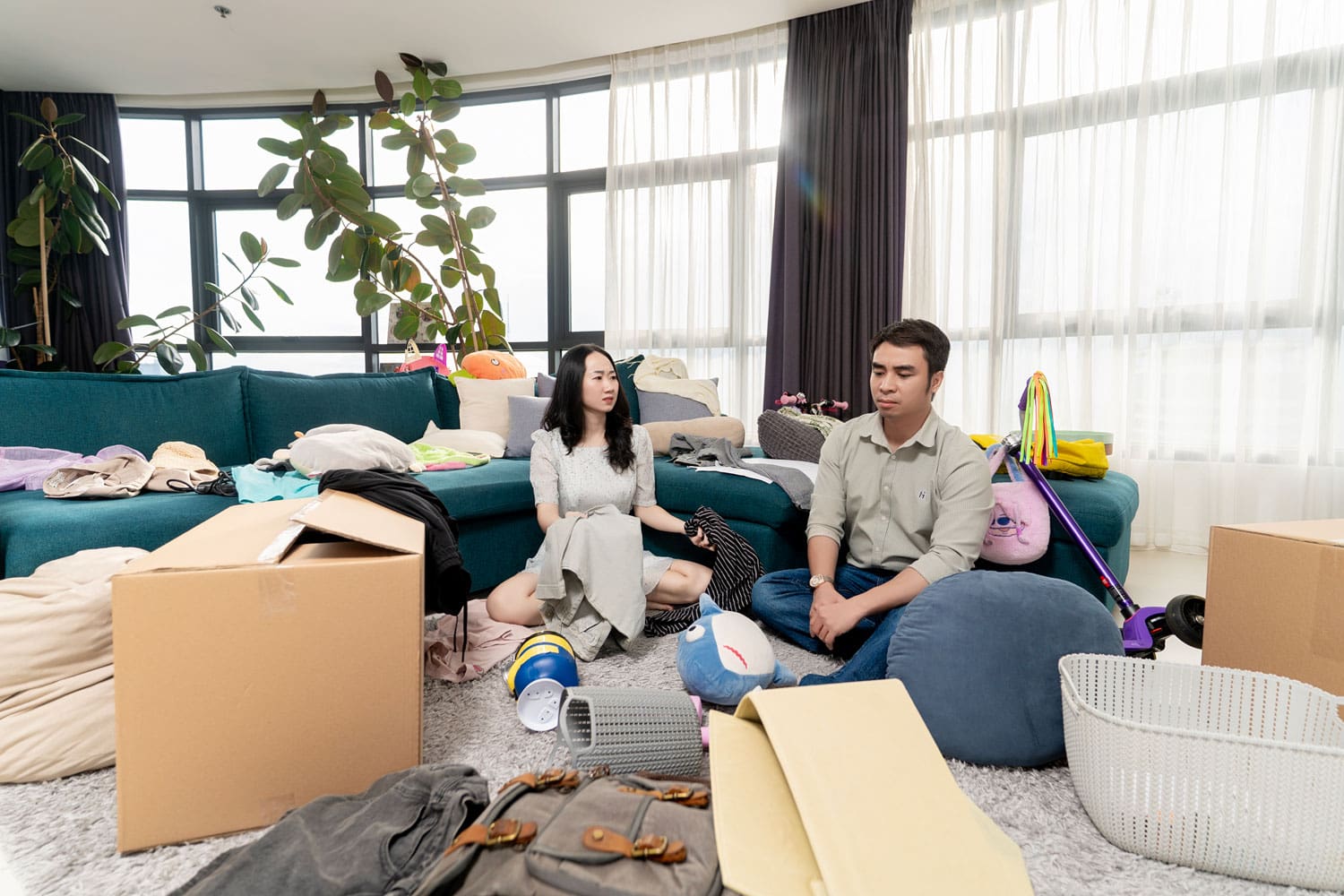
    A 2-bedroom apartment can be perfectly spacious and tidy if you know how to categorize, organize, and store items reasonably. Instead of buying more cabinets or cluttering the house, many families choose to keep daily essentials in the apartment and store seasonal items, spare furniture, or rarely used belongings in mini storage units to optimize their living space.

    Why Do 2-Bedroom Apartments Quickly Become Cramped?

    A 2-bedroom apartment isn’t cramped because of its original design, but because the rate of accumulating belongings far exceeds the rate of decluttering. Six main causes, from changes in family members to online shopping habits, accumulate gradually over the years until every empty space is occupied.

    • Increasing Family Size: A 2-bedroom apartment is typically bought or rented for two people or newlyweds, with a storage system designed just for that scale. When children arrive, grandparents move in, or relatives stay long-term, the volume of belongings grows exponentially while the floor area and shelving systems remain unchanged. A family growing from 2 to 4 members doesn’t just double their clothing; they also accumulate entirely new items like cribs, strollers, and high chairs that the original apartment layout never accounted for.
    • Ever-Growing Baby Gear: Children are the fastest source of clutter in any household because their needs change constantly through each developmental stage. Clothes for every age milestone, age-appropriate toys, increasing school supplies, and support equipment like walkers, high chairs, and cribs take up significant space. Families with 1–2 children under 6 in a 2-bedroom apartment often find that kids’ items occupy 25–35% of the total storage area, equivalent to 8–12 m² in a 45–60m² unit.
    • Seasonal Clothing: Winter blankets, heavy coats, summer swimwear, and holiday outfits are items used for only 2–3 months a year but occupy closet space year-round. In a 2-bedroom apartment with 2–4 members, the family’s total seasonal gear can easily fill 1–2 medium-sized wardrobes, especially when each member has specific outfits for every season without a proper rotation system.
    • Old Electronics: Old phones, laptops, TVs, and household appliances are often kept after upgrades because of the mindset that they “might still work” or uncertainty about how to dispose of them. Charging cables, original boxes, and accessories accumulate with every upgrade, creating a drawer or cabinet full of unused electronics that have yet to be cleared out.
    • Rarely Used Furniture: Spare chairs for guests, extra stools, or decorative shelves bought on impulse that don’t fit the actual space are often pushed into corners or onto the balcony after a short period of use. In a 2-bedroom apartment with limited space, every piece of furniture not used regularly takes up a significant portion of the already scarce floor area.
    • Frequent Online Shopping: The speed of shopping via e-commerce platforms and flash sales causes many families to receive goods faster than they can use or discard old ones. Major sales events throughout the year often lead to a sudden surge in incoming items without a corresponding organization plan, putting immediate pressure on the apartment’s space in the following weeks.

    A 2-bedroom apartment doesn’t lack living space; it lacks storage space that matches the family’s actual growth rate. The solution isn’t necessarily moving to a larger apartment, but rather separating rarely used items from the main living area.

    Vì Sao Căn Hộ 2PN Nhanh Chóng Trở Nên Chật Chội?

    Storage Principles to Keep Your Apartment Spacious

    A spacious apartment is not the result of owning fewer things, but rather the result of placing the right items in the right spots based on their frequency of use. The following five principles help optimize space without having to give up the things you truly need.

    Only Keep Daily Essentials Inside the Apartment

    The most core principle: your main living space should only contain items used at least 1–2 times per week. Daily essentials such as work clothes, primary kitchen utensils, personal toiletries, and work equipment should be placed in the most accessible locations within the apartment.

    Everything else, even if it still has value, should be moved out of daily sight so that your living space isn’t overwhelmed both visually and physically.

    Categorize Items by Frequency of Use

    Instead of categorizing by type like clothing, electronics, or kitchenware, sorting by frequency of use helps you decide on the most accurate storage locations.

    Frequency Group Definition Suitable Storage Location
    Daily Used at least 3–4 times per week Most accessible shelves and drawers within reach
    Weekly Used 1–2 times per week Mid-level shelves, no need for a central position
    Monthly Used less than 4 times per month High shelves, under the bed, or deep inside cabinets
    Seasonal Used less than 3 months per year Mini storage outside the apartment or high-up boxes
    Rarely used Keepsakes, documents, spare items Self-storage, without taking up apartment space

    Categorizing this way ensures every item has a logical spot based on actual usage, rather than being randomly arranged by emotion or old habits.

    Utilize Vertical Space

    2-bedroom apartments often have limited floor area, but ceiling heights of 2.7–3m or more are frequently underutilized. Installing floating shelves from 1.8m up to the ceiling significantly increases storage capacity without taking up extra floor space.

    Built-in wardrobes extending to the ceiling take advantage of the full height instead of stopping at the standard 2m mark. Hooks and hanging racks behind doors, kitchen cabinets, and in bathrooms are often overlooked spots that contribute significantly to the apartment’s total storage capacity.

    Seasonal Storage

    Seasonal items should be completely separated from the daily storage system and moved into a rotation cycle based on the time of year.

    Season Items to take out Items to put away
    Before Summer Swimwear, fans, sun protection gear Thick blankets, winter coats
    Before Rainy Season Raincoats, boots, dehumidifiers Unnecessary dry season items
    Before Tet Decorations, festive outfits Temporarily less important daily items
    After Tet Daily items return Tet decorations, excess gifts

    Storing seasonal items in self-storage units of 1–2 m² completely frees up 1–2 wardrobes in the apartment, while providing better preservation thanks to a climate-controlled environment compared to home closets.

    Don’t Turn the Bedroom Into a Storage Room

    Bedrooms, especially the second bedroom in a 2-bedroom apartment, often turn into a dumping ground for items with nowhere else to go: suitcases, outgrown baby clothes, unopened cardboard boxes, and spare furniture. When a bedroom loses its primary function of rest, the sleep quality and daily life of the members using that room are directly affected.

    The principle to apply: bedrooms should only contain furniture for sleep and personal activities, not long-term storage. If the second bedroom is gradually turning into a warehouse, it is a clear sign that the apartment needs extra external storage space, rather than sacrificing a functional room to solve a temporary problem.

    Nguyên Tắc Lưu Trữ Giúp Căn Hộ Luôn Rộng Rãi

    Items You Should Move Out of Your Apartment

    The ten categories of items below are not needed daily but still hold functional or sentimental value, making them ideal for storage in a mini self-storage unit instead of occupying primary living space in a 2-bedroom apartment.

    Item Category Frequency of Use Space Occupied at Home Reason to Move to Storage
    Winter clothing 2–3 months per year 1–2 large closet shelves Heavy blankets and coats take up space year-round despite only being used for a short season
    Suitcases A few times per year 0.5–1 m² of floor space Bulky and difficult to tuck away in closets, often left in the middle of rooms or under beds
    Christmas decorations 1 month per year 1–2 cardboard boxes Trees, decorative lights, and ornaments are only used during short holiday periods
    Occasional decorations A few times per year 1–3 cardboard boxes Tet decorations, birthday supplies, and family event banners are rarely used but hard to discard
    Spare furniture Rarely or for special occasions 1–3 m² of floor space Extra chairs and folding tables for guests occupy room corners all year round
    Sports equipment Seasonal or irregular 0.5–1.5 m² Rackets, golf clubs, and large gym equipment are hard to integrate into small living spaces
    Bicycles A few times per week to a few times per year 1–1.5 m² Occupy significant floor space and are difficult to store neatly in small apartments
    Books rarely re-read Rarely 2–4 m² of wall space Accumulate quickly over the years, taking up entire bookshelves and spilling onto the floor
    Outgrown children’s items No longer used at the current stage 2–4 m² Clothes and toys from various age stages accumulate rapidly
    Old records and documents Rarely consulted but must be kept 0.5–1 m² Legal papers and old contracts need to be stored but do not require frequent access
    • Winter Clothing: Heavy blankets, puffer jackets, and thermal wear are only necessary during the 2–3 coldest months but occupy 1–2 closet shelves for the remaining 9 months. Packing them in vacuum bags or lidded boxes and sending them to mini storage immediately frees up the most vital closet space in the apartment.
    • Suitcases: A family set of 3–4 suitcases often lacks a fixed spot in a 2-bedroom apartment, leading to them being left in bedrooms or stacked in corners. Sending suitcases to storage and retrieving them before each trip is the most effective way to handle this group of items.
    • Christmas and Occasional Decorations: Holiday decorations share the common trait of high sentimental value but very short usage periods. Instead of letting them occupy closet corners or under-bed space year-round, storing them and taking them out only when needed preserves their decorative value without affecting daily living space.
    • Spare Furniture: Extra chairs, folding tables, and furniture used only when guests visit are often pushed into living room corners or onto balconies, reducing the spacious feel of the entire apartment. Storing furniture in a warehouse and bringing it back when hosting guests is a more practical solution than letting it occupy daily usable area.
    • Sports Equipment and Bicycles: Bulky sports gear like bicycles, golf clubs, or large gym equipment is very difficult to integrate harmoniously into a small apartment’s living space. A mini storage unit with sufficient ceiling height and convenient access is a much more suitable storage location than a bedroom or a common hallway.
    • Books and Records: Books that are rarely re-read and paper documents that must be kept by law but are seldom consulted are the two groups that accumulate most silently over time. Mini storage with a climate-controlled environment provides better preservation than home storage, which is particularly important for legal documents that need to remain in original condition for many years.
    • Outgrown Children’s Items: For families planning to have more children or wishing to pass items down to relatives, storing children’s gear by size in mini storage is a more sensible choice than keeping it at home where it takes up space or donating it in haste only to have to buy it again later.

    Real-Life Example: A Family of 4 Living Comfortably in a 2-Bedroom Apartment

    A simple change in storage habits can transform a cramped 2-bedroom apartment into a comfortable living space for a family of four without the need for renovation or moving. The case study below illustrates a real-life transformation from an overcrowded state to a fully optimized space.

    Status Before the Change

    A family of four, including parents and two young children, lives in a 55m² 2-bedroom apartment in Ho Chi Minh City. The second bedroom, originally intended as an office, gradually turned into a storage room after three years of living there.

    Their accumulated belongings included 3 suitcases of various sizes, 8 general storage boxes containing books, old electronics, and miscellaneous items, baby gear from infancy to the present, a large stroller no longer in regular use, and numerous seasonal outfits for all four members.

    Area Status before the change
    Second bedroom Almost unusable, containing 8 storage boxes and a stroller occupying 70% of the room area
    Balcony Cluttered with suitcases, unused children’s items, and objects waiting to be processed
    Main closet Overloaded with seasonal clothes for the whole family, making it hard to find daily outfits
    Living room One corner occupied by items with no designated place

    The Transformation Process

    • Step 1 — Keep only daily-use items
      The family reviewed all belongings and categorized them by actual frequency of use. Daily items such as work clothes, children’s school supplies, and essential kitchenware were kept in accessible locations within the apartment.
    • Step 2 — Move rarely used items to mini storage
      Suitcases, 6 out of 8 general storage boxes, outgrown baby gear, and the large stroller were moved to a 4 m² mini storage unit at MyStorage. Seasonal clothing for the entire family was also packed and stored, keeping only the current season’s outfits in the closet.
    • Step 3 — Donate old clothes and items to charity
      During the sorting process, the family discovered many children’s and adult clothes that were still in good condition but no longer needed or planned to be kept. These items were taken to charity bins instead of being kept or discarded, both freeing up space and creating value for those in need.

    Results After the Change

    Area Before After
    Second bedroom Storage room, unusable Became a functional home office for both parents
    Balcony Cluttered with suitcases and baby gear Completely clear, with space for evening relaxation
    Main closet Overloaded, hard to find items 35–40% more empty space, easy to find and retrieve daily clothes
    Living room A corner occupied by items waiting to be processed Completely tidy, providing a larger play area for the children
    Monthly cost No storage costs but low quality of life Approximately 800,000–1,000,000 VND per month for a 4 m² storage unit

    Upon completion, the family noted that the biggest change wasn’t just the amount of items moved out, but the addition of a fully functional room in an apartment that previously felt cramped. The second bedroom went from a place no one wanted to enter to a daily workspace for the couple—a transformation they previously thought could only be achieved by moving to a larger apartment.

    Căn Hộ 2PN Vẫn Rộng Rãi Nếu Biết Lưu Trữ Đúng Cách

    MyStorage Helps Make 2-Bedroom Apartments More Spacious

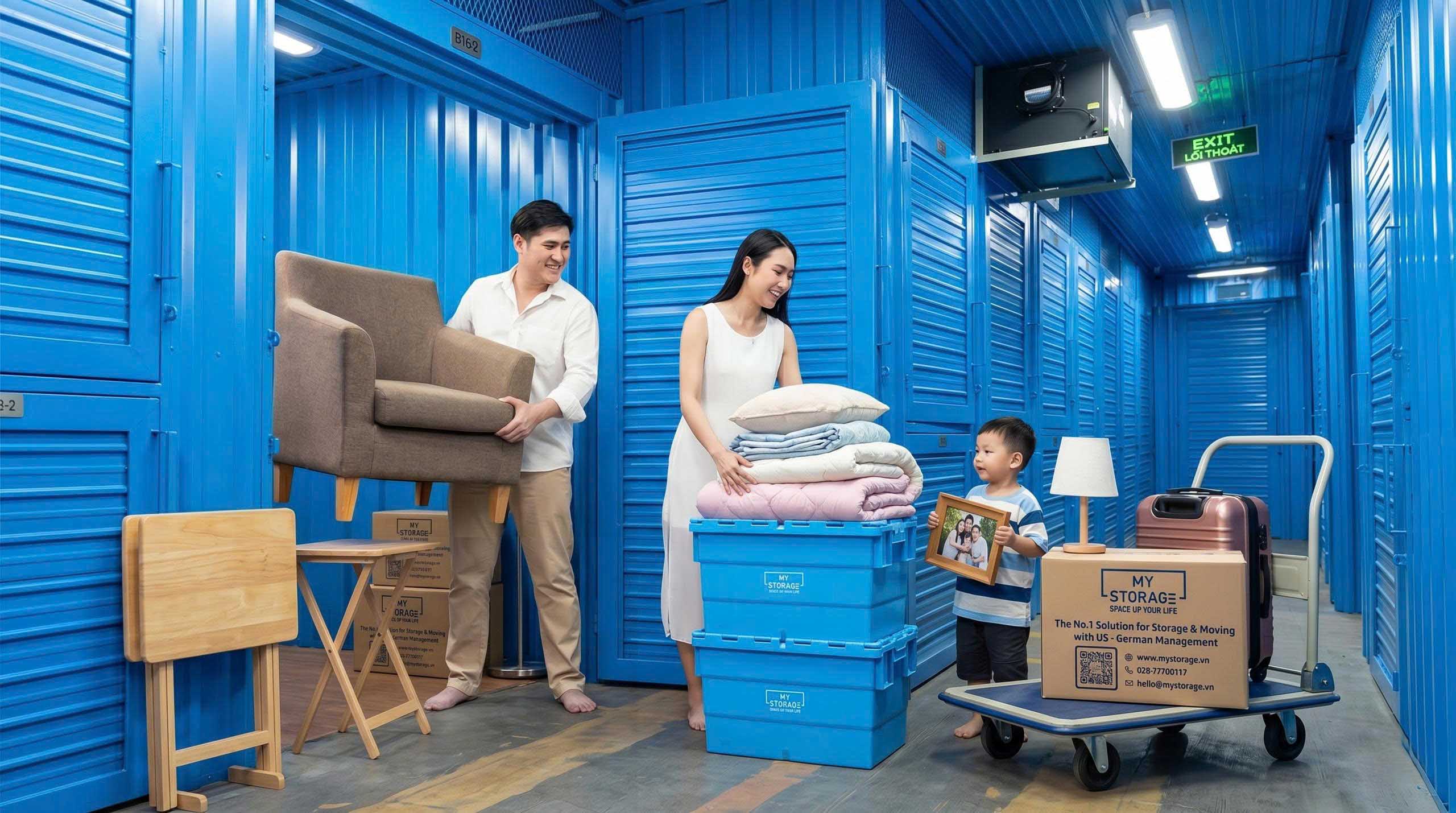
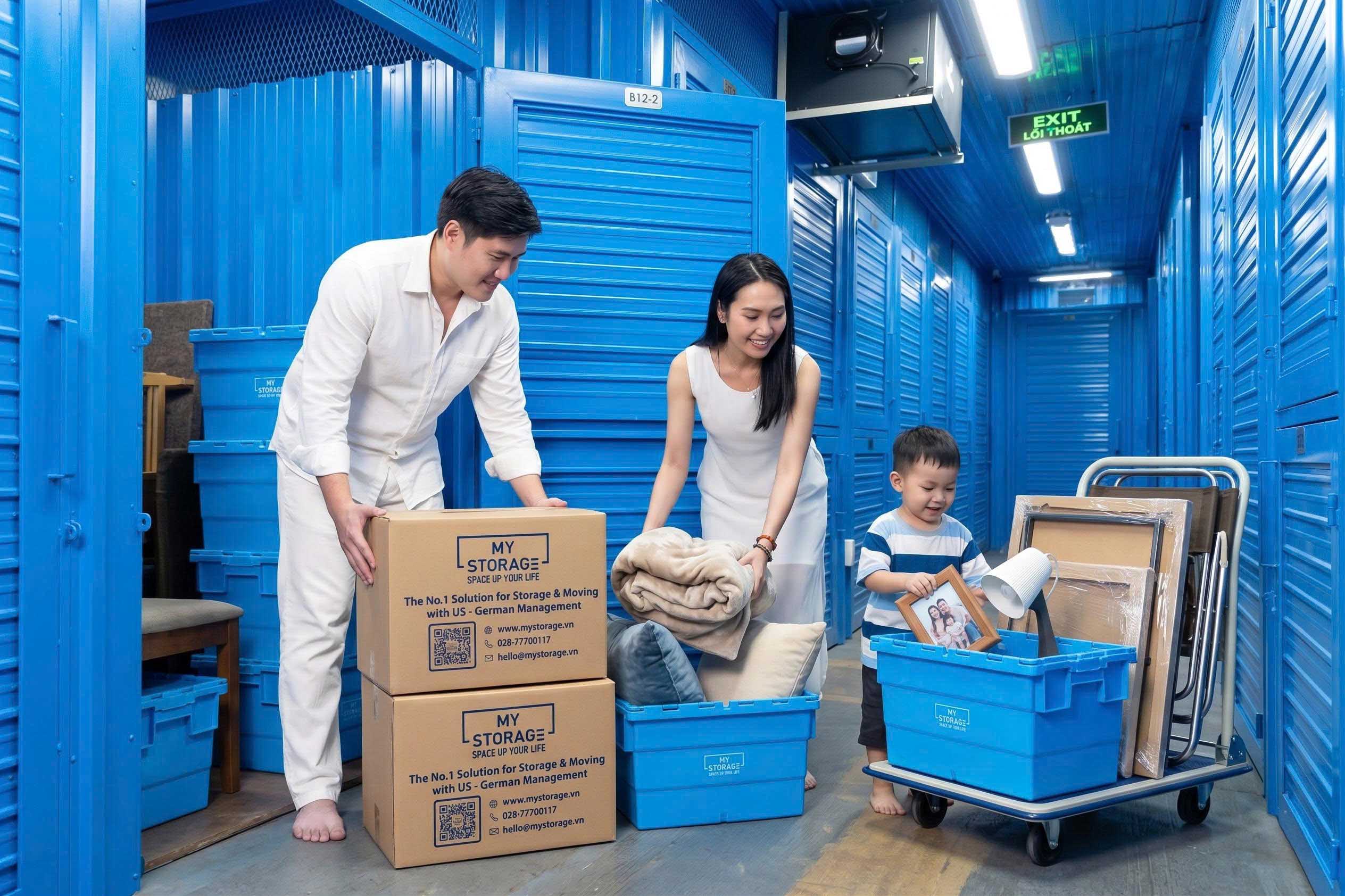
    MyStorage provides mini storage units in various sizes from 1–23 m³, perfect for storing seasonal clothing, suitcases, spare furniture, baby gear, books, and documents. You only keep what you truly need in your apartment, while the rest is safely preserved in a clean, secure facility and easily accessible whenever required. For items you no longer wish to keep, the MyStorage charity locker is the next destination.

    Diverse Sizes to Suit Every Need

    Size Reference Capacity Best For
    1–2 m³ 3–5 boxes, 1–2 suitcases Couples or small families, basic seasonal storage
    3–5 m³ 8–12 boxes, family suitcase sets, baby strollers Families of 3–4 with baby gear from various stages
    6–10 m³ 15–25 boxes, small furniture, bicycles Families needing to move multiple types of items at once
    11–23 m³ Room furniture, sports equipment, combined goods Large households or diverse storage needs

    Tailored for Each Category of 2-Bedroom Apartment Items

    Item Category Apartment Issues How MyStorage Solves Them
    Seasonal clothing Occupies 1–2 closet shelves year-round despite only being used for 2–3 months 50–65% RH humidity prevents mold, retrieve exactly when needed
    Suitcases No fixed spot, left in the middle of the room or under the bed Store them, retrieve before each trip, completely freeing up space
    Outgrown baby gear Accumulates quickly through stages, taking up 2–4 m² Store by size, keep for the next child or relatives without cluttering the home
    Spare furniture Extra chairs and folding tables occupy living room corners year-round Store them, bring back for guests or special occasions
    Books and documents Accumulate silently, taking up wall and cabinet space Humidity-controlled environment preserves them better than at home

    Safe and Easy Access

    Standards How MyStorage Delivers
    Security 24/7 cameras, individual PIN locks for each unit, only the owner has access
    Environmental control 50–65% RH humidity, 20–26°C temperature stable year-round
    Access 24/7 via personal code, no prior booking required
    Flexible rental Monthly basis, adjust unit size anytime with no penalties

    Charity Locker — The Destination for Items No Longer Needed

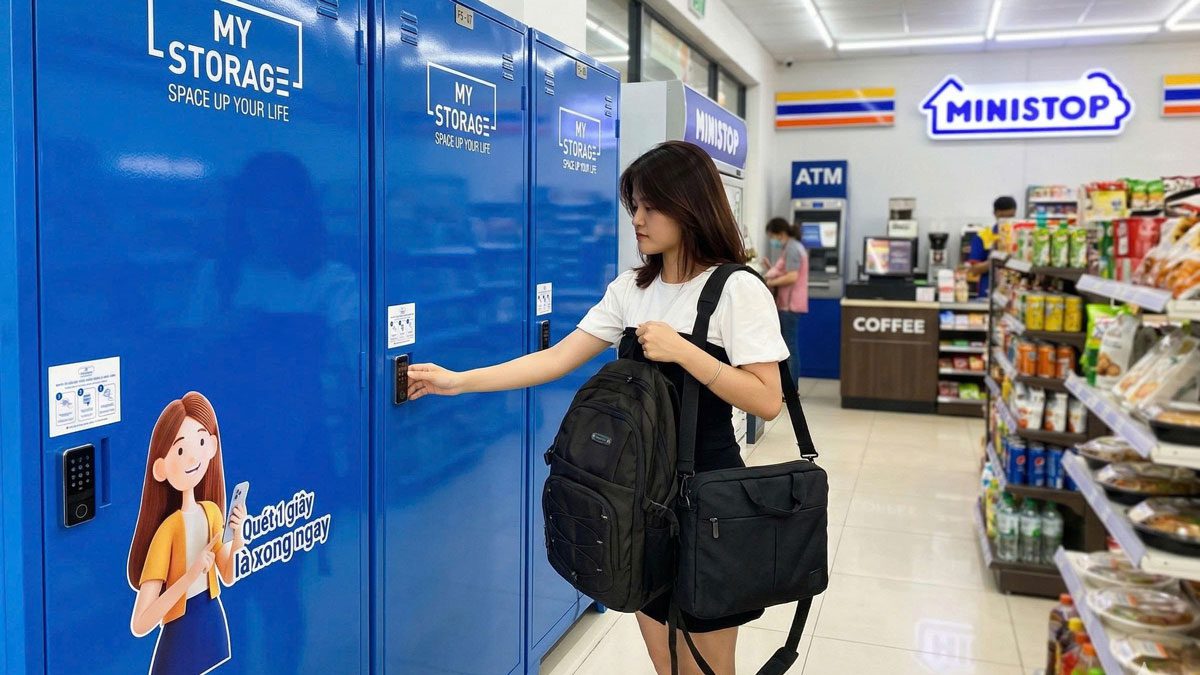
    During the apartment decluttering process, not every item needs to be kept. Clothes and belongings in good condition that are no longer needed can be brought to the MyStorage charity locker at 375 Vo Nguyen Giap, HCMC. Items must be washed and completely dry before being dropped off; heavily torn or moldy-smelling items are not accepted.

    An effective 2-bedroom apartment decluttering session often ends at MyStorage in two ways: items to keep go into storage, and items to give away go into the charity locker. The apartment returns to its true living function without sacrificing what the family actually needs.

    FAQ

    What size unit should a family of 4 in a 2-bedroom apartment rent?

    Depending on actual volume, 3–5 m³ is typically suitable for a family of 4 with baby items, suitcases, and seasonal clothing. Starting with a smaller unit and expanding once actual needs become clear after 1–2 months is also a practical approach

    Will seasonal clothing develop mould in storage?

    No, if the facility maintains 50–65% RH humidity control like MyStorage. Clothing should be washed and fully dried before packing, stored in boxes or vacuum bags, with silica gel added for extra moisture protection during long-term storage.

    How long should outgrown children’s items be kept in storage?

    It depends on family plans. If another child is planned within 1–3 years, storing by size is reasonable. If there are no plans for reuse, donating rather than long-term storage is more practical, saving costs and getting items to those in need sooner.

    Where should you start when a second bedroom has become a storage room?

    Begin by sorting everything in the room into three groups: daily-use items stay, infrequently used but valuable items move to mini storage, and unwanted items get donated or sold. Once cleared, the room can be repurposed according to the family’s actual needs.

    How should family suitcases be stored for easy retrieval?

    Arrange suitcases from largest to smallest, placing the most frequently used one near the unit entrance for easy access. Labels indicating short-trip versus long-trip suitcases help avoid checking each one when retrieving quickly before a trip.

    How much does a 4m² unit cost monthly at MyStorage?

    Specific pricing depends on location and timing. Contact MyStorage directly for an accurate quote for a 4m² unit. Generally this cost is significantly lower than moving to a larger apartment just to gain additional storage space.


    Can furniture like spare chairs and folding tables be stored?

    Yes. MyStorage units ranging from 1–23 m³ accommodate spare furniture such as extra chairs, folding tables, and small shelving. Disassembling where possible saves space and makes transport in and out of the unit easier.


    What types of clothing does the MyStorage charity wardrobe accept?

    Accepts clean and wearable clothing including adult and children’s items, jackets, and school uniforms. Items must be washed and fully dried before drop-off. Heavily torn, permanently stained, or mouldy items are not accepted.

    Do books and documents need special packaging for storage?

    They should be packed in sturdy cartons, each weighing no more than 15–20 kg, with paper or moisture-resistant padding at the bottom. Important documents should be placed in separate waterproof bags or boxes and clearly labeled for easy retrieval when needed.

    What should be prepared before renting storage and donating at MyStorage?

    Sort household items into three groups: keep, store, and donate. Contact MyStorage for unit size consultation based on the items needing storage. For donations, wash and neatly pack items before bringing them to the charity wardrobe at 375 Vo Nguyen Giap.


  • Is Minimalism Just About Throwing Everything Away? Understanding Minimalism the Right Way

    Is Minimalism Just About Throwing Everything Away? Understanding Minimalism the Right Way

    Minimalist living doesn’t mean throwing everything away or living with as few possessions as possible. The essence of a minimalist lifestyle is keeping things that truly bring value and eliminating what is no longer necessary. Instead of owning too many items that waste space, time, and money, minimalism helps you focus on the more important things in life.

    What Is Minimalism?

    Minimalism is an intentional lifestyle that prioritizes keeping what truly creates value and removing the rest. It is not about having the fewest items possible, but about not letting objects control your living space, time, and attention.

    • The Origins of Minimalism: Minimalism emerged from various philosophical and artistic movements. In design, Bauhaus and the Japanese school of wabi-sabi laid the foundation for the “discarding what is unnecessary” mindset. In terms of lifestyle, the modern minimalism movement exploded in the US and Japan in the 2010s, partly as a reaction to excessive consumer culture and the pressure of material accumulation. In Vietnam, minimalism began to attract urban youth around 2015–2017, closely linked to the tidying trend of Marie Kondo’s KonMari method and green living movements.
    • The “Less But Better” Philosophy: Dieter Rams, the legendary designer for Braun, summarized the minimalist philosophy in just three words: less but better. Less but better does not mean deprivation; it means that everything you keep serves a clear purpose and is carefully selected. A well-curated wardrobe of 30 items often provides more practical outfit choices than a cluttered closet of 150 items. A living space with fewer items is usually easier to clean, easier to find things in, and creates a significantly more comfortable feeling.
    • Minimalism Does Not Mean Poverty: A common misconception is that minimalism requires discarding everything and living in an empty space. In reality, many minimalists still own high-quality material goods—just fewer and more carefully selected ones. Buying one good table instead of three cheap ones, or owning ten favorite outfits instead of a hundred worn once, are all expressions of minimalism. The difference lies in conscious choice, not absolute quantity.
    • Minimalism for More Freedom: Psychological research shows that more objects do not automatically bring more happiness but often create an additional psychological burden. Every item you own requires a portion of your attention to manage, maintain, and organize. When reducing the number of items to what is truly necessary, people often feel lighter, more focused, and have more time and energy for the things that truly matter in life.

    How Does Minimalism Differ from Frugality?

    Many people confuse minimalism with frugality because both involve not buying too much. However, the motivations and outcomes of these two lifestyles differ significantly.

    Criteria Minimalism Frugality
    Main motivation Quality of life and freedom Financial accumulation
    View on spending Willing to pay more for high quality but buy less Prioritize maximum cost reduction
    Goal Reduce quantity of items to increase quality of life Reduce spending to increase savings
    Result Tidier and freer living space Higher bank account balance
    Attitude toward old items Keep if still valuable, discard if not serving life Keep because it’s still usable even if not needed

    A minimalist might spend more money on a high-quality shirt instead of buying many cheap ones. A frugal person might keep many old items even if they aren’t used because they don’t want to be wasteful. The two lifestyles can be combined, but their essences are different.

    Is Minimalism Just a Passing Trend?

    This question arises frequently as minimalism booms on social media and then cools down. However, there is an important distinction between minimalism as an Instagram aesthetic and minimalism as a true life philosophy.

    Aesthetic minimalism—meaning pure white spaces, dark furniture, and photogenic capsule wardrobes—might be a passing trend. But the core philosophy of minimalism—living intentionally, not letting objects control your life, and prioritizing experiences over material accumulation—has existed for centuries in Buddhist, Stoic, and many other traditions. What makes minimalism sustainable is not its aesthetic, but the practical solution it provides for the problem of over-accumulation that is increasingly common in modern consumer society.

    Minimalism Is Not About Getting Rid of Everything

    Minimalism doesn’t require you to live in an empty space or give up everything you love. The goal is to eliminate what no longer serves your life, not to eliminate everything. The difference lies in the fact that every item you keep has a clear reason.

    Keeping Items with Functional Value

    Any item you use regularly that makes life easier deserves a place in your living space, whether it’s a high-quality set of kitchen knives, a work computer, or running shoes used every day. The question is not whether this is a “minimalist” object, but whether it truly serves your life.

    A practical principle for evaluating functional value includes three questions: have you used it in the past 30 days, would you have to buy it again if you didn’t have it, and does it help you do an important task better? If at least one of the three answers is yes, the item is worth keeping.

    Keeping Items with Sentimental Value

    Minimalism doesn’t require you to be emotionless toward objects. Family photos, gifts from loved ones, mementos from important trips, or books that changed how you view life all have real value even if they have no practical daily use.

    The boundary to recognize is the difference between objects with true sentimental value and objects you keep only because you feel guilty if you discard them. A gift you don’t like but don’t dare discard for fear of upsetting the giver, an object you keep because it was expensive even though you never use it, or children’s items you keep in their entirety just because you can’t bear to let go, all belong to the second group. True sentimental value is the positive emotion every time you see or touch that item, not the heavy feeling when thinking about getting rid of it.

    Keeping Things That Serve Work and Hobbies

    Musicians need instruments and accessories, cooks need full kitchen tools, photographers need cameras and lenses, and writers need reference books. Living minimally does not mean giving up what nurtures your passion and creates value in your life.

    Field Keep Consider removing
    Work Equipment and tools used regularly, necessary references Old equipment no longer used, outdated documents
    Sports Equipment for the sport currently practiced Equipment for sports long abandoned
    Art and Hobbies Materials and tools currently in use Materials accumulated for projects never started
    Reading Books currently being read and those truly worth re-reading Books already finished with no reference value

    Removing Items That Are No Longer Used

    This is the true core of minimalism—not removing everything, but removing what no longer serves your current life.

    Five clear signs that an item should be removed: you didn’t remember you had it until you happened to see it, you bought a replacement while still keeping the old one, you keep it only because you feel you “should” rather than because you actually need it, it is taking up space that could be better used for something else, and every time you see it, you feel heavier rather than joyful.

    Removing doesn’t necessarily mean throwing away. Donating to those in need, reselling to create economic value, long-term lending, or systematically storing items that need to be kept but aren’t used frequently are all more positive ways to handle items than letting them take up space in the house without being used.

    Kho Lưu Trữ Quần Áo, Vải Vóc: Tránh Ẩm Mốc, Côn Trùng & Bạc Màu

    Items You Shouldn’t Rush to Throw Away

    Effective minimalism isn’t about cleaning up the fastest, but about making the right decision for each item. Just because something isn’t used today doesn’t mean it won’t be needed in the future. Understanding this difference helps avoid regret after discarding things of real value.

    Family Photos and Keepsakes

    Printed photos, photo albums, and family keepsakes are irreplaceable items if lost. Unlike most other things that can be repurchased, photos capturing a specific moment and keepsakes associated with deceased loved ones or past life stages hold a unique, irrecoverable value.

    A practical solution is to digitize photos and documents to save physical space while preserving the content. However, physical originals especially old printed photos, multi-generational family albums, and keepsakes with high sentimental value should be stored properly in a humidity-controlled environment rather than being rushed to the bin just because of a cleaning spree.

    Important Documents

    Many types of documents have legal value and must be kept according to regulations or may be needed in unpredictable situations.

    Document Storage Type Retention Period Reason
    Real estate sales contracts Permanent Property disputes can occur at any time
    Important medical records Minimum 10 years Medical history is necessary for future diagnosis
    Tax and accounting documents 5–10 years as regulated Legal requirements for auditing and inspection
    Degrees and certificates Permanent Necessary for work and administrative procedures
    Old labor contracts Minimum 5 years Social insurance and salary/bonus disputes
    Equipment warranties During warranty period Needed when equipment fails within the term

    Seasonal Clothing

    Seasonal clothing is a category easily discarded by mistake during decluttering because it goes unused for months. However, thick blankets, winter coats, swimwear, and special occasion outfits all have practical uses, even if only for a certain period each year.

    Instead of throwing them away and having to repurchase every season, a better solution is systematic storage. Properly packing them in labeled cardboard boxes and sending them to self-storage completely frees up closet space while keeping what you need. The cost of storage for a few months is often much lower than buying new items for the next season.

    Children’s Items You Want to Keep

    Children’s items accumulate quickly and take up a lot of space, creating pressure for constant decluttering. However, not everything should be discarded immediately.

    Category of children’s items Keep when Donate when
    Clothing by size There is a younger sibling approaching that size No plans for more children or passing them down
    Quality educational toys The child is still interested or there is a younger sibling The child has outgrown the age and there are no siblings
    Children’s books The collection is valuable or for a younger sibling to read later Single books with little reuse value
    Childhood keepsakes They hold emotional value for the family No one in the family is attached to them

    Personal Collections

    Collections, whether books, music records, handicrafts, or cultural items, are often expressions of passion and personality. Minimalism does not require you to give up what defines who you are.

    What needs to be considered is not whether the collection should exist, but whether it is being cherished and stored correctly. A collection left in disarray, damaged due to lack of preservation, or taking up space for things you need daily is a sign it needs reorganization, not necessarily disposal. Storing parts of the collection that are not frequently displayed in a mini-storage facility helps with better preservation while freeing up living space.

    Spare Furniture

    Tables, chairs, shelves, and spare furniture often appear during minimalist-trend decluttering sessions and are discarded hastily. However, some furniture has clear value in being kept.

    High-quality furniture purchased at a high price, furniture left by relatives with family value, spare seating for special guest occasions, and furniture waiting for a move or renovation are all cases where storage is better than disposal. The cost of replacing quality furniture is often much higher than the cost of storing it for a few months in a self-storage unit.

    Những món đồ bạn nên lưu kho cho nhà thêm rộng

    Smart Minimalism: Categorizing Items into 3 Groups

    The most common mistake in minimalism is only dividing items into two groups: keep or discard. A smarter approach is to divide them into three groups: keep frequently used items at home, systematically store items that are valuable but not used often, and donate or liquidate items that are no longer needed. These three groups allow you to minimize your living space without having to give up what is truly valuable.

    Group Identification Criteria Action Specific Examples
    Frequently used Used at least 1–2 times per week, immediate inconvenience if missing, placed in the most accessible spots Keep at home, arrange for easy access Daily clothes, work tools, main kitchenware
    Infrequent but valuable Used seasonally or for special occasions, has clear utility or emotional value, will be needed again in the future Systematic storage in a warehouse or labeled boxes Seasonal items, wedding dresses, multi-stage baby gear, family heirlooms
    No longer needed Not used for over 12 months, no specific reason to keep, others may need it more Donate, resell, or recycle Unworn clothes, replaced old devices, items bought but never used

    Group 1 — Frequently Used: Keep at Home

    This is the core group of your living space, the things that make up your daily life. The arrangement principle: place the most used items in the easiest-to-reach positions, requiring no searching. When only the things you actually use remain, the space naturally becomes tidier and easier to maintain.

    Group 2 — Valuable But Infrequently Used: Storage

    This is the group that many minimalists overlook and later regret. Seasonal items, special outfits, heirlooms, baby gear, and spare furniture all belong here. Systematic storage in a self-storage facility helps these items avoid taking up living space while remaining well-preserved and easy to retrieve when needed.

    Group 3 — No Longer Needed: Donate or Liquidate

    This group should be handled first because it creates space the fastest. Donate to those in need, resell through e-commerce platforms, or drop them off at the MyStorage charity locker at 375 Vo Nguyen Giap. For broken items that cannot be used, recycle them instead of throwing them into the general trash.

    Categorizing into three groups is more effective than two because it solves the biggest psychological bottleneck of minimalism: not everything is ready to be discarded immediately, but that doesn’t mean it must occupy your living space. Smart storage is the bridge that helps minimalism become a sustainable choice rather than the pressure to give everything up.

    Donate, Liquidate, or Store – Which is the Right Choice?

    There is no one-size-fits-all formula for everyone and every item. The right choice depends on the condition of the item, its potential for future reuse, and how much others might need it. Understanding these three options helps you make decisions faster and with less regret.

    When Should You Donate?

    Donating is the best option when an item is still in good working condition but you no longer need it, and someone else can benefit directly from it right now.

    Signs you should donate Specific examples
    Good condition but unused for over 12 months Clothes that are still new but unworn, books already read
    Others clearly need it more than you School uniforms, coats, baby gear in good condition
    No specific reason to keep it Items bought but never used
    Utility value decreases if kept too long Food, cosmetics near expiry, outdated technology
    Want items to reach those in need quickly Warm clothes before winter, relief goods after natural disasters

    Point of contact for donating good clothes in HCMC: MyStorage charity locker at 375 Vo Nguyen Giap.

    When Should You Liquidate?

    Liquidating is suitable when an item still has economic value but you no longer have a use for it and want to recover part of the initial cost.

    Signs you should liquidate Specific examples
    Clear market value remains Old electronics in good working order, quality furniture
    Budget needs to be reinvested Selling old items to buy more suitable ones
    Specialized items not suitable for donation Professional sports equipment, musical instruments, machinery
    Specific buyer demand exists Selling in community groups, flea markets, e-commerce platforms
    Want items to be appreciated by someone who truly needs them Rare books, collectibles, branded clothing

    Popular liquidation channels in Vietnam: Cho Tot, Facebook Marketplace, second-hand groups on Facebook, Shopee, and specialized groups by product category.

    When Should You Store?

    Renting a storage unit is the right choice when an item has a clear reason to be kept but does not need frequent access and is occupying precious living space.

    Signs you should store Specific examples
    Used seasonally or for special occasions Winter gear, Tet decorations, summer swimwear
    Irreplaceable emotional value Storing family heirlooms, original photo prints, wedding dresses
    Will be needed again in a specific future Baby gear for a child approaching that size, furniture while waiting to move house
    Value is higher than storage costs High-end suits, backup equipment, valuable collections
    Not ready to decide immediately Need more time to think without letting it clutter your living space

    Cost comparison:

    Choice Cost Result
    Discard then rebuy 100% new price Loss of money and time spent searching
    Keep at home Living space cost Cramped cabinets, occupied space
    Mini storage From 300,000 VND per month Tidy living space, well-preserved items

    The three options are not mutually exclusive. A smart decluttering session usually creates all three groups at once: some items are donated or liquidated immediately, some are systematically stored, and the rest continue to be used daily. The key is that each item is handled intentionally rather than being left to accumulate over time.

    Living minimally is not a revolution that happens in a day but a process of building the habit of making intentional decisions for every item. Categorizing correctly into three groups, processing them in the right direction, and maintaining that system over time is all it takes for your living space to always reflect the life you want to have.

    What you are not ready to let go of does not necessarily have to take up living space. MyStorage self-storage helps you store what is valuable, while the charity locker at 375 Vo Nguyen Giap accepts what others need more. Smart minimalism is knowing exactly where each item goes, not trying to discard as much as possible in the shortest time.

    FAQ

    Where should I start living minimally if my home is very cluttered?

    Start with one small, visible area — usually a desk surface or wardrobe. Complete one area fully before moving to the next. The sense of finishing each section builds better momentum than attempting to clear the entire home in a single day.

    Does minimalism mean never buying anything new?

    No. Minimalism does not prohibit shopping but changes how you approach it. Each new purchase comes with consideration of whether it is truly needed and where it will live. The one-in-one-out rule maintains a stable amount of belongings while still allowing updates to things genuinely needed.

    How do I avoid regret after getting rid of belongings?

    Avoid rushing during the first decluttering session. For uncertain items, place them in a labeled box with a date and store it away for 30–90 days. If you have not retrieved or thought about any item after that period, the decision to let it go becomes much easier with far less regret.

    What is the most effective order for processing unwanted belongings?

    Sell or donate first, recycle second, and discard last. Selling and donating create immediate positive value while reducing waste. Recycling handles what cannot be used. Discarding is only the last resort when no other option remains.

    What items should never be discarded when minimising?

    Important legal documents, irreplaceable family photos and keepsakes, tools for active work and hobbies, and items whose value exceeds storage costs. These should be properly stored rather than discarded simply because you are in a decluttering mood.

    Is self-storage compatible with a minimalist lifestyle?

    Completely compatible because self-storage does not contradict minimalism but complements it. Minimalism aims for intentional and uncluttered living space, and self-storage helps achieve this without surrendering genuinely valuable items. You live minimally at home while things worth keeping are safely preserved elsewhere.

    Should items be kept just in case they are needed later?

    Just-in-case thinking is common but often leads to unnecessary accumulation. A practical rule: if the cost of replacing an item is lower than storing it for a year, letting it go and repurchasing when genuinely needed is the more rational choice. Conversely, if storage costs less than replacement value, keeping it in storage is the right decision.

    How do I maintain a minimalist space after decluttering?

    Three simple habits support long-term maintenance: a 5-minute reset each evening to return the space to its baseline state, applying the one-in-one-out rule with every new purchase, and reviewing belongings every 3–6 months to process anything that has stopped serving your life.

    Does the MyStorage charity wardrobe regularly accept donations?

    The charity wardrobe at the MyStorage office at 375 Vo Nguyen Giap accepts clean and wearable clothing during business hours. No appointment is needed — simply bring washed, fully dried, and neatly packed items to drop off. This is the simplest way to get unused clothing to people who need it without significant time or effort.

    Is the cost of storage at MyStorage worth it compared to the benefits?

    Worth it when the value of stored items exceeds storage costs and when quality of life improves through a tidier living space. A 1–2 m² unit at 300,000–600,000 VND per month is usually far lower than the cost of repurchasing discarded items or moving to a larger apartment just to have more storage space.

  • Why Should We Reuse Old Clothes? Is Donating or Recycling Better?

    Why Should We Reuse Old Clothes? Is Donating or Recycling Better?

    Reusing old clothes is one of the simplest ways to reduce waste, extend product lifecycles, and limit the fashion industry’s impact on the environment. However, not every item should be donated or recycled. Depending on the condition of the clothes, you can choose to continue using them, give them to others, donate to charity, recycle, or store them for future use.

    Why Are Old Clothes Becoming an Environmental Issue?

    The fashion industry is currently one of the second largest polluting industries in the world, following only the oil industry. Every year, the world produces over 100 billion garments, but 92 million tons of them end up in landfills. The growth of fast fashion, the habit of buying much but wearing little, and the increasingly short lifespan of clothing are the three main causes of the ongoing textile waste crisis.

    What Is Fast Fashion?

    Fast fashion is a business model that continuously releases new collections at low prices and high speeds, encouraging consumers to buy more and change clothes more frequently. While the fashion industry previously had only two main seasons per year, fast fashion brands now launch 52 collections annually, equivalent to one new collection every week.

    The low prices of fast fashion do not reflect the actual costs but are subsidized by poor labor conditions, low-durability materials, and environmental costs that are not included in the selling price.

    How Does a T-shirt Impact the Environment?

    The lifecycle of a cotton T-shirt leaves a much larger environmental footprint than consumers typically imagine.

    Stage Specific environmental impact
    Cotton farming 1 kg of cotton requires 10,000–20,000 liters of irrigation water, equivalent to the amount of water a person drinks in 10–27 years
    Dyeing and fabric treatment The textile dyeing industry is the second largest source of water pollution in the world, using thousands of types of toxic chemicals
    Transportation Clothing often passes through 3–5 countries before reaching the buyer, generating significant CO2 emissions
    Usage A polyester T-shirt releases 1,900 microplastic fibers per wash, entering the food chain through water sources
    Disposal 85% of clothing is discarded in landfills or incinerated, with only 1% being recycled into new clothes

    In total, a typical cotton T-shirt generates about 2.1 kg of CO2 throughout its entire lifecycle, equivalent to driving a car for 8 km. Multiplied by the billions of shirts produced each year, the cumulative impact is enormous.

    What Happens to Clothes After They Are Discarded?

    The journey of a garment after leaving the wardrobe rarely ends in an environmentally friendly way as many people expect.

    • Landfills — the destination for 85% of discarded clothing” Most clothes are thrown into regular trash bins and end up in landfills. Synthetic fabrics like polyester and nylon can take 200–500 years to decompose, while the decomposition process generates methane, a greenhouse gas 80 times more potent than CO2 in the short term.
    • Incineration — a quick solution but causes air pollution: Some waste treatment plants and major fashion brands burn unsold inventory to avoid price dumping and protect brand image. Burning synthetic fabrics releases toxic chemicals into the air, including dioxins and furans, harming human health and the environment.
    • Exporting to developing countries — shifting the problem elsewhere: Old clothes from developed countries are often collected and exported to Africa and Asia. Ghana receives about 15 million pieces of secondhand clothing every week, of which 40% cannot be reused and go directly into landfills or local coastlines. This model does not solve the problem but merely moves waste from one place to another.
    • Recycling — great potential but still limited: Only 1% of clothing is recycled into new fibers due to current technological limitations, especially with blended fabrics. The rest is recycled into lower-grade materials like industrial rags or insulation, a form of downcycling that does not address the root of the problem.

    Những món đồ gia đình nên gửi kho để nhà rộng gấp đôi

    What Are the Benefits of Reusing Old Clothes?

    Reusing old clothes is a simple action that creates a real environmental and economic impact. Every garment used for an additional 9 months beyond its average lifespan can reduce carbon, water, and waste footprints associated with new production by 20–30%.

    Reducing Waste Discharged into the Environment

    Every year, Vietnam generates approximately 200,000 tons of textile waste, most of which ends up in landfills or is incinerated. Reusing clothes directly reduces this waste by extending the lifespan of each product before it becomes trash.

    A shirt worn 30 times instead of 10 means replacing three new shirts, equivalent to reducing two-thirds of the potential waste from that product group. When reuse becomes a habit for many, the cumulative impact on urban waste management systems is significant.

    Saving Production Resources

    Producing new clothing consumes a massive amount of resources at every stage.

    Resource Consumption for production Practical equivalent
    Water 2,700 liters for one cotton T-shirt A person’s drinking water for 3 years
    Water 10,000 liters for a pair of jeans A person’s drinking water for 10 years
    Energy 400 MJ for one T-shirt Equivalent to riding 100 km on a motorbike
    Agricultural land 1 kg of cotton requires 0.3–0.4 ha of land An area equal to half a tennis court

    Every time a garment is reused instead of buying new, consumers indirectly save all the resources mentioned above without needing to significantly change their lifestyle.

    Reducing Carbon Emissions

    The fashion industry accounts for 10% of global carbon emissions, more than the aviation and shipping industries combined. Reusing clothes directly impacts this figure in several ways.

    Extending a garment’s lifespan by 9 months reduces its carbon footprint by 20–30%. Buying secondhand instead of new reduces carbon emissions by 82% compared to equivalent new production. Repairing instead of replacing saves the entire volume of emissions from manufacturing a replacement product.

    In summary, if everyone in developed countries simply increased the average lifespan of their clothes from 2 years to 3 years, the global fashion industry’s carbon emissions could drop by about 10%.

    Cost Savings for Individuals and Families

    The economic benefits of reusing clothes are often underestimated because they accumulate gradually over time rather than appearing as a single, obvious saving.

    Reuse action Estimated savings
    Wearing clothes for 1 more year before replacing 20–40% of annual clothing costs
    Buying secondhand instead of new 50–80% savings for the same quality
    Repairing instead of discarding 70–90% savings compared to buying a replacement
    Swapping clothes with friends Near-zero cost for a new wardrobe
    Renting outfits for special occasions 80–95% savings compared to buying for one-time use

    For families with young children, reusing kids’ clothes has a particularly significant saving impact because children outgrow clothes quickly and rarely have the chance to wear them enough times before they no longer fit.

    Contributing to Building a Sustainable Lifestyle

    Reusing clothes is not just an isolated action but often a gateway to many more positive lifestyle changes. People who start reusing clothes tend to consider their purchases more carefully, prioritizing quality over quantity and extending their sustainable mindset to other areas of consumption.

    At the community level, reusing clothes creates sharing networks, exchanges, and informal circular economies with social value that goes beyond direct environmental impact. As more people practice this, demand for the secondhand market increases, creating economic incentives to develop more professional reuse infrastructure.

    Old Clothing Donation – A Humanistic and Practical Solution

    Donating usable clothing is a way to transfer value from those who no longer need it to those in need, creating a direct social impact while reducing textile waste. The simplest principle: if you would feel comfortable giving it to a relative, it is suitable for donation.

    Types of Clothing Suitable for Donation

    Clothing type Reason for suitability Preparation notes
    New or lightly worn clothing High utility value, recipients can use immediately Wash and fold neatly before packing
    School uniforms High demand in rural areas and disadvantaged families, significantly saving costs for parents Clearly label the grade level and size on the outside of the bag
    Jackets and warm clothes Great demand in the Northern mountainous regions, especially during winter Check that zippers and buttons are still functioning well
    Children’s clothing Children grow quickly so items are often still in good condition, with very high reuse demand Categorize clearly by age or size
    Footwear in good condition Quality shoes are expensive, providing practical support for recipients Tie pairs together and label the size on the outside
    Blankets, duvets, towels High demand in flood-prone and highland areas Ensure they are clean and free of musty odors

    Types of Clothing That Should Not Be Donated

    Donating sub-standard clothing is not only futile but also places an extra burden on receiving organizations that must process unusable items.

    Types not to donate Reason Alternative disposal
    Heavily torn or large holes Unusable, creating extra sorting and processing work for the organization Cut into rags or recycling materials
    Moldy or with un-washable odors Can spread to other items in storage and harm recipients Dispose of in trash or textile recycling bins
    Heavily soiled and un-cleanable Organizations lack the manpower and equipment to re-wash all donated items Recycle as industrial materials
    Severe structural damage Broken zippers, many missing buttons, completely unraveled seams Liquidate or recycle the fabric
    Used underwear and swimwear Most organizations do not accept these for hygiene reasons Dispose of in regular trash

    How to Prepare Clothing Before Donating

    Proper preparation helps receiving organizations save processing time and ensures items reach those in need in the best possible condition.

    • Wash and dry completely: This is the most crucial step and cannot be skipped. Even slightly damp clothing will mold during transport and storage, damaging surrounding items. Wash according to label instructions, and air-dry or tumble-dry completely at least 24 hours before packing.
    • Sort before packing: Categorizing items helps receiving organizations distribute them faster and more efficiently. The most common sorting methods: by recipient (men, women, children), by garment type (shirts, pants, jackets), and by season (warm vs. thin clothing). Place each group in a separate bag instead of mixing them.
    • Pack neatly and securely: Use thick plastic bags or sturdy cardboard boxes to prevent clothing from getting damp or damaged during transport. Do not overstuff, as this causes wrinkles and makes items difficult to remove. Tie bags tightly or tape cardboard boxes shut.
    • Label clearly on the outside: Write the contents on the outside of each bag or box, including the type of clothing, sizes if known, and the intended recipient. For example: children’s t-shirts ages 3–5, women’s clothing size S–M, or primary school uniforms. Clear information helps organizations sort and distribute to the right people without wasting time checking each item.

    A simple rule for self-checking before donating: if you would feel uncomfortable giving it directly to someone you know, do not donate that item. Quality donations are better than a large quantity of poor-quality items.

    Quyên góp quần áo đồ dùng từ thiện cho miền trung, vùng lũ tại Mystorage

    What is Clothing Recycling?

    Clothing recycling is the process of transforming used fabrics and garments into new materials or products, rather than sending them to landfills or incineration. Unlike direct reuse, recycling alters the form and properties of the original material to create new value.

    Textile Fiber Recycling

    Textile fiber recycling is the most advanced form of recycling in the garment industry, turning old clothes back into fibers to be woven into new fabric. The process involves sorting fabrics by material, mechanical shredding or chemical dissolution into fibers, and spinning them into yarn for new textile production.

    Material Recycling Method Output Product Current Recycling Rate
    Cotton Mechanical shredding into short fibers, blended with virgin cotton Medium-quality recycled cotton fabric Around 1% globally
    Polyester Chemical dissolution or melting into plastic pellets Recycled polyester fiber with quality equivalent to the original Around 15% globally
    Nylon More complex chemical process than polyester Recycled nylon fiber, popular in swimwear and sportswear Under 5% globally
    Blended fabrics Difficult to separate materials, technology is still developing Lower quality fibers or cannot be recycled into yarn Almost no commercial solutions yet

    The biggest challenge in fiber recycling is that most modern clothing is made from blended fabrics, making the separation and recycling into high-quality fibers technically difficult and costly.

    Recycling into Industrial Rags

    This is currently the most common and practical form of recycling because it does not require complex technology and can handle most blended fabrics that fiber recycling cannot.

    Old clothes are cut into standard-sized fabric pieces, packaged by weight, and sold to factories, workshops, and industrial cleaning facilities. Rags made from old cotton are preferred over synthetic ones due to their superior absorbency. One kilogram of old fabric recycled into industrial rags has a much lower value than recycled fiber, but in return, it does not require complex material sorting and can process almost any unwearable clothing.

    Recycling into New Materials

    Old clothes and fabrics can be transformed into various materials entirely different from their original use in construction, industry, and daily life.

    Output Material Input Material Practical Application
    Acoustic and thermal insulation Shredded cotton and wool, compressed into panels Wall insulation, studio soundproofing, green building materials
    Recycled mattresses and padding Compressed synthetic and cotton fabrics Budget mattresses, car seat padding, protective padding for shipping goods
    Geotextiles Re-woven recycled synthetic fibers Soil erosion control, road lining, and construction infrastructure
    Recycled filament for 3D printing Recycled polyester and nylon extruded into plastic filament Eco-friendly 3D printing materials
    Packaging materials Recycled heavy fabrics Reusable packaging bags, cushioning materials to replace foam

    Upcycling – Turning Old Items into Higher-Value Products

    Upcycling differs from traditional recycling in that the output product has a higher value than the original material, rather than being downgraded. This is the most creative form of recycling and is becoming a major trend in sustainable fashion design.

    • Upcycling clothes at home is the simplest approach, including cutting old jeans into shorts, turning old t-shirts into tote bags, or reusing fabric from damaged clothes to patch other garments or sew accessories like small pouches and scarves.
    • Commercial upcycling is developing into a distinct segment within the fashion industry. Upcycling brands purchase old clothing, deconstruct them, and recombine them into new products with unique designs. A skirt made from recycled denim or a jacket from old wool fabric can be priced higher than a new product made from raw fabric due to its uniqueness and the story behind the product.
    Comparison Traditional Recycling Upcycling
    Output product value Lower than the original material Higher than the original material
    Technical requirements Industrial technology Design and sewing skills
    Scale Industrial, mass production Handcrafted to small commercial
    Uniqueness Uniform products Each product is usually unique
    Best fit for Damaged fabric, cannot be used directly Fabric in good condition, can be cut and recreated

    Is Donating or Recycling Better?

    There is no absolute answer because the best choice depends on the condition of each item. The general rule: if the clothes are still usable, donate them; if the clothes have degraded, recycle them. Both are better than throwing them into the regular trash.

    Criteria Donating Recycling
    Extending product lifecycle High, maintains the functional value of the clothing Medium, converts into lower-grade materials
    Social value High, directly supports those in need Lower, indirect through industrial chains
    Waste reduction High, prevents clothes from entering landfills High, processes items that are no longer usable
    Resource saving Very high, no need for new production Medium, requires energy and water for the recycling process
    Reducing carbon emissions Very high, avoids all emissions from new production Medium, the recycling process still consumes energy
    Suitability for good items Very suitable Unnecessary, wastes remaining value
    Suitability for damaged items Not suitable, creates a burden for organizations Very suitable, processes the correct material types
    Ease of implementation Easy, just need to find a drop-off point Medium, need to find a recycling collection unit
    Cost Almost none Some services charge a collection fee

    When to Donate and When to Store?

    The decision to donate or store clothes depends on the potential for future reuse and the emotional value of each item. Donate when others need it more than you do, and store when you will need it again or the item has irreplaceable value.

    Type of clothing Should donate Should store Reason
    Clothes no longer worn and no plan to wear again   Takes up closet space without creating value; others may need them more
    Outgrown children’s clothes Optional Donate if there are no plans for more children; store if intended for a younger sibling
    School uniforms in good condition Optional Donate to the school or families in need; store if there is a younger sibling at the same school
    Coats and warm winter gear   Used seasonally; no need to have them in the closet year-round but needed every year
    Wedding dresses Optional High emotional value, high cost; some want to keep them as a memento or alter them for children
    Suits and high-end evening wear   High value, used for special occasions; proper preservation keeps them for many years
    Keepsakes and heirlooms   Irreplaceable emotional value; requires special preservation to maintain condition
    Clothes waiting for weight loss or gain Optional Optional Store if the goal is specific and realistic; donate if kept for many years without change
    Infrequently worn seasonal items   No need to take up closet space year-round; mini storage is the optimal solution
    Slightly damaged clothes that can be repaired   Store to repair; do not donate damaged items as it burdens receiving organizations

    When to Use Mini Storage Instead of Home Storage

    Home storage is suitable for items that need frequent access. Mini storage is more appropriate when items need long-term keeping but take up too much living space.

    Type of item Store at home Mini storage
    Weekly wear  
    Seasonal items used 2–3 months per year  
    Wedding dresses and special attire  
    Children’s clothes for various age stages  
    Multiple boxes of family keepsakes  
    Infrequently worn suits and high-end coats  

    A simple way to decide: if an item has sat in your closet for more than 12 months without being worn and you have no specific reason to keep it, donating is a better choice than storing. If there is a clear reason to keep it but you don’t need frequent access, mini storage helps free up living space without having to give up what is valuable.

    MyStorage Supports Clothing Storage & Charity Closets

    After sorting your clothes, MyStorage supports both directions of handling: safely storing items you want to keep and accepting donations through the charity closet at the main office. You don’t have to choose one or the other; you can do both in a single visit.

    Storing Seasonal Clothing and Personal Items at MyStorage

    MyStorage self-storage is suitable for items with functional or emotional value that do not require frequent access, freeing up closet area and living space without giving up what is important.

    Type of item to store Why it fits MyStorage Preservation conditions
    Seasonal coats and warm gear Only used 2–3 months a year, takes up a lot of remaining closet space 50–65% RH humidity prevents mold and musty odors from accumulating
    Wedding dresses and evening wear High value, requires special preservation to avoid moisture and light Temperature 20–26°C, avoids direct light which yellows fabric
    Suits and high-end office wear Used for occasions, not needed in the daily closet Hung properly in breathable garment bags to avoid wrinkles and deformation
    Children’s clothes for various stages Accumulates quickly by month of age, needs flexible storage space Completely clean and dry before storing, categorized by size
    Keepsakes and heirlooms Irreplaceable, needs a stable environment for long-term preservation Packed in sturdy boxes with padding, using silica gel for moisture control

    MyStorage Charity Closet

    If during the sorting process you have clothes in good condition that you want to donate, MyStorage provides a charity closet at the main office to receive them.

    Information Details
    Location 375 Vo Nguyen Giap, Thu Duc City, HCMC
    Accepted items Clean and usable clothes, children’s items, coats, uniforms
    Non-accepted items Heavily torn items, un-cleanable stains, odors, or mold
    How to prepare Wash clean, dry completely, and pack neatly before bringing
    Visiting time During MyStorage office working hours

    A complete closet decluttering session can end at MyStorage: bring items you want to keep into storage and leave items you want to give away in the charity closet. Living space is freed up, valuable items are preserved, and good clothes reach those in need.

    Every piece of clothing in your closet has a most suitable way to be handled based on its condition and value. Continue wearing it if it’s still usable, donate it if others need it more, store it if there is a clear reason to keep it, and recycle it if there are no other solutions. These four simple steps, when they become a habit, can significantly reduce textile waste without requiring major lifestyle changes.

    MyStorage supports both needs in the same location: self-storage helps preserve valuable items you aren’t ready to give up, and the charity closet at 375 Vo Nguyen Giap accepts good clothing to be passed on to those in need. Decluttering your closet is no longer a difficult puzzle when you know exactly where each item is going.

    FAQ

    How do I know whether to donate or store clothing?

    Ask two simple questions: will you wear it again within 12 months, and is there a specific reason to keep it? If neither has a clear answer, donating is the better choice. If there is a specific reason to keep it but no frequent need, mini storage frees up living space without losing value.

    Should wedding dresses be stored in a storage unit?

    Yes, if the facility maintains humidity and temperature control. Wedding dresses made from silk and lace are particularly sensitive to high humidity and UV light that yellows fabric over time. Hang in breathable fabric bags rather than sealed plastic and store in a facility maintaining 50–65% RH for best preservation.

    What items does the MyStorage charity wardrobe accept?

    Accepts clean and wearable clothing including adult and children’s garments, jackets, school uniforms, and shoes in good condition. Items must be washed and fully dried before dropping off. Does not accept heavily torn, permanently stained, mouldy, or odorous items.

    Should outgrown children’s clothes be donated or stored?

    It depends on family plans. If there are plans for another child or younger family members who will use them, storing by size in labeled boxes is the economical choice. If there are no plans to reuse them, donating so the clothes reach families who need them now creates higher social value.

    Will wool and cashmere stored in a unit attract moths and pests?

    Risk is low if the facility has environmental control and regular cleaning. Wool and cashmere should be washed before storing because sweat and stains attract insects. Adding natural cedar or lavender sachets to storage boxes helps repel moths and cockroaches without the unpleasant chemical smell of mothballs.

    Can donations be dropped off at MyStorage without an appointment?

    Walk-in donations are welcome at the MyStorage office at 375 Vo Nguyen Giap, Ho Chi Minh City during business hours. No appointment is needed for dropping off donations. Items should be washed, fully dried, and neatly packed before arrival to save time.

    How suitable is mini storage for seasonal clothing?

    Very suitable since seasonal clothing is only needed 2–3 months per year but occupies wardrobe space 365 days. A 1–2 m² unit holds all heavy blankets, jackets, swimwear, and holiday decorations for an entire family. Retrieve before the season and return after, at a cost of just a few hundred thousand VND per month.

    How does fast fashion impact Vietnam’s environment?

    Vietnam is one of the world’s largest garment producers, directly experiencing pollution from dyeing and fabric treatment. At the same time, Vietnamese consumers are increasingly adopting global fast fashion consumption patterns, generating rapidly growing textile waste in major cities that existing waste management infrastructure has yet to catch up with.

    How much does clothing storage at MyStorage cost?

    A 1–2 m² unit suitable for seasonal clothing and personal items ranges from 300,000–600,000 VND per month. Compared to buying additional wardrobes or moving to a larger apartment just for extra storage space, this is a significantly more cost-effective solution in the long term.

    How should clothing be prepared before long-term storage?

    Wash and dry completely for at least 24 hours before packing. Knitwear and delicate fabrics should be folded flat in rigid boxes rather than hung long-term to prevent distortion. Place 1–2 silica gel packets in each box, label clearly with contents, and avoid fully sealed plastic bags as they trap moisture inside over time.

  • What is Warehouse Classification? How to Classify Grade A, B, and C Warehouses in Logistics

    What is Warehouse Classification? How to Classify Grade A, B, and C Warehouses in Logistics

    Warehousing is often classified into different levels such as Grade A, Grade B, or Grade C based on location, construction quality, operating technology, security systems, and logistics fulfillment capabilities. Understanding warehouse rating standards helps businesses choose storage solutions that fit their budget and operational requirements.

    What Is Warehouse Rating?

    Warehouse rating is a system for classifying warehouse quality based on technical and operational criteria such as infrastructure, location, management technology, and security. This system helps tenants evaluate and select suitable warehouses while creating a common benchmark for the rapidly growing warehousing market in Vietnam.

    Infrastructure Quality

    Infrastructure is the first and most important criterion in warehouse rating because it directly affects cargo preservation capabilities and operational efficiency. Evaluated factors include clear height from floor to ceiling, floor load capacity in tons per m², warehouse fire protection systems, roof and wall quality, drainage systems, and surrounding yard conditions.

    Grade A warehouses typically have a clear height of 10–12m or more, a floor load of 3–5 tons/m², and automatic sprinkler systems, while Grade C warehouses may only reach 5–6m in height and 1–2 tons/m² in load capacity.

    Location And Logistics Connectivity

    Warehouse location directly impacts the transportation costs and delivery times of tenants. Evaluation criteria include distance to seaports, airports, and main roads, accessibility for large trucks, position within the region’s overall logistics planning, and travel time to major consumption centers. High-grade warehouses are usually located in well-planned industrial zones with wide internal roads and synchronized transport infrastructure.

    Management Technology

    The level of technology application in warehouse operations is increasingly becoming an important classification criterion, especially when tenants are businesses with system integration requirements.

    Evaluation factors include Warehouse Management Systems (WMS), the ability to integrate with the tenant’s ERP system, real-time cargo tracking, automation of inbound/outbound processes, and data reporting upon request. Modern Grade A warehouses typically operate with fully integrated WMS, while lower-grade warehouses still manage manually using spreadsheets.

    Security Systems

    Warehouse security is evaluated through multiple layers of protection rather than just relying on standard cameras and guards. Criteria include electronic access control systems, HD cameras covering the entire area, alarm systems, 24/7 security, standard fencing and walls, adequate lighting for all outdoor areas, and recorded vehicle entry/exit control procedures. The level of security directly affects the cargo insurance premiums that tenants must pay.

    Operational Standards

    In addition to facilities, the actual operational quality of the warehouse management unit is also a key rating criterion. Evaluation factors include the capacity and experience of the operations team, standardized inbound/outbound processes, quality certifications such as ISO 9001, operational error rates, response time during incidents, and transparency in reporting to tenants.

    Purpose Of The Warehouse Rating System

    Purpose Practical benefits
    Helping tenants evaluate easily Compare different warehouses based on the same set of criteria instead of subjective assessment, saving survey time and reducing the risk of choosing the wrong partner
    Standardizing the warehousing market Create a common language between warehouse owners and tenants, encouraging warehouse units to invest in upgrades to achieve higher ratings and attract better tenants
    Supporting investment decision-making Investors and real estate funds use warehouse ratings to value assets and assess rental potential; Grade A warehouses typically have significantly higher rental rates and occupancy levels
    Meeting insurance requirements Insurance companies use warehouse ratings to calculate cargo insurance premiums; high-grade warehouses are usually applied lower rates due to lower risks
    Creating a basis for contract negotiation Clear ratings provide both parties with a transparent basis to negotiate rental prices, insurance terms, and compensation liabilities when incidents occur

    Why Should Businesses Care About Warehouse Ratings?

    Warehouse rating is not just a number on paper but a practical indicator reflecting the ability to protect goods, operational performance, and the risk level of the entire supply chain. Choosing the right warehouse grade helps businesses optimize costs while still meeting customer requirements and industry standards.

    Protecting Goods From Environmental And Physical Risks

    Damaged goods in the warehouse are a direct loss that many businesses underestimate when choosing a warehouse based solely on rental price. Low-grade warehouses with weak floor loads lead to floor cracking and shelf tilting over time. Substandard roofs and walls allow water leakage and moisture to damage goods during the rainy season.

    Substandard fire protection systems increase the risk of total cargo loss during an incident. An electronics shipment worth 2 billion VND damaged by water leakage from a degraded warehouse roof can cause losses far exceeding the savings from choosing a cheaper warehouse.

    Increasing Total Chain Logistics Efficiency

    High-grade warehouses with synchronized infrastructure and good management technology generate significantly higher operational efficiency than low-grade ones. Large clear heights allow for more multi-level racking, increasing storage density on the same floor area.

    Integrated WMS systems reduce searching and dispatching time. Large yards with multiple loading dock doors allow many trucks to enter and exit simultaneously, reducing waiting times and accelerating order processing speeds. These factors combined create a real competitive advantage in delivery times and overall logistics costs.

    Thuê kho Bình Dương gần KCN VSIP 1: Lưu Trữ Tối Ưu Cho Doanh Nghiệp

    Reducing Losses and Operational Errors

    Cargo loss in warehouses occurs through many channels: theft, errors in inbound and outbound processes, damage due to improper storage, and inventory discrepancies. High-grade warehouses with multi-layered security systems and standardized operating procedures minimize all four causes simultaneously.

    HD cameras covering the entire area prevent theft and provide evidence in case of disputes. WMS tracks every unit of goods, reducing errors in inbound and outbound processes. Periodic inventory procedures detect discrepancies early before they accumulate into significant losses.

    Meeting Increasing Customer Demands

    Corporate clients, especially multinational corporations and modern retailers, are increasingly including warehousing standards in their requirement lists when evaluating suppliers. Some specific requirements businesses encounter in practice: the warehouse must be Grade A or B according to CBRE standards, the warehouse must have ISO or HACCP certification depending on the type of goods, the warehouse must provide real-time inventory reports, and the warehouse must be located within a certain radius of the delivery point. Failing to meet these requirements means disqualifying oneself from the list of potential suppliers, even if production capacity is fully met.

    Supporting Sustainable Scaling

    Growing businesses need warehouses capable of expanding at the same pace as their development. Low-grade warehouses often have small areas, limited load capacity, and lack flexibility in layout, creating bottlenecks when businesses suddenly increase cargo volume.

    Grade A warehouses in large industrial parks often provide modular expansion capabilities, technical systems sufficient to support future automation, and favorable locations to serve broader markets as businesses expand their territory.

    Criteria Low-grade warehouse Medium-grade warehouse High-grade warehouse
    Cargo protection High risk of water leakage and mold Meets basic standards, low environmental risk Comprehensive environmental control, lowest risk
    Operational efficiency Manual, slow, many errors Partially automated, stable processes Integrated WMS, high processing speed, low error rate
    Security Basic cameras, permanent security guards Standard security systems Multi-layered protection, electronic access control
    Rental cost Lowest Average 20–50% higher than low-grade warehouses
    Suitable for Non-sensitive goods, limited budget Most common goods High-value goods, international clients, complex supply chains

    Criteria Used for Warehouse Grading

    Warehouse grading is based on five main groups of criteria: location and transport connectivity, construction quality, fire prevention and fighting systems, security, and management technology. Each group contributes to the overall capacity of the warehouse and directly affects the operational costs and risks of the tenants.

    Location and Transport Connectivity

    Warehouse location determines transportation costs and delivery times throughout the entire supply chain. A warehouse in a good location saves more in daily logistics costs than the difference in warehouse rental price compared to a warehouse in a less favorable location.

    Location criteria Grade A Warehouse Grade B Warehouse Grade C Warehouse
    Distance to seaports Under 10 km 10–25 km Over 25 km
    Distance to airports Under 15 km 15–30 km Over 30 km
    Highway connectivity Direct or under 5 km 5–15 km Over 15 km or small roads
    Proximity to consumption centers Within major urban areas Suburban areas Areas far from the center
    Internal roads 12m or wider for container trucks 8–12m for large trucks Under 8m, restricted for large vehicles

    Construction Quality

    Construction quality determines the ability to protect goods from environmental factors and the actual operational limits of the warehouse. This is a criterion that is difficult to upgrade after construction, unlike technology or security which can be added later.

    Construction criteria Grade A Warehouse Grade B Warehouse Grade C Warehouse
    Clear height 10–12m or more 7–10m Under 7m
    Floor load capacity 3–5 tons/m² or more 2–3 tons/m² Under 2 tons/m²
    Roof quality Insulated roof, standard waterproofing, lifespan of 20 years or more Basic standard roof, periodic maintenance Simple roof, prone to leakage over time
    Flood resistance Warehouse floor 0.5–1m higher than road level, synchronized drainage system Floor higher than road level, basic drainage Prone to flooding during heavy rain or high tides
    Loading dock doors Multiple doors with automatic levelers, suitable for containers Standard doors with levelers Ordinary doors, no levelers
    Yards Wide container turning yards, asphalt internal roads Sufficient yard for large trucks Narrow yard, difficult for large vehicles to maneuver

    Fire Prevention and Fighting Systems

    Fire prevention and fighting (FPF) systems are mandatory safety criteria and directly affect the cargo insurance premiums of tenants. Warehouses meeting high FPF standards help tenants reduce insurance premiums and minimize damage when incidents occur.

    FPF components Grade A warehouse standards Minimum standards
    Sprinkler system Automatic sprinklers covering the entire warehouse area, spray density meeting NFPA standards or equivalent Basic sprinklers in key areas
    Fire detectors Automatic smoke and heat detectors throughout the area, directly connected to the monitoring center Fire detectors at regulated positions
    Fire extinguishers CO2 and ABC powder extinguishers distributed at correct distances according to regulations, periodic inspections Minimum quantity of fire extinguishers met
    Emergency exits Multiple emergency exits with illuminated signs, standard fire-resistant doors Minimum required emergency exits
    Fire water tank Dedicated water storage tank for firefighting, automatic backup pumps Firefighting water source connected to the public system
    Fire partitions Fire-resistant zoning according to regulated areas Basic partitions in some areas

    Security Systems

    Warehouse security is evaluated based on the coverage and reliability of monitoring systems, access control, and security personnel. High-grade warehouses have multiple independent layers of protection instead of relying on a single control point.

    Security components Grade A Warehouse Grade B Warehouse Grade C Warehouse
    Surveillance cameras HD cameras covering 100% of the warehouse and yard area, footage storage for 90 days or more Cameras covering key areas, 30–60 days storage Basic cameras, short-term storage
    Access control Magnetic card or biometric systems at all entrances, automatic access logs Electronic access control at the main gate Manual control by security guards
    Security guards 24/7 professionally trained security, periodic scheduled patrols 24/7 security at the main gate Office hours or non-permanent security
    Fencing and walls Walls 3m or higher with barbed wire or intrusion sensor systems Fencing meeting regulated height Basic fencing
    Outdoor lighting LED lights covering the entire yard and corridors, no dark spots Sufficient lighting in main activity areas Basic lighting

    Warehouse Management Technology

    The level of technology application in warehouse management is increasingly becoming an important grading criterion because it directly affects inventory accuracy, order processing speed, and the ability to integrate with the tenant’s systems.

    Technology Description Grade A Warehouse Grade B Warehouse Grade C Warehouse
    WMS Integrated warehouse management system tracking all real-time inbound, outbound, and inventory Full WMS, API integration with tenant’s ERP Basic WMS, periodic reports Manual management using spreadsheets
    RFID Remote identification of goods without direct scanning, increasing inventory speed Implemented throughout or in key areas Piloted in some areas Not yet implemented
    Barcode & QR Scanning codes to confirm inbound/outbound and track cargo location Entire inbound/outbound process is code-scanned Code scanning at main control points Code scanning at certain locations, not synchronized
    IoT Sensors for continuous monitoring of temperature, humidity, and warehouse environmental conditions Full IoT sensor coverage, automatic alerts Sensors in key areas None or manual monitoring
    System integration Ability to connect with the tenant’s ERP, TMS, and e-commerce systems Full API integration as requested Integration with some popular systems No integration support

    Vì sao nên thuê kho tại Bình Dương

    What is a Grade A Warehouse?

    A Grade A warehouse is the most premium segment in the warehousing market, built to international standards with strategic locations, modern infrastructure, and advanced management technology. This is the top choice for businesses with high requirements for processing speed, inventory accuracy, and supply chain integration capabilities.

    Key Characteristics of Grade A Warehouses

    Criteria Grade A Standards
    Location Within or adjacent to major industrial zones, under 10 km to ports or airports, direct highway access
    Clear height 10–12m or more, allowing for 4–6 tier racking to optimize storage density
    Floor load capacity 3–5 tons/m², accommodating heavy goods and large-capacity forklifts
    Firefighting system Fully automated Sprinklers, smoke and heat detectors, dedicated backup water tanks
    Loading docks Multiple doors with automatic levelers, suitable for 40-foot containers
    Management technology Integrated WMS, RFID, IoT for environmental monitoring, API connection with tenant systems
    Security 24/7 HD Cameras covering 100% of the area, biometric access control, professional security

    Who is it Suitable For?

    Industry Reasons for needing Grade A
    FMCG Handling high volumes of fast-moving consumer goods with high speed requirements and strict shelf-life management
    E-commerce Needs platform-integrated WMS, fast order processing speed, and sufficient space for seasonal inventory fluctuations
    3PL Serving multiple clients simultaneously requires flexible zoning systems and transparent reporting for each client
    International Logistics Requires supply chain security certification, traceability, and integration with customs systems

    Grade A warehouses have rental prices 20–50% higher than Grade B and C, but operational costs are lower thanks to automation technology and significantly lower error rates. For high-value goods or complex supply chains, the rental price difference is often much lower than the potential losses from errors and damage in lower-grade warehouses.

    What is a Grade B Warehouse?

    A Grade B warehouse is the mid-range segment in the warehousing market, effectively meeting standard storage and distribution needs at a more reasonable cost than Grade A. This is the most popular choice in Vietnam, suitable for small and medium enterprises (SMEs), distributors, and large-scale online shops that do not need all the features of Grade A but still require reliable infrastructure.

    Key Characteristics of Grade B Warehouses

    Criteria Grade B Standards
    Location Suburban areas or secondary industrial zones, 10–25 km from ports and airports, connected to major roads but not directly to highways
    Clear height 7–10m, allowing for 3–4 tier racking
    Floor load capacity 2–3 tons/m², meeting the needs of most general cargo
    Firefighting system Sprinklers in key areas, basic standard fire detectors, fire extinguishers distributed per regulations
    Loading docks Standard doors with levelers, suitable for large trucks and 20-foot containers
    Management technology Basic WMS or warehouse management software, barcode scanning at main checkpoints
    Security Cameras covering key areas, main gate access control, 24/7 security

    Who is it Suitable For?

    Target Audience Reasons Grade B is suitable
    SMEs Reasonable rental costs, infrastructure sufficient for domestic storage and distribution without paying for unnecessary features
    Distributors Flexible area, loading docks sufficient for large trucks, basic systems meeting frequent import/export needs
    Large-scale online shops Basic WMS is enough to manage multi-SKU inventory, order processing speed is adequate without full automation

    Grade B warehouses represent the best balance between cost and quality for the majority of businesses in Vietnam. When to upgrade to Grade A: when international clients demand higher standards, when cargo volume increases to the point of needing automation, or when current error rates cause losses exceeding the price gap between the two grades.

    What is a Grade C Warehouse?

    A Grade C warehouse is the most basic segment in the warehousing market, often consisting of old warehouses, renovated workshops, or new builds with minimal standards. Rental costs are the lowest but come with significant limitations in infrastructure, technology, and cargo protection capabilities.

    Key Characteristics of Grade C Warehouses

    Criteria Grade C Standards
    Location Far from the center, in suburban or rural areas, limited transport connectivity for large trucks
    Clear height Under 7m, limiting high racking and the use of large forklifts
    Floor load capacity Under 2 tons/m², not suitable for heavy goods or multi-tier pallet stacking
    Firefighting system Basic fire extinguishers, minimal fire detectors, usually no automatic sprinklers
    Loading docks Regular doors without levelers, restricted for large container trucks
    Management technology Manual management using spreadsheets or logbooks, no integrated WMS
    Security Basic cameras at the main gate, security during office hours or not permanently stationed

    Suitable and Unsuitable Goods

    Type of Goods Suitable for Grade C Should NOT use Grade C
    General Cargo Construction materials, bulky non-sensitive items Electronics, cosmetics, pharmaceuticals
    Seasonal Goods Decorations, short-term seasonal accessories Goods requiring temperature and humidity control
    Low-value Goods Auxiliary supplies, packaging, wrapping materials Luxury goods, high-tech equipment
    Short-term Storage Transshipment goods for 1–4 weeks Goods requiring long-term storage over 3 months

    Grade C warehouses are best suited as temporary solutions or for goods that truly have no special preservation requirements. Businesses should fully account for hidden costs from damage and loss risks before deciding on a Grade C warehouse solely due to the lower rent.

    Properly understanding the warehouse grading system helps businesses make warehouse rental decisions based on actual data rather than just comparing prices. Grade A is suitable for complex supply chains and high-value goods, Grade B is a balanced choice for most SMEs, while Grade C is only appropriate for non-sensitive items and short-term needs.

    The higher rental costs of Grade A or B are often much lower than the cumulative losses from cargo damage, operational errors, and loss of reputation with customers when choosing an unsuitable warehouse. Investing correctly in warehousing is not an extra cost but a foundation for operating a sustainable supply chain and scaling effectively.

    FAQ

    What are the basic differences between Grade A, B, and C warehouses?

    Grade A meets international standards with ceiling height above 10m, floor load capacity of 3–5 tonnes/m², and fully integrated WMS. Grade B achieves good standards with 7–10m height and basic WMS, suitable for most SMEs. Grade C is basic storage with under 7m height, manual management, and limited security.

    Which warehouse grade should SMEs choose?

    Grade B is most suitable for the majority of Vietnamese SMEs. Costs are 20–35% lower than Grade A while still meeting adequate infrastructure, security, and basic inventory management requirements. Only upgrade to Grade A when international clients require it or when volume demands full automation.

    Is Grade C warehouse suitable for storing electronics?

    Not suitable. Electronics require humidity control below 65% RH and stable temperature at 20–26°C, while Grade C facilities typically lack environmental control systems. The risk of circuit oxidation and component damage at Grade C is usually far greater than the rental cost difference compared to Grade B.

    Which criteria are most important in warehouse grading?

    Floor load capacity and clear ceiling height are the two criteria hardest to change after construction and most impactful on space utilisation efficiency. Fire safety systems rank second as they directly affect asset protection and insurance costs. Technology and security can be upgraded later but the first two cannot.

    Can Grade B warehouses meet international customer requirements?

    It depends on specific requirements. Many international clients accept Grade B if it holds ISO 9001 certification and demonstrates strong management systems. However, some multinationals and large retailers require a minimum of Grade A with industry-specific certifications like GDP for pharmaceuticals or HACCP for food.

    How much more expensive is Grade A compared to Grade B warehouse rental?

    Typically 20–50% higher depending on location and market. In Ho Chi Minh City and Hanoi, Grade A ranges from 120,000–180,000 VND/m²/month while Grade B runs 80,000–120,000 VND/m²/month. This difference is often offset by lower operating costs and fewer errors associated with Grade A facilities.

    Which grade does self-storage like MyStorage fall under?

    Self-storage serving individuals and small businesses does not fall within the A, B, C grading system, which applies to large-scale commercial warehouses. Self-storage is evaluated by its own criteria including security, environmental control, flexible unit sizing, and customer service quality, suited to individual and small-to-medium business storage needs.

    Can a Grade C warehouse be upgraded to Grade B?

    Some criteria can be improved such as upgrading fire safety systems, adding cameras, and implementing WMS. However, ceiling height and floor load capacity are two criteria that are economically impossible to upgrade without rebuilding the entire structure. In most cases, investing in a new Grade B facility is more cost-effective than renovating Grade C.

    Is WMS really necessary for Grade B warehouses?

    Necessary when inventory exceeds 500 SKUs or when processing over 100 orders daily. Below this threshold spreadsheets remain manageable but errors increase proportionally with volume. Basic WMS at Grade B reduces incorrect delivery rates, shortens inventory counting time, and provides real-time stock data for multi-channel sales synchronisation.

    How should a warehouse be evaluated before signing a rental contract?

    Conduct a site visit and check five basic criteria: measure clear ceiling height and ask about floor load capacity, verify that fire safety systems are operational, test access control and camera systems, request a WMS demonstration if available, and ask about incident history and response procedures. Seek feedback from current tenants before making a final decision.

  • Safe Luggage & Suitcase Storage in HCMC: Flexible Storage Solutions for Travelers

    Safe Luggage & Suitcase Storage in HCMC: Flexible Storage Solutions for Travelers

    If you need to store your suitcases for a few hours, a few days, or long-term in Ho Chi Minh City, solutions such as smart lockers, self-storage units, or professional luggage storage services will help you move around more conveniently without carrying bulky bags. This is an ideal choice for tourists, business travelers, international students, or those waiting for hotel check-ins.

    When Do You Need to Store Your Suitcases or Luggage?

    The need for luggage storage arises in various situations, ranging from a few hours between flights to several months during study abroad or long-term business trips. Anticipating these scenarios helps travelers prepare the right storage solutions instead of rushing to find one on the spot.

    Early Check-out and Late Check-in

    Most hotels and serviced apartments require check-out before 12 PM and check-in after 2–3 PM. The 2–6 hour gap between these times is the most common situation where travelers need to store their luggage. Dragging suitcases around for sightseeing or dining is not a comfortable option, especially with bulky bags or in hot weather.

    Some hotels offer free luggage storage, but they don’t always have space or guarantee security. Hourly luggage storage services at central locations provide a more proactive solution that doesn’t depend on the specific policies of each accommodation.

    Waiting for Flights, Trains, or Buses

    A flight departing in the evening or at midnight while having to check out in the morning creates an 8–12 hour free window that travelers don’t want to spend sitting at the airport with all their luggage. The same applies to those traveling by train or bus with inconvenient departure times. Storing luggage at a central city location allows you to make the most of your remaining time to explore, shop, or meet up without being hindered by heavy suitcases.

    Transiting in Ho Chi Minh City

    Travelers on layovers or stopping in Ho Chi Minh City during long journeys often have 6–24 hours in the city before their next trip. Instead of staying at the airport or booking a hotel room just to have a place for suitcases, storing luggage at the airport or using hourly storage services makes exploring the city during transit much easier. This is a common situation for travelers from other provinces coming to HCMC before heading to the airport or international passengers with long connecting flights.

    tủ locker chứa đồ, vali, hành lý du lịch ở khách sạn

    Short-Term Business Trips

    People on 1–3 day business trips usually carry just enough luggage but still need a place to store it during meetings, factory tours, or partner visits. Bringing a suitcase into a meeting room or leaving it in a taxi all day is not a professional choice. Storing luggage at a storage point near the work area allows for smoother movement and creates a more professional impression during business meetings.

    Studying Abroad or Long-Term Assignments

    International students returning home for summer break or individuals finishing long-term work contracts often have a large amount of luggage that they don’t want to transport entirely back home or don’t yet have fixed accommodation for at their next destination. Paying for 5–10 kg of excess baggage on a flight is often much more expensive than storing it in a warehouse for 1–2 months. Self-storage with flexible monthly contracts is a more economical solution for this group, especially for those whose travel schedules are not yet fixed during their initial return.

    Situation Storage duration Suitable solution
    Early check-out, late check-in 2–8 hours Hourly lockers or daily luggage storage services
    Waiting for evening flight 4–12 hours Hourly lockers in the city center
    Transit in HCMC 6–24 hours Daily luggage storage services near the center
    Short-term business trip A few hours during work Hourly lockers near office areas
    Studying abroad/summer break 1–3 months Self-storage with flexible monthly terms
    Long-term assignment ends 1–6 months Self-storage with flexible contracts

    Where to Store Suitcases in Ho Chi Minh City?

    Ho Chi Minh City currently offers three main luggage storage options depending on time and needs: hourly lockers for short-term daily needs, self-storage for multiple suitcases requiring flexible access, and long-term storage for international students and business travelers working far from home.

    Hourly Lockers

    Hourly lockers are the fastest and most convenient solution for travelers needing to store luggage for a few hours between two daily activities, requiring no prior booking and paying based on actual usage time.

    Time package Suitable for Reference cost
    1 hour Quick errands, lunch, short meetings Lowest among packages
    2 hours Visiting one site, short work session at a cafe More economical than twice the 1-hour package
    4 hours Half-day city exploration, morning or afternoon Suitable for short transits
    Full day Waiting for evening flight, making the most of the last day in the city Most optimal for long days

    MyStorage lockers are currently located at Ministop Tran Trong Cung, District 7, open from early morning until late at night following convenience store hours. Users select the appropriate locker size, pay via the touch screen, and receive an unlock code immediately without needing to contact staff.

    Storage locker at ministop 6

    Self-Storage

    Self-storage is ideal when you need to store multiple suitcases at once or store items for several days to months with flexible 24/7 access.

    Standard lockers usually only fit one small suitcase or a backpack. When your luggage includes 3–5 suitcases plus cardboard boxes and personal items—common for international students returning home or professionals finishing a work contract—a 2–5 m² self-storage unit is a more practical solution. 24/7 access via a personal PIN allows you to retrieve or add items at any time without depending on staff working hours.

    Advantages Details
    Large capacity 2–5 m² units hold 3–8 suitcases plus cardboard boxes
    Flexible access 24/7 via PIN code, no prior booking required
    Monthly rental Start and end anytime, no long-term commitment
    Enhanced security 24/7 cameras, individual unit locks, only the owner has access

    Long-Term Storage

    International students, expats, and people moving house need long-term luggage and belongings storage solutions with monthly costs significantly lower than paying excess baggage fees or renting an extra room just for storage.

    Target Audience Storage Duration Common Items Benefits vs. Alternatives
    Students returning home for summer 2–4 months 3–5 suitcases, book boxes, personal items 60–80% cheaper than paying round-trip excess baggage fees
    Professionals finishing overseas contracts 1–6 months Large suitcases, boxes accumulated during the assignment No need to ship everything home without a permanent residence
    People moving house 1–3 months All or part of belongings during the transition No need to rush selling or discarding items; move step-by-step
    People waiting for a new home 2–6 months Furniture, appliances, suitcases, and personal boxes Avoid staying in hotels with all your luggage during the wait

    No single solution fits every situation. If you need storage for a few hours, use a locker; if you have multiple suitcases, use self-storage; and if you need to store items for a month or more, long-term storage is more cost-effective. MyStorage offers all three solutions in HCMC.

    How Much Does Luggage Storage Cost?

    Luggage storage costs in HCMC depend on three factors: storage duration, luggage size, and service type. Hourly storage is suitable for daily needs, while monthly storage is more economical for long-term requirements.

    Hourly Lockers — Reference Price List

    Time Package Small Size (1 CBM) Large Size (2 CBM)
    1 hour 50,000 VND 70,000 VND
    2 hours 70,000 VND 90,000 VND
    4 hours 100,000 VND 130,000 VND
    Full day (8–12 hours) 150,000 VND 200,000 VND

    MyStorage lockers are currently located at Ministop Tran Trong Tung, District 7, with prices starting from only 54,000 VND/hour. Pay directly and receive your unlock code instantly.

    Self-Storage — For Multiple Suitcases or Longer Storage

    Duration Suitable Area Reference Cost Capacity
    Weekly 1–2 m² Contact MyStorage 2–3 suitcases plus backpacks
    Monthly 1–2 m² From 300,000–600,000 VND 3–5 suitcases and small boxes
    Monthly 3–5 m² From 700,000–1,400,000 VND 5–10 suitcases plus cardboard boxes
    Long-term 3–6 months 2–5 m² Contact for promotional rates

    Entire student or business luggage

    self storage for luggage storage by hour and day

    Cost Comparison Based on Actual Needs

    Scenario Solution Estimated Cost
    Waiting 4 hours between check-out and check-in 4-hour locker Lowest
    Making the most of the day before an evening flight Full-day locker Average
    International student storing 4 suitcases for 3 summer months 2 m² storage for 3 months 900,000–1,800,000 VND in total
    Home mover storing items for 2 months 5 m² storage for 2 months 1,400,000–2,800,000 VND in total
    Paying for 10 kg excess baggage round-trip Airline rates 1,000,000–3,000,000 VND per trip

    For a detailed price list based on size and storage duration, please contact us directly for a consultation on the package that best fits your specific needs.

    Items You Can Store Along With Your Suitcases

    Luggage storage services are not limited to just suitcases. Many customers take advantage of the same storage unit or locker to store additional personal items, making travel lighter and saving costs compared to renting separate spaces for each item type.

    # Specific Examples Storage Notes Suitable for Locker or Storage Unit
    Clothing Storage Garment bags, jackets, office wear for evening events Pack in sealed bags to avoid dust; items that need to stay flat should be hung or folded carefully Locker for a few outfits, storage unit for multiple bags
    Footwear Sneakers, dress shoes, sandals, boots Place in separate cloth or plastic bags to prevent dirt transfer; wet shoes must be dried before storage Locker for 1–2 pairs, storage unit for more
    Sports Equipment Storage Gym bags, rolled yoga mats, small workout gear, helmets Used workout gear must be dry before storage; helmets should be placed correctly to avoid deformation 2 CBM locker or mini storage unit
    Document & File Storage Contracts, business documents, legal files, catalogs Store in waterproof bags or hard boxes to prevent wrinkling and moisture; avoid direct contact with the floor Mini storage unit with humidity control
    Electronics Storage Laptops, tablets, cameras, headphones, chargers, and cables Store in shockproof bags, avoid stacking heavy objects on top; storage units should maintain humidity below 65% RH Mini storage unit with security cameras
    Travel Gear Neck pillows, airplane blankets, swimwear, beach gear, photography accessories Swimwear and blankets must be completely dry to avoid mold; small items should be kept together in a labeled bag Full-day locker or short-term storage unit

    A simple rule for storing items with your suitcases: daily essentials go in hourly lockers, while items needing overnight or multi-day storage should be moved to self-storage units for better space and preservation conditions.

    FAQ

    Where is the most convenient place to store luggage by the hour in Ho Chi Minh City?

    MyStorage has hourly lockers at Ministop Tran Trong Cung, District 7, open from early morning to late evening. Payment is made directly on the touchscreen and an access code is received instantly, with no advance booking or staff contact required.

    What should I do if the hotel does not offer luggage storage?

    Use an hourly locker or self-storage facility near the accommodation. MyStorage lockers in District 7 are a suitable option for travellers needing 2–8 hours of storage without depending on individual hotel policies.

    Can luggage be stored overnight in a locker?

    Hourly lockers typically offer a full-day package of up to 8–12 hours. For overnight or multi-day storage, monthly self-storage is a more suitable option with lower cost per day and more space for multiple pieces of luggage simultaneously.

    Where should international students store their luggage when returning home for summer?

    Monthly self-storage is the most cost-effective option. A 2–3 m² unit holds 4–6 suitcases and personal boxes at 300,000–700,000 VND per month, significantly cheaper than paying two-way excess baggage fees when flying home and back.

    Is it safe to store laptops and electronics alongside luggage?

    Safe if the facility has 24/7 cameras, individual PIN locks, and humidity control below 65% RH. Electronics should be stored in padded bags with nothing heavy placed on top. Avoid storing electronic devices in outdoor lockers without temperature control.

    How much does monthly luggage storage cost at MyStorage?

    A 1–2 m² unit suitable for 3–5 suitcases ranges from 300,000–600,000 VND per month. A 3–5 m² unit holding 5–10 suitcases plus cartons runs 700,000–1,400,000 VND monthly. Month-to-month rental with no long-term commitment and flexible cancellation at any time.

    Can people in the process of moving home store suitcases and belongings in storage?

    Yes. Self-storage is a common solution during home moves when the old apartment has been vacated but the new one is not yet available. Renting a unit for 1–3 months allows a phased move without rushing to sell or discard valuable items.

    What size suitcases fit in 1 CBM and 2 CBM lockers?

    A 1 CBM locker suits a 20-inch cabin bag, large backpack, or oversized tote. A 2 CBM locker fits a 24–28 inch check-in suitcase or a cabin bag combined with a gym bag and backpack. Measure luggage dimensions before selecting a package to avoid sizing issues.

    Can luggage be stored together with sports equipment in a locker?

    Yes, if the total volume fits the selected locker size. Sports items like helmets, gym bags, and shoes should be packed compactly before placing in the locker alongside luggage. Choose a 2 CBM locker when storing both a suitcase and a full gym bag together.

    Should short-term business travellers rent a mini storage unit?

    Yes if the business trip lasts 3–7 days and dragging luggage to every meeting or client visit is impractical. A small 1–2 m² self-storage unit with 24/7 access allows retrieval early in the morning before meetings and return late at night after work without being limited by business hours.

  • Phone Accessory Warehousing Solutions for Online Shops

    Phone Accessory Warehousing Solutions for Online Shops

    Phone accessory warehouse is a solution that helps online shops, sellers on Shopee, TikTok Shop, and distribution businesses store goods more safely, neatly, and easily. Instead of stuffing products at home or in the office, businesses can use storage units to preserve cases, charging cables, headphones, and other tech accessories, while flexibly scaling as sales grow.

    Why Do Phone Accessory Shops Often Face Warehousing Issues?

    Phone accessories look compact but create the most complex warehousing puzzle in the e-commerce category. Large SKU counts, rapid model changes following new device releases, and inventory that is difficult to control manually are the three main reasons why phone accessory shops quickly exceed the storage capacity of homes or small offices.

    Numerous designs and colors create a massive number of SKUs

    A simple phone case can have 20–30 designs, each with 5–8 different colors and compatibility with 10–15 popular phone models. A single case category alone can generate 1,000–3,600 different SKUs. When a shop expands into screen protectors, charging cables, headphones, stands, and photography accessories, the total SKU count can easily exceed 5,000–10,000 product codes.

    Each SKU requires at least one distinct storage location to avoid confusion during packing, creating space and classification requirements far beyond what a room in a house can provide.

    Diverse inventory and constant fluctuations

    Unlike apparel or cosmetics, phone accessories have product lifecycles closely tied to the release cycles of major manufacturers. When Apple releases a new iPhone or Samsung launches a Galaxy S series, the entire inventory of cases and screen protectors for older models immediately loses value and sales speed slows down significantly.

    Shops need to restock new items quickly while still processing old inventory, creating a situation where goods accumulate with each new device launch from manufacturers. After 2–3 years of operation, an active phone accessory shop can have inventory from 5–7 different device generations simultaneously.

    SKUs increase rapidly according to market trends

    Market trends for phone accessories change very quickly, and any shop that reacts slowly will miss out on revenue opportunities. When a case model goes viral on social media, dozens of shops immediately import it to catch up, but just a few weeks later, the trend may have shifted to another model.

    As a result, shops continuously import new items based on trends while old items from previous trends haven’t sold out yet. This rate of inventory accumulation is particularly fast for shops that follow multiple trends at once without a clear inventory management strategy.

    Small homes and offices quickly run out of space

    Although phone accessories are small, with a large number of SKUs, the total volume of accumulated inventory grows much faster than regular goods. A 50x40x30cm box holds about 200–300 thin cases, but when needing to store 5,000 SKUs with 20–50 units each, the total inventory volume has exceeded 10–20 large cardboard boxes.

    This space cannot be squeezed into a bedroom or office without seriously affecting daily life. Additionally, small items left cluttered in a living space create a much higher risk of loss and confusion compared to large-sized goods that are easy to distinguish.

    Difficult to control inventory manually when there are too many SKUs

    Controlling inventory manually with spreadsheets or hand-written notes is already difficult with 100 SKUs and nearly impossible with 1,000 or more without making mistakes. Phone accessory shops frequently encounter overselling because recording systems are not updated in time when selling simultaneously on multiple channels like Shopee, TikTok Shop, and direct sales.

    Conversely, some SKUs are forgotten in the warehouse because there is no reminder system, leading to items expiring their sales window or becoming obsolete without being handled in time. Both situations cause direct financial damage and affect the shop’s rating on platforms.

    A shop might only sell phone accessories but own hundreds to thousands of different product codes. Managing this number of SKUs well requires systematic storage space and cannot rely forever on a corner of a bedroom or under a desk.

    Giải Pháp Lưu Kho Phụ Kiện Điện Thoại Cho Shop Online 2

    Common Types of Phone Accessories Requiring Warehousing

    A suitable storage warehouse accommodates the entire catalog of phone accessories and consumer tech devices. Each product group has different storage characteristics, ranging from moisture-proof storage for electronic components to impact protection for fragile items.

    H3 Description Product Characteristics Storage Requirements Risks of Improper Storage
    Phone Cases Cases have the largest number of SKUs in the accessory category because each phone model needs its own case, and each design comes in many colors and materials. Lightweight but the number of SKUs can easily exceed 1,000–3,000 codes; requires detailed zoning by phone model and color. Tiered shelving by phone model, partitioned boxes by color, and clear labeling for each position to ensure correct SKU fulfillment. Shipping the wrong model or color is the most common cause of returns, directly affecting the shop’s rating.
    Charging Cables & Adapters Cables and adapters are easily tangled and confused between connection standards if there is no clear classification system from the moment of stock entry. Multiple connection standards like Type-C, Lightning, Micro USB, and various power outputs; easily mixed up without labels. Classify by connection standard and power output; tie or coil cables neatly before storing; avoid stacking in heaps. Shipping the wrong charging standard can damage the customer’s device, leading to difficult-to-resolve complaints and refunds.
    Bluetooth Headphones Headphones and small audio devices have high value relative to their size and are sensitive to humidity and impact during storage and transport. Product boxes are easily dented; audio chips and lithium batteries are sensitive to moisture and high temperatures. Maintain warehouse humidity below 65% RH; stack vertically or in rows to avoid heavy pressure; keep boxes sealed until shipping. Moisture penetration can damage audio drivers; batteries may swell due to high heat; dented boxes affect the customer’s unboxing experience.
    Screen Protectors Screen protectors are the most fragile items in the phone accessory category, requiring special attention during both storage and internal warehouse handling. Thin and easily broken under uneven pressure; each phone model needs a specific protector; difficult to distinguish by eye without labels. Stack vertically instead of horizontally; do not stack more than 10–15 boxes; use padding between rows of protectors. Cracked protectors in the warehouse may go undetected; shipping broken goods leads to mass returns and significant financial loss.
    Power Banks & Tech Accessories Lithium batteries in power banks and tech devices have the strictest storage requirements due to the risk of swelling and fire if kept in the wrong conditions. Lithium batteries must never be kept at temperatures above 40°C or in damp places; high-value products require better security. Warehouse temperature below 30°C; avoid direct sunlight and heat sources; do not stack in many layers; 24/7 camera security. Swollen batteries can ruin the entire shipment; risk of fire or explosion in the warehouse if batteries are compressed or kept in excessive heat.

    When Should Online Shops Rent a Warehouse for Phone Accessories?

    Renting a warehouse is a natural transition when a phone accessory shop surpasses the threshold where home space can no longer meet efficient operational needs. The five signs below, combined with corresponding solutions, help sellers determine the right time to take action.

    Identification Signs Practical Issues Solutions with a Private Warehouse
    Stock occupies the entire bedroom or living room Living space is narrowed to the point of affecting the whole family’s daily life. Cases stacked up to the bed, cables scattered on the floor, and cartons blocking walkways become familiar daily sights. Psychological stress from living amidst inventory accumulates, affecting both work quality and personal life. Self-managed warehouses completely separate business space from living space. The home returns to its proper living function, and sellers work more effectively with clear boundaries between work and life.
    Orders consistently exceed 30–50 per day Order processing speed cannot keep up without a fixed packing area. Sellers spend an extra 5–10 minutes per order just finding items and clearing space to pack; multiplied by 50 orders a day, this is 4–8 hours wasted that could be used for business growth. Late delivery rates rise, dragging down shop ratings. Warehouses provide fixed packing areas with wide tables, shelving within reach, and packing materials ready to go. Order processing speed increases by 40–60%, errors decrease, and on-time delivery rates significantly improve.
    Having several hundred SKUs or more Manual management loses control when SKUs exceed 300–500 codes. Cases for different phone models look nearly identical, cables with different standards can only be distinguished by small labels, and screen protectors are almost impossible to tell apart by eye. The rate of shipping the wrong SKU increases proportionally with the number of product codes without a professional zoning system. A private warehouse allows for the setup of shelving systems zoned by phone model, connection standard, and product category. Each SKU has a fixed location with clear labels; the mis-shipment rate drops significantly, and picking time per order is reduced to under 1 minute.
    Importing in bulk to optimize cost of goods Bulk importing saves 15–25% on cost of goods but creates immediate space issues. A shipment of 2,000 cases occupies 3–5 large cartons; adding cables, protectors, and headphones from the same batch can total 10–15 boxes. Home space cannot accommodate large shipments without disrupting existing stock, forcing sellers to import in small trickles and miss out on cost advantages. Flexible warehouses can increase space for each large shipment and shrink back down when inventory decreases. Sellers proactively import optimal quantities for the best cost of goods without being limited by home area.
    Starting multi-channel selling Selling simultaneously on Shopee, TikTok Shop, Lazada, and direct channels creates pressure to synchronize inventory and process orders from multiple sources. Unsynchronized inventory leads to overselling on one channel while another still shows stock, causing mass order cancellations and severely affecting reputation scores across all platforms at once. Centralizing all goods in one location makes synchronizing physical inventory much easier. Sellers gain control over actual quantities and update all sales channels more accurately, minimizing overselling and unnecessary cancellations.

    You don’t need to wait until all five signs appear simultaneously. Just two of them occurring consistently for a month is enough to seriously consider renting a warehouse. The cost of a 2–5 m² self-storage unit in HCMC, price ranging from 500,000 to 1,200,000 VND per month, is often lower than the losses from a single batch of wrong deliveries or mass order cancellations due to poor inventory management.

    Giải Pháp Lưu Kho Phụ Kiện Điện Thoại Cho Shop Online 3

    Benefits of Renting a Phone Accessory Warehouse

    A private warehouse doesn’t just solve space issues; it creates a more professional operational foundation for growing phone accessory shops. Four core benefits directly impact business efficiency from the very first month.

    Freeing Up Living and Working Space

    Separating inventory from living space improves both quality of life and work efficiency simultaneously.

    Moving stock to a private warehouse returns bedrooms, living rooms, and desks to their intended functions. Sellers no longer live among thousands of phone case boxes and cable rolls, making the home work environment airier and more focused. Families no longer complain about cardboard boxes blocking walkways or goods taking up common areas. The clear boundary between work and personal life is a less-mentioned benefit, but in reality, it is the one sellers value most after moving to a private warehouse.

    Easier SKU Management

    A system of zoned shelving and clear labeling in a private warehouse helps find the right SKU in under 1 minute, instead of the 5–15 minutes it takes when goods are cluttered at home.

    Operational Metrics Home Storage With Private Warehouse
    Time to find one SKU 5–15 minutes Under 1 minute
    Wrong delivery rate High, especially with similar-looking SKUs Significantly lower due to clear zoning
    Inventory time Several days per month A few hours with standard labeling
    Inventory accuracy Low, prone to overselling Higher, better multi-channel synchronization

    Easy Business Scaling

    Monthly self-storage allows shops to increase space when importing large shipments and shrink when inventory decreases, without being limited by home size or long-term commitments.

    Importing in bulk to optimize cost prices is no longer hindered by a lack of storage space. Shops can stock up before major sales like 9.9, 11.11, and Tet with 3–5 times the normal volume without affecting living space. When new trends emerge, shops react quickly by importing new SKUs without disrupting existing stock. Flexible monthly warehouse space ensures storage costs always align with the shop’s actual scale.

    Better Product Protection

    Environmentally controlled warehouses with 24/7 security protect phone accessories significantly better than home storage, especially for lithium batteries and electronic components sensitive to humidity and temperature.

    Risk Type Home Storage MyStorage Self-Storage
    High humidity damaging components Difficult to control, especially in rainy season 50–65% RH maintained continuously
    High temperature causing battery swelling Up to 35–40°C during the day Stable at 20–26°C
    Theft of high-value goods General apartment security 24/7 cameras, individual PIN locks for each unit
    Goods crushed due to poor stacking Cramped space, arbitrary stacking Tiered shelving, properly organized by category

    What Standards Should a Phone Accessory Warehouse Meet?

    Phone accessories and electronic components have stricter storage requirements than general goods. A suitable warehouse must meet five core standards: a dry environment, surveillance cameras, access control, flexible space, and convenient loading and unloading.

    Dry Environment

    High humidity is the leading cause of electronic component failure in warehouses. Swollen lithium batteries, oxidized circuits, and peeling tempered glass films are all directly related to substandard storage environments.

    Parameter Requirements for Phone Accessories Risks if not met
    Humidity Below 65% RH, ideally 50–60% Circuit oxidation, battery swelling, film peeling
    Temperature 20–26°C, not exceeding 30°C Rapid battery capacity loss, plastic deformation
    Ventilation Continuous air circulation Localized humidity buildup damaging long-term stock
    Lighting No direct sunlight exposure Packaging fading, plastic becoming brittle and deformed

    Surveillance Camera System

    Phone accessories are high-value, compact, and portable items, belonging to the group of goods at the highest risk of loss if the surveillance system is not strong enough.

    Cameras at MyStorage cover all hallways, entrances, and areas adjacent to each storage unit, operating 24/7 and storing footage for 90 days. This system not only prevents loss but also provides verification evidence when shops need to check the timing of a specific shipment’s entry or exit, which is particularly useful during disputes with shipping units regarding the condition of goods upon dispatch.

    Access Control

    Phone accessory warehouses need strict access control because of the high value and small size of the goods, which can easily go missing without immediate detection.

    Criteria Required Standards MyStorage Compliance
    Access Lock Individual PIN code for each unit, no sharing Each customer has an independent PIN
    Staff Access Rights Warehouse staff cannot open customer units Only the owner has access to their unit
    Access Logs Record time and person for each access Automatic log system that can be retrieved
    After-hours Access Need early morning or late night pickup 24/7 access via individual PIN code

    Multiple Flexible Warehouse Sizes

    The storage needs of phone accessory shops fluctuate greatly month by month, especially before and after major sales or when new phone models are released.

    Business Stage Space Requirements Estimated Cost
    Starting out, under 500 SKUs 2–3 m² 400,000–700,000 VND per month
    Growing, 500–2,000 SKUs 4–6 m² 800,000–1,400,000 VND per month
    Before major sales, restocking Temporary increase of 2–4 m² Adjusted from the following month
    After sales, inventory decreases Shrink back to base level No penalty fees for reducing space

    Easy Loading and Unloading

    The speed of loading and unloading directly affects the ability to process orders quickly and maintain on-time delivery rates, which is especially important during peak sale periods.

    Logistics Criteria Why it matters for accessory shops
    24/7 Access Shipping pickup schedules are often 7–9 AM; early access is needed to prepare orders before pickup
    Parking near warehouse entrance Accessories are imported in large boxes; motorcycles or small trucks need to park close for fast unloading
    On-site trolleys 20–30 kg boxes require equipment for movement within the warehouse
    Receiving goods on behalf Suppliers deliver directly to the warehouse when the owner is absent, ensuring no missed orders
    Wide aisles in the warehouse Space is needed to open boxes and inspect goods on-site before organizing them onto shelves

    Which Warehouse Model Suits Shopee, TikTok Shop, and Facebook Stores?

    The ideal warehouse model depends on order volume, SKU count, and sales channels. New shops require flexible small warehouses, growing shops need systematic self-storage, and distributors require large spaces with professional warehouse operation processes.

    Scale & Sales Channels Operational Characteristics Warehousing Challenges Suitable Solutions Area & Cost
    New shops starting with under 20 orders per day 1–2 sales channels, under 200 SKUs, small-scale inventory imports, operated solo or with one assistant Stock stored at home begins to impact living space, lacking a clear SKU management system Mini warehouse 1–3 m² at a self-storage facility, monthly rental without long-term commitment, enough space for 200–500 SKUs with simple tiered shelving 1–3 m², 300,000–700,000 VND per month
    Growing Shopee shops with 20–80 orders per day Focused on one main channel, 200–1,000 SKUs, periodic batch imports, starting to need packing staff High SKU inventory is hard to manage manually, lack of packing space, mis-delivery rates increase with order volume 3–6 m² self-storage with a shelving system zoned by product line and category, fixed packing area inside the storage unit 3–6 m², 700,000–1,400,000 VND per month
    Trend-based TikTok Shop stores Orders concentrated after each livestream, SKUs change rapidly with trends, need to process 100–500 orders within a few hours Fast-moving trend inventory needs immediate storage, packing speed must be very high during short post-live windows Flexible warehouses that expand area before major live seasons, prioritizing locations near shipping routes for quick pickup, large packing area 4–8 m², 800,000–1,800,000 VND per month
    Facebook shops selling diverse products Orders spread across messages and comments, many different accessory categories, customers often buy combos Diverse SKUs are hard to zone, combo items need a separate assembly area, difficult to sync inventory with other channels Warehouse with dedicated areas for combo items and special request packing, detailed labeling system by product group 3–7 m², 700,000–1,500,000 VND per month
    Simultaneous multi-channel selling Parallel operations on Shopee, TikTok Shop, and Facebook, over 1,000 SKUs, periodic bulk inventory imports Unsynchronized inventory across channels leads to overselling, requires a central warehouse as a single control point 6–15 m² centralized warehouse as the sole hub for all channels, clear zoning system, and real-time inventory updates from a single source 6–15 m², 1,200,000–3,000,000 VND per month
    Tier 1 Distributors Supplying many small shops and retail stores, large SKU volume, periodic container or bulk shipment imports Requires large areas with professional inbound/outbound management systems, frequent truck access, specialized warehouse staff 15–30 m² warehouse with industrial shelving, pallets, and handling equipment, spacious truck parking, and fully documented inbound/outbound processes 15–30 m², 3,000,000–6,000,000 VND per month

    Principles for choosing a warehouse by sales channel: Shopee shops prioritize accurate SKU zoning to reduce mis-deliveries. TikTok shops prioritize packing speed and proximity to shipping routes. Multi-channel shops prioritize a centralized warehouse for accurate inventory synchronization. Warehouse scale should start smaller than maximum demand and expand gradually based on actual data rather than initial estimates.

    Giải Pháp Lưu Kho Phụ Kiện Điện Thoại Cho Shop Online

    MyStorage – Phone Accessory Storage Solutions for Online Shops

    MyStorage provides flexible self-storage for phone accessory shops in HCMC, with monthly rentals and no long-term commitment, offering sizes from 1–20 m² suitable for all scales from new shops to distributors.

    MyStorage facilities are designed to solve three core issues for phone accessory shops: a standard storage environment for electronic components, a security system to protect high-value goods, and flexible space adjustments according to each business stage.

    Criteria MyStorage Solution
    Size 1–20 m², monthly adjustments with no penalty fees
    Environment 50–65% RH humidity, 20–26°C temperature maintained continuously
    Security 24/7 HD cameras, individual PIN locks for each unit, access logs
    Access 24/7 via personal code, no scheduling required
    Cost From 500,000 VND per month, no large deposits
    Suitability Shopee, TikTok Shop, Facebook Shop, distributors

    Small or large shops can all start immediately. Contact MyStorage to choose the right storage unit and begin storing on the same day the contract is signed.

    FAQ

    When should a phone accessories shop start renting storage?

    When stock starts occupying living space, SKU count exceeds 300, or incorrect delivery rates increase. These three signals appearing together indicate that home-based operations have reached their limit and a more systematic storage solution is needed.

    Is self-storage suitable for power banks and lithium battery devices?

    Yes, if the facility maintains temperatures below 30°C and humidity below 65% RH. Lithium batteries must never be stored where temperatures exceed 40°C or where they are subject to compression, conditions that commonly occur in vehicles or uncontrolled storage spaces.

    How should storage be zoned effectively with thousands of accessories SKUs?

    Zone across three levels: group major categories by area within the unit, separate device models by shelf, and differentiate colours or versions by compartment. Label clearly at each level and create a simple storage map so anyone can locate the correct SKU in under one minute.

    Do TikTok livestream sellers need dedicated storage?

    Very much so, as orders concentrate within a few hours after each live session, demanding packing speeds that home environments cannot support. Storage with a fixed packing area and properly organized inventory allows 100–500 orders to be processed significantly faster than searching through a cluttered room.

    How should tempered glass screen protectors be stored to avoid breakage?

    Store vertically rather than horizontally, stack no more than 10–15 boxes per column, and pad between rows. Avoid placing glass boxes where they may be knocked when retrieving surrounding items. Breakage inside storage often goes undetected immediately, causing batch returns when customers receive damaged products.

    How should multi-channel sellers manage warehouse inventory?

    Centralise all stock in one location rather than splitting across multiple places. Update actual inventory from a single source after every dispatch across all channels. One controlled central warehouse is the simplest and most effective way to prevent simultaneous overselling across multiple platforms.

    Can the storage unit be used for order packing directly at the facility?

    Yes, if the unit is large enough to set up a folding table and packing materials. Many sellers choose 4–6 m² units for combined storage and on-site packing, particularly effective during peak sale seasons when fast order processing is needed without transporting goods home first.

    How should phone cases for different models be zoned?

    Zone by brand first, then by device generation, and finally by colour or material. For example: the iPhone section has separate shelves for iPhone 13, 14, and 15, with each shelf divided into compartments by colour. This system allows new staff to find the right item without asking for guidance.

    Does renting a mini storage unit help shops reduce incorrect delivery rates?

    Yes, when combined with a clear zoning and labeling system established from the start. Incorrect delivery rates for phone accessories shops are typically high because many SKUs look similar, and an organized storage environment reduces these errors significantly compared to searching through cluttered home spaces.

    What preparation is needed before renting a phone accessories storage unit at MyStorage?

    List current SKUs and estimate total stock volume to select the right unit size. Prepare tiered shelving and category labels before moving stock in so the zoning system is established from day one. Contact MyStorage for size consultation and storage can begin on the same day the agreement is signed.

  • A 50m² Apartment Remains Spacious with the Right Storage Solutions

    A 50m² Apartment Remains Spacious with the Right Storage Solutions

    A 50m² apartment can fully meet the living needs of a small family or a single person if the space is organized reasonably. Instead of trying to cram everything into the house, utilizing smart storage solutions, multi-functional furniture, and storing rarely used items in a mini storage will help the apartment stay tidy, airy, and more comfortable to live in.

    Why Do 50m² Apartments Often Quickly Become Cramped?

    A 50m² apartment is not cramped because it is too small, but because belongings accumulate faster than the available storage space can handle. Continuous shopping, seasonal items, rapidly increasing baby gear, and hard-to-discard gifts are the four main reasons why living space gradually shrinks, which many families don’t realize until every corner of the house is filled with stuff.

    Shopping Beyond Actual Needs

    Modern shopping behavior is driven by promotions, flash sales, and social media content, causing many families to buy items at a significantly faster rate than they can use or dispose of them. A UCLA survey on family life in the US showed that the average woman feels stressed when looking at cluttered spaces in the home, and this stress correlates directly with the density of objects in the living space.

    In Vietnam, major sales events like 11.11 or Black Friday often lead to a surge in incoming goods without a corresponding storage plan, creating space pressure in the very weeks that follow.

    Seasonal Items Occupy Space All Year Round

    Thick blankets, heaters, swimwear, camping gear, and festive decorations are items used for only a few weeks to a few months each year but occupy storage space for 365 days. A family of four might have 2–4 sets of thick winter blankets, 1–2 sets of camping gear, Tet and Christmas decorations, along with swimwear and summer accessories, totaling 2–4 large cardboard boxes or equivalent to 1–2 m² of storage area. In a 50m² apartment without a dedicated storage room, all these items are usually scattered in wardrobes, under beds, and in balcony corners, taking up space meant for daily essentials.

    Baby Gear Increases Rapidly Through Each Stage

    Children change in size and needs very quickly, creating an accumulation of items through each developmental stage. Clothes for 0–3 months, 3–6 months, 6–12 months, age-appropriate toys, strollers, high chairs, cribs, and walkers are things used for only a short time but take up a lot of space and are hard to discard because they are still in good condition or have sentimental value.

    Families with children under 6 often find that baby gear occupies 20–30% of the total storage area in the house, equivalent to 10–15 m² in a 50m² apartment.

    Gifts and Souvenirs That Are Hard to Let Go

    Gifts from relatives, souvenirs from trips, and items associated with memories create psychological pressure that prevents many people from disposing of them even when they are no longer used. Psychological research on the endowment effect shows that people value objects they own 2–3 times higher than their actual market price, making the act of letting go much more difficult emotionally.

    In Vietnamese culture, discarding gifts from relatives carries even more complex social implications, causing this group of items to accumulate year by year with almost no natural reduction.

    Lack of a Scientific Storage System from the Start

    Many families start with an empty apartment and design their own storage systems based on current needs without considering the rate of item accumulation over the next 3–5 years. A wardrobe designed for two people must accommodate the belongings of 3–4 people after having children. A bookshelf that was initially wide enough overflows onto the floor after just 2–3 years.

    Without a separate storage room, every space in the house must double as storage: under tables become warehouses, balconies become drying and storage areas, and even the space under the stairs is maximized but still remains insufficient.

    What many families lack is not living space, but storage space. The solution is not necessarily moving to a larger apartment but separating rarely used items from the daily living space.

    Vì Sao Căn Hộ 50m² Thường Nhanh Chóng Trở Nên Chật Chội?

    The Areas That Take Up the Most Space in an Apartment

    The four areas where belongings accumulate the most in an apartment are the wardrobe, balcony, under-bed space, and bookshelves. Identifying these bottlenecks correctly helps families free up space more effectively instead of cleaning constantly without seeing clear results.

    Overloaded Wardrobes

    The wardrobe is the fastest area to become overloaded in an apartment because it holds daily items, seasonal clothes, spare items, and sentimental belongings. Most of the wardrobe space is often occupied by clothes that are rarely worn rather than frequently used items.

    Item group Frequency of use Occupied area Suitable solution
    Seasonal clothing 2–3 months per year 20–30% of wardrobe space Store in vacuum bags or lidded boxes, send to storage if in large quantities
    Old office wear Almost never used but not yet liquidated 15–20% of wardrobe space Review every 6 months, liquidate items not worn for over 1 year
    Wedding dresses & suits Very rare or never worn again 10–15% of wardrobe space Preserve in specialized fabric bags and send to climate-controlled self-storage
    Baby clothes by stage Outgrown but not yet discarded 15–25% of wardrobe space Sort by size, keep items for siblings or donation, send the rest to storage

    Research on clothing habits shows that most people only wear 20% of the clothes they own 80% of the time. The remaining 80% takes up wardrobe space but creates almost no daily utility value. For wedding dresses and evening suits, these are high-sentimental-value items that are rarely worn again, making them suitable for climate-controlled self-storage for long-term preservation without taking up wardrobe space.

    The Balcony Turning Into a Storage Room

    Balconies in Vietnamese apartments are often utilized as a place for drying clothes combined with storage, gradually losing their original function for relaxation and outdoor living. When the balcony is full of items, the actual living space of the entire apartment is significantly narrowed.

    An average balcony in a 50m² apartment has an area of 4–6 m², accounting for 8–12% of the total apartment area. When filled with washing machines, old cabinets, bicycles, sports equipment, and miscellaneous containers, the balcony completely loses its living function and becomes an area no one wants to look at. Items left on the balcony are also directly affected by sunlight, rain, and humidity, leading to faster deterioration compared to being kept indoors. Freeing up the balcony by moving rarely used items to self-storage is often the fastest way to improve quality of life without needing renovation or buying more furniture.

    Under-Bed Space and Dead Corners in the House

    The space under the bed and hidden corners in the house are often gathering spots for items with no designated place, creating unsystematic accumulation areas that are very difficult to manage over time.

    Location Commonly accumulated items Arising issues Solution
    Under the bed Suitcases, old boxes, children’s toys, seasonal clothes Dust accumulation, difficult to clean, not knowing exactly what is stored Use boxes with wheels and clear labels, only store well-packed seasonal items
    Bedroom corners Old handbags, sports equipment, old electronic devices Clutter, affecting bedroom aesthetics, difficult to find items when needed Liquidate unused items, send valuable items to storage
    Under the stairs Tools, bicycles, cleaning supplies, cardboard boxes Mold due to poor ventilation, risk of termites Only store non-moisture-sensitive items, use shelves to lift off the floor
    Balcony corners Gardening tools, cleaning equipment, surplus construction materials Direct exposure to weather, rapid deterioration Move to storage or liquidate if there is no specific plan for use

    Bookshelves and Documents

    Books and documents are the most silent group of accumulated items because they do not take up space suddenly but increase steadily year by year. By the time you realize it, the bookshelves are full, and books have spilled onto the floor and other surfaces in the house.

    A regular reader accumulates an average of 30–50 books per year. After 5 years, the number of books in the house can easily exceed 200, equivalent to 2–3 standard bookshelves occupying about 3–5 m² of wall space. Besides books, work documents, personal records, old textbooks, and magazines accumulated year by year create significant storage pressure. Digitizing documents solves part of the problem, but many types of legal papers still need to be kept as originals according to regulations. Mini storage with a climate-controlled environment is a suitable solution for storing rarely read books and documents that need long-term preservation without taking up daily living space.

    Kho Lưu Trữ Quần Áo, Vải Vóc: Tránh Ẩm Mốc, Côn Trùng & Bạc Màu

    How to Make a 50m² Apartment Look Larger Instantly

    A 50m² apartment can look larger without renovations or buying more furniture. Eight simple changes in layout, storage, and clutter control can make a noticeable difference within the first week of implementation.

    Keep Only Frequently Used Items

    The core principle for keeping a small apartment airy: only things used in the last 30 days deserve a place in your living space. Seasonal items, backups, and rarely used mementos should be kept out of daily sight. Start by going through each room and asking a question for every item: when was it last used? If the answer is more than 3 months ago, it is a candidate for moving to storage or liquidation.

    Utilize Vertical Space

    Most wall space from 1.8m and above in an apartment is often left empty. Installing floating shelves up to the ceiling significantly increases capacity without taking up additional floor space. Floor-to-ceiling wardrobes utilize the full height of the room instead of stopping at 2m like conventional cabinets.

    Hooks and hanging rails behind kitchen cabinet doors, bedroom doors, and in the bathroom are often overlooked locations that can significantly increase storage space without consuming extra floor area.

    Use Multi-functional Furniture

    Multi-functional furniture allows one item to serve multiple purposes, reducing the total number of items needed in the home.

    Furniture Primary Function Additional Storage Function
    Sofa bed Seating and bed Storage compartment for blankets/pillows underneath
    Lidded ottoman Coffee table or seat Stores blankets, toys, or magazines
    Wall-mounted folding table Desk Occupies no space when not in use
    Bed with drawers Bed Completely replaces a separate dresser
    Lidded stool Seating Stores shoes, accessories, or small items

    Storage Under the Bed

    The space under the bed is one of the most wasted storage areas in a small apartment. A bed with a clearance height of 25cm or more can hold 4–6 standard storage boxes, equivalent to the area of a small cabinet. Principles for effective use: only store items packed tightly in boxes with lids and wheels for easy access, label the outside clearly, and prioritize seasonal groups such as thick blankets, swimwear, and holiday decorations.

    Utilize the Back of Doors

    The back of a door is an area often completely ignored in interior design but can contribute significantly to the apartment’s total storage capacity.

    Location Solution Suitable for
    Behind bedroom door Multi-tier hooks Handbags, coats, belts
    Behind bathroom door Hanging shelves or pouches Toiletries, hair dryer
    Behind kitchen cabinet door Pot lid racks, hanging bags Pot lids, plastic bags, small kitchen tools
    Behind wardrobe door Shoe or fabric organizers Shoes, accessories, underwear

    Use Uniform Storage Boxes

    Storage boxes that are inconsistent in color and size create a sense of clutter even if items are tucked away. Investing in a set of uniform boxes of the same color and standard size creates an instant sense of neatness and utilizes shelf space more effectively because square boxes fit tightly together without wasting gaps. Prioritize neutral colors like white, gray, or beige to make the space look airier compared to multi-colored boxes. Label the outside of each box with clear text to find items quickly without opening every box.

    Categorize Items by Frequency of Use

    Categorizing by frequency of use instead of by type helps arrange items more logically and saves time during daily searches.

    Frequency Group Definition Suitable Storage Location
    Daily use Items used at least 3–4 times per week Within reach, most accessible shelves and drawers
    Weekly use Items used 1–2 times per week Eye-level shelves, no need for central priority
    Monthly use Items used less than 4 times per month High shelves, under the bed, back of cabinets
    Seasonal use Items used less than 3 months per year External mini storage or high storage boxes
    Rarely used Mementos, records, backups Self-storage, does not occupy apartment space

    Eliminate Broken or Valueless Items

    Broken items waiting for repair and items that no longer have utility value are two groups that occupy space without creating any value. Broken items often wait forever because the repair cost is not worth the remaining value of the item. Set a hard rule: broken items must be fixed within 2 weeks or liquidated; do not keep them in an infinite waiting state. For items with no value, such as unusable old electronics, broken children’s toys, and torn clothes that cannot be worn, schedule a cleanup every 3 months to handle this entire group before they accumulate into a larger problem.

    When Should You Rent Mini Storage Instead of Cramming More Items at Home?

    When belongings start occupying actual living space instead of just storage space, it is the clearest sign to consider renting mini storage. The cost of storage is often much lower than the opportunity cost of lost living space and the psychological stress of living in a constant cluttered environment.

    Sign Specific Manifestation Why Action is Needed Now
    Balcony becomes storage No standing room on the balcony, full of cartons and old items Loss of 4–6 m² of outdoor living space, affects ventilation and natural light for the whole apartment
    Overloaded wardrobe Cannot close cabinet doors neatly, items fall out every time they are opened Time wasted searching for clothes every morning, clothes get wrinkled and damaged from being stuffed too tightly
    No room for suitcases Suitcases left in the middle of the bedroom or blocking paths Suitcases occupy 0.3–0.5 m² of floor space, affecting movement and space aesthetics
    New baby in the house Baby gear overflowing everywhere, no space left for adults Baby items increase rapidly month by month; if not handled early, the situation only gets worse
    Preparing to move Need a place to store items during the transition period Short-term mini storage (1–3 months) is much cheaper than hiring multiple moving trips
    Need to keep but not ready to sell Items still have value but are not used frequently, not ready to discard Mini storage allows keeping them without sacrificing daily living space

    How Mini Storage Makes a 50m² Apartment Feel Larger

    Mini storage acts as an extended storage room outside the apartment, helping to move the entire group of rarely used items out of the main living space. As a result, each area in the apartment is returned to its original design function instead of having to double as storage.

    • Free Up Wardrobe Space: Moving seasonal clothes, wedding dresses, evening suits, and outgrown baby clothes to mini storage frees up 30–40% of wardrobe space. The freed-up area allows daily clothes to have space for proper hanging and folding, reducing wrinkles and making them easier to find every morning. A wardrobe that is no longer overloaded also means no more scenes of clothes falling out when opened or spending 10 minutes looking for a specific shirt.
    • Store Suitcases and Travel Gear: A family suitcase set usually consists of 3–5 pieces of different sizes, occupying a total of 1–2 m² when stacked. Sending them all to a small unit at a self-storage facility, taking them out only before each trip and returning them afterward, completely frees up this space for other purposes. Travel gear such as beach bags, camping sets, and flight accessories also belong to this group—rarely used but taking up significant space in cabinets or under the bed.
    • Store Books and Records: Books that have been read but kept, old textbooks, and records that need long-term storage are the most suitable items to send to storage because they rarely need frequent access. Moving 5–10 boxes of books and documents to mini storage frees up 1–2 bookshelves, equivalent to 2–4 m² of wall area. This space can be reused for other purposes or left empty to create a more airy feel for the room.
    • Preserve Family Mementos: Mementos such as printed photo albums, emotionally valuable gifts, handicrafts, and heirlooms are usually not used daily but cannot be discarded. Mini storage with a humidity-controlled environment preserves this group significantly better than keeping them in cabinets or under the bed where they are exposed to seasonal temperature and humidity fluctuations. This is a solution that helps families keep what is valuable without sacrificing living space.
    • Store Seasonal Clothing: Thick blankets, heaters, swimwear, and holiday decorations are only used 2–3 months a year but occupy storage space for 365 days. Sending this entire group to mini storage and taking them out according to the seasonal schedule frees up 2–4 large cartons, equivalent to 0.5–1 m² in cabinets or under the bed. The storage cost for this group of items is usually only a few hundred thousand VND per month, much lower than letting them occupy high-value living space.

    Case Study: A Family of Three in a 52m² Apartment

    Pre-storage status: A family consisting of a couple and a 2-year-old child was living in a 52m² apartment in Ho Chi Minh City. The items needing management included 4 travel suitcases of various sizes, 12 boxes of baby supplies ranging from newborn to 18 months old, and 6 boxes of books and study materials belonging to the couple. All of these items occupied the balcony, under-bed space, and a corner of the bedroom, significantly shrinking their living space.

    Applied solution: Renting a 4 m² storage unit at MyStorage for approximately 800,000 VND per month. All suitcases, baby boxes, and book boxes were moved to the storage facility in a single afternoon. The family kept baby items for the current stage and books they were currently reading, while the rest was stored and retrieved as needed.

    Area Before renting storage After renting storage
    Balcony Held 4 suitcases and 3 baby boxes, no standing room Functionality restored, with space for evening relaxation
    Wardrobe Baby clothes mixed with adult clothes, doors hard to close 30% more empty space, easier to find items, and clothes are less wrinkled
    Living room Corner had 2 book boxes and 1 suitcase waiting to be handled Completely tidy, the baby has a larger play area
    Under the bed 6 book boxes and 9 baby boxes packed tight Only 2 boxes of winter clothes remain, easier to clean
    Monthly cost No storage cost but low quality of life 800,000 VND per month, living space significantly improved

    After one month, the family commented that 800,000 VND per month was the most worthwhile expense they had ever made for the apartment, not just because it solved the space issue, but because it improved the daily quality of life for all three members.

    Mini Storage vs. Apartment Upgrades & Who Is This Solution For?

    Renting mini storage is typically 90% more cost-effective than moving to a larger apartment just for extra storage space. This solution is suitable for most urban residents, from singles to families with young children, especially as apartment prices in HCMC and Hanoi continue to rise.

    Cost Comparison: Solutions for Handling Cramped Spaces

    Solution Estimated cost Impact on living space Implementation time Suitable when
    Moving to a larger apartment Rent difference of 3–8 million VND/month, moving costs of 5–15 million VND, new deposit of 2–3 months’ rent Increases living area, but accumulation issues remain if habits don’t change 1–3 months of preparation and moving You truly need more living space, not just storage space
    Renting mini storage 300,000–1,500,000 VND/month depending on size, no hidden costs Living space is freed up without changing residence Starts immediately on the day of contract signing Rarely used items occupy living space, and you want to keep them rather than sell them
    Buying more cabinets and shelves 2–10 million VND for furniture, consumes an extra 1–3 m² of floor space Increases capacity but simultaneously makes the apartment more cramped as furniture takes up space 1–2 weeks for purchase and installation You have empty floor space and only need a small amount of extra capacity
    Integrated interior renovation 20–80 million VND, requires temporary accommodation for 2–4 weeks during construction Significantly increases capacity but involves high costs and long-term living disruption 1–3 months from design to completion You have a large budget and plan to stay long-term in the current apartment
    Decluttering unnecessary items Almost zero cost, can even recoup some money Frees up space immediately but permanently loses discarded items 1–2 weekend days You are ready to let go and items truly have no remaining value

    Who Is Mini Storage Suitable For?

    Target Audience Common Situations Items typically stored Suitable size Key benefits
    Singles Boarding rooms or 25–35m² studios without private storage, items accumulated from years of living away from home Suitcases, sports gear, textbooks, old electronics 1–2 m² Tidier living space, allowing for more effective work and lifestyle
    Young couples 45–55m² apartments becoming cramped after merging belongings and preparing for a child Wedding items, seasonal clothes, sports gear, books, and documents 2–4 m² More comfortable living space during the stage where moving is not yet desired
    Families with young children 50–70m² apartments occupied by baby gear from various developmental stages Outgrown baby items, strollers, cribs, large toys, children’s books 3–6 m² Keep baby items for the next child or to give to relatives without cluttering the home
    Minimalism enthusiasts Want a tidy living space but don’t want to completely give up items with sentimental value Memorabilia, book collections, crafts, heirlooms 1–3 m² Live minimally at home without losing meaningful items
    Frequent business travelers Apartments with few residents but still full of stuff, needing a tidy space when returning home Large suitcases, business gear, backup work equipment, seasonal items 2–4 m² Relax immediately upon returning home, no need to clean or find storage space
    People preparing to move Need storage during the waiting period between two apartments or during renovation All or part of belongings during a 1–3 month transition 5–15 m² Move step-by-step, without rushing or losing items in the process

    Transportation Support When Needed Moving items from your apartment to storage doesn’t have to be a solo effort. MyStorage assists in connecting you with transportation services, provides free trolleys on-site, and offers truck parking right at the storage door to make loading and unloading fast and convenient.

    A 50m² apartment can absolutely feel more spacious without the need to move. By simply moving rarely used items to the right place, the remaining space will naturally return to its intended function.

    FAQ

    Do small apartment residents really need to rent a mini storage unit?

    Yes, when belongings start occupying actual living space like balconies, under-bed areas, and walkways. Storage costs of 300,000–800,000 VND per month are usually far lower than the cost of upgrading to a larger apartment or the ongoing quality-of-life impact of living in a cluttered environment.

    Is renting a mini storage unit cheaper than moving to a larger apartment?

    Significantly cheaper. The rental difference between a 50m² and 65m² apartment in Ho Chi Minh City typically runs 3–8 million VND per month, excluding moving costs and deposits. A 3–5 m² unit at MyStorage starts from just 600,000–1,200,000 VND monthly, solving the storage problem at 80–90% lower cost.

    How should baby and children’s items be stored in a storage unit?

    Sort by age stage before packing and clearly label boxes with size and item type on the outside. Fabric items like clothes and blankets must be fully washed and dried before storing. Place silica gel in each box to control humidity, especially important for fabric items and soft-material toys.

    Is mini storage suitable for storing luggage and travel items?

    Very suitable. A family set of 3–5 suitcases takes up 1–2 m² of floor space but is only needed a few times a year. Storing them and retrieving before each trip completely frees this space without affecting travel plans.

    Can sentimental items and gifts be preserved in storage?

    Yes, if the facility maintains stable humidity and temperature control. Pack in rigid boxes with protective padding, avoid direct floor contact, and include moisture absorbers. MyStorage maintains 50–65% RH and 20–26°C, preserving sentimental items far better than storing in closets or under beds at home.

    When should families expecting a baby start renting storage?

    Ideally 1–2 months before birth to allow time to move rarely used items out and create space for baby essentials. Start with a small 2–3 m² unit and expand as baby items accumulate through developmental stages. Storage costs are usually far lower than the stress of living in a cramped apartment with a newborn.

    Can belongings be moved into storage without renting a truck?

    Yes for moderate quantities. MyStorage provides complimentary trolleys on site and parking near the unit entrance for convenient unloading. For larger volumes like a full home move, connecting with a transport service saves significant time and effort.

    What size unit should be rented when unsure of actual needs?

    Start with the smallest unit that fits the planned list of items, typically 2–3 m² for households. After 1–2 months the actual need becomes clear and adjustments can be made. MyStorage allows size changes from the following month with no penalty fees.

    Do minimalists need storage units?

    Yes, if there are sentimental items, family heirlooms, or collections worth keeping but not displaying daily. Mini storage allows living minimally in the home without surrendering meaningful possessions, balancing a minimalist lifestyle with the emotional value of certain belongings.

    What is needed to start renting storage at MyStorage?

    Contact MyStorage for unit size consultation based on the list of items to store. Sign the agreement and receive the access PIN on the same day. Belongings can be moved in immediately after signing with no waiting period or additional preparation required.

  • Warehouse Industry Certifications – What Are ISO, HACCP, and GDP?

    Warehouse Industry Certifications – What Are ISO, HACCP, and GDP?

    Warehousing industry certifications help evaluate safety levels, operational quality, inventory management, and the ability to meet customer requirements. Depending on the type of goods such as food, pharmaceuticals, e-commerce, or industrial products businesses should choose warehousing providers that hold appropriate certifications like ISO 9001, ISO 45001, HACCP, GDP, or mandatory fire safety standards.

    Why Are Warehousing Certifications Increasingly Important?

    Warehousing certifications are no longer an optional competitive advantage but are becoming a minimum standard in modern supply chains. Today, warehouse-leasing businesses are not only concerned about space and rental prices but also require concrete evidence of operational capacity, compliance levels, and risk control capabilities from the warehousing provider.

    • Enhancing supply chain reliability: Certifications from reputable organizations serve as objective evidence, helping warehousing units prove their operational capacity to customers without relying on subjective promises. In an increasingly competitive business environment, warehouse tenants prioritize partners with certifications because this signifies that processes have been independently audited, not just self-declared. For instance, a warehousing provider with ISO 9001 certification for quality management has demonstrated that the entire warehouse operation process, from receiving to dispatching, is controlled and continuously improved according to international standards.
    • Risk control for both parties: Certifications create a clear risk management framework for both the warehousing provider and the customer. A unit with fire safety certification has complied with mandatory safety standards, minimizing the risk of fire and property damage. Cargo insurance certifications provide a clear compensation mechanism when incidents occur. For high-value or sensitive goods, customers cannot accept risks from a warehousing provider that lacks a verified risk management framework. The damage from a single incident in a sub-standard warehouse can many times exceed the cost difference between a certified and a non-certified facility.
    • Meeting the rising demands of international customers: Import-export businesses and multinational corporations operating in Vietnam often have mandatory requirements for warehousing certifications within their supply chains. GMP certification is a prerequisite for warehouses storing pharmaceuticals and functional foods exported to the EU and US markets. C-TPAT or AEO certifications are required for warehousing units in supply chains exporting to the US and other developed markets. Without the appropriate certifications, a warehousing unit effectively disqualifies itself from the potential supplier lists of major corporations, even if its actual capacity might meet the requirements.
    • Compliance with increasingly strict legal regulations: The legal framework for warehousing in Vietnam is being tightened to align with international standards. Decree 67/2016 on pharmaceutical business conditions requires warehouses to meet GSP standards. Circular 36/2018 on food safety sets stricter requirements for food storage warehouses. Warehousing businesses that fail to meet these legal requirements not only lose customers but also face the risk of operational suspension and administrative penalties. Holding the right certifications ensures that a warehousing unit is always prepared for periodic inspections and audits.
    • Improving service quality from within: The process of achieving certification is not just an end goal but also a tool for internal operational improvement. A business preparing for ISO certification is forced to standardize processes, train personnel according to standards, and build clear recording and reporting systems. These improvements generate real operational efficiency, not just for auditing purposes. Many warehousing units find that operating costs decrease and error rates drop significantly after perfecting their systems to achieve certification, even before the official certificate is issued.

    Businesses do not just rent warehouse space; they rent peace of mind. Certification is the way a warehousing provider proves that this peace of mind is grounded in reality, not just a promise.

    Vì Sao Chứng Nhận Kho Bãi Ngày Càng Quan Trọng?

    Common Certification Groups in the Warehousing Industry

    Warehousing certifications are divided into five main groups: total quality management, occupational safety, environmental management, food safety, and specialized pharmaceutical standards. Each group addresses a different aspect of warehouse operations and is suitable for specific types of goods and markets.

    ISO 9001 – Quality Management Standard

    ISO 9001 is the most fundamental certification in the warehousing industry, establishing a comprehensive quality management system for every process from receiving to dispatching. This is the most widely recognized standard and is often the first certification that warehousing units aim for.

    Content Standard Requirements Practical Benefits
    Process management All operating processes must be documented, standardized, and controlled according to the PDCA cycle Reduces errors due to inconsistent processes, making it easy to train new personnel according to unified standards
    Error control Systems for detecting, recording, and handling errors with clear traceability Rates of mis-delivery, loss, and damage are significantly reduced compared to warehouses operating without a system
    Customer service improvement Mandatory mechanisms for collecting and processing customer feedback, with periodic monitoring and improvement Customers have a formal feedback channel, and issues are handled systematically rather than on a case-by-case basis
    Operational KPI tracking Identify and measure key operational indicators such as on-time delivery rates, inventory accuracy, and order processing time Real-world data serves as a basis for continuous improvement, avoiding reliance on intuition in operational decision-making

    ISO 45001 – Occupational Health and Safety Standard

    Warehousing is a work environment with many risks of occupational accidents from forklifts, heavy lifting, and working at heights. ISO 45001 establishes an occupational health and safety management system that helps warehousing units systematically minimize risks instead of reacting after incidents occur.

    Content Standard Requirements Practical Benefits
    Forklift safety Forklift operation procedures are documented, with clear separation of pedestrian and vehicle traffic in the warehouse Reduces collision accidents between forklifts and workers, the leading cause of serious injuries in warehouses
    Loading and unloading safety Maximum weight standards for each manual handling task, mandatory support equipment for each type of goods Reduces spinal and musculoskeletal injuries, the most common group of occupational diseases in the warehousing industry
    Reduction of occupational accidents Mandatory incident and near-miss reporting systems, root cause analysis, and preventive measures against recurrence Accident rates decrease significantly after implementation, leading to lower compensation costs and operational disruptions
    Personnel training Mandatory periodic safety training programs for all personnel, including testing and record-keeping Personnel become more aware of risks in the work environment, proactively preventing them rather than being passive

    ISO 14001 – Environmental Management Standard

    ISO 14001 is becoming increasingly important as ESG requirements from corporate clients and investors become more prevalent. Warehousing units with ISO 14001 demonstrate a commitment to reducing environmental impact in operations, meeting the supplier selection criteria of many multinational corporations.

    Content Standard Requirements Practical Benefits
    Energy saving Identify and monitor main energy consumption sources, setting measurable reduction targets Electricity and fuel costs decrease, especially for cold storage and warehouses with large air conditioning systems
    Waste management Classify and treat waste according to regulations, prioritizing recycling and minimizing landfill waste Compliance with environmental regulations, avoiding the risk of fines and negative impacts on brand reputation
    Green operations Periodic environmental impact assessments, continuous improvement according to committed goals Facilities are improved towards sustainability, reducing long-term operating costs
    ESG & Sustainable development Transparent environmental reporting as required by corporate clients and investors Meets ESG criteria that are increasingly common in supplier evaluations by large corporations

    HACCP – Certification for Food Warehouses

    HACCP is a Hazard Analysis and Critical Control Points system, mandatory for food warehouses wishing to distribute to major supermarket chains or export to markets with strict food safety requirements.

    Content Standard Requirements Target Audience
    General food warehouses Control temperature, humidity, and warehouse hygiene according to pre-determined safety limits Distributors of dry food, packaged beverages, and processed foods
    Cold storage Maintain an uninterrupted cold chain, continuous temperature recording with alerts when thresholds are exceeded Meat, seafood, dairy, and products requiring cold storage
    FMCG Manage expiration dates according to the First-In-First-Out (FIFO) principle, batch traceability in case of incidents Manufacturers and distributors of fast-moving consumer goods with food safety requirements
    Food distributors Separate storage areas by product group, preventing cross-contamination between different types of goods Multi-category distribution units with both food and non-food items in the same warehouse

    GDP – Good Distribution Practice for the Pharmaceutical Industry

    GDP is a mandatory Good Distribution Practice standard for pharmaceutical warehouses in Vietnam according to Ministry of Health regulations. This is the most rigorous specialized certification in the group, requiring continuous environmental control and comprehensive traceability.

    Content Specific Requirements Consequences of Non-compliance
    Temperature control Maintain temperature within the allowed range for each type of medicine, typically 15–25°C for normal medicine and 2–8°C for cold medicine, recorded 24/7 Medicine loses its activity, fails to meet quality standards when reaching users, and risks mass recalls
    Humidity monitoring Humidity controlled according to each type of medicine, usually below 75% RH, with automatic alerts when thresholds are exceeded Chemical decomposition of medicine due to moisture, especially dangerous for tablets and powders
    Traceability Fully record batch information, production date, and expiration date for each unit of goods, traceable within 24 hours upon request Inability to quickly recall defective medicine when incidents occur, violating Ministry of Health regulations
    Medicine management Separate areas for medicines requiring special control, near-expiry medicines, and recalled medicines, ensuring no mix-up with regular goods Risk of mistakenly releasing expired or recalled medicine to the market, leading to serious legal consequences

    Which Certifications Are Essential for Each Type of Goods?

    There is no one-size-fits-all set of certifications for every type of warehouse. The necessary certifications depend on the specific nature of the goods, customer requirements, and target markets. Choosing the right certifications helps businesses optimize compliance costs while still fully meeting legal and commercial requirements.

    • Food HACCP and ISO 22000 are two indispensable certifications and are often required simultaneously. ISO 22000 expands the scope of HACCP by integrating it with an overall quality management system, making it more suitable for businesses looking to export or supply international retail chains. Food cold storage requires additional requirements for continuous temperature monitoring and automatic alerts when the cold chain is interrupted.
    • Pharmaceuticals GDP is a mandatory standard according to Circular 36/2018 of the Ministry of Health for all units involved in pharmaceutical distribution in Vietnam. GSP applies specifically to drug storage warehouses. These two certifications are usually evaluated and issued together by state management agencies, not independent organizations.
    • Industrial Goods ISO 9001 is a sufficient foundation for most domestic customers. Businesses providing warehousing services to foreign clients or within export supply chains should add ISO 45001, as occupational safety requirements are increasingly scrutinized during supplier audits by multinational corporations.
    • Cosmetics and Chemicals The line between cosmetics and pharmaceuticals is increasingly blurred with cosmeceutical product lines. Warehouses storing these products should refer to GMP requirements even if not yet legally mandatory, as this is the direction regulations are heading and is a criterion requested by many international brands when selecting warehouse partners.
    • E-commerce In addition to ISO 9001 and Fire Safety (PCCC), e-commerce warehouses need to pay special attention to real-time inventory management systems and return processing procedures. These are not certifications but operational capabilities that major e-commerce platforms often evaluate when choosing warehouse partners.
    • International Logistics C-TPAT applies to supply chains exporting to the US, while AEO applies to trade with the EU. These two certifications not only help with faster customs clearance but also signal supply chain security capabilities, which are highly valued by multinational corporations when selecting long-term logistics partners.
    Goods Type Mandatory Certifications Recommended Certifications Specific Reasons Risks of Lacking Certification
    Food HACCP, ISO 22000 ISO 9001, ISO 14001 Food is sensitive to temperature, humidity, and cross-contamination, requiring continuous critical point control throughout the distribution chain Unable to enter large supermarket systems and modern retail chains, rejected for export to the EU and US
    Pharmaceuticals GDP, GSP ISO 9001, ISO 45001 Drugs require strict temperature and humidity control by type, comprehensive traceability, and complete separation from non-pharmaceutical goods Violation of Ministry of Health regulations, revocation of pharmaceutical business licenses, risk of affecting end-user health
    Industrial Goods ISO 9001 ISO 45001, ISO 14001 Industrial goods are often heavy and bulky, requiring high occupational safety in loading and forklift operations, along with consistent quality control processes Increased workplace accidents, large B2B customers refusing to cooperate due to lack of proof of capability
    Cosmetics and Chemicals ISO 9001 GMP, ISO 14001 Cosmetics are sensitive to temperature and light; some product lines containing active ingredients require special storage conditions close to pharmaceutical standards Products damaged before expiration, quality complaints from distributors and end consumers
    E-commerce ISO 9001, Fire Safety ISO 45001 E-commerce warehouses handle high order volumes at high speeds, requiring strict standardized processes and rigorous fire safety due to high goods density Increased rates of wrong orders and damaged goods, high fire risk when fire safety standards are not met
    International Logistics ISO 9001, C-TPAT or AEO ISO 14001, ISO 45001 International supply chains require cargo security standards and traceability for fast customs clearance and meeting requirements of developed markets Removed from supplier lists of multinational corporations, prolonged customs clearance times

    New Trends — ESG Certification and Green Warehousing

    ESG criteria are shifting from a competitive advantage to a mandatory requirement in supplier evaluations by multinational corporations. Warehousing units without a clear ESG roadmap are increasingly being excluded from the potential supplier lists of international businesses, regardless of their actual operational capacity.

    Kho Bãi Đạt Chuẩn ISO & Chứng Nhận Xanh: Doanh Nghiệp Logistics Cần Biết Gì?

    • Solar-powered warehouses — reducing costs and boosting ESG scores simultaneously: Large warehouse roof areas are a natural advantage for installing solar power systems. A 5,000 m² roof can accommodate a 500–800 kWp system, meeting 40–70% of operational electricity needs depending on the warehouse type and level of mechanization. An initial investment of 6–10 billion VND typically pays back within 5–7 years through electricity savings, while ESG benefits are generated from the very first year when reporting to international clients. Several multinational retail and manufacturing corporations now require warehouse partners to provide renewable energy consumption data as part of their annual supply chain assessments.
    • Carbon emission reduction — from voluntary reporting to mandatory requirements: Carbon emissions from warehouse operations include electricity consumption, fuel for forklifts and internal transport vehicles, refrigeration systems, and lighting. Measuring and reporting carbon emissions according to GHG Protocol standards is shifting from a voluntary activity to a mandatory requirement in contracts with many international clients. Warehouses with a clear emission reduction roadmap and specific milestones create a competitive advantage in long-term contract negotiations compared to units without emission data.

    Các Chứng Nhận Quan Trọng Trong Ngành Kho Bãi - ISO, HACCP, GDP Là Gì?

    Security — Multi-Layered Asset Protection

    Security at MyStorage is designed based on the principle of independent multi-layered protection, not relying on a single point of control.

    Protection Layer MyStorage Standards Benefits for Customers
    Surveillance cameras HD cameras covering all hallways, entrances, and common areas, operating 24/7 Footage stored for 90 days, accessible when incident verification is needed
    Access control Individual personal PIN codes for each storage unit, no sharing Only the unit owner has access; MyStorage staff cannot open customers’ units
    On-site security Security personnel control entry and exit to the storage area Prevent unauthorized individuals from accessing the storage area
    Access logs Recording the time and identity of everyone entering and exiting each time Customers have a full access history for cross-referencing when necessary

    Environmental Control — Preserving Assets Under Optimal Conditions

    The hot and humid climate in HCMC, with an average humidity of 75–85%, is a real threat to most types of assets. MyStorage facilities actively control the environment rather than relying on natural conditions.

    Environmental Parameters Maintenance Standards Protected Assets
    Humidity 50–65% RH maintained continuously year-round Books, documents, clothing, wood, leather, and electronics
    Temperature Stable 20–26°C, no sudden fluctuations Cosmetics, furniture, heat-sensitive equipment
    Ventilation Continuous ventilation system prevents humid air buildup Clothing, leather goods, organic materials prone to mold
    Lighting UV-free LED lights, no windows with direct sunlight exposure Fabrics, books, cosmetics, and collectibles prone to fading

    Facility Cleanliness — A Clean Environment to Protect Goods

    Facility cleanliness directly affects preservation quality and the professional image of the storage provider.

    Cleanliness Standards Implementation at MyStorage Impact on Goods
    Facility floors Dust-proof epoxy floors, cleaned regularly, no moisture buildup Goods are protected from rising dampness, reducing the risk of termites
    Storage shelving Metal or plastic shelving that doesn’t absorb moisture and is easy to clean Prevents an environment for mold and bacteria to grow
    Pest control Regular preventive treatments, not waiting for issues to arise Prevents termites, cockroaches, and rodents from accessing the storage area
    Common areas Hallways and lobbies cleaned frequently, free of trash and obstacles Professional environment, easy to move goods in and out

    Operational Processes — Transparent and Consistent

    Clear operational processes are the foundation for customers to know exactly what happens at every step, ensuring no surprises or ambiguity during the storage rental process.

    Process MyStorage Standards Benefits for Customers
    Contract signing Clear contracts regarding size, rental rates, access rights, and termination conditions No hidden costs or unexpected terms after signing
    Facility access 24/7 via personal PIN code, no need to schedule or contact staff Complete autonomy in accessing the unit according to personal schedules
    Size adjustments 1–2 weeks’ notice, adjustments starting the following month, no penalties Flexibility to scale up or down based on actual needs without being locked in
    Incident handling Support hotline during business hours, handling process with committed response times Issues are handled systematically, not dependent on individual staff members
    Contract termination Vacate the unit anytime after notice, security deposit refunded according to terms No unreasonable withholding of deposits when ending the contract correctly

    Choosing a storage facility is a decision about peace of mind, not just space. MyStorage builds its entire operational system so that customers don’t have to worry about their assets once they are in storage.

    FAQ

    What is warehouse certification and why does it matter?

    Warehouse certification is confirmation from an independent body that a facility meets specific standards in operations, safety, environment, or service quality. It matters because it gives customers an objective basis to assess a warehouse’s actual capabilities rather than relying solely on self-proclaimed claims.

    What certifications are needed for food storage warehouses?

    Food storage facilities need at minimum HACCP certification to control critical control points in storage. ISO 22000 is a more comprehensive option integrating food safety management into the overall quality management system, commonly required when exporting to the EU and US markets.

    What certifications are mandatory for pharmaceutical warehouses in Vietnam?

    Under Ministry of Health Circular 36/2018, pharmaceutical warehouses must meet GDP standards for distribution and GSP for storage. These are legal requirements, not voluntary, and are mandatory conditions for operating within the pharmaceutical distribution chain.

    Is ISO 9001 suitable for small self-storage facilities?

    Technically applicable but generally unnecessary for self-storage serving individuals and households. ISO 9001 is more relevant for commercial warehouses serving businesses where customers require independently verified evidence of a quality management system.

    Do ESG and green warehouse certifications affect rental costs?

    Green-certified warehouses like LEED or EDGE typically command 10–20% higher rental rates than conventional facilities. However, lower operating costs from energy and water savings often partially offset this difference, particularly for cold storage and heavily air-conditioned facilities.

    Which certifications should e-commerce businesses prioritize?

    ISO 9001 to standardize order processing workflows and fire safety certification to ensure protection in high-density storage environments. These two address the two biggest risks in e-commerce warehousing: incorrect order fulfillment rates and fire hazards.

    How can you verify whether a warehouse’s certifications are genuine?

    Request the original certificate showing issue date and expiry date. Cross-reference on the certifying body’s database such as ISO.org or local certification body websites. Expired certificates or those absent from public databases are signals requiring further verification.

    How important is ISO 45001 certification for warehouses?

    Very important because warehouses present significant occupational hazards from forklifts, heavy goods handling, and working at height. ISO 45001 demonstrates a certified occupational health and safety management system, reducing operational disruption from accidents and meeting supplier evaluation requirements of multinational corporations.

    Do warehouses need to achieve all certifications simultaneously?

    No, and they should not try to. Prioritize certifications based on the primary goods stored and target customer requirements. ISO 9001 is usually the best starting point as it builds the management system foundation for subsequent specialized certifications.

    What standards does MyStorage guarantee for individual and business customers?

    MyStorage operates to four core standards: 24/7 security with HD cameras and individual PIN-coded locks per unit, environmental control maintaining 50–65% RH and 20–26°C, regular facility hygiene with moisture-resistant epoxy flooring and pest control, and transparent operations with clear contracts and no hidden fees.

  • Affordable Warehouse & Workshop Rentals in HCMC – Business Storage

    Affordable Warehouse & Workshop Rentals in HCMC – Business Storage

    Affordable warehouse and factory rentals in HCMC provide flexible storage, production, and distribution solutions for businesses of all sizes, with prices depending on location, area, warehouse type, and included amenities. Areas such as District 2, Thu Duc, Binh Tan, Binh Chanh, District 6, District 10, and District 11 all offer suitable warehousing options for business, logistics, e-commerce, and import-export, complete with fire safety standards, security, and convenient container truck access. Vietnam is one of the most promising countries in Southeast Asia for the warehouse rental and logistics industry. The trend of renting small warehouses for both individuals and businesses has grown rapidly in Vietnam in recent years, driven by the country’s strong economic growth and the expansion of the consumer market. Most domestic storage facilities are located in major cities like HCMC and Hanoi, meeting the demand for modern, high-quality storage solutions for both businesses and individuals. The rising demand for e-commerce, coupled with a growing middle class, is expected to drive continued growth in Vietnam’s storage industry in the coming years. MyStorage currently operates 04 self-storage facilities that cater to diverse storage needs while providing maximum convenience for customers.

    Get In Touch

    DD slash MM slash YYYY

    Warehouse Rental Demand of Businesses in HCMC

    The demand for warehouse rentals in HCMC is surging due to the robust growth of manufacturing, e-commerce, goods distribution, and the small business segment seeking secure storage solutions at reasonable costs. Coupled with urbanization and limited space, many businesses choose to rent warehouses near the city center and major transport routes to optimize operational and logistics costs. The demand for storage warehouse rentals has been steadily increasing in recent years. Specifically, boosted production has led many businesses to seek warehouse rental services and HCMC warehouse rentals around central areas or locations convenient for traffic and goods delivery. However, following current trends, to thoroughly optimize costs, business owners not only want to rent warehouses for large volumes and quantities of goods but also wish to simplify the procedures, paperwork, and processes for warehouse leasing and stacking. This is why MyStorage was established, providing complete warehousing and logistics services for customers.

    What to Consider When Renting a Warehouse?

    Warehouse rental prices in HCMC depend on geographical location, warehouse area, type of warehouse (dry, cold, industrial standard), fire protection systems, security, and lease terms. Warehouses near the center or port connections usually command higher prices, while those in bordering areas like Binh Chanh or Cu Chi often offer more competitive rates with larger spaces. When proceeding with a warehouse rental, businesses should consider the following points:
    • Warehouse location convenient for storing and distributing goods in and out
    • Clean infrastructure, full electricity and water, safe fire protection, and periodic pest control
    • Diverse warehouse areas suitable for all business storage needs
    • Included utility services that eliminate the need for third-party handling, such as inventory tracking and reporting, inbound/outbound management, loading support, etc.
    • Ensuring safety & security for goods inside the warehouse

    5 Trends in the Self-Storage Industry in HCMC

    1. The Growth of E-commerce:

    The strong growth of online shopping in recent years is driving the demand for urban storage solutions, as businesses seek safe and convenient places to store their inventory. Instead of storing overflowing goods at home or having to rent expensive premises in central locations, small businesses and online shops are increasingly turning to small warehouse rentals/self-storage to save costs and minimize risks.

    2. Increasing Urbanization

    As more people move to the city, living spaces are shrinking, and the high cost of living causes many to rent and move frequently. Consequently, the demand for safe and convenient storage is rising as residents look to maximize the limited space in their homes and apartments. Lưu kho tự quản đồ dùng gia đình, nội thất

    3. Improved Quality of Life

    Rising personal incomes among residents in Ho Chi Minh City are driving the demand for high-quality storage solutions, as people place greater importance on the safety and security of their belongings.

    4. Technological Advancements

    Storage service providers in the city are investing in technology to enhance the storage experience for their customers, such as automated rental processes, online booking and payment systems, as well as digital security systems.

    5. Increasing Competition

    The storage industry in HCMC is becoming increasingly competitive, with new startups entering the market and established companies in related sectors like real estate and logistics expanding their operations to meet the growing demand for storage solutions. These trends are likely to continue shaping the storage industry in Ho Chi Minh City in the coming years.

    MyStorage – Warehouse and Small Storage Rentals in HCMC

    Starting in 2018-2019, MyStorage – a leading storage and self-storage provider in HCMC, recognized the potential of this sector thanks to the convergence of e-commerce growth, urbanization, and the increasingly modern lifestyle of Saigon residents. After 5 years of development, MyStorage now operates 4 storage facilities located in Ho Chi Minh City and Dong Nai. Dễ dàng truy xuất lấy đồ tại kho tự quản hành lý At MyStorage, any business can rent a warehouse. We offer various warehouse rental packages suitable for large enterprises, as well as more cost-effective options for small and medium-sized businesses.

    About our facilities:

    Our A/C warehouse system maintains a stable temperature of 20-25 degrees Celsius. Humidity is kept at 45-50% to preserve goods in optimal conditions.
    • 3-layer security: Guarded areas, fingerprint access, and private keys for self-storage customers. Shared storage customers can rest easy entrusting warehouse management to MyStorage staff.
    • The infrastructure is always dust-free, airy, and cleaned daily. Our fire prevention system is fast and safe, equipped with gas extinguishers and full water piping. There is a centralized fire alarm and monthly pest control treatments.
    • The flooring can withstand heavy loads and meets standard subsidence requirements. It is elevated and clean.
    • The warehouse frames are made from durable, rust-resistant, and secure containers, featuring ventilation and natural lighting systems.
    • Convenient locations with multiple warehouses in central District 2warehouses in Thu Duc, and Dong Nai. Easily accessible for many business clients from all over Ho Chi Minh City.
    • Storage sizes and durations are extremely flexible. We have 4 facilities with a total area of up to 1,500m2. You can rent a 1m3 unit just to store 6-8 boxes. Or you can rent spaces up to several hundred cubic meters. Larger units are suitable for bulky goods like high-end wooden furniture that requires a stable environment.

    About our services:

    • Equipped with our own clean trucks and vans to support customers with transportation services.
    • An experienced team, skilled in training and transferring warehouse management and operations in a professional manner.
    Thuê Kho Cá Nhân

    5 Reasons Why You Should Rent a MyStorage Unit:

    Here are 5 reasons why you should rent a small storage unit for your personal belongings as well as business goods at MyStorage:
    • Convenient Warehouse Location: MyStorage self-storage is situated in a prime location at 375 Vo Nguyen Giap, An Phu, Thu Duc City, nestled between major roads and densely packed apartment buildings, making it incredibly convenient for customers to access their stored items whenever needed.
    • Safe and Secure Facilities: MyStorage always prioritizes the security of customers’ belongings, featuring modern security systems and climate control to ensure items are protected in the best possible condition.
    • Flexible Rental Options: With various unit sizes and flexible rental terms, MyStorage allows customers to choose the storage solution that best fits their needs and budget.
    • Customer-Centric Service: MyStorage is renowned for providing high-quality customer service, with a friendly and knowledgeable team always ready to assist with any questions or concerns.
    • Additional Services: MyStorage offers a range of different services and amenities, such as packing and moving supplies, plastic storage bins,… to provide the simplest storage experience possible for its customers.
    With a modern warehouse system, MyStorage provides warehouse rental services for self-storage, commercial goods, personal items, or furniture. Customers can freely access their units, ensuring maximum flexibility and privacy.

    FAQ

    What are the rental prices for warehouses and factories in Ho Chi Minh City by area? Rental prices for warehouses and factories in Ho Chi Minh City vary depending on the area and type of warehouse; for example, warehouses in Binh Tan District can range from approximately 13–510 million VND/month, while those in Thu Duc District range from approximately 11–395 million VND/month, depending on size and standards. What are the differences in price and services between central and suburban warehouses in Ho Chi Minh City? Central warehouses like those in Districts 3 and 10 usually have higher prices, 24/7 security, and faster transportation services, while suburban warehouses like Binh Chanh and Cu Chi are generally cheaper, with larger areas suitable for large-scale production or distribution.Can warehouses for rent in Ho Chi Minh City be leased on a short-term monthly basis? Can warehouses for rent in Ho Chi Minh City be leased on a short-term monthly basis? Yes; many warehouses accept short-term monthly contracts, especially mini-warehouses or small warehouses, while larger warehouses usually require long-term contracts for business stability. What type of warehouse should a small business rent in Ho Chi Minh City? Small businesses or e-commerce companies often choose small, self-managed or mini warehouses because of their cost flexibility, ease of increasing/decreasing space, and potential for significant savings compared to renting large warehouses. Do warehouses in Ho Chi Minh City have standard security and fire safety services? Many warehouses in Ho Chi Minh City, especially in central districts, are equipped with fire safety systems, 24/7 security, CCTV, and access control to protect goods and business assets. Does renting a warehouse in Ho Chi Minh City save costs compared to building your own warehouse? Yes; renting a warehouse helps businesses avoid initial investment, maintenance, and labor costs, and optimizes operations according to actual needs. What are the differences between cold storage and regular warehouses in Ho Chi Minh City? Cold storage has temperature and humidity control, suitable for food and pharmaceuticals; regular warehouses are suitable for dry goods, pallets, machinery, etc., at a lower cost. What are the advantages of warehouses in District 6 and District 8? District 6 is known for its excellent location between major commercial arteries, facilitating inner-city delivery; warehouse rentals in District 8 offer competitive pricing and direct connections to key routes in Ho Chi Minh City. Is it possible to rent multiple warehouses in Ho Chi Minh City to optimize delivery? Yes; the multi-warehouse model helps businesses reduce transportation costs, optimize warehouse proximity to customers, and manage inventory more effectively. Which industries are best suited for warehouses in Ho Chi Minh City? Warehouses in Ho Chi Minh City are suitable for e-commerce, wholesale distribution, light manufacturing, import/export warehousing, multi-point logistics, and temporary storage.